

This is the first of three episodes highlighting the principal themes of the Broadway Musical. Today I look at the single most ubiquitous and pervasive theme: “Transgressive Women”... Read More
From the show: BROADWAY NATION
Featured Shows
About
This is the first of three episodes highlighting the principal themes of the Broadway Musical. Today I look at the single most ubiquitous and pervasive theme: “Transgressive Women”.
For more than 100 years an overwhelming majority of musicals have featured transgressive female characters who break the rules, and refuse to follow the path that society has set out for them. And more often than not they are the protagonist, or co-protagonist, of the story.
However, for some reason musicals are not generally perceived in this way. Most people would not identify this as one of the Broadway Musicals principal attributes. I believe that is part of their subversive power. In fact I would contend that the musicals themselves, as well as the characters, are transgressive.
From “Laurey” in Oklahoma! to “Elphaba” in Wicked. From “Annie Oakley” to “Tracy Turnblad”. From “Maria” in The Sound Of Music to “Effie” in Dreamgirls. Dynamic women have always been at the center of America’s signature Art Form.
Transcript
This transcript was automatically generated and might contain errors.
[0:01] David Armstrong: And now, little lady, if you'll kindly step up to the parapet, I'll give you a lesson in marksmanship.
[0:07] David Armstrong: You couldn't give me a lesson in long-distance spitting.
[0:11] David Armstrong: Anything you can do, I can do better. I can do anything better than you.
[0:17] David Armstrong: No, you can't. Yes, I can. No, you can't. Yes, I can. No, you can't. Yes, I can. Yes, I can.
[0:22] David Armstrong: Welcome to another episode of Broadway Nation, the podcast that tells the incredible story of how immigrants, Jews, queers, African-Americans, and other outcasts invented the Broadway musical and how they changed America in the process.
[0:36] David Armstrong: I'm David Armstrong, and I call this episode Transgressive Women, the Principal Themes of the Broadway Musical, part 1.
[0:44] David Armstrong: I can jump a hurdle. I can wear a girdle. I can knit a sweater. I can fillet better. I can do most anything.
[0:52] David Armstrong: Can you make a pie? No. Neither can I.
[0:55] David Armstrong: The Broadway musical is often seen by its critics and detractors as being a very middle-of-the-road, middle-class, middle-brow art form.
[1:03] David Armstrong: But I would suggest that these observers have failed to look beyond and below the musical's slick, polished, and very entertaining surface.
[1:11] David Armstrong: If they did, they would see that something much more disruptive and subversive is at work.
[1:16] David Armstrong: As you just heard, at the beginning of each episode of this podcast, I state that the Broadway musical was invented by various marginalized and disenfranchised people, and that in the process of creating it, they transformed American culture as well.
[1:30] David Armstrong: Today and over the next several episodes, I'm going to demonstrate just why and how I think that is true.
[1:36] David Armstrong: There's an old show business saying that goes, there are only three kinds of Broadway songwriters, Jewish, gay, and bad.
[1:44] David Armstrong: And I think the last 31 episodes of this podcast have revealed that that joke holds a lot of truth in it.
[1:50] David Armstrong: However, it leaves out of the non-bad category African-Americans, women, the Irish, and other plucky immigrants that contributed to the musical.
[1:59] David Armstrong: It is a fact that virtually all of the great masters of the Broadway musical have come from one or more of those five marginalized groups.
[2:07] David Armstrong: To confirm that this was true, I compiled a comprehensive list of the most important and influential writers, composers, directors, choreographers, and producers of the Broadway musical from 1900 right up to today.
[2:20] David Armstrong: More than 350 people were significant enough to make the cut, and only 36 of them are straight, white, Anglo-Saxon, Protestant males.
[2:29] David Armstrong: 36 out of 350, that's just barely over 10%.
[2:34] David Armstrong: The musical is truly an outcast art form.
[2:37] David Armstrong: With that in mind, I don't think it should be surprising to discover that the three principal themes of the Broadway musical, the three main topics that these outcast inventors have explored and dramatized most often, are number one, transgressive women and their value to society.
[2:54] David Armstrong: Number two, racial, ethnic, and cultural equity, social justice, and inclusion.
[2:59] David Armstrong: And finally, the crucial importance to society of forming healthy, diverse, well-functioning communities.
[3:06] David Armstrong: Nearly every musical, both classic and modern, is centered around one of those three themes, and they often overlap.
[3:13] David Armstrong: Many shows tackle two of them or even all three.
[3:16] David Armstrong: In today's episode, I'm going to focus on what is perhaps the Broadway musical's most ubiquitous and pervasive theme, transgressive women and their liberating value to society.
[3:26] David Armstrong: What do I mean by transgressive?
[3:28] David Armstrong: Well, the dictionary defines it two ways.
[3:30] David Armstrong: First, involving a violation of accepted or imposed boundaries, especially those of social acceptability.
[3:37] David Armstrong: And secondly, someone who breaks the rules, a sinner by some people's way of thinking.
[3:43] David Armstrong: For more than 100 years, an overwhelming majority of musicals have featured transgressive female characters that fit both of those definitions.
[3:51] David Armstrong: And more often than not, they are the protagonist or co-protagonist of the story.
[3:56] David Armstrong: But for some reason, musicals are not generally perceived in this way.
[4:00] David Armstrong: Most people would not identify this as one of the musical's principal attributes.
[4:04] David Armstrong: And this, I believe, is part of their subversive power.
[4:07] David Armstrong: In fact, I would contend that musicals themselves, as well as these female characters, are transgressive.
[4:14] David Armstrong: Something has changed within me.
[4:18] David Armstrong: Something is not the same.
[4:22] David Armstrong: I'm through with playing by the rules of someone else's game.
[4:30] David Armstrong: Too late for second guessing.
[4:33] David Armstrong: Too late to go back to sleep.
[4:38] David Armstrong: It's time to trust my instincts.
[4:41] David Armstrong: Close my eyes and leave.
[4:47] David Armstrong: In the introduction to her book, Changed for Good, A Feminist History of the Broadway Musical, author Stacey Wolf says this.
[4:54] David Armstrong: At the end of Act One of Wicked, Stephen Schwartz and Winnie Holtzman's 2003 blockbuster hit, Elphaba, the misunderstood, green-skinned witch heroine, separates from her dear friend and co-conspirator, Glinda, to pursue her passion as an activist and truth-seeker.
[5:10] David Armstrong: As she levitates 20 feet above the stage and most crucially belts out a loud and long me, Elphaba tells the audience that this show is hers.
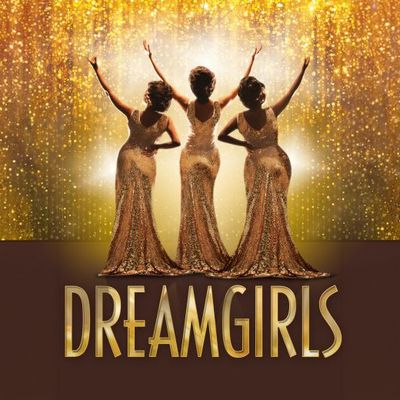
[5:19] David Armstrong: And when Elphaba nails her final note in Defying Gravity and the lights go down, the performance contributes to the Broadway Musical Theatre's archive of belted Act One finales of female assertion, which includes Fanny Brice's Don't Rain on My Parade from Funny Girl, Dolly Levi's Before the Parade Passes By from Hello Dolly, Effie White's And I'm Telling You I'm Not Going from Dreamgirls, and what might be the most terrifying and enthralling display of confidence on the Broadway stage, Mama Rose's Everything's Coming Up Roses from Gypsy.
[5:51] David Armstrong: While each of these songs in its first incarnation was a unique, never-heard-before combination of notes and words, the Act One finale of female self-assertion has become a conventional song type repeated and reproduced in countless musicals.
[6:05] David Armstrong: Defying Gravity can only come at the end of Act One after the audience has gotten to know Elphaba a bit and witnessed the forces that conspire against her, which she must defy.
[6:16] David Armstrong: And Stacey Wolf concludes her introduction with this contention, Wicked uses the tools and conventions of traditional musical theatre, the musicals of Rodgers and Hammerstein from the 1940s and 50s, to craft a feminist and queer musical.
[6:30] David Armstrong: And that is just her jumping-off place for what is a very interesting and provocative book.
[6:34] David Armstrong: However, as we've seen over the past 31 episodes of Broadway Nation, those kinds of transgressive women can be traced back to way before Rodgers and Hammerstein.
[6:43] David Armstrong: From the very beginning, powerful women have been at the center of Broadway musicals.
[6:48] David Armstrong: If you haven't already heard them, I encourage you to listen to episodes 7 and 8 to hear about amazing early superstars like Lydia Thompson, Nora Bays, and Fanny Brice.
[6:57] David Armstrong: Dynamic women who called the shots on their art and careers at the dawn of the musical, a time before women even had the right to vote.
[7:05] David Armstrong: But they were more acclaimed for their own personas rather than the characters they played.
[7:09] David Armstrong: And of course, it is the vivid characters of Broadway musicals that have lived on.
[7:14] David Armstrong: I find it useful to talk about these transgressive female characters by dividing them into categories of character type.
[7:20] David Armstrong: Glinda and Elphaba are 21st century examples of an age-old type of theatrical female character, the ingenue or young leading lady.
[7:26] David Armstrong: And right from the very beginning, the earliest musical comedies set a pattern that has endured right up to today.
[7:35] David Armstrong: The rebellious ingenues and feisty leading ladies of Broadway musicals are overwhelmingly unmarried working women, at least at the beginning of the story.
[7:44] David Armstrong: And this is very different from most Hollywood narratives during this same period, where young women are usually defined by their relationship to men as daughters, sweethearts, and wives.
[7:53] David Armstrong: In the long-running smash hit musicals Irene and Sally, which opened a year apart in late 1919 and 1920, the title characters are Irene O'Dare, a plucky Irish immigrant who works in an upholstery shop, and Sally Rhinelander, an orphan dishwasher who dreams of being a dancer.
[8:12] David Armstrong: Both of them were stand-ins for the thousands of young women entering the workforce in New York and across the country in the years following the end of World War I.
[8:21] David Armstrong: And even the lyric soprano leading ladies of operettas during this period were working girls, such as a waitress in The Student Prince and a Frontier saloon singer in Rose Marie, both in 1924.
[8:33] David Armstrong: If it's naughty to lose your lips, shake your shoulders and twist your hips.
[8:40] David Armstrong: Let a lady confess, I want to be bad.
[8:45] David Armstrong: Then the mid-1920s saw the emergence of the flapper, both in real life and on stage.
[8:51] David Armstrong: These were independent women who visibly rebelled against society by cutting their hair short, raising their hemlines, and rejecting the many layers of Victorian fashion in favor of unstructured dresses that would allow them to kick their legs and dance the Charleston.
[9:05] David Armstrong: This thing of being a good little goodie is all very well.
[9:13] David Armstrong: What can you do if you're loaded with plenty of hair?
[9:19] David Armstrong: And bigger.
[9:21] David Armstrong: We see them in the college co-eds and the female golf pros of DeSilva Brown and Henderson's musicals, as well as the title character of No No Nanette, who rebels against her parents and her boyfriend.
[9:31] David Armstrong: And where did these flappers first see the Charleston?
[9:34] David Armstrong: In black Broadway musicals like Shuffle Along and Runnin' Wild.
[9:38] David Armstrong: The dancing of Shuffle Along's female chorus was described as being performed with wild abandon and was criticized by the white establishment for being unladylike, but it was soon copied and replicated in nearly every Broadway show and in every nightclub and living room.
[9:53] David Armstrong: In the 1930s, the Depression brought a more worldly, wise, independent, and sexually sophisticated leading lady to the musical, epitomized by a young and sexy Ethel Merman—yes, she was young and sexy at one time—who, in roles like Reno Sweeney in Anything Goes, established belting as Broadway's signature singing style.
[10:13] David Armstrong: Come on and blow, Gabriel, blow.
[10:19] David Armstrong: Go on and blow, Gabriel, blow.
[10:23] David Armstrong: I've been a sinner, I've been a scamp, but now I'm willing to trim a lamp.
[10:27] David Armstrong: So blow, Gabriel, blow.
[10:31] David Armstrong: Belting exudes power.
[10:32] David Armstrong: And confidence equal to any man. All of the expressions that go with it are assertive and aggressive. You belt out the song to the back wall of the theater. You murder the audience. You knock them dead. As Merman would later say as Rose in Gypsy, you make them beg for more and then you don't give it to them.
[11:05] David Armstrong: And these Ethel Merman roles lead us into another category of female characters that I call the sexual mavericks. Sex-positive, liberated women who are unashamed to express a desire for sex as casual, uncomplicated fun. These are characters like Babe, the sous-brette or second female lead in the 1920s musical Good News. A more powerful and sophisticated version of this character is Vera Simpson in Pal Joey. Strong, jaded, confident, who calls all the shots both sexual and financial in her relationship with her boy toy, Joey Evans. In the 1940s, World War II put women to work and made them even more independent, as exemplified by all three of the leading ladies in On the Town, a scientist, a professional dancer, and a lusty female cab driver.
[12:32] David Armstrong: Rodgers and Hammerstein continued to use these same character types, but added progressively greater levels of depth and complexity to them over the course of their five classic musicals. But right from the start with Oklahoma, their women are feisty, strong, and independent. Laurie and Aunt Ellar own and run their own farm. There are no husbands or fathers on the scene, and neither of them seems to be desperate for a man. In fact, Laurie's I Am song, Many a New Day, begins with these words, "Why should a woman who is healthy and strong blubber like a baby if her man goes away?" And Aunt Ellar seems to be the leader and most important person in the community. She is consulted and deferred to by the men on every decision.
It's she who is chosen to run the auction and make sure the money for the schoolhouse gets raised. She imposes order on the community. She makes the final decision on Curly's impromptu trial. She functions basically as the mayor. And she represents another transgressive female character type, the wise woman and caretaker.
[14:20] David Armstrong: Rodgers and Hammerstein have won nearly every show. Nettie Fowler in Carousel, Bloody Mary in South Pacific, Lady Tiang in The King and I, and The Mother Superior in The Sound of Music. They usually function as advisors to the leading lady, and they provide her with crucial life-changing advice, encouragement, and hope at a key turning point in the story. And Ado Annie defines the sexual maverick. She can't say no and doesn't think she should have to. And she has no guilt or shame about it. Sex is fun, so why not enjoy it? Other sexual mavericks that will follow her in the Golden Age include Meg Brocky in Brigadoon, Lola in Damn Yankees, Nancy in Oliver, and Charity Hope Valentine in Sweet Charity.
[15:03] David Armstrong: This brings us to another character type that I call the disruptor. Dorothy and Herbert Fields brought this type of character vividly to life with their creation of Annie Oakley in Annie Get Your Gun, which in turn inspired Irving Berlin to write his most character-revealing score. Annie is smart, funny, competitive, and a world champion in a man's profession in a man's world. Everything about her is an affront to the establishment view of a woman's place in society. The final moments of the show can be troubling. Annie purposely loses the final shooting match in order to get her man, and this is usually tweaked in modern productions. But even in the original, it's clear that she is outsmarting him.
She understands that his male ego is a limiting factor, and we understand that she is the bigger person. All marriages require compromise, as Sondheim will tell us many years later, and Annie will let him have this one thing. But she knows that she's the champion, and she knows that we know it, too. And of course, in performance, just a few minutes later, it will be Annie, not Frank Butler, that takes the final bow, with the entire curtain call building up to her triumphant entrance, and the entire company, including the actor playing Frank, as her adoring, supporting cast. She owns the show.
[17:13] David Armstrong: Don't go away. Broadway Nation will be back right after this short break.
[17:24] David Armstrong: Now let's talk about Nellie Forbush. South Pacific is one of the many musicals that I have my students watch as part of the course I teach at the University of Washington, and many of them are put off by the racist feelings that she discovers and confronts within herself, and that cause her to turn down Emile's proposal of marriage. This is a character flaw that is hard for them to get past. But I encourage them to look at what ultimately happens. What does this rebellious ingenue ultimately decide to do in the final scenes of South Pacific? She decides to return to her former life and family in the rigidly segregated south of Little Rock, Arkansas, and instead live out her life on an island in the South Pacific as the stepmother of two dark-skinned, mixed-race children.
It is the woman, Nellie, who is strong enough to grow and change and evolve as a person, and Lieutenant Cable, the male warrior who is weak. He is unable to change, and to break away from his family's inherent racism, Nellie bravely stands up to racism while Cable takes the coward's way out. And that is why, from a metaphoric story perspective, he has to die in the war. Nellie Forbush chooses life.
[19:40] David Armstrong: This brings us to the 1950s, a transformative period. The women on television programs in the 50s were nearly always stay-at-home mothers in nuclear families or their non-working ingenue daughters. The family was central to the era because it was seen as a stabilizing force protecting the country from un-American activities like communism and homosexuality. Even Maria in The Sound of Music. She starts off as a rebellious tomboy, a problem that must be solved. She has a really difficult job, governess to seven children, aged from five to sixteen. Both in the abbey and in the captain's household, she defies all authority and breaks every rule and restriction that is put in front of her. And that is exactly what allows her to triumph in the end. And no doubt, because of the women's liberation movement that was emerging, the musicals of the 1960s go even further.
[21:05] David Armstrong: The plot can be summed up like this. One by one, each of Tevye's three oldest ingenue daughters rebels against the sexist, patriarchal traditions of her father and her society, and becomes a groundbreaking change agent for her family, her community, and therefore the world.
[22:30] David Armstrong: The 1960s also brought us a category of characters that I call Forces of Nature. Many of these are dynamic, middle-aged women in their 40s or early 50s that are played by dynamic actresses of the same age or a little older. These are the big lady shows where not only the story but the very structure of the musical is designed to reinforce the central woman's importance and dominant position. The entire show is created as a tribute to their transgressive personalities and actions. These women are smarter, funnier, and more resourceful than anyone else, more capable, more dynamic, and more full of life. Dolly Levi, Mame Dennis, Fanny Bryce, even characters like Rose in Gypsy or Ava Peron in Evita or Mrs. Lovett in Sweeney Todd, who we are often horrified by, are still Force of Life characters, and we still end up admiring them.
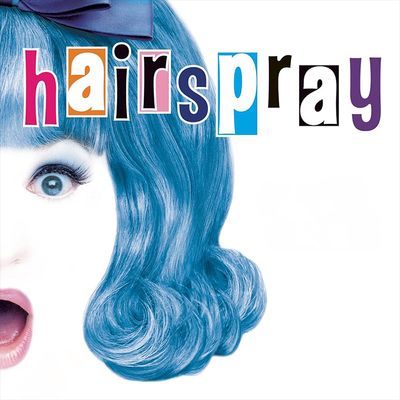
We admire them for their resourcefulness, their moxie, their determination. Unlike us, they will not let anything stand in their way. Each of them, of course, has flaws, big flaws, but they are her flaws, and she owns them in the same way that she owns the show. The sexual mavericks continue into the 60s but get a bit darker with Sally Bowles in Cabaret and Aldonza in Man of La Mancha. And in the modern era, we have Rizzo in Grease, Roxy and Velma in Chicago, and Suge Avery in The Color Purple. The musical Hairspray brings many of these categories together in the character of Tracy Turnblad. She is a rebellious ingenue, a disruptor, and a force of nature, and she inspires her mother Edna to become a disruptor and a Force of Life character as well.
And Hairspray puts a unique spin on what Stacy Wolf called the Act 1 finale of female self-assertion by giving most of that song to a supporting character, the show's wise woman caretaker character, the black DJ and record shop owner Motormouth Mabel.
[25:03] David Armstrong: In fact, this is the first of two moments in the show during which Motormouth incites and inspires the major turning points in the story. This Act 1 finale, big, blonde, and beautiful, brings together all of Hairspray's central issues. First and foremost, the body image issues. This song is a lesson in how to combat the shame we are made to feel and the discrimination that comes at us from society when our bodies do not conform to the standard ideas of beauty. And it's also a protest song, singing out against racial discrimination, as well as economic injustice and inequality. And in its own wacky way, it demonstrates the power that could be harnessed and the changes in society that could be achieved if all of the disenfranchised people, poor, BIPOC, and big, came together to fight systematic discrimination.
[26:47] David Armstrong: I'll let another Disruptor character have the final word today, Dreamgirls' Effie White. He feels the dreams can cross over. But when we're famous, I'll write great things for you. Effie, do it for me. What about me? What about me? The three Dreamgirls, Dina, L'Rell, and Effie, embody several of these transgressive women types. They are all rebellious ingenues, all Disruptors, and to some degree, sexual mavericks. But only one of them becomes a force of nature, when at the end of Act 1, her rage at the injustice of being thrown out of the group becomes a defiant, searing anthem of emotional pain and righteous anger. She hits bottom at the end of Act 1, so that she can rise again to triumph and even forgiveness by the end of Act 2. Look at me. Look at me. I am changing. Trying every way I can. I am changing. I'll be better than I am.
[28:46] David Armstrong: These are the dynamic women that give the Broadway musical its power. And of course, there are many, many more that unfortunately I didn't have time to include. I find one of the most remarkable things about Broadway musicals is how long and how vividly they remain in our memories. It's not at all unusual for people to remember in great detail the sights, the sounds, and especially the feelings that they experienced at musicals they saw half a lifetime ago. I believe this is because live theater, unlike film or television, is a visceral experience that our minds and our bodies actively participate in. We physically and mentally interact with the performers and they with us in conscious and subconscious ways.
The music and lyrics especially get inside us. And as a result of this interaction, we absorb, internalize, and take to heart the stories, the characters, the themes, the images, and the metaphors of Broadway musicals in a deep and profound way. Like all art, musicals are empathy generators. And that can't help but have a tremendously beneficial effect on society. And that's how Broadway musicals and the people who create them change the world.
[29:56] David Armstrong: On the next episode of Broadway Nation, we'll explore another of the Broadway musicals' principal themes, racial, ethnic, and cultural equity, justice, and inclusion. Broadway Nation is written and produced by me, David Armstrong. If you enjoy these podcasts, I hope you'll help me spread the word to other Broadway fans that might be interested in hearing them. If you listen on Apple Podcasts, the most effective way of doing this is to rate the show and write a brief review. This really does make a big difference. And subscribing to the show, wherever you listen, also really helps. Special thanks to 101.9, the voice of beautiful Vashon Island, Washington, and to the entire team at the Broadway Podcast Network.
[31:37] David Armstrong: I'm gonna change my life.
© Broadway Podcast Network, All Rights Reserved