

Ken Posner is a lighting designer for Broadway shows such as Wicked, Hairspray, Legally Blonde, Grease, Kinky Boots, You’re A Good Man Charlie Brown, War Paint, Finding Neverland, Mean Girls, Beetlejuice, and several other ICONIC Broadway shows!.. Read More
From the show: Real Talk with Mason Bray
Featured Shows
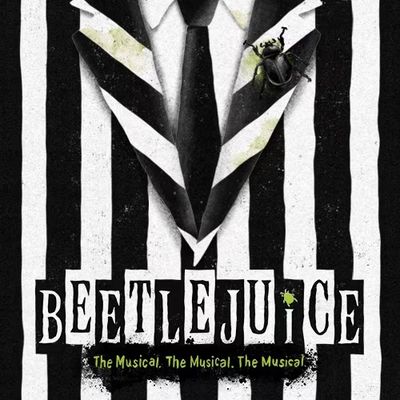
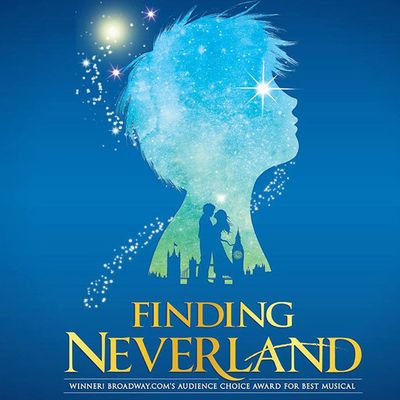
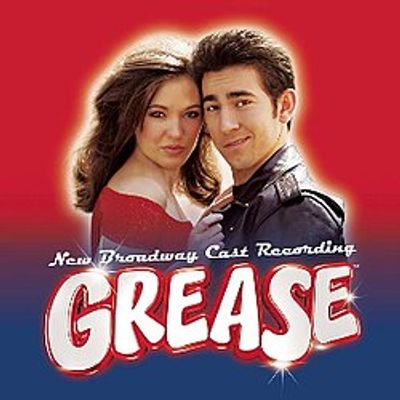
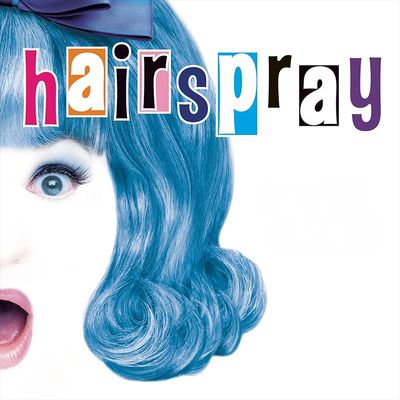
About
Ken Posner is a lighting designer for Broadway shows such as Wicked, Hairspray, Legally Blonde, Grease, Kinky Boots, You’re A Good Man Charlie Brown, War Paint, Finding Neverland, Mean Girls, Beetlejuice, and several other ICONIC Broadway shows! As some might know, I am obsessed with lighting design, so I am so excited to have Ken here this week!
Join us as we discuss coming back to London theatres and getting back to work on the US National Tour of WICKED, as well as how he makes decisions in pre-production, and how he blends lighting and projections for his past shows!
Thank you for supporting my podcast!! If you like this episode or want to check out more, our social media platforms are:
Instagram - @_RealTalk_Pod
Twitter - @_RealTalk_Pod
Facebook - Real Talk with Mason Bray
Broadway Podcast Network - Real Talk with Mason Bray
Website - realtalkmasonbray.com
Transcript
This transcript was automatically generated and might contain errors.
[0:00] Mason Bray: So we have Ken Posner, the lighting designer for Broadway shows such as Wicked, Hairspray, Legally Blonde, Grease, Kinky Boots, You're a Good Man, Charlie Brown, War Paint, Finding Neverland, Mean Girls, Beetlejuice, and several other iconic Broadway shows. I've been obsessed with lighting and Ken's work for years, and I'm so excited to have him here today. Hi, Ken.
[0:20] Ken Posner: Hi, thanks for having me, Mason.
[0:22] Mason Bray: Thank you for being here. How are you?
[0:24] Ken Posner: I'm great, thank you. Really great.
[0:25] Mason Bray: Um, can you walk me through your path to um working on over fifty Broadway shows, I think?
[0:32] Ken Posner: Um sh sure. Uh I guess the uh the sort of the uh condensed version of that is I started doing community theater uh uh in uh when I was around um I guess helping out around backstage. My with my my parents weren't involved, my mom especially, uh probably six or seven. And then just developed a passion for storytelling and um and you know, m making theater that sort of just evolved into um a career and I just pursued it through grade school and then high school and into college and then uh from college into summer stock theater uh and from summer stock I m moved into New York City and just sort of built a career based out of New York, but a lot of work in regional theaters around the country and opera, a little bit of dance, um, and um sort of one thing led to another and kinda here I am.
[1:32] Mason Bray: Um, so from the first production meeting for these shows to opening night, what's your process of getting together a design, getting together a plot, and then programming? What's your process for all of that?
[1:45] Ken Posner: Um, you know, it really Mason, it really it varies from project to project. Um I don't uh uh have a particular style. I really let the director and the other member of the creative team sort of drive that. Um but um I can be hired to do a project anywhere from 18 months to two years out up until a few weeks out, depending on the scale and scope of the project. But I I my favorite part about what we do is the collaboration, this working with other people to create theater, to make tell a story, to engage an audience, to celebrate, whatever it is. Um that's that's what you know that's what drives me. That's my passion.
[2:24] Mason Bray: You were talking about getting started on shows and how people ask you to do stuff. Um is that how it works now, or did you start out sending out resumes and now you've gotten enough shows under your belt to get asked to do stuff?
[2:37] Ken Posner: Um the answer is yes to that. I think it really depends. Um certainly early, early on on my career, I was sort of building um a name for myself. Um and it was really a combination of um, you know, my career is really built out of doing summer stock theater. I made so many great contacts and friends um in those four or five years that I was really immersed in summer stock. And I continued to do it way after that. But really, sort of the, you know, the notion of doing four or five or six or eight shows in a you know, eight or ten week period of time was thrilling and a huge part of my education and a huge part of you know developing professional and and personal relationships that have lasted, you know, 35 years.
And um, I wouldn't trade those days for anything. And the uh and I worked at some great theaters, um Williamstown Theater Festival for a year as an intern and then almost nearly 10 years at the Berkshire Theater Festival in Stockbridge, Massachusetts, which I think now called Berkshire Theatre Group. But um that's kind of my my foundation. So it was sort of building those contacts, you know, meeting people. One of my oldest friends in the business is Michael Grife, the director of Dear Evan Hansen and Rent. Two shows I didn't design, by the way. But he's one of my oldest friends. And we met at the Berkshire Theater Festival, Unicorn Theater in maybe 1988. And one of the key, one of my key both key projects for both of us in terms of just launching our career was a play that we did at Naked Angels called Machinal that then moved to the public theater and got a lot of recognition that season.
And that's just, you know, one example of many, many of my, like I said, collaborators, friends that I've known over the years. So once you sort of build almost like a little network or a group of people, you know, artists that you work with, it's just, you know, it grows exponentially.
[4:48] Mason Bray: Yeah. So working on shows such as like Wicked and Beetlejuice, you're working with like projection designers. Um, how do you go about weaving in and out of not overpowering them, but also not making it stand out too much? How does it be?
[5:03] Ken Posner: Um, you know, that's a great question. Um, just in terms of how does light, how do light and projection blend? And because um, you know, projection basically is a light-driven source of uh, you know, medium, you know, how how how does that collaboration occur? And I know I've been very, very fortunate to work with really talented and gifted projection designers, Peter Green being one of them, William McCarthy being one of them, also she did Wicked. Um, obviously that technology has just um exploded in the last 20 years. But Peter actually, Peter Green in particular, and many, many others, but Peter is also a lighting designer, so there's a sensitivity and um a mutual respect that we both had for each other.
And we were really uh for for on Beetlejuice, for example, we were really attached at the hip. You know, and if you look at the lighting versus the the projection or video um for Beetlejuice, unless you have a really discerning eye, in a lot of times it's just it's hard to tell which is which, and that's the way it should be. Um, but it just comes but keys back to the fact that I just love the collaborative part of what we do, and um, you know, Peter is a brilliant designer and uh brilliant dramaturg, and it's just always amazing to be in the room with him. It just makes me a better lighting designer.
[6:23] Mason Bray: Um, this is a very technical question that some people might not understand. Um but in Wicked, I know it's not like a normal board that you might see on Broadway, it's a grand MA, right?
[6:37] Ken Posner: Yes.
[6:38] Mason Bray: Um on the Broadway company, yes.
[6:41] Ken Posner: Yeah.
[6:42] Mason Bray: How do you go through choosing your equipment and what suits a show better than maybe the standard on Broadway?
[6:50] Ken Posner: Well, in terms of the brand that may specifically, I tended to defer to the moving light programmer on the on their console of choice. It's like you know, a musician choosing an instrument. Um and at that in the in that period of time in the early 2000s, shows were still on two, and in case of Wicked three different three desks. So there was a conventional lighting desk, there was a moving a desk for moving lights, and then there was another desk for the projection video component of for Wicked. And the bit over the years, the the and that and the moving light console was the Grand MA1. That's what Warren Flynn chose to program the show. I was fine with that. Um and the conventional desk was uh ETC obsession.
And I don't know what the I don't remember what the um video was on, to tell you the truth. Might have also been in the Grand MA. Anyway, over the years, those consoles became obsolete. We technology improved, we upgraded the consoles in New York to the Grand MA2, and all those things just merged into one desk. Um and the reason that things were on three desks at that point was available memory, speed of programming. Uh those are basically the primary reasons. Um and now the technology technology has evolved, like all of that data, all that information can be sit inside one console because um of the you know improvements and evolution of the technology.
[8:22] Ken Posner: On top of the programming aspect of it, um, how do you know what lights to put in the plot and how do you know what's going to suit your design?
[8:31] Ken Posner: Um well I'm an artist, so if you give me a light, I'll make a picture with it. Uh in terms of choosing equipment, um, it's driven by a lot of different things, you know, the specific needs of specific show, um, space, um, availability in terms of equipment availability in lighting shops, you know, budgetary concerns, those were all factors in this in deciding and choosing lighting equipment.
[8:59] Ken Posner: And there's a lot of lighting equipment out there now. There's much more now than there was 20 years ago, many more options. Um, but at the end of the day, as an artist, you can kind of make it all work. Do I have preferences? Yes. Do I there are other certain things in my toolboxes because I like one fixture's color versus the one curve fixture's ability to um move in a specific way or do specific shutter cuts or have you know extra room for more um pattern lighting patterns, whatever it may be. Again, it's really about picking the right tool for the piece that you're lighting.
[9:36] Ken Posner: So a lot of your shows went out on tour. Um so how big is of a role do you play in transcribing the lighting plot to be able to be transported around the United States and around the globe? Um very important. I'm very attached. Um I'm actually heading down to Dallas next week for the relaunch of Wicked. I'll be opening in Dallas after this 18-month hiatus because of COVID. So uh I did return from London where we relit um and remounted the West End production of Hairspray that just opened a few weeks ago in London, which by the way, the audience went crazy for. It was just so throwing me back in the theater. Um, and to revisit that show, it's one of my favorite all-time projects for sure.
[10:20] Ken Posner: Um, and also while I was in London, we moved um uh Pretty Woman from the Piccadilly to the Savoy. That's a show that I co-designed with um a dear friend and colleague, Philip Rosenberg. We designed it together. So uh, you know, very, very, very committed and attached to additional companies. And it's fun to take something that you've done at a very large scale and then make it portable and make you know try to bring them. I mean, the goal is to bring the Broadway experience to as many people as you possibly can. So that's that's the kind of the job.
[10:53] Ken Posner: How much changes in those instances? It really depends on scale and scope. Um, you know, a very large-scale tour such as Wicked is uh many, many, many trucks. I think the initial, the first, the first national when it first came out, which is not what's on the road right now, it's a pared down version of that, was I think 20 trucks, nearly 20 trucks, 17 um, and then three show to show, meaning we did jumps of certain equipment just to make the time get the show into the theater in time.
[11:27] Ken Posner: Um Wicked comes down on a Sunday matinee and then can do a performance on Wednesday evening in its first week. So that those parameters are very tightly set, and um the scenery and uh is very cleverly engineered to fit in trucks that way, as is the lighting, as of the sound. You know, the costumes are carefully packaged. We travel everything, city to city. Um, so that's why it's so many trucks, and it's very organized um choreographed uh um event to load in or load out a show of that scale.
[12:09] Ken Posner: Now, having said that, that's sort of at the larger end of the scale, like a Lion King Wicked sort of scale. Um at this at the lower sort of um not lower but um smaller scale tours, it could be four or five or six trucks, which means that scenery that used to be hard is probably soft, there are probably fewer lights, much smaller front of house lighting package, um you would use uh local follow spots, you wouldn't group your own, for example, things like that.
[12:43] Ken Posner: Um so you mentioned the summer stock being part of your education. Um other than that, what's your educational path to where you are and how much did education play a role in where you are now? Um certainly very, very important. And um I'm a graduate of student at Purchase, which is part of the state um university system of New York. And I had some great teachers there, including Billy Mincer, my mentor, Brian McDebitt was a teacher of mine.
[13:12] Ken Posner: And the proximity to New York was fantastic because we had that we could pull from that community. So a lot of guest artists came to teach um at that point. And we were also able to do a little work. We weren't allowed to, but we could, you know, you could escape on a weekend and go, you know, focus a show off Broadway or help hang a show up Broadway. So there was always that kind of um uh you know, proximity to New York was really helpful for me.
[13:38] Ken Posner: Um I don't have a master's degree, I just came I came out of the uh of SUNY Purchase with the BFA and um just kind of went right to work. I was able to get into the United States Artists internship program for lighting design, which doesn't exist anymore. It had kind of come and gone over the years, but that's how I got into the United States Artists, which is the union for designers, the local for designers.
[14:02] Ken Posner: And uh, you know, again, it was just about uh, you know, building those networks, the alum from Purchase, and um, you know, just you know, immersing in the community. What's the best advice you got from that education or shows that you've done in the past that you would want to pass down to future lighting designers or just designers that want to work in theater?
[14:25] Ken Posner: Yeah, um I think um my advice is follow your passion. There are many, many, many different um uh occupations or vocation within the lighting design world. So, you know, I happen to be a theatrical lighting designer, but there you can do architectural lighting, you can like trade shows, you can like fashion shows, you can do architectural lighting themed entertainment, um lighting on cruise ships. There's just the occupation has expanded so much and grown so much in 30 years that um and there's so many ways to be a lighting artist, it doesn't necessarily have to be theater.
[15:08] Ken Posner: Um so just follow your passion. And if you know, if you look at how um clever and detailed the lighting is, for instance, in video games, um, or you know, if you're interested in making content, you know, ultimately that's what as a theatrical designer, that's what I do. I make content in three dimensions, but you can also be an animator and make content.
[15:27] Ken Posner: So I I would just say be tenacious, um follow your passion and insert yourself into the environment that you ultimately think you want to be in or work in. Um even if you learn ultimately that oh, this isn't what I want to do, that's still great. Then you can move to the next idea.
[15:46] Ken Posner: So the past year and a half has been crazy, um, to say the least. So how have you taken that time to like work on shows and what have you been doing during the past year and a half to work on shows? Well, I've it's tricky. Uh not a lot of work on shows actually. It picked up in the last few months for sure, probably after the new year.
[16:09] Ken Posner: Um I've all had a lot of things in the pipeline, things kept being postponed, kind of false starts. Um but really reading a lot, um, looking at light a lot, um, listening to music, um doing interviews like this, for example, really sort of helping uh, you know, doing a lot of Zoom teaching or Zoom guest appearances, lecturing, however you how you want to phrase it, um uh, you know, uh mentoring, things of that nature.
[16:42] Ken Posner: And with that, I'm sure that you are ready to be back in a theater, but other than being back in a room and back to designing, what are you looking forward to when the as the world reopens? Um you know, just rejoining the community and getting back in the room and being creative and making and making theater again and um also very interested in the next generation and helping them you know uh follow their dreams and and enter this fantastic um location, this great world that I happen to be so fortunate to be in.
[17:18] Ken Posner: Yeah. Um is there anything else you want to add before we wrap up this episode? Um I don't think so. If you have any more questions, shoot them out. Otherwise, thank you for this opportunity and um I'm really happy that you reached out in honor to be in this amazing group of artists that you've already interviewed. Very impressive.
[17:38] Mason Bray: Well, thank you so much for saying that, and thank you so much for being here.
© Broadway Podcast Network, All Rights Reserved