

Jak Malone co-stars in the hit new musical, Operation Mincemeat, which is nominated for four Tony Awards, including Best Musical and a nomination for Jak. He also received Oliver, Drama Desk and Outer Critics Circle awards for his show-stopping performance as Hester Leggatt and other characters... Read More
From the show: When Lightning Strikes!
Guests

Featured Shows
About
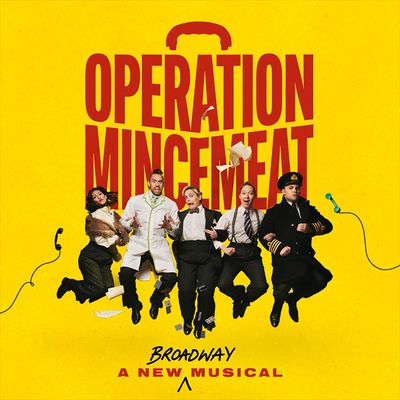
Jak Malone co-stars in the hit new musical, Operation Mincemeat, which is nominated for four Tony Awards, including Best Musical and a nomination for Jak. He also received Oliver, Drama Desk and Outer Critics Circle awards for his show-stopping performance as Hester Leggatt and other characters. Operation Mincemeat is based on the unlikely, but completely true, story of how during WW2 the allies deceived the Nazi's by attaching fake war-plan documents to a corpse and washing him up on the shores of Spain. The success of the mission transformed the war.
Operation Mincemeat is now playing at the John Golden Theatre. In 2026, the production will be launching a world tour going around the globe throughout the United States, Canada, the United Kingdom, Australia, China, Mexico and New Zealand.
Transcript
This transcript was automatically generated and might contain errors.
[0:00] Jeryl Brunner: From Shakespeare's Schwartz, from Fosse to Alvin Ailey, from Sondheim to Borellis, from McNally to Fay, it happened to the greats, it still happens every day, when lightning strikes, it's the moment you know, when lightning strikes, where you're meant to go, you can stand and tell Eureka, do whatever you like, you'll never forget the moment, when lightning strikes.
[0:28] Jeryl Brunner: Hi, this is Jeryl Brunner, and you're listening to When Lightning Strikes, where we talk about the tingly mic drop moments that led you to becoming an artist. Jak Malone co-stars in the hit new musical Operation Mincemeat, which is nominated for four Tony Awards, including Best Musical.
[0:54] Jeryl Brunner: Jak also received a Tony nomination and an Olivier Award for his show-stopping performance as Hester Leggatt and other characters.
[1:06] Jeryl Brunner: Operation Mincemeat is based on the unlikely, but completely true story of how during World War Two, the Allies deceived the Nazis by attaching fake war plan documents to a corpse and washing him up on the shores of Spain. The success of this mission totally transformed the war.
[1:33] Jeryl Brunner: Operation Mincemeat is now playing at the John Golden Theatre. And in 2026, the production will be launching a world tour going around the globe throughout the United States, Canada, the United Kingdom, Australia, China, Mexico, and New Zealand. Welcome, Jak.
[1:56] Jak Malone: Hello, thank you so much for having me.
[1:58] Jeryl Brunner: Thank you. Oh, what a gift to have you and all the characters you play in this beautiful show and your gorgeous ensemble. I want to know when Operation Mincemeat came into your life. From what I understand, it was 2019, very early on. And of course, you originated this role. But I want to hear from you. How did you connect with Splitlip, the creators of Operation Mincemeat? How did it all go down?
[2:33] Jak Malone: So I was at drama school in Liverpool. I went to the Liverpool Institute for Performing Arts, which was a terrific school, still is a terrific school. And we had a teacher say to us, it was, I think it was the end of our first year. We were going to head into second year and we were just about to break up for the summer. And the teacher said to us, this summer, what you really should try and do, if you're serious, is you should try and get out there, go see some theatre, take a trip down to London, go, you know, go wherever, go to the Edinburgh Fringe, see if you can engage with work and try and really pinpoint exactly what it is that you want to do.
[3:14] Jak Malone: And I was like, great, challenge accepted. So we booked a trip to the Edinburgh Fringe Festival. We were going to go for a week and we went. And a couple of days in, I had been recommended to me this horror comedy play called He Had Hairy Hands. And it was described to me as this sort of werewolf horror comedy, whodunit. And I thought, that sounds good. I'm into that because I like horror. I'm very spooky and I like comedy. So I thought, OK, I'll go to that. And by the end of that hour of that show, I was like, OK, I found it. This is what I want to do. This is it, 100%.
[3:51] Jak Malone: And that show was made by a team called Kill the Beast, who, when they decided that they wanted to focus on and write a musical, they sort of splintered off. And another guy called Felix Hagen joined the team and they created Splitlip, who were going to make new musicals. And I'm a huge fan of these guys by this point. And I'm known to them as a fan. They knew me. Jack from Twitter, he's a big fan. And they said, well, we're making a musical. And I was like, well, you better let me be in it. I do musicals and I promise that I'll work really well with you and I'm exactly what you need. And they let me audition. They're on record as saying they let me. They thought, oh, fine. It'll be nice for him to come and meet us.
[4:35] Jak Malone: So I went in and auditioned. And from there, they were like, oh, no, OK, this guy, he put his money where his mouth is. He really needs to be in the show. And that was, yes, that was early. That was February 2019. And we did the first run of the show in May. And then with a little pandemic in the middle, we've been doing the show steadily ever since, with each venue getting bigger and bigger and bigger until we hit the West End. And then now we're here on Broadway at the John Golden Theatre having the absolute time of our lives.
[5:04] Jeryl Brunner: That's such an incredible story, because from what I read, weren't you? I mean, you were a super fan making fan art.
[5:12] Jak Malone: Yeah. I was in deep.
[5:16] Jeryl Brunner: What was it? Is it hard to put into words what it was about this group, this talented troupe that swept you off your feet?
[5:27] Jak Malone: No, it's easy to quantify, really. It's that they were so serious about being silly. The shows that they made, when I use the word dumb, I use the word dumb as the highest compliment. The shows were ridiculous. They were dumb. They were stupid. But they were so serious about that. They put so much work into it.
[5:45] Jak Malone: I could just tell from watching that first show, oh, me and these people have all of the same references. I know that we do. There's a British comedy troupe called the League of Gentlemen, who they were so inspired by. League of Gentlemen were my favourite thing since when I was younger. And yeah, I just knew that they like all the same things as me. They're serious about being silly. They don't care about gender and they don't care about anything when casting a role. The funniest person for that role gets to do that role. And that really spoke to me. That was really interesting. And I just thought, yeah, these are the people who are making the theatre that I want to engage with.
[6:29] Jak Malone: And I do consider myself very lucky to have been given that mission, you know, go out, find what it is and to come back two months later and go, well, I found it 100% and then to actually go on and do it and go, yeah, I found it and now I'm doing it. So it's really great.
[6:48] Jeryl Brunner: And I think about when you say silly and I completely agree. And yet I wanted to share just to give people context more about the plot of Operation Mincemeat without giving too much away. It's 1943 and most of mainland Europe is under Nazi occupation. And the next targeted invasion is Sicily. And the British need a plan to convince Hitler that they're going to head somewhere else, which ends up being Sardinia. They wanted to create this diversion and enter Operation Mincemeat, a deception plan conceived by British intelligence to fool the Germans and convince them that the invasion would be Sardinia.
[7:38] Jeryl Brunner: Do you mind taking over what they do if you don't mind?
[7:42] Jak Malone: Yeah, of course. They took a corpse of a homeless man. They dressed him up as a British officer with a briefcase handcuffed to his wrist and they washed him up in Nazi occupied Spain. And inside the briefcase were invasion plans that said that we were going to Sardinia.
[8:03] Jak Malone: So the Nazis took the briefcase, got their hands on the briefcase, found the plans. The plans got ferried all the way up to Adolf Hitler, who said, this seems authentic. This seems legit. Let's move our troops from Sicily to Sardinia. He moved 100,000 men from Sicily to Sardinia. And we were able to walk into Sicily and take back the mainland. And it was a real turning point that won us the war. And it was all down to this weird, kind of off the books, kind of morally cray piece of military deception.
[8:36] Jak Malone: And what's so genius about it is it's like truth is stranger than fiction, as they say, right? And you think, how could it possibly work? And then, and it works. And there's this beautiful, funny, heartfelt musical now about it. So when you heard about it, the show, what went through your mind?
[9:03] Jak Malone: The first thing that went through my mind was, why weren't we taught about this in school? For me, and for my experience, we learn a lot about World War Two in school in England, definitely. But it's all very much about the evacuees, about Anderson shelters, and rations, and everybody's very sad, and everybody's very worried. And Winston Churchill has the weight of the world on his shoulders.
[9:32] Jak Malone: And it's all about this. I never truly, until I heard this story, had any concept that there were people who managed to have a good time during the war. There were people who managed to make the best of it, and who managed to get together and say, no, let's do something crazy and madcap and weird.
[9:52] Jak Malone: And the story is like an honest-to-God spy caper. They were flying by the seats of their pants. They were getting away with murder. They were spending the King's money like it was going out of style. They were going out for drinks. They were just having a terrific time. And I never, ever, that wasn't the World War Two that I knew. So I was delighted when I heard the story.
[10:16] Jak Malone: And then, you know, the story was told to me by the writers, and they told the story to me through their lens of it being in this, you know, madcap musical. And I thought, okay, that sounds right. That sounds correct. So then when I heard that the film was coming out with Colin Firth as Ewan Montague, and I looked into it, and I discovered that they'd made this, like, serious, somber war story. I was like, wow, I don't know how anyone could hear that story and see it in any other way than a mad adventure, because that's what it was. That's what they were doing. They were making the best of it, and they had a damn good time.
[10:56] Jak Malone: And Ian Fleming, I mean, you just cannot make this up. And what's so amazing is what you all play, what, 82 different characters?
[11:06] Jak Malone: Between us, yeah. There's five of us, and we play 80, I think it's 86, maybe. I'm not sure. I play, my character count is in the high 20s. But I don't, I've never definitively counted, because I think if I knew the real number, it would stress me out every day. It would daunt me.
[11:26] Jeryl Brunner: Let's talk about Hester, who is an administrator, right? And she is really wants to be part of Operation Mincemeat. She's very devoted to her job at the intelligence. And what do you love about Hester?
[11:47] Jak Malone: When I was given the role, what I immediately loved about Hester is that she represents so many, the type of people that I really like. And these are people, I just love it. I can't help but love these people. They turn off at a situation, be it a work situation, social situation. And they say, maybe not directly, but they say it with their body language, with their demeanor. They say, I'm not here to have any fun. I'm not here to make friends. I'm not here to, I'm not going to, I don't want to feel any joy at this event. I'm here and I'm very serious. And you're not going to make me laugh, not at all.
[12:23] Jak Malone: And those people are great because don't be so silly. Of course, you're here to make friends. We're all, that's all we're doing. All we're doing is looking for connection. So these, this specific brand of person, you find the right thing to talk to them about. You tickle them in the right spot. You tell the right kind of joke. And they bloom, they blossom and they join in. And it's always nice. And it's always satisfying. And that to me straight away is who Hester is. She's the stick in the mud. She's the wasp. She's the dragon of the secretarial pool. And it's because she's so defensive and so wrapped up in her own defenses. But of course, she can't help but forge a bond with these, this tight little team, this unit who are pulling off the unthinkable. And she's one of the gang. And I love her. I absolutely cherish this role.
[13:13] Jak Malone: And she really, in many ways, becomes the heart of Operation Mincemeat.
[13:20] Jak Malone: To come up with a whole identity. And the office, you all decide that the corpse, who they come up with the name Bill, William, is engaged, or was engaged. And you come up with a letter in his briefcase. And it's a song, "Dear Bill," and is absolutely the most gorgeous ballad. It's a beautiful song about the war and love. Can you talk about "Dear Bill" and your reaction to that song?
[13:57] Jak Malone: Yeah, it's, um, yeah, they're trying to write a love letter, an authentic love letter that somebody who's at home who's missing their soldier would have written. And they try and write one. And it's really flowery and really high, high drama and metaphor. And it's called a song called "Love is a Bird." It's about, you know, how big and wonderful our love is. And Hester comes in and says, "No, no, that won't do at all. Let me help." And the song, "Dear Bill," it's very pedestrian. It's very small in scope. It's witty. It's informal. There's no big, grand metaphor. There's tiny metaphors that Hester herself doesn't even, I don't think even realizes that she's making. And yeah, I call the song a magnum opus to quiet grief.
I think that they, the writers in making "Dear Bill," have nailed what it means to suffer these tiny aches, missing somebody, whether they've passed away or whether they haven't. And these are the things that we know as humans never go away. You still, just when you think you've grieved and you're done and you're all right, you've moved on with your life, you think to yourself, "Oh, I must tell that," but I can't tell them. I can't tell them because they're gone. And it gets you, it gets you all the time. And that's really what the song is. She's tumbling into memory. She starts out very safe. "I'm going to help you write a letter, and it's going to be very easy." And I'm just giving, we're just going to tell him the news and let him know what's going on with his family and all that.
And by the end of it, she's lost to her memory and she's a little bit broken. It freaks her out. It really rattles her and she can't, we don't, the song doesn't finish. She doesn't finish a sentence. She can't carry on. And it's the honor of my life so far to perform this song. It really finds people. It really connects people because they've loaded it full of that experience. And everybody can share it. Everybody can connect. It's the quietest I've ever known a theatre to get consistently. And the applause afterwards is phenomenal. And I say that because this is people, I actually think it's mainly people releasing. It's mainly people going, "Oh my God, I've got to do something," whether it's to make sure that Hester is okay, or whether it's to go, "Oh my God, I've just felt something huge in a comedy World War Two musical." So yeah, I love it. I love the song.
[16:52] Jeryl Brunner: Well, I've seen the show several times and people were standing up, you know, on their feet applauding. And I thought, my goodness, I've never seen a standing ovation in the middle of a show for a ballad. You know, it's not the big brassy, you know, 11 o'clock number. It's a quiet, beautiful, poetic number. And it's so simple and relatable, and it's so complex. And it's really a work of art.
[17:26] Jak Malone: Yeah, truly. But it's the type of thing that as a performer that you dream that someone will hand you something like this. And I can confidently say that the scope of it and how brilliant it was. I mean, I knew, the first time hearing it, I thought, "This is great. This is really good." But it's only as years went on that I went, "Oh no, actually they've written the best thing ever." I actually think that they've written the best musical theatre song in recent memory. And I'm the one, I'm the one who gets to channel it and give it and share it. It's a kindness on their part. I tell them that they've written the best musical theatre song in recent memory, but they didn't have the good sense to sing it themselves.
[18:14] Jeryl Brunner: What an act of generosity!
[18:23] Jak Malone: Yeah, truly, truly. There's a lot of beautiful songs. Can you talk about your lightning strikes moment when you knew you had to be an artist? I read that one of your grandparents was a dresser who said, "Go study drama."
[18:36] Jak Malone: Yeah, so I was a really difficult child when I was young. I was very angry. And my only memory of that time is being angry. I remember just being a kid and just being furious with everybody all the time. And I have vivid memories of being at a family event and thinking, "I'm going to ruin this." I'm thinking to myself, "I don't want, everyone's having too good of a time here. I'm going to spoil this." And that's what I was like. And I didn't know why, too young to know why and nobody around me knew why. And it wasn't until my nan, who's my dad's mom, my paternal grandmother said, "This kid is creative and he needs a creative outlet. He's always, you know, the only way to get me to be quiet and still is if I was drawing."
If I did have a tantrum, I would go up to my room and I would sing, I would blast the "Grease" soundtrack and sing along. And she's saying he's using music and performance to self-soothe. These are the things that we need to pay attention to. So they sent me to a little youth theater in Merseyside where I'm from, and it was night and day from there. I think I kind of figured out my place in the world and what it was that I liked best and what it was that meant, what it was that could carry me through moment to moment. You know, I just was nicer because I was like, "Well, at least I have this in my life and I have this to look forward to. And I have this to think about." And it's been that way ever since.
I don't think that there hasn't been much in my life that I've liked as much as this or that I've been, I often describe it as the thing that I'm best at and the thing I like best, which I'm kind of lucky that those two things, you know, marry. So yeah, there was never any question of whether or not this is what I was going to go on to do apart from a brief, brief stint where I said to my dad, my dad was, I've always had very, very supportive parents, but my dad at one point was like, "Okay, but you know, all parents have to go, well performing is tough and you never know. And there's a lot of people." And my dad said, "If there wants to be anything else, what is it that you might want to focus on?"
And I said, "Okay, dad, well, I'm either going to be an actor or I'm going to work in makeup effects. Which one do you want me to go for?" And he was like, "Well, I suppose you can be an actor then because they're both as high in the sky as each other." So I thought I'll do that. I like that too.
[21:14] Jeryl Brunner: What were some of the early shows you did at that, what was the community theatre called?
[21:20] Jak Malone: It was called Starlight Youth Theatre. And we used to do these pantos, the lady who ran it, her name was Jackie, and I love her. I'm still in touch with this to this day. She was like a second mom to me. She's a wonderful, wonderful person that cared for me more than I deserve. She's wonderful. And she used to write these pantomimes that would be set to like, we did like Snow White and the Fab Four. So it was Snow White with loads of Beatles music. I'm trying to think of others that we did. We did Rockerella instead of Cinderella, and it was all like fifties and sixties rock and roll. It was all good fun. And those are my first experiences of performing. And I think that's absolutely informed my taste as well. I think I'm a bit of an old soul when it comes to music and to film and stuff like that. And I think it was because of all of the things that I was surrounded by. It's incredible.
[22:27] Jeryl Brunner: So I have some questions from my co-correspondent who's a massive, massive fan of the show. It's eight years old. Who's your favorite character that you play in "Operation Mincemeat" and why?
[22:39] Jak Malone: My favorite kind of, I play, it is Hester. It has to be Hester. Yeah. And I feel, I often feel when people ask this question, they want, they kind of don't, they don't mean Hester because Hester, I think Hester is a separate entity. I think they mean the side characters. They mean Spillsbury and Willie Watkins and stuff like that, but I always bring it back to Hester. I think she's brilliant. I based her, I mean, talking about, you know, me like having a second mom, I've had tens of maternal figures in my life. So many, I think it's the more people I talk to, I think it's a similar experience that sort of weird little possibly queer stagey children. It takes a village to raise us and to get us to figure ourselves out.
And Hester is based on a lot of those women that there's parts of, there's parts of people, these strong, brilliant, inspiring women that I was just so inspired by growing up and still are, that they make up Hester. Mainly one is my nanny Joan. That's my other nan. That's my mom's mom. And she was my biggest fan. She could be viewed as quite a serious person. I think some people thought she was very serious. Some people that listen, dare I say that may have even been people who thought she might have been a bit rude, but I knew her to be joyous and kind and generous and so fun and so funny. And we were each other's favorite person. And she passed away, I think it's 13 years ago. So mainly, mainly, and I didn't intentionally base Hester on her.
I didn't, that was not something that was ever at the forefront. I think it got to, we were doing a run of the show in 2022 and I realized, I think halfway through the show, I thought, "Oh my God, this is who this character is." And so I hope to test Hester all the more tightly because I think I carry a little bit of nanny Joan each night and I love how much people love Hester. Cause I think if you love Hester, then you kind of love nanny Joan cause that's who she was. She was good fun, but only if she liked you. I love it down to her glasses. She's very prim and proper and she dresses immaculately. I imagine she's very, very polished.
[25:04] Jeryl Brunner: And what's a favorite part of doing the show?
[25:18] Jak Malone: My favorite part of the whole show is, there's a character I play called Spillsbury, who's a coroner who, in our version of the show helps them source the body. And he's this glitzy razzle dazzle vampire that we've made. The real Spillsbury by all accounts was very suave, very handsome, like kind of cool guy, but I've just made him this crazy man who lives in a basement with glittery blood all over his vinyl gloves. I love him. And he gets his own little part of the show during act one, during "Making a Man," where we introduced to who he is. And we sing a little mini song called "Spillsbury." And then in act two, you find out that Spillsbury has been lying. Spillsbury is not this big esteemed coroner because he's not been telling the truth.
He's been bluffing the whole time. So we do a number called "Spillsbury Reprise." Now the number starts, we're in the office where we're finding out you really, you know, what's going on. You really haven't heard. And we're in this position. We're all in the office, stood in these spots. We transform the stage at lightning speed. We do this reprise, "Spillsbury Reprise," where you find out that Spillsbury has been lying the whole time. I'm playing Spillsbury. And to end the number,
[26:40] Jak Malone: Before the audience's very eyes, I transformed from Spilsbury into Hester by taking three steps backwards, costumes gone, glasses are on, hands are clasped, and suddenly I'm Hester. And every night, every night you hear people go, oh, oh, you hear people surprised that, oh my god, where did Spilsbury go? I love it. What a treat to be able to do that every night. I look forward to it. I get so excited to do the snapback. It's good fun. And they're so different, which is incredible, you know, how you're able to do that.
[27:15] Jeryl Brunner: So what is your favorite song in the show and why?
[27:20] Jak Malone: My favorite song in the show is a song called The Ballad of Willie Watkins. And it's again, now this mission is stranger than fiction, really, you couldn't write it, some of the stuff. So they sent the body off to Spain to be washed up on the shore and discovered. And one day they get a call to say, hey, an allied pilot has washed up in Spain. And they're like, great. And they go, no, no, he's still alive. It's not the British pilot that you've sent. An American pilot, whose name is also William, which is also the name of the body, has just washed up in Spain. And I play in the show, I play the character of Willie Watkins, who's a real pilot that really, he crashed into the sea and swam to shore.
And he is so happy not to have died in that crash. So it's a song called The Ballad of Willie Watkins slash I Got a Good Feeling. And he disrupts, he's a complete menace. But he doesn't mean to be, he's just really happy to be there. The song is this, it's like this swinging, big band, fun, cool number. I get to play the goofiest version of what like the British idea of American might be. He's huge, larger than life. But the reason why the song is my favourite is Steve Sidwell, who's our orchestrator, if you listen to the song, he has laced that song with the star-spangled banner throughout. Now, the song existed for years before Steve came on board. But if you listen to the instruments in the background, they're playing the star-spangled banner. And I think that is genius. And I love to listen to that song. It's the only song on the cast album that I'm like, no, put that on. That's good fun. I'll listen to that.
[29:07] Jeryl Brunner: I love how you make the entrance.
[29:11] Jak Malone: Yeah, he appears as if by magic. In my head, he's actually, I think in the show, he represents the British team's nightmare. I think he is what the British team imagined is happening in Spain. I don't think he exists in the real world. I think he's a dream. And he, as mysteriously as he arrived, he disappeared.
[29:35] Jeryl Brunner: You cannot make this stuff up. And again, to your, I mean, every character you play, all of you play is so different, and so specific. You know, if you were to say, Hester's the same person as that soldier who crash landed and is an American, you'd think it has to be a different person.
[29:59] Jak Malone: My favorite compliment that I've ever been given, I've been given it a few times by different people, so nice, is when people say, I will enter as one character. And they'll check the stage because they'll be like, no, no, he's already on, surely, who's that now? So they have to, you know, I've walked in and they're checking that I, when did he leave? And how is he a different character? I think that's really fun, that people are so invested in these characters by a character by character basis, that they think of us all as different people. I think that's great.
[30:32] Jeryl Brunner: That's what's such an incredible feat. I mean, that there are five of you playing so many people. And my co-correspondent also had this question. How is doing the show on Broadway different from doing it on the West End? And how have you noticed that audiences are different?
[30:55] Jak Malone: And in terms of audiences in the two places, British audiences, the West End audience was great, always great. American audiences, I feel are just a little bit more willing to show up and be, there's five of us in the show and we need the audience to be the sixth cast member. And I think American audiences are a little bit more willing to show up and be just that. Do you know what? American audiences love a gasp. They love to collectively go, when something's revealed, they love an, they love a like, they love a annoyed, they love all that. And that's great. That's exactly what the show is. It's we, it's a comedy and we need them right there with us. And I think American audiences are just a little bit more than British audiences are.
And in terms of what it means to do the show in America versus England on the day to day, I think the spirit of community here that exists in theatre, between theatre in New York, doesn't quite exist back home. There's a lovely West End community back home, but it's not as involved or as open or as generous as the New York theatre community. This really is a community built on kindness and uplifting and celebrating everybody. Even if you're a newcomer who's turned up from England and nobody knows who the hell you are, people still want to go for coffee. And I love that. I think that's, that gives me all of the energy I need to do this ridiculous show eight times a week.
[32:29] Jeryl Brunner: Now, is it, is it possible to put into words how the show has changed you? You know, you've been with it since 2019. I love that it started kind of in a small theatre, you know, an 80 seat theatre. And, and now here you are with Tony Awards and world tours. And how is this experience, and making your Broadway debut, winning an Olivier Award, I mean on and on, how has that changed you?
[33:00] Jak Malone: I like to say that this show has given me a priceless life. And I mean it. It's, you know, talking about me being a fan of the writers and saying that they were influenced by the League of Gentlemen, who are this British comedy troupe, who they have, they've had all these TV shows and stuff like that. One of the League of Gentlemen, an actor called Rhys Shearsmith is now one of my very good friends. And that's because he saw the show. And I'm talking about, the League of Gentlemen is a show I used to watch when I was 14. And he's now my very good friend. And yeah, you know, I feel like I'm ticking off my little lifelong dreams one by one, making, befriending my heroes, winning an Olivier, coming to Broadway.
I'm now here in New York with my partner, Jasmine, who we've been together for eight years, and my little dog, Dracula. And this life that I'm living is a priceless, priceless life. I was in a room today, you were in the same room with me today, where Stephen Schwartz sang For Good to Idina Menzel. And I'm like, when that happened, I said to the others at the table, please, I was tearing up, I said, please, excuse me, my 15 year old self is in the room. He's here, he's here with us, because that's, that's priceless. The show has given me a priceless life. And I'm so grateful for Operation Mincemeat and all who sail in her.
[34:29] Jeryl Brunner: Can you tell me about when you found out you were cast in Operation Mincemeat?
[34:38] Jak Malone: Yes. So I found out, I got a call at 11 o'clock at night. And the reason was, is because I did the thing that actors are not supposed to do at all. And I sent an anxious email, like, like, hey, guys, any idea, any figured it out yet? Because they, I think they'd said, you'll hear on, on Thursday. And Thursday came and went. So on Friday, at like 7pm, I said, hey, any, any thoughts on anything you want to share with me? Because I just was so desperate to do this show and to work with them. And I've never been like that in my career. I've never, I've never had that full, full on, like, you know, I need this. So at 11 o'clock at night, I got this call from Felix Hagen, who's one of the writers, who says, hey, you're in, you're in.
And the reason it was, the call was at 11 o'clock at night is because they'd gone, they'd all gone to a pub, they'd met up, and they'd all sat there with their, like, pieces of paper and figured out who was going to play who and how it was all going to work. And apparently I was a fixture from the start, they knew, they really knew that they wanted me. So yeah, I got that call, which was, hey, you're in, you're coming, you're coming along, you're joining the team. I didn't live in London at the time, I was still living in Merseyside, I was living in my, in my granddad's spare bedroom. And I knew that it was the start of something exciting. And it was, it was possibly going to be the thing that really launched my career.
And the thing that made me move to London and sort of step up and get a little bit more serious. And that's exactly how it played out. That's exactly what happened. And it's a, it's a joy. I always say that I heard, when I first heard the music for this show, before I auditioned, I knew that the show was going to be really big and do really well. And so if nothing else, put all of the awards and all the nice things aside, it's just good to be vindicated.
[36:37] Jeryl Brunner: Was there a moment though, where you thought, okay, this is going to be, I mean, I know you said you knew from the get go, but when, when it was really happening, was it, you know, the move to the West End? Was it the, what was it when you thought, oh, was it with the mince, mince-fluencers?
[36:51] Jak Malone: Mince-fluencers, yeah.
[36:53] Jeryl Brunner: That you have these loyal fans who flew from London to New York to see the show.
[37:02] Jak Malone: Yeah. For me, the moment was our first performance at the New Diorama Theatre, the 80-seater theatre where we first did the show. Tiny space, really, given where we are now. The response to that first performance, the buzz in the room, the applause for Dear Bill, the applause at the end, the people who waited in the bar to speak to us, the tweets I got that night, the emails I got from people who found my email on my old website, the people who contacted me and said, hey, I want to, I want to help you. I want to progress your career. I want to introduce you to this person. I want to do this, I want to do that. I thought, oh, okay, this is, this is, this is the right thing. It's the exact right thing to do, to have done.
This show is going to be great. I never, ever doubted that the show at least would make it to the West End. In my head, we were destined for the West End. I didn't, I don't think I dared to dream about Broadway. But the minute, the minute we were a hit in the West End, I said, oh yeah, we'll do Broadway then. Great, that's fine. That's, that's done, that's, that's signed and sealed. I'm sure I'll go. So yeah, it's, way back then, way back in 2019, I thought, yeah, this is the show that's going to, that's going to do great things for me and everyone who touches it.
[38:25] Jeryl Brunner: Yes. Well, so much congratulations, Jak, on a beautiful performance, a beautiful show, glorious ensemble, all the accolades. It's really a joy to talk to you.
[38:33] Jak Malone: Thank you. Thank you so much. It's nice to, it's nice to look back and to think about these, these little moments that, that, you know, none of us realized were an axis. It's, it's good. It feels good to, to know that I'm, I'm still making the right steps. It's nice. I love how it all sort of fell into place, how, how, and that your, your connection transformed from being a super fan to a collaborator.
[39:00] Jak Malone: Yeah, it's, it's not, it's not a path that many people get to, get to walk. I'm very grateful for it. Now that, you know, now that I am in the show and I've worked with them all for six years, I think they're all terrible people. They're an absolute nightmare and I'm sick to death of them and I'll never work with them again, but it's, it was fun while it lasted, you know.
[39:32] Jeryl Brunner: So much congratulations. Me and my co-correspondent really are very grateful to you.
[39:44] Jak Malone: Thank you so much.
[39:44] ♪ Musical number: "When Lightning Strikes" — performed by Tom McGovern ♪
[39:48] Jeryl Brunner: Thank you. Lovely to chat. See you soon. Take care.
© Broadway Podcast Network, All Rights Reserved