

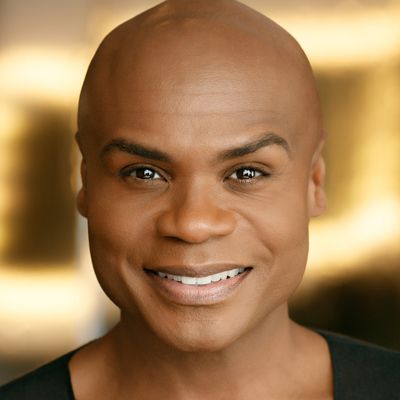
This conversation with Nathan Lee Graham goes deeper than expected, mixing sharp humor with real insight into a career built on consistency, curiosity, and craft. He reflects on growing up between St... Read More
From the show: The Theatre Podcast with Alan Seales
Guests
About
This conversation with Nathan Lee Graham goes deeper than expected, mixing sharp humor with real insight into a career built on consistency, curiosity, and craft. He reflects on growing up between St. Louis and Los Angeles, navigating a childhood shaped by divorce, experimental schools, and parents who understood early on that the arts were his home. Nathan talks about discovering his calling in high school, the moment Marin Mazie encouraged him to move to New York, and how that one decision launched decades of steady work across stage and screen. Along the way he opens up about playing twins on Scrubs, aging in Hollywood, the discipline required to keep his instrument ready, and why he still sees himself first and foremost as a working actor rather than someone chasing fame.
We also dive into the surprising path that led him to Zoolander the day after The Wild Party closed, the unique challenge and joy of creating memorable moments with only a handful of lines, and how he approaches every medium — stage, film, TV — with the same mindset and integrity. Nathan shares what it means to trust collaborators, what he’s learning during previews of The Baker’s Wife at Classic Stage Company, and why patience, perspective, and self-care have become essential to his life and artistry. It’s a thoughtful, warm, and often funny look at a career defined not by one role, but by the sum of its parts and the relationships that shaped them.
Nathan Lee Graham is a Grammy winner for Best Classical Album (Songs of Innocence and of Experience), a Los Angeles Drama Critics Circle Award recipient for The Wild Party, and a Drama League Award nominee for Wig Out. His stage work includes originating roles in The Wild Party and Priscilla, Queen of the Desert, with national tours of Hadestown and Show Boat. On screen, he is known for Zoolander, Zoolander 2, Sweet Home Alabama, Hitch, The Comeback, Scrubs, LA to Vegas, Mid-Century Modern, and more. He currently stars as Marquis in The Baker’s Wife at Classic Stage Company.
This episode is powered by WelcomeToTimesSquare.com, the billboard where you can be a star for a day.
Connect with Nathan:
- Instagram: @nathanleegraham
Connect with The Theatre Podcast:
- Support the podcast on Patreon and watch video versions of the episodes: Patreon.com/TheTheatrePodcast
- Twitter & Instagram: @theatre_podcast
- Facebook.com/OfficialTheatrePodcast
- TheTheatrePodcast.com
- Alan's personal Instagram: @alanseales
- Email me at feedback@thetheatrepodcast.com. I want to know what you think.
Transcript
This transcript was automatically generated and might contain errors.
Nathan Lee Graham:
Hello, I'm Nathan Lee Graham and welcome to The Theatre Podcast with Alan Seales.
Alan Seales:
Hey everyone, welcome to another episode of The Theatre Podcast with Alan Seales. I am your host, Alan Seales, and our guest today is none other than Nathan Lee Graham. And this conversation just surprised me in all of the best ways. Before we even officially started, he corrected my intro, adjusted his headphones into a perfectly intentional look, so if you're not watching this episode, I highly recommend it, and immediately set the tone for what became a thoughtful and generous hour together.
We explored some of the moments that shaped him, like when Maren Mazie encouraged him to move to New York, the unexpected way Zoolander came into his life the day after The Wild Party closed, and the discipline it takes to maintain longevity in a business that can rarely offer pretty much any type of certainty.
And then now there's The Baker's Wife, which he is doing off-Broadway, where he finds himself now describing the production as a snow globe. You just get to step inside. I have seen it. I agree with him. It is beautiful. The space is filled with trust, collaboration, the kind of artistic generosity that only comes from people who truly know how to play.
This is a conversation about craft, identity, and patience in the long arc of a career built on consistency rather than luck. Nathan just brings humor, honesty, and his remarkable sense of self, and I'm excited for you to hear him.
Find me online on Instagram, Twitter, all of the things, thanks to welcometotimesquare.com, the billboard where you can be a star for a day. You can watch the video version of this episode on Spotify or Patreon. And now, everybody, please, I hope you enjoyed this episode with Nathan Lee Graham.
Oh, boy, today's guest is a Grammy winner for Best Classical Album for Songs of Innocence and of Experience, a Los Angeles Drama Critics Circle Award recipient for The Wild Party, and a Drama League Award nominee for Wig Out! On Broadway, he originated roles in The Wild Party and Priscilla, Queen of the Desert. His national tours include Hadestown as Hermes and Showboat.
On screen, he's known for Zoolander and Zoolander 2 as Todd, the assistant who insists on a perfectly foamy latte, with additional credits in Sweet Home Alabama, Hitch, and Theater Camp. On television, his work includes The Comeback, Scrubs, Katie Keene, L.A. to Vegas, Mid-Century Modern, and Woke, and so many more. Gosh, he's currently starring as Marquis in The Baker's Wife at Classic Stage Company.
Nathan Lee Graham, welcome to The Theatre Podcast.
Nathan Lee Graham:
Thank you so very much. You left out my obi.
Alan Seales:
You have the obi, and I think I'm going to give you a fashion award for what you're doing with these headphones right now.
Nathan Lee Graham:
Yes. I think we should just all... Yes, I think so. You have to have the proper head for this sort of thing. I don't have the proper head.
Alan Seales:
There's a joke in there that I'm not going...
Nathan Lee Graham:
Well, listen, my head came out of my mother with forceps, and you know what forceps are? They use a vacuum now. Back when I was born, they were using these contraptions called forceps, and I think they were made out of steel or something.
Alan Seales:
Yeah, they're like giant kitchen tongs.
Nathan Lee Graham:
Yeah, like you know. I mean, it's very Dickens. Blame me out of ye old mother.
Alan Seales:
Yeah, so you have to have the proper head. And your mother will never let you forget it.
Nathan Lee Graham:
Yeah, so my head is molded for this sort of headphone configuration.
Alan Seales:
Yes, the obi, the obi for Orlando. Sarah rules Orlando in the signature, at the signature last year, I believe.
Nathan Lee Graham:
Last year. And right before we started, you mentioned Scrubs, that you played twins on Scrubs.
Alan Seales:
I played twins. Eric and David, I think his name was. And you said you got paid twice.
Nathan Lee Graham:
I did. And one twin was gay and one was not. So it was really just a matter of me being very straight, and I mean physically straight, with one of the characters and moving around for the other character. You guess which one was gay. But it was really fun because, you know, when you're playing twins, you literally have to keep one side of your body perfectly straight for the camera, to not sort of, so they could sort of, if it's a split screen of the two of you.
So, you know, and then your double comes in and does their business, but you have to keep one side completely.
Alan Seales:
Oh, because they'll, yeah, for post. Now, I don't know if they still do that in post, because, you know, I did this back when Sanskrit was being used, and Papyrus, you know, back when the tablets were happening. But maybe they still use that, you know, technology today. Who knows? Who knows?
But I did get paid twice, because I was playing two different characters. You don't think that people would get paid twice again? What if someone plays triplets?
Nathan Lee Graham:
You know what? I think now, or triplets, my god, I think now...
Alan Seales:
Do you get, wait, do you get double the residuals? I can't remember that.
Nathan Lee Graham:
No, they're lumped into one lump sum.
Alan Seales:
Oh, screw that. But today, I feel as though they would get one contract to play these characters. That sounds like a today thing to do.
Nathan Lee Graham:
Yeah, you know.
Alan Seales:
And so you grew up in St. Louis, Missouri?
Nathan Lee Graham:
Yes, and Los Angeles.
Alan Seales:
And Los Angeles, both the same time. So what was your childhood like? Why'd you split at the time?
Nathan Lee Graham:
Because the parents split.
Alan Seales:
Oh, yeah? Parents split, I split. I hope it wasn't anything to do with the forceps.
Nathan Lee Graham:
No, I don't think so. Maybe. I'll have to go through that in therapy. But, no, they split early on, and then both got remarried right away. So I always had two sets of parents, and one in Missouri, one in California.
Alan Seales:
And did you like that at the time, or looking back, like...
Nathan Lee Graham:
Well, I mean, you know, it was weird, because I had all this sort of California sensibility, but I would go to school in St. Louis. So every summer was in California, and then, you know, during the school year, I would be in St. Louis. And I literally would leave the day before school started and the day after school ended. So it was a weird juxtaposition, I must admit. But, you know.
Alan Seales:
I mean, those are two very, very different regions, with varying levels of acceptance of differences.
Nathan Lee Graham:
Absolutely. And my parents did their best to, you know, shelter me. I mean, I do have a unicorn sort of life, because I've always been in performing arts. This, that, or the other, right? And they knew they had a gay little kid very early on. So they put me into the arts and arts programs and after-school activities and all this sort of thing very early.
And so I did have that sort of sheltered life, in a way. And then on top of the divorce and all of that. So they really did do their best in sort of sheltering me and my sister and, you know, helping us along.
Alan Seales:
What was your coming out story? Was it just like, you told them, and they were like, oh yeah, yeah, we knew.
Nathan Lee Graham:
There was no coming out. You know, I mean, I hate to belabor my mother's, you know, birthing me. But she did say I came out with one arm stretched all the way up and one down and, you know, presenting myself. Ta-da. And they just always knew, and I never had to really have the conversation.
And then when I started to work, you know, it was just a very easy transition. My mother always said, you know, back in the 80s, the code word for parents who had gay children was different. You know, my child is different. You know, that's what you would see on the after-school special. My child is different. So I knew what that meant. And they were very accepting of it right from the start, which is also a unicorn move.
Because, you know, hey, you come from this, you know, African-American, I would say, not fundamentalist religious, but, you know, I am a preacher's kid. Like, my grandfather was a big-time, you know, Methodist minister. But it was more of a case that our family, the church was our business as opposed to our judgment, if that makes any sense to people.
Alan Seales:
That is a wonderful way of putting it.
Nathan Lee Graham:
Yeah, it was our business. It was just the business, right? So...
Alan Seales:
It was a job.
Nathan Lee Graham:
It was a job. And, you know, it was a job of nurturing people and community and all of that sort of thing. And theater is just sort of quasi the same thing. So it was an easy transition for me.
Alan Seales:
And did you always kind of find an extra home or chosen friends? I mean, a lot of people get in a theater because it's like they're a misfit and then they find their chosen family, we will say, right, of other misfits that come together. So was it always just like this extension of the village that helped to raise you?
Nathan Lee Graham:
I think so. They were always very careful to have me around, you know, people who were semi-sane, but always eccentric. Yeah, definitely had... I went to eccentric schools and experimental schools and we got to take ducks home and all this sort of thing. So yeah, I did have sort of that Auntie Mame life in a way. I really did. I shan't deny it, which is why I'm as insane as I am today.
Alan Seales:
You took an actual duck out? I'm thinking like, I mean, I don't know, in New York, maybe they do this, maybe they don't. My kids are nine and ten. And like, of course, Leo, the Adam Sandler movie, right, like he's the, what is he, a chameleon? He's a chameleon that gets taken home. And like, I was just thinking, I was like, do kids take home animals anymore?
Nathan Lee Graham:
I certainly did. Yeah, I took home a little yellow ducky and we raised it and it was a part of our sort of science thing, you know, biology, science thing. It was very interesting. Lots of bird poop. But, and the duck.
Alan Seales:
And the duck. And did anybody ever like, hurt these animals?
Nathan Lee Graham:
No, no. Like, you would hate to be the kid who would just like, yeah, grew this duck.
Alan Seales:
No, not at my school anyway. No, we were, you know, raising them, nurturing them. And then we had a little farm on the campus of the school in Watts. And, you know, my, listen, we'll go a little deep, but my grandfather was good friends with Mayor Tom Bradley, who was the first black mayor of Los Angeles, I believe.
And they had a lot of community outreach and programs. And he put his grandchildren, my grandfather, put his grandchildren into these experimental things to show other people that it could be done, right? So it wasn't as if we had to go to these schools. He was just using us as guinea pigs, me and my sister. But it turned out to be a really special experience.
And so then continuing on, on this trajectory, I guess, when did you realize that like, I can make a career out of this, I can get paid to do it, I can, I don't want to do anything else?
Nathan Lee Graham:
By high school, I knew that I wanted to be a working actor. I remember being in the kitchen and saying to my mother specifically, Mom, I want to be a working actor. And she said that I said those two words, working actor. I didn't say star. I didn't say, you know, singer, dancer, rapper, whatever. I said, working actor. And that's what the dream was.
And so I knew that you could do this as a job. And I'm a Virgo. So everything is very practical to me. I really shouldn't be in this business because I'm so practical. But I really do see it as a job. And I will even extend that a little bit and say that I don't even think of this business like a lot of Americans do.
I don't want to say, you know, generalize that, but I'm more of a European, UK kind of actor in that work is work to me. So they go seamlessly from all the mediums, film, TV to stage, without it being a thing. Here, there's more, more rigid sort of, oh, you do TV or you do film or you do stage. I've never thought of it like that because whatever I bring to it, it's the same instrument.
Yes, it's channeled through something different or the requirements might be slightly different, but the nervousness, the energy, the wanting to do my best is always the same and it's work. So in that way, I see that my UK colleagues in particular, they just, they will go from doing a film to some television to the stage without any sort of caveat. It's just like, oh, I'm doing this.
And I wish that Americans, American actors would catch on to that a little bit more. We are multifaceted now. Like, you know, it's no longer, oh, a film person can't do television or vice versa, or, you know, some TV personality is not going to come to stage, but it should be something that's just de rigueur, you know, it should just be a regular thing, you know, and I think maybe perhaps we're getting there.
Alan Seales:
Is it, do you think in the US, because pre-internet, pre-digital and fast flights and fast communication, the East Coast and the West Coast, LA film and New York theater were so far apart versus the UK where it's just all, it's a lot smaller.
Nathan Lee Graham:
Logistically, I think you're absolutely right. And I think that you take the work that's available to you, but now because we live in such a global community and Los Angeles is no longer the center of the entertainment world as far as film and TV is concerned, not to diss Los Angeles, I love Los Angeles, but you can live anywhere and do film and TV.
And you can get to a stage as well. Yes, I think logistically it was a little bit more difficult, but now because we live in a global society, a global world, you know, we can work anywhere.
Alan Seales:
So then you ended up doing training at Webster University?
Nathan Lee Graham:
Yes. Yeah. So you went to Webster. The Sargent Conservatory, now they call it, at Webster University. You know, lots of us went there. Lots of people went to Webster.
Alan Seales:
Yeah. Yeah. It spits out a lot of good people.
Nathan Lee Graham:
Yes, it has. And then you kind of like, you landed Zoolander early, right?
Nathan Lee Graham:
Well, here's the thing. I started working as soon as I got to New York. I graduated in, I think, 91. I went an extra year because I changed majors. I was a vocal performance major first. And then, you know, I was discovered. Oh, he can act too. What? Mind blown. Zoinks.
And then I moved to Chicago because my parents didn't want me to go straight to New York. So I worked in Chicago for a year, got my equity card. And then the wonderful Maren Mazie, she was one of the people, one of the artists, one of the amazing souls that said, you know what, you need to move to New York.
We were doing a show called Riverview at the Goodman Theater. It was my last show in Chicago that year, 92, early 92, and summer of 92. And she said, when this show is over, you should move straight to New York. And if you need help, I will help you. And so I did. And the rest is history.
I came here, the first show I auditioned for, which is the national tour of Jesus Christ Superstar with the original people from the film, Ted Neely and Carl Anderson. Irene Cara was our Mary. I eventually took over the role for Harrod from Larry Drew for a moment. It was an amazing experience. It was my first audition.
That was when you had to audition like five times for something. I think they even changed the rules. Like if you go over five or six times, now you have to get paid or something. I don't know if equity does that, but used to go in a lot for a show.
Alan Seales:
On stage.
Nathan Lee Graham:
Yeah. Back then it was like, what? But first show, got it. And the rest is really history. I mean, I've worked ever since. And that was in 92. I had been coming to New York since 83, though. My parents let me come here for spring break instead of going to Florida or something like that. I would come here and see 11 shows.
Alan Seales:
Well, I got to say, though, you've made like kind of a deal with the devil because you look like you're still 22.
Nathan Lee Graham:
Yeah. Well, there is a portrait in every apartment I've ever had that I keep closed behind closed doors. It is the portrait of Dorian Gray. And yes, I am siphoning off blood from baboons and howler monkeys and all kinds of-
Alan Seales:
That's the secret.
Nathan Lee Graham:
Yes. It's like howler monkeys, get rid of these bags under my eyes a little bit. You have to ask Ben Stiller. When we did Zoolander 2, he stopped production for just a second and said, I want everyone to look at Nathan Lee Graham. What the fuck is happening?
Will Ferrell said the same thing to me. He's like, how do you not age? What is going on? I have no idea. Good genes. And maybe because I've never had a cigarette. I don't know.
Alan Seales:
Really? I've had other things. Good old-
Nathan Lee Graham:
I've had CMCs. I've had other things. But no cigarettes. So who knows? We'll just keep it going. Anyway, so continue, continue.
Alan Seales:
So, yeah. So, you know, thank God for the beautiful, extraordinary Marin Mazzie and lots of other people too. But she's such a pivotal part of that beginning of me getting here and getting started, you know? And I had a wonderful time in Chicago too, getting my equity card and making all the things happen that first year out of college.
And Webster was such a wonderful training ground. I say that that school, Webster in particular, is a school for working actors. They produce working actors. You know, other schools, which are amazing, Cincinnati, CCM, Carnegie Mellon, you know, all the other schools, North Carolina, they all have their things.
But I will say that Webster produces working people all around. So in the technical aspect as well, we have wonderful stage managers that come out of there, wonderful lighting people, scenic designers, costumes, hair and wigs, and wonderful actors and singers.
Alan Seales:
Don't go anywhere. We're going to take a quick commercial break.
Nathan Lee Graham:
All right, everyone. Now we're back.
Alan Seales:
Okay. So then when you landed Zoolander, things just kind of like, was that a switch?
Nathan Lee Graham:
So here's the thing. Didn't plan on doing any film and TV. Not at all. Still don't. But I keep doing it. The Wild Party closed on that Sunday. Ben Stiller happened to be in the audience for the matinee, our closing matinee.
Alan Seales:
The matinee?
Nathan Lee Graham:
Yes. With an accent. And the next day called me in, you know, agents, all that, to discuss Zoolander. And they whipped something like this, Nathan, wear something stylish. And you're going to go, there's no script or anything, just you're going to go and talk to Ben Stiller.
So I said, oh, I'm terribly excited. And let's go make this happen. So I put on some helmet long, I remember what I wore, and walked in and we just discussed me playing some character he said will probably be named Todd. And you're going to be an assistant. And would you like to do this?
And I'm like, well, you were at my show yesterday and it closed. So yes, I would like to do it. And he even asked me, I think, he says, you know, I'm doing this sort of show on VH1, it's called Zoolander, have you seen it? And I was very honest, I hadn't seen it yet in that moment. But I was like, listen, you're Ben Stiller. Of course, I want to do anything with you. You're a genius.
So that's how that happened. Literally how that happened. And then, you know, uh, homie lattes later.
Alan Seales:
I mean, you have, I think, six lines?
Nathan Lee Graham:
Six. Two at the top, two in the middle, and two at the end. But you are one of the most memorable characters. All of it. Listen, listen, kids, what you need in a film is to get one to two big laughs. That's all you need. And then you've made it.
Because if you can make a group of people laugh simultaneously together across the world, just think about that. Just think what you're doing. Your work, what the director has captured, that's why you can't leave any sort of bad work, you know, be good in every frame is what I'm saying.
So however they cut it up, they got something. But if you can get one to two laughs in a film that makes everyone laugh, you've done it. You've done your job. And also it's about position. I knew that I had two at the top, two in the middle, and two at the end. That's it. That's all I needed.
It's location of the laughs and, you know, making them happen. And I also was introducing certain things like Magnum. You know, I introduced Magnum. So I knew what Ben had given me, and you make the most of everything. What is it? There are no small parts? Only small actors. And there is a lot to be said for that.
It doesn't mean that you go out of bounds with the bits that you have. It just means that you land them, you know? You land them in perspective, and hopefully they translate.
Alan Seales:
I gotta think being on set with you and Will Ferrell and Ben Stiller must have been a dream for most people, or even for you to work with those two.
Nathan Lee Graham:
It was amazing. Even the foamy latte scene, a lot of that business we thought was B-camera, B-roll, because it was done for Ben's benefit, you know, with the A-camera looking on him to get his reactions, right? So they kept the foolishness that we were doing.
Alan Seales:
The look. The look I will never forget with you and Will. It was brilliant.
Nathan Lee Graham:
Yeah, and we shot that 14 times.
Alan Seales:
14 different shirts?
Nathan Lee Graham:
Yes, 14 different shirts. Ben would complain about the t-shirt not being tight enough to see the imprint of the spillage. I tell people, they said, was it hot or cold? I said, it doesn't matter on film. Felt the same.
You know, hot or cold, getting this stuff splashed in your face. Yeah, 14 times. There was a blizzard that day. We shot that in New York. On the same day, I think it was the election between Gore and Bush.
Alan Seales:
At the beginning, Gore was winning, and we were all, well, this is not a political podcast. But a lot of people were smiling. Let's just put it that way. And then at the end, there was more of a grimace than a frown. But, you know, that's all water under the Brooklyn bitch.
Nathan Lee Graham:
Brooklyn bitch. The Brooklyn bleach.
Alan Seales:
Okay, so you're writing on this success, and then you said you didn't originally want to do TV and film stuff. I feel like that's where you've fallen the most into.
Nathan Lee Graham:
Well, and then Sweet Home Alabama followed that right away. And then Hitch followed that right away. And then you sneak in The Comeback with that. I said, what's happening? What's happening?
But I still didn't get that, oh, this is what I have to be doing. Even though everyone was telling me, oh, well, you know, you're doing film now. You're doing film. You're doing TV now. You're doing film and TV. Yes, you do get paid more.
But in my mind, I guess because I'm practical too, it's just really another job. And if you're lucky enough to get it, great. But I never depended on it, right? And the stage is what I trained for, and what I love the most, even though I really enjoy doing film and TV.
But it's all hard if you care about it. You know, it's all hard if you care about it. I mean, I probably put a lot of pressure on myself because I have a certain standard and a certain bar, hopefully, that I'm achieving. But yeah, I still don't even plan on doing it. I'm not even kidding. I'm really, really not kidding.
It's like when it happens, I'm always excited. This is a great thing. Wow. But it's nothing I sort of plan on. I do always plan on being on stage.
Alan Seales:
Is receiving a closing notice on theater different, easier or harder than not getting renewed for TV and film? Because TV and film, it's kind of like there's a set number of episodes, then you're waiting. You know you can prepare yourself for possibly not getting it.
But then theater too, you can see the house kind of gets a little more empty, and you sort of feel the vibe shift a little bit, right?
Nathan Lee Graham:
Yeah. I would go as far as to say it depends upon each project. That's what I would say to that. Because they both are disappointing, but it depends on what you're doing in it and how much of your flesh you have given over to it.
So I think it's on a case-by-case basis, to be honest. And that is being said from a person who works, not just in theory. Certain projects, you're like, secretly, I'm glad that's over. Or it was wonderful to do, but I don't need to do that again.
And then other projects, you're like, wow, I wish this could have gone a little bit longer. We put a lot into this. It's always disappointing though, across the board.
Alan Seales:
Do you ever take it personally? If you're leading a show, or if you're a bigger role versus a smaller role, we'll put those in air quotes, right? Because there are no small parts.
Nathan Lee Graham:
Yeah, yeah, yeah. Gosh. I think the older you get, the less you... At least for me, I will always speak only for myself. I become less and less personally responsible, because I'm always going to show up and give 100%, and I know that.
And those that have hired me, they know it as well. So I feel less and less personally responsible, because it is such a collaborative art form. And there's so many things that go into mounting a show or putting a TV show together.
Film is a little different, because it's sort of like a unicorn. It's a one-off, and you have a lot of people who are doing distribution and marketing and all of that. And so that's sort of their bag. And there's an art form to that too.
But yeah, I feel less and less personally responsible when I've done the job that is required of me in the moment. So that's my answer to that.
Alan Seales:
I like that. All right. So yeah, you're bringing what you believe you were hired to do. And I think that's a very good way of looking at it, because you keep saying in the end of this, it's still just a job.
So you can leave your job at work and go home. And then what do you do when you're at home? What does Nathan do when Nathan turns off work?
Nathan Lee Graham:
Well, you always know in the back of your mind that you're an artist. So even my parents did this with me. My parents wouldn't allow my sister or my cousins or anything to talk to me if they had a cold or...
Yeah, they couldn't get near me. I mean, it was weird, but also they understood. And to this day, they still respond in the same way. I have a cold. I can't talk. I can't get... Because my body is my commodity, right? I can't turn in a brief. I am the brief.
So there's always something in the back of your mind that's, oh, Nathan, don't eat that because you have X, Y, Z to do tomorrow or in two weeks. Don't drink that. Don't go there. Don't do that. So I must admit, that's always in the back of my mind.
Of course I relax. I love watching friends work. I always have a friend in some show doing something, always. And I really love cheering them on. So that's a great way for me to relax.
I love going to the ballet. I love going to concerts, classical concerts. I really enjoy all those kinds of things. I'm not a huge fan of sitting in theater audiences, and I'll tell you why. Controversial. Hot take.
Please come to the theater. That is not what I'm saying. Please come in whatever you like. I would prefer you to put on a nice pair of dungarees and a shirt, but if you have to come in your gym togs, do so. Just come to the theater.
But as an actor, I don't want to hear a bunch of conversation, so I'd rather watch a show from the lighting booth or from the wings and just watch the show. People are allowed to have feedback. From an actor's perspective, it's not the most fun to hear the conversation, especially when I know someone on the stage, which is why I always sit on the aisle.
I always sit on an aisle if I can, so I can get up.
Nathan Lee Graham:
Get up and get out.
Alan Seales:
Get up and get out, or slip right in as the lights are coming down. So that's my explanation for that. Please still come to the theater.
Nathan Lee Graham:
Well, so, okay. Speaking of theater, then, The Baker's Wife.
Alan Seales:
Yes. Let's dive there. As we're recording this, you are still in previews.
Nathan Lee Graham:
We are. We have 18 of them. I think we're at number seven or eight.
Alan Seales:
Oh, yeah. So you're going to open pretty soon. What's this experience been like compared to past projects? I mean, because this cast, this seems like a dream cast.
Nathan Lee Graham:
This is a dream cast. Everyone in the cast is marvelous, including our wonderful swings. I cannot tell you how joyful it is to work with the composer, alive and well, Mr. Stephen Schwartz. It is a dream.
And the fact that he's enjoying this process so much is just also icing on the cake. This is the first major production of The Baker's Wife in New York City. So even if you thought you saw it, you haven't seen this production.
And that's exciting, too. So it's like this weird sort of space to be in where it's a revival, but it's a revival that no one has seen or remembers, you know, really. Even if you saw an iteration of it many years ago, or a paper mill, or whatever.
And the show itself is like this wonderful little snow globe that you just peer into, and you go into this wonderful world for two hours, and you see these relationships happening with these amazing actors and singers.
And then the creative team as well. Gordon Greenberg, Stephanie Clemons, Emil. I mean, it's just, everyone's knocking it out of the park. You know, we have the most amazing set.
And then those wonderful people over at Classic Stage Company. You know, I'm checking the off-Broadway houses off. I told my team that I wanted to do all the off-Broadway houses in New York City. Maybe not all of them, but most of them. And we're making that happen.
Alan Seales:
I love it. I've worked with Gordon for a couple of years on some other projects and stuff, and I feel like he's always just like, he knows comedy, but he's... I don't want this to come out the wrong way. He's not outwardly funny, but he knows how to do comedy, right?
And it is that sort of mentality that he's bringing into the room, into the rehearsal space, and into the cast and whatnot. How is the environment being fostered to allow the creativity and the experimentation? Because I feel like all the cast, you're all amazing actors in your own right, and then together you're going to lift yourself up.
But you need to be vulnerable, and you need to feel safe to be able to do that, right? So how has that process been for you, specifically for this rehearsal process?
Nathan Lee Graham:
Well, first of all, we are allowed to experiment. That's always key, when you don't feel stunted. So you're allowed to do what you do. You've hired a bunch of... We have some very new people who... Some people, this is their first show, but most of the people in this company are veterans.
So they're already coming in with all of this knowledge, right? And how to put something over. And because Gordon has worked on this piece for 20 plus years, fine-tuning it, crafting it, he, in a way, can sort of let people do their thing, because he's, first of all, done what any good director does well, is cast.
So that's more than half the battle. And then mold and shape. So I would say that this thing, the way that this is turned out, is that we have this big mound of clay, and we're shaping it, as opposed to trying to find the clay and build it out.
And that's what's happening here. When you have an embarrassment of riches, like this cast, what you can do is say, hey, Nathan, why don't you do trick number 684 out of your trunk? Try that here.
And there's a lot of nonverbal things happening. There's a lot of trust in that way, which is so great. It's so great when a director can come straight up to you and say, do this. And then I say, yeah, I'll try that. And we do it. And then you move on.
Let's do that. Let's build that in and sort of hone that. And that's what's been happening, right? It's great to be in that place. It's great to trust yourself enough to do that, and that a director knows you well enough that he trusts what's going to be happening.
And so then you just play. And then, of course, when you're working with people who know how to play, it's a wonderful sport. It reminds me of Gatsby.
Alan Seales:
Yes. Old sport.
Nathan Lee Graham:
Old sport. Old sport.
Alan Seales:
And in addition to all of this, you do concerts and cabarets and everything. So you said a little while ago that TV and film is still not something you plan on doing. Theater is where you want to be.
So when you're not on stage, is that why you do the concerts and the cabarets to get yourself out there?
Nathan Lee Graham:
Well, when I get a chance. I haven't done one in a long time. So I hope to do more. Fortunately, I am asked to do it. I just haven't had an opportunity because of all of the work, the film and the TV and the stage.
And I guess I would love to reiterate that it's not that I don't want to do what you didn't say, TV or film. It's just that I never anticipate doing it. It's not something that I'm seeking. Now, mind you, my team certainly probably is.
And if there's some wonderful projects. I mean, I have two indies coming up that I'll be shooting next summer already. And I'm excited about doing those. But I guess it's also maybe a safe fail kind of system for me because I'm not anticipating those kinds of things.
When they happen, it really is something wonderful to do. But I'm not sort of like hinging everything on it. You know, it's like, oh, I gotta, I don't do a, you know, whereas Judith Light told me something once we were working on some, we were doing a reading or something, or maybe we were doing, yeah, for Bob King, the guy who did, the wonderful director who did Psycho Beach Party.
We were working on something. And Judith said to me, Nathan, always try to do one theater project a year or you'll lose that muscle. And I've always remembered that because I've seen some people who haven't done that.
And it's a different thing on stage to watch them be nervous or not have the breath or, so I don't want to lose that either.
Alan Seales:
That means a lot, I think, coming from her because how many seasons of Who's the Boss did she film, right? But she's always coming back to theater.
Nathan Lee Graham:
Yes, always. And then her wonderful film work, you know, wonderful television work. She just is a phenomenal human being and actor. But yeah, coming back to the stage, you don't want to lose that muscle. That's why it's so important to me.
Alan Seales:
We're going to take a quick break for a few commercials.
Nathan Lee Graham:
All right, everyone, welcome back to the episode. Do you have a favorite role you've done over the years?
Nathan Lee Graham:
No.
Alan Seales:
No?
Nathan Lee Graham:
I don't. I don't have a favorite role. I mean, I really do. And this is so niche, right? I really did love playing Queen Elizabeth I in Sarah Rule's Orlando, just because it was such a departure and you had to totally commit to that absurdity, right?
I really enjoyed doing that, but that's not something you do every day. And, you know, I do always probably enjoy what I'm doing the most at the time I'm doing it. Just playing Arthur Broussard on Mid-Century Modern was a dream because I worked with Nathan Lane, Matt Bomer, and Linda Lavin, and David Cohen and Max Muchnick and Jimmy Burrows.
I mean, that was also a joyful experience because of the collaboration of that, right? The writing was at the very top. The directing was at the very top. The actors were at the very top. So if you're going to do a multicam, you do it with those people.
And God rest our wonderful Linda Lavin as well, who went out on blazing on top, you know? She just went out on top. It makes me joyful to think about her all the time. My dog is named after her, by the way.
Alan Seales:
Linda Lavin?
Nathan Lee Graham:
Yeah. Well, his name is Lavin.
Alan Seales:
Lavin. Okay. Okay. Then with all the roles that you have done, though, what would you like to be remembered for the most? Do you care that, like, foamy lattes at the top of the memory?
Nathan Lee Graham:
I really don't, because I care more about something making you feel a certain way. That's what I care about. So, you know, I never know what people are going to stop me for in the street. I never know. Because just when I think I know, it's like something obscure, like when I did Broad City, you know, with those amazing actors.
Or Ab Fab, with those amazing actors. I ran into Danny Bernstein several weeks ago, months ago, maybe two months ago, because it was warm. On the corner was me and Jessica Hecht and Danny Bernstein. That trio. God, so good.
And Danny and I had never spoken about... First of all, it was a pleasure to see him, and to congratulate him on his latest Tony nomination for Gypsy. But we had never spoken about that we are one of the few Americans to have done Ab Fab when they shot here in New York.
Whoopi Goldberg is another. And we'd never talked about that in person. And I said, the very next time I see him, and I can get to him, I want to mention that. We both did it at the same time.
So it's just amazing. Whatever project makes you feel good, that's what I want to be remembered for. Some people, it's a comeback. They just cannot live without the original, you know, the first season of the comeback, which I was just so thankful to be a part of. Thank you, Michael Patrick King and Lisa Kudrow for that.
So it just depends. You know, Sweet Home Alabama is a big one for lots of people. You know, they'll come up to me and do one of the lines from that. Do we know Moe? Which was my take, by the way. Thank you, Andy Tennant.
So it just depends. So whatever makes you happy, it's about the body of work for me. And, you know, it's just, that's just what it is. And roles, too, because I played Hermes in the first national tour, which was amazing. You know, thank you, Rachel Trafkin, for that.
It was just amazing to do, and such a wonderful show. But after I did it, I said to myself, I don't have to play a role that large ever again. I really don't.
Alan Seales:
Well, this is what I want out there, composers and directors. Put it out there. Nathan Lee Graham wants to play the mother in the musical version of Doubt.
Nathan Lee Graham:
No. But that's the size of the role I want. You know, I joke, but I want one big song, one meaningful song, if we're talking musical, at the end of the first act. And then I want to reprise the same song with one modulation in the second act.
And then the Tony goes to... Right? So, yeah, I just don't have to do a lot to make a big impact. I've always maintained that I don't have to star in anything. I just have to steal it.
So, and of course, you know, what that means is you come in and you knock it out of the park, you make an impression, and you keep it moving. That's what I'm looking forward to now. You know, when I was younger, it's like, let me do these big old things and make them happen.
But over the course of this career, and it truly has been a career that I'm very proud of and grateful for in so many ways, considering who I am on paper. You know, if you just put down the stats, it's like, how did this happen? I just don't need to do any more roles like that.
I don't need to, I don't have to carry something. It has to be significant, but I don't have to carry it. And that's why The Baker's Wife has been so wonderful, too, because Ariana DeBose and Scott Bakula are so dreamy, and so sublime, and so magical in this show.
And then I can't even go on with the rest of this company. I'll mention those two, because that's The Baker and The Baker's Wife. But the fact that I get to work with the caliber of people that I work with in this show is just extraordinary.
I had Scott on this podcast for The Connector.
Alan Seales:
Yes, he was wonderful in that, too. I was then years old when I learned that he started his career in musical theater.
Nathan Lee Graham:
Oh, absolutely. Before Quantum Leap, before TV film.
Alan Seales:
Oh, I had him sign my Romance Romance cassette on the first day of rehearsal. I kid you not.
Nathan Lee Graham:
You still have the cassette.
Alan Seales:
Yes. And I had Judy Kuhn sign my Chess cassettes, which I had to make from an album, because they hadn't produced that. Now you can get it. But from my handwritten... Back in the day, this is in the 80s when I made my album to cassette, double cassette player.
They signed them both. Those were great, when you had the dual cassette player, so you could do your dubbing and whatnot.
Nathan Lee Graham:
Oh man, I would try to record things off of the radio.
Alan Seales:
Yes, and you have to press it right at the same time.
Nathan Lee Graham:
Exactly. You're like, I don't want the DJ talking over it. I don't want that on it. I missed it again. All four fingers. Kids these days don't know.
Alan Seales:
Yes, they have no idea. With their ticky tocks, they have no idea. They don't know.
All right, so let's start winding down with Plot in 60 Seconds.
Nathan Lee Graham:
Uh-oh. I hope you're good under pressure. What's happening?
Alan Seales:
So I have a list of 17 popular musicals right here in front of me.
Nathan Lee Graham:
What?
Alan Seales:
And you give me a number one through 17, which means you pick off of my list, and then you have to give me the plot to the musical you pick in 60 seconds or less.
Nathan Lee Graham:
Oh, shucks.
Alan Seales:
One through 17.
Nathan Lee Graham:
Five.
Alan Seales:
Five is Mary Poppins. Go.
Nathan Lee Graham:
60 seconds remaining. Oh, Mary Poppins is about this dame that has all this stuff in her bag, right? And then she can pull it out and take care of these kids. She's this magical, wonderful person that some say is a myth, but she was real.
And then there's these chimney sweepers.
Alan Seales:
45 seconds remaining.
Nathan Lee Graham:
And everyone has a good time. And there's this metaphor about relationships, and the father becomes a better person because of it. And then you've got these ladies who are suffragettes and things like this happening. Is that in Mary Poppins? I think it is.
Alan Seales:
30 seconds remaining.
Nathan Lee Graham:
And then it's about a carpet bag, and a woman, and an umbrella, and standing in first position when she flies. Yeah. That's it. A spoonful of sugar.
Alan Seales:
15 seconds remaining.
Nathan Lee Graham:
Golf clap. Golf clap, my friend.
Alan Seales:
All right. Three standard closing questions then to calm you back down. First one, just simply, is what motivates you?
Nathan Lee Graham:
Oh my God, what motivates me? I suppose love does. Love for what I do. Love for what happens when I do it. Love for other human beings, my dog, other people's dogs. Love is sort of the connector, I think, because it takes on so many forms. So I think that's what motivates me to do what I do.
Alan Seales:
Shout out to Levin.
Nathan Lee Graham:
Yeah.
Alan Seales:
Okay. What advice would you give to your younger self and younger people listening now starting out down a similar path?
Nathan Lee Graham:
To be patient. That is what I must tell you. It's so very difficult, but if you can be patient, that is the biggest thing I can tell you. And patience requires you to do other things, right? To listen, to take care of yourself, to love yourself. So patience is the basis. Patience to love yourself. That's what a lot of people miss. That's what I miss.
Alan Seales:
Yeah. I'm going to remember that.
Nathan Lee Graham:
All right. So this is the last question. Hardest one. If you could only see one show for the rest of your life, if you can see it as many times as you want, what would you see?
Nathan Lee Graham:
Sweeney Todd, The Demon Barber of Fleet Street.
Alan Seales:
Woo. We're getting back to that one. That was the number one answer pre-COVID and post-COVID. It's been all over the place.
Nathan Lee Graham:
Really?
Alan Seales:
Yeah. Yeah. So I wonder if we're getting back to our, it's okay to be a little depressed and see people get killed mentality again.
Nathan Lee Graham:
Well, yeah. I want to see throat slit. No, here's the thing. There's so many beautiful aspects of that show too, because ultimately Sweeney Todd is about relationships. It really is.
And it's about what happens if you deceive, what happens if you betray, what happens if you have revenge, what happens if you love, what happens if you go for it, what happens if you deny yourself. It's all about relationships and how you interpret and respond to them.
So yeah, more hot pies, more hot pies.
Alan Seales:
And how you dispose of your dead bodies, I guess.
Nathan Lee Graham:
Yes. And it's about recycling. Hot take.
Alan Seales:
That's our poll quote. Sweeney Todd is about recycling.
Nathan Lee Graham:
Yes. It's about sustainability.
Alan Seales:
There you go. There you go. Reuse everything. Where can we find you online? Where can we connect with you?
Nathan Lee Graham:
Nathan Lee Graham is my Instagram.
Alan Seales:
All right. And that's about it because I mean, yes, I can do other things, but I'm not doing other things. Other people can do other things for me, but you'll always know about what I'm doing because there's wonderful marketing teams that work for everything that I do.
So look for those things, but come and see The Baker's Wife because it's so beautiful. If you can get a ticket.
Nathan Lee Graham:
I got my ticket.
Alan Seales:
See? I see it next week, I think.
Nathan Lee Graham:
Wonderful.
Alan Seales:
Pretty sure. Yeah, yeah. Let me know.
Nathan Lee Graham:
Let me know.
Alan Seales:
I will. I will. I'm online at theater underscore podcast on threads, Instagram, TikTok, Facebook, all the places. Leave a reading and a review. Share with your friends. Tell everybody how awesome Nathan Lee Graham is.
Thanks to Jukebox the Ghost for the intro and outro music. Thanks to welcometotimesquare.com for this lovely studio we were in. And thanks to Nathan for always remembering us to recycle our dead bugs.
Nathan Lee Graham:
Thank you.
Alan Seales:
You're welcome.
© Broadway Podcast Network, All Rights Reserved