

Broadway is getting WANTED — and The Roundtable is going inside one of the season’s most exciting new musicals! ⭐️ Grammy Award winner Ledisi joins us alongside members of the incredible cast and creative team of WANTED, the new American musical heading to Broadway’s James Earl Jones Theatre... Read More
From the show: The Roundtable with Robert Bannon
Guests
About
Broadway is getting WANTED — and The Roundtable is going inside one of the season’s most exciting new musicals! ⭐️
Grammy Award winner Ledisi joins us alongside members of the incredible cast and creative team of WANTED, the new American musical heading to Broadway’s James Earl Jones Theatre.
Inspired by a Clarke family story carried through generations, WANTED takes us to Texas in 1893, where twin sisters Mary and Martha Clarke are on the run. Black women passing as white, the sisters navigate two very different Americas while fighting for their family, their freedom, and a future they refuse to surrender.
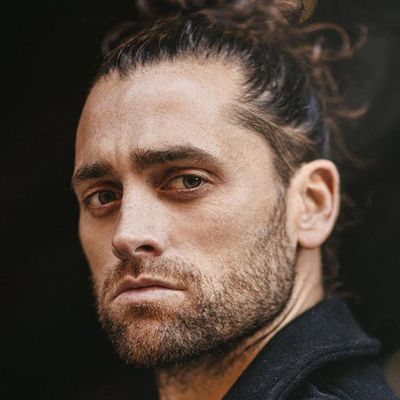
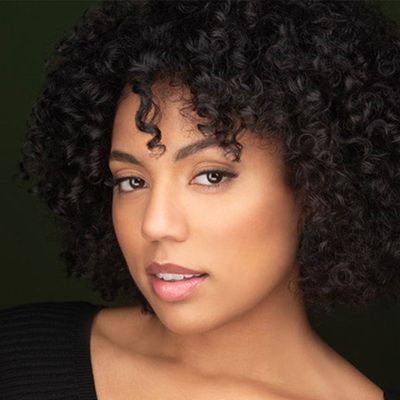
We talk about bringing this extraordinary story to Broadway, finding the sound and soul of the piece, the history behind the Clarke sisters, and what it means to tell their story to audiences today. And with a company led by Solea Pfeiffer, Liisi LaFontaine, Ledisi, Luke James, Bradley Jaden, Aurelia Williams, and Awa Sal Secka, there is some SERIOUS talent bringing this world to life.
WANTED features book and lyrics by Angelica Chéri, a descendant of the Clarke sisters, with music by Ross Baum, direction by Stevie Walker-Webb, and choreography by Chelsey Arce.
The show begins Broadway previews October 15 and officially opens November 8 at the James Earl Jones Theatre.
🎭 Learn more and get tickets at the official WANTED website.
🎤 The Roundtable with Robert Bannon
🎥 Watch on YouTube
🎧 Listen on Spotify, Apple Podcasts & iHeart
💻 Visit RobertBannon.com
More than 1,000 conversations and counting — with the artists, performers, and creators shaping entertainment today.
The best is yet to come. ❤️
#WANTEDBroadway #WANTEDMusical #Ledisi #SoleaPfeiffer #LiisiLaFontaine #LukeJames #Broadway #BroadwayMusical #TheRoundtable #RobertBannon #TheRoundtableWithRobertBannon #Theatre #NYC #NewMusical
Transcript
This transcript was automatically generated and might contain errors.
[0:00] Robert Bannon: Well hey everybody, this is Robert Bannon, and before I hit the theme song and introduce the show, I want to tell you about some exciting Roundtable news. The Roundtable has a brand new website. You can go to robertbannon.com, find out all about me, find out all about the show, brand new and now up and running with brand new Roundtable merchandise. Go to robertbannon.com, follow me on Instagram, and make sure you're subscribing to us wherever you listen to podcasts or on YouTube. Now let's do a show.
[0:29] Robert Bannon: Are you ready? It's The Roundtable with me, Robert Bannon.
[0:34] Robert Bannon: Well hello everybody, my name is Robert Bannon and this is The Roundtable on Broadway World, the Broadway Podcast Network, iHeart and Spotify. If you're watching it on a weekend, happy weekend. If you're watching it on a workday, I hope to make your day amazing and wonderful. Please check out robertbannon.com for our merch and all of our episodes. Before we get into it, my friend Rob Nicholson, who I go way back with, hit press day for the show that I'm most excited to see on Broadway this season. That show is called Wanted. It has my friend Ledisi in it. She's my homegirl and I love her. It has Bradley in it who has been on this show. It has Luke James. It has Solea Pfeiffer. It has an incredible, incredible cast. We got to chat with my buddy Stevie Walker-Webb who directed this as well as the creatives and a bunch of the cast. Rob hit the streets at press day. Thank you for being here. The best is yet to come and enjoy a little taste of Broadway for this season.
[1:29] Ledisi: Yes. Hi everybody. My name is Ledisi and I play the great Tallulah Clark in Wanted. So my biggest question for you is what, what did you understand about the mother immediately before anyone had to explain it to you?
[1:43] Ledisi: What did I understand about Tallulah Clark immediately? That she's very strong. She is the crown jewel of the family and she is the mama, the matriarch. Yes.
[1:57] Robert Bannon: You've had a lot of successes in your career. Congratulations on all of them. What is different about this experience for you?
[2:08] Ledisi: What's different about this from the rest of my career? It is real. No, I'm saying it's fun. It's fun, but it's also hard. It's a challenge. Broadway is, uh, there's no, the storytelling is different. It's, uh, you can feel it when it's not true right away. That's fair. Like, and it's a planned story, but making it your own is what's so fun. And I love my director who makes sure I'm natural and having fun and being intentional about the storytelling. Different form of storytelling. That's to me, one of the best in the world. If you can make it on this stage, you can make it anywhere. Broadway is a great teacher and there's nowhere you can hide. That's, that's the problem. Live theater. There is no hiding.
[2:58] Ledisi: That's right. You must not hide on Broadway. There's nowhere to hide. Nowhere.
[3:04] Robert Bannon: And finally, what do you want people to take away from this show?
[3:09] Ledisi: What do I want people to take away from this show? I want them to remember their freedom. I want them to remember love still ties everything together and to dream and don't be afraid to go after it. Incredible. Thank you so much for your time. Appreciate you.
[3:31] Liisi LaFontaine: Hi, I'm Liisi LaFontaine and I play Martha Clark in Wanted on Broadway. Being that I only have two minutes, what does the show mean to you?
[3:39] Liisi LaFontaine: Oh my God, this show means everything to me. The show is, I feel like my child at this point, I've been working on the show for eight years and I think it's such an important story and knowing that it's going to be told on the biggest stage in the world is an honor that I do not take lightly. And I'm just, I'm really excited to be one of the people that ushers this into the world.
[4:06] Robert Bannon: And Birdset, what do these sisters do that made you ask yourself, would I go that far for my family?
[4:11] Liisi LaFontaine: Oh my gosh. Well, I mean, I think everything. They pass for white, which is something I'm not sure I would do in this current climate. They rob people, which I don't know I would do that. And then they give up a lot. They give up a lot. They almost give up each other. I think that like, these are impossible circumstances for us to comprehend right now because, you know, we're, we're in a different place. We're in a bad place, but we're in a very different place. And some of these, some of the odds that were stacked against them were impossible to overcome without making these huge decisions. But I would say pretty much from jump. I don't know if I would do what these girls did, but I understand it in the context of the show.
[4:49] Robert Bannon: And finally, what would be the most important thing you want people to take away from this show?
[4:53] Liisi LaFontaine: I want people to take away the concept of ancestry. I want people to understand that like, we are tethered to so much more than we think, like everything we come from matters and means something. And we're also tethered to what's coming before us. Like, I think legacy is a really beautiful thing to think about and think about what you leave behind when you are finished with this life. And really like I want people to go and research their own family histories, like see if there's any interesting people in their bloodlines who maybe weren't famous, but who did something really groundbreaking for the time. I think that the more we can learn about our past, the more we can inform our present and hopefully, better the future.
[5:40] Robert Bannon: Oh my god, I kind of ate that. That's a, that's an ancestry.com commercial waiting to happen. Wow, go you. Awesome. Thank you so much. Break legs. Congratulations, and hope to see you in a couple weeks.
[6:03] Bradley Jaden: Hello, I am Bradley Jaden. And you play Jesse in the new Broadway musical. I know. Thrilled, honored, blown away. So the main question I have for you is coming off of who I just saw you as, which is the lawman himself, the man who is obsessed to almost a fault. How did that change your approach to this story? Or did it inform you at all?
[6:20] Bradley Jaden: I think what playing the role of Inspector Javert gave me for any of my career is escapism gave me belief in myself as an actor, to push the boundaries to take my emotions to somewhere that to fail to succeed. And it enabled me to kind of go this is where I want to go. And it might not be right. And I feel like it is taken a long journey being part of that show. But it's enabled me to be here at the right point in my life and my right, my right point in my career to kind of take that challenge and go, I'm going to go with this. And, and, you know, being under, you know, the arms of Stevie and Angelica and Ross, and for them to allow me to fail to succeed, to allow me to try to challenge things or think differently. It's, it's been the biggest education, let's say that. So I feel very lucky that I've played that role.
[7:20] Robert Bannon: And you're making your Broadway debut. Congratulations.
[7:24] Bradley Jaden: Yeah. Congratulations. Saying that I'm just like, I can't believe it.
[7:26] Robert Bannon: Hey, you know what, you were you were on the stage at Radio City.
[7:29] Bradley Jaden: It was I know, and a lot of people don't get to do either of those things. And I've done it in like two months. I mean, what happened? It's been crazy. But yeah, to be part of and to say I'm in a Broadway original cast is just, it's wild. It's unbelievable. You know, my mom and my sister, my family and my best mates are just every day constantly like saying you're doing this. I'm like, I know it's crazy.
[7:56] Robert Bannon: It's amazing. It's amazing. And finally, what do you want people to take away from the show?
[7:59] Bradley Jaden: The message. I want people to know the truth of what we're talking about, that, you know, even from 1893, it's still going on now. And it's still happening in our day to day lives. And, you know, we need to open up our eyes and see what's going on. And the message is strong. The message is clear. And, you know, if we can educate one person on a daily or the whole audience, that's what matters. That's all that matters to me. So yeah, that's it.
[8:23] Robert Bannon: Bradley, thank you so much.
[8:27] Bradley Jaden: Thank you so much. I appreciate it. Thank you. Appreciate that.
[8:31] Awa Sal Secka: Hi, my name is Awa Sal Secka and I play Flo in the musical Wanted.
[8:33] Aurelia Williams: Aurelia and I play Sissy in the musical WANTED.
[8:36] Robert Bannon: Aurelia, I'm going to start with you. What was the first moment that made you think, people need to hear this?
[8:43] Aurelia Williams: The first moment that made me say, people need to hear this. Honestly, I keep saying this, but it's the conversation about land ownership. Black land ownership. That one platform was something that was fresh to me and something that I wanted people to hear. But also the song, All of Me. All of Me, oh my goodness. Just wait. I can't wait. You're not ready. This music over all this music was just... It felt like I was going into a church revival. That's what it felt like. I was like, hellfire and brimstone, here it comes, let's go. Church is when we are all present and connected. Fellowship. Fellowship and freedom. Absolutely. This story, it's so spiritual. It's so spiritual.
[9:44] Robert Bannon: Now, I'm going to ask you. When people hear Western, they think of something completely different than probably what they're going to walk in and witness. What will this show do for them?
[9:55] Aurelia Williams: I think, I mean, I would, I think I'd say that they'll get a little bit of what they expect of a Western. And on top of that, there's a layering of love stories. There's a layering of spirituality. There's a layering of, I think, newness in the topic of what would be explored in a Western. And Westerns, so far as I understand them, don't necessarily go as in-depth with Blackness, specifically. And I think this understanding of the Black experience in terms of being somebody who is of mixed race, how particular it can be for somebody of mixed race to have to find a place in the world in the middle of two worlds. And of two worlds that sometimes won't always accept them as half and half. And that is so, so necessary a story to tell.
I think that, you know, of course, one drop system would tell us that you're one thing or another thing. So we cast that as a society that people deserve to be accepted for and loved for and recognized for all of the ways and parts that they are. And I think this story goes into real depth about that and the joys and the difficulties of what that might look like. And they're finding their way home.
[11:23] Robert Bannon: That's right. You know?
[11:25] Aurelia Williams: Yeah. And it's a family story.
[11:27] Robert Bannon: It is.
[11:28] Aurelia Williams: At the end of the day, it's a family story. I love that word home. There's something to be said about that. They leave their home to find their way back home. And there's, I can say, there's certain shows that come along. Rent is the one that I go back to all the time. That kind of knocked Broadway on its, excuse me for lack of a better term, ass.
[11:47] Robert Bannon: That's right.
[11:48] Aurelia Williams: They knocked them on their ass.
[11:49] Robert Bannon: That's right. And that's what I think this show is going to do. So I'm anxious to see it in a couple weeks and break legs.
[11:58] Aurelia Williams: Thank you. Best of everything to you guys. So much love.
[12:02] Robert Bannon: Thank you so much.
[12:03] Aurelia Williams: Thank you.
[12:04] Stevie Walker-Webb: As a director, how do you make the audience root for something or someone that is doing something in life that they might not normally do?
[12:16] Stevie Walker-Webb: I think that all characters, whether they're heroes, sheroes, or villains, that they all have to be justified. They all have to. We all have to find the reasons why people do what they do. You know, and I think that when audiences experience actors who have carved out a real truth, you then begin to project yourself onto those choices. You say, oh, my gosh, maybe maybe it's 2026 and it's 1893. Maybe I don't look like the character that's on stage, but I've had a conversation like that with my mother. I've had a conversation like that with someone that I broke up with, that I fought to keep the relationship alive. And our job as artists is to get people to slow down enough to see that what they're watching is not so far away from what they're living.
And I think when people experience this play, even though it's about three women in 1893 who face insurmountable odds, odds that we can't even imagine from our modern sensibilities, if they can get up every day and fight for hope and fight to live. And if we can get the audience to project that faith onto them, then hopefully they can walk out of the theater feeling like we can take this country back. We can make sure that America becomes what it was always meant to be. And I think that we need that. And I've always said that about theater is that it gives you some place to go in this crazy world that we live in.
[13:56] Aurelia Williams: Yeah, it gives us some place to go for two hours, an hour and a half, an hour. It doesn't even matter. Like just to forget. It's sort of like Cheers, you know, where everybody knows your name and you can just forget about life for a while, you know.
[14:12] Robert Bannon: So I so appreciate that. What I wanted to ask you was the women have to control how strangers see them. What changes in the way they move when they finally feel safe?
[14:23] Stevie Walker-Webb: You know, what's interesting is I actually like inverted that whole concept. I made everybody kind of move differently around them so that they learned how to move with specific people. And so you get to see this contrast between communities or status. And so I made the worlds around them feel very contrasted.
[14:53] Robert Bannon: Incredible, guys. Thank you so much for your time. Congratulations to both of you. I cannot wait to see it in a couple of weeks and break legs and hopefully bigger, bigger things are coming. I said a while ago that like there are certain shows that change the trajectory and what people think of theater. Rent being one of them. This is going to be another one. I felt it from the first words.
[15:19] Robert Bannon: What was the impetus? What made you realize that you wanted to do this and when?
[15:23] Angelica Chéri: When we were at NYU, we were given the assignment to think about what we would want to write for our thesis musical. And what was interesting to me is thinking about historical figures. I'm a history buff. I love history. And to think about Ida B. Wells, Zora Neale Hurston, a lot of women who have inspired me and to think that it would be worthy enough to write their life stories. But then I thought back to my grandmother's kitchen table, thinking about the stories that she told me about Mary and Martha Clark. And I thought to myself, I have heroines in my own family. So why not take the opportunity to lift them up?
[16:01] Robert Bannon: What has your family thought about the process now?
[16:05] Angelica Chéri: My family is so tickled by the fact that WANTED is coming to Broadway. They feel that they never would conceive of this family myth that just gets passed around the dining room table around like Thanksgiving table would make its way to the Broadway stage. And I think there's a tremendous amount of pride and joy in that. And I can't wait for my own family to see the show.
[16:20] Robert Bannon: Incredible. Ross, a question for you. If I could listen to one 30 second piece of music from the entire show, what would that be and why?
[16:31] Ross Baum: I think it's got to be Gun and Powder. It's the quintessential cinematic Wild West sequence. It's transformational. We see Mary and Martha transform from farm girls to outlaws and eventually to legends. It's a sweeping representation of what the score is.
[17:00] Ross Baum: It's got to be Gun and Powder.
© Broadway Podcast Network, All Rights Reserved