

Today we are talking 20 Pounds To Happiness! This funny, real, and emotion movie is all the rave by critics and film festivals!.. Read More
From the show: The Roundtable with Robert Bannon
Featured Shows
About
Today we are talking 20 Pounds To Happiness! This funny, real, and emotion movie is all the rave by critics and film festivals!
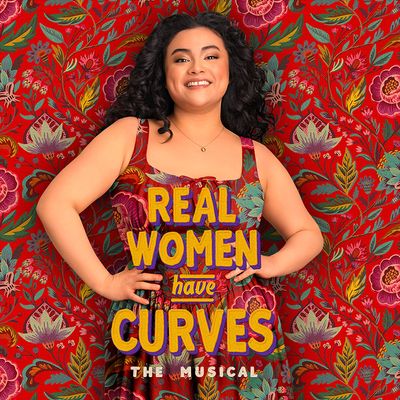
Written by Sundance Audience Award-winning writer Josefina López (Real Women Have Curves, both the film and its Broadway version), 20 Pounds to Happiness is about a full-figured Latina (Yelyna De León) in a Real Women Have Curves Support Group who must decide between staying loyal to her girlfriends and risk losing the man of her dreams.
About Yelena: Yelyna De León is an actress, filmmaker, artivist who hails from the southside of Chicago. She has worked on numerous TV shows (Will and Grace, Snowfall, Ray Donovan, Shameless), feature films (A Better Life, East Side Story) and docs (Behind the Mask of Zorro) to name a few. “Murder in the Woods”, a murder mystery feature film she wrote and produced, starring an all diverse cast including Danny Trejo (Machete), had a successful theatrical and drive-in release during the pandemic and is currently available in English and Spanish, on most streaming platforms, has an 82% on Rotten Tomatoes, has been called "darkly funny," by Richard Roeper of the Chicago Sun Times, and hit the Hot List in People in Español.
About Josefina: Josefina López is best known for authoring the play and co-authoring the 2002 SUNDANCE AWARD WINNING film Real Women Have Curves. López started her writing career at 17 and has had over 130 productions produced of her many plays throughout the country. She has been working as a professional screenwriter in Hollywood for over 30 years with countless development deals and screenplay assignments. She has worked with many established producers like Norman Lear (“All In the Family”) and Michael McDonald (“American Crime”) to bring Latinos to television. Born in San Luis Potosi, Mexico on March 19, 1969, Josefina López was five- years-old when she and her family migrated to the United States and settled in the East Los Angeles neighborhood of Boyle Heights. López was undocumented for 13 years before she received Amnesty in 1987 and eventually became a U.S. Citizen in 1995.
A great chat with great women!
__________________________________________________________________
Check out "The Roundtable with Robert Bannon" here on BPN on the daily, on YouTube, Broadway World, and on social media! Like, comment, share, & subscribe!
For more info on Robert- www.RobertBannon.com
Follow Him on IG- @RobertMBannon
TikTok-@RobertMBannon
Transcript
This transcript was automatically generated and might contain errors.
[0:10] Robert Bannon: Are you ready? It's the Roundtable with me, Robert Bannon. Hi, everybody. Welcome to the Roundtable. My name is Robert Bannon. You're watching us on Broadway World or over here on the Broadway Podcast Network. And I'm so excited about our next guests because, well, talk about Broadway, talk about everything that's going on, talk about movies. You guys have been doing it all. Y'all have to do it. We'll go and get it done. We make it work. Josefina, Yelyna, welcome to the show.
[0:37] Josefina López: Thank you.
[0:38] Yelyna De León: Thank you for having us.
[0:40] Robert Bannon: Y'all have been busy.
[0:42] Yelyna De León: Yeah.
[0:43] Robert Bannon: Two weeks ago.
[0:44] Yelyna De León: Two weeks ago or less than two weeks ago.
[0:46] Yelyna De León: And then we were in LA. Now I'm back in New York City.
[0:49] Robert Bannon: Yeah. So, Josefina, tell us we're talking about 20 Pounds to Happiness, a new rom-com set to hit the festival circuit this month with premieres in it. You just are writing movies and hits. And what's it about?
[1:01] Josefina López: Well, no, I've been writing for like 30 years. And it's, you know, it's great that finally this shows, you know, on Broadway, and my movie finally, you know, made it to the festivals. It's in the same universe as Real Women Have Curves. It's kind of like a companion piece to Real Women Have Curves. It's also about loving and accepting yourself. And it's a feminist romantic comedy. That's how I'll call it. And Yelyna stars in it, directs it, and she did a kick-ass job.
[1:20] Yelyna De León: Thank you.
[1:20] Robert Bannon: Yelyna, you starred in it and directed. Are you gonna give anyone a job? You two have taken every job on the set.
[1:30] Yelyna De León: Only because we have to, not by choice.
[1:32] Josefina López: You know what? There's a big lie out there that Mexicans take people's jobs. That's not true. We create. Josefina has created so many jobs, especially right now on Broadway. If you look at the credits on her show, I will say I don't know exactly how many, you know, Josefina. How many of those people? It's our first time on Broadway, like the majority of your cast, correct?
[1:50] Josefina López: Yeah, yeah, majority of the cast.
[1:52] Robert Bannon: Yes. And that's the same thing on our movie set that we gave a lot of people a lot of opportunities and chances behind the camera and in front of the camera as well. So I will say that. So, Josefina, where is the idea for this? These projects, Real Women Have Curves, and also what we're talking about today in particular about 20 Pounds to Happiness. Where does it come from? Is it based on truth? Is it based on your imagination? Are these characters?
[2:20] Josefina López: I really did work in a sewing factory. I really was undocumented. I really was afraid of getting deported, you know. And it's sad that I wrote this in 1987 and it's as relevant today as ever. It's even more relevant because, you know, on TikTok, everywhere you see people getting kidnapped by ICE, and it's just horrific. And I just go, oh my God, I thank God this show is up on its feet and it's speaking to the times right now. 20 Pounds to Happiness was inspired by a friend who told me that she was conflicted because she had gone to the doctor and he told her that she didn't qualify for the lap band surgery, but she was obese. But so she was debating whether to gain the 20 pounds so she could get the lap band surgery.
And so we were joking about how every woman is trying to lose 20 pounds so she could be happy one day with herself, and she's thinking of gaining 20 pounds so she could get the surgery so she could be happy one day. And I thought, why can't women just be allowed to be happy like right now? Why can't we just love ourselves now? Why does society constantly have to monitor and police our bodies? You know, it's like as undocumented people, as people of color, we're constantly being policed and told who we need to be and what we need to do. Why can't we just be? Why can't we just be enough? Why can't we? Why are we made to feel like we're less than, you know? And so the movie is really a celebration of a woman, you know.
And again, it deals with social media. So not only is she, you know, social media is used to humiliate women and put women in check, it, it something horrible happens to this woman in a very funny way that she's able to recover. And it shows women kind of dignity, what it takes to really fully accept yourself.
[3:51] Robert Bannon: Wow. I have so many people I know who have been aided by this surgery, who have their own journey through the surgery. So this film, Yelyna, it's not just for, I mean, obviously, if you're Hispanic or a Latin audience, you're gonna love it and get a lot of the jokes, but this is a universal story that women and people in general can really fall in love with. What did this character mean to you, especially this journey that she's on in this film?
[4:12] Yelyna De León: Well, when I first read the script, I mean I read it and I could not put it down. I was like, I absolutely fell in love with Carrie and I related to her in so many ways. You know, having that overbearing mother that's always telling you, you know, if I were to gain, you know, five pounds, it's like, oh my God, are you pregnant? What's going on? You know, if I were to lose 10 pounds, it was like, are you sick? Here, you need to eat some more, you know, like you're always being criticized and policed. That was my mother, my grandmother, you know, that's what they were taught. So I could really relate to it. And I was like, you know what? I love this character. I want to bring it to life. Not just that, but it's the first time that I am actually in a romantic lead.
I've been in this business for a minute, but unfortunately, there are no leads. That's why Josefina's writing them for people like myself. So it really meant a lot to me. It was a real dream come true to be able to star in something where it didn't matter what my size was. You know, I went to a theater conservatory where there were theater majors and then there were ballerinas, and the ballerinas were judged on their weight. So if you had a, if you weighed 90 pounds or less, you actually got an A. Like this is real life that happened to me. So I could relate to everything that was going on through Carrie's mind and just her journey and just self-acceptance, you know, because when you're in Hollywood, they want you to be a certain weight.
That's the other pressure, you know. There's an extra pressure there. And now with all the filters and social media telling you, you know, that you if you don't look like this, if you don't look like a Kardashian, you know, you're not beautiful, you know. I thought this is such an important message, and like you said, it's a universal message, it's about self-love, self-acceptance. So I just fell in love with Carrie, and I know that everyone that watches this movie, hopefully, they will fall in love with Carrie as well, but they'll also fall in love with themselves. That's the most important thing and message about this movie.
[5:47] Yelyna De León: The other thing, you know, like, I remember when I was in the sewing factory, I remember seeing a size zero, and we were making dresses that were size zero, and we're like, for me, I couldn't believe that. I was like, where did the woman go? Where did she disappear? Like, why are we told that being a size zero is what's desirable? It's almost like you can be here, but we don't want to hear you. You can be in this dress and look the part, but do not tell us who you are. Do not show us who you are as a real woman. And that's kind of what started me thinking about like dresses and sizes and size forms, and this idea of like these that these women were in a sewing factory making these beautiful dresses for women that they couldn't afford or fit in.
And I just the tragedy of that, and I thought, no, you know, I, you know, who gets to decide what is beautiful? All women are beautiful, so that's why I wrote this play. Because growing up, you know, constantly being told that Barbie is a standard of being beautiful, as an ethnic indigenous woman, you know, it's like there's no way I'm ever gonna grow to be tall because I'm an indigenous woman. There's no way anybody, you know what we represent, we are part of nature. Women are part of nature, so you look the beauty that shows that you show is shows where you come in, what part of the world you come from. So indigenous women come, you know, that we I have flat feet, for instance. The doctor told me because you're an indigenous woman, and you know, you're closer to the, and I'm thinking, oh, so I'm not supposed to be like a six-foot white woman, you know, with like, and I'm supposed to have curves.
You go, yeah, you know, naturally my body is exactly what it needs to be for the environment and the life that I'm gonna have, so I'm gonna celebrate that. I'm not gonna aspire to be a white skinny, I mean, I'm not flat chested no matter what I do. I can't be flat chested. There's no way I'm getting all these dresses that everyone wants to wear. I'm like, no, I have curves and I have to offer curves because they're not gonna go away. They're part of me and I love them.
[7:38] Yelyna De León: Well, you'll see people pay for those breasts, by the way. That's what people keep telling me, like people pay for breast stickers. I'm like, oh, okay, well I love my curves. But listen, in the queer community, I'm 42 and I'm a size 34 way, so I'm over the hill and over the side. I mean, we've, we've, oh yeah, we've always gorgeous. What are you talking about? Y'all are gorgeous. And let me tell you, it's been a minute since I've been with a woman, but real women do have curves. I can tell you that much. I know that's for real.
[8:04] Robert Bannon: Josefina, this moment for you, this film being out, the show on Broadway, which people you have to go see the show on Broadway. I mean every incredible superstar has. I saw Gloria Estefan was there the other day. I saw this incredible group of people there. I was like, yay, thank you for your support, everybody there the other day. The cast is bananas. We just were with some of the cast over at the Drama Desk Awards the other day and all the things that are going on that you have going on. This is a moment for you. You have worked on, I don't know how many plays have you written?
[8:10] Josefina López: No, no, I've written like 30 plays. Like I haven't written a hundred, but I've had over a hundred productions of Real Women easily.
[8:10] Robert Bannon: There you go.
[8:38] Josefina López: Yeah, yeah, yeah, yeah. No, it's been everywhere. It's also in Spanish, and I'm so happy that it's a Broadway musical because hopefully it'll go on tour and it'll go to Mexico and South America and women all over the world will get this message. And it is, but I have worked my butt off for this. Like it didn't happen overnight, you know, I've been working since I was 18 years old as a playwright. And it's great that I'm finally being noticed, that finally Latinos, you know, are on Broadway, and especially Latina women. And I'm so happy for Yelyna because, you know, Yelyna got to play Anna when she was 21. Now that, you know, she's a grown woman, she's playing the mom. So it took that long for her to finally be noticed. And she's such a talented woman. So I'm praying that she gets the Tony. I'm praying that Ben and Joy get the Tony for best score because we deserve it.
[9:27] Robert Bannon: I tell you, we deserve even more Tonys. But I'm the two that we got, yeah. And well, everyone, if you are in the New York area, you're visiting New York, you have to get your tickets to see that because everyone just says it is the most colorful rainbow of joy and it's a love mom and for every show on Broadway. And I'm not telling you because I'm the one, because I've seen plenty of Broadway shows, you know, like I didn't get a master's degree in musical theater, so I had to come see Broadway shows as often as I could coming from LA. And I've never seen like a standing ovation in the middle of a show where everything stops, and there's actually two moments in the show where there's like an ice raid, and everything stops, and everyone's like, everyone, the audience freezes too.
We're all kind of like not trying not to breathe, so we don't, and it is a humanity and a connection that happens on stage that is so incredible. I've never seen that on Broadway. So it's the first time we've seen anything like this. So I really was hoping that we could get, you know, best musical. But you know what? The audiences are gonna have to decide that. The audiences are gonna have to buy a ticket and realize that we are the best musical on Broadway. Give us the audience award, okay? Yes, go buy your tickets and then make sure that you also follow and support this film. Elena, when you got this job and when you got this role, I mean, you have done a lot talking about Broadway and trying to diversify Broadway.
You come from television and film. I mean, you did Will and Grace, you did Shameless, you did Ray Donovan, you've done a bunch of television shows, but a lot of shows, even though there's been progress, a lot of people of color, a lot of indigenous people, a lot of Latin people, women, they don't get the roles. They act their teeth out and they don't get the role. So when you get a role like this, what does it symbolize for the art form for other actresses that are next up and coming?
[11:02] Yelyna De León: Well, it just means that things are slowly changing, but they're changing because Josefina is writing roles for women like myself, you know. Like you said it. I've been typecast, which to my agent and my manager is a good thing, the way they explain it, because that means you're working, you know. But I've played a chola since I was a teenager, and I could still play the chola out when they need to tell the stars of the show off they'll call me, you know. I guess I'm just that tough. And I finally embraced it. I embraced it. I was like, okay, fine, you know what? There's all these stereotypes, but we're gonna show the true side of what a chola is. So our next project actually, Josefina and I are working on is called Hollywood Chola, and that's gonna be a really fun, a fun show.
It's a one-person show with a lot of music. I'm dropping an album in the fall. So we're doing a lot of music, but it's because Josefina is writing these roles. Without that, without her creating them, they don't exist. I'm gonna say that this is like the first time that I get to be starring in a role, and I hope that it inspires other actors because my journey has really been all these stereotypes. So I'm all about like going against the Hollywood stereotype. But if these roles don't exist, then how am I gonna prove that I can actually be the lead in a feature film and then I can carry a film, you know? We just had the premiere and people loved it, and I just, I'm speechless because thank you, Josefina, for helping me prove that I can carry a film.
You know, it took this long. I don't know if you know this, but I actually had auditioned for Real Women Have Curves 20-something years ago, and for the role of Anna. So I was one of the people that was at the very end, and I was like, wow, you know, it took me this long to work with Josefina, so I'm very honored and very proud. And if you're in New York, please come see 20 Pounds of Happiness. We're screening on the 14th of June, and in Philadelphia, the 7th of June as well. So they come, you know, people want to follow us on social media at 20 Pounds of Happiness. They can, yeah, at the Latino Film Market, they can get tickets and please come out and support and meet us because we will be there.
All the links and all of the information will be below. So if you're listening to us on the podcast, go look below for their Instagram and also for all the show, the film information. And then if you're watching us, make sure you click below and you will see all the information. Make sure you follow them and follow them and get the word out. Tell your friends, tell your neighbors, tell everybody.
[13:10] Robert Bannon: I was gonna joke. I joked about all the jobs you do directing and starring and writing. And my joke usually is you must do craft services as well. But you'll see that, yeah. That was Josefina. She was production designer, she was everything, but it's not by choice. But I will quote Josefina when she says, I never chose to be this extraordinarily chingona. It's a budget, it's a budgetary reason, you know. As a producer, which we were both producers on this, you have to do what you gotta do, you know. And she was doing production design, she was chauffeur. Whatever I needed to get done to get it made. So, Josefina, what can we do to get the word about this film? The film doesn't have a wide release yet, it's gonna be in New York, it's gonna be, but we want to follow it. We want to know when it's gonna be available. We want to know when we can watch it. So, what can we do?
[13:53] Josefina López: Follow us on Instagram, follow me at Josefina Lopez, RWHC, and I'm gonna share the journey of what it, you know. Because I set out to do this to put a show on Broadway, and I set out to make a movie because I kept waiting and waiting, and I realized no one's gonna rescue us, no one's gonna come save, no one's gonna do it. We have to do it ourselves, and we have to invest in ourselves as people of color, as women, because that's it. We are the future of American theater, we're the future of cinema. AI cannot reproduce us, AI is not gonna copy us because our stories aren't out there. So we are what's original, we are the future, and we gotta take up our space and really create and we create our own destiny.
[14:31] Robert Bannon: You and you have both of you have, and I don't know why. And I know a studio, a distributor is gonna swoop in and take this movie and put it everywhere because it makes logical monetary sense. A bunch of women go see it, and then you cheer together, and it's because you know the love of your self-love is the greatest love story. We've been sold this idea that a man's gonna complete us. No, and then, but also the love between women and this sisterhood, which is what I write about on Real Women, is really the truth. In the end, you're probably gonna end up with a bunch of old ladies with cats and tea, and it's gonna be the greatest chocolate cake and chocolate cake. Don't forget the chocolate cake. That works for Yelyna for you to work. Tell us a little bit about the rest of the cast of this film while we've got you here, because I know it's more than just the two of you. There's an entire crew and cast that makes this magic.
[15:18] Yelyna De León: Oh, absolutely. I mean, these roles were just when I read all of them, I was like, oh my god, this is amazing. We saw over 13,000 actors. That's a testament to our casting director, Julian Ortega, who actually did watch every single tape, like beginning to end, because I said, bring me the best. I want the best of the best of the best. We are so fortunate to have Carlo Mendes playing the best friend. He is just phenomenal to work with Cristiana Lucas. We have Soledad St. Hilier, who was one of the original women in Real Women Have Curves. So our cast is just phenomenal. We had such a good time. We were just, you know, we were there to play, bring the comedy, bring the drama. So I'm very grateful for this cast.
Like, yeah, there's a lot of people that we gave them their break. Trisha Cruz is one of our associate producers as well. She was also somebody that, you know, we've been I've been waiting to work with her for like 20 years. So it was an opportunity to really like work with new people and people that I had never met. Brianna Oppenheimer as well, who I know from USC, but I didn't know her like as an actor. We just knew each other from film school. So it was just a great opportunity to really just go out and find the best talent. And I have to say, we have some of the best talent out there. Kelsey Watson, Rafael Siegeler. I mean, the list goes on and on. Samantha Fajardo, like Michelle Lebo, like all these actors are just top notch.
And when you see them, you're gonna be like, wow, where can I see more of them? You know? Well, I'm Riley as well. Riley plays our Echo, he's from Echo Park, Riley Shhenana, Shenanna. Yeah, exactly. He's the other lead as well. So yeah, they're all great.
[16:49] Robert Bannon: You both move me because you both created the yes when the bits when the business and the industry did not hand it to you. You guys have created it, and there's an entire demographic of people of all around the world who will get to see themselves represented on screen and on stages because of the work that you both do. And that is such joy, and that's what art is all about. So thank you all for giving people work and representation matters on art. And that's what you've done. It means so much.
[17:15] Josefina López: Oh, thank you for recognizing that because we were one of five films. I mean, this post COVID world is very different, especially in LA. Production is, you know, I read somewhere it's like 50% down. I feel like it's a lot more than that because I have a lot of friends that have moved out. So it was really an opportunity to say, you know what? It's our time to make something happen because we have all the resources. Josefina and I had just come back from Equatorial Guinea. We made a short film with no resources. So we came back here going, wow, we're so inspired. We went there to inspire them, but they inspired us. And we're like, you know what? Everything that we need, we have. So we're gonna make this film.
Just like we're gonna open up a film school in Boyle Heights so that we can teach other people and inspire other people to tell their own stories because that's really important to give people that agency so that they can tell their stories and so we can empower our community. That's really important for us.
[18:00] Robert Bannon: So, homework, everybody. We're all going to follow the Instagram. We're all gonna stay up to date. And if you're in New York City, you have to come see the screening, or if you're going to be in Philly, you have to come see the screening. We're gonna follow, we're gonna follow, we're gonna stay up to date on all the acting and directing that she's gonna do. We're gonna go to Broadway, we're gonna see Real Women Have Curves and show our money. Is gonna put, you know, put our money in the commerce and art that means something to you, and then we'll stay up to Josefina and what you have. And I'm sure you got all sorts of tricks up your sleeves, everybody. So we we're ready for the work. Let's go.
Let's go. But 20 Pounds to Happiness is coming. It's a new rom-com. I love a rom-com. I love rom-coms. Bring them back. Let's we need more of them. Yes, we need more of them. Come laugh with us. Come laugh with us. Laugh in his healing. Yes. It's such an honor to have you both here. Thank you so much for spending time with us and congratulations. Thank you.
© Broadway Podcast Network, All Rights Reserved