

What happens when one of history's greatest epics is told from the perspective of the woman left behind? That's the question at the heart of Penelope, the acclaimed contemporary chamber musical created by Alex Bechtel, Grace McLean, and Eva Steinmetz... Read More
From the show: The Roundtable with Robert Bannon
Guests
About
What happens when one of history's greatest epics is told from the perspective of the woman left behind?
That's the question at the heart of Penelope, the acclaimed contemporary chamber musical created by Alex Bechtel, Grace McLean, and Eva Steinmetz. Now, with the release of Penelope: Live at Joe's Pub from JOY MACHINE RECORDS and an upcoming run at the Edinburgh Fringe Festival, the award-winning musical is reaching even more audiences.
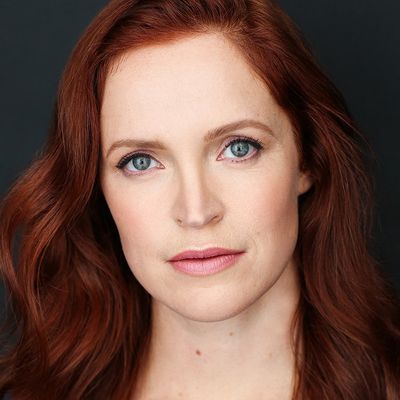
On The Roundtable with Robert Bannon, we're joined by composer, lyricist, and co-book writer Alex Bechtel along with Broadway star, co-book writer, and performer Grace McLean to talk about the journey of creating this deeply personal and emotionally rich new work.
Inspired by Bechtel's own experience of being separated from his partner during the COVID-19 pandemic, Penelope reimagines Homer's epic through the eyes of Penelope, who has spent twenty years waiting for Odysseus to return from war. Blending folk-pop music, intimate storytelling, poetic movement, and sharp humor, the musical transforms an ancient tale into a moving reflection on love, loneliness, hope, and resilience.
The live album captures the energy of the show's celebrated performances at Joe's Pub at The Public Theater, following acclaimed productions at Hudson Valley Shakespeare, Signature Theatre, Theatre Horizon, Pennsylvania Shakespeare Festival, and Ancram Center for the Arts.
Bechtel has earned widespread acclaim as a composer, writer, musician, and theater artist, while McLean has become one of Broadway's most distinctive voices through performances in Suffs, Bad Cinderella, and Natasha, Pierre & The Great Comet of 1812, alongside her own celebrated original music and award-winning theatrical work.
Together, Alex and Grace discuss the collaborative process behind Penelope, the inspiration for its unforgettable music, what it means to reinterpret a legendary story for today's audiences, and why this timeless tale continues to resonate in such a powerful way.
Watch our conversation with Alex Bechtel and Grace McLean on The Roundtable with Robert Bannon, streaming on BroadwayWorld, Broadway Podcast Network, YouTube, Spotify, Apple Podcasts, iHeartRadio, and wherever you enjoy great conversations.
For more information, visit RobertBannon.com and follow @RobertMBannon on Instagram.
#PenelopeMusical #GraceMcLean #AlexBechtel #EvaSteinmetz #JoyMachineRecords #Broadway #MusicalTheatre #EdinburghFringe #Joe'sPub #TheRoundtable #BroadwayWorld #RobertBannon
Transcript
This transcript was automatically generated and might contain errors.
[0:09] Robert Bannon: Welcome to The Roundtable, everybody. My name is Robert Bannon. You're listening to us on Broadway World over here on the Broadway Podcast Network, iHeartSpotify, wherever you listen to artists talking about art. We're gonna have fun today because we have a Broadway superstar. We have a writing superstar, we have a brand new album that's out. We have things that have happened at Joe's Pub, which is too cool for me to perform at, but not for our next guests. They have been out here working and touring and doing all the things and writing original. They're crazy because they write original musicals. You know how many years it takes to do like decades, years. What is Penelope? Who is Penelope? It's a contemporary chamber musical, it's got Grace, it's got Alex's music, and it's out and streaming right now.
Penelope Live at Joe's Pub is here. Welcome, Grace McLean. Alex Bechtel. I'm gonna say your name wrong. I got scared. Alex! You should be scared. It's Bechtel, like the Bechtel test, right? Bechtel. And I was gonna say the show. Like oh, but I like that. Sometimes people class up my name, and I'm really here for it. Bestel. I'll Alex Bechtel. I knew that. So the album is out. Tell me, you know, Grace. You have had a lot of Broadway shows, and you have been in this game. And you have toured. Like I was reading your bio, and you well, like in Pakistan and stuff, singing for the people.
[1:30] Grace McLean: Yeah. So why? Why that how did this idea, where did it come from? Who started it? When?
[1:36] Alex Bechtel: Alex started it. It's all his fault. This is Alex's baby.
[1:39] Grace McLean: And I Alex started writing this in the pandemic. I'll let him tell you about that.
[1:44] Alex Bechtel: But I just want to say, like, I what thought I did! Thought I said don't. It's just my husband. Hi, husband. We can't talk. We can't. I have a husband, but I told him. Honey! See? It could be he may need you. I keep that. This is literally the opposite of Penelope.
[2:04] Grace McLean: It is.
[2:05] Alex Bechtel: Your husband is gone. Can't. I'm just saying, can't. On a call. Sorry, husband.
[2:11] Grace McLean: So I needed something different than that. I needed something different than a man knocking on my door 24-7, leave me alone. That's not true.
[2:18] Alex Bechtel: Penelope.
[2:21] Grace McLean: Um yeah. Oh, what I'm trying to say is that I was just, I was a huge fan of Alex's before getting involved with this beautiful piece that he wrote. And so it's been truly an honor to work with him these past couple of years on developing this beautiful lady, and we're just so freaking thrilled that we're finally able to share her in this form, in the form of the album with you. You can come and go on this journey wherever you are, and if you aren't, you're probably gonna be in Scotland, and that's when you should come see the show of Penelope at the end of the fridge.
[3:00] Robert Bannon: But before we get there, listen to this baby, because she's out, she's streaming now. You know, people come to Edinburgh, they come on this show and then they get big giant runs in New York City. So listen, I'm putting it out there right now. They're gonna go over there. The show's coming out, the album is out, they're doing things right. Alex has seven Barrymore awards.
[3:18] Grace McLean: Drew Barrymore, John Barrymore.
[3:22] Robert Bannon: He has seven awards. He has um Ethel. I'm trying to think of Barrymore's. That's a good one. That's a good one. And then and he's got all those awards.
[3:30] Alex Bechtel: He's written a ton of shows.
[3:31] Robert Bannon: You how do you describe your artist, your composer, an actor, a sound designer, a writer, a director, a teaching artist? What are you just an artist who writes music?
[3:41] Alex Bechtel: Yeah, the way that I've been talking about sort of my mission statement is that I make new works of music theater and musical theater. Um, so sometimes that's just like me writing a piano solo and putting it out on Spotify. Sometimes that's me as an actor helping to devise a piece because I work a lot in this sort of experimental devised theater community and scene, and sometimes that's being hired as a sound designer who composes new music. And I feel really fortunate in that you know I'm not the best actor for every show, I'm not the best composer for every show, I'm not the best music director, but because I wear a couple different hats, it has afforded me the ability to work on a lot of different projects in a lot of different capacities.
[4:22] Robert Bannon: So, yeah. So Penelope and the idea, you two part question, Alex. When did the idea come from? And when did you reach out to Grace? And how did she become a part of not only the performing aspect of it, but the creating aspect of it?
[4:39] Alex Bechtel: Yeah, I started writing Penelope in the summer of 2020 because the pandemic hit, and at the time I was in a long distance relationship. My partner at the time was in grad school in Boston, and I was still living in Philadelphia, and so we had to spend those like quarantine months in different cities, and so as I was you know stuck in a house in South Philadelphia, these songs and instrumental pieces from the point of view of Penelope from the Odyssey started showing up, and it was really therapeutic practice to write into the metaphor of this character's experience through my own emotional experience. Um, and I put that out as a sort of concept album in the fall of 2020, but then more songs kept showing up after that little concept album was out in the world, and so I reached out to my friend Eva Steinmetz, with whom I've made a lot of work, who was a director um and maker of new work, and I was like, let's expand this into a musical.
[5:30] We did one summer at the Orchard Project, which is this amazing new work incubator in upstate New York. It was a Zoom summer because we were still in the throes of the pandemic. And at the end of that first round of workshops, we wanted to do a concert and I had just moved to New York and we were thinking about who could do just the concert of this music because there was no script at the time. We just had a sort of first draft of the score. And we had just met Grace because Grace had seen a musical that Eva and I made with my theater company Lightning Rod Special called The Appointment, which we did um at New York Theater Workshop Next Door in 2019. And she had reached out to us and said like basically that she was fans of our work and if there was anything that we had in the future that we thought she might be right for she'd like to work with us.
[6:19] And that was what sort of gave us the idea of like we were making this thing we were like we need someone who is we have this impossible ask right you have this impossible brief with Penelope the show where you're like you need someone who's a classical actor and the front woman of a rock band and kind of a modern dancer and kind of a clown and it's kind of it's insane and so and you know what I'm learning is that there was this mutual admiration between us and Grace over the years before working on this project where she has she says like manifested this thing of wanting to work with us and we're over here being like I mean I'm gonna email her and ask her and she's not gonna do it. You know she did it.
It's worth asking. And she did it, and we've sort of and then what happened was we had a series of canceled concerts because of COVID, which was hilarious for a show that was born out of the COVID pandemic. But in between these cancelled concerts, before we did our first sort of like work in progress showing, the Orchard Project asked us if it would be useful to come back upstate and have an in-person workshop that led to a couple of shows.
[7:22] And that was when we realized, you know, Eva and I had talked to we're like, what if we just you know build the script together? Grace is such a brilliant writer. Uh we're we're both such huge fans of her work, both as a singer songwriter and as a playwright. And it was just like it felt like a no-brainer to be building this thing that was a solo musical with such a dynamic and creative artist. Like it it would be silly to try and put someone else's words in her mouth, and it's like, let's all build those words together. And it has led to such a beautiful hey, just such a good time. It's been so great making this over the years. Um, because we work really well together and fit really well together.
[8:00] Alex Bechtel: Um, but also I think it gives the dialogue such a mediacy and groundedness and homespun feeling. I've had people over the years ask me how much of the script is written down and how much Grace is just making up on the spot. And I'm like, it's all it's all written down. It just feels like she's just talking to you because you know, my experience of devised work very often. It's like when the actor on stage is speaking lines that they themselves created and crafted, if it can feel so much more honest and immediate.
[8:35] Robert Bannon: That is, you know, what I love so much, uh, Grace, is all that that journey and that story and the mutual admiration, you know, the Odyssey Penelope, the Odyssey, the movie, and you know, Anne Hathaway and yada yada yada. I don't is you please don't tell me that I Grace, is it like three and a half hours long your show like The Odyssey? Because I have I got real bad ADD.
[8:57] Grace McLean: We're not gonna do that to you.
[8:58] Alex Bechtel: We're not gonna do that.
[8:59] Grace McLean: We're capping out about right around an hour, maybe just over, just over, and it's gonna fly by. You're not gonna look at your watch once. You are gonna go on a journey in those 65, 70, 75 minutes.
[9:15] Alex Bechtel: You're gonna go all over the place.
[9:16] Grace McLean: And guess what? We're not going anywhere. We're staying right where we are, and it's all I mean.
[9:21] Robert Bannon: That's the thing, that's the way the show. Penelope, what is she doing? She's sitting and she's waiting.
[9:25] Grace McLean: But she's that's not that's not doing nothing.
[9:28] Alex Bechtel: That is living a life.
[9:31] Grace McLean: You're stuck, but you still gotta live.
[9:33] Robert Bannon: And that's what we're doing, and that's what we have crafted. That's what storytelling is, man.
[9:38] Grace McLean: I you're fun, Grace.
[9:40] Robert Bannon: And Alex, I don't have hair that does anything.
[9:44] Alex Bechtel: I'll do it for you.
[9:45] Robert Bannon: Leave it to me. Grace, you know, people may know you because you did SUFs and you bit did Bad Cinderella and you did the Josh Groban in the comics.
[9:52] Grace McLean: I love Josh.
[9:53] Robert Bannon: I just saw Josh Groban last month in concert, and I love him. So you've done all this work, but then all and television and etc. But you are a writer and you do musical theater and you you write musicals and you've taught classes like everywhere.
[10:07] Grace McLean: And you also have we were talking about Barrymore Awards.
[10:10] Robert Bannon: I mean, you have your Lord Tell Award and you have your Richard Rogers for reward for writing, and and you know two Richard Rogers awards now, two double Richard Rogers.
[10:19] Grace McLean: Yeah, but now let me go.
[10:20] Robert Bannon: She got a baby camp.
[10:22] Grace McLean: So, what is for me is what I love is that your first musical was in the green. And when Lincoln Center, you write a musical, and then Lincoln Center's like, yeah, sure. We love it. That does not that doesn't really happen.
[10:34] Robert Bannon: So working, that was yours, so now working collaboratively and performing it. Is it different? Is it fun? What have you learned about about yourself as a writer?
[10:45] Grace McLean: Yeah, that's a great question because I will say, in the green, it really became a thing that, like, it was it was born out of my weird obsession with this historical person, Hildegard von Bingen, this 12th century German mystic nun polymath. But it really, you know, I was really writing about some things. There was something about this woman's life that like pinged with some stuff I was dealing with, but you know, that's what we're doing. I'm using that backdrop for la la la. But it was a thing that was very personal to me. Um, and I felt like I needed to figure out how to do this, and I needed to figure out how to write it because I had worked with some different people when I was in the development.
As you said, it takes years to make a musical. Um, and I was figuring out how to work and how I wanted to work on this that piece in particular, and ultimately it came for it. I was like, Grace, you need to figure out what your voice is because sometimes I would work with people and I'd be like, that's great, but like I can't, I don't know if I can articulate why that's not quite what I need this to be. I needed to like sit with my voice, my flavor, my taste to help myself fail in order to get to the thing that I was looking for.
[12:04] Grace McLean: So that was like a real trial tribulation that I'm really glad that I went through. And now to work on a piece collaboratively, um, I'm so grateful for Alex and Eva, who are incredible collaborators. They're so generous, and also like, you know, this is Alex's piece, and so he's being so generous in like allowing me and Eva to come and step into it and to inhabit it with him and to interpret something that is his flavor and is so particular to him to allow us to step in and put a little bit of our skin cells, our little DNA in it as well. Um in a way of course always wanting to honor the writer. That's that's that's a thing that I've learned. You know it's interesting being a performer and a writer like I think you gotta honor that writer man.
This is their baby. What is it they're trying to get and how can I either as a collaborative writer and as a performer best deliver their vision to honor that work. And that's the whole point of being an actor is to honor the vision of the writer the idea of the director etc put that on do the job and put it on stage.
[13:17] Robert Bannon: So Alex you do this show apparently you did it at Joe's Pub. Because if I mean if you didn't that's lying to us so I'm assuming Alex did so you did it title the album live at Joe's Pub but we're not there. We're in my garage. So Alex when you did the show and put it up on its feet at Joe's Pub why did you decide to record it? Why is putting out this cast album important to the process of the show?
[13:37] Alex Bechtel: I well I've been thinking about this a lot. I grew up in rural Pennsylvania and obviously times are very different now than they were when I was you know 13 but like growing up the way that I experienced the art form that would become my life was through cast albums. And I see and feel so sad that so many new musicals come and go and don't have this record of the score for people to return to and discover. And so much of my the development of my love for musical theater was listening to cast albums and imagining what the shows were like. Um and so I've always wanted that for this piece, especially because this show really follows a musical logic more than a traditional theatrical logic. It's not a traditional musical.
There's not like an overture, then an opening number, then a bunch of songs, then a yada yada yada. It follows a very particular like musical logic. Um and so the music and having a record of that music felt really important. And there's a question of like, do we rent a studio and do we go into a studio and do it lay that down? But in the through the couple of productions we've done and the couple of concerts we've done, the way the show behaves with the audience feels so beautiful to me and so important. And I think the show is so funny. There's so much humor in the piece and lightness in the piece that I thought to myself, like if we were in a traditional studio without that audience feedback, the humor might not play as much.
It's nice to feel an audience laughing at the things that are funny. I've been saying a lot, like I'm the kind of person who always tries to get a laugh in therapy. So I love the moments in our show where it is so sad, and then Grace says something that gets a laugh in the middle of that sweetness and sadness, and it's just so anyway, doing it at Joe's Pub, which is so beautifully set up to record video and audio, um, and then doing it in collaboration with JOY MACHINE RECORDS, the record label that we worked with, and Ian Kage, who mixed our album, who just did such inspired and inspiring work, making it sound so beautiful. It's the kind of live album that like you would forget that it's live, and then you hear the audience clap, we're laughing, and you remember that we're in Joe's Pub.
And for me, I've been thinking a lot about how like, yeah, I think if I heard this album when I was a kid in rural Pennsylvania, it would have blown my mind. And I would have been like, oh wow, this is theater is like this. I didn't know musicals were like this, but they can be. And so we're doing it, of course, for all the reasons you make a cast album, which is like to preserve the show and to like make sure people can read it. But also, like I want those people, those young people, and those people who are searching for new musicals to fall in love with through the medium of cast albums to find it and to have it spark in them, like a love for our both our show and also like new musicals that push and challenge the art form.
[16:54] Grace McLean: I love that. That's why you can be streaming it right now. It's out and available for you to stream. All you gotta do is wherever you listen to music, go find Penelope live at Joe's Pub. So, how do you describe Grace, the music? Like, what is the style?
[17:08] Grace McLean: Oh, well, that's what's so beautiful about it, is it's quite eclectic. And as Alex said, like it takes you on an emotional journey. And there are, I think it's been described as a pop folk, pop folk score.
[17:23] Alex Bechtel: What does that mean?
[17:25] Grace McLean: Well, it's so it's we've got a five-piece band, we've got that piano drums, um, cello, violin viola.
[17:32] Alex Bechtel: Oh, beautiful.
[17:33] Grace McLean: Yes, those strings, and we are, we really are playing in a sort of like neoclassical, but also pop, but also something a little bit experimental. Like it's the band and the singer, like we're the center of it. And then from that, what are the flavors that this collection of sounds and instruments can bring forth that reflect the emotional journey of this person? So pop folk cute. Yeah. Eclectic, yes, it's you know, it's not one style. It requires many styles and tones circling around the narrative of what it means to stay in place and to choose to wait. The many, many ways that choice is made.
[18:22] Robert Bannon: So Alex, this came from your personal, you know. Uh I remember, you know, COVID, I I was thinking about it's gonna be 2027. Like it's almost seven years ago. Six years ago that it started. So the idea comes out of the idea. We were all alone, isolated, relationships were fine. I was in a long distance really I now my husband was in Detroit. I'm in New York, and I didn't see him for like, I don't know, a long time. A long time. We all sat alone, we all tried to figure it out. People that have husbands or wives or boyfriends or girlfriends or partners that were in the same place, they wanted them to go long distance and go away because they were stuck together for so long. Um does the story I'm not trying to spoiler alert. Is it have a happy ending? Is it sad? You know, a lot of relationships didn't make it. A lot of do I have to listen to the album to get the answer?
[19:10] Alex Bechtel: Well, first of all, it's pretty old source material. So I mean, that's true. Spoilers really apply with something based on the Odyssey. Um, we're gonna tell you how the Odyssey ends, so you better um So I will say look, I think that our the ending of our show is intentionally leaves a lot open for you as the audience member or listener in this case to decide whether you think it's a happy ending or a sad ending for you to sit with and and more to the point, rather than even decide whether it's happy or it's sad. The thing I love about the way we approach this character and and building up this musical is it's never gonna be one thing because that's not my experience of being a human being. My experience of that period of time waiting for this person that I love and this thing that I love, live performance and gathering with people, it wasn't one thing.
It wasn't just sad. Sometimes I was having a great time, sometimes it was funny, sometimes I was you know angry. And so I love that we've made a musical that really rejects the notion of really broad and like caricatury characters, but like we have this woman who is a human being, and she is smart and she is funny, and she is also at times weak and also at times like full of rage. And so when you come away from the ending, I think I don't know what people's experiences are because it's sort of not my job, but like I do think that you sit in a lot of complexity, and I love that because that's my experience of being a human being, is like I'm constantly having to sit with this lap full of feelings and information and emotions and be like, okay, I can hold it all. Like that's what it is, that's what it is.
[20:51] Grace McLean: I love that. And that's what I think is so wonderful. Sorry, just about what theater can do is like we don't have to tell you what it is or what it means. We're gonna show you a lot of stuff, and you get to decide. Like, I love theater that allows me to decide, and I know I've talked to people that take different things away from the ending, and some of them come up and they're like, I got this. Is that right? And I was like, that's right for you, you know. And we are intentional about that. You know, like there, there's a way to say this and to be just like, here's a mess. There's not a mess. We are intentional about the ambiguity, because it does mean multiple things. And that multiple is a gift to you, the audience to take your flavor and your flavor, your your meaning may be different tomorrow.
[21:42] Robert Bannon: Oh you are. This is so good. So when when Grace, when are we gonna when is it going? When are you going over to the festival?
[21:50] Grace McLean: Well, we start performances August 5th. We run all of August, August 5th through the 30th.
[21:55] Robert Bannon: Are you excited? Are you nervous? Are you thrilled? Are you just ready to jump in there?
[22:00] Grace McLean: I'll have it.
[22:02] Alex Bechtel: And Alex, who should listen to this cast?
[22:04] Alex Bechtel: If you love cast albums, if you love theater, but it's not just for the theater girlies out here, it's also for people who love songwriting. Like if you love a song, if you love to sit down and listen to a piano or a guitar or someone just tell their feeling, this expands beyond musical theater.
[22:18] Alex Bechtel: Yeah, and I would say also if you're a fan of contemporary classical music, if you're a fan of chamber music, there are so many cracks on this album that are just a string trio playing a string trio. The second crack on this album, which is the second thing that happens in our musical, is that the incomparable Justin Yoder plays a cello solo. And it is like it's you know, so if you love new music, if you love, yeah, if you love songs that that tell stories in creative ways, you know, in addition to all the people who love musical theater, those are the people who I think will really get something from the album.
[22:52] Robert Bannon: Let's go. Everybody, right now, go stream JOY MACHINE RECORDS presents Penelope live at Joe's Pub. Grace McLean, she's singing on it. Alex is writing music and lyrics away. And they're going to be at Edinburgh this August. So you need to get your streaming on right now before this show continues. It is out as we speak. It's such an honor to be able to speak to you both. Congratulations, break legs over there. Have the most fun. Enjoy it. And we'll be ready for the next iteration production. And I can't wait to see it alive and in person right back here in the States.
[23:29] Grace McLean: Thank you so much, Robert.
[23:31] Alex Bechtel: So great talking to you.
[23:32] Grace McLean: Congratulations back at you.
© Broadway Podcast Network, All Rights Reserved