

In this episode, Christine sits down with another one of her fellow Guild officers, Kristoffer Diaz, to talk about what it takes for a theatre writer to make a living, some of the nitty gritty on how writers get paid on Broadway, and keeping grounded in spite of the unpredictable nature of the theatre... Read More
From the show: The Dramatists Guild Presents: TALKBACK, sponsored by the Dramatists Guild Foundation
Featured Shows
About
In this episode, Christine sits down with another one of her fellow Guild officers, Kristoffer Diaz, to talk about what it takes for a theatre writer to make a living, some of the nitty gritty on how writers get paid on Broadway, and keeping grounded in spite of the unpredictable nature of the theatre.
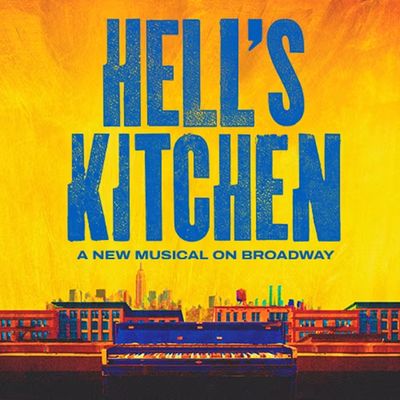
Kristoffer Diaz is an associate professor at New York University, Pulitzer finalist for “the elaborate entrance of Chad deity”, Tony nominee for Hell’s Kitchen, which kicked off its first national tour in the fall of 2025, and Secretary of the DG.
The Dramatists Guild of America is the national, professional membership trade association of theatre writers including playwrights, composers, lyricists, and librettists, whose mission is to protect the economic, legal, and creative interests of professional writers in the American Theater. Visit www.dramatistsguild.com to learn more.
This podcast is supported by the Dramatists Guild Foundation (DGF), a national charity that fuels the future of American theater by supporting the writers who create it. DGF fosters playwrights, composers, lyricists, and librettists at all stages of their careers through educational programs; awards, grants, and stipends; free space to create new works; and emergency aid to writers in need of immediate support. DGF is a 2024 recipient of a Tony Honors for Excellence in the Theatre. By supporting and nurturing the creators of today, we protect the stories of tomorrow. Visit www.dgf.org or follow @DGFound to learn more about DGF's grants and programs or ways to donate.
Talkback is executive produced by Christine Toy Johnson and edited and recorded by Bruce Johnson. Our theme music is by Andrea Daly. Distributed by the Broadway Podcast Network.
Transcript
This transcript was automatically generated and might contain errors.
[0:01] Christine Toy Johnson: Welcome to Season 6 of the Dramatists Guild Presents TALKBACK, sponsored by the Dramatists Guild Foundation.
[0:10] Christine Toy Johnson: I'm your host, Christine Toy Johnson. This season is all about reinvention.
[0:15] Christine Toy Johnson: In this episode, I sit down with another one of my fellow Guild officers, Kristoffer Diaz, to talk about what it takes for a theatre writer to make a living, the nitty-gritty of how writers get paid on Broadway, and keeping grounded in spite of the unpredictable nature of the theatre.
[0:32] Christine Toy Johnson: Kristoffer Diaz is an associate professor at New York University, a Pulitzer Prize finalist for his play The Elaborate Entrance of Chad Deity, a Tony nominee for Hell's Kitchen, which kicked off its first national tour in the fall of 2025 in Cleveland, and Secretary of the Dramatists Guild. Here we go.
[0:54] Christine Toy Johnson: So I'm sitting here with Kristoffer Diaz, the Kristoffer Diaz. I'm very excited to talk to you.
[1:00] Kristoffer Diaz: Well, I'm really excited to talk to you in person, because we've been doing so many meetings as fellow officers of the Dramatists Guild on the little square thing. So thanks for coming in here today and talking about various matters of concern.
[1:17] Kristoffer Diaz: Yeah, it's an absolute pleasure. And it's better to be talking to you about this stuff than to be talking about myself, I guess.
[1:24] Christine Toy Johnson: Well, we are going to talk about you. So really what this season is all about is reinvention. And that is, as usual for me, it's intentionally broad, because I've been thinking a lot about how, you know, in our lives as artists, there are ups and downs all the time, ebbs and flows. It's never static, which is good. But in this past year especially, or really in the last five years, things have changed so much from day to day, week to week, month to month. I wanted to talk to people about how it was or was not affecting their creative lives, their creative impulses, what you're thinking about, what you're writing about. And so that's where I really want to start.
[2:16] Christine Toy Johnson: Especially in the, you know, the elephant in the room, it's not really the elephant in the room, it's staring at us. Every day is really, there's some new surprise. And so how has that affected you? You have a long-running hit Broadway show called Hell's Kitchen that you were nominated for a Tony Award for, which was our favorite show of the season. So you have that ongoing. You have new plays opening in various theaters. So those are steady.
[2:50] Kristoffer Diaz: Yeah. Steady-ish. Yeah, relatively steady. But what else can you say about how your life is?
[3:00] Kristoffer Diaz: Yeah. You know, it's such an interesting question, reinvention, because it is, everything is constantly shifting. And my whole career, our whole careers, our whole lives, everyone's whole lives, I'll just keep going, like it's always, everything evolves. Like you think that you sort of have figured it out, and then something major shifts. My career begins in earnest in the shadow of 9-11. Like I was in graduate school, and my second day of my second year of graduate school at NYU was 9-11.
[3:30] Kristoffer Diaz: Wow. I had taken a year off to go work at the, to intern at the public, and then I was working at the public, and then I went back to school, and that day was the second day of classes. Wow. And so I began my career in that moment, like that literal moment of New York City is shut down. We don't know what any of this is going to look like when it comes back. We don't know when Broadway is going to reopen or whatever that, you know. So that happens, and then every four or five years there's a market crash, and then there's a this, and then there's a that, and then there was the crazy thing when we started working in the guild, when it was like, does, like literally is theater going to exist again?
[4:12] Christine Toy Johnson: Right.
[4:13] Kristoffer Diaz: Like are we going to get back into a space together? We are the most at-risk art form. Like don't get in a room with dark people with your faces uncovered and share the same air. Like, oh, that's what we do. Yeah, right. Right? Like singing. Right, right. The end of, singing is murder, right? Yeah. Anyway, so, right, so to have all these things happen, and then, you know, so for five years after COVID to be getting to a place where we're like, all right, like we can meet without masks or with masks, whatever, and be settling in, and then now to be in a position where every organization I work with, not just in the theater side of things, but in the education side of things, or that my wife, my wife works with children's media, so places like Sesame and places like children, you know, the public broadcasting company, to see that everybody not only is in actual disaster recovery mode from like the things that they have lost, but is also in you could wake up tomorrow and find out that another chunk of your percentage has been, of your budget has been cut. Or like it's now illegal to do the thing that you do. Right?
[5:21] Christine Toy Johnson: Yeah.
[5:22] Kristoffer Diaz: So that part is, so anyway, so I don't have a specific answer to that other than to say like it is a constant shift. And when I talk to my students, it's one of the things that I do try to reiterate, is that yes, it is like unprecedented chaos, and also it is always unprecedented chaos. You know, like the world is always in this disastrous place. And there are good things happening at the same time. So anyway, like yes, like constantly shifting. And then to backpedal again, just quickly, like even when you have steady, stable things, and we won't go too deep into this, unless it goes to my head and we start talking about things, but even a steady thing, like a show that's running, or commitments from theater companies to do your work, or works in development, those things are unpredictable. You know, you never know when a show, even the most successful shows, they're not foolproof.
[6:22] Christine Toy Johnson: Yeah.
[6:23] Kristoffer Diaz: You know, so who knows like what's ahead. So things are going to change tomorrow as much as they may have changed, you know, yesterday.
[6:30] Christine Toy Johnson: And what keeps you grounded knowing that? Because you do seem always to me to be, to have both feet on the floor and looking forward.
[6:43] Kristoffer Diaz: Yeah. Man, I don't know. I mean, a lot of it is the non-theater stuff. A lot of it is like my family, my wife, my kids, my parents, my friends, most of my friends that I've had for many, many years are outside of the business. And that reminder that there's change in other places too, is a good thing to know. You know, it does help. I'm not going to lie. It does help to have stability. So in addition to the fact that Hell's Kitchen is running, we've been running for a year plus, we're about to open our first national tour, we're going to work for some international tours. You know, we've got stuff. So that part is good. I've got some shows happening. I've got a lot of shows that I've written already that are, you know, I like to call them underproduced.
They maybe have not been done at all. They've been developed a lot. We talked about that. But things that are in the air, I've got projects that I'm working on. So knowing that the work doesn't disappear is helpful. And the work never disappears. Whether you're getting paid for it, that's a different question. But the work never disappears. You always can show up and make something.
[7:53] Kristoffer Diaz: It also helps, frankly, that I've been teaching at NYU for coming up on 10 years. And it's a stable job. And my health insurance comes from there. I think the biggest crazy thing that I tell students all the time, and their jaws drop, I say there is no path to health insurance in this line of work. And some of them are like, you know. Anyway, so being able to have those kinds of things in place, money coming in, health insurance, and all that kind of bourgeois stuff, it helps. It makes it easier. But really, like in terms of the business, the biggest things are knowing that you can always sit down, you can always write, you can always turn to a friend and give them something, they'll pick it up and do it.
And knowing that there's always a space to sit and have conversations. As much as you and I, I don't want to put words in your mouth, as much as I rue the fact that you and I, as lovely as our conversations are, have to get on the phone three times a week to talk about how the industry is falling apart.
[8:53] Christine Toy Johnson: Only three?
[8:54] Kristoffer Diaz: Yeah, exactly, and other things. As much as the content of those conversations can be difficult, the fact that we're able to do it is really helpful. The fact that we always sit down together and we just talk and we say the world is chaos, the fact that we do that together feels helpful.
[9:09] Christine Toy Johnson: Yeah, and how can we address it together? How can we address it?
[9:12] Kristoffer Diaz: Yeah, how do we make the best out of this? What's in our control? What's out of our control? What's in somebody else's control? What are other people thinking about in the same kind of way? We're discovering a lot of stuff where we start talking about things and it turns out Brandon's had that same argument or somebody else in our guild has had that same argument or we find out that the directors are feeling the same way about something or whatever that might be. So knowing that there's community, it's always community, it always comes back to community.
[9:37] Christine Toy Johnson: Yeah, so I have two follow-ups. There are two streams of following up. One is I want to go back to the plays that you have going on that are about to go into production that we talked when you got here about them having a long gestation period, right? So talk about the one that's going on now that you wrote the longest time ago because I have a follow-up question to that.
[10:09] Kristoffer Diaz: They always take me really long. I think I still don't know the mechanism for how to go from a completed play to a play that theaters are really considering. It's a million-dollar question, right? I've had three productions in New York City, three full productions in New York City. One was a Pulitzer Prize finalist, one was sold out, you couldn't get a ticket to, in Shakespeare in the Park, and one was nominated for 13 Tonys and all that kind of stuff. Sometimes people come sniffing around after that and not sniffing around, that sounds disrespectful. Theaters that you've had relationships with, they come back and they say like, okay, now we'd like to look at some of the other work that you've done.
We'd like to bring those things back up. It hasn't happened as much in New York City as I would like for that to be. I'm not super complaining, right? I'm doing fine. But the one in Chicago, I had written a play called Things with Friends about a dinner party that's taking place in the Upper West Side, basically, in the shadows of a fallen George Washington Bridge.
[11:18] Kristoffer Diaz: George Washington Bridge has collapsed into the Hudson River. I see the GWB from my desk window.
[11:24] Christine Toy Johnson: Well, there you go. It could be part of your house.
[11:26] Kristoffer Diaz: No, don't speak it into existence. It's this weird play that's become kind of a climate change play. It wasn't written to be a climate change play and I don't know that it exactly is, but we talk about it in that way for sure. It's got elements of that. But I wrote it and it's a weird play. It has sort of narration. The stage directions were very ornate when I wrote it and it became a part of the play. So now the stage directions are spoken in actual production. And we're just figuring out what that means right now. But we've developed it a ton. I developed it, I think, at the Playwrights' Center. We did a podcast version of it at the Playwrights' Center. I've developed it with this theater and that theater and we sit around the table.
It's actually my favorite part of my job. I sit around the table and do a 29-hour workshop with smart New York City actors, a bunch of New York City actors who I never have been able to hire in actual production because they've never been produced in New York. But folks like Maureen Sebastian, Maria Cristina Longomarius, Desmond Borges. There's so many, Armando Riesco, there's just so many people that I just work with all the time. And we've done that a lot with this play. But nobody actually, you know, I don't think people know that it exists. I still am not entirely sure how to sort of make people know that it exists. So anyway, all that is to say I submitted it to a competition, which I don't usually do.
But I submitted it to a competition in Chicago with a theater company that I had a relationship, American Blues Theater. And they selected it to win that competition and then selected it to move into production. But yeah, it takes a really, really long time. There's so many steps between writing the thing and then getting the thing out in the world.
[13:06] Kristoffer Diaz: I know how it has changed in basically in the narrative over the past 10 or so years because so much has happened in our world. Do you feel like you keep chasing the line of what time it takes place in or how do you address that? Yeah, it's hard. I don't think so. I mean, that play for as much as it's got like climate change elements is a play about people sitting together and having a dinner party. It's rich people sitting on the couch drinking wine play but with a spin on it. So I don't think I'm actively chasing that, but you do have to respond. You have to respond to the way that the world is shifting and evolving. Every time that we've done a workshop of it for the last four or five years, it's been either in a rainstorm or it's been three days after you've seen those pictures of the J train flooding.
So it takes on new meaning for sure. I don't necessarily chase the timeliness of it, but you're always chasing the truth of it. And if you're chasing the truth of it, you kind of have to respond. And then I've had situations where you're like, well, what year does this play take place in now? I wrote this play in 2012. Are we doing it in 2025? One of the things that we were discussing this week is there were lines about cell phones. There's a lot of talk about cell phones and a lot of talk about television in the play. Not a lot, but there are moments and we're sort of like, do we have to adjust? People don't watch television in the same way that they watch television. It's not cable anymore.
It's streaming. And cell phone, there's a line like you never have your cell phone in your hand. Who doesn't have their cell phone in their hand? So you do have to respond. For me, it's always looking at something happened before 2016 or after 2020. There are those lines. And for you, I just wondered how the shifts in really the political zeitgeist and cultural understandings, how they have been influenced or not.
[15:22] Kristoffer Diaz: Yeah. I mean, the biggest one that comes to mind for that is Chad Deity, which was written originally during the tail end of Bush II, of his second term. So it was written in response to a particular world. It got produced during the first years of the Obama tenure. So its big run in Chicago, New York, and Los Angeles was all during Obama. And it became sort of a commentary in a different set of things. It gets produced a bunch still, and it's been produced through Trump, through Biden, through Trump again. And it's a piece that's really sort of critical, hopeful, a lot of things about US culture and politics and all those without being about that directly. So it shifts. It constantly shifts. And we're trying to remount that show and trying to find a new production for it in a big, real way. And there's a ton of questions that come with that. How do you reinvestigate what you were investigating now almost 20 years ago?
[16:32] Christine Toy Johnson: Yeah. It's so interesting. What lens you are looking at it through and what you ask the audience to look at it through.
[16:40] Kristoffer Diaz: Yeah. And you're a different person.
[16:41] Christine Toy Johnson: Right. Exactly.
[16:41] Kristoffer Diaz: You're a different person. I wrote a bunch of these plays when I was single. I wrote a bunch of these plays when I didn't have health insurance. Well, now I have health insurance, but I didn't have anything. I had no money. I was a New York City public school teacher while I was writing some of these. I was living in Cleveland by myself while I was writing some of this stuff. You become a different human. And just the way that you think about the world, the political point of view that you had, the personal point of view that you had is not the same thing anytime you revisit something. Do you sometimes think about some of those plays and think, oh, I want to open that up again. I want to open up that file and see where it is and where I am.
[17:11] Kristoffer Diaz: To some extent. Not so much the ones that are out in the world because I don't have time. But yes, if you do something like Chad Deity again, and I think Chad Deity is a nicely, tightly constructed play. I don't want to mess with the construction of it too much, but I do think you have to go back and think about it. There are unproduced plays that are kind of fun to go back and think about. If we tear this a different way, if we pull a different direction on it. One of the other things that I am thinking a lot about is what happened to those characters later on. So I'm taking one play right now, my first play that I ever wrote called Welcome to Arroyos, which was set in the Lower East Side of New York.
And I'm thinking about those characters, particularly one, this 18-year-old girl in that play. And I'm like, oh, she's in her 40s right now. What has happened to her and what does her midlife crisis look like? Because these characters are, and I don't, I'm actually thinking about people of color, working class people of color going through a midlife crisis. I'm like, I've never seen that before. So trying to think about the lives that these folks have. Not even so much necessarily in like a sequel, because I don't know that many people have done that. Although I know Rajiv did a sequel, which is a super cool idea to a play of his. But thinking just about how do you dive back into either of those characters where people will like them in new ways.
[18:42] Christine Toy Johnson: Yeah, that's interesting. I want to go back to another thing you started talking about that has to do with the profession. And as we have talked about so much as theater writers, we have a guilt and not a union because we own our copyright and we're not employees. That's the simplest way to say it, right? And as you and Brandon and Amanda and I have talked ad nauseum, but essentially, there are so many ways, I think, that we aspire to help make the profession healthier. And so I wanted to ask you about, I know there's so many issues, but what are some of your burning issues that are really at the top of your list for what you'd like to help fix?
[19:37] Kristoffer Diaz: So here's where I get into trouble. Yeah. Yeah, that was a nice pleasant beginning of the conversation. And now we'll start to say stuff. I would preface everything by saying, again, how fortunate I am. I have not had a non-theater job, non-theater related job, for my entire adulthood. I have made money. I have made a living. I've made a life doing this. And I think I continue to have the opportunity to do that. So I'm very grateful. And I still choose to go to theater and to participate in theater more than I do anything else. So I think all of it is great. That said, no, there's a lot of problems. There are a ton of problems. And as writers, the problems are kind of the basic fundamental problems.
We are the people. I always say to my students, we are the generative artists. And my bit is, I always say, we are not the generative artists. We could be, but we are the generative artists on a piece. We are the ones who, as it says out there, we are the one who was there when the page was white and the person when the page was blank. But we are the ones who walk around with some crazy idea in our head and have a vision for what it's going to look like on stage. And our job is to create a document to translate the idea that we have in our head to all those people who are going to execute that idea and turn it into something better than what we thought it was. So that feels like a lot. And it feels like an important position in the creation of what we do.
There was nothing, and then we had something, and then we said to all these other people, be geniuses with the thing that we had, and let's make that thing together. It doesn't feel like the writer has that position of primacy, of first mover, of generative artist, of this is where we start. It doesn't feel that way all the time. It often feels that way in the room when we're working. I think almost all the actors and directors and dancers and choreographers that I've ever worked with have that level of respect and not reverence. It sounds like I'm trying to say, we're at the top of the thing. It's not that. But collaboration, an open collaboration, an open sense of we're working together and there's a respect for what the writer does in this.
So even with that knowledge, when it starts to move into the business side of things, this business is not set up to really have writers' backs all the time. Whether it comes to financial structures, whether it comes to just the way that we're treated, we've been able to fight at the Guild and other writers have been able to fight those battles about things like billing. We've seen in the opera committee what a complicated situation that is, that sometimes the librettists don't get credit. The bigger issues have to do with what does it mean for a young writer trying to get produced for the first time? What does it mean for somebody who's trying to have their voice heard in a rehearsal room, have their mission as an artist respected when they go into these conversations with anybody, with a producer or with some other folks, to be able to say, yeah, you are doing something that nobody else in this room is doing and you are an expert at the thing that you're doing.
We trust you. That's always a complicated process. Then there's the issue of how writers in the theatre get paid or not paid. So I know, this is a big topic that we're very concerned about and speak your wisdom.
[23:31] Kristoffer Diaz: Yeah. So there are some fundamental changes to the way that a writer gets paid throughout the industry. And we talk about Broadway because we work very closely in that space, not just as some of us working on Broadway, but we work with writers in that space. It's important to us. So I'll talk about that a little bit. It's true throughout. I mean, I will say, I'll start on the other side of things. The numbers when it comes to what it takes for a playwright to make a living are staggering, partially because the economics of an off-Broadway theatre company, of an off-off-Broadway theatre company are such that it's never going to be enough money for somebody to have a production and pay their rent with a production, pay their rent sometimes for one month or two months with the money that you've made for a commission or a developmental production at a small theatre company.
And I understand that. Small theatre companies have low budgets. Nobody's making a ton of money off of that. The fundamental difficulty is that it can take a year, two years, eight years, 12, 13 years, as it does for most of my plays, for that play to get written, developed, you know, whatever. And if you're making $2,000 from it, you're making like, you know, are we making minimum wage? Right. If you amortize it, no, you're not. You wouldn't be making minimum wage, you know, the amount of time that you put into the play. I probably said this last time we talked, but people always, students always asked me when I was younger, you know, do you write every day? And things have changed a little bit, but my answer to that was I don't necessarily sit down and write every day, but I spend 10 minutes of every hour that I'm awake working on trying to solve a writing problem.
Like I'm obsessed with the thing. So like I'm never going to be like compensated for all of that. And you know, the expectation is not to be compensated on a one-to-one basis. How do you know how many hours are, am I playing video games and figuring up, solving a problem, or am I like actually writing? Like it's never going to be that, but the numbers are staggering in that regard. The time, you know, you can't get to that place. Let alone the fact then, as we said, that you can't get to, you can't get a place to health insurance. You can't get a place to any of those sort of stable markers that you might get in other things. You can't get to a place where you have a union speaking directly on your behalf.
You have us speaking on your behalf, but not in a way that we can take collective action. So we have all those other problems. The idea at some point was that you will then take this play, it will get produced in this one place, and then it will go on to get produced in a bunch of other places. And that happens sometimes. Chad Deity still throws some money back my way.
[26:12] Kristoffer Diaz: Every year, not a ton, but a little bit. And that's a good thing. But it's still not sort of enough to make a living on, so everybody sort of has to do other things. Then the idea has kind of been, well, if you ever get a first-class production, a Broadway production, that you're going to be able to make a ton of money off of that. And some people make a ton of money off of that. We won't, you know, call people out. I mean, that's a great thing. We celebrate these folks. They're doing very well. There was a time, I think, where even the, not the top 1%, 2%, whatever that was, there was a tier where folks were making a good amount of money from a show that was succeeding on Broadway. If you made it past a year or two, if you got to recruitment, if you got to those sort of markers, that you could be making a good amount of money.
I'm not sure how true that is anymore. And we're finding more and more things out every day that really give us pause about some business practices that feel morally gray, to say the least, or who, where the money that comes in goes first. What goes to investors first? What goes to producers first? When, you know, what kinds of deals are writers being asked to make and are writers making to help a show continue to run? So we have some of these issues. It's tied to some of these questions. You know, we've been spent, we have a bunch of texts on our phone today about this amortization question, which we won't go deep into the details of. It's also boring to folks who are not involved in it, but it feels important.
But can you just, for those who might not know what it means, briefly heads up is to say, in addition to the weekly run costs of a show, many shows, I would say most musicals on Broadway are also taking a chunk of money, a chunk of profit every week in the early stages of a production to pay back investors. And that chunk of money that is going to pay back investors is eating into the chunk of money that would be used to pay writers over their guaranteed weekly minimums. So if a show costs $700,000 a week to run, there may be another $200,000 on top of that, that under old models would have gone back to the creators of the show. And when I say creators, it's not just, it's any royalty participants.
So it's a book writer, it's a librettist, a director can be a royalty participant, a choreographer can be a royalty participant. So those folks that would be getting additional monies are not getting them yet. They're going to make the investors whole. And then at a certain point that ends and then money starts to come back to those royalty participants. But what makes it tricky is that the amortization happens during those really hot first weeks when your show is a big thing. Your show may have just gotten its Tony nominations and you're making over, you know, instead of you needed $700,000 to recoup, you may be making a million that week. Well, if you're making a million and they're taking another $200,000, you're only participating in $100,000 extra where you would have been participating in $300,000 extra.
I will also say that I'm not an expert on this. I'm not an accountant. I'm not a lawyer. I'm not any of those things. This is my understanding of those things. I'm happy to be told otherwise, but it is that kind of idea. And I think what it speaks to philosophically is this idea, it's a prioritizing of the money rather than a prioritizing of the art. So hypothetically speaking, if a show, for example, wasn't doing so well, we have talked to many people who have been asked to either waive their royalties for a period of time. But typically, do you know if someone is asked to waive their royalties, does the money still go everywhere else? Yeah. I'm just curious. We are in it. No, my understanding, and again, I'm not an expert, and I would be happy to sit down with a producer, with a general manager of a show and talk through this stuff, either on your podcast or somewhere else to get to a better place of understanding.
My understanding is that there is a favored nations idea when it comes to that kind of thing. So every royalty participant is agreeing if there is a waiver going on, a waiver or a deferral. And I will say, sidebar, it feels really essential to me not speaking on behalf of the Writers Guild, definitely not the Writers Guild because this is not television, not speaking on behalf of the Dramatists Guild, not speaking on behalf of other writers, I don't know. But it feels important to me to understand the difference between a waiver and a deferral. Deferral is, this money will come back to me at some point, or we will make arrangements that if the show succeeds again someday, we may be having a weak period now, but if for whatever reason, those numbers start to jump off again, or we do a tour, we license the show, that there is a path that that money that you're giving up in your weekly guarantee comes back to you through some channel.
So it's like I'm giving up whatever X amount of dollars a week, anywhere at $2,000 a week to $15,000, $16,000 a week that you're giving up, depending on your role in the show, that that money gets sort of compiled and placed in a, the idea is that there is a pool, a path for it to come back. Anyway, whatever the agreement is to waive that money, to defer that money, to just say, to waiving meaning just like, I agree not to take any money, which seems wild. Whatever that agreement is, everyone has to sign off on it. And it's my understanding, again, I'm new to this, but it's my understanding that people generally do. People generally want the show to continue to run, partially because it may get a second life, partially because how many people are employed in our show.
My dear friends are employed on my show and I want them to get paid. People who are working, people who are going to the office, people who are on stage, they get paid, they're getting paid. The show has to pay them, otherwise we don't do it anymore. But the royalty participants, the people who spent the 13 years making a show, the 10 years creating a show and not getting any money upfront, the deal is that we are supposed to get that money when the money is coming in. So there's a point where that gets waived and everybody is sort of agreeing to that equally. It's so complicated, right? It's so complicated. I want to talk a little bit about the other kinds of productions. So in regional theaters across the country, as we know, we could be in rehearsal.
Not we could be, we're in rehearsal, we're not getting a paycheck. They're passing out paychecks to everyone else. And I just wonder what you think about that. Is there any kind of path in your wildest dreams to figure out a way to get paid without being employees? I mean, that's the trade-off, right? Because our founding people of the Guild, Moss Hart and George S. Kaufman and those giants decided, and I'm grateful for that, not to give up the copyright. And that's why the Guild was really essentially formed in the first place and to maintain that ownership. But what is the cost? And is there a way to look at that cost in different ways? Yeah, it's so hard. It's so difficult. And again, we're not experts on the budget, so that we are the finance committee of the Drama Guild, and we're learning this stuff in big ways.
But in terms of these small theater companies, American Blues Theater that's doing my show is pay what you can for all the time. Oh, wow, for the audience members? Yeah, yeah. Or a company like Mixed Blood that at a certain point was just like, yeah, we don't make that much money from our ticket sales, so radical hospitality, come see our show. And if you believe in what we do, give us money. That kind of stuff is so exciting to me and speaks to the awareness that, yeah, it's not that somebody is making money hand over fist. In a lot of cases, nobody's making money in those organizations. So it's not a matter of us going into those places and saying, you need to pay us a minimum weekly guarantee.
In those places, you want to work with the organizations. Those are true not-for-profit companies that are prioritizing the art. That said, it's really expensive as an artist to live an artist's life. Most of the time, in my experience, if a theater company wants to work with me, they will bring me out. They will put me up. The putting me up in those small organizations can be anything. You stay in a board member's house, and that's fine. If it's part of what they do, sometimes you go and you stay in a college dorm room, and you're like, oh, I haven't slept in a scene again in forever. So you get that and totally get that. I think people are making the gesture and saying, we're doing what we can for you is a great thing.
But then it's still expensive. It's expensive to just go and be in a new town and try to figure out how to eat well. Not eat well like go to a fancy restaurant. Eat healthily. Eat healthily. So we do have to figure that out, and we don't get a check. There are shows that cost. It costs us money sometimes. It costs you money to go do a show. I want to be in a position a lot of times in these smaller theater companies to say, you know what? Keep it. Keep the $1,000 or $500 that you're making as a gesture. I'm in a position that it might mean more to you than it does to me. There's also positions where that $1,000 means a lot more to the writer than it does to the producing organization. Some of these theater organizations are $17 million budgets, and you have people who are working for the company who make $300,000 or $1 million, whatever those things might be.
And then I think where you get into those situations where it's like you should be thinking about the fact that we talk about this all the time, and Amanda talks about it all the time. It happens on Friday all the time. Everyone sitting around the table is handed an envelope, and you're not. And you're trying to figure out where is my lunch going to come from? There is this idea that while you participate, you're an owner and you participate in the back end, most shows are not going to make money in the back end. Most shows are not going to be spinning royalties back to you forever. And even if they are, it's $1,000 here, $1,000 there over the course of a year for 12 years. It's like, great.
That doesn't help me because I couldn't eat. I know writers who, off-Broadway, on-Broadway, whatever, who are just like, I was the poorest that I've ever been while I was making this show. There's a great in Song of Spider-Man, Glenn Berger's book about making Spider-Man turn off the dark, which is an incredible, incredible book, where he talks about finding himself at dinner with his collaborators, Julie Taymor, Bono, The Edge, and they'd be at dinner, and he's just like, I have zero dollars because I've been working on this show forever, and I don't get paid. And I don't have all the other sources of income that these folks have. So it is a real problem. Playwrights are not, playwrights, composers, librettists are not wealthy other than the ones who are extremely wealthy.
How can we address that? I have no idea. Well, I mean, I think part of it is I love to talk about it because I think a lot of people aren't aware of the ecosystem. Yeah. One of the things that feels really important that we talk about quite a bit is that there are two parts of the classification of the writer, right? There is the owner. We own copyright, and that's non-negotiable. We will always own our copyright. We will always have the ability to dig back into the show, do another production of it later. We will always have the ability to take that show and turn it into a film or a television project. We will always have the ability to make sure that nobody changes any words in our script. Like, that's...
[39:18] Kristoffer Diaz: That's our position as Dramatists Guild. It feels really essential. We're not giving up the copyright. We're not giving up ownership. But that means if someone is licensing your show or is doing your show, they're paying you a fee to be allowed to utilize this thing that you own. That's one part of the deal. The other part of the deal is the work that you're still doing. It's not like you write a play and then you're finished. You know, there are cases someone licenses the play and you're just like, okay, treat it as if I was a dead playwright and you just do the play. That's one thing, but that's not what new play development is. New play development is they've agreed to this license and then we're going to come into a room together and I'm going to rewrite.
And I'm not only going to rewrite, I'm going to help the actors understand why they're doing what they're doing. I'm going to collaborate with a composer or whoever else to find new things. So there's a labor part. So we are ownership and we are labor at the same time. And it's not like I completely control everything that happens to my show as I would if it was just a question of ownership. I'm going into a space and I'm being told like, this is what our budget is. This is what the director's vision is. This is the actor that we cast. And so we have to make these changes. Those things feel to me like they at least deserve some kind of investigation of classification of the kind of work that we do.
So I envision in my head that there's multiple things. Like yes, there's a license, there's a fee, there's a royalty, there's an advance, and there's a royalty on the back end. But for the four weeks that we're rehearsing, I'm showing up and I'm working. What's my compensation for that? And hopefully, well, hopefully a person can negotiate for something or in the future, we could change the culture around that. I've said that a lot in conversations we've had with writers who have found themselves in dire situations where it says, well, I was told that's normal. That's the way it's done. And really shifting that perception of what's normal, quote unquote normal, is probably really important.
[41:42] Christine Toy Johnson: Yeah. Well, I think that it's important for writers to know that it may be normal, it may be the standard practice, and it doesn't mean you can't still ask and you can't still push and you can't still express like, listen, I get that everybody else is on a different contract than I am in terms of they're working and I'm ownership and whatever. I have no money. Like, what can we do about that? I do think a lot of theater companies and producers hear that and make efforts. But I think we are afraid a lot of times to say, this sounds strange to me, or it doesn't work for my terms. I'd be able to speak up.
[42:23] Kristoffer Diaz: Yeah. And the Guild has all kinds of model agreements and things that you can base your conversations on and negotiations if you don't have an agent or a lawyer or someone else who might be pushing those things for you.
[42:41] Christine Toy Johnson: Yeah. Just the way that you and your team stepped up and said, this diversity stuff matters. We're going to find a way to memorialize that in a contract. I think there are ways to push for that. Very important. So I want to go back to the question of asking for what you need. Say you're in negotiation for a certain opportunity and there's so much that we can say about the scarcity model and us. Two things can be true. We can be grateful for the opportunity, but also we can know what we need and speak up for ourselves.
[43:23] Kristoffer Diaz: And I always feel like in negotiations, whatever it is, you really have to be willing slash prepared for it not to go the way you'd like it to go. And decide for yourself what's worth walking away or putting up with something maybe that you would like to have gone another way. In your experience, have you ever asked for something that's very important to you and been told no and walked away?
[44:01] Kristoffer Diaz: Yeah. I mean, I think it's always, you always have to be in conversation with yourself and your management and your friends, but in conversation with yourself ultimately about what's a non-negotiable and what's something you're willing to sort of suck up. I don't know that I've ever been in a situation where I've gotten everything that I've wanted. But yeah, knowing that these things are non-negotiables. There are theater companies that, little things like when you're submitting plays that do an application fee or a contest. So you have to make a decision. Am I willing to pay? Am I not willing to pay? For a lot of people, they don't participate in anything if they have to do a fee. That means that you're going to lose an opportunity.
There are certainly theater companies that will say, we're going to do this play and we don't want to bring you in. Or there are directors whose way of working is like, I don't want the writer to talk to the actors. If you have an issue in the room, you lean over to me, you talk to me and you write it down. And then I translate. I get that as a practice and I'm not going to do that.
[45:21] Christine Toy Johnson: Yeah. I don't like it either. That sounds to me like the worst process in terms of the worst work, but also that wouldn't be fun for me. And it puts you in a place like, oh, is it that you need to be in your place behind the table? What message does that send?
[45:40] Kristoffer Diaz: Yeah. And it's like, am I sitting there and then it's on me and it's like, I'm sitting there in my sunglasses and a beret and I'm an auteur and I'm like, don't talk to me. Don't look me in the face. It's not that, but I'm not going to do that. It's also, I'm in a different place in my career. If somebody said that to me now, I'd be like, that doesn't make sense. It happens to young writers all the time. It happens to young writers where they say, we're going to develop this commercially, but we want to be able to make changes. We want to be able to do whatever. We're hiring this fancy actor and they want the play to look like this rather than like that. You have to be able to sort of negotiate. It's just important to know that you have every dramatist, wherever they are from Tony Kushner down to somebody who's never studied playwriting for a second, you have authority and you have ownership and you get to make the decision.
[46:34] Christine Toy Johnson: So circling back to the theme of this season. You're so good.
[46:41] Kristoffer Diaz: Well, I'm listening to thinking about how fantastic it is that you have come this far, that you've had this trajectory and this path and how you have been constantly reinventing yourself. And as you've grown as a person and as an artist, what kind of advice might you have for someone who is feeling that they need to take their own agency and be able to get to that place whatever that means for them?
[47:16] Kristoffer Diaz: Yeah. Yeah. It's always such a hard specific question because every person is a little bit different. But the biggest thing is the work is the work. The work, it ultimately comes down to what are you creating? What are you creating that is unique to you? What are you creating that nobody else can create? It's not so much about this is how a play is constructed. I teach three-act structure to my students in 25 minutes. It's like, we can do that. That's very easy. And you know it already. You watch a ton of television, you watch movies, you know. Once upon a time, there was a person who wanted a thing, but these obstacles got in their way. They overcame those obstacles through a lot of hard work.
They either got what they wanted or didn't get what they wanted. They were either happy about that or they were sad about that. That's three-act structure. Is a play well put together? That's easy. Not every play is going to be constructed in that way. They're going to go in different ways. But what feels unique, what we remember about plays and what I think producers and collaborators and theater makers are looking for is not that. It's what's the spark? What's the unique thing that you can bring to the table? So if it is racial, ethnic, gender-based, if it is subcultural thing that you're interested in, it's just this knowledge that you have. I love when I get a student who says like, I didn't study theater as an undergrad.
I studied technology. I had a data scientist in one of my classes recently. I'm like, yeah, that's killer. You have a thing that nobody else can possibly do. I have a career because I write about sports and wrestling and hip-hop. There's not a lot of people who do that. So finding that thing feels really important. Being really diligent with yourself about what it is that you do and doing that to the highest possible level. That feels really essential. I do think it's also really essential to be in rooms, to be in actual rooms. Zoom rooms is one thing, but actual spaces, talking to other people. The beginning of my career, as much was spent writing as it was going to the LARC and then going to dinner afterwards, going to have a drink with people afterwards.
If you get to go to, well, Humanity Festival doesn't exist anymore. None of these places exist anymore. But when we used to go to Humana, yes, it was seeing the shows, but it was also, it's a weekend where you're just around people.
[49:36] Kristoffer Diaz: And you can create your own community too. You can create your own community now. So whether it's joining up with AAPI folks, or whether it is Latino folks, or whatever that might be, or just other people, the people that you went to school with, the people that you like seeing their work. The great thing about something like the LARC was that you found the space of community where it was like, if people are coming here, we're invested in a similar idea. We may not write the same thing, but we're invested in a similar idea. And if you kept showing up, you just got to know other people. And that thing feels really essential, both other writers, but other actors and whatever. You work with those people forever and you make the good stuff and then they will succeed.
Someone will succeed and you will reach back and do something else. They'll reach back and pull you up or you'll reach back and pull something up. So whatever that is, it ultimately has to be about the work. It has to be about the community. It's all those things. And then unfortunately, it also has to be about an awareness of the business. You do need to know what's happening, not so much about how do I fit into what the theaters want right now. It's not so much that, but being aware of this is how I should be compensated. This is the kind of question that I should be asking. This is what's happening in the field that I feel concerned about my friends who are not receiving their just desserts.
So you do have to have an awareness of what's going on around you. It's not just about making the art. The art's the most important thing. But in order to have a career in this, to go from writing something for fun, which everyone can do and everyone should do, but to say I'm going to also make a living out of this, you do have to be aware about the financial side of it, the business side of it, and all the messiness that goes along with that.
[51:31] Christine Toy Johnson: Thank you so much to all our guests this season. This podcast is sponsored by the Dramatists Guild Foundation, a nonprofit organization that fosters playwrights, composers, lyricists, and librettists at all stages of their careers. DGF supports these writers with financial grants, free space to create new works, and career resources and programs. If you are a dramatist seeking support or are a lover of theater who wants to support the future of storytelling, visit dgf.org or follow at dgfound to learn more. Talkback is executive produced by me, Christine Toy Johnson, and edited and recorded by Bruce Johnson. Our music is by Andrea Daly. As always, To Be Continued.
© Broadway Podcast Network, All Rights Reserved