

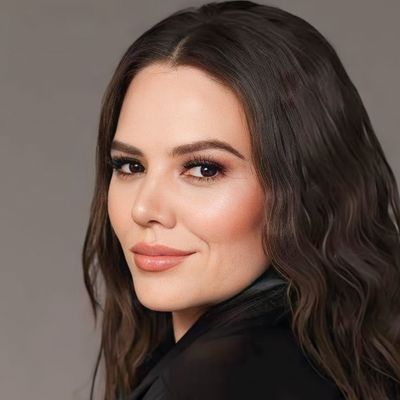
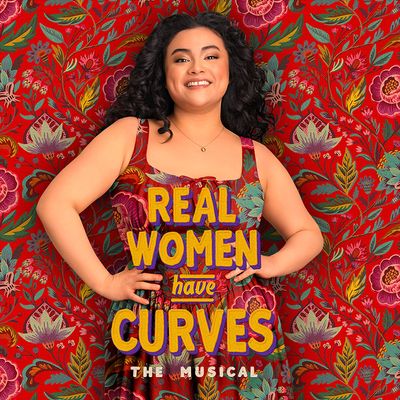
Huerta, one half of the Grammy winning band Jesse & Joy, and her co-songwriter Benjamin Velez discussing bringing the new musical "Real Women Have Curves" to Broadway — and share the surprising details of how the two of them wrote songs together, while apart, during lockdown... Read More
From the show: Stagecraft with Gordon Cox
Guests

Featured Shows
About
Huerta, one half of the Grammy winning band Jesse & Joy, and her co-songwriter Benjamin Velez discussing bringing the new musical "Real Women Have Curves" to Broadway — and share the surprising details of how the two of them wrote songs together, while apart, during lockdown.
Transcript
This transcript was automatically generated and might contain errors.
[0:00] Gordon Cox: The songwriters of the new Broadway musical, Real Women Have Curves. Huerta is a Mexican singer-songwriter who, with her brother, is one half of the duo Jesse y Joy, which has won six Latin Grammys and a Grammy Award for Best Latin Album. Velez is an award-winning musical theatre composer-lyricist whose projects include the John Leguizamo musical Kiss My Aztec. Together, Huerta and Velez have written the score to Real Women Have Curves, based on the 2002 independent film and the play that inspired it. It's the story of Ana, a young woman on the precipice of adulthood in Boyle Heights, Los Angeles, in 1987. She comes of age surrounded by a community of women, many of them undocumented immigrants, all working together in a dress factory and up against a tight deadline for their biggest job yet.
The musical is directed by Broadway regular Sergio Trujillo, a name that Huerta and Velez mention in our conversation, along with the names of three of the show's producers, Barry Weissler, Alicia Parker, and Jack Noseworthy. Also in our conversation, the two songwriters discuss the show's journey to Broadway, describe its musical palette, and share the surprising specifics of how the two of them wrote songs together while apart during lockdown. Hello, Joy and Benjamin. Thanks for joining me.
[1:33] Joy Huerta: Hello, Gordon.
[1:34] Benjamin Velez: Thank you for having us.
[1:35] Gordon Cox: Yeah. I wonder if we could start just by talking about, first, how you both got involved in the project. Joy, you've been working in the pop music industry for so much of your career. How much was musical theatre and Broadway even on your radar? Was it a thing you were interested in, or is this a new thing for you?
[1:53] Joy Huerta: Well, I obviously knew musical theatre and knew Broadway. Times that I would come and travel to New York, sometimes I'd be like, is there anything fun to go watch? Yeah, maybe occasionally, but it was not necessarily something I was inclined to or very attracted to. I keep saying that I think this became—it's just a dream I didn't realize I had, because I got to know theatre from within, and it's just been one of my favourite experiences in my life. It really has been such a different way of working from what I'm used to doing in my other day job, and it just became such a wonderful opportunity of growth for me. I just love how much I've been learning from all the beautiful people that I have surrounding me in this project.
All my creatives are wonderful people, not just Benjamin, but it's just like it's such a fun group of people to work with, and working closely with actors, first and foremost, to have someone like a group of people in front of me performing something that I've created versus, you know, I've written songs for other artists throughout my career, but it's very different. You don't get to see it up and close. This is something entirely different, and it's just been such a beautiful process, such a wonderful thing that it was right in front of me, and I never even thought that I could not only be a part of, but how wonderful it is once you're deep in it, and the process and how it all came to be is that I was approached late 2019, early 2020, and just the passion with... So, the director and one of the producers came to Mexico City, so Jack Noseworthy and Sergio Trujillo travelled to Mexico City to meet with me, and we had Barry Weissler and Alicia Parker on FaceTime, and they were just so passionate about the project, and they were so passionate about the play, and all the possibilities that this show could have.
I was just so intrigued, and it just sounded so much fun, and it turned into like an eight-hour meeting because we were just having the time of our lives just talking about all the possibilities. Then the pandemic came, and I was just like, oh my god, I got to see the... I read the play. I got to see the movie, and I was just wondering, how do they think this can be a musical? I was intrigued because I was like, I don't know how I can approach something like this. I don't know exactly what they have in mind, and it was when it hit me that as much as I'm a songwriter for a living, and I'm a singer for a living, I was just like, this is entirely different, and it's something that if it's going to be my first time, I want it to be perfect, and I asked for someone great in the business, and they found Benjamin, and they paired us up, and that's where our love story began.
[4:47] Benjamin Velez: So you two had never met before starting to work on this?
[4:47] Joy Huerta: We had never met, and honestly, it was kind of a miracle that it all ended up working so perfectly because I had been working on a concert that Sergio was directing, and this was all virtual because it was summer 2020, and this must have been around the time that they were trying to look for someone to partner with Joy, and it was a Viva Broadway concert, and I had a song from my show Kiss My Aztec in it, and Sergio really liked it, and he...
[5:12] Benjamin Velez: This is for folks who maybe don't know what that is. Kiss My Aztec is a John Leguizamo show with music that you are involved in, yeah?
[5:21] Benjamin Velez: Yes, and Sergio really liked the song, and he suggested me to Barry, and I ended up having Zooms with Barry, and then with Joy, and on our first call, I think we both...
[5:32] Joy Huerta: Hit it off.
[5:32] Benjamin Velez: Yeah, we fell for each other hard, and that was it, and then we started writing, and it was all over Zoom. We never met in person until maybe a year and a half into it after we'd already written a full draft.
[5:45] Gordon Cox: I have to say, starting in 2019, six years is actually pretty... It's on the shorter end of how long it usually takes a musical to get fully made. I feel like seven years. People tend to say it takes seven years to get a musical to Broadway, and you guys have done it in six.
[6:02] Benjamin Velez: Yeah, it's really... I mean, I didn't really start until fall of 2020, so...
[6:06] Gordon Cox: Okay.
[6:06] Benjamin Velez: It didn't even start until late 2020, because I remember it was only until 2020 that we met, because I had no idea. I am normally approached from different areas and different people to do different projects, but we... I mean, me and my brother, we have a band, and we're pretty busy, so it's like... I get approached by a lot of people for certain things, and I remember they were just very insistent during late 2019, and it wasn't until 2020 that we met, because my wife was like... She realized they were trying to reach out to me from so many different people. He looked up who these people were, and she was like, baby, I think they're like professionals. I think they know what they're doing. You should probably take the meeting.
So we met in 2020, and that was just the day before the lockdown of the pandemic. So it was like almost half a year or a year on hold. It was just more like they wanted to keep me on board and excited, so we would just have like regular meetings of like, so how's life, and have you had time to see the movie? And I'm like, yeah. Have you had any thoughts? Yeah, like I have more questions than thoughts.
[7:13] Joy Huerta: Yeah.
[7:13] Benjamin Velez: So it was literally until the moment we got a draft, and just whenever we started seeing drafts or just things that started to look more like we're shaping something, that's when we started writing, and that's when it just feels like we were just pulling one string of a pantyhose.
[7:34] Gordon Cox: You're right that it was very fast. I mean, five years from starting to Broadway is crazy, and I'm working on so many other shows that it's seven, eight, nine years, and we're still not at Broadway, and I think part of it is just everyone involved was so eager, and every new draft, we were just pushing each other to go quickly, and we didn't really take shortcuts. We still did many readings, a couple workshops, and out of town, so we didn't like skip any of those main steps to make it faster. It's just I think we were all motivated to get this to the stage as fast as possible.
[8:08] Joy Huerta: Yeah, and it sounds like, Benjamin, you did not know the story. You didn't know the play or the movie that this is based on before all this. Did you?
[8:17] Benjamin Velez: No, I didn't.
[8:17] Gordon Cox: Okay. Benjamin, did you?
[8:24] Benjamin Velez: I didn't either. I had heard of it, and I knew it was like a staple of independent cinema, but I had never seen it until this.
[8:31] Gordon Cox: And what, for each of you, do you like about the story? What is the thing that made you think, oh, this is a story I'd be interested to tell or retell?
[8:36] Joy Huerta: I think to me, it was the potential of the story that we could tell, because as it is and as it's already been told, you can't fix it. It's perfect the way it is, the way it was already showcased, the way it was already shared as a play, as a movie. What I was excited about is how much we could be inspired by it. I'm Mexican American myself. I was born and raised in Mexico City, so for me to be able to tell a little bit of my story and what it was like for me growing up in many ways and just sharing a little bit of my culture in such a big stage, it was a way of showcasing how much we all have in common, no matter where you're from, no matter where your background, no matter where, you know what I mean?
I think that that was the most catching thing for me. It was just like, it has so much potential, because it's a story about a family. It's a story that I feel we can all identify with, because no matter where you were born, you're always at a time and place in your life where you want to... It's that coming-of-age story, but it's also finding your place in life, where do you belong, the people that you're with, just all the learning that you have to do at some point in your life, and the fact that you never stop learning, but really growing within your community, within your family, all the changes that happen throughout life. I felt like it was a beautiful story that had so much potential to be told, and also thinking if we can share that with music, it could be a beautiful experience.
[10:06] Benjamin Velez: Yeah, I mean, there's something so universal about just the generational misunderstandings between parents and children that I always am intrigued and love tackling, but also when we were approached, I feel like it was, what can we bring to this to make it a musical that the other versions don't have? I think one thing I was really excited about, I love world building, I love how music can get into people's heads, and for example, the whole story at the factory and those women, they're part of the original, but you don't really get to know them as well as you can through music and song and backstory, and fleshing out some of the characters more through song, like Estella and her sister, was really fun, and giving Carmen more of a rounder shape so that you kind of understand why she is so difficult to her daughter and is so hesitant to let her leave.
So all of those things, it felt like just such a fun sandbox to play in. Often, if a story doesn't feel immediately like, oh, I know where this song, this song, and this song is going to be in this story, I find that not as exciting as when you adapt something that it feels wonderful in the form it's in, but you're trying to find a new way of telling it in a new form, and that's more exciting.
[11:22] Joy Huerta: And so then how did you, tell us a little bit about how you figured out what the song, what sings about the story, and when it sings, what was that process like?
[11:29] Joy Huerta: Well, we were having a conversation with one of the book writers yesterday, and it was interesting to do so in the way we did, because we rarely have time to actually just chat and have it be like just a conversation. Every time we see each other, it's just work, work, work, work, work, especially in these last few months. But hearing her speak, well, it was basically another interview, but hearing her speak of her way throughout the process, I feel like we were also invested from the very beginning in wanting to tell a story that could resonate with everyone that, I think, that sparked, for example,
[12:05] Joy Huerta: For me and for Benjamin, it was like we need to figure out each character in order to really figure out the sound of the play and the musical. I was brought on, and the only reason why I said yes to this is because I really wanted the challenge. Ultimately, they said, you know, you have a sound that we feel could work with the play, so I was like, okay, fantastic. At least I'm somewhere in the realm of things that I know. But what was interesting to do is create a sound for each character. Whenever we were considering the possibility of telling a story through each character through sound as well, it just became a world of possibilities. Like, the mom has had dreams of being a mariachi. Wonderful!
We created a folder, and this is the sound that she can have, and these are all the tools that we can get. We were just talking yesterday on how different this is in terms of in the play. The mom is a different type of mom than what we wanted to create in this particular version. Then we added elements of like the trifecta you were talking about yesterday, that the sister is much more present, so it's a more family dynamic. What does she sound like? You know, and what does Anna sound like? Basically, working around that started shaping our version of the play. I think that also helped our book writer and vice versa, so I think it was a very collaborative project in terms of we were all really aligned with the story we wanted to tell.
[13:39] Benjamin Velez: Yeah, and I think in terms of the exact, like how we define that sound, there were a combination of factors. This is an immigrant story, so we were talking yesterday how as an immigrant, you're always trying to figure out what you keep from where you came from and what you leave behind so that you're not too burdened down and you can still create a new life for yourself in this new place. We wanted each of the characters to have musical influences from their home countries, and they're not all Mexican; some are from El Salvador, Guatemala. And then also, what are the influences they might be hearing in the States? They're probably at the factory most of the day listening to the radio. What would be on the radio at that time?
Anna, for example, was born in the States, so her sound is definitely the closest to maybe what Joy's sound is outside of writing the show. We had fun playing with elements from '80s music since it is a period piece to some degree, so we didn't want it to feel like an '80s thing. We wanted to take aspects of all these genres and tweak the ratio depending on that character and what their personality type might be, but we wanted it all to feel cohesive as well.
[14:58] Gordon Cox: I'll have more with Joy and Benjamin right after this break.
[15:03] Gordon Cox: And now back to my conversation with the songwriters of "Real Women Have Curves," Joy Huerta and Benjamin Velez. For those of us who do not make music, it feels like such a mystery the way people compose and write songs, especially together. You know, two different people who are both working on the melody and they're crafting the music, and then they're also talking about lyrics and all of that. Can you tell us a little bit just about how the two of you work together and how ideas sort of come to you when they come and then how they're fleshed out from there as you work on them together and collaborate?
[15:37] Benjamin Velez: I feel like it was actually very helpful that we were doing this over Zoom because Joy plays guitar and I play piano. If we were both in the same room, it would be hard to kind of not be bothered by each time one of us wanted to play around with an idea. But on Zoom, we could mute ourselves, and we could each fool around with different ideas and then record voice memos and send them back and forth. We enjoyed that kind of bouncing off of ideas because it gave us the freedom to not be rushed or influenced. Then, we could be like, oh no, but I really like what you did in this one. Maybe we combine this idea with this idea. Joy was just so generous as a collaborator. I feel like we both were in terms of, well, I like what I did, but I also really like your idea, so let's try that. We kind of figured out a way to put it together.
[16:24] Joy Huerta: Right. So basically, imagine yourself hanging out with friends, and you're thinking of a song that you like, and you start humming it. Maybe the person next to you starts humming it with you but doesn't necessarily remember it the same way, so you're already both coming up with some sort of melody. Whenever you're writing with someone in the same room, it's a beautiful thing, but I think that what happened here that made it so much more interesting is that as much as we were on Zoom together, muting each other—not just the audio but the microphone—we were keeping each other company without any sound. We were both coming up with melodies on our own, and so we started getting excited and recording voice memos for each other to be like, I have an idea.
Whenever we played it to each other, it was like, oh my God, he went to a wholly different place. This is a whole other thing, and this is okay. Let's see if they work together, and if not, this could be great for this extra thing. We started merging those ideas. For me, I just love that part of the process now. Sometimes if we're together, I'll be right back. Anyway, I'll be right back. Well, on some songs, it made the process go so much faster because we each had different ideas, and we were like, oh, well, maybe your idea would be great for the verse, and my idea would be great for the bridge, and things like that. The song got pieced together so quickly. Other times, we were like, no, I really think this is a chorus, or yeah, and we had to discuss more.
But honestly, it was very fruitful in terms of just the ability to—I think sometimes it might be complicated if you're doing both music and lyrics with someone, but in this case, it didn't feel difficult.
[17:59] Benjamin Velez: No, I really feel that we were very lucky because we did hit it off from the very beginning. The process of the whole writing process, the recording process, the orchestrations, it just became such a fun thing to do. I mean, we became very close during the process. We didn't get to see each other in person until a couple of years later, and it was very weird because, okay, I mean, we've known each other, but physically, we finally broke that barrier. We just hugged each other, etc. I went to—I'm from Miami originally—and I went to visit my mom, and Joy was on tour. She happened to be in Miami, so I went with my husband and my mom, and we went to see Joy perform. Then after, we went backstage, and it was the first time I was meeting her.
We ran into each other's arms, and it felt so weird because I felt, I mean, I've known her over a year, but it was just something that you would never happen usually. The nice thing is that we were just like friends getting to work together, and that's what it feels like. I mean, it's not the type of process in which you're like, oh, my very just co-worker, right? Because there's a lot of people that have remote work, but writing music together is so intimate, so it felt like she was a family member already.
[19:11] Gordon Cox: Does music tend to come first? Is it a tune that comes first versus lyrics, or is it different for every song?
[19:17] Joy Huerta: I don't think there's a rule necessarily because there were times where we felt like we knew what we wanted to say, and it was more a matter of this is a ballad, is this a mid-tempo, is this an uptempo? There were times where we just be like, well, maybe let's just see what happens and take it from there. But that's the other thing. This is so different from what I do because this already has some sort of storyline that you have to kind of follow. Ultimately, the one thing that got me very excited is how much backstory we could bring into songs as well. Sometimes we'd go crazy and just be like giving them a whole entire identity and be like, oh my God, but imagine if she did this or if she liked that.
We would just call the book writers and be like, are you okay with this idea? Because we really, really want to push it forward, and they're like, yeah, we can even add some more things, etc. Sometimes we tried other stuff. Sometimes we tried a different tune, and maybe what we wanted to say was a little too much, and maybe we went for a different route. Like the bird song, if our bird was an entirely different thing before, and then we figured it had to be a duet, and it had to be an entirely different idea. Just things like that.
[20:40] Benjamin Velez: Yeah, I mean, I like my brain thinks of lyrics as I come up with melodies usually, so sometimes we might have come up with a song using a specific lyric, but then as the story evolved, the lyrics changed. It wasn't like this one we wrote just melodies, and then we had to fill all the lyrics. Usually, we would discuss what is this moment? What does this beat need to do for the story or for the character? We would come up with either a hook or several ideas for hooks that we would play around with musically and go from there. Then it would just continue to evolve as we wrote and fleshed out the song.
[21:13] Joy Huerta: Can you give me an example of one of those ideas that you had that you got really excited about, sort of adding fleshing out the characters or events that occurred to you musically before it was then worked in by the book writers?
[21:27] Benjamin Velez: Well, I mean, one, so Anna's love story with Henry, there's not a lot of real estate in the show for it. We've written many versions of their first song together. Several used to be when they had more scenes before that, and we got to know what we saw more of their relationship happen. But we just realized that the show wasn't really about her love story, and so we still wanted to include it because it's an important step on her journey of just becoming this more confident version of herself. But without real estate to have them actually fall for each other, there’s the cliché in musicals of like the almost love song, and I feel like this kind of falls into this hook of I already know you. We were trying to play around with how do you make people sing about how they feel about each other if they barely know anything about each other?
That's how we fell into this idea of like, I don't know you at all, but I feel like I already know you. So early in the story, we kind of sold that to the writers so that they didn't have to feel like their scene was just going to be exposition. It could be more banter; it could be more just them getting a sense of what's important to each other but not necessarily like a life story.
[22:42] Gordon Cox: Joy, did you enjoy the musical theater kind of process of getting into the voice of a character, like a different person for each different song or each different verse or chorus depending on the song you're writing? How much did writing for a specific character in a specific situation feel similar to what you do in your other day job, and how much did it feel different?
[23:07] Joy Huerta: Well, I've enjoyed every second of it. I found so much pleasure in it. I really love challenges, and this is a perfect example of what it looks like to get out of your element because as much as it has to do with music, it's so different and yet so similar. It's a bit hard to explain, but I feel like in this particular process, it's really about storytelling, and you can really let your imagination run wild. As much as you can, literally the sky is the limit, you know what I mean? Because in a song, you get to have that storytelling in maybe three minutes, and you can probably skip so many parts. But here, you can go really deep and really specific into many different areas, and one song can have so much to do with the other songs, which was also so interesting to learn as we were writing the first batch of songs. I remember the producers really wanted us to tackle.
[24:10] Joy Huerta: I wrote the opening just for fun. And Ben, I'm never going to forget this, but Benjamin was like, I think we're going to write the opening at the end, because that's going to be changing forever. And he was so right about it. And it just made so much sense because as we were evolving in the process, and we went through so many different versions and drafts of our play, we literally had to maybe rewrite a couple of versions of the one song that Anna sings. I was invited to perform that not that long ago. And during soundcheck, my body just went to muscle memory, and I was singing the first version of it. And I'm like, oh, wow, that's not the one we're using in the play right now. And how much would you create in the first songs or the last songs or any song in your play really affect the rest of them?
That's not how it works in an album, unless you're really telling a story that has to go through a beginning, a middle part and an end. And so I found that to also help me whenever I'm writing a song for my band, because it's like, you know what, it's gonna be okay. It's gonna be fine. People will understand it. You know what I mean?
[25:20] Benjamin Velez: Yeah. So what song did you end up writing first? Do you remember?
[25:24] Joy Huerta: The very, very, very first. It was a batch of four.
[25:29] Benjamin Velez: Yeah.
[25:29] Joy Huerta: It was always on the run, flying away.
[25:32] Benjamin Velez: Which always on the run, which doesn't exist anymore. Not the scene nor the song.
[25:39] Joy Huerta: Adios Andres.
[25:40] Benjamin Velez: Adios Andres. Life is like a dance?
[25:42] Joy Huerta: Yes.
[25:43] Benjamin Velez: And life is like a dance.
[25:45] Joy Huerta: Was there a song in particular that you found really hardest to get right, or the one that really challenged you the most?
[25:52] Benjamin Velez: Well, I think it was several. But I think we're still debating one.
[25:58] Joy Huerta: I'm curious which one you're gonna say.
[26:00] Benjamin Velez: Well, to me, it was two that were very specific, rough moments. And it was Already Know You, but it was also Doing It Anyway.
[26:09] Joy Huerta: Oh, yeah. I wasn't gonna say either of those.
[26:11] Benjamin Velez: Oh, my thing.
[26:12] Joy Huerta: Well, I was gonna say Oye Muchacha, because I feel like that.
[26:14] Benjamin Velez: Yeah, but in its core, it's always been the same. I think that the one that, like, for example, Already Know You, the reason why the song just was so difficult to find, it was because we had so many drafts in which we were trying to find what that love story for Ana was gonna be. And we ultimately realized that this is just one part of her journey, as much as everything else is just one part of her journey. And she's just learning where her place in life is going to be. And so whenever we were sitting down, and we create a different version of Doing It Anyway, because I feel like these two affect each other, we had this other song called Leave The Light On. And it was such a beautiful ballad, such a beautiful ballad that we were fighting for so much. And in retrospect, I don't know why we were fighting so much.
[27:00] Benjamin Velez: Oh, no, I do. I do know because the draft, I mean, the draft does change a lot. It's true. But we were also doing what had been asked of us at the time, which was we want this epic love ballad for them. And we...
[27:14] Joy Huerta: Literal words.
[27:15] Benjamin Velez: We wrote a beautiful love song, but it just felt forced because we weren't getting enough real estate to earn an epic love ballad. And it just felt more like what, I don't know, I as a writer, I'm always trying to find ways to keep the audience surprised and not do the expected thing. And so we were just like, what if this song is not this epic love song, but it's just, it's about just that excitement of the senior virginity. And it's just them, the foreplay of that. And over the drafts, we've really tried to build up Anna's love of journalism. And I think it just felt perfect to root the song in their shared love of journalism and make it this kinky, faux kinky, because it's really sweet, but it's...
[27:53] Joy Huerta: Super spoiler alerts.
[27:57] Benjamin Velez: It's just about them interviewing each other about what turned each other on. And like, that just felt like a more true to the age idea as well, because these are 18 year olds. And while they're dealing with some heavy things, at the end of the day, they're just ready and excited to start the next chapter of their lives, but they don't really know what they're doing. And we leaned into that concept of, they're just figuring it out.
[28:18] Joy Huerta: But do you remember then when we had the ballad, it was also their way of making up because they had a huge fight at some point. So it was like, it felt accurate. And yes, that's what it had been asked. But ultimately, we sat down, we figure out what all of it was going to be. And then we did Doing It Anyway. But also, we've reshaped Already Know You, because it was a different song. And then the ending was totally different. So it made no sense. And I gotta say, I feel that all the rewrites that we did were much, much better. But I feel like this before they were good.
[28:56] Benjamin Velez: In the moment, you really hate when things have to be cut, not because the song's not good, but because the story doesn't work with it anymore. And it's the hardest part is realizing that early enough in the process that you allow yourself to let go of it and move on to something else. And I think in this case, I mean, the Already Know You song is the third version of a song in that spot. The previous version was a song about them driving away together. And because so much of his scene, it still is a little bit, was focused on him buying this car, and he wants her to drive with him across the country. But in the end of the story, she now flies away and decides to not go with him by car. And so it didn't make sense to have a whole song about driving when she's going to fly.
[29:39] Joy Huerta: The show had an out-of-town tryout in late 2023, early 2024 at ART in Cambridge, Massachusetts. What did you learn about the show during that run? What surprised you about what the audience responded to?
[29:53] Benjamin Velez: Well, so much of it has to do with many of the things that we just mentioned that changed. Because we felt like, ultimately, her journey has many things happening around, but we felt like really tapping into each and every one of them was not going to give us enough time to really just focus on her. Even now during previews, we're still tweaking little things, and we're still tweaking, you know, tightening a few parts. But I feel that, I don't know if you've heard that saying, but, and I don't know how it goes in English, because I know it in Spanish, but ultimately, you never finish art, you just leave it alone and let it be. And I feel like that's where we are right now with this draft of it.
[30:38] Joy Huerta: Yeah, I mean, my takeaway from Boston was that this story works because people love being with the women in the factory. Like the women and the community of women in that factory is the heart of the show. I think that taught us two things. One, we don't need to open, we used to open the show in Boston with a Greek chorus of mariachis singing to us about the themes of the show and instead of opening with Make It Work as an opener. So Make It Work existed in some form in Boston, but we turned it more into an opening number and the world of our show is the factory. It's not Boyle Heights, which is what that previous draft was. And I think that helped us clarify the beating heart of the show is Anna understanding how strong these women are and admiring them.
[31:31] Benjamin Velez: Now that the show is on Broadway, what feels meaningful to each of you about Broadway and about seeing your work on Broadway?
[31:37] Joy Huerta: I mean, it's a magical dream for me. I'm still getting over the fact that people are coming every night to a show that we wrote. It still feels a little unbelievable to me. It's been so magical. I think that what Benjamin just said about the women, that was a no-brainer, I think, from the very beginning. We knew we had a very special group of people. We knew that showcasing that camaraderie, that sorority, that solidarity, just watching them work together, the fun they have, we wanted to be one of them and be up there with them. I think that I'm just so happy to see how people leave the theater realizing how much we have in common with people, without any tags, without any labels, without any sort of prejudgment.
I just love coming people, watch the show, and enjoy how much these women, all the fun that it feels, the energy, the atmosphere that you feel in the energy is very special. I think people are realizing that once they come. I think it's surprising people just how much fun they have with it. There are themes in the story that might feel, if you just read what the show is tackling, a little heavy, but when you experience the story in the audience, it feels like a joy bomb. It doesn't feel like we're trying to be too heavy-handed with things. We want to show some realities the way they are, but also just have you fall in love with these people. It's been so beautiful to see our cast, who are, I think, over 90% having their Broadway debuts.
They've never had this kind of opportunity to just be stars. Seeing them at the stage door, seeing people react to them on socials, and seeing them on Good Morning America, all these things that probably they've been dreaming about their whole lives, too. It's so gratifying to see the reactions, I guess. That's been so special.
[33:38] Benjamin Velez: What's next for you both?
[33:40] Joy Huerta: I have to continue on tour. I had to put a brief pause for a couple of months, because I've been still on tour. I have to go back and forth, back and forth. My family just got here to New York City, so I hadn't seen them in a while. I'm just excited to finally be with them for a little bit and have my wife come to as many shows as we can every night. But I have to go back, continue with the tour. I'm putting it out in the universe that I want to continue doing Broadway musicals. This has been wonderful. I enjoy it so much. Like I said, I don't know if I just got really, really lucky, because I just had the most amazing collaborators to work with. I hear that it really happens often, because it's a beautiful community, so I hope that I get many more chances to do so.
[34:27] Benjamin Velez: I can't wait to keep writing musicals. Of course, this one happened quickly, but many of the others I'm working on are still being rewritten and developed. I can't wait to bring more stories to life, both in theater and, hopefully, I would love to work in TV and film as well and write songs for different mediums. Honestly, just getting to Broadway is a huge milestone for my career, and I'm excited that it will hopefully lift up other stories that maybe aren't as obviously hits on the surface. Maybe people might take a chance, because I'm a writer now with that kind of pedigree.
[35:07] Joy Huerta: We will look forward to what's coming from you both in the very near future, both on tour and around the country and on Broadway and TV and film, all of it. Thank you so much, both of you, for taking the time, and happy opening.
[35:21] Benjamin Velez: Thank you.
[35:23] Joy Huerta: Thanks for talking to us.
[35:24] Benjamin Velez: Thank you so much.
[35:26] Gordon Cox: That was Joy Huerta and Benjamin Velez, the songwriters of the new Broadway musical, Real Women Have Curves.
[35:36] Gordon Cox: If you enjoyed this conversation here on Stagecraft, do us a favor. We'd so appreciate it if you would take the time to rate and review us on your favorite podcasting app. It really does help. Or tell a friend about Stagecraft. Find past episodes and subscribe at all the places you get your pods, including Apple Podcasts, Spotify, and on the Broadway Podcast Network, a great place to find more theater for your ears. Until next episode, find me on Instagram and X at Gordon B. Cox. You can also check out my newsletter about international theater. It's called JQuiz, and it's at GordonCox.Substack.com. Thanks for listening, and see you at the theater.
© Broadway Podcast Network, All Rights Reserved