

Can you imagine what it would be like to work at a Russian internet troll factory? What if your job was to creatively use social media to manipulate the U.S. population into destroying its own democracy? Well..... Read More
From the show: Russian Troll Farm, The Podcast
Guests
Featured Shows
Videos
About
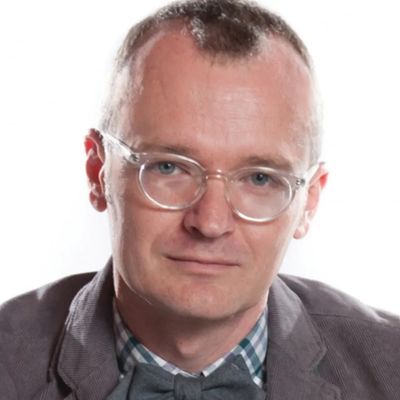
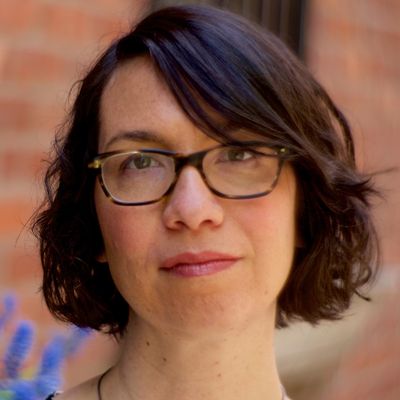
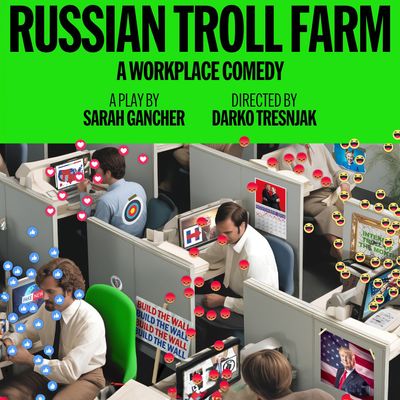
Can you imagine what it would be like to work at a Russian internet troll factory? What if your job was to creatively use social media to manipulate the U.S. population into destroying its own democracy? Well... meet Obie-winning playwright Sarah Gancher and Tony-winning Director Darko Tresnjak. Together, they answer these questions and many more in Sarah's audaciously funny, yet chilling, new play RUSSIAN TROLL FARM.
Watch the full Dateline segment used in this episode: https://www.youtube.com/watch?v=Vw6Jy5MeLZo
Hosted by show star John Lavelle, lose yourself to the world of Russian trolls on the Broadway Podcast Network.
Transcript
This transcript was automatically generated and might contain errors.
[0:13] John Lavelle: Welcome to RUSSIAN TROLL FARM, the podcast. This podcast is inspired by and a companion to Sarah Gancher’s audaciously funny, deeply relevant, subversive play, RUSSIAN TROLL FARM, set in 2016 at the Internet Research Agency in Moscow, where Russian trolls show up to work to wreak havoc on the U.S. presidential election. Their job? To get Trump elected. Good job, trolls. My name is John. John Lavelle. And I'm one of the actors in the show, and I play Steve, a maniacal sociopath who believes deeply in the glory days of the Soviet Union. Typecasting? No, just kidding. No, I don't. No, I'm not like that at all. So it's not just about me. In addition to chatting with the amazing cast and creators of the play of RUSSIAN TROLL FARM, this podcast is going out into the super scary real world to speak with cyber warfare experts and actual hackers regarding Russian's ongoing and very effective efforts to create chaos and division in the United States. What exactly is a troll farm? And why should we care in the first place?
[1:34] John Lavelle: But instead of a monotonous day of selling paper, it's a monotonous day of manipulating people's emotions and thoughts, all in the name of undermining stability and democracy. Troll farms aim to intervene in politics, elections, and public debates, by polarizing people and sharing deliberate misinformation while attacking those who are fighting for the truth. Hashtag NBD. For all you non-hipsters out there, that means no big deal. Okay, it's called sarcasm, folks. I'm not a hipster, although my genes are very tight. Of course, it's a big deal. Ugh. Okay, moving on. Back in January of 2015, a Russian journalist named Ludmila Sovchik infiltrated an actual troll factory in Russian, working there for over two months. Subsequently, she published her story, which was then translated from Russian and released as a Dateline segment in 2018. Here's a little of what she had to say.
[2:28] Ludmila Sovchik: Trolls by the departments, depending on what they've been working on. Social media, YouTube, media commentaries, blogging, and so on. There was this caste atmosphere at the factory. The social media commentators who were writing brief, often offensive comments, were basically considered the lower cast of trolls. People writing and speaking English had higher wages. They were working on a separate floor, and basically, they were the elite. Much like all the characters in the play, the real trolls would assume multiple fake identities, personas, social media profiles, you name it, often creating 100% fabricated conversations with themselves, using their own multiple identities and profiles in order to get others to engage and begin to believe these fabricated stories are actual fact.
Some might even call these alternative facts. I'm looking at you, Kellyanne. The aim of the trolls is to represent human appearance. The main thing is not to copy paste. It's strictly prohibited. You have to write from yourself, with your own words. Following the assignment, but as personally as possible, it's completely welcome there to create facts from scratch in order to create a certain impression.
[3:44] Ludmila Sovchik: When a person comes to the troll factory, they'll receive a list of topics that the factory is working on that day. That includes what event happened, and then what should be written about it, and to what emotional state the troll should bring the audience to. These topics, this agenda, it's absolutely identical to the one on Russian TV, which is basically a propaganda machine. It's Russian's successes, and of course, Vladimir Putin, who's being praised every second. Thus, the US is always among the top subjects on that list. But I hear you asking yourself, why would people do this type of job in the first place? At the troll factory, mostly the young people in their 20s work. Wages are high for people of this social standing, often much higher than those of doctors and teachers. That's why people go there for the money.
[4:35] Ludmila Sovchik: Oh, wait, you just heard that. But again, why should we even care? Raise your hand if you like to have your thoughts and emotions manipulated. I'm really afraid of when Russian propaganda skillfully diverts from the real international issues, topics that draw us away from solving life problems inside Russian and all over the world. Okay, now it's time to zoom in a little. The play, RUSSIAN TROLL FARM, is about the 2016 election, but the impact of Russian trolls even today is massively greater.
[5:15] Sarah Gancher: I began writing this play because I got obsessed with the subject of the interference from Russian trolls during the 2016 election, particularly those that worked at the Internet Research Agency in St. Petersburg in Russian. During the election season, sort of this the summer and the fall leading up to that election, I just I was on Facebook a lot and I started noticing just posts that were showing up in my feed that normally felt like they wouldn't show up in my feed. I started noticing like Facebook telling me that friends of mine liked Donald Trump when I knew that wasn't the case. I started noticing people that I didn't know and had never heard of showing up in comment threads on my friends' posts where nobody sort of knew who these people were, and they were getting in really, really virulent, angry fights.
[6:14] Sarah Gancher: And Facebook started pushing more and more sort of posts and new, you know, new accounts to me that had this kind of grammar that I really didn't recognize, where it sort of felt like not that people are having bad grammar because they're writing in the way that they speak, but some sort of like new and totally different. It sort of felt a little bit like space aliens to me. And I actually thought at first that it was a new kind of slang. And after the election, I found out that some of the accounts that I followed were actually not American accounts, but were being run out of the Internet Research Agency in St. Petersburg. And the more that I learned about this job, that there's like a whole building full of people to impersonate Americans to essentially stage fights and poke and prod people and make us angry and make us disgusted and make us feel like it's pointless to try to understand other people to try to work with other people. The more that I learned about this, the more that I just thought this is so insane that this is a job. It was very, very, very compelling to me.
[7:26] Sarah Gancher: I found myself sometimes even fantasizing about like, you know, how much does this pay anyway? You know, because like it feels like a thing that I would probably be really good at. If I didn't know better, I think Sarah was a little bit jealous.
[7:40] John Lavelle: I was, I actually was a little bit jealous, right?
[7:43] Sarah Gancher: If you left me to my own devices, I would be writing 12 hours a day anyway, right? And you know, I realized that the reason why this was so compelling and interesting to me was that these people are essentially our playwrights. Um they're making up characters, they're writing dialogue, they are provoking really strong emotions. That's their job. They're really good at it. Then I started to realize, like, oh, so this thing that I do that I've devoted my life to, the people in this building have weaponized. That felt really fascinating to me. And then I thought about uh just sort of came to me the idea of making a workplace comedy. What must the experience of working in this building be like? How do you need to think about this job in order to live with yourself and do it?
You know, I I've uh all of that has sort of gone into the play. I suspect the characters in the play could be transplanted into any other mundane workplace comedy. They're ultimately just trying to make ends meet for now, most of whom all have larger aspirations and dreams for their lives. Maybe Sarah saw herself in one or two of them. Okay, all of them. There is an ex-journalist who's there just to make money. Who she's the new girl in the office. Her name is Masha. I would say that that's if I imagine myself in this play, that's the kind of like the me character. Like her love interest is uh her boss in the department who is a frustrated screenwriter who is trapped doing this job, but is gonna really try to get his artistic yah yas out by via trolling.
That's a situation I could easily imagine myself in, easily. There is a very Vulcan sort of programmer type troll who has a whole secret life online named Igor, and the way that he gets so completely lost in his writing, I relate to. There's an really despicable and awful outright troll named Steve, who is using the tools of his trolling trade to try to climb the corporate ladder at this office, played by John Lavelle. Hey, that's me. But I am facing my own fears about the world by trying to figure out how he thinks and how he ticks, and he is very fun to write lines for. So I think probably in a certain way you need to relate to people in order to write jokes for them. And then their boss is a former KGB and current sort of intelligence uh affiliated woman named Luba, who has lived through a lot and seen a lot and sort of really had to shape herself emotionally to her job.
I relate to her too in in a certain way, and in the way in which we all have to figure out a way to survive and move through this world emotionally without shattering. And um, we all have to make choices that we wouldn't love in the natural normal world love to make in order to just keep moving forward as human beings. So I will also say this that every act is from a different character's perspective and is in a different style. We're living in different universes. We're living completely different stories, but we're side by side. You know, it's not just a stylistic choice. It's also trying to make a comment about the way that we move through the world together, but we're living really different stories.
[10:51] John Lavelle: We'll be taking a quick break, but please stay tuned for more Russian trolls. Darko Tresnjak is our Steam director, who, among other things, won a Tony Award in 2014 for his direction of A Gentleman's Guide to Love and Murder. When I read the play, it jumped off the page for me. I was like, wow, what an entertaining and frightening piece of educational theater. As somebody who's a, you know, an emigrant who loves this country very much. I was frightened and disgusted that this was happening. And then reading this play has helped me move through the world with greater courage. Strangely enough, it doesn't make me more frightened. I learned something about my own responses. Elderly people especially should see this play because uh they may not want to think about it, but it influences the lives of their children and their grandchildren.
And when we did this in Rochester, at the end of the play, there's an amazing thing that happens. The cast at the end of the curtain call faces upstage and looks at the back wall, and then we project tweets, the actual Russian troll tweets. And so many people in Rochester just stayed there and watched these quotes scroll by, and you could tell that the play has the power to change people's minds and open up minds.
[12:08] Sarah Gancher: Ew, wait a second. Darko said this play is educational, gross. Doesn't educational sort of imply something you might not want to do, like doing homework or eating your vegetables? Vegetables, well well prepared can be completely delicious, right? It's a neurological fact that one of the greatest pleasures that human beings have is learning. So I want to frame educational in that way is that you know, we're we're trying to make it delicious and to not not make it feel like homework. I mean, homework is not this crazy. I'll say. Don't worry, dear listener. It is possible to learn about all of this intense subject matter, educate yourself, and still laugh at the same time. I love putting high and and low, funny and sad, comic and tragic, super uh intellectual and super silly and stupid right next to each other.
It for me, that's my experience of the world. So that's that's the way I have to write. I'm not as interested in uh a kind of like a smoothed out, leveled up, blanched, perfect with no seams experience. Anyway, I and I think it's part of what makes the show feel very roller coaster-y, you know. It's uh there's there's always something new happening, especially in this version, which is very, you know, a tight hundred minutes. It it starts going and it doesn't let you off till the end.
[13:33] John Lavelle: Cool. So now we're nearing the end of this first episode, and you might be wondering, what else could we possibly tell you since I've already told you literally everything you need to know? Well, I asked Darko and Sarah why they think RUSSIAN TROLL FARM is such an important play. Here's what they had to say.
[13:49] Darko Tresnjak: I think this play lands differently with different people. I think that's fantastic. You know what I mean? It's polarizing, you know. I think it is, and I think that's wonderful. And for me personally, I will say that working on it, and I know for some people seeing it, it's very cathartic. It's sort of liberating. You can't avoid it. You know. So so you get you get to laugh about it and think about it. I've had many, many people tell me that this play makes them feel more brave. Um, so if you are feeling scared, if you're feeling anxious, if you're feeling like you've compartmentalized maybe a little bit too much, and there's stuff that is uh in the past or coming up that you don't want to look at, I recommend this to you. We're gonna get through it together.
[14:34] John Lavelle: Dear listeners, I'm so glad you joined us for episode one of RUSSIAN TROLL FARM, the podcast. Make sure to join us for our next episode dissecting some of the deeper impacts of Trolls Farms with the cast of the play, RUSSIAN TROLL FARM, Christine Lottie, Haskell King, Renata Friedman, Hattie Tabal, and of course, me, John Lavelle. No, that list wasn't in talent or success order, although it kind of worked out that way. Thanks to Sarah Goodman and Alan Seals, your sound engineers and editors, and to Kim Garris, the head of production over at Broadway Podcast Network. I'm John Lavelle, your host, and so much more. Read more about this episode and all others by visiting bpn.fm/slash RUSSIAN TROLL FARM. Das Vedanya.
© Broadway Podcast Network, All Rights Reserved