

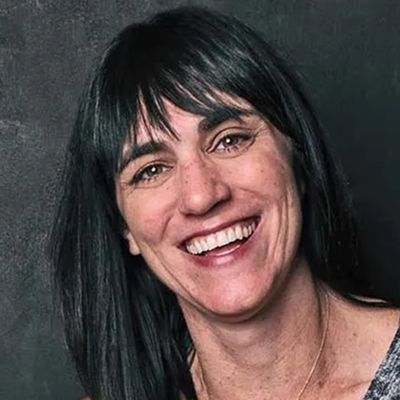
What does it take to build a lasting career in theatre as a director when the hustle never ends? Two-time Tony-nominated director Leigh Silverman (Suffs, Violet, Yellow Face) joins us for a refreshingly candid conversation about the art of directing, her deep love of playwrights and developing new work, and what thirty years of navigating the industry have taught her... Read More
From the show: Empowered Artist Collective Podcast - for actors, singers, dancers, writers, creators and performers
Guests
Featured Shows

About
What does it take to build a lasting career in theatre as a director when the hustle never ends? Two-time Tony-nominated director Leigh Silverman (Suffs, Violet, Yellow Face) joins us for a refreshingly candid conversation about the art of directing, her deep love of playwrights and developing new work, and what thirty years of navigating the industry have taught her. We trace her unexpected journey from aspiring actor to director, how studying playwriting shaped her approach to storytelling, and why bringing original work to life requires curiosity, collaboration, and a willingness to embrace uncertainty. Leigh pulls back the curtain on what directors think in the audition room, why creative relationships matter more than ego, and the complicated realities of being a woman directing on Broadway. It's a conversation about redefining success, embracing the long game, and building a full artistic life.
Leigh Silverman has directed over 60 world premiere new plays and musicals. She received Tony nominations for her direction of the musicals Suffs and Violet and received a 2011 Obie Award and 2019 Obie for Sustained Excellence. Broadway credits include: Yellow Face (Roundabout); Suffs (Tony nomination); Grand Horizons; The Lifespan of a Fact; Violet (Tony nomination); Chinglish; Well. Select Off-Broadway: The Unknown (Studio Seaview), The Seat of Our Pants (Drama League and Drama Desk nom; Public Theater); Harry Clarke (West End; Berkeley Rep; Vineyard Theatre/Audible, Minetta Lane; Lortel nom); The Search for Signs of Intelligent Life in the Universe (Shed, Taper); Soft Power (Public Theater; Ahmanson Theater/ Curran Theater; Drama Desk nom); Sweet Charity (New Group).
Download the FREE Monologue Selection Toolkit: www.jenniferapple.net/freebie
Want to coach with Jennifer? Schedule a session here! www.calendarpa.com/@jenniferapple
Learn more about Jennifer Apple: www.jenniferapple.net
Jennifer Apple’s IG: @JenniferApple_
EAC IG: @EmpoweredArtistCollective
EAC TikTok: @EmpowerArtistCollective
Learn more: https://www.empoweredartistcollective.com/
Sign up for our newsletter: https://www.empoweredartistcollective.com/newslettersignup
Check Out Our Merch: https://empoweredartistcollective.threadless.com
Any thoughts you'd like to share? Email us at EmpoweredArtistCollective@gmail.com
Transcript
This transcript was automatically generated and might contain errors.
[0:00] Leigh Silverman: I'm Leigh Silverman. I'm here at the Empowered Artist Collective Podcast.
[0:10] Jennifer Apple: Hello, welcome to the Empowered Artist Collective Podcast. I'm your host, Jennifer Apple, actor, coach, monologue whisperer, writer, dog mom, and creator of the Empowered Artist Framework. And I believe there's another way to build a creative, sustainable life in the arts that doesn't involve losing yourself. I am so glad you're here. In this episode, I sat down with two-time Tony-nominated and Obie Award-winning director Leigh Silverman, whose work includes Suffs, Violet, and Yellowface, just to name a few, to talk about her 30-year career in theater, her deep love of playwrights, and what it takes to bring original stories to life. Leigh shares her journey to directing, why studying playwriting fundamentally shaped her approach to the craft, and how she builds creative teams that embrace experimentation, artistic tension, and the possibility of discovering something none of them could have imagined alone.
We also get into the audition process from the director's side of the table, what actors can and can't control, what it's like being a woman directing on Broadway, what Tony nominations do and don't change, and the importance of building relationships that sustain a career over decades. What I love about this conversation is Leigh's reminder that it's all about the people you create with, the work you continue to make, and building a life that allows you to keep doing it. This episode is powered by Welcome to Times Square.com, the billboard where you can be a star for a day. Enjoy!
[1:31] Leigh Silverman: Thank you so much for having me. I'm so excited that you are here. For anybody who does not know you, who are you today?
[1:39] Leigh Silverman: Wow, today. I'm a Q-train rider, a slow Q-train rider. I am a theater director, deep, deep. I'm feeling it deep today. I am excited. That's who I am today.
[1:58] Jennifer Apple: I love it. I love it. The Q-train, unrelatable, the feeling deep in the director hat. I'm curious what that is today.
[2:09] Leigh Silverman: It's really a combination of juggling a lot of different projects. It's talking to a lot of different people about a lot of different aspects of those projects, all within the course of a day. It's one of the things I love most about particularly being someone who does plays and musicals. It means a Zoom from some location where I'm going to find to talk to a writer about a project, a couple of auditions that are happening, a meeting with designers about a project, just a lot of planting a lot of seeds today for things that are going to come up in the future. I think so much of directing is about being at all stages inside of a process at any one time. You have the thing you're working on right now, and then you have the thing you're working on in the summer, and then you have the thing you're working on in the fall, and then next January, and then a year from now, and a year from now, and a year from now.
[3:21] Leigh Silverman: I imagine also beyond that, maybe the word is pitching, but getting yourself in the room for the thing that you want down the line.
[3:26] Leigh Silverman: Absolutely. It's funny. I had lunch with someone, a great young director who had assisted me earlier this year. She's like, oh, I'm meeting with this person, and I'm just doing this hustle, and it's so exhausting. She described exactly the day that I was having. Obviously, it's different exposure. It's different money. Everything is different, but it's exactly the same. I was like, I know you feel like it's still out there and that you're just trying to get to there, but you're there. That's actually what my life is too. I think the difference is obviously the room, and the people, and the accessibility, and the age, the finances. There's lots of the event of what you're doing. The actual activities is the thing you're going to be doing forever.
There's a way in which just finding some buckle in and get used to it feeling that I was trying to offer her, and also a sense of yes, that feeling of when will I get there, I think is also something that I don't know a director or a person in the arts who doesn't feel that way. I do think that that's also part of the ride. It's like figuring out where that ambition piece, jealousy piece, drive piece, the part that knows and has a vision for where you want to be and where you want to end up. Handling that, holding that, shaking hands with those feelings is also part of the experience, at least for me, and certainly in relationship to being a freelance theater person.
[5:06] Jennifer Apple: Everything that you're saying is completely relatable as an actor. I feel like many of us sometimes forget that most of the people in the ecosystem that we are working in are all freelancers. Then it seems like, oh, well, they keep working. They must be employed by the thing, unless you are actually employed by a theater and have a salary job. Barring those folks, most of us are freelancers. That hustle, that learning to get comfortable with that repetitive putting yourself out there, trying, hoping it sticks, communicating, relationships, networking, whatever we want to call it, that is the work. When people are like, oh, you're an actor. It's like, no, no, my job actually is auditioning. If I'm not learning to get comfortable and cozy and frankly love mostly, hopefully most of the time, that process, then maybe I should do it more recreationally as opposed to the career part.
It's always interesting to think about the people who are the tiers above you and like, oh, well, it seems like they just have offer only. They never have to. Then you're remembering that there's a bunch of people actually operating at that tier. Meryl Streep is maybe an outlier, but the other people who are in that same field, they're all competing with each other. I don't love that word, but we're all—
[6:24] Leigh Silverman: Well, I just think we're all sort of doing the same thing and we're doing it at different levels and in different ways and certainly with different financial gain or with different levels of accessibility. Certainly, it's different for women. It's different for people of color. There's all different kinds of barriers and obstacles, but I think as a whole, we're all really toiling in kind of exactly the same way. There is something like, I don't know, maybe comforting in that for somebody. I find it that way.
[7:00] Leigh Silverman: I think that's what I was saying to this young director yesterday as I was like, I don't know if it gives you any relief to know that I feel exactly what you're feeling and to also know that this is it. That's what it is. That's what it feels like. This is my 30th year. I moved to New York in 1996. I've been freelance every second of the whole time. Maybe that's why I feel particularly tired today, but I do think that there is or I hope that that provides some sense of just, if not comfort, then at least sense that you're not alone and that we're kind of all handling it, not handling it in the same ways.
[7:50] Jennifer Apple: Yeah. As somebody who is a proud alum of Carnegie Mellon, I'm curious how you found yourself in the director lane for these 30 years. What was the impetus? How did you know that that was a thing to even do, the beginnings of your directing journey?
[8:08] Leigh Silverman: Yeah. I was like a theater rat like everybody else. I just love theater. I didn't see a lot of theater. I actually wasn't brought to a lot of theater. I grew up in Maryland. I was an only child. I made up plays in my room. I made all my friends do plays, like I think many of us. It wasn't part of my life, really. I just was obsessed with it. I went to this little acting school after-school program. We did Cats. I've been showing my many friends who are working on this incredible, ravishing production of Cats on me as the Rum Tum Tugger. Yeah, quality work there. I was about 15. I was doing a summer theater abroad program. I was having a really hard time in high school. My mom had just died. I was really struggling.
I felt very alone. I got to this theater program. Everyone had to do a monologue and then talk about the plays they were from. Afterwards, the teacher, who in my mind I remember being about 150 years old. She was probably like 40. She asked me to stay after and she said, really frankly to me, Lee, you are terrible. You are not an actor at all, but you're very smart. You had great things to say. I was wondering if you'd use this time this summer to actually assist me and think about directing. For some reason, it must have really struck a chord. Literally, this complete stranger who I just met gave me this piece of advice and I've never looked back. I don't really know why I believed her except that it felt so immediately right.
She gave me Ibsen and Shaw and Chekhov and opened my eyes to this whole other way of engaging with the theater. I would go with her from person to person, scene to scene, watch her work with people. I just came back from that time and was like, I'm a director. I did the CMU pre-college program between my junior and senior year of high school. At the end of that summer, I was invited to join the program and started my senior year of high school knowing I was going to CMU for directing. And it saved my life. The distress I was in to know that I had this way out, that I was going to go someplace that wanted me, that thought I was special, where I felt comfortable, where I could feel like I could be myself, was everything at that time.
And then I went to Carnegie Mellon and I was a director there. We had a very small class of people. And somewhere in my sophomore year, I became really obsessed with the idea of working with playwrights. I was like, yeah, yeah, I want to learn how to ground plan and where do you put the couch and where's the fountain in summer and smoke. But what I really felt like I wanted to do was sit with those writers. The playwriting program was just for grads. And they said, oh, well, you can sit in. And then I sat in on a couple of classes and then they said, well, you can apply. And so I applied and they let me in and I became sort of a graduate playwright at the same time that I was an undergrad director.
And I'm really not a good writer. I think that I'm now as a director, I'm a very good dramaturgical director. And I can really say that my directing and specifically my love and passion for new work came from those two years that I sat with those writers and learned what it is to talk about play and structure and character. I mean, everything about being a playwright made me a better director. And it, I think, gave me a certain amount of cred when I moved to New York to say that I had gone through this program. It's been a really it was it was an incredible way to.
[12:54] Leigh Silverman: Mine or somebody I looked up to told me something and it stuck with me to the point that that's what like led me to get my master's. Like I was 15 when it happened and it was so influential that it was like I have to keep proving this until I actually believe it myself because it didn't have the follow-through of, "Hey, therefore if this is what it is, let me help you with this," or "Let me offer this to you." And I think many artists, I know many artists, certainly ones I coach, have just like there has been like that one moment, whether it was somebody that they didn't know very well and then it was influential or somebody they respected and they said something in passing that they probably wouldn't even remember they had said that sticks with them and kind of dictates the course of their life.
Yeah, and so how beautiful that this direct moment that could have been derailing of like your terrible period was then like actually this isn't the path, here's this beautiful offering, yeah try this.
[13:39] Jennifer Apple: Well, it's interesting that you just articulated that way. I've never quite thought of it. I think in some ways it was helpful she was a stranger, you know, and very disassociated from anyone I was trying to impress or that I knew or someone that I would feel defensive around. Um, yeah, she had like kind of an authority but also no emotional baggage attached.
[14:00] Leigh Silverman: Yeah, you were saying if she's like a hundred thousand years old, like she clearly has lived for ages and like yes seen things. Yes, I mean I have thought about her so many times.
[14:09] Jennifer Apple: Um, have you ever reached out?
[14:11] Leigh Silverman: No, I mean there was, yeah, I mean I would have no way to. Yeah, it wasn't like we had even that deep of a connection even that summer but yeah she really I think was able to access something and say it to me for whatever reason in that moment in a way that I could hear and appreciate.
[14:28] Jennifer Apple: Yeah, I think it's just a valuable lesson of like how can we who are potentially giving advice or folks in mentor positions or leadership positions, how can we give feedback in a way that is clear and kind but also in theory helpful? Yeah, um I just think that that's yeah it's created your entire career which is really an insanely beautiful thing and wild journey.
[14:52] Leigh Silverman: Yeah, um and so now you have created a ton of gorgeous pieces you've brought them to life with folks you've taken them over courses of development. Um, I mean you have a deep relationship with the public and I'm curious to know about these long relationships that you've built, the ones that you care to, how you do that and your process with um deepening those.
[15:11] Leigh Silverman: Yeah, I mean I think this is a business built on relationships for sure. Um, it has been for me. Um, I would say the sign of success is for me the depth of relationships that I have, the people I've worked with over and over, people who come back to me who say I have a new idea, I have a new play. Um, I just was on a call yesterday with um one of my favorite collaborators who I've worked with many times, David Henry Wong, and we have a show that is happening um uh in January but he's like, "Oh, I have this idea about this other thing, can we talk about it?" And I just, I think for me that's really the sign um or the sign for me of of success or people who want to work with you again.
[15:59] Leigh Silverman: And I will say that um because I also really like to talk about things that don't go well as well as things that go well because I think it's um just part of it which is also being able to really look at when it hasn't gone well. Um, and I don't mean in any kind of critical way or in any kind of like what project like has a good review or a life or anything like that but just why did a relationship fail or why um did the process derail, what happened that made something difficult whether it's with a writer or an actor designer. Um, and that's also um for me a really important piece of it which is to learn from it, um to grow from it, to um understand my part of it, to obviously try and make repair when possible. Um, and I think it's, it's also part of the um the business which hinges so much on relationships and I think that in a way people get hired because of their relationship generally.
[17:12] Leigh Silverman: I would say, let me just speak about directors. I think directors get hired because someone saw their work and liked it, yeah, and met them and liked them and wanted to take a chance or somebody vouched for them. And I think that that's something that I feel very strongly about is you have to be always creating your own work, you have to give people for young directors, you know, um you have to give people something to see and you have to be simultaneously building those relationships because people will write to me all the time and say how is this person, how is that person, did you see this, did you see that, like we talk to each other.
[17:52] Leigh Silverman: And so I think this idea that it's just relationship based or that it's just, you know, there are these two components that really, really go hand in hand and the nepotism or the nepotistic part of the business is its most wonderful and also uh can be the most painful because if a relationship turns or goes sour, it doesn't work out, that's very difficult and also if you don't know someone that you're desperate to know, getting to them and figuring it out when they know other people is very difficult. So um but I really think those things go hand in hand.
[18:27] Jennifer Apple: Yeah, I really appreciate you naming that because I feel like in some ways it feels like the elephant in the room sometimes. It just seems like, oh well they're there, it's like no actually what are the pieces that have maybe even years prior laid the foundation for that and the nurturing that goes into sustaining those relationships or even creating them. Um, it's a lot of potential follow-ups and follow-through and patience and grace and um and I think the humanity part of like we are actually all people when push comes to shove and yes we're creating art and we're trying to you know build this thing that hopefully has a life and whatever and how are we showing up for one another in this and do we want to spend time with each other while we're doing it?
[19:11] Leigh Silverman: That's right. Um, which I think is always something to keep in mind for all of us. I am curious, your directing style, yeah, um are you somebody who you know for every project it's the same, you do this kind of research and then you do this and there's a book or whatever, is it like you know depending on the project, depending on the creatives, who do you bring in, when do you bring them in, all of that?
[19:37] Leigh Silverman: It's never the same. Cool, it's never, I mean it's weird, it's like the job is exactly the same and completely different on every show. Um, yeah I, what's my style? I mean I will say a few constants about me, yeah. Um, I don't know if this is like style or aesthetic or personality, um but I like constant communication. I like a kind of mind meld with the people I'm working with.
[20:06] Jennifer Apple: What does that mean to you?
[20:08] Leigh Silverman: It means like um send me the rewrite of that scene, I don't need you to do the full play, like let me see the direction you're going with the designer. Um, show me the napkin sketches, like let's have a few different versions. Um, I'm really, I'm always really interested in kind of the C idea which means not my idea or not your idea but like the next idea and not C minus like grade but like C being the next, yeah, and the next and the next.
[20:40] Leigh Silverman: And I think that it's, it's one of the things about particularly working on new work that is maddening, you know, it's always maddening to make work because you never know kind of where it's going to go or how it's going to be or how you're going to make it but with a new play it's like you frequently are starting rehearsal and you don't know exactly how it's going to end, like there's not a finished script or with a new musical we're not sure where that song goes or if that song should be, there's kind of like, you know, I sometimes describe it as like the difference between new work and a revival is like a revival as you're walking into a pitch black room but like you know there's a wall on a floor and like a new play you don't know where, you know, you could be standing on the ceiling, you have no idea where the floor is.
[21:29] Leigh Silverman: Yeah, and that even if you need a floor, yeah exactly. And I think that so for me being able to really be in communication, I like presence from people. Um, I have um particularly designers I will say I sort of now go into a um in the pre-production process I will say like if you can't be there for all of tech that's totally fine, this project probably isn't for you. Um, I need the collaboration. I used to do a thing early in my career where I would invite designers over and like eat, you know, pizza and drink wine and like read the play with the designers because like making them act and having them in like weirdly it sort of put a different level of investment in from the designers to do that.
[22:13] Leigh Silverman: Um, they understood the play differently when they spoke the words and it's like then one of them was like I hate this, yeah, yeah, yeah. Well, well or it's just like now people are busy and like everyone's seen a million readings or workshops but I, I just, I think it's really hard to make work over zoom when it's gonna live in a three-dimensional theater space and you kind of need people to show up and when designers have um one of my real pet peeves is when designers say I can be there, we can meet in person and then it turns out we never meet in person and they don't can't show up.
[22:52] Leigh Silverman: Like that's an immediate for me like betrayal of like what I feel like is an important part of the um theater making process and also for me what I need and require. Um, I think it's important that we experience the same thing together in the room um before we make it, while we're making it, while we're putting it together in tech. Um, it's, it's also because I will assemble the people that I assemble because I want their feedback and I want to get to that next idea and I can't do it if we're not all together.
[23:31] Leigh Silverman: So that's something that I really care about. I have over the years, you know, really um been more lenient and less lenient and I'm in a kind of strict position on that at the moment. Um, I would say that um another kind of thing that I really care about is people who are really about making the work and not about themselves and um when there's a sense of like but how is this good for me and that ego permeates everything it really um is a huge turnoff for me.
[24:02] Leigh Silverman: Um, and I think it's um it serves people and it can often lead to great gains and it just for me is kind of antithetical to making a piece. Um, I'm really uh not into people who like um uh to yell scream confrontation like that's a thing so for me I'm just always cultivating a room full of adventurous creative and by room I don't mean just actors, writers, designers, producers, you know, people who want to um make the work with ferocity, rigor, adventuresomeness, fun, creativity and are.
[25:38] Jennifer Apple: I love that framing because it does feel like the container that you A. know for yourself and B. recognize for the work are instrumental to then throw in the details. The details, not that they don't matter, but if you have the container of collaboration, you have the container of people who want to be there and participate and are all there for the purpose of the art with each other, then you are all working towards the same goal and then it feels like whatever the work is, is going to blossom.
[26:12] Leigh Silverman: I think that 100% is your directing style and I also appreciate you naming the things that you don't love and also what potentially hinders for you your particular process and the way that you create art. I think that's why I have various directors in this seat and ask them a version of this because I want to name also that there isn't just the one way to do this. People go and study and they're like, well, if this person went here, they must do it this way or if this person knows this or worked here, they must do it this way. It's like actually, no, let's learn that there's many ways to find yours.
[26:43] Leigh Silverman: Well, it's so interesting that you say that and I just thought of one other too, but what I was going to say is that when I'm on panels with other directors, I'm constantly like, wow, that's what you need to do your work. That's so interesting. I need something else to do my best work and we're very different directors and we've all had very different careers and I will say one of the things that's amazing about directing is that people get into directing from different paths, from stage management, from acting, from biology, and so how people find their way to it is so interesting, from choreographing. That's always really interesting to me and I'm constantly amazed when I talk to other directors about how they do it.
[27:32] Leigh Silverman: The other thing I just wanted to add that I really care about when I put together a design team is that I have not just a room full of people that I've worked with before. So I always try and have at least one new designer in the team. I really care about diversity of voices, not just racial diversity, but age diversity and experience diversity with me. So I think from my early days of assisting, I would just see directors assemble the same teams over and over again and there was a kind of, I was talking to Sam Pinkleton about this like echo chamber thing where everyone just would be nodding at each other all the time and there was a kind of same same and something that I just think it keeps you honest and it keeps you a little bit more, at least in my case, present because you're not just like doing like, you're not just saying to someone like, it's, you know, the thing we did last time with the stairs, let's do that thing.
Like you maybe want to do that stair thing again, but then someone's going, Oh, what did you do? And then they get to say, Oh, on my last project, I did it this way. And then you have this, like you do the same thing, but you do it slightly differently because of that new opinion, that new point of view.
[28:46] Leigh Silverman: And so I care about that very, very much and always look for it. And I think that the, it goes back to this thing about that it is a nepotistic business and that you love the people that you love and you work with the people. And sometimes I just don't work with those same designers again, because I am or those same actors again, because I'm looking for a kind of diverse, new person to bring into the mix. And sometimes that is a huge mistake. And believe me, I have gotten fucking burned from it. But sometimes it has yielded incredible results. And I think I'm just always anxious to both make work with the people that I love and also to just make sure that it doesn't just become like this echo chamber of nodding heads.
[29:36] Jennifer Apple: Yeah, it's so interesting to me because I feel like there's two, not like, you know, people have thought, but there's like two categories in some ways of like, you know, the Martin Scorsese always works with Leonardo DiCaprio, why? Because they speak the same language. And therefore, it's so much easier just to do the thing and you don't have to really get into it. You just kind of know. And then what you're talking about, which is how are we continuously looking inwards and growing and being comfortable with being uncomfortable? I think that's what I'm hearing a lot in the way that you're talking about, I'd say your tenants, your foundation, in that it seems that you really do value the healthy discomfort of and maybe that's not the word for it.
But the like the growth opportunity of how can somebody who I might not have experience with beforehand, but they come with their plethora of their experience, bring that newness into this piece. And then we have to negotiate that and collaborate for the C version of this of what is that thing?
[30:32] Leigh Silverman: Yeah. And I love that. And I, you know, I think it's also naming the thing in the room that's for so many folks of like, well, the same people are always in the same shows. The same people are always hired. How do I find myself in these rooms? So I think here there are people out here who are really craving a new voice, a new perspective. I just I think it's a wonderful thing to remind folks that it isn't actually as bleak as perhaps they might think about the ecosystem sometimes.
[30:57] Leigh Silverman: Definitely. And I think that the particularly about acting and actors, I am like always really excited to give someone a break or like to give someone this opportunity. I mean, something that I am so proud of are the number of Broadway debuts for Suffs, for Yellow Face. You know, I think it's it's for me and I don't want to generalize about directors on the whole, but for many of us, that is an exciting opportunity to feel like you're discovering someone. And it is a real invitation to people to be that person. And I yeah, I think it's it's it's one of my it's one of the great joys about directing is to find that person who's just like, oh, you like this is exciting.
[31:55] Jennifer Apple: I am curious then with that opening, what has been some of the most or maybe you have like a particular memorable audition experience of an actor and then maybe the opposite of one that you're like, please that I will remember that forever for all of the wrong reasons.
[32:12] Leigh Silverman: Yeah. Um, on the whole. Directors and casting directors and people who are sitting behind the table. Have a kind of picture of the whole company. They have a picture of all kinds of things related to the production. And frequently when an actor comes into the room, they don't have any of that information. And the thing that I always try and remind actors when I have the chance is you don't have any information about what is happening on our side. You don't know the chessboard of coverage that we're thinking about in our heads all the time for parts and who's going to cover who and how that's going to work. You don't have information about what writing is going to change and how the parts going to change.
You don't have information about requirements that maybe are coming from the theater like you don't you just don't you're not privy. Thank God you don't have that information. That's actually my job. So there's very little that actors can do aside from bring their best selves and show in the most authentic way who you are and what you can do. You the rest of it is unknowable to you.
[33:43] Leigh Silverman: It's not just that it's sort of like out of your control, but it's actually unknowable. And I think that that's one of the things that when I have less pleasurable experiences in auditions with actors when questions are asked about those kinds of things or when it's like, oh, how can I do something different or better or like what like when it's I just think that there's there's no other responsibility that actors have than to bring who they are in the best way to the room and to kind of leave it at that. And learning how to audition is a skill. It's not the same as acting in a long-running show. It's not the same as doing a monologue. It's a different skill opening that door walking in and showing up with as you know, I always say like sometimes anxiety shows up like cheesecloth like, you know, that like thing that is in front of people's faces and you kind of can't see them because there's just this like veil of anxiety that separates you from them. So you that's a that's a skill to figure out how to take the veil of anxiety away and let someone see you and see what you can do. That's your job.
[35:04] Leigh Silverman: And whether that fits in the giant mosaic picture that's going on in my head or not is actually not you don't have to worry about it. And I think that that's just a way to say that that is hard to do it is the best advice I can give to actors and the best audition experiences I've had have come from somebody who has shown me so clearly themselves that I can say like, oh my God, I mean I have cast people and have said to them every single choice you made in that audition was wrong. Like you had the completely wrong idea about that character like that's not how it goes at all in a way, but I like you I like you and I like that you took this big swing. I gave you this adjustment you you completely pivoted you did the adjustment and people say oh, well, I don't always get adjustments or blah blah blah blah blah.
It's like that's just all in a way I would say defensive noise and for actors to really work on showing up in the room showing what you can do not worrying about it being right or wrong and and that is like going to give me the most information and it still might be not the right piece because it just isn't the right piece for the things that I have that I know that you are not privy to and that actors will never be privy to because again that would be too much information.
[36:35] Leigh Silverman: So I think that's that for me sort of is the way that I look at auditioning and I look at when I when people ask me about it. That's kind of the best advice I can give.
[36:48] Jennifer Apple: I love it. I love it. Yeah. I mean it's the thing that we hear so often of like just be yourself just be yourself just try to get to the root of being yourself to show up as yourself the authenticity blah blah blah like all the words and it's oftentimes the hardest thing when you want something so much and you want to make sure in some world that like you show your work and it's like you just have to go in and somehow just trust that you have done it and they will give you a note if they really if they're the ecosystem that they see in their mind's eye that you don't know is the thing and they need to just see that part can be there.
[37:20] Leigh Silverman: Yes. And I think like that's that's hard. Those things are hard. Yeah. I mean I kind of hate being like what authenticity is.
[37:29] Leigh Silverman: You without that anxiety veil and you without the noise and you showing me what you can do. Yeah. And I just think that that's hard enough. Yeah. Especially when you want it. And especially when you feel like you're really right. And especially, you know, the power dynamic is fucked. Like, it's a really rough thing. And it's hard to feel inevitable rejection. It's hard to, you know, all those things. Like it's really, very difficult life. Yeah. For you, for me, for all of us. And but particularly for actors who just face that rejection on the regular. Yeah. And or look at it like that. Yeah. Yeah. It will. And I think that it just that. So I guess that's why I offer a kind of reframing of like, you know, you have no idea what. Yeah. Where you what else is happening in that room and to let that be OK. Yeah. And actually take it as like a gift. No, no. Yeah.
[38:35] Leigh Silverman: What about for the self tapes of it all where you don't even have the luxury of being in the room for you as a director on the other side? How has that shift over the past six years been? Yeah. What is that? From your body language? Yeah. I just I do not. Yeah. It's hard. It's I. Yeah. I don't know what to say about it. I mean, it's really, really hard because you sort of have to do everything I just said and send it out into the ether. Correct. And you get no response and for me, it's hard because I can't get a vibe check at all, like it's so flat and it's the opposite of what being in a room with someone is like in so many ways. I really, really try and have if I'm going to do have a self tape experience, I at least try and have a live zoom with someone. I can't not since really deep pandemic days have I cast someone just on a self tape with no interaction. Yeah. And. Yeah, I yeah, it's hard. It's hard.
[39:55] Leigh Silverman: Yeah. I mean, it's all about exchange of energy and you can't tell. Yeah. I appreciate you acknowledging that, naming that because I feel like it is the thing that so many of us miss and also just have to learn to accept and embrace because it is and also can have feelings about it simultaneously. And there can be many things happening simultaneously about that experience for all of us.
[40:35] Leigh Silverman: For you with developing these new works, I am curious about how you're either brought in to these pieces or how you are like, hey, I know this thing. Can I be a part of this? And then seeing something to fruition in the umbrella of, quote, unquote, success, like say a seps or, you know, something that you have been a part of for a while? I mean, it happens in so many different ways. It's rarely does it happen that. I mean. Sometimes it's actor generated. Sometimes it's I will say for me, 80 percent is writer generated. Writers come to me, they send me projects, they ask me to join a team if they're working on a musical. I would say the rest is some combination of producer, agent, um, actor. Yeah.
You know, writing to me and saying, oh, I'm going to develop a musical about this kind of this property or this thing or, you know, I I think that I have a very not exactly sure. I think because I do so much new work, because that's really been my thing, because I do work that is a little left of center that people maybe don't necessarily like.
[42:08] Leigh Silverman: Very few people come to me with like the big blockbuster movie remake musical, which, you know, sometimes I'm like, why not? But other times I, you know, I would say for the most part, I really understand. Yeah. I like to say that I've really only directed of the like 60 something shows that I've directed in New York, like only three of them had a couch. Like I just don't do that much. Yeah. Straight up kind of. We could have gotten you a different kind of, you know, seating situation if you needed. Yeah. Yeah. It's really like it's just not my that's. And by that, I just mean like I don't do that much sort of more naturalistic work. Yeah. Like kitchen sink kind of drama work. But I, um, I've never I've really wanted to do a Shakespeare.
I've never been offered a Shakespeare like I, I think that my, um, it's just sort of not where my career has gone. And I do hope that in this next chapter, whatever it is, that there's more of that kind of stuff that I haven't done before.
[43:04] Leigh Silverman: It's so interesting. I'm interrupting you in that Whitney last season, Donya this season, and you have all mentioned Shakespeare. Yeah. Every single one of you. And so whoever is listening out there, producer land, there are many brilliant female directors who want to direct Shakespeare. It's true. Yeah. I mean, no. Uh, yeah. It's, it's an interesting statistic, um, as a homework assignment to look at how many women have directed Shakespeare in the park. Yep. It's a good, it's a good, good homework assignment. Um, the number is less than five. Um, it's really, so for me, I think it's a combination of the business likes to pigeonhole you. Um, it's where my interests have been. And, um, people like you to sort of pick a lane. It is happening less and less that way. Like I, the multi hyphenates, Whitney is a good example of one. Um, I mean, Sam Pinkleton, they're just people who have really managed to, um, more and more break out of that.
[44:11] Leigh Silverman: That lane feeling, which I think really the idea, I think there was just this thing that was happening for me where people were like, you'd be lucky to work at all. And so it was better to pick a lane because at least then people kind of knew what your gig was. Um, I love that people aren't doing that as much anymore. And I hope to figure out in my, um, next chapter how to, how to do it more because I think it's for me about, um, being able to, uh, move into something else. And it's also like the, you know, kind of trying to manifest it for myself, but it's also, I think one of the things that's hard, you know, you do a show. I mean, the number of people who have sent me historical musicals, um, is a lot, you know, because I think they're like, oh, you did stuff.
So, you know, and I'm like, uh, um, you know, I, um, when I directed the first play I directed on Broadway was Lisa Crone's Play Well, which was a play about Lisa and her mother. And it was like, really, I will say for five to 10 years after I, the number of plays I got sent about people and their mothers, you know, um, or people in their fathers, because it was like, oh, you just did this. Maybe this'll be interesting to you. And it's such a funny like way that people think, I mean, I totally understand, but it's like, oh, you had a success with this kind of thing. So therefore you must want to do this kind of thing again.
[45:37] Leigh Silverman: Also solo shows. I get a lot of solo shows and I've done way more solo shows than I would have ever imagined that I would have done. But, um, it's, that makes sense to me though, in terms of the way that you have talked about the way you like to work. Yeah. In terms of the collaboration, the intimacy, the presence that it requires to do a solo show, like that makes sense. But also if you're wanting to do other things. And I've been lucky enough to be sent some incredible, um, pieces and have, um, just worked with some amazing people. And so they're, they were hard to turn down, but.
[46:06] Leigh Silverman: You had a Tony nomination early and then early, I mean, like many years ago. And then you had the other one for Suffs for Violet and then for Suffs. Have you found that since you have this label now attached to your name that also has given you the ability to, I guess, pitch yourself into spaces and rooms or the way that people treat you has changed? How have you felt in relationship to those nominations in regards to the industry? Like what is the Tony label and how has it been? So interesting.
[46:40] Leigh Silverman: So I'm going to answer this really honestly, which is to say that I think because Violet happened at the roundabout and Suffs did not make money on Broadway, the tour has recouped, but it was not a commercial success on Broadway, even though we ran for 10 months and in many ways I think it's viewed as a success. Um, it was not a financial success. It means less. I also think there's a real sense on Broadway and in the Broadway community, the people who produce Broadway, that if you haven't made money on Broadway, it really, you're not really part of the club.
[47:34] Leigh Silverman: The people who have made money on Broadway have really historically been white men. And so I offer all of that to say that I'm sure it feels like it's a big deal and it's, um, you know, I'll always have two time Tony nominee, you know, after my name or it'll be part of my legacy in some way. Do I think it quote unquote matters to the Broadway community? I'm gonna say it could matter more to me. It's everything. It's a huge deal. Um, I have been enormously lucky and have worked really hard and have wanted it very badly. I'd like to win someday. I'd like to get nominated again. You know, like I want those things. And I think that what really matters to the Broadway community is whether something makes money or not in like a real way.
[48:38] Leigh Silverman: Um, I think it's one of the great achievements for Danya of the outsiders that that show has been so financially successful. Um, and I think it's great. And Julie Tamor, obviously for the Lion King. And it's, um, a really big deal to have women at the helm of commercially successful shows. And it is, uh, rare. It is still rare. It is crazy to think that in 2006, I was like the seventh woman or something to ever direct a straight play. Like it just is not a hospitable environment. Um, certainly for women overall, I mean, doubly so for women of color. Um, I think it's one of the great, you know, um, the fact that Whitney, um, is represented so beautifully this season.
[49:42] Leigh Silverman: Um, uh, we had Debbie Allen this season, but it is, um, not a hospitable environment.
[49:54] Leigh Silverman: Joey Soloway has this incredible quote that men are hired for their potential and women are hired for their experience. I think that on Broadway, there's also that added piece, which is that being kind of a viable commercial director who has recouped Broadway shows is kind of the… Also, I should say Rachel Chavkin. Sorry, I left her out. Obviously, Hadestown is a huge hit, but it's like, you know, they're rare.
[50:26] Yeah. Oof. Thank you for saying all of that so openly. I think it's worth naming because it's real. And I imagine for a lot of younger folks who are certainly women and women of color who are thinking of going into the field and it's like you want to look for the representation, you want to see who's doing it before you, who are those trailblazers, who are they? And yeah, they're there, but they're few and far between in that, quote unquote, level of success in large quotations that the industry deems are worthy somehow of being at that caliber, which has nothing to do with their ability, their craft, their collaboration, their skill, their humanity. It really is sad and hard and frustrating and I wish it were different.
[51:17] Yeah. I mean, but also it has changed and it is changing. And, you know, like Omeri has really changed the game and Cats. And, you know, I look at this season and I look at Jalon and I will say Jalon Levingston. He ousted me as being the youngest director on Broadway when he directed Chicken and Biscuits. And I called him and I was like, thank God it's you. I'm just so glad now there's somebody who is younger than me, you know, when I directed that play. And so now he holds that title of being the youngest director. And I was so happy, you know, for him and so happy for it to not be me anymore. And so I just want to say like there is progress and there is change and it is slow.
[52:00] And I think just to go back to the Tony thing for a second, I will also say that for me, like, yes, that is part of my world and I am so grateful for it. And as I said, you know, keep it coming. And having repeat collaborations with incredible artists, writers and actors and designers, producers is another piece of that puzzle for me. And having a life that I have a beautiful partner and a house and a great dog, like those things are, I don't have a house, I have an apartment, but I take the Q train. Yeah, yeah. But my home, you know, those are part of it too. And I guess I just don't want to undersell or oversell any one piece. And for me, like my life or the parts of my life, when they're all in balance is when it feels like success.
[53:08] And I do think that there are every year so many people who are worthy of Tony nominations who don't get it. You know, like there's just so many factors, like in an audition, like anything else that go into everything. So I don't want to overemphasize it. And I also don't want to undersell it.
[53:33] For anybody who's wanting to go down the directing path, what would be a piece of advice or thing that you would recommend for them as there is no one right way to do this?
[53:42] Yeah. So I think there's a lot of different, obviously, answers to this question. For me, I loved assisting. It was a huge deal. I assisted Michael Greif. I assisted Doug Hughes. I assisted Doug and like six or seven times. He's an amazing director. I watched I never got to assist George Wolf, but I watched him work because I was working at the public doing Lisa Crone's play, and I got to watch him in rehearsal for Carolina Change. I mean, just that man is a hero to me. I really love assisting. I loved it. It was a really important part of becoming a director for me, not because it led necessarily to opportunities, although sometimes it did, but because I learned what to do, what not to do, what situations could possibly arise. It just really gives you information.
[54:30] And also, it allows for happy accidents. And by that, I mean a director is like, oh, I have to go do this other thing. I need you to run rehearsal. And then you kind of get to swoop in and save the day. Then the person at the theater is like, oh, my God, you put that actor in. That was amazing. And then I say, yeah, that's great. Do you have a reading I can direct here? There's all kinds of ways in which I think it's like that relationship building piece is a big part of the assistant job and also the learning assistant. For me, being an assistant was a very big part of that. So I really recommend assisting.
[55:13] I also really recommend, well, I guess I will say I have a three-prong recommendation. The first is assisting because you're building those relationships. You're being in rooms that you want to someday be leading. You're getting to know actors. You're getting to know writers. You just are inside of a process. You're learning good habits. You're learning how you want to lead, whether it's by example or in opposition. And then I really recommend if you are interested in new work, get to know writers. Get to know them any way you can. Practice giving notes with them. Mount your own work. Be proactive. No one's going to hire you to direct. You have to be proactive.
[55:58] And the hustle of getting your work up as a director is actually the same hustle all the way through your career. It's just that you're also paying for it and having to self-produce and all of that. That's it, which is really difficult, but that is also part of it. And I think when you're both working, they kind of can go hand in hand because let's say you're assisting and then the person you're assisting, let's say it's me and I'm like, oh, I have to go do this other thing. I need you to run this rehearsal or I need you to work with the understudies or whatever it is. And then you happen to be doing that, but you're also doing a reading on the side. And then you get to say to the person at the theater who's just congratulated you for stepping in, you get to say, oh, I'm doing this reading and you invite them. They won't come, but you get to say, I'm doing it. And then they see you as someone else besides my assistant.
[56:47] So those things work really well hand in hand. And so I really recommend kind of like get both those, I'm really mixing my metaphors, but get both those plates spinning simultaneously. And I would say the third plate is emotional and financial sustainability. And the earlier you can figure out how you can stay in this game, both financially, because that piece is really hard, and emotionally, because that piece is really hard. What do you need to stay in it? Because I think you have to think of, particularly for directors, it's a long game. Rarely do people get hired right away. And how you're going to stay in it. And by that, I mean, how are you going to pay your rent? And also, how are you going to handle all those times that you put a lot of effort into mounting a reading and then nobody shows up or the people you wanted to show up who promised you would show up that you scheduled it around them don't come? Like all those parts, how are you going to continue to build your artistic vision while keeping a thick skin and emotionally stable?
[57:55] And not that those things, I mean, look, no one feels stable all the time. But on the balance, you feel like you can stay in it. And I think part of that is also knowing it's not going to happen right away. So if you can give yourself a 10 year plan and think, oh, as opposed to like, it's all about this fall when I got to do this thing. But like, no, it's a 10 year plan. So this fall was part of it, but it's also building towards the fall after.
[58:25] Yeah. I love that so much. Thank you for laying that out. For anybody who wants to work with you, who wants to pitch you for something or who is curious about your work, where within your boundaries, is it best for people to find you?
[58:38] I'm not like a huge responder on Instagram, but I am on Instagram. You're welcome to message me there. You're always welcome to message me or send me something at a theater where I'm working. I love when people are specific about an opportunity that they're really looking for. And sometimes I can really tell whether someone's actually seen my work and it resonates with them and that's why they want to connect versus someone who's just sort of like cold calling a bunch of people who they've heard of. And I think that's important. And I really believe in persistence, obviously. And I think that it's good to have realistic expectations and be specific about the why for yourself, whether it's with me or with anybody else, like why this person, why this relationship at this time.
I think it's a really crucial piece of any kind of reach out is that you have a really specific reason why. I think it lets the person know how they can help as opposed to just feeling like I'm going to write to everybody who had a play off Broadway this season.
[1:00:04] Yeah. Thank you so much for this conversation. I so appreciate how candid you are, how vulnerable you've been, how transparent. And also, and I guess this is a compliment, it's just like you don't claim to be the expert at this thing you are so good at. And you also love it so much and it's so evident with the pieces that you pick and also the way that you communicate about collaboration and the way that you are in a room in the process, like how much the art means to you and also how you're able to see it from all these different perspectives, but also know what matters. And I just I really, really value how deeply you value it. And I think it's so important to be in an industry with folks like you who are, you know, whether they are being given the accolades they deserve or not, like there are people like you who are existing and doing that kind of work.
And I think it's a beautiful reminder for all of us, as we potentially do feel stuck, whatever, you know, just like the part that there are people like you doing it. And that can be a North Star for so many folks. So truly thank you for engaging in this conversation. Also for the work that you are contributing to the Canon and American Theatre. So thank you. I really appreciate that. So great conversation. So happy to be here. Yay!
[1:01:30] Jennifer Apple: I hope this episode empowered you to take one small step forward. Make sure you're subscribed to never miss out. And while you're at it, kindly leave us a review. It's one of the best ways to help other artists find the podcast and join in on the conversations. Be sure to tag @EmpoweredArtistsCollective and @JenniferApple_ so we can see what's landing for you and keep the conversation going. As always, thank you for being here. Thank you for listening. And thank you for being a part of this incredible community. Remember, whether it's a small shift or a big breakthrough, every step forward counts. Keep creating and keep thriving. I'm Jennifer Apple. Until next time.
© Broadway Podcast Network, All Rights Reserved