
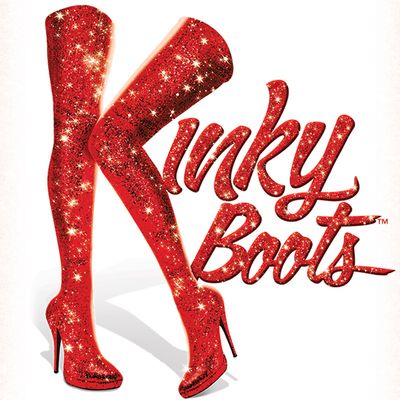
This is the second part of my conversation with author Rob Schneider, who returns to tell us more about his new book, Queer Musicals — Boy Meets Boy to Jagged Little Pill. On this episode, Falsettos, Hedwig And the Angry Inch, BARE, and Kinky Boots... Read More
From the show: BROADWAY NATION
Guests

Featured Shows

About
This is the second part of my conversation with author Rob Schneider, who returns to tell us more about his new book, Queer Musicals — Boy Meets Boy to Jagged Little Pill. On this episode, Falsettos, Hedwig And the Angry Inch, BARE, and Kinky Boots.
Robert W. Schneider is a historian, director, producer, author, educator, and podcast host, and the Artistic Director of the J2 Spotlight Musical Theater Company in New York. And since working as an original programming producer at 54 Below, Rob has directed and produced over 100 concerts for the venue. His first book, 50 Key Stage Musicals, was published in 2022.
On this first episode in this series, we discuss the musicals Boy Meets Boy, La Cage aux Folles, and The Knife.
Become A PATRON of Broadway Nation!
This episode is made possible in part through the generous support of our Patron Club Members.
If you are a fan of Broadway Nation, I invite you to become a PATRON! For as little as $7.00 a month, you can receive exclusive access to never-before-heard, unedited versions of many of the discussions that I have with my guests — in fact, I often record nearly twice as much conversation as ends up in the edited versions. You will also have access to additional, in-depth conversations with my frequent co-host, Albert Evans, that have not been featured on the podcast. And all patrons receive special “on-air” shout-outs and acknowledgement of your vital support of this podcast.
And if you are very enthusiastic about Broadway Nation, there are additional PATRON levels that come with even more benefits.
If you would like to support the work of Broadway Nation and receive these exclusive member benefits, please click on this link:
https://broadwaynationpodcast.supercast.tech/
Thank you in advance for your support!
Transcript
This transcript was automatically generated and might contain errors.
[0:00] ♪ Musical number: "The Falsettos Saga" — performed by Unknown performer ♪
[0:31] David Armstrong: Welcome to another episode of Broadway Nation, the podcast that tells the remarkable story of how immigrant, Jewish, queer, and black artists invented the Broadway musical, and how they changed America in the process. I'm David Armstrong, and this is the second part of my conversation with Rob Schneider, who's the author of the new book, Queer Musicals, Boy Meets Boy to Jagged Little Pill. On this episode, we discuss the musicals Falsettos, Hedwig and the Angry Inch, the off-Broadway musical Bare, and Kinky Boots. If you missed the first part of this conversation, you may want to catch up with that before listening to this one. Broadway Nation is made possible in part through the generous support of our patron club members, such as our longtime producer-level member, Robert Braun.
If you enjoy this podcast, your support will be greatly appreciated as a crucial part of keeping this podcast rolling, and there'll be information at the end of the episode about how you, too, can become a patron. Here we go!
[1:27] David Armstrong: So then, we get to Falsettos. So, obviously, the Falsettos saga started back in the late 70s with the great Bill Finn, and he created, God, what an amazing piece. In 1979 or 80, he created a show called March of the Falsettos, which was about a man realizing that he's gay and he's leaving his wife and child to go with his male lover, and talk about not having any sympathy whatsoever. Bill Finn was like, I'm going to create maybe one of the most annoying, complicated protagonists in musical theater. You know, what do they tell you when you write a musical? Like, the audience has to feel for the, you know, they have to be sympathetic and vulnerable. Bill Finn said, absolutely not. Marvin is a jerk from start to finish, and at the end, there's a little bit of redemption.
That was the show. Also, very interesting at the time, really handled with a lot of sympathy and a lot of warmth. And then, after that show closed a few years later, AIDS came out, and he had wondered, I wonder what would happen to these characters in the AIDS crisis. So, he wrote a second one act called Falsetto Land, which is what happens when the lover contracts AIDS and passes away from it, and how the family deals with it. And then, very smartly, they put both of those together in one evening. They called it Falsettos, and it was the first Broadway musical to deal with the AIDS crisis. There were lots of plays about the AIDS crisis, you know, as is in the normal heart, but those plays were very political, and there's a lot of yelling in those plays.
The Falsettos made it feel warm and made it feel approachable, and also just said, family can be anything you want it to be. What I love about Falsettos is this was in 1992 when it came out, and Dan Quayle was running for re-election at the time for vice president. He made the comment about family values, and Frank Rich responded by saying, I'm taking my kids to a show that's filled with family values, and it's called Falsettos. I think in the 90s, to see an unconventionally looking family carried a lot of weight. I don't think it's just a musical about a gay couple. I think it's a musical about what is your chosen family.
[3:19] David Armstrong: Well, what was really remarkable is the Weisslers, who were the producers, and I don't know whether it was their idea or the advertising agencies, they then marketed the show as a family musical, which you could do in New York City at that particular moment very successfully. It was, we're going to go take our kids to see Falsettos on Broadway, which is kind of remarkable because now I think that would be much more controversial than it felt at the time.
[3:46] Rob Schneider: I know, right? Isn't that interesting to think that you would think that it would have progressed at this point? But no, you're absolutely right. And that was mostly the Weisslers. They had tried a few marketing techniques, marketing the show and then marketing Bill Finn, and none of it seemed to work. And then they were like, it's about a family. And they put the kid on like all the, you know, the kid in the show, they put them on all the posters. And they did this beautiful thing where they got people from all over like rabbis and priests and the woman who won Miss America, and they took them to see the show. And then in the newspaper, they would take a quote from the rabbi and a quote from the priest and a quote from Miss America saying everyone is welcome to this gay show. It's not a gay show. It's a family show. And that moves the needle so much.
[4:27] David Armstrong: Yeah, I remember going to see both of those shows individually before it went to Broadway and years apart and just being so thrilled by that material. It was very exciting. Was it Playwrights Horizons? Is that where they were done?
[4:42] Rob Schneider: It was at Playwrights Horizons. Yeah.
[4:43] David Armstrong: Yeah, to go to Playwrights and see March of the Falsettos and just the audaciousness of that and this really unique voice that Bill Finn had, just like nobody else, and yet really accessible.
[4:57] Rob Schneider: Everything about it was revolutionary. Everything was about it. The lack of a warm protagonist, the lack of subject matter, like you said, Bill Finn's quirky voice that feels like a word salad but makes total logic when you hear it. It was incredible. It was absolutely incredible. I was like, we have to include this because it's the first one to deal with AIDS. But there's a lot there. There's really a lot of there.
[5:18] David Armstrong: Well, and I would say in many ways, it's although La Cage aux Folles has the protagonists are both gay, there's something, there's a step forward, maybe because it's a contemporary story. Although that was a contemporary story, too. It didn't feel like a contemporary story, La Cage. It was set in the present day. But yeah, there's just something about this that I think is a step forward. And I think A Chorus Line coming between those two is a step in that direction where you had gay people on the stage as our contemporaries had such incredible impact and was so important. So I do think it's a show that had to be in your book, of course.
[5:53] Rob Schneider: You know, it's so funny. I don't think I mentioned this in the book. And now in hindsight, I wish I did. There was intimacy between the two lead characters.
[5:59] David Armstrong: Yeah. You know, you saw them in bed together. You saw them holding each other.
[6:03] Rob Schneider: Who'd believe that we two would end up as lovers?
[6:10] David Armstrong: Do you want me to reply?
[6:13] Rob Schneider: Him and me, you and I, passionately lovers.
[6:19] David Armstrong: Please don't get morbid.
[6:22] Rob Schneider: Right. It's just.
[6:23] David Armstrong: Don't fight.
[6:24] Rob Schneider: That I haven't died yet.
[6:26] David Armstrong: Just stop it.
[6:27] Rob Schneider: I'm sick, but kicking.
[6:30] David Armstrong: Geez.
[6:30] Rob Schneider: All right.
[6:31] David Armstrong: Louie.
[6:32] Rob Schneider: Good night.
[6:34] David Armstrong: I'm staying here in this spot.
[6:37] Rob Schneider: Whether you want me to or not, I'm staying.
[6:42] David Armstrong: Here I am by your side.
[6:45] Rob Schneider: One old horny lover.
[6:48] David Armstrong: Please go home and don't be scared.
[6:51] Rob Schneider: What's the fuss? I'm not scared.
[6:54] David Armstrong: What good is a lover?
[6:57] Rob Schneider: Who's scared?
[6:59] David Armstrong: Hit me if you need to.
[7:03] Rob Schneider: Slap my face or hold me till winter.
[7:10] David Armstrong: Oh, baby, please do.
[7:14] Rob Schneider: I love you too.
[7:19] David Armstrong: My lover.
[7:23] Rob Schneider: You didn't see that in La Cage.
[7:24] David Armstrong: Right. You know, La Cage was like we're 10 feet away from each other at all times. Like nobody get.
[7:29] Rob Schneider: I was talking to Harvey Evans, who did La Cage on tour. He was saying to me when they used to play in the south, when they would go on tour in the south, him and Larry Kurt, who played opposite him. They'd have a rule. They'd be like, OK, when we hit this town, we're going to be six feet apart from each other. But this town's more liberal. So we'll be three feet apart from each other. They literally had markers depending on what town they were in. And so Falsettos was like, to hell with it. Didn't do well on tour. Falsettos struggled on tour when it went across the United States. But what can you do? By the time it went on tour, we were in a little more conservative moment. So that's interesting. Yeah, perfect.
[8:01] David Armstrong: Let's then talk about now we're off Broadway again. And your book includes both Broadway and off Broadway. Talk about why you couldn't just limit it to Broadway shows.
[8:11] Rob Schneider: Queer representation in Broadway musicals. It's slim. It's really, really, really slim, especially anything before the 21st century. If you just did Broadway, I think it would have just been what? And then Falsettos in the 20th century. And you can't do that. So I was like, we have to go beyond that particular scope. So we have to go off Broadway and Hedwig and the Angry Inch. And of course, off Broadway was more embracing of all kinds of theater and subject matter.
[8:40] David Armstrong: So, of course, it's going to be off Broadway before it's on Broadway or at least in greater degree.
[8:46] Rob Schneider: Yeah, one hundred and ten percent. Like you said, off Broadway has always been cutting edge. Off Broadway has been, you know, I don't want to say trendier, but they have less to lose.
[8:55] David Armstrong: Exactly. They can be more experimental.
[8:57] Rob Schneider: And Hedwig, to me, I'm like, that's the perfect case study for what an off Broadway musical can do in terms of its creativity and how they construct a show. It was great. Got started at a nightclub, you know, a drag club, and then just morphed and morphed and morphed and then ended up becoming a movie musical that a lot of people think is one of the greatest movie musicals ever made. And then it got to play on Broadway for a long time. You know, so it's just like this little show that could. And it's a good show. It's a really good show.
[9:22] David Armstrong: Absolutely. When I started working on this book, that was the show I knew the least. And I was so fascinated by its history. Like, how do you get an audience for this thing? This thing that nobody knows that's too weird for the uptown crowd and too conservative for the downtown crowd. How do you find an audience for this thing? And God love him, John Cameron Mitchell. He did. And he did quite brilliantly.
[9:44] Rob Schneider: Oh, and they made a lot of smart choices, putting it in that strange little theater.
[9:49] David Armstrong: Yeah. That was so as you described in the book, you had to walk past junkies to get into the theater. It was in a building that had been a rundown hotel, basically.
[9:59] Rob Schneider: I don't describe what that was. So they were like, we need to find a middle space between uptown and downtown to do this show. And they found a dilapidated, abandoned ballroom on the West Side at a hotel called the Jane Street Hotel, which was literally like you brought a sex worker there for an hour. It was one of those types of places. And, you know, there's you have to step over druggies to get in. And on opening night of the show, while like a lot of the uptown people like in their tuxedos were waiting outside, somebody had overdosed in one of the hotel rooms. And so they had to like hold the show while the police brought the body out. And the audience was like, is this part of the show? Like, is that a real like what is this? What is this? And to me, I think that's just the best description of Hedwig. Like, what is this? And what it was was brilliant. So, yeah. So they went to this dilapidated place to do it, and it paid off brilliantly.
[10:46] David Armstrong: It did add a lot to the whole atmosphere of the show. Even by the time you got in there to see the show, the show had already started, as you said, maybe not so graphically as opening night. It's all part of that like milieu that I think just helps the show. Then it moved uptown to Broadway in a revival a few years later. And that was very successful.
[11:03] Rob Schneider: Amazingly successful. Yeah.
[11:05] David Armstrong: And it's a show that for that generation in the 90s, it crossed a line. It wasn't a straight show. It wasn't a gay show. It was just a good rock show that people liked.
[11:11] Rob Schneider: So I know I had friends in college, straight as can be. They could sing every line of Hedwig.
[11:21] David Armstrong: Yeah. To be honest with you, I think it actually has more appeal with that generation than Rent did, because I think Rent was good, but it always still felt like a musical. Hedwig didn't. And I think that grabbed a lot of people.
[11:42] ♪ Musical number: "Wicked Little Town" — performed by Unknown performer ♪
[12:30] Rob Schneider: I think that's really important.
[12:32] David Armstrong: Yeah, very interesting show. And to see it go from, as you said, from its origins in this.
[12:38] Rob Schneider: What was the name of the nightclub?
[12:40] David Armstrong: It was in a wheeze box, the squeeze box.
[12:43] Rob Schneider: Exactly. Two Broadway success with giant stars is really remarkable and unbelievable.
[12:50] David Armstrong: It's the best. And I love that it all got started because John Cameron Mitchell wanted to do a nightclub act. And he went down to this drag club and they're like, well, you can do it, but you can't be in your male clothes like you have to be a drag character. And so he created this character.
[13:04] Rob Schneider: Which he had never done before, which he had never done before.
[13:08] David Armstrong: So this brings us to a show that probably the one I was most surprised to see in your book, which is Bare. Don't go away, Rob and I will be back with more Broadway Nation right now.
[14:00] David Armstrong: Hi, this is David Armstrong, and if you're enjoying this episode, I strongly suspect that you will want to read my new book, Broadway Nation, How Immigrant Jewish Queer and Black Artists Invented the Broadway Musical. On sale now wherever books are sold, and I'm very happy to report that the early reviews have been terrific. The esteemed author Jeffrey Bloch says that Broadway Nation is a fascinating, comprehensive, and timely gem of a book that more than lives up to its promise of delivering no less than five books in one. Kudos to David Armstrong. And Tony Award-winning lyricist David Zippel says that David Armstrong's insightful history of the evolution of the Broadway musical and its creators is captivating and comprehensive as well as indispensable.
The book is, of course, available on Amazon, but I recommend that you go to the publisher's website, bloomsbury.com, where you will currently receive a 10% discount. Again, like the podcast that inspired it, the book is titled Broadway Nation, How Immigrant Jewish Queer and Black Artists Invented the Broadway Musical. Now back to the show.
[15:19] David Armstrong: So this brings us to a show that probably the one I was most surprised to see in your book, which is Bare, a show that I saw in its New York production and have been somewhat oblivious to since then, and probably paid very little attention to it at the time and was unaware of this sort of life that it's had outside of New York with younger audiences.
[15:41] Robert Schneider: The younger audiences, and I'm, you know, full transparency, the New York production was not the best. I saw it in Los Angeles when it first got started at the Hudson, and it was incredible. And then I don't know why when they brought it to New York, they're like, let's make these changes. I'm sorry if it ain't broke, don't fix it. You know, I think they made changes because they felt they had to make changes. The L.A. production was so stimulating, but because it's edgy and it's rocky and there's a lot of roles for a whole wide range of people, it's not just a gay story. There's body diversity in it. There's racial diversity, and it's all over the place. So colleges love doing this show because everybody got a role.
That's how it's taken on this life. Is it the best show ever written? No. But is it a show that introduced a lot of people to the joys of musical theater and acceptance of queer people? Absolutely. At the collegiate level. And I think to me, that's pretty important. But no, I don't think it's the best show ever written. I don't think I ever need to see it again.
[16:36] David Armstrong: But and of course, as you said, the only experience I had of it was probably not the optimal experience.
[16:42] Robert Schneider: Unfortunately not. I'm sorry to say, unfortunately not. I wish you could have seen it in Los Angeles. It was so clearly a passion show. When it got to New York, I think it was, this is a launching pad.
[16:52] David Armstrong: Well, and of course, I don't think this was my attitude, but anything that came as a hit in L.A. to New York was often looked at with skepticism at the time.
[17:01] Robert Schneider: Dave, I wanted to include this in the book so much, and I could, and I had to cut it for length. I grew up in Los Angeles, and I remember all the bad theater that was out there. So I had like two or three paragraphs describing all the bad, bad shows I saw that people loved. So that way, I could really show how Bears stood out as an anomaly. And then I got done and I read the draft. I'm like, this just seems bitter. I just seem bitter. I should just cut this. This has nothing really to do with what I want to talk about.
[17:27] David Armstrong: That's funny.
[17:27] Robert Schneider: Yeah, but no, that was the thing. In L.A., you were like, oh my God, it's going great in L.A. And you're like, OK, cool. New York will be the judge of that.
[17:33] David Armstrong: Yeah, I suffered from that myself. I had a hit show in L.A. By the time we brought it to New York and because it premiered in L.A., it was hard to get people to take it.
[17:42] Robert Schneider: If you don't mind, what was the show?
[17:43] David Armstrong: It was called The Wonder Years. This was before the TV show The Wonder Years.
[17:48] Robert Schneider: Yeah.
[17:49] David Armstrong: It was at the Coronet Theater for a long time. We had a big hit out there. First, we were at the, what's the hotel where they had the original Academy Awards?
[17:56] Robert Schneider: Oh, yeah.
[17:57] David Armstrong: Downtown. That's where we opened in a small room. And it was a big hit. And then they moved to the Coronet Theater.
[18:02] Robert Schneider: Yeah.
[18:03] David Armstrong: Yeah. And it was, I mean, we ran more than a year in L.A.
[18:06] Robert Schneider: Oh, yeah. But then you have to, you have to sell it to New York.
[18:09] David Armstrong: Totally.
[18:10] Robert Schneider: It's L.A. Like, what does that mean?
[18:12] David Armstrong: Yeah, exactly.
[18:13] Robert Schneider: Yeah. But it was obviously a fantastic show.
[18:15] David Armstrong: Well, and we got delayed. By the time we'd opened, it was like three years later before we opened off Broadway. So it was, it had lost some of its immediacy.
[18:24] Robert Schneider: That's what happened with Bear. It had a long, just a, they should have moved it immediately to New York and they didn't. And I think it suffered because of it. Yeah. You got to get that momentum.
[18:34] David Armstrong: But Bear is still being done. This is a show that still gets done quite a bit, right?
[18:38] Robert Schneider: All the time. It also came out at a time where like kids were starting to use the Internet. And so this little tiny show from L.A. suddenly made the rounds online and people started gravitating towards it. It ended up doing a lot of good. But I think it was the right generation, the right technology, healthy combo.
[18:58] David Armstrong: That's so interesting. I think that'll be interesting to listeners because I think a lot of people in my office will be completely unaware. If they were aware of it at the time, they've been completely unaware of it since then, that it has this other life and that it has this influence.
[19:11] Robert Schneider: Yeah. I mean, like you said, colleges do it all the time. It's perfect for colleges.
[19:17] David Armstrong: Very interesting. All right, let's move on to Kinky Boots.
[19:20] Robert Schneider: Kinky Boots.
[19:21] David Armstrong: Another giant hit. I guess the giant hits in your list of shows would be La Cage, Falsettos, Lesser but still a hit show, substantial hit. And then Kinky Boots being on the level of La Cage to a certain extent.
[19:35] Robert Schneider: Yeah, a juggernaut, just an absolute juggernaut. And also, we've gone through a pretty conservative movement not that long ago because we had eight years of what the Bush administration and then there was still a real big conservative outreach there. But tourists love this show. Middle America loved this show for some reason. And so once again, the potential for homophobia disappeared once they got into the theater and they enjoyed the production. And a lot of that actually is due, I think, to Billy Porter. And that's who played the lead in the show and ended up launching his, I mean, he had a pretty nice career before that, but, you know, it launched him to like a global status. That's pretty cool.
[20:08] David Armstrong: He was somebody who had a long career on Broadway, but was certainly not a star before the show. And this launched him into stardom.
[20:14] Robert Schneider: We talk about that in the book. To me, it's the first musical where a queer star comes out of it. You know what I mean? Like, oh, you know, Ethel Merman was made a star out of Anything Goes or Alfred Drake was made, like Audra McDonald. This was a big one. This was an absolute, absolute big one. That's mostly what the chapter is about. The show is great, but it's really about, you know, putting a queer person from a musical into the zeitgeist.
[20:37] ♪ Musical number: "Land of Lola" — performed by Billy Porter ♪
[21:45] David Armstrong: Now the guy's got an Emmy, he's got a Tony, he's everywhere.
[21:48] Robert Schneider: Yeah, it certainly did catapult him to stardom 20 years into his career.
[21:52] David Armstrong: Yeah, they were like, where have you been? And he's like, I'm not an overnight sensation. I remember him in that revival of Grease. He was, wasn't he the Teen Angel or something?
[22:01] Robert Schneider: Yeah, he was around a lot in my day in New York. He was everywhere.
[22:05] David Armstrong: Yeah, everybody knew him.
[22:06] Robert Schneider: But he was not a star. The two shows, La Cage and Kinky Boots both share Harvey Fierstein. So talk a little bit about that. Do you think that's a coincidence?
[22:15] David Armstrong: How does that affect those two shows?
[22:17] Robert Schneider: I mean, look, he was the first openly proud gay guy in the 80s. And I think because he has no filter, and I mean that in the best way possible, he has such a deep emotional reserve in him that I think he's able to articulate things that no other playwright or librettist can. And I think that's really clear in the story structure. There's never any pity with his characters. And that was a big thing I think we also talk about in the book is that a lot of queer characters always looked at as something that, you know, you should feel bad for them. And Harvey says, why? Why should you feel bad for me? You see that in La Cage and you do see that in Kinky Boots. So I think that pride is what connects those two. And it's not a political pride. It's not a pride that like it bats you over the head. It's a pride of this is my identity and I'm celebrating it. But that's that's about it. And I think that's why La Cage and Kinky Boots are really successful.
[23:08] David Armstrong: You mentioned identity and I think that's interesting because in my book I talk about the three great themes, the ubiquitous themes of the Broadway musical. And there was a fourth one that I toyed with, which is identity. But it's probably the newest theme, the most recent theme, although I think it dates back to La Cage a Faux. So that's still now 40 years ago. Something that has exploded more in the last in this century with Kinky Boots and with Jagged Little Pill, actually probably with Fun Home as well, where identity becomes the central driving point of the story, of the theme of it. If I ever get a chance to go back and do an update of my book, there'll be enough identity shows. I didn't feel there was quite enough to make a theme equal with the other three that I talk about.
[23:52] Robert Schneider: I agree with you wholeheartedly. And I hope that, you know, if you come back to it in five or ten years, I'm sure that's kind of where we're going now with storytelling. So you'll probably have a wealth of richness at that point.
[24:03] David Armstrong: Yeah, or that theme will fade away. It'll be interesting to see whether, I mean, right now it seems like it will be the thing. Another show that you couldn't use in your book because you were only doing American shows, but Everybody Loves Jamie.
[24:14] Robert Schneider: Oh, yeah.
[24:15] David Armstrong: It certainly exemplifies that theme.
[24:17] Robert Schneider: Yeah, absolutely.
[24:18] David Armstrong: Yeah, that's one I wish I could have included. It's such a good show. Very interesting. So let's talk about Fun Home.
[24:24] David Armstrong: We'll pick up the conversation on the next episode of Broadway Nation when Robert W. Schneider returns to tell us more about his new book, Queer Musicals, Boy Meets Boy to Jagged Little Pill.
[24:54] David Armstrong: If you love this podcast and would like to delve even deeper into the world of Broadway musicals, I invite you to become a patron of Broadway Nation. For as little as $7 a month, you can receive access to a whole world of exclusive features, including ad-free episodes and new original episodes not available anywhere else, including a five-part series on the Broadway musicals that receive the Pulitzer Prize for Drama. And all patrons will receive on-air shout-outs and acknowledgments in recognition of your vital support. To join, simply go to broadwaynationpodcast.supercast.tech. That's all one word, broadwaynationpodcast, S-U-P-E-R-C-A-S-T dot tech, or simply click the link in the show notes to this episode. Broadway Nation is written and produced by me, David Armstrong. Special thanks to Pals Mox for his help with editing this episode and to the entire team at the Broadway Podcast Network.
© Broadway Podcast Network, All Rights Reserved