

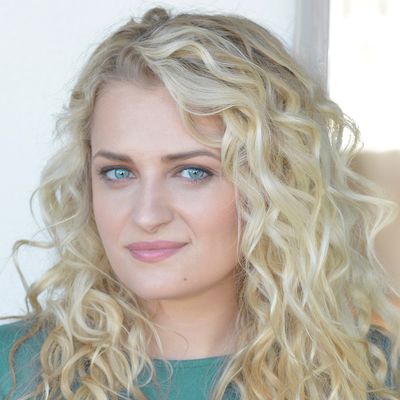
You'll love this episode with Ali Stroker, someone who really hasn’t let anything stop her. Even though no one in a wheelchair had ever been nominated for a Tony award, or even been on Broadway, she still let herself dream!.. Read More
From the show: Breaking Broadway with Kerry Butler
Guests
Featured Shows
About
You'll love this episode with Ali Stroker, someone who really hasn’t let anything stop her. Even though no one in a wheelchair had ever been nominated for a Tony award, or even been on Broadway, she still let herself dream! (And win the Tony award!!!) Hear this incredibly inspiring episode about how she doesn’t take no for an answer. She finds ways to turn no’s into yes’s! I left this episode feeling so moved and inspired!
Follow Ali Stroker on Instagram @alistroker
You can find me on Instagram @kerrybutler1 and TikTok @kerrybutlernyc. For coaching and teaching, visit my website at kerrybutlercoach.com, follow @kerrybutlercoach on Instagram, or email me at kerrybutlercoach@gmail.com.
Transcript
This transcript was automatically generated and might contain errors.
[0:36] Kerry Butler: Now come with me and fly, fly. I am your host, Miss Kerry Butler. Together you and I are breaking Broadway.
[0:54] Kerry Butler: Hello! Welcome back to Breaking Broadway. Today I'm so excited to welcome my new friend. She is an actress, author, singer. She is the first actor who uses a wheelchair to appear on a Broadway stage and also the first to be nominated and win a Tony Award for Best Featured Actress in a Musical for her performance in Oklahoma. I'm guessing that you know who it is. The lovely Ali Stroker. I also loved you, Ali, on TV and film. I loved you in Ozark. We didn't really know each other then, but I was like, oh my gosh, she's so good on TV. And Only Murders in the Building. And we became fast, fast friends on the Broadway cruise together. I just loved hanging out with her. And as soon as I met her and was talking to her, I was like, oh my gosh, you have to be on my podcast. The perfect person because she's so just light and inspiration. So thank you so much for being here, Ali.
[1:58] Ali Stroker: Thanks, Keri. I'm so excited to be here. And thank you for that intro. That was so nice. So we usually start out by asking people when they realized they wanted to be an actor or the first time they discovered theater.
[2:13] Ali Stroker: I love that question. I was introduced to musical theater on the Jersey Shore when I was seven years old. And our next door neighbors had three kids and their oldest daughter had just come home from stage doorman. Oh, that's the fancy theater camp for those who don't know. Yes, that's like the big theater camp on the East Coast. And she decided at 12 years old that she wanted to direct a production of Annie in our backyard. And she cast all the neighborhood kids. And she cast me as the lead Annie. And it changed my life. And we rehearsed all summer long, like watching the VHS and learning the music. And then at the end of the summer, we sold tickets to our neighbors, the local newspaper, The Sandpaper came out.
Oh my gosh. And I remember wheeling out on stage for the first time. And what happened for me, Carrie, was that up until this point, I had been getting a lot of attention because I'm in a wheelchair. And when I was out in public, people would stare at me. And it was uncomfortable. And it made me feel small. And there I was, center stage, singing, and everyone was staring at me. And I did not feel small anymore. I felt like a star. And I knew I wanted to be on stage for the rest of my life. And so I started to take voice lessons. I told my parents I wanted to be on Broadway, even though I had never seen a Broadway show. And I was just hooked. I loved it so much.
[4:01] Kerry Butler: At first, I was like, that's my story too. In terms of putting on Annie in my backyard, I was like, I'm that girl. I'm the girl. But then I was like, no, I wouldn't cast you. I would be like, I am Annie. You are Molly. Yeah, I'm the star. You're the supporting role. That's so good. So then when did you see your first Broadway show?
[4:20] Ali Stroker: I saw my first Broadway show in first grade. I saw Beauty and the Beast. Oh, yeah. It was amazing. I was so blown away because everyone seemed so perfect and so talented. And something about musical theater, even to this day when I see a show, it makes me feel like I'm not a religious person, but it's sort of like a religious experience. Yes. I feel so emotional and so taken over. The whole show takes over my body. I'm so invested. And I just enjoy it so much. And I obviously continue to go see Broadway and musicals my entire life. I need it.
[5:19] Kerry Butler: And so then were you doing the high school plays? When did you start auditioning or doing other stuff besides the backyard shows?
[5:31] Ali Stroker: Yeah. So our elementary school in our district was doing The Wiz, and I auditioned and got the role of Dorothy. Oh. And I know. I think everyone was sort of like, oh, she can really sing. And then the next year they were doing Barnum, and I was cast as Charity Barnum. Wow. Barnum's wife. And then in middle school we did plays and musicals, and then in high school we had this amazing theater program where we did five shows a year. Wow. I know. It was like there was a Shakespeare play, there was a straight play, there was a musical, there was a concert, like a variety concert. And then another play. And what I loved the most about it was that if you weren't cast in the play, you had to do crew hours.
So I would do costumes. I would, like, assistant stage manage, assistant direct. And so it felt like a theater company, and I was always involved in it, and that's where I met my best friends, and it really created such a community. And for the first time in my life, I felt so confident and secure with my friends. Up until that point, I always felt like I had one or two friends, but I never had a group of friends. And then when I joined, it was called New Players. When I joined New Players, I had this huge group of friends that were so cool and nice, and it was like, oh, finally, my people.
[7:09] Kerry Butler: Yeah. That's the power of theater.
[7:11] Ali Stroker: Yeah.
[7:12] Kerry Butler: So then you went to NYU. Is that right?
[7:14] Ali Stroker: Yes.
[7:15] Kerry Butler: Yes. So I went to NYU, and I was in Tisch, and I studied musical theater. I was in Cap 21 at the time. It was the musical theater studio. And it was really hard. When I got there, they were, like, really not on board with me taking dance class. And it really comes down to fear. They just had never worked with somebody in a wheelchair, and so they were afraid. They didn't have the answers. So instead of being like, let's figure this out, they were like, we don't want you to take dance classes.
[8:00] Ali Stroker: Wow. And I just am so grateful for my parents and the way that they advocated for me as a kid because they wouldn't take no for an answer. And so I didn't fight back, but I was like, listen, I really believe I can take the dance classes. And so I will observe. They wanted me to observe the classes, but let's talk in a few weeks, and let's figure this out. And so I started translating the dance classes for myself. And everybody else in the class was able-bodied, and I'm in a wheelchair, so I had to. And this was the best part of my education at NYU. I learned how to translate movement. Most of the musical theater world is able-bodied people, and so I don't ever wait for someone else to tell me how to do something.
I just have to figure it out on my own, and it's really made the creative part of my brain super, super strong. And I use that part of my brain every day, whether I'm working on a show or not, because part of my experience of having a disability is that I solve problems creatively. I creative problem-solve. And that is my preference, and I love it. That's one of the things I love about being in a wheelchair, is that I have to problem-solve creatively all the time and make it up, because there isn't always a solution. The world doesn't always give me solutions, so I get to find them on my own.
[9:32] Kerry Butler: I mean, it's so incredible how you approach everything, and I saw it on the cruise, when there were things that weren't accessible, and you just made it work, but you didn't let yourself really indulge in... I mean, because you would have been allowed to feel badly about not being able to do some of the things. You know what I mean?
[10:00] Ali Stroker: Sure. But you didn't. So do you have those moments when you're just like, ugh, like you're so upset that you can't do what everybody else is doing?
[10:09] Ali Stroker: You know, Carrie, I think because I've been in a chair since I was two years old, I am very aware of what I can and can't do. And now as an adult, I don't indulge in the things that I can't, because there are so many things I can do, and I have been so lucky to have so many incredible opportunities, and I have built a life for myself where most of the time I am in places and doing things that I can do. Now, recently I've become a mommy, and I have a two-year-old son, and this has brought up new challenges and new things of like, I can't do that. And it's so interesting to navigate that, but I really don't feel like my limitations impact Jesse negatively. I feel like my limitations allow him to see the world differently and become more independent.
So, for example, like Jesse loves to climb. He's an amazing climber. And at the playground, we have a certain amount of trust with each other. I can only spot him up to a certain place, and then he has to be on his own, and I tell him, like, I'm right here, but I can't help you. And there's something about it that I watch him, and when he's doing something independently, his confidence just like explodes, because the truth is he can do it on his own. But as parents, we feel like it's our job to protect and not let a kid get hurt, obviously, but I wouldn't be allowing him to go that high if I thought he was going to get hurt. Anyway, it's just created this amazing dance. You know, Jesse and I have to physically move together, and so that's what I mean by I don't really feel like there's time to like indulge in the like, I can't do this.
It's more like let's figure out, I have to use my brain to problem solve, and then also assess, okay, maybe this isn't an option, so let's look at the other options versus looking at the one that isn't going to work for me. You know what I'm saying?
[12:32] Kerry Butler: Yeah, yeah, and when you went to college, like you have now broken a glass ceiling, right? And you have now people around the world can now see she did it, so now I could do it, and that's why representation is so important, but you didn't have that, so how did you do it?
[12:55] Ali Stroker: Yeah, I feel like so much of my drive and fire to do certain things now is representation because I wish that I had seen someone like me doing it before, but I did it without that because of the way I was raised. You know, my mom and dad both believed in me, and they said, you can do anything, Allie. And my dad used to say, you're a superstar. You can do anything, and then once you're told that a certain amount of time and you really believe the people who are telling you, then you believe it. And then I kind of felt like I became unstoppable because there have been many people along the way who have been like, this is going to be really hard for you. Are you sure this is what you want to do? And there's something exciting to me about proving somebody wrong and about doing something for the first time and not letting someone else dictate what your success and your future can be.
[14:09] Kerry Butler: I love that. Oh, okay, so I just want to go back to the dance story before I forget.
[14:17] Kerry Butler: Welcome back to Breaking Broadway! Today, I am thrilled to have the incredibly talented Ali Stroker with me. Ali is a groundbreaking performer who made history as the first actress in a wheelchair to win a Tony Award.
[14:47] Ali Stroker: Thank you so much for having me, Kerry! I’m excited to be here.
[15:17] Kerry Butler: You have such an inspiring story. Can you tell us a little about your journey and how you got started in the business?
[15:47] Ali Stroker: Absolutely! I grew up in New Jersey and was always involved in theater. I started performing at a young age, and I just fell in love with it. I knew I wanted to be on Broadway, but I also faced a lot of challenges along the way.
[16:17] Kerry Butler: What were some of those challenges?
[16:47] Ali Stroker: Well, for starters, there were very few opportunities for performers with disabilities. I often felt like I was fighting an uphill battle. But I never let that stop me. I kept pushing forward, auditioning for everything I could.
[17:17] Kerry Butler: That’s so inspiring! How did you manage to stay motivated during tough times?
[17:47] Ali Stroker: I think it’s all about mindset. I learned to turn “no” into “yes.” Every rejection was just a step closer to the right opportunity. I focused on what I could control and kept working on my craft.
[18:17] Kerry Butler: That’s such a powerful perspective. Can you share a specific moment that really changed things for you?
[18:47] Ali Stroker: Definitely! When I got the call that I was cast in “Spring Awakening,” it was a huge turning point for me. It was my first big role on Broadway, and it felt like all my hard work was finally paying off.
[19:17] Kerry Butler: And then you went on to win a Tony Award for “Oklahoma!” What was that experience like?
[19:47] Ali Stroker: Winning the Tony was surreal! It was a dream come true, and I felt so honored to represent not just myself, but the entire community of performers with disabilities.
[20:17] Kerry Butler: You’ve truly paved the way for so many. What advice would you give to aspiring performers who might be facing similar challenges?
[20:29] Ali Stroker: I would say, don’t let anyone tell you what you can or cannot do. Believe in yourself and your talent. Surround yourself with supportive people, and never stop pursuing your dreams.
[20:39] Kerry Butler: That’s such great advice! What’s next for you? Any upcoming projects you can share?
[20:49] Ali Stroker: I’m currently working on a few exciting projects, but I can’t share too much just yet. Just know that I’m always looking for ways to push boundaries and create more opportunities for performers like me.
[20:59] Kerry Butler: We can’t wait to see what you do next! Thank you so much for joining me today, Ali. It’s been a pleasure.
[21:09] Ali Stroker: Thank you, Kerry! I loved being here.
[21:19] Kerry Butler: And thank you to our listeners for tuning in to Breaking Broadway. Be sure to follow Ali on Instagram @alistroker and catch her upcoming projects. Until next time!
[21:29] Ali Stroker: Bye everyone!
[21:39] Kerry Butler: Bye!
[28:34] Ali Stroker: For a while, there was only one accessible trailer in all of Los Angeles. Whoa, so we have part of how we have solved that problem is that I just offer like, "Hey, if you want to put me in a room near the production office versus trying to find an accessible trailer, I prefer that." Because the trailers you have to take a lift up and down, and a lot of the times I can't operate that lift, and then all of a sudden I become dependent at work, and that doesn't feel always great. So this is a lot of trial and error, but we have figured out that it's better when I am sort of near the production offices and there's an accessible bathroom. And these are all conversations that are had before we agree to the job.
Oh, yeah, and I have excellent agents and managers who do all this negotiating for me so that I can arrive and be the good guy. That's great. That is. Yeah, it's wonderful. That's sort of how we've set it up. It's kind of like an accessibility rider, like the way the artists have riders and they go places. It's that like she needs to have an accessible bathroom. Like we need, you know, just little detail stuff like we need accessibility, you know, in and out of dressing rooms and on and off set transportation. And then the theater part is where it gets trickier because there are a lot of old theaters. Yes, and there are a lot of theaters that are not accessible. In fact, most Broadway theaters are not accessible backstage.
Yeah, and so both times that I've been on Broadway, the producers have had to come up with the money to create accessibility backstage for me. And it was particularly hard at Circle in the Square when I was doing Oklahoma because Circle in the Square is in a basement. So I had to take an elevator down in another building that brought us down to sort of the house level of Circle in the Square, and then they had to put a chairlift in for me to get down backstage. And then we had to create all these ramps. In the end, it sort of looked like a skate park, but we did it, you know? Like when there's a will, there's a way, and like we did it, and we figured it out. And I just feel so fortunate to have worked with producers that wanted to figure it out because I was worth it to them, and that has meant so much to me that these producers really believe in me and believe in what I bring, and so they will create the accessibility that I need.
[31:21] Kerry Butler: So you've already answered this podcast is for like young actors starting out, and you've already given so much great advice. I feel like, do you ever feel like really connected to an audition? And like, do you get upset when you don't get parts, when you get rejected now? Or are you able to just brush it off?
[31:41] Ali Stroker: Auditioning has changed a lot for me because a lot of the work is a self-tape. Yes, and I have found this to be very challenging because I really feed off of other people's energy, and I also am a performer. So when I enter into a room, like something turns on in me where I'm performing, and like I give a certain level of performance when there is an audience, when I'm in a new room, when I am, you know, under pressure, right? So I have found auditioning to be really hard with self-tapes now. It gives us the freedom to do many takes, but sometimes for me, I don't even feel like I'm able to see my performance clearly when I watch them over and over and over again. So my husband has an acting studio, and one of the things that he helps his students do is, you know, to rehearse the material as much as possible, but then only do one or two takes.
Oh, and this has like kind of changed my life because I then feel like I'm actually auditioning versus trying to produce and film, right? So that's been helpful. But when I send an audition in, like I completely forget about it and let it go.
[33:14] Kerry Butler: I'm the same way because, I mean, I couldn't tell you the last audition that I did because I don't remember it afterwards. I had this like compartmentalization thing in my brain that once I do it, it's gone. It's into the universe. It's happened.
[33:35] Ali Stroker: Mm-hmm, but it no longer affects me. And if I hear something, then that's a new journey. Yes, but the journey's done once the audition is done.
[33:42] Kerry Butler: Yeah, I feel the same way because I have gotten so hurt in the past. Oh, yeah, I used to get so hurt, and it used to mess with my head. It used to mess with my confidence, used to mess with my voice, and I was just like, I can't invest anything else after the audition. Yes, done. It's done. Like that is the entire event. Mm-hmm, and then the next, there's a second part that could happen, which is like the callback and getting the job, but the audition piece of it is done at the end of the audition.
[34:27] Ali Stroker: Yeah, so that, I mean, that's kind of something that I've had to create for myself so that I can function. Mm-hmm. Yeah, because it is, it's a crazy, crazy world where you're constantly putting yourself out there and making yourself vulnerable. And I say do that and be creative, but then protect yourself once you're done with that work because you have no control after that.
[35:04] Kerry Butler: Yeah, I'm really big into like what I do have control over and what I don't have control over because living in a paralyzed body, that is a very, very big part of my life. Mm-hmm, so, and my dad is a motivational speaker, and so—
[35:21] Ali Stroker: Oh wow, that's where you got it from, huh?
[35:22] Kerry Butler: Exactly. I watched him do it my whole life. He was a teacher and now he does speaking full-time, and a huge piece of it is like what he talks about is like he does this, I think you'll like this, Kerry. So he does this equation, and it's E plus R equals O: the events of our life plus our response equals the outcome. Most of the time, we have absolutely no control over the events. Mm-hmm. We have 100% control over the response. Therefore, we do have some control over the outcome. So this is big. I'm like, what do you have control over? What do you not have control over? And with auditioning, I have no control over what's gonna happen after I audition. Mm-hmm, and so my response and what I have chosen after years of pain is like my response to it is, "I'm done." That's right. I did it. Mm-hmm. I did the gig. The gig was the audition. Mm-hmm. Now I'm done.
[36:35] Ali Stroker: And so it's a little weird, but like it works for me. It works for me too, and I do think it's something that comes with time to where like every audition isn't precious anymore because you've kind of been around the block, and you trust like I'm gonna get what I meant to get, you know? But also, like I don't tell anyone in my family when I'm going on auditions because then that's the worst, like when everyone's like, "Did you hear about that audition? But did you get a callback?" You know, then it just, you're like reliving it all over again, right?
[37:06] Kerry Butler: It's awful.
[37:07] Ali Stroker: It's awful, and I've done it recently where I like told people about an audition I was really excited about, and then never heard anything. So like that's what I try to practice is like when it's done, it's done.
[37:24] Kerry Butler: Well, I've loved everything you've said. Do you have any other like advice for young actors starting out that we didn't cover?
[37:32] Ali Stroker: I would say two other things. One is like I think that becoming a performer, an actor, a singer, a dancer, it is a muscle. So I feel like as much as you can do it, try to get involved in as many productions as possible. And if you're not able to be a part of a production, don't wait for somebody to give you an opportunity. Yes, create your own opportunities. And I'll tell you, when you become a leader in your own career, you then become a leader in the industry. You see people that create things on their own, and all of a sudden you feel like, "Oh, well, they can do anything." And I think that it's sort of like the law of attraction. Like you just begin to attract things. Yes. So I just, I feel like for young people, I think it's like to do it as much as possible.
It also will make you happier. Experience is so important to learn what you like, what you don't like, and, you know, and then to create work on your own with people you love. You know, I think it's amazing now, like you can reach out to anyone and ask them to be a part of something or to support something, and I feel like so many people say yes to young people. So, you know, take it in your own hands. You are in the driver's seat, so, you know, go wherever you want to go.
[39:20] Kerry Butler: Wait, we should plug your husband's school, right? To give him a little—
[39:27] Ali Stroker: Yes! So my husband's name is David Perlow, and he has an acting studio called The Actors Gym, and he does classes every week in the city. It's like a month-to-month enrollment, and it is amazing, and he's amazing. And for anyone who's moving to New York and wanting to take classes, he has an amazing, amazing studio with a great culture and great community.
[39:58] Kerry Butler: Is there anything else that you could think of that people might not know about? Like I always say, you know those theaters where you can get those summer programs or anything like that that you could think of?
[40:13] Ali Stroker: Well, you were at Paper Mill, right?
[40:13] Kerry Butler: Oh, yeah, growing up, I did the Paper Mill summer conservatory, and then I ended up working there on their professional stage after I graduated from college, and I did Spelling Bee. I am about to do a play in D.C., which I'm excited about called Babbitt at the Shakespeare Theatre, and that should be cool. It's a straight play. It's a political satire, like a comedy, and it's starring Matthew Broderick, and it's such a great play. I'm loving it.
[40:49] Ali Stroker: Amazing. And what else? What else is going on?
[40:58] Ali Stroker: Oh, I have books! Yes, for young people. I have a book called The Chance to Fly, and then the sequel is called Cut Loose, and it's about a girl in a wheelchair who gets involved in a theater program, and it's like her adventures. And I feel like the book isn't just for somebody who has a disability. It's like for anyone in theater. So if you're interested, those books exist, and there's audibles and recordings of them if you like to listen. And I think that's maybe everything right now.
[41:34] Kerry Butler: And follow Ali! What's your social media?
[41:39] Ali Stroker: @alistroker on Instagram. Follow Ali for more inspiration if that's possible because she's the most inspirational!
[41:49] Kerry Butler: I loved talking to you so much. I'm gonna fly out of my attic where I'm recording just high on your words and just wanting to take your words with me because they're so beautiful, and I adore you, and I'm so happy that we became friends, and I hope I get to see you in real life soon.
[42:07] Ali Stroker: I am too. I'm so happy we became friends, and thank you for doing this.
[42:12] Kerry Butler: Thanks, Ali Stroker!
[42:17] Kerry Butler: Thank you so much for listening! If you would like me to come to your school or theater group and give a master class or a talk back, please reach out at kerrybutlercoach.com. If you like this podcast, subscribe and leave a rating, and in the comments, let me know what topics you want me to cover. You're listening to the Broadway Podcast Network.
© Broadway Podcast Network, All Rights Reserved