

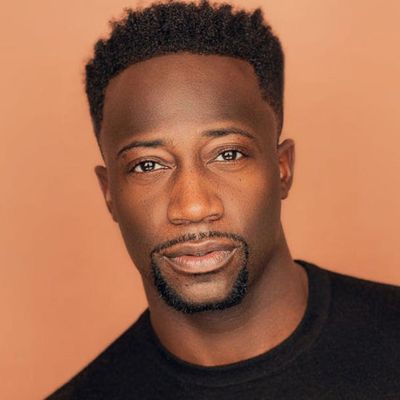
In the previous episode, we explored Nick Rashad Burroughs' journey from Alabama to Broadway. And now we're getting even more personal... Read More
From the show: Why I‘ll Never Make It
Guests
Featured Shows
About
In the previous episode, we explored Nick Rashad Burroughs' journey from Alabama to Broadway. And now we're getting even more personal. Join us as Nick answers the Final Five questions, revealing key lessons he's learned, his hopes for the performing arts industry, and what truly drives him as an artist.Why I’ll Never Make It is an independent production of WINMI Media and Patrick Oliver Jones. To support the ongoing efforts of this podcast please subscribe or donate. Thank you!
Transcript
Patrick Oliver Jones:
Welcome back, listeners. Last week, Nick Rashad Burroughs and I dove into what led him from our home state of Alabama to the Big Apple, as well as his experiences in shows like, like Kinky Boots and Tina. And while those were insightful conversations, there's still so much more to explore, which is why I am thrilled to have Nick back here with me again for the final five question. Now, here's where we get to get a little more personal. Uncovering lessons learned and hopes for the industry and. And a deeper look at what drives him as an artist. So, Nick, let us get started here with question number one. What do you remember most about your first professional show?
Nick Rashad Burrows:
What I remember most about my first professional show was that I had found my passion. I remembered that rehearsing, singing it, performing, the reaction that I got from the audience, the feeling of being inspired by other actors, the feeling of being around other performers that understood me in a way that I've never been around other people that were similar to me in that way. I remember it being a sense of newly finding my passion. That's how I remember it.
Patrick Oliver Jones:
And what was that role that you were playing?
Nick Rashad Burrows:
It was the play that I did in high school called Separate but Equal, and it was a competition piece, and I won an award for best supporting actor. And it was like the first play that I ever done, and that was on a trajectory to go and run track that next semester. But once I did that, I realized that I wanted to change my trajectory from getting a scholarship for track and field to changing my trajectory to getting a scholarship for musical theater. And it took that one show that told me that. And one. Once I got to do it, what was it about?
Patrick Oliver Jones:
I mean, because you had been doing sports for years, yet this one. Shows changes and trigger something. What was it that made that shift?
Nick Rashad Burrows:
It wasn't just the show. It was the theater community. Was my first time being introduced to the theater community and how safe I felt instantly, how seen I felt and how. How much fun. Like that, like, you know, like, it sounds crazy, but, you know, when you watch a super power, a superhero movie, and, like, you see them discover their powers and, like, how thrilling that is. Like, it. I really, all of a sudden was just feeling like this new thing within myself being like, I can do that. What is this like? And I just.
Nick Rashad Burrows:
I have never forgotten that feeling. And so that's why it's so special to me. And I think that's the difference is when you, like, I can really pinpoint that emotion of finding something that I was always Searching for. And that was theater.
Patrick Oliver Jones:
Well, question number two. If you could give advice to your younger self, starting out, what would that be?
Nick Rashad Burrows:
Trust your instincts and that confident voice that you had as a child. Lead with it. Don't let shame stop you from making that confident voice take you even longer to get to. I remember when I think about that as a kid, I knew exactly what I wanted out of life. Very early on. I knew that once I knew that I wanted what type of trajectory, I knew that I wanted to sing. I knew that, and I knew that I had, like, a lot to give. But then you grow up, and then shame comes into play and being cool comes into play, and just other people's opinions come into play, and.
Nick Rashad Burrows:
And then you make yourself smaller just to fit in. So I would tell that kid to listen to those things that you're. That you're. Is inside of you and don't deny them. They can take you far.
Patrick Oliver Jones:
It sounds like the role of Lola is really where you got to experience that. That coming out of yourself.
Nick Rashad Burrows:
100%. I learned about who I am as a person. Just getting to play that role at all, Just getting to play that role at all. I adapted into my manhood, my feminine side, my queerness, how I talk to people, who I am in this industry, how. How I'm seen and how I would like to be seen. I learned so much. And so don't cheat yourself out of learning more about yourself and learning what you're capable of. That's what I would sell that.
Nick Rashad Burrows:
That younger self.
Patrick Oliver Jones:
Well, question number three. What does success or making it mean to you?
Nick Rashad Burrows:
To me, it means the goals that I set that are scary enough to scare me, but realistically enough that I can work hard to get. And so. And that's going to continue throughout my entire life. I mean, making it is kind of like, yeah, you can do something that's so big and they make you feel like you made it. But especially in our industry, you realize that things just keep going. I mean, like, like you. You just keep going. So for me, as long as I am setting, actively setting goals that challenge me and going after them and achieving and achieving some and most on the way, that feels like that's my version of making it, because it's never going to stop right now.
Nick Rashad Burrows:
I mean, before I knew that I wanted to be on Broadway, I found out what it was, and then I was like, oh, okay, I want to be on Broadway. I got on Broadway. That doesn't mean I made it. Now I have to. Now I have Another dream, like, oh, I would like to play a lead. Then, boom, so you do it. And then nothing in your life changes except for things change. But, like, you're still sitting with the same person.
Nick Rashad Burrows:
So as long as you go after. Realistically go after your dreams and you have to accept that you've already made it, that you're just continuing as you.
Patrick Oliver Jones:
As you go down your. Your path, your. Your personal. Your career path, how have you navigated, you know, changing your goals, maybe changing a trajectory? Mean, like, I wanted to do this, but, oh, now I see this over here. I mean, you certainly did that with theater. Sports was. Sports was this way, but theater was the other way. As you've become an adult and grown up, have you had to make those choices? As about.
Patrick Oliver Jones:
This goal is no longer. For me now, this goal is.
Nick Rashad Burrows:
Yeah, yeah. I mean, as small as, like, as small as, like, me wanting to be in the ensemble. I wanted to be in the ensemble of a raw show. And then I realized that I could do more. And then I was like, then, now I work towards something, and I was like, I want to be able to. To play a character. I want to be. And then, like, when you're introduced to things, when you.
Nick Rashad Burrows:
When you set your goals and you achieve them, in the midst of trying to achieve those goals, you. You tend to learn that you've outgrown something and that and you don't want to stop growing, you know, and so you just. I feel like that's what it is. You set your intentions, you set your goals, and while you're working towards getting them, that's you naturally growing, and then so you have new goals and new intentions, and so you grow into that as you go into those.
Patrick Oliver Jones:
Well, question number four. What changes would you like to see in the industry moving forward?
Nick Rashad Burrows:
I would love to see the. I would love to see diversity in the industry without it being a thought or a hoopla or like, oh, the first trans person to do this, or, oh, the first black person to do this. I just see us all, all artists as equal human beings. And so I would love to see the world just more diversified in that sense, because the reason that I'm doing theater at all and the reason that I have all of this success in theater is because I saw a production of a show where people looked like me, and then I knew it was possible to even do it. And that's now why I've done all this. That's quite literally why I'm here. I was doing another trajectory, doing another show, saw a Production of lame misbehaving. Saw a cast of people that look like me, saw a cast of women that look like my mother, got inspired and now I'm here and I'm making opportunities for other people that look like me the same way that any demographic, White, black, gay, straight, anyone.
Nick Rashad Burrows:
As long as you're an art, as long as you want to put your art into the world, you really touching your. These stories resonate with people in ways we don't realize until you realize how it resonated with you the first time. So I would just love to see this industry continue to push to be more of a diversity, to be, to have more diversity as opposed to filling a quota for diversity.
Patrick Oliver Jones:
Because being the first of something is certainly an important milestone. That's an important step in any, no matter what the profession is, to be the first of doing something, the first of your kind to do it. But yeah, I, I, I want to get to a day where we're not having the first anymore. It's just part of, it's just part of the profession. It's part of our life. Yeah. Yeah, I'm with you. And number five, describe a personal lesson that's taken you a while to learn or one that you are still working on to this day.
Nick Rashad Burrows:
A personal lesson is that, you know, not that, not to sound dark, but everyone's not upset with you. You're not disappointing everyone. Everyone is not thinking about you that much, actually. And give yourself some grace. That, that thing when you eat, that awkward thing you said when you meant something else. No one's harping that over you. Just be free in yourself and believe in what, Believe in yourself more, I would say. I mean, that has been like an ongoing thing for every human being, but especially for me.
Nick Rashad Burrows:
I came from a world of a lot of suppression and, and I can be a serial people pleaser. And so that lesson that I'm still working on and working towards every day is be like, it's fine. You didn't fail. And if you did, that was a lesson. Everything is fine.
Patrick Oliver Jones:
Yeah.
Patrick Oliver Jones:
As, as much as you and I both came from Birmingham, we share a lot of experiences there. There, there are obviously ways that we grew up that, that were different and the, the experiences that we come from and the things that we had to worry about and things that we didn't have to worry about growing up. And I, I'm curious if that, the, the way that you grew up, growing up in Alabama, if that sticks with you, if that's something that you constantly push against or is something that you've been able to more embrace and grow beyond?
Nick Rashad Burrows:
Definitely something that I embrace. I mean. I mean, my Southern. My Southernness and me growing up in the church and all of that is so a part of me. I can't escape it. And the differences in me that were different from living in Alabama. I mean, yes, I moved to New York to feel more like myself, more singing, but the reality is my upbringing and the root of who I am as a Southern guy from the church, that will never be lost on me. But I'm also another human being.
Nick Rashad Burrows:
I'm also. There's a lot of facets to me and a lot of sides to me, so I don't push it away. I welcome it now because it is what makes me an individual and it is a beautiful part of me. But anything that's negative about it or what's negative about anything, I spend my life trying to work towards getting rid of or cleaning that out and being myself in a way that changes any, like, negative things that come with, you know, a lot of negative ideas come with the south and. And especially with queerness, especially with beliefs. But. But that's why I do the work on myself to, like, you know, be right for my fellow man, my family, my community, and accept the fact that I'm gonna. Maybe if I have a drink or two, my Southern accent is gonna come out so thick and so crazy.
Nick Rashad Burrows:
And there's nothing wrong with that.
Patrick Oliver Jones:
See. See, for me, it's. Whenever I get angry, which I don't get. I get angry with myself too, but. But I rarely get angry at other people. But when I. When I do, it can kind of come out a little bit more.
Nick Rashad Burrows:
And people are like, whoa, whoa, whoa, whoa. What was that?
Patrick Oliver Jones:
Oh, yeah. Well, Nick, this has been such a great conversation. It's. It's so great to have connected with you and to learn about you. So thank you for sharing your stories.
Nick Rashad Burrows:
Thank you. Thanks for having me. It was awesome talking to you.
Patrick Oliver Jones:
Thank you so much for joining why I'll Never Make It. And don't forget, you can become a subscriber and get bonus conversations by going to why I'll Never make it. Com and click subscribe. Or just look for the link in the show notes. Be sure to join me next time as we talk more about why I'll Never Make It.
© Broadway Podcast Network, All Rights Reserved