

The experiences of our lives influence the paths we choose and shape who we are. In Part One of my conversation with Debra Ann Byrd, she revealed the ups and downs of her own life that eventually ignited a desire to perform and pursue a life on the stage... Read More
From the show: Why I‘ll Never Make It
Featured Shows
About
The experiences of our lives influence the paths we choose and shape who we are. In Part One of my conversation with Debra Ann Byrd, she revealed the ups and downs of her own life that eventually ignited a desire to perform and pursue a life on the stage. In this second half of our conversation, we discuss how Debra’s path toward becoming an actor was slow, but steady, and how her first steps as a producer started from very meager beginnings.
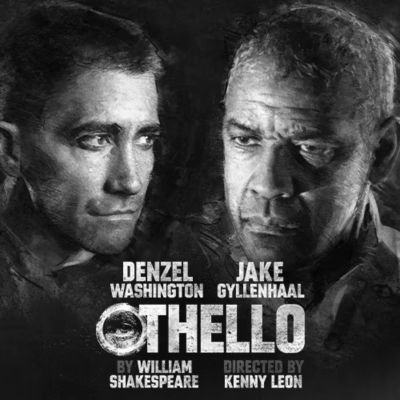
At her very core, Debra is a storyteller and that is on full display in this episode as she talks about taking on Shakespeare’s iconic role of Othello as well as the early years of forming her own company: Take Wing and Soar Productions.
SUBSCRIBE TO WINMI
Get access to Audition Stories, the Final Five questions, and other bonus content by becoming a monthly or yearly subscriber to Why I’ll Never Make It. Producing this podcast is rewarding in its own way, but I’m essentially a one-man operation. So it is both costly and time-intensive to put together each episode. By subscribing you’ll be supporting these podcasting efforts, and have access to extended conversations and other bonus content. Your financial support of this podcast is greatly appreciated!
- Subscribe to get access to bonus episodes and extra content
- Make a one-time Donation to support transcripts and podcast production
- If you’d like to support WINMI but have limited funds to do so, then contact me directly for reduced-price or even free access to the bonus content.
Follow WINMI: Website | Instagram | YouTube
Why I’ll Never Make It is an award-winning, Top Theater Podcast hosted by actor and singer Patrick Oliver Jones and is a production of WINMI Media. Background music is by John Bartmann and Blue Dot Sessions is used under a Creative Commons Attribution-NonCommercial 4.0 International License.
Transcript
This transcript was automatically generated and might contain errors.
[0:00] Patrick Oliver Jones: The experiences of our lives affect the paths we choose and help make us who we are today.
[0:06] Patrick Oliver Jones: In part one of my conversation with Debra Ann Byrd, she revealed the ups and downs of her own life that eventually ignited a desire to perform and pursue a life on the stage.
[0:18] Patrick Oliver Jones: But just as it was with her personal journey, Debra's path toward becoming an actor was slow but steady.
[0:25] Patrick Oliver Jones: And her first steps as a producer started from very meager beginnings.
[0:33] Debra Ann Byrd: It was very humble.
[0:34] Debra Ann Byrd: We often didn't have sets.
[0:36] Debra Ann Byrd: If I could have lights and sound and costumes and the actors speaking to speech trippingly, I was okay with not having the kind of set that would make people go, oh, that's beautiful.
[0:52] Patrick Oliver Jones: Welcome to Why I'll Never Make It or Win Me for Short, one of Feed Spot's top 25 theater podcasts.
[0:59] Patrick Oliver Jones: I'm your host, Patrick Oliver Jones, an actor and singer for almost 30 years.
[1:04] Patrick Oliver Jones: And each week I talk with fellow actors and creatives as we explore the realities of what it really means to make it in this business.
[1:12] Patrick Oliver Jones: The website is why I'll never make it.com.
[1:16] Patrick Oliver Jones: There you can support this podcast financially.
[1:19] Patrick Oliver Jones: Learn about all that and more at why I'll never make it.com or click on the link in the show notes.
[1:33] Patrick Oliver Jones: As season five of Why I'll Never Make It winds down, there's only one more episode left, the annual Look Back episode, which will release on this podcast's birthday, December 28th.
[1:46] Patrick Oliver Jones: I'll tell you more about that special presentation at the end of this episode.
[1:51] Patrick Oliver Jones: But for today, we pick up with part two of my conversation with Debra Ann Byrd.
[1:57] Patrick Oliver Jones: She previously opened up about her many personal struggles growing up, from absent parents and being put in foster care to becoming pregnant as a teenager.
[2:07] Patrick Oliver Jones: Professionally, she pursued careers in accounting and preaching, but didn't really find a home until becoming an actor on stage.
[2:16] Patrick Oliver Jones: But even then, she had doubts about her own abilities and where her life was headed.
[2:21] Patrick Oliver Jones: So we continue here with where we left off, as Debra shares how she finally found her calling, not only as an actor, but producer and writer as well.
[2:32] Patrick Oliver Jones: At her very core, Debra is a storyteller, and that is on full display in this episode as she talks about taking on Shakespeare's iconic role of Othello, as well as the early years of forming her own production company, Take Wing and Soar Productions.
[2:52] Patrick Oliver Jones: I imagine that's been quite a journey of 19 years.
[2:56] Patrick Oliver Jones: And yes, there's all that gumption, there's all that excitement of getting started.
[3:01] Patrick Oliver Jones: What was the first drawback?
[3:04] Patrick Oliver Jones: The first time when you thought, oh gosh, what have I gotten myself into?
[3:09] Debra Ann Byrd: Uh-huh.
[3:10] Debra Ann Byrd: The first thing was absolutely fabulous.
[3:13] Debra Ann Byrd: We did Richard the Third, and that was really, really great, and it did really well.
[3:20] Debra Ann Byrd: And then the next year I was like, oh, what am I gonna do now?
[3:23] Debra Ann Byrd: How do we do that again?
[3:27] Debra Ann Byrd: And how do we—so I started to reach out to different people in the community.
[3:31] Debra Ann Byrd: When you think back to like Tosanna Baveli, who won the Tony for For Colored Girls, you know, she was a professor now working at Juilliard and other schools, but she still was an actor and not getting the opportunities that she wanted.
[3:43] Debra Ann Byrd: She always wanted to play Medea.
[3:45] Debra Ann Byrd: She always wanted to play King Lear and be Lear as a man.
[3:50] Debra Ann Byrd: She wanted to do a lot of things.
[3:52] Debra Ann Byrd: And so I said, well, let me draw on the resources and the talents of not just people from my community, but I reached back to my college and I got some of my professors.
[4:02] Debra Ann Byrd: I hired them to be directors, so that when we came out of the block of the starter's block, we would look like we were a professional theater company.
[4:02] Debra Ann Byrd: We would look like we knew what we were doing and that everything was decent and in order.
[4:18] Debra Ann Byrd: And then after like two years, I would die.
[4:21] Debra Ann Byrd: Wait a minute.
[4:23] Debra Ann Byrd: This is hard.
[4:24] Debra Ann Byrd: Because then press started to pay attention.
[4:27] Debra Ann Byrd: And people started to pay attention and they wanted to do interviews and they wanted to chat.
[4:32] Debra Ann Byrd: And then some of the people around me would get upset and jealous that they wanted to talk to the founder.
[4:38] Debra Ann Byrd: And so that became a challenge.
[4:40] Debra Ann Byrd: And I said, you know, what am I doing?
[4:42] Debra Ann Byrd: Deborah Ann, you're an actor.
[4:44] Debra Ann Byrd: You don't have to do this.
[4:45] Debra Ann Byrd: Yes, by now I already started a 501c3.
[4:48] Debra Ann Byrd: I'm a grant writer now.
[4:50] Debra Ann Byrd: I can do everything in the theater.
[4:52] Debra Ann Byrd: Once I realized that, you know, the theater was going to be right for me, is because I could do a lot of things.
[4:58] Debra Ann Byrd: I had the bookkeeping part down.
[5:00] Debra Ann Byrd: I had down management.
[5:01] Debra Ann Byrd: I was good at organizational skills.
[5:03] Debra Ann Byrd: I was good at forms.
[5:05] Debra Ann Byrd: I was good at talking to people and managing people.
[5:07] Debra Ann Byrd: I was good at all those things.
[5:08] Debra Ann Byrd: And so it was great until it wasn't.
[5:12] Debra Ann Byrd: And I was conflicted and said, you know, Deborah Ann, I'm gonna just keep going a little bit because I told myself the longest running company that was run by people of color who presented the classics was three years.
[5:28] Debra Ann Byrd: And that was 1821 to 1824.
[5:32] Debra Ann Byrd: Oh, is that good?
[5:33] Debra Ann Byrd: And that was the acting company.
[5:34] Debra Ann Byrd: And I said to myself, I know darn well that people of color can run a company.
[5:41] Debra Ann Byrd: And I'm gonna do at least five years.
[5:46] Debra Ann Byrd: Right.
[5:47] Debra Ann Byrd: So I had that pushing and fueling me to as a goal, no matter what, I'm going to do five years.
[5:56] Debra Ann Byrd: And so even though I was tired, and even though I was feeling like, oh my God, I'm an actor and I'm not getting a chance to act now because I have to be an administrator and a producer, I didn't let that deter me because I knew that I needed to for myself and for the people I was working with, and for people who were naysayers, I needed to prove that that could be done.
[6:18] Debra Ann Byrd: And so we made it to five years.
[6:20] Debra Ann Byrd: And I said, I'm tired.
[6:22] Debra Ann Byrd: I think I'm gonna just like go lay down somewhere.
[6:25] Debra Ann Byrd: Right.
[6:25] Debra Ann Byrd: And Patronia Paley says, Deborah Ann, we need you.
[6:28] Debra Ann Byrd: You can't quit now.
[6:30] Debra Ann Byrd: Right, you gotta keep going.
[6:31] Debra Ann Byrd: I said, okay, okay, okay.
[6:32] Debra Ann Byrd: I'm gonna do 10 years, and that is it.
[6:37] Patrick Oliver Jones: Now I'm curious, you know, you'd gone through it five years.
[6:40] Patrick Oliver Jones: Now you've made this 10-year commitment.
[6:42] Patrick Oliver Jones: What had been the response, not only of the actors and people that you had brought into the company, but your audience as well?
[6:51] Debra Ann Byrd: Well, it was being received pretty good.
[6:53] Debra Ann Byrd: I mean, really, you know, it was doing really well.
[6:56] Debra Ann Byrd: And the first couple of years, there was a little bit of red going on, but then after a while, we started to be in the black.
[7:03] Debra Ann Byrd: I mean, I got some producing partners sometimes to help me to co-produce some shows so that we could end up in the black.
[7:11] Debra Ann Byrd: So that was one of the things I really wanted to do.
[7:13] Debra Ann Byrd: I wanted to end up in the black.
[7:15] Debra Ann Byrd: I mean, I took every theater class, every management class, every development class, every marketing class, every class that I could possibly take to make this company a professional theater company, I actually took them, including CTI with the Broadway League.
[7:35] Debra Ann Byrd: I did everything I could to make sure that it was going to be a visible and viable company.
[7:41] Debra Ann Byrd: Writing those grants, I got all of them except maybe two.
[7:45] Debra Ann Byrd: And so I was feeling empowered.
[7:48] Debra Ann Byrd: I was feeling strong.
[7:49] Debra Ann Byrd: I had some people around me.
[7:51] Debra Ann Byrd: I had board members now, and I had some women from my community who came on to help as board members, and then sometimes just volunteer staff.
[8:01] Debra Ann Byrd: And whatever little bit of cash flow we had, we pay for car fare, we pay for food, we pay for whatever we could pay for.
[8:09] Debra Ann Byrd: The actors, you know, they were, they had actors' equity, they were we were doing showcase level.
[8:14] Debra Ann Byrd: And whenever we could do better with the funds, we did better.
[8:17] Debra Ann Byrd: And whenever we couldn't, we just couldn't.
[8:20] Debra Ann Byrd: And so we did stage readings because in our community, a lot of people didn't know these kinds of plays.
[8:25] Debra Ann Byrd: These were new plays for my community.
[8:28] Debra Ann Byrd: Our audiences were 85% African American, you know, like 10% white folks, and another 3% and 2% Latino and Asian.
[8:38] Debra Ann Byrd: And they were receiving, they were receiving these stories well.
[8:42] Debra Ann Byrd: I mean, a lot of times when we did the comedies like The Rivals and Mrs. Warren's Profession and things like that, or The Importance of Being Earnest, we redid that.
[8:51] Debra Ann Byrd: People really loved them.
[8:53] Debra Ann Byrd: They loved Pekong, which is the Medea story set in the Caribbean.
[8:56] Debra Ann Byrd: They loved A Darker Face of the Earth, which is the Oedipus story set in Slavery Time America.
[9:02] Debra Ann Byrd: We did a lot of Shakespeare's, we did a lot of Greek tragedies.
[9:06] Debra Ann Byrd: We did a whole lot of work, and the people, the audiences was really loving it.
[9:12] Debra Ann Byrd: They were eating it up.
[9:13] Debra Ann Byrd: You know, when we did talkbacks, the interesting thing was sometimes audience members would say, I didn't know that we could do that.
[9:20] Debra Ann Byrd: Not could as in permission, but could as in I didn't know we had the ability to.
[9:28] Debra Ann Byrd: And so that was very interesting.
[9:30] Debra Ann Byrd: And sometimes people would be proud and excited about the kind of work that we were doing and the way that we were doing.
[9:38] Debra Ann Byrd: It was very humble.
[9:39] Debra Ann Byrd: We often didn't have sets, but I focused on the actors and their skill sets.
[9:46] Debra Ann Byrd: If I could have lights and sound and costumes, and the actors speaking to speech trippingly, then I was okay with not having the kind of set that would make people go, oh, that's beautiful.
[9:59] Debra Ann Byrd: Because the thing that we wanted people to pay attention to was that actor.
[10:04] Debra Ann Byrd: And that actor was not only willing to be on the stage, but that they belonged there because they had the skill sets and able to be able to tell those stories like everyone else.
[10:16] Debra Ann Byrd: And that part made me extremely happy.
[10:19] Patrick Oliver Jones: You've been playing the part of administrator, producer, and all that.
[10:23] Patrick Oliver Jones: You did eventually get back onto the stage and you got to play Othello, which must have been a mammoth undertaking for any actor.
[10:33] Patrick Oliver Jones: But for a woman to take on this man's role.
[10:38] Patrick Oliver Jones: How did you transform?
[10:40] Patrick Oliver Jones: How did you bring yourself to shift into those kind of gears?
[10:45] Debra Ann Byrd: That was a journey.
[10:47] Debra Ann Byrd: It's still a journey.
[10:49] Debra Ann Byrd: Of course, like I said, 10 years, like I was at Marymount and I wanted to play Othello, I knew that.
[10:56] Debra Ann Byrd: And 13 years later, I got a chance.
[11:00] Debra Ann Byrd: By year 10 of Take Wing and Soar, I was really tired because I was doing year-round.
[11:05] Debra Ann Byrd: And I said, I need to do something else.
[11:07] Debra Ann Byrd: I need to shorten this.
[11:09] Debra Ann Byrd: And so I said, well, what if I do a festival?
[11:11] Debra Ann Byrd: I make a three-door indoor outdoor festival.
[11:15] Debra Ann Byrd: And what if it has a stage reading and a full main stage outdoor, mainstage indoor, and some other parts of it that makes it into a festival?
[11:25] Debra Ann Byrd: And I thought, and I was at the Shakespeare Conference, the Shakespeare Theatre Association, where the other producers of Shakespeare are.
[11:32] Debra Ann Byrd: And I told them that I'm gonna start the Harlem Shakespeare Festival.
[11:36] Debra Ann Byrd: And they said, yay.
[11:37] Debra Ann Byrd: And on the break, a young woman called Lisa Vulpe, she came to me and she said, Deborah Ann, I hear you're starting the Harlem Shakespeare Festival.
[11:45] Debra Ann Byrd: What is it that I can do to help you?
[11:47] Debra Ann Byrd: I see you're the only brown person in the room, and you're female, and I want to help you.
[11:53] Debra Ann Byrd: Now, Lisa runs the Los Angeles Women's Shakespeare Festival.
[11:57] Debra Ann Byrd: And she saw someone who she thought that she might support.
[12:01] Debra Ann Byrd: And I said, well, maybe you could help us by doing a stage reading with us.
[12:04] Debra Ann Byrd: And we didn't know what we were gonna do.
[12:06] Debra Ann Byrd: She came to New York, we went downtown to see our mentor, Tina Packer.
[12:11] Debra Ann Byrd: She was performing Women of Will downtown with Nigel Gore, and they performed the scene, Othello, Act Five, scene Two.
[12:17] Debra Ann Byrd: And I reminded myself, oh my God, that's that show I want to do.
[12:21] Debra Ann Byrd: So in the break, I say, Hey Lisa, you got any Yago in you? She said, Yeah, you got some Othello in you. I was like, uh-huh, yeah, sure. Yeah. And then we decided that we were going to do an all-female multiracial stage reading of Othello the More Venice. And it was great. We guys cast 15 other women to round out the cast. And we were down there at Ripley Greer. Ladies came through. If you were too girly, you wasn't the one. Unless you were going to be Desdemona or Amelia. And we kind of already knew who they were. They were some big shots that were Lisa's friends. And um, and so we cast the ladies. And then Lisa started to give us workshops. She had been 20 years doing all female Shakespeare.
And so we all were learning how to walk, how to sit, how to ambulate in a more direct manner, how to drop our voices or register or do how to behave. And it was wonderful. And I said, before I got there, I said, Lisa, am I a female Othello or a male Othello? You know, there are women generals now. She said, Deborah Ann, this is a man's story. And I said, Oh, what am I gonna do with these? And she said, Don't worry about that. We got that. Then I started to worry because I was like, what am I gonna look like as a man? Uh-oh. And so I thought about my little son Joshua. He had a neat short curly afro, these beautiful sideburns and a lovely goatee. And I said, That's my look. I didn't want to look like a fool.
I didn't want to look like a girl pretending to be a man. I didn't want to look like I had on excessive makeup. I didn't want it to be a distraction. I wanted the actor's challenge of really transforming and really as close as possible, remove my feminine and take on the masculine. No makeup, no jewelry, no perfume, except Othello's little gold hoop. I changed my hair. I used to wear my hair way down my back. I changed it to a little afro. But I didn't do that until the night of the stage reading, which was sold out. And I was nervous as hell. I put my makeup on. I got that selfie. Oh my God, I am a daddy's child. And places. And everyone saw me. I was like, oh my God, my family's gonna see me, my community's gonna see me.
Now by this time, I am a producer and people know me in the world as that. So to be an actor is like strange again. I came on that stage. At this point, how long had it been since you had been on stage?
[14:52] Patrick Oliver Jones: Um I had a little break in there.
[14:55] Debra Ann Byrd: Seven, eight years I went without being on the stage. But then that can be a big break, yeah. When my um when my mentor died, I said I'm gonna go on the stage and I did play Cleopatra. I figured I could since I did at school. I won I won an honor at the public. They gave me a full scholarship to do their Shakespeare. Once I did my Cleopatra monologue, I must be okay. So I did that. And so I had that under my belt. So there was some Shakespeare back in, you know, back in the in this in the tank. But playing this man, I knew it would be a challenge. And like I do when I'm playing other things, like if I'm playing something other than myself, like a Caribbean woman, misspeak with an accent all day, every day, all the time.
So when the time I hit the stage, you would not know that I'm really not Caribbean. I wanted to do the same thing with me playing a man. How do I remove my feminine self and become as masculine as possible? So that when you saw the stage, you see a general, a man, a warrior. And I worked on it, and I got damn close. And it was beautiful. It was amazing. It was extremely different.
[16:10] Patrick Oliver Jones: I'm curious, in taking on this masculine role, did it give you insight into us men or even insight into your own femininity, playing something so opposite?
[16:23] Debra Ann Byrd: It gave me a lot of insight. A lot of things happened. After that, I did 2015 and in those between all those times when I was becoming Othello, I thought I was just gonna have a regular actor's journey and I was gonna go in and learn my lines and just you know figure out how to put this character on. But a lot of other things started to happen. Because of what I looked like and what I sounded like, a lot of people began to treat me differently. It was really interesting to discover that people would not hold the doors open for you anymore. It was interesting to discover that no one would get up and offer you the seat on the bus anymore. It was more um interesting to learn that people did not walk down the street and smile at me like they normally do.
All of those changes were really noticeable and palpable. The women in my world, sometimes they would um, one of them particularly would say, You better get away from me, Debbie Ann. I have to tell my husband. Oh no, Debra Ann, get away from me. You're a fellow, no. The men in my world, they would tease and laugh and whisper and talk about me in the dark corners at the bar. All of that was sometimes it was fun and I was figuring it out, but sometimes it felt like rejection. And it was like that. Um, not in that way. That was felt like being kept out, put out and shut out. This felt like you are that thing. And that thing is wrong or nasty or not wanted in my space. And I was thinking, am I not the same kind, loving, generous human being that I always been?
What the hell is gender anyway? Who created that shit? So I started to think about that. And then I started to think about myself and my life, and I thought about it, and I said, you know what, Debra Ann? From the time you were a little girl, you always did, you were always exploring and discovering and curious. You did everything. You played double dutch rope with the girls, but you also played tag football with the boys. You took the sewing class and the cooking class, but you also took metal shop and wood shop and ceramic shop with the boys. You fixed bicycle tires, you cornrolled girls' hair, you played with the girls, you played with the boys. I was always all of it, male and female at the same time, not really knowing or clocking that.
I know I remember I was thinking I was a tomboy, because I could do all those things. But I never really thought about it like that. And I never really thought about gender like that until I was becoming Othello. So not only were the people in my world changing, and the people who knew me and the people who did not know me, not only were those things different, but I was understanding what it felt like to maybe be a black man. And it's a little lonely and frightening, felt like. People would, you know, clutch their purses a little tighter. Really? Damn. Because I lived like that every day. I didn't have beards and mustaches and things, but just the look of someone who looked like a black man was really interesting.
It was more interesting when in my male mind, in my male dress, femaleness showed up in the form of changing of the moon, which is translation to menstrual. What happens when you have a male mind and your body tells you, sorry, you a girl? It's reminding you, hey, remember me. Oh, shoot. Especially when it comes as a shock. I'm in rehearsal, I'm swinging my sword and my arm brushed against my tender breasts. And the pain shoots up to the brain, and it felt like my world was like, oh, where am I? Who am I? What's going on? And it was weird because I couldn't look at Desdemona in the eye after that. I felt like an imposter. I felt like it was hard to love her now, because I was really a girl. But then at the same time, it was the same crazy Desdemona who kept saying to me every rehearsal, when are you gonna kiss me?
When are you gonna kiss me? I was like, girl, I'm not gonna kiss you. I mean, I'm gonna kiss you. I'm gonna kiss you on act three, scene four. No, I needed to be more organic. Really, Desdemona? Now, what was happening in the other side of my brain on this side over here? Was remembering back in college when I had a crush on her or her or her? Oh shit. I'm not gonna kiss this girl in rehearsals, and everybody's gonna know I like girls. Hell no. I ain't doing that. I'm a leader in my community. They're not gonna be talking about me. And then I was like, let all that be okay. But the part that was started to break my heart and make me more empathetic towards men and women, especially the women, was when I thought about Debra Ann, you're an actor.
And mentally you're feeling some kind of way when the menstrual comes. What happens to those women or those female bodies who transition and now they live as men all the time? What happens to them every month? Hmm. Because I was feeling some kind of way. So I was wondering. And then I was so empathetic and trying to understand that these people are just people trying to live their lives, trying to be okay. And I thought about men folk, and then all the girls in the bar was hitting on me, and all the girls everywhere was hitting on me, hitting on my Othello, or hitting on me after costumes off. And I was like, mmm, what's this? I don't understand. But maybe I do, but maybe I'm not sure. So all of those things was going on.
I had a myriad of things happening to me while I was becoming Othello, and it was very interesting. And I thought, I need to write about this. I need to write about these things. Is it a memoir? But I always thought I was too young to write one, even though I had a lot of living. And then I was like, is it a solo show? I always want to do a solo show. I never thought to write my own, but I always wanted to do one. I wanted to try it as an actor. Then I thought maybe it's both. So then I get to praying. Which is it, Lord? And who's gonna help me? And then in my mind, I see Paul Edmondson from Shakespeare Birthplace Trust in the UK. I called her. I said, Paul, I have a project. You want to help me?
And he'd tell me about it. I told him about it. He says, Yes. And then Shakespeare Birthplace Trust made me artists in residence. And I went out there and began to think about it and write. I did about nine, 10 interviews. Um, did some public speaking at some of the universities, and then came back home with all these tapes and all these ideas for what this solo show memoir might be, and a plan to come back in three years and perform it there at the birthplace trust where um Shakespeare's house. So I I got a writing coach. I found this woman who seems like she spoke my same language. It felt like I understood her when she was explaining what she does and what she could offer. And I didn't have really money, but I figured I'm gonna find this money because this lady is the one, you know, I've always been able to feel spiritually, what's right for me. And this woman felt right, and so um I called her and we had a conversation and I found the money, and I did the workshop with her, and it was great.
[24:41] Debra Ann Byrd: And then I walked away with this play, and now I needed someone to help me to make it theater worthy, really, really theater worthy. I knew I loved Tina Packer from Shakespeare and Company. And I said, oh my God, that would be amazing if I could get her to help me develop this show. And then Lisa Volpe could direct. And I finally came to a workshop at Shakespeare and Company and I said, Tina, I need your help. She said, read it to me. I read it to her. She said I got I got you. And so then we set off to make it right and we made it as beautiful as we can take it to the UK performed it a couple of times there bring it back to America performed it for a body of Shakespearean producers and actors and teachers and they were that must have been daunting because now you're you know you're not just presenting it to you know to Harlem residents who may or may not know theater at all or or Shakespeare.
Now you're in front of the experts who know this these are the experts. I was scared as heck but I did it and they received it so well you know and then I got like 10 12 bookings of it around the globe and then COVID doors closed.
[25:56] Patrick Oliver Jones: I know oh goodness I'm so glad that as things are opening up that you've gotten a chance to finally bring it to stage and bring it to life how have these performances been that you've been doing?
[25:56] Debra Ann Byrd: Oh it's they've been amazing you know I really only had like two weeks to rehearse two weeks to rehearse anything is not a lot of time. Um, and then I had to go right into tech. So I was very, very nervous about all of that, you know. Um, but I knew I had Tina Packer, I knew I had Diane Harvey, who was my movement person, and I had Tina's son who uh Mart Marty J. And he's like a fight specialist, and he's just like really like a strong aggressive man. And so I knew that he could help on those parts where I needed to BO um or project masculinity. Um, I knew that Tina was going to kick my butt and not let me quit. I knew that Diane Harvey was going to give me the best movement that I could possibly, my body could hold, even though I had a meniscus tear in the knee and all these other things going on.
I knew that I could be okay. And Tina says, Deborah Ann, you're used to being in charge. You're used to doing almost every damn thing. Let me get you a team of people around you to support you so you can be an actor. How about that? Can we try that? I was like, yeah, yeah, yeah, yeah, yeah, yeah, yeah, yeah. Yeah. And so it just was beautiful because between my stage bandage and my, I'm like, this is a solo show, but the contact sheet has 20 people on it. Right. So now there's that community. There's that community. And now I feel supported in a different kind of way. Now I'm understanding again what it means to be an actor that is fully supported. What is that new thing? How do I trust it? How do I get used to it? Do I get used to it? Because I'm gonna have to be gone from here after a while. And am I gonna have that? Do I want that? Absolutely. Is it possible? Sure it is. And now it's time to do it.
[28:07] Debra Ann Byrd: I was scared to death. Final dress. I must have called line about 20 times. Right.
[28:14] Patrick Oliver Jones: I can only imagine. I can only imagine how many times, like, oh my gosh, did I skip a page?
[28:21] Debra Ann Byrd: I did skip a page or two sometimes. You know, um, but it worked out. And we did our first two previews, and um opening night was rained out, so we had to go indoors onto a stage where I had not done the show before, and we made it work. You know, are they gonna I'm a playwright and I'm an actor. Are they gonna like the play and hate the actor? Are they gonna like the actor, hate the play? Are they gonna like both? Are you gonna hate both? Ah, and so I was going through all of that, and then I realized, you know, just get to praying like you always do. God, you got me, I got you. I'm gonna make sure that I tell these stories to help change people's lives, that we get folks to understand, to have some empathy, to walk away and think about themselves, make themselves better, make the world better.
This is what we're gonna do. I got this. And then I got Tina. She's like a I call Shakespeare mom, and she just like encourages you and just rocks you into calm and peace, and knowing that I have the all the tools and all the equipment that I need to make this so is there. Just trust, bird. Be anxious for nothing, but everything by prayer and petition, make your request known before God, and the peace of God which transcends all understanding, will keep your heart and mind in Christ Jesus. I said, okay, I got this. And I think about the ancestors in the play, and I start. I hear them calling. Drum start. If someone was to ask little Debbie who she wanted to be when she grew up, I don't think she would have said, oh, fellow. But I'm sure glad that I got to experience that. Not just one or two or three times. And I guess it took that much practice to become fully undone.
[30:23] Patrick Oliver Jones: And so, how has this process of becoming your own artistic director, your own writer, and now, you know, your own one woman show and you're back to the acting, what drew you into this whole profession to begin with? How does it feel now wearing all these different hats and being this person that does so many things?
[30:45] Debra Ann Byrd: Well, you know, I have to kind of compartmentalize without putting myself in a box. I need to remember and remind myself often what role I'm playing, which hat I'm wearing. And when I can do that well, then all of us do well. So then people don't feel like you're stepping on their toes or that you're watching them too closely. When I'm an actor, I decide go ahead and be an actor. Knowing that I have a great team around me. If I don't feel like I have a great team, then I worry and I start to look at this, that, and the other thing. But knowing that I have a good team around me, I can relax into being an actor and allow myself the space of being served or helped or assisted, which is different for me.
It's really beautiful to have that kind of experience. When I'm a producer, I know what I need to do. I need to find the money. I need to get the people and get the people and the resources to make that project happen. When I'm the writer, I feel like I'm free to explore and create and figure it out and make it up. You know, but being the actor and the playwright is it comes a time where I have to just stop thinking about how to make it better with my perfectionist self. How to shift it and make it better. The hardest part, I think for me has been the attention that came with photos and people want to talk to you and people want to see you, and people want to hold your hand, and people now. When I see people one on one after a show, we did a workshop tour of this.
That was fabulous. That was great. That was wonderful. But sometimes it's the people in your world who see you going and growing and expanding, and they start to tease and they start to make fun and they start to accuse you of all kinds of things that are just not so. That's the hard part. It's a hard part of being away from your family for a long time because you're on the road somewhere. Why are you home? Why are you when you coming home? What's up? When you why are you up? Why are you working? Why you? I'm busy. I got something to do right now. And it's not that it's something I'm doing because, oh, it's fun, it's exciting. It's not just that. For me, this is a ministry. And I can see the lives that have been touched.
I got all those um reviews that the students have written. I see how it's shifting them, especially the ones who identify as they're really touching some lives. And so that theater ministry that I thought I was starting when I was a young person is absolutely that with this particular show. And that feels like I'm on purpose. And so anything and anyone who's who's against that probably shouldn't be in my world. And that's the hard part. How do you let go of the things that are not serving you? Um, that's not serving the greater good. I think that's the biggest challenge.
[34:05] Patrick Oliver Jones: Well, it has been a joy to kind of walk through this journey with you that you've been on. And I I certainly know for myself, it is it's really inspiring. And it's really just it's there's a connection, I think is what it what I feel. I feel a connection to you, I feel a connection to your story. Parts of it I relate to, parts of it I don't, but it all still feels very much like a connection. And I think that that seems to be what you're bringing audiences and the people who see your work. So I greatly appreciate you being on the podcast today.
[34:41] Debra Ann Byrd: Thank you so much. I really love my time with you, Patrick. Um, and thank you again for inviting me to chat with you about the world and and how we do it, or how we get past not being able to do it sometime.
[34:56] Patrick Oliver Jones: Exactly. Thank you.
[35:01] Patrick Oliver Jones: Thanks so much to Deborah for joining me on the podcast. And a big thanks to you for listening and being a part of our conversation. Check the show notes for ways to connect with Deborah and learn more about her one woman show, Becoming a Fellow, A Black Girl's Journey. As I mentioned at the beginning, there's just one episode left for this season. And it will be both a look back at 2021 as well as a look forward to season six. This is definitely not a best of episode. It's going to be chock full of new discussions, processing the year that was, and information on ways to make the coming year even better. You'll also get a sneak peek at the new guests and format for the show. That's right. Why I'll Never Make It is getting a makeover, kind of brushing off the residue of these past two tumultuous years with a refocus on the true mission of this podcast and how to connect us in more personal and productive ways.
[36:22] Patrick Oliver Jones: Publicity provided by Imagine PR Group. Background music featured in this episode is by Blue Dot Sessions. Why I'll Never Make It is a part of the Helium Radio Network and a member of the Broadway Makers Alliance. Join me next time for the season five finale as we talk more about why I'll Never Make It's.
© Broadway Podcast Network, All Rights Reserved