

As actors, it’s easy to get caught up in auditions, roles, and the day-to-day work of performing, often without stepping back to consider the larger forces shaping the stories we’re asked to tell. Playwright Lynn Nottage operates on that larger scale... Read More
From the show: Why I‘ll Never Make It
Guests
About
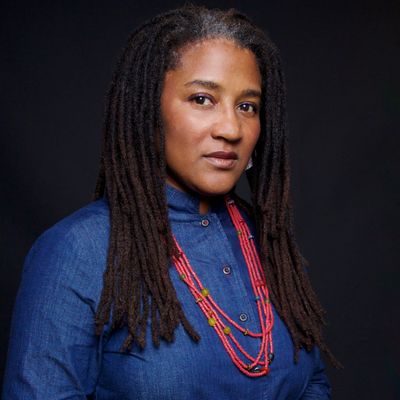
As actors, it’s easy to get caught up in auditions, roles, and the day-to-day work of performing, often without stepping back to consider the larger forces shaping the stories we’re asked to tell. Playwright Lynn Nottage operates on that larger scale. A two-time Pulitzer Prize winner and one of the most influential voices in American theater, Lynn has built a body of work that challenges audiences while expanding what stories are seen and heard on Broadway and beyond. In this conversation, recorded in 2024, Lynn speaks candidly about the responsibility of storytelling, the discipline behind the writing process, and the long road to trusting a creative voice in an ever-evolving industry.
From Ruined, which explores the lives of women during the civil war in the Democratic Republic of Congo, to the Tony Award-winning musical MJ, Lynn discusses the balance between artistry, ethics, and collaboration in theater. What emerges is a clear and grounded perspective on what it means to create meaningful work—not for recognition, but with intention. For anyone working in the performing arts, whether onstage or behind the scenes, this conversation offers a deeper understanding of how stories are shaped, and why the ones that matter most are often the hardest to tell.
Transcript
(This was transcript was automatically generated and may contain typographical or grammatical errors.)
Patrick Oliver Jones:
There's an old adage that there are no small parts, only small actors. And while I've had my fair share of small roles on stage, I don't think I've shrunk my acting in the process. Now, the same can be said for writers as well, because whether it's a 10 minute play or five act epic drama, the writing and crafting of a story remains fundamental. But there are those artists whose work quietly changes the direction of the art form itself and whose perspective defines what stories get told and how. As an actor, I spend so much time focused on auditions, roles, and my own small piece of the artistic puzzle that it can be enlightening and humbling to step back and listen to someone working on an entirely different scale. That's what made Sitting down with Nottage last year so special.
Lynn Nottage:
Hi, I'm Lynn Nottage. I'm a playwright from Brooklyn and I live in the home that I grew up in. So I've made a complete full circle.
Patrick Oliver Jones:
You know, I have to admit that there were some jitters going into this interview. I mean, first off, I was on the road with Beetlejuice and was sick and having vocal issues by the time we sat down to record, so I wasn't feeling 100%. And then add on top of that the fact that I'm sitting down with one of the preeminent playwrights in theater right now. So my heart was racing out of excitement and nervousness all at the same time. But she was a joy, totally understanding of my vocal limitations at the time and extremely thoughtful. During the interview, there was nothing rushed or performative about her reflections on success or struggle.
She spoke with such clarity about her process and personal struggles she faced, as well as her responsibility as a storyteller and the long road it took to trust her own voice, not just creatively, but morally and politically as well. Her work has ranged from the Pulitzer Prize winning play Ruined, which explores the plight of women during the civil war in the Congo, to the Tony winning musical MJ, which focuses on Michael Jackson as he prepares for his dangerous world tour.
What comes through so clearly in my conversation with Lynn is that meaningful work isn't about the accolades, but about intention, about committing to stories that matter, even when they're difficult, uncomfortable, or slow to be recognized. It's why I chose this as the final conversation in this Look Back series, because that kind of perspective is invaluable, no matter if you're the one writing the words or the one saying them.
Welcome to why I'll never make it an award winning theater podcast about the realities of a career in the arts. I'm your host, Patrick Oliver Jones, a Broadway actor here in New York City. And as we head into the 10th season high, I wanted to take a moment to look back at 10 guests who have been so meaningful over the years. Their stories, honesty and lessons are still just as relevant today. And I'm excited to share them with you again, reminding us all what it really takes to keep creating, performing and showing up in this business.
Jones:
Welcome, Lynn. It is such an honor and such a pleasure to meet you and have you on the podcast today. Thank you for coming.
Nottage:
Thank you for the invitation.
Jones:
Well, one of my favorite things about when people start off in the theater, you know, obviously it's as a child, they see some stage production. But for you, you mentioned a puppet show called Succotash on Ice. Tell us about this show and why it sticks out to you.
Nottage:
Yeah, I remember Succotash on Ice because it was one of the first experiences I ever had in the theater. My mother took me to see the puppet show at Long Island University and I still remember the moment when the curtain went up and then the refrigerator opened and there were puppets of corn and lima beans and they began to talk and I was like, oh my God. I mean, it was just this incred, magical moment that I couldn't completely comprehend, but that utterly delighted me. And from then I think that I was just won over by the magic of theater. I thought, this is what I want to do. I want to make lima beans and corn talk.
Jones:
I love it. Did you go into acting first? Was that one of your first forays on stage?
Nottage:
You know, it's interesting. I've always been drawn to writing for the theater, crafting plays. It began in my parents living room where I'd write plays for my brother and myself to perform. They had guests and I certainly dabbled in acting, but I wouldn't say that I was ever really drawn to it. I think that I preferred to be behind scenes. It's like I'm an introvert, extrovert, and I love the solitary time sort of wrestling with questions and ideas and then being in collaboration with people. But I never had that desire to be on stage. I never really wanted to be seen in that way.
Jones:
I see, I see. Well, this kind of gets us into your first story and we'll go back to 1993 and this was when you were making your transition from a stressful full time work at Amnesty International and you were embracing your life as an artist. Now, you had graduated from Brown University, gotten your MFA from Yale, and around that same year, you also produced your first play in New York, which I believe was Rhinestones and paste in 1989.
Nottage:
Yeah, that's definitely true. It's like I went directly from Brown undergraduate into graduate school, and I was on the young side. And so I arrived in Yale University at a very fraught moment. I mean, it was the height of the AIDS epidemic and the crack epidemic, and you could really feel that impact on the community outside of Yale, but also very much on the community inside Yale. And so my years at the drama school were quite fraught and difficult and filled with a kind of sadness that is external to just like the. The wear and tear of being a student. You know, it was really difficult to have teachers die and to have fellow students die of AIDS when you're just 20 years old. And so when I finished graduate school, I felt like I really needed to pause from theater, and I felt like I needed to do something that had more impact and that would directly address sort of human woes and what was happening in the world.
Nottage:
And I went to work for Amnesty International, where I worked as the press officer for about four years. And that was immensely intense work and had another kind of wear and tear on the mind and body. And for that period of time, I really pushed aside writing for the theater, and I sold my computer, if you could call it a computer. Back then. It was more like a word processor. And I committed to this life as like, a human rights warrior. But then, you know, there came a moment when I was working at Amnesty when I felt like there were ways in which I wanted to be in dialogue with people that I couldn't do as a press officer, you know, through, you know, three or four paragraphs of describing what's happening in the world, is that I wanted to really be much more in conversation with people and explain what I was feeling, explaining what I was experiencing at Amnesty International. And I decided to write again.
Nottage:
And it really came at a moment when I had encountered these pictures that a photographer named Donna Ferrato had brought in for us to look at. And she had taken these images of women just as they were arriving at a battered women's shelter. And they were filled with so much emotion. I mean, there was relief, there was grief, there was anger. There's just, you know, within these images, there's the kind of tension that as an artist, you really struggle to capture. And Donna asked whether there was anything we could do at Amnesty International with the images and at the time, unfortunately, we were really struggling with how to deal with gender specific human rights abuses, and it wasn't within our mandate. And that was immensely frustrating to me. And so after she left, I closed my door and for the first time in four years, I wrote a play.
Nottage:
I thought, oh, this is what I do. And I wrote a play called Poof, which is about a woman who's abused and she tells her husband to go to hell and he explodes. And then she has to deal with, you know, what to do now because he's been reduced to a pile of ash. And she calls her best friend down and they have this discussion and finally they decide to sweep him under the rug. And so it was this very funny short piece, but it captured all of the things that I had experienced upon seeing Donna Ferrato's images. And I put that back into the world. And that was really sort of my transition back into theater.
Jones:
Did it feel natural or did it just come out of you onto the page, that writing?
Nottage:
I think, yeah, it just came out. You know, it felt like I need to respond in some way and what are the tools that I have to respond. And I thought, it's writing. It's like I've been trained to do this. This is something I love. This is something that I have sort of locked away in order to exercise different muscles. And I realized, oh, those muscles are still there and I can still use them when necessary.
Jones:
How did you go about continuing to kind of draft and rewrite Pouf? Because you did eventually produce it, I think just a few years later, I sent off.
Nottage:
It's funny how things happen is I remember getting a flyer from the Actors Theater of Louisville about their 10 minute play competition. And I had looked at it and looked at it and looked at it, and finally I thought, oh, I have a 10 minute play. And I sent it in and I won the competition with that particular play. And then it drew me out to the Actors Theatre of Louisville, which ended up being my very first professional production, even though it was 10 minutes and it was directed by the wonderful Surrette Scott. And we really revised it in the moment in rehearsal.
Jones:
And as you transitioned into more full length plays, was it kind of difficult, kind of getting back on the bike again, so to speak, and writing these full length plays?
Nottage:
Yeah, you know, it was difficult, but it was also really quite a wonderful sensation to recommit to writing. You know, the difficulty is really trying to figure out how you're going to survive when you're writing. The writing itself wasn't hard. It's everything around the writing. Once I quit my job, that became really quite complicated.
Jones:
Did it feel like it was going to actually produce a living for you? Produce a paycheck?
Nottage:
It's interesting. And we live in such different times than we do now, where there's so many ways to monetize, and that as a young writer, that you could write for television, you can write for. For podcasts, you can write for video games. And, like, when I was coming into the world, there weren't those options, particularly if you were a black woman. And so I wasn't really thinking about making a living as a playwright. What I was thinking about is, how can I be an artist in this world and survive? And so that's what I was doing for those years. It was like I was surviving and making my art. And I realized that in order to feel complete, that I had to do both of those things.
Nottage:
You know, had tried the job, which, yes, it was immensely fulfilling, but was the survival job. And I realized that there was a part of me that was unfulfilled, that was incomplete. And so I thought I'd rather be struggling, but also writing than just working and not writing.
Jones:
Now, for us actors, we go from job to job, and it's dependent upon playwrights like yourself, producers, theater companies, putting up these shows, casting us in them. And so for us, it's all about the audition process and keep going, keep going until you book shows, and hopefully we have work over the year for you, you're a bit more in control because you write your own stuff. Do you feel more empowered, more in control of your career? In some ways, yeah.
Nottage:
I mean, it's really the question of agency. Right. As a playwright, yes, I can control what I write, but I can't control when and how it gets produced. And so there's that moment that it gets into the release in the world in which I live in that same kind of sphere of uncertainty, you know. And as a playwright, you know, I'm really used to the same kind of precarity that actors have, because once you produce the play, you don't know whether it's ever going to be produced again. And it may take you another year and a half to write another play. And it's like, what am I going to do for that year and a half in between where I'm waiting to get produced? And so, yes, we certainly have control over this thing, which is a play, but what we don't ultimately have control over unless, you know, we're independently wealthy or whether we want to put it up in our living rooms. We don't have control of when and where it's going to get produced.
Jones:
And then once it is produced, a lot of times it's out of your hands. They can kind of take it in whatever direction they want to take it.
Nottage:
Well, you know, hopefully the playwright gets to remain involved in development of the piece. But a lot of times once it's produced the first time, you don't have any control. It goes into the world and then to different theaters and you can't always be there. And that's a little scary, but it's a leap of faith. And that's sort of the contract of being a playwright, is that you're entrusting your work to other people. I mean, you know, I liken playwriting to like a, a dinner party in which it's a potluck in which you provide the table and the beverage. And then you don't know what's gonna. Everyone's gonna bring, you know, and sometimes there's no vegetable.
Jones:
Have there been a couple of instances of productions of your plays that you would have disagreed with or you would have done it differently?
Nottage:
Yeah, yeah. I mean, I've seen productions of my plays where I've just wanted to run for the hills. I remember going to see one production, my husband was there, and at intermission he says, let's go. And I'm like, I can't go. It's my play. I've just seen really kind of wild and wacky decisions made that are sort of contrary to anything in, in the narrative. So I mean, but that's, you know, that's what happens.
Jones:
That's the beauty and the frustration of theater.
Nottage:
But, you know, the other side is I have been to productions where I am blown away by some of the choices that are, are being made. I, you know, I remember seeing like a community theater production of Intimate Apparel here in Brooklyn, because I'm in Brooklyn right now. And I thought, oh, this is one of the best productions I've ever seen. And it was all actors who had full time jobs and so they couldn't commit to, you know, a life in the theater, but still wanted to make art. And they were so wonderful and the design was wonderful. I'm like, this is just those gifts that every once in a while you encounter.
Jones:
For story number two, we'll talk about a particularly rough period in 1997, and this is when you were going into rehearsals for Mud River Stone at Playwrights Horizon. Let's see. Your daughter was only three weeks old. the time, you had been caring for your mother, who had been diagnosed with als, and she passed away. During the first preview of that production, I recently interviewed a good friend of mine, Dominic Thrasher, who transitioned from. From an actor to a children's book writer when he was diagnosed with als, and he talked about a firsthand account of dealing with that terrible disease. For you, what was it like as a caregiver to your mother?
Nottage:
Yeah, I mean, it was really difficult because I was at a moment in my life that should have been filled with an immensity of joy. I had just finished making first film Side Streets. We were wrapping that. I was pregnant with my my first child, and I was going to have a big production at Playwrights Horizons. It's like, oh, the world is my oyster. But the other side of that coin is my mother had been diagnosed with Lou Gehrit's disease, and it was sort of ravaging her body and sort of indescribable and awful ways. And the disease was progressing quite quickly. And I had moved home when I was pregnant to actually help with her, her caregiving.
Nottage:
And so I found myself trying to rewrite, you know, take care of my body because I was pregnant and, you know, feeding my mother and taking. Taking care of her and just trying to negotiate, which was probably the most difficult moment in my life. And I thought, I have to get this play up. And fortunately, my daughter came, like, two weeks early, so I was able to be with her for two weeks before going to rehearsal. But I literally would sit in rehearsal while feeding my daughter and then checking in because we had a nurse who was coming in during the day. Well, caregiver who's coming in during the day to care for my mother while I was at rehearsal to make sure that everything was going well with my mother and trying to do rewrites.
Jones:
Was there ever a time whenever you were pregnant or moving back to help your mother that you taught about taking a break from writing, or was it
Nottage:
just not really possible if everything wasn't happening in succession? Most absolutely, I would have taken a break from writing. But all of these things were lined up before I knew that there were going to be so many complications in. In my life. And they also, you know, it was like a perfect storm. And I moved. That's the other thing. Because I had to move my life back to Brooklyn and everything, you know, and eight months pregnant, moving and wrapping this movie and doing all that, it was just, you know, it seems insane that I survived that. That ordeal and Then in the middle of previews, at the beginning of previews, actually, my mother died.
Nottage:
And I just had to deal with that awful grief of loss and just try and be brave for a cast and for the production.
Jones:
And it was at this time that the artistic director asked if you wanted to do a talk back during this time.
Nottage:
Yeah. Which I found I still, to this day I find astonishing and I wish I had pushed back, but he said, you know, we've booked the show and all these people are coming for a talk back. And this is the day after my mother died. And he's like, can you do it? And I thought, there's no way I can do it. And I did it. And I should have said no. And that's the thing that I think it's really important to understand in this business is that first and foremost, we have to take care of our mental health and we have to take care of ourselves. And that by saying no, everything is not going to collapse and people will understand, I think that it's more dangerous when we say yes to things that are detrimental to our health and things that are detrimental to just the well being of everyone who's around you.
Nottage:
And so, yeah, I did, and I still feel angry that I did it. All these years later. I feel like, oh my God, that was an immense character flaw. Why did, why wasn't I stronger in that moment? But I know that I couldn't be stronger. I was like at the most vulnerable moment in my entire life. All reason had gone out of the window. I was incapable of making rational decisions.
Jones:
Yeah. Looking back at that time, how do you think you balance that? The joys of a new play of a new daughter, while going through these challenging times with your mother, how did you balance all of that together?
Nottage:
I think you hit it on the nose. It's the joy of having a new daughter. It's having this new life that I'm responsible for and that I'm feeding. And so no matter how bad things get, it's like I have to take care of this other person. And this other person, every time I looked at her was like a bright shining light in my life. And I think that that's what kept me centered through so much.
Patrick Oliver Jones:
Yeah.
Jones:
Because you had this new life coming into the world and while your mother was basically transitioning out of this world.
Nottage:
Yeah. Which was a really beautiful thing. And we actually had, you know, we had a ceremony and my, my. Which my grandmother led. There's a belief she, her, her family's from the Caribbean, that if you pass the body of a child over the person who's dying. The spirit will enter. And so both my mother was a ruby and my daughter was a ruby. And so there was this moment when we passed her over, literally as my mother was dying.
Nottage:
And so I feel like my daughter is this vessel for sort of the past, the present, and the future.
Jones:
Do you see bits of your mother in your daughter?
Nottage:
I do see bits of my mother definitely in there.
Patrick Oliver Jones:
That's wonderful.
Jones:
Well into story number three here you were putting up three shows in the middle of COVID which was just. It was a crazy time for all of us. You. You had two shows on Broadway, I believe this was Clyde's and ML. And then you also had an opera at Lincoln center. And this was the adaptation of Intimate Apparel into an opera. Now, from what I understand, MG was actually supposed to open in 2020 before COVID but like, so many things that had to postpone.
Nottage:
And so it was Intimate Apparel. Yeah, I mean, it's. It's just. You talk about perfect storms. It's. Once again, Covid happened, and productions that were all supposed to happen at different time, different years, and all ended up happening at the same exact moment.
Jones:
And so did both Intimate Apparel and ML, did they go through any rewrites or changes due to the pandemic, the racial awakening of that summer? Sure.
Nottage:
I mean, what was interesting, I can begin with Intimate Apparel is that we were in the middle of previews, so we actually had had two weeks of the show going up and there with audiences, and we got to see how they were reacting, which was really interesting because I guess Lincoln center hadn't primed their audience enough that it was an opera. And so there was always that wonderful moment when the opera singer begins to sing and everyone in the audience, like, looks around like, what is this? And we actually had to put a little flyer, even though on the COVID it says, intimate Apparel, the opera of the. The Playbill. We had to put additional flyer inside in really big letters that said, this is an opera.
Jones:
There will be singing.
Nottage:
There will be singing, but there will be people. Because people were just, like, stunned to experience that. And so that's what the first thing that we encountered is like, oh, we have to really prepare people that this is going to be opera in a small theater. Because I don't think people are used to that kind of expansive singing and emotion on a small stage. And then, you know, the piece was immensely beautiful, but it was overly long. And in opera, because of its complications, you don't. You can't, like, just cut things out the way you can in a musical or in a play during previews? I mean, it's just much more complicated than that. And so when Covid interrupted and we had that year and a half pause, we had the opportunity to go back and revisit the piece in ways that you don't usually have.
Nottage:
We were able to trim moments and expand moments and do the work that I think really benefited the piece in the long run. So when we reopened a year and a half, which was kind of spooky because we left and, like, everything was frozen in place. And when we came back on the tech table, it's like our pens were still at the same angle.
Jones:
Oh, my gosh.
Nottage:
Like, nothing. The t. You know, nothing had been changed in a year and a half in that theater. It's almost like we just started right back up in place. But we had a year to reflect on the piece, which I think benefited, you know, and the actors had a. The. The singers had a year to think about the roles, and so they came back with, like, a fresh perspective, and so their acting was deeper and more connected. And I somehow think, you know.
Nottage:
You know, they wanted to be in collaboration because there was a year and a half in which we couldn't see other people. And so I think that just made everything better, you know, And I would say, you know, for ML similarly, is that we had more time to ruminate on the piece and to work on the piece. Unfortunately, because of COVID part of our tech schedule got truncated. So, you know, there's these wonderful wind effects that we never got to put in, and pyrotechnics that we never got to put in. And maybe it would have been like gilding the lily, but we. We were disappointed that we lost those things.
Jones:
Now, did you get to add them in subsequent productions?
Nottage:
No, we just decided, you know, it works without it, it's kind of expensive. We don't need all of that, though. I would love a wind machine. It doesn't love a wind machine.
Jones:
Well, especially ML. He loved a wind machine.
Nottage:
Yeah. I mean, you know, it's like Beyonce loves. Like, singers love wind machines. And that would have been so cool, the shirt flapping and the wind going,
Jones:
yeah, I got to see ML in London. That was my first time to see it. But fortunately, I got to see it with Miles, who was absolutely stunning. It must have been like a revelation when he came into the room and inhabited that character.
Nottage:
You know, finding an ML is really hard because you need Someone who's a triple threat. You need someone who can act, dance and sing like Michael Jackson. And, you know, Michael Jackson was Michael Jackson because he kind of was singular. And so when Miles Frost walked into the audition room and began, we all like, looked at each other like, oh, my God, we found a unicorn.
Jones:
Yeah, he must have been so different from everyone else.
Nottage:
Yeah, he's really. And I thought in London, now that he's older, is that he's really owned the role in a new way that I think is quite, quite, quite delightful to. To watch. I mean, he just is lighter on his feet and he's more confident and yeah, he's really. It's really evolved quite beautifully.
Jones:
Was ML a different kind of process for you? Because the others you had kind of come up with the stories, the characters, whereas ML was this iconic figure. Was that different writing?
Nottage:
Yeah, I mean, taking on the writing of something as complicated as Michael Jackson is daunting and it's really scary. But I think that as artists, I mean, part of what our roles are is to lean into the complications and to lean into things that scare us. And I think the hardest thing when you're writing about someone like Michael Jackson is that he's so beloved and there's so many people who know every single thing about him. Like, I remember on her first preview, someone complaining because, like, the little piece of tape that he put around his finger, you know, was on like the second digit and not the first digit, you know, like that's how micro people are when it comes to their love of this particular icon. And so going in, I thought, I'm going to have to really make sure we get it right. And I think one of the things that I feel really proud of is that people who know Michael very, very well said you got him, that this is right, and that the fans love the show.
Jones:
And what were the conversations like? Cause obviously Michael Jackson's had many highs, many lows, and certain controversies. What were the conversations around how to address some of the controversies in his life?
Nottage:
Yeah, I mean, of course you can't make a show about Michael Jackson without having this conversation. But really early on in the process, even before the documentary dropped, which kind of broadsided all of us, is that we decided that we wanted to micro focus on Michael Jackson the artist, and to look at a very small moment in his life, but a very important moment, which is when he was making this mega concert that would really come to define what those kind of mega concerts look like. You know, there wouldn't be any Beyonce renaissance tour without sort of the dangerous tour. That. That was the prototype. And we thought it might be interesting for audiences to go inside of his process, because I think what happens with Michael Jackson is that everyone knows, like, the public Michael, but they don't really know Michael as the craftsperson and as the leader. And so we thought that's what we want to show. And, you know, the thing that I've said is that Michael's complications and all the noise out there is the final collaborator.
Nottage:
So, like, people bring that into that space, and I think that we leave room for that collaboration.
Jones:
I see sue. Without addressing it head on or diving deep into those controversies, you let people's assumptions and all the things that they bring into the show kind of be a part of it.
Nottage:
That is part of it. I mean, we can't help it. But I do think that that's interesting, and it's there. It's like, you know, when you go in there, regardless of what you feel about Michael Jackson, I think that you're able to have a complicated and fulfilling experience.
Jones:
Now, before ML opened at the end of 2021, that's when Clyde was opening Clyde's. And it was your second Broadway play after Sweat, which won the Pulitzer Prize, was. Now, even though you'd been writing for decades, did you feel any particular pressure on this sophomore effort on Broadway?
Nottage:
Yeah, I think there's always pressure when you put on a Broadway play, number one, because there are commercial demands, and so you want those tickets to sell, which is an anxiety that, as a playwright, I shouldn't have to think about. But, you know, in a commercial production, you kind of have to think about it. But I think, like, the. The. The biggest complication is the fact that we were putting up a show during COVID with all of those protocols and all of that anxiety and not being able to be as intimate and close as you usually are when you're making something. I think that that was the thing that I found most challenging during this particular process.
Jones:
What was it like for you guys in rehearsal during that time? Because there were protocols for rehearsals. Not just for the audience as well.
Nottage:
For everything.
Jones:
Yeah, for everyone. Was it challenging to find that intimacy when people have to be six feet apart?
Nottage:
Yeah, I mean, that's the hardest thing is, like, when do the actors go in and actually make physical contact? Or do you want to withhold it because you don't want to get someone sick? And, of course, I mean, you went through Covid, and you know what that was like, is that rehearsals can be going great, and all of a sudden you get a call and three people have Covid. Or the director. Has Covid. Or the stage manager. Yeah. Has Covid. And suddenly you're down to, like, a skeletal cast and crew. And like every show during that period.
Nottage:
And that's. And people, you know, how quickly we forget is during ML, we had to close for two weeks because of COVID You know, we just had to shut. Shut down operations. And for a musical that big, that's immensely expensive. But the decision was, let's get everyone healthy, otherwise we're going to just keep rolling with COVID And the same with Clyde's. You know, we had to shut down because there literally weren't enough people to be on stage because the understudies were getting. Getting sick. But, you know, God bless the understudies during this period of time, they really were the heroes of COVID And in many instances, I mean, certainly for ML, the standby carried our show for almost two months.
Jones:
Wow.
Nottage:
After we opened.
Jones:
That's amazing. Yeah, yeah. Being an understudy myself, I know what it's like. You just. At a moment's notice, you never know when you're going to get to go.
Nottage:
Yeah. Well, I mean, literally, the standby did the show. We opened, and then the next day, the standby did the show. ML for two months.
Jones:
Wow. It's amazing.
Nottage:
And kept it going and built the audience.
Jones:
And Intimate Apparel, I assume, went through some of the similar challenges because it
Nottage:
was around the same time, strangely enough. And I don't know whether it's because opera singers take better care of themselves. No one got Covid.
Jones:
Wow.
Nottage:
I mean, we'd kind of laugh or whether our, you know, our COVID protocol officer just was running a tighter ship. But we did not have the problems on that show, and people were closer and they're projecting, but we didn't. We didn't. No one. I think that the opera singers were really good about rehearsal. Go home, steam your throats, don't see anyone.
Jones:
Right.
Patrick Oliver Jones:
Yeah.
Jones:
They really kind of go into isolation themselves.
Nottage:
Isolation. They're used to doing it, so.
Jones:
And were there particular challenges in taking your stage play Intimate Apparel and turning it into an opera?
Nottage:
Yeah, Yeah. I mean, there's always a challenge when you're leaping to a new form. It's like, how much of the narrative do you keep and do you rewrite? But the biggest thing is that it was shrinking the play to the libretto and really finding a way to collaborate with the composer. I shouldn't say Finding a way, because we actually had a very beautiful collaboration, but beginning to understand his role as a storyteller. Because I'm. As a playwright, I'm so used to, like, micromanaging. It's like I'm controlling everything. But in opera, it's really a medium where the composer shines.
Nottage:
And so my job was to provide just enough for the composer to tell a more expansive story.
Jones:
And obviously, the lyrics were taken from your dialogue then. So you had a hand in the lyrics a little bit.
Nottage:
Yeah. Well, I wrote the libretto, so it's all. You know, I wrote all of it. And so it's. He had to then, you know, infuse it with all of that beautiful emotion and in a way that only music can do.
Jones:
With ML and Intimate Apparel being both musical theater and opera, is that something you want to go into more, or do you still like the plays?
Nottage:
I do like the plays. I do. You know what I've discovered? I kind of. I kind of love being in rehearsal for musical theater. I just find. Yeah, I just. I love that part of the process of. Of finding the song and finding the music and also having more collaborators.
Nottage:
So it's not just me. There are other people, like, there's a lyricist and a composer who are also helping you make decisions about the narrative. And I do also like the opera form because there's something more poetic and visual about it, and you can tell stories in a much more fanciful way. And so I am working on two other operas, one called this House, which I co wrote the libretto with my daughter Ruby IO Garber, and Ricky Yang Gordon, who was the composer of Intimate Apparel, is the composer for that. And we're doing that at Opera St. Louis next summer. And then there's another opera that I also wrote with a Ruby, and this time composer Carlos Simon, that has been commissioned by the Met Lincoln Center. And so that will be in the big house sometime in the future.
Jones:
Yeah. Ruby also went to Brown like you did and is following in your footsteps. What is it like watching her grow into a writer as well?
Nottage:
Well, I guess, you know, it's. It was because she spent, you know, the first weeks of her life in a rehearsal room. I. I think it was inevitable that part of her would be drawn to storytelling and storytelling in a more collaborative way. And she is an incredibly beautiful writer. I mean, that's part of why I collaborated with her is I feel like she has these creative muscles that I aspire to have. I mean, she has, you know, a very robust imagination, but she also has Access to a kind of poetic language that I can only dream of.
Jones:
So you're learning from her, and So
Nottage:
I am 100% learning from her. I mean, isn't that what life is about, is continuing to grow and evolve and then make room for others to grow and evolve? Love.
Jones:
Well, let's get into your audition story. This one I. I find so funny.
Patrick Oliver Jones:
So.
Jones:
So you had a crazy audition where you were. This person was so. So amusingly bad that it bordered on a performance art, and you guys were laughing behind the table. So what exactly happened in this audition?
Nottage:
I mean, it was. I, you know, I'm embarrassed even to share this story, but it was so bizarre. You know, the person came in and the audition was so shockingly bad, we thought, this can't be real. This has to be some sort of performance. This person could not think, this is good. And at some point, the casting person, I looked over and they were stifling their laughter. And when we looked at each other, we both burst into laughter. And then the director's like, you shouldn't be laughing.
Nottage:
And then we looked at him and he began to laugh, and we just couldn't control it. And I thought, surely this person who's auditioning knows, and maybe this person is auditioning, is being provocative, and this is the performance.
Jones:
And I mean, maybe you don't want to say the show because it might give things away.
Nottage:
No, I don't want to see the show.
Jones:
That's totally fine. So you're laughing during the audition, which I assume was not a funny piece that they were auditioning for.
Nottage:
No, I mean, we were laughing. And I do remember the casting person saying, we're so sorry. Give us a moment. And we couldn't stop laughing. And the poor person was standing there and he's like, should I continue? And the director said, God, no.
Jones:
Oh, my gosh. Oh, I mean, I'm trying to. I mean, I can put myself. I haven't had someone laugh when it wasn't funny. So I haven't had that particular experience in my audition. But I can only imagine if. If it wasn't meant to be provocative.
Nottage:
I think I, a hundred percent think it was designed to be a provocation.
Jones:
Okay.
Nottage:
I. I can't explain it any other way. Or perhaps this person was insane.
Jones:
Well, can you give us at least one. One tidbit of what this person did? You know, without giving too much away,
Nottage:
but the person was using a voice like this that was really high and
Jones:
was not their natural voice.
Nottage:
It wasn't there. It was like a Choice. The voice went up really high. We're like, why are they. Why are they speaking so high? But not even higher than I'm doing. It was really, really high. And so every. When they were talking, it was really like this.
Jones:
So it's like Elmo.
Nottage:
It was like Elmo. I was like. And as this happens, like, why is he doing that?
Jones:
Oh, my goodness. Oh, my goodness. Well, when the auditioner left the room, then what was that discussion like? We.
Nottage:
We were in shock. I mean, is the discussion like, what the hell was that? And why would anyone do that? I mean, that was the question. It's like the why?
Jones:
Yes. Yes. Us. Us as actors, we. We come up with some crazy things sometimes.
Nottage:
I mean, I've seen crazy things, sure. And where I've been able to just sit and think. This is really crazy. But this was, like, beyond that. This was just like, oh, my God.
Jones:
Yeah. Yeah.
Nottage:
It's so funny. It's really funny. That's the thing.
Jones:
No, no, it sounds it. It sounds it.
Nottage:
And the casting person is like, I'm so sorry. That's never happened before.
Jones:
Was he apologizing to auditioner or to you guys?
Nottage:
To us, yes.
Jones:
Oh, my gosh.
Nottage:
Like, I don't know how that even happened.
Jones:
Are you usually in the room for all of the plays and stuff that
Nottage:
you do for a new production, even, you know, even for ML? I still go to the auditions. I mean, I just think it's. It's really important to be there.
Jones:
Yeah. I did get to submit a tape for ML once. It probably never got to you because I was never called back, but it was an interesting piece to audition for, and fortunately, I had just seen it in London whenever I got to audition
Nottage:
what the role was.
Jones:
Yeah, right. Yeah, yeah. So it was a little easier.
Nottage:
I can imagine which role you auditioned for, too.
Jones:
Yeah, yeah. There's only. There's only select few roles that I could. I could do in that show. But, yeah, it definitely helps seeing the. Seeing the show because it's such a. He is such an interesting character, as far as, you know, how he interacts with Michael.
Nottage:
Well, I do think. I mean, and this is the piece of advice I have for actors is when you come into audition, read the play. Because sometimes I can tell when people in the audition room where they have no idea what's come before, what's come after, because they make a choice that's antithetical to what you need in the room, and in some instances, you can just give the adjustment and say, you know, this is actually A tragedy.
Jones:
Right.
Nottage:
Not a comedy. And then the other thing, I mean, particularly if a show has been running, is go and see it.
Jones:
Yeah, that always helps before you audition.
Nottage:
It just makes it 100% easier. And the third thing I will just say about this is that literally when you're in the audition room, every single person who steps into the room, you want them to be the person to get the role is that you're never rooting against anyone. You know, you are so deeply, every single time someone steps in that room, you're like, this is going to be it. This is the person I want. And to know that that's the energy, at least that I am projecting is I'm here for you.
Jones:
I love it. I love it. Whenever you write, do you have either particular actors in mind or you have a particular type of actor that you want, or how does that go into the formation of your characters?
Nottage:
You know, that's a really good question. And there are times and it's rare that I actually hear very specific actors voice in my head. It's like for Intimate Apparel, I heard Viola Davis. It's like I had seen her in Everybody's Ruby at the Public Theater. And when I was writing the play, her voice became my lead line. And then when I was doing Clyde's Ron C. Fitz Jones for Montrella, so he was just the person who came to mind. It's like I heard his voice and then when he said.
Nottage:
When both of them said yes, I'm like, hallelujah. But it's really rare that I'm thinking very specifically about someone. And sometimes it's someone I know whose voice is leading me.
Jones:
Yeah, yeah, just someone in your life. Not necessarily an actor.
Nottage:
Yeah, just someone in my life. You know, it's like, yeah, this is my friend Tanya.
Patrick Oliver Jones:
Well, Lynn has certainly been hearing those voices as she prepares to open her new Off Broadway musical, Imitation of Life that begins this September. September at the Shed. Music and lyrics are by egot winner John Legend with direction by Liesel Tommy, winner of a 2014 Obie Award for her direction of appropriate and a Tony Award nominee for Eclipsed. Imitation of Life is a co production of the National Black Theater and is based on Fannie Hurst 1933 novel about two single mothers, one black and one white, building a shared life with their daughters in a society deeply divided by race and class. I certainly plan on checking this one out in the fall, but we are not done with Lynn yet. Here after the break, she answers the final five questions and reveals an important lesson she learned From a conversation with August Wilson. We'll be right back.
Jones:
Well, let's get into the five final questions that I ask every guest. And the first one is, what do you remember most about your first professional show?
Nottage:
My first professional show was Poof. And what I remember most is probably the fear and anxiety that gave way to relief when it was finally on the stage.
Jones:
Did it come together as you wanted whenever you watched it?
Nottage:
Yeah, I mean, it came together in a really beautiful way. And we're so fortunate to have such a fantastic cast. I mean, the two women who put it on. And that's just a lesson for me, because I'd never had that experience of just how invested they were in the piece, and I found that to be really beautiful.
Jones:
Well, number two, how has the industry changed most since when you first started?
Nottage:
Well, that's a big question. I came into a very different industry than it is now. Number one, you know, as a woman, as a black woman, there were so few opportunities, and we were very much relegated to the second stage, and you had to fight to get to the bigger stages. And there just weren't a lot of mentors out there, and there weren't a lot of our plays that were being produced, not just in New York, but regionally. And so now, when you look at the landscape, there's actually, for the first time, parody for women and men getting produced. We're not there for people of color. There's still a lot of work to be done. But that's kind of astonishing is that in this industry, women's stories are now being told as often as men's stories are being told.
Nottage:
And that's a beautiful thing because, you know, 50% of the actors are women and the audience. And when only men are telling stories, it means there's just less work for women. And so that's the big change. And then I think the other big change is there are more theaters. There are more theaters in New York, the more theaters across the country, which means that there's slightly more opportunities for young people coming into the industry. And also I think that theaters recognize that they have to nurture the next generation. So I teach. I teach at Columbia School of the Arts, graduate students.
Nottage:
And one of the things that I love that wasn't there for me is that there are more festivals, there are grants, and there are commissions, and there's television. Is that a playwright coming out of graduate school, you know, you know, with enough tenaciousness and talent can find their way through this industry and maybe not have to get 10 extra jobs right now.
Jones:
Now, you mentioned grants, and one of the grants that you've been awarded throughout your career is called the genius grant. How do you feel about having a genius award given to you?
Nottage:
The MacArthur Grant for me came at such a important and necessary moment in my life. I still remember this. And this is true. I was on the phone with playwright Katori hall, who at the time, you know, she was transitioning from, like, being my mentee to being my colleague. And she's like, well, what are you doing next year? And I looked at my calendar. I'm like, apparently nothing. Like, there's nothing out there for me. Like, I'm just going to have to continue to temp.
Nottage:
And then literally, while I was talking to her, and this is before cell phone. You know how you remember how you used to, like, click off to get the other call?
Jones:
Right.
Nottage:
Like, I clicked and they're like, hello, we're calling from MacArthur. I'm like, oh, hold on. Click. I'm like, tori, I think I have to take this call. And it was the MacArthur people telling me that I had won this very generous, life changing and career changing grant. And so I feel nothing but gratitude to the foundation for gifting me with that award at a time when I really needed it in my life.
Jones:
Yeah. Yeah. That's really amazing. Yeah. I mean, like, you were saying that you write and write and write and you're not being paid to the right. You're paid once it's produced.
Nottage:
Once it's produced.
Jones:
Yeah. And you never know when that's going to be.
Nottage:
And you never know. And also it's like, we really receive these commissions. I'm really fortunate. I'm at this point in my career where I can get a commission, but by the end of the writing process, most of those commissions amount to like 8 cents an hour, if that. You know, it's like below a living wage that most of the playwrights are writing for.
Jones:
Yeah. So that's when you hope to license and produce and it gets.
Nottage:
And produce and get it out there. But. But even if you do license and produce, you know, you have two good years and then it's back to the drawing board.
Jones:
So what does success or making it mean to you?
Nottage:
What does success? I mean, it's. It's. I think I have a rolling notion of what success means, and it continues to evolve as I get older and I have a different relation to my work, you know, And I remember years and years ago when I was like a young writer, I saw an interview with Whoopi Goldberg. And someone said, what do you want to be doing in 10, 15 years? And she said, working. And for me, I guess I'm a worker, and working for me is success. And it's not connected to monetary reward. It's just connected to the ability to continue to do what I love. And the fact that I each year can continue to write and continue to find opportunities.
Nottage:
To me, that is success.
Jones:
And in all the plays that you've written, which one took you the longest to write?
Nottage:
Oh, you know what? I don't know the answer to that question. Which one? I think perhaps the longest process was maybe sweat, because baked into the writing of that was the research. And so it was like a year and a half of research, and then, you know, like a year and a half of ruminating, and then I wrote it.
Jones:
Yeah. Number four, describe a personal lesson that has taken you a while to learn or one that you're still working on to this day.
Nottage:
Personal lesson?
Jones:
Yeah.
Nottage:
That's a hard question to ask, because I've had so many things that I've learned in the course of being in this business. I can tell you one of the first. I remember one of the first things that I had the opportunity to sit down and have coffee with August Wilson, and I asked him, you know, what is your advice for a young writer? And he said, a writer writes. And I thought, yeah, of course, that's kind of obvious. But now, as I get older, I understand that, like, baked into there was some advice is it's really about doing it and committing to it and just sitting down and investing in your craft. You know, it's like a writer writes, and no one can take that away from you, even as badly as you feel. The writing can be a place of solace, of refuge, of comfort, of empowerment. And I think that that's the lesson that I've learned, is that my writing is more than just trying to trace opportunity, that it's actually a discipline and a practice and something that I need to do in order to get closer to myself and get closer to the world that I live in.
Nottage:
And so I guess that's the lesson.
Jones:
That's a pretty good lesson. And much like songwriters have these. What's called trunk songs, you know, songs that they work on that aren't going anywhere, so they put them away. Do you have writings or plays that you put away and that come back? Maybe, or maybe that don't come back?
Nottage:
No, I do. I have, like, you know, I have one play about a professor that every once in a while I'm like, oh, I have nothing to do. Let me go and visit my professor. And I just get in there and tinker, tinker, tinker, and then I get out.
Jones:
So it's. It's a play that may or may not ever come.
Nottage:
No one may ever see it. But I enjoy visiting with my professor and having my professor do interesting and strange things.
Jones:
How funny. Number five, here we are at the last one. What is the most useful advice that you've received might be from August Wilson, and how have you applied it to your life or career?
Nottage:
What is the most useful piece of advice that I've received over the years? It's like, I've received advice at different stages of my career, and I've said this often in interviews. I went to hear a lecture by Toni Morrison, and someone said, what happens when you are blocked? And she said, you honor the block, and rather than trying to fight through it, is that you interrogate. Well, what is it that's stopping me from going forward and spend time thinking about that? Like, why can't I write this character? Perhaps it's because I don't know the character well enough. I don't know what I want to say yet. And I think that that, for me, really landed, and I honored the block. When I'm blocked, I don't think, oh, I'm gonna fight. I'm gonna write. I think, okay, what is the work that I have to do to get through this block? It just means that something needs to be done.
Nottage:
What is the other advice? I think, you know, the other piece of advice. And it's. Someone said to me, and this was really in. Early in career, and it's something that I tell people I'd be asked, well, what do you do? It's like, well, you know, I tamp. I do all this. And they're like, no, no, no. You're a playwright, and you have to own it. And what's fascinating is the minute I owned being a playwright, then opportunity happened because I could see myself as a playwright.
Jones:
Yeah, because it's same for actors. A lot of times, actors can say, well, I'm a waiter or I'm an office temp or, you know, whatever they do to survive. But that's not who they are as a person.
Nottage:
It's not who they are. And it's like, really owning who you are. And I think that that was the piece of advice, you know, regardless, you know, of whether it's a playwright or a mother or, you know, it's just being able to live in you know, your. Your. Your preferred self, you know, now with all the.
Jones:
The awards that you've been given, the grants and different recognitions, you know, you have a certain place. And whenever I was telling people I was going to be interviewing you, they were like, oh, my gosh, yes. You know, that they were so excited that I was going to get to talk to you. And I've certainly been looking forward to this. Does that kind of pressure that pedestal, so to speak, does that put any type of extra oomph into your work or maybe even challenge your work sometimes?
Nottage:
You know, I think maybe if you had asked me that question five years ago, I would have said, oh, yeah, absolutely. But now I'm at a point where I'm just enjoying being in my practice and not thinking about external pressures. And I think that it's been a journey to get there because I think that there's so many obstacles that we throw up that prevents us from actualizing. And I think over the course of the last five years, I've been trying to tear down some of those obstacles. And, you know, one of those was just the pressure of expectations. It's like, oh, you know, your next play has to be great, or, you know, this is you. You. You know, you have to be out in the world doing all these things.
Nottage:
And I thought, no, I don't. What I need to do is what August Wilson says a writer writes, and it's just as fundamental as that.
Jones:
Wonderful. Well, this has been an absolute joy to talk to, and I really appreciate you sharing the stories and experiences with us.
Nottage:
Well, thank you for having me. It's been a pleasure. Thank you so much. Take care.
Patrick Oliver Jones:
Well, that does it for this look back series of 10 memorable conversations. Just listening to that one with Lynn again, I still have to pinch myself that I had the honor and pleasure of getting to see speak with someone of her talent and gracious spirit. Well, as always, I am your host, Patrick Oliver Jones, with the theme song also created by me, and background music by John Bartman. I hope you've enjoyed this chance to reflect on wonderful past guests as we head into the 10th season of why I'll Never Make It.
© Broadway Podcast Network, All Rights Reserved