

No matter what it is that initially motivates someone to be in the arts, it could be the craft or the people or the fame, there is one thing I think we all strive for: longevity... Read More
From the show: Why I‘ll Never Make It
Guests
Featured Shows
About
No matter what it is that initially motivates someone to be in the arts, it could be the craft or the people or the fame, there is one thing I think we all strive for: longevity. Besides finding consistent work, which is certainly no small task, the foundation of a long career is figuring out what it takes to personally stay motivated, energized, and still be yourself over the years. Some days it can feel like you’ve got a handle on it, while other days it’s a scramble to keep priorities straight and maintain direction.
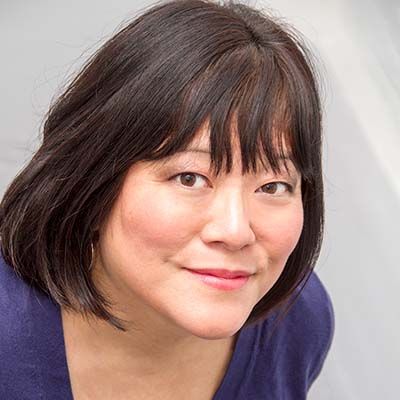
I sat down with Ann Harada in 2024 to talk about Broadway career that has spanned 4 decades, from the original production of M. Butterfly and the most recent revival of Into the Woods to her current Broadway show, Schmigadoon. But Ann would be the first to tell you that finding happiness and satisfaction in the acting business didn’t come quickly or easily for her. In our conversation, she talked about some lean years before Avenue Q made her a Broadway star as well as how she continued working hard and pushing herself both on and offstage.
Follow Ann: Schmigadoon / Facebook / IMDb / IBDB
Transcript
This is an automatically generated transcript, please excuse any grammar or typographical errors.
Ann Harada:
I'm Anne Harada. I'm originally from Kaneohe, Hawaii, but now I live in New York City. And I'm an actor, singer, and I've been in the New York theater since 1987.
Patrick Oliver Jones:
Anne would be the first to tell you, though, that finding that happiness and satisfaction didn't come quickly or easily for her. In fact, her first Broadway credit came as a production assistant, not as an actor. She followed that up with ensemble roles in m butterfly and Seussical. But between those two shows was a 10 year gap, and it wasn't until her next Broadway show that Anne Harada truly made a name for herself as Christmas Eve in Avenue Q. In our conversation, she talks about those lean years before Avenue q, but also how she had to continue to work hard and push herself even after her breakout role at the tender age of 39.
Ann Harada:
You know, I've been working kind of off Broadway, regionally, and stuff like that, but I would not say that anybody cared or noticed at any point anything that I ever did. And so it was sort of startling to suddenly be like, oh, she's great. I'm like, well, thank you. Happy I've been here for a while.
Patrick Oliver Jones:
Hi, Anne. It is so great to meet you and so great to have you on the podcast. Thank you for coming today.
Ann Harada:
Thank you.
Patrick Oliver Jones:
Now you were part of the original Avenue Q cast both on Broadway and in the West End. So what would you say are I guess the biggest differences between performing in both cities, you know, from the production process as well as the audiences?
Ann Harada:
Yeah. They're both so completely different. When we started Avenue Q on Broadway, we had done it off Broadway at the Vineyard Theatre, of course, and it was a big success. And that's why we moved to Broadway. But we had no idea that it would become a success in any way, shape, or form. We we just couldn't believe it was happening the whole time, and, we were kind of just along for the ride. Whereas when it went to London, it was an established property, and so they were all very excited, to be doing this New York hit. You know? They had been listening to the CD, and I replaced a woman who, the British as I think of her, the British Christmas Eve, who couldn't go on to do the opening because she had gotten cast at a TV show.
Ann Harada:
And so they were really in a bind and called me at the last minute. They were they had already started rehearsals, actually, I think, or however, they were just about to. And they were and they were like, could you come and do it? And I was like, guys, I have, like, a baby and a husband, and my elderly parents live with me. And they were like, bring everybody. And it was Cameron Macintosh's office, so he kind of had the power to do that, to facilitate a whole bunch of visas for a bunch of random people. And I was like, okay. If you want to. Great.
Ann Harada:
You know, and I set all my conditions, which was like, okay. I have old people and a baby, so I need a flat with a lift. And I need to be close to a tube stop. And I need to be close to a supermarket and a pharmacy. I'm like, yes. Yes. Yes. Fine.
Ann Harada:
Fine.
Patrick Oliver Jones:
Well well well, yeah. I mean, they needed you, so I guess you could kinda make the
Ann Harada:
connection to me. Really badly. I should've told them some better conditions, but that's what I needed. You know? I should have been like, I need a drive in. You know? I mean, I didn't but whatever the point was, they needed me desperately. So I knew the show. I walked right in, and it was great. We were very worried that, London audiences would not understand all of the American y, New York y jokes.
Patrick Oliver Jones:
Well yeah. Plus, there's a lot of American cultural references.
Ann Harada:
Yes. Of course. But they got them all fine. You know, it's not like we don't all watch the same TV shows. They absolutely knew who Gary Coleman was. They they understood everything. They got it. We changed a few goofy things, like they didn't know what a Long Island iced tea was.
Ann Harada:
So we had we had to come up with a name like, the name of a wacky drink, like a like a drink that sounds like a really bad idea because that is the drink that the bad idea bears. It's a Long Island iced tea. Right? So, we came up with absinthe daiquiri, which does sound like a bad idea.
Patrick Oliver Jones:
Right. I've had absinthe. Have you had it before?
Ann Harada:
No. It it sounds disgusting to me.
Patrick Oliver Jones:
Actually, it wasn't that bad. I had it in Russia. It's the only place I've ever had been able
Patrick Oliver Jones:
to have it.
Ann Harada:
Licoricey, right, for taste?
Patrick Oliver Jones:
Yeah. It's definitely very sweet and licoricey. Yeah.
Ann Harada:
Sounds disgusting.
Patrick Oliver Jones:
Well, would you say that show Avenue Q was the one that really put you on the map as an actress?
Ann Harada:
Oh, of course. Absolutely was. Yeah. Of course, I was 40. You know what I mean? It was like I'd already been haggling away for forever. And I, you know, I've been working kind of off Broadway, regionally and stuff like that, but I would not say that anybody cared or noticed at any point anything that I ever did. And so it was sort of startling at that age to suddenly be like, oh, she's great. I'm like, well, thank you.
Ann Harada:
Happy. I've been here for a while.
Patrick Oliver Jones:
So that's really avenue Q was kinda confirming what you already at least felt or hoped about yourself as an actress as well.
Ann Harada:
Of course. But so lots of times, people don't get that break. You know? And you just don't know what that break will be ever.
Patrick Oliver Jones:
Yeah. I've been here in the city more than 15 years now, and I'm still waiting for that, quote, unquote, break myself.
Ann Harada:
So I magical that magical role. You know? Chip Zaian, when I worked with him and Les Miserables together, he said to me that he felt incredibly lucky to have had 2 parts that he will always be associated with forever. Do you know what I mean? Now maybe 3 because I think his work in harmony is one of those kinds of parts, but, you know, that he was the baker and he was Mendel in falsettos that, like, people listen to him forever on the CD. They'll he's in their minds. Do you know what I mean? So for him, that's his legacy, and he's really thrilled to have had 2 chances. And he knows lots of people don't get one chance. You know? And I and I think about that all the time. Like, oh, I've had Christmas Eve and you know? But, like, what's will I ever get another chance? You just don't know.
Patrick Oliver Jones:
And and with regards to that, originating a role as opposed to, like, you went into Les Mis, you were obviously doing a role that had been done by many different actresses. Is there
Ann Harada:
a difference in better than I could ever do it, certainly.
Patrick Oliver Jones:
Well, I'm sure you were great. But is there a difference in approaching a role that's a that's a revival that you that you're stepping into rather than when you're originating? How do you approach them?
Ann Harada:
Of course. You know, the thing about, doing the part that everybody knows, like madame to an RDA, is that, basically, you just don't wanna mess up. You know? It's such a well known show, such well known part. Any of the parts that you take in a revival is a well known part, or else they wouldn't be reviving it. So everybody knows the song. You can't mess up lyrics of the song. You know what I mean? You're you're very conscious of, like, your predecessors always. What I like about new work, and this is why I'm trying to concentrate on new work and why I've always cared the most about it, is that it's your chance to put your stamp on something, your chance to work with the creatives and say, what about this? Or I think maybe she would do that.
Ann Harada:
That's the only time in your life you'll ever get to say, I think she might do this instead. Why don't we try it like this? You know what I mean? There's there's so little room to to do that in a revival. You know, you're trying not to mess up, and you're trying not to suck. That's pretty much it. And that's a drag comparatively to doing a new piece.
Patrick Oliver Jones:
Yeah. Certainly, in in regional markets, there's a little less pressure because you don't have the the eyes of New York on you like a a Broadway revival. So a lot of the times, directors wanna put their spin on a show that's been done many times before. So
Ann Harada:
And that's fine. That's absolutely great. If you can justify it, you know, that's fine. I'll do whatever. I'm up for a lot of interpretations of the classic, canon. But I also think, you know, for me, it's more fun to work on a new on new material.
Patrick Oliver Jones:
I totally get that. Well, let's get into story number 1, which talks about a new show that you were cast in a part that you really wanted, but then the financing fell through, and this is for Gilligan's Island, the musical. Now now, I mean, it sounds fun already, but what was it about this particular show that made you wanna be a part of it?
Ann Harada:
Well, I had spent about, like, a year and a half living in Chicago, and that's where Gilly and Zion the musical first made its debut. And it was a very big hit, and so I had sort of heard about it. And so when I heard it was coming to New York, I was very excited about auditioning for it. And I was casted as Mary Anne, and I was thrilled because I love Gilligan's Island the musical. We love Gilligan's Island the TV show. And I was just sort of like, oh my god. I'll get to play Mary Anne. I'll get to have a blow for non traditional casting, you know, that they would be willing to sort of stretch their mind a little bit and cast somebody not specifically like the original girl was good.
Ann Harada:
And I was just really excited about it because I thought, well, it'll be funny and will be a chance for me to I was this was a long time ago. What did you did we say it was 90 2?
Patrick Oliver Jones:
Yeah. It was, like, early nineties. Yeah.
Ann Harada:
Yeah. Pretty early in the game for me. And I just thought, this would be great. I'll make you know, I'll, like, I'll be able to make an impression with something like this. I think it'll be a good role for me. I'm very much a Mary Anne type, at least I was then. I was excited about it. Sherwood Schwartz was attached to it.
Ann Harada:
You know? I just thought this will be fun. You know, hit or not a hit, I just thought that New York would having a role like that, I would get on the radars of more people, and I was excited about it. And then, of course, the financing fell through, and I didn't get to do it. Nobody got to do it.
Patrick Oliver Jones:
How far did it get in production? Did you even get to rehearsals or anything?
Ann Harada:
We never we got to the point where we broadcast, and I was like, oh, great. You know, so and so's doing it. And then it just never happened. And it's just one of those things where you just gonna go like, what was that for? What was that all about?
Patrick Oliver Jones:
Did they actually call you, or was it your agent that called you? How did you find out the show where the My
Ann Harada:
yeah. My my managers called me and said, like, this is unhappening. They canceled it. I was like, okay. Well, back to the. What can you do? I mean, that's, you know
Patrick Oliver Jones:
Yeah. Yeah. I was part of, First Wives Club, which which actually did get get into production, and we were in Chicago for for a couple of months. And we were I mean, they were still spending money the last week to get us to Broadway because they they wanted to bring it to New York. But then we never heard anything. We never heard anything. Mhmm. And our last paycheck finally came, and it was paid through the bond.
Patrick Oliver Jones:
Wow. And and for those of you who who may not know, once a show pays through the bond, it means they ran out of money. They they have no more money left. And so the bond is something that Actors' Equity forces in order to prevent such a thing so that, you know, your last paycheck will get paid. So once we heard that we knew that there were financial troubles, and it never went anywhere beyond that. So it does happen. Because financing shows and producing them, it's it's a it's a rough game sometimes.
Ann Harada:
Well, yeah, my first job in New York, was as a production assistant on a Broadway, play called Sleight of Hand written by John P. O. Meyer, who had written Agnes of God, and it was a thriller. And this play opened and closed in a week at the court, now the James Earl Jones. And and working in this producer's office. And I you know, literally, I was I worked for her for for a few years. But just in the process of that learning about that particular show, I was like, well, I will never be a producer. I don't like it.
Ann Harada:
It's horrible. Trying to come up with the money, asking people you know, the whole process of raising money, I think, is hard and not fun. So
Patrick Oliver Jones:
Yeah. I've dipped my toe into it as well, and it's one of those things where it has given me a greater appreciation what producers do for sure. But
Ann Harada:
Oh, yeah.
Patrick Oliver Jones:
Of course. But I think much like you, it it's a job that I don't really like. As necessary as it is, I just don't think that that's where where I fit into the industry. Even though I'm, you know, I'm trying to do my little parts here and there. But,
Ann Harada:
Of course. No. I think we're all trying to do it until I get stuff produced and encourage, you know, talent that we love and blah blah blah. But, you know, I'm not a producer. I don't like it. I don't enjoy it. There's nothing about it I enjoy. So
Patrick Oliver Jones:
I totally get that. I totally get that. Well, one of the thing that producers certainly do a lot of, and this gets us into story number 2, is readings and workshops before it goes into production. And you call yourself the queen of doing these readings and workshops, but then not being asked to continue on with the production. You call up Dave, prom, and the most recent revival of 17/76.
Ann Harada:
Yeah.
Patrick Oliver Jones:
There's a there's a thrill of being part of the ground floor of a new musical. Well, what does it mean to you to be that first actor putting your stamp on a role that that hasn't even made it to the stage yet?
Ann Harada:
Well, I mean, 7076 was different because, of course, it was a revival. Revival. And that was all women. Right? Okay. So I had been cast as Franklin in the reading slash workshop, whatever it was. And the thing that really bothered me about that was that, ART was one of the producers of that. Right? The tour, the national tour started at American Repertory Theatre in Boston, so they were one of the producers. And I remember on the last day of the workshop, they were like, everyone, you're gonna come to Boston, and it's gonna be great.
Ann Harada:
And we're gonna start this tour, and it's gonna be amazing. We love you guys so much, your family. And I should have known then, but I didn't. And then I found out, you know, in Playbill that I wasn't cast, that I wasn't gonna get an offer. And I was like, great. You know? And this is the part that I really don't like about reading slash workshops that go on to production. It's like, directors at least have the decency to write an email or make a phone call to the actors who are Right.
Patrick Oliver Jones:
At least an email.
Ann Harada:
Yeah. I'm not I'm not asking you for reasons. I don't care. Just tell me so I don't have to read about it, you know, on the Internet. Like, I just feel like that's so rude and unkind, especially since that actor has already worked for you and put in a lot of effort. And the least you could do is acknowledge that and say, thank you, and I'm sorry. That's all you have to say. I don't I didn't mean the whole, you know, reason why, like, we went with her over you.
Ann Harada:
She's taller, and I like her. Whatever. It doesn't matter. I don't care. But it's like, just, you know, just step up.
Patrick Oliver Jones:
Yeah. The same thing happened to me just a month ago. I'm scrolling through Instagram, and this show that I had done regionally, which had aspirations of further development.
Ann Harada:
Sure.
Patrick Oliver Jones:
So I did the regional production. We're all just kinda waiting to hear. I knew that one of the actresses had been replaced, but they did at least contact her and let her know. So then, you know, we're all just kind of waiting. And then I go over Instagram, and they're the one of the writers has our new workshop production. We're so excited to start rehearsals today. I was like, what what workshop? What what what are you yeah. That's how I found out I was no longer part of the company.
Patrick Oliver Jones:
I would not be moving forward with it. So, yeah, it it's a simple thing. I'm just sending out an email saying, we're sorry, but we wish you well. It just something. Yes. Like that. Some sort
Ann Harada:
of acknowledgment. You know, that's really that's really all anyone could ask for, and I just I hold that grudge so deep.
Patrick Oliver Jones:
I'm with you. I'm with you.
Ann Harada:
You know? And and I with many directors who fall in this category too. It's not just, like, one person. It's a lot of people. And I just go like, do you not realize that I will never work for you again? I would never listen to a thing you said or trust you. Like, that's just so rude. I just don't I feel like directors would be better about that if they knew kind of, like, the ramifications of that kind of callousness.
Patrick Oliver Jones:
Especially when they get picky about the people. Like, some people who may have been in principal roles or bigger names, they'll get the call, but all the other 20 people under them, none of them get a call. It's it's that kind of pick and choose. Gross. Right?
Ann Harada:
Yeah. No. It's terrible.
Patrick Oliver Jones:
Now The Prom and 1776 revival, they did make their way to Broadway, but that Dave, it, it still hasn't played in New York City. It was a 2017 workshop that you were a part of before it went to arena, but you weren't a part of the arena production.
Ann Harada:
Certainly was not.
Patrick Oliver Jones:
Now Stephanie j Block was also in that, and she didn't move on. So so you're in good company at least with
Ann Harada:
I know. I know. I but probably the difference between us is that she probably had another job, and I didn't.
Patrick Oliver Jones:
Yes. That is true. Now moving on to story number 3. This is about you not getting miss Saigon and thinking that you had no future in Broadway. Now had you felt like this before? Was that self doubt kind of creeping in even before then?
Ann Harada:
Yes. I think, you know, it's impossible, especially when you're part of kind of, like, a minority group. Right? And you have a lot of actor friends within that minority group, and you see big shows coming along and everybody else gets in those shows and you don't, you kind of go like, maybe this is not for me. Like, I'm not this is not what I should be trying to spend my time doing. Like, anytime I took King and I, I feel this. I have never been into King and I. I cannot get cast into King and I. Nobody wants to see me in King and I.
Ann Harada:
That's probably okay. You know what I mean? Like, in the long run. But it just at the time, you're like, what? Why not? You know? You just feel like, what's wrong with me? Why don't you like me enough? You know? So, anyway, Miss Saigon is one of those shows where literally you know, I knew everybody in it. I was friends with everybody. I just didn't have the skill set to be in it, and I had to kind of, like, come to terms with that. You have to be a dancer to be in that show, and I'm not a dancer. And I tried really hard to be a dancer for that show and failed miserably. All my audition stories are about failing miserably at the dance call, really.
Patrick Oliver Jones:
Oh, I was saying here, I'm not a great dancer. I can kinda move well, but once they start tapping and once they start moving their arms different from their legs, I don't know what's happening.
Ann Harada:
Right. Exactly. Well and the things like you know, especially, like, that was back then when I was young and I could sort of understand. Like, they don't know me. You know, they don't know that I'm terrible at this. But, like, even recently for Soft Power, you know Soft Power that was at the Public Theater? I had to go to the dance call for that, and I was 55. And I I knew every single one of those that creative team. Every single one of them I'd worked for, including the choreographer.
Ann Harada:
And I was like, you are making me go through a dance call? Don't you know that? Right.
Patrick Oliver Jones:
You know me. You know what I mean?
Ann Harada:
It's like, you know that I can't do that. You know that I well, how bad I am. I literally fell down during the dance call.
Patrick Oliver Jones:
Oh.
Ann Harada:
Like
Patrick Oliver Jones:
I've been there. Yeah.
Ann Harada:
But, of course, all the other girls were like, oh my god. Are you alright? Like, you know, this ancient crow has to be held up off the floor. And I was like, this wouldn't have happened if any one of you had the sense to go, like, why is she doing this? You know she's not going to do well. Oh,
Patrick Oliver Jones:
I feel for you. I've been the oldest one in the room before. I I don't know if you were the oldest in this room, but I'm just saying I know
Ann Harada:
I was.
Patrick Oliver Jones:
Well, I yeah. I know I've been the oldest in the room, and I'm like, this is not what I want to be doing with my day or my life.
Ann Harada:
Well, it's just it made no sense to me. I'm like, you know who I am. You know I mean, I'm a character actor of a certain age. Really? You need to see me try to do this stuff across the floor. Okay. It made no sense. And then when I saw the show, I was like, I don't even see a part I could've remotely played in this stupid show. Why was I even there?
Patrick Oliver Jones:
Oh my goodness. Well, you know, I was looking at your Broadway credits, and it looked like there was a a 10 year gap between M. Butterfly and Seussical, and that was the 10 year gap of miss Saigon. So while it was on Broadway, you weren't on Broadway. I'm not saying that there were other shows you could have been in, but I just noticed that there was a 10 year gap. And I wondered if you just decided to focus your energies elsewhere apart from Broadway or or what was going on in the
Ann Harada:
You think I have a choice about that? I I I know.
Patrick Oliver Jones:
I don't.
Ann Harada:
I just took work that was offered to me. I went out on every audition I could get. I took I did a lot of off Broadway and a lot of regional theater. Those are the parts that they offered me. Did I wanna stay away from Broadway? Nobody wants to stay away from Broadway. We all wanna work on Broadway all the time. Too bad for you. Doesn't happen like that, at least not to me at that point.
Ann Harada:
So whatever. I I wanted to do all of those things, but nobody cares. Nobody cared.
Patrick Oliver Jones:
Yeah. It is interesting. Once you get a Broadway credit, then you hope the next one comes and the next you know, you want it to be a string of things. But anytime there's a gap in it, people can look and be like, were you working? Were you doing anything else? And, of course, as actors, well, no. I'm just doing other jobs. I took a cruise ship or went through a Right.
Ann Harada:
It's definitely I yeah. I had a lot of day jobs to fill waiting around or whatever it was. You know, I never stopped being an actor. Just you never heard of any of the jobs I did, which is fine. You know?
Patrick Oliver Jones:
What kind of day jobs do you normally do or have you done in the past?
Ann Harada:
Well, my biggest stage job and my most that I'm most proud of because I was a fact checker for Self Magazine, which means that I went to Conde Nast and fact checked all day. And those were the days when there were magazines. Good luck, young listeners. You have no idea what I'm talking about. But, yeah, my friend from college was the head of the fact checking department, and he hired me because he knew I was a fast reader. I could read incredibly quickly. So I could read articles. I could read whatever source material, whip through it, find the citation, check it off, and, you know, verify that it was true.
Ann Harada:
That's what I did. That was my day job for a really long time. And the great thing about that job was, again, because I knew the editor, I knew the the guy in charge, he's like, I could just go and audition whenever I had an audition I'll come back. If I got a job, I went, okay. See you in a few weeks. Bye. You know how Those
Patrick Oliver Jones:
are like the dream jobs when you come and go and they recognize that you have other work, and you'll take it, and then you'll come back. No. It's great to find those kind of jobs. I I have one of those right now myself, so it's been been really great to be able to still be an actor and still call myself an actor and do all the auditions and everything, but then know I have this job waiting for me when I get back.
Ann Harada:
Yeah. Well, that's what my life was, you know, for a really long time until I have an issue, which kind of changed the landscape for me. After Avenue Q, I have not really stopped working for any enormous length of time.
Patrick Oliver Jones:
Do you feel like the Avenue Q put more of the choice into your hands as far as where you could go the things the roles you wanna do?
Ann Harada:
Oh, yeah. Yeah. Yeah. Absolutely. Because after having a cue, I never had to explain to anybody who I was.
Patrick Oliver Jones:
You may have to do a dance audition, but you don't have to explain.
Ann Harada:
Of course. But they knew who I was.
Patrick Oliver Jones:
Right.
Ann Harada:
You know? Of course. A dance audition's oh, dear. Okay. So I should've had to do that one. That was just a mistake on everybody's part. I should've just said, like, no. Thank you. Goodbye.
Ann Harada:
You know? But
Patrick Oliver Jones:
Well, yeah, it's the same for me for different reasons. I'm 6 three and long and just dances don't look the same as me as these great dancer bodies that are, you know, next to me and then 25 years old. So it's like, 2 of these things are not like the other, so you should recognize this, especially when you know people behind the table. But, I feel you.
Ann Harada:
Every single one of them. Like, why are we doing this, Skye?
Patrick Oliver Jones:
Getting back to miss Saigon, did it take a while for the sting of not getting that show lesson as you got more work? Did it start to feel like, okay. I can put it behind me.
Ann Harada:
Well, this is the thing. So, you know, so I had my callback and whatever, and I didn't get it. And I was crying, and my roommate was like, do you seriously think your career is done because you didn't get missed by god? Just like that. And I was like, what kind of? Because if I can't get into, like, these big Asian shows, what am I gonna get? And he was like, Anne, do you not see that you have so much more to offer than that? That's not even who you are. That's not even what you're good at doing. You know? It's like, you're gonna be fine. And he was right, but I had to figure that out for myself that it was like I and this is, like, the number one thing that I believe and hang on to and try to tell every young actor is that you can only go for so long. When you're young, you try to kind of figure out what kind of slot do I belong to, what type am I? You know? Can I be the ingenue? Can I be, you know, the Ato Annie part? Can I be whatever whatever slot that you had, and then you try to be that? You show up.
Ann Harada:
You change your dress. You change your hair. You try to, you know, look a certain way, be a certain way, lose a little weight, gain a little weight, whatever it is. Right? You're trying to fit it tight. And it wasn't until, you know, even like, until it took me till I was 40 to just go, like, you can just be you, and you should just be you. And you're not gonna be successful going after things that are not you. It's like, you're okay. You know, you don't have to try to fit into some kind of crazy mold.
Ann Harada:
But it was like you I don't know if you're not old enough, but, like, in the early nineties, it was like all the girls. We had, like, a uniform. We all wore, like, a Laura Ashley dress with a big collar and character shoes. And we walked around like that to every audition because that was what the girls looked like. I I don't know how to describe it any other way. It's so dumb in retrospect. It's like, who's gonna hire me in a Laura Ashley dress and character shoes? Nobody. I'm not that girl.
Ann Harada:
You know? But I thought I could be, and I thought that's what I needed to be. And so, like, no wonder I never got any work. I wasn't me.
Patrick Oliver Jones:
Right. Right. You were trying to be something else and I was
Ann Harada:
trying to be something else. So, like but, you know, like, you know, when I was young, when I was first starting out, I was trying so hard to be, like, an ingenue with, like, long hair and, you know, a girl with a ponytail that you know what I I don't know, a tucked in or something where I was a type that I actually never was, should never have tried to be. But you don't know that when you're young and you're just trying to figure out how to get your foot in the door. And you're trying so hard to, like if I do this, if I dress like her, I do you know, it's impossible. That's how you are.
Patrick Oliver Jones:
And being Asian, did that put you in your own box? Do you feel from casting or even yourself? Did you put yourself
Ann Harada:
Yeah. Of course. I mean, when especially when I was starting. You have to understand. When I was starting, nontraditional casting was not really a thing yet. Uh-huh. And so any job that anybody got was like a miracle. That's why if you couldn't get into an Asian specific show, you just felt like, well, now I'll never work.
Ann Harada:
Because, usually, in a mainstream show, just like white people, if you got a part, you'd be in the ensemble, and usually you'd have to dance. 2 strikes. Right? Okay. So, and I was just like, this is not gonna be for me. You know, like, these kinds of shows and these kinds of roles are not gonna be for me. I have to figure out a way to work another way, which is why I ended up working off Broadway and in regional theater because those shows were not as mainstreamy, more willing to take a chance. Does that make sense?
Patrick Oliver Jones:
Yeah. It sounds like that that you were having to figure out yourself as well as casting the industry
Ann Harada:
Of course.
Patrick Oliver Jones:
Figure itself out too.
Ann Harada:
Because it was like, you know, like, people would go like, well, you're talented, but I don't know what to do with you. And I'd be like, well, I get that because I don't know what to do with me either. But here we are. What are people gonna accept me as being? What kind of parts can I do that pea aren't gonna make people go like, oh, no? What you know, what's happening here? And I just feel very lucky that I had some people that were like, she's good, and I wanna put her in something. And, you know, so what if nobody sees it? It's fine.
Patrick Oliver Jones:
Well, let's get to your audition story since we're talking about casting, and we'll start with that that Broadway debut that you did, but not as an actress. This is sleight of hand in 1987. So
Ann Harada:
tell us about it. Okay. So when I was working for this producer, in her office at strength phones and making copies and all that kind of stuff, part of my job as her intern was, like, to go with her to all of these meetings, you know, in the course of producing the show, and it was, like, the most brilliant education I could have ever received. You know? Like, all of a sudden, I was a girl who had just come out of college. I had no real world experience. Right? And to go to these meetings with, like, all these Broadway, like, you know, experts, basically, to go to the marketing meetings and to go to whatever, to see how Broadway show gets put together. It was very instructional. And and I got to go sit in on the auditions.
Ann Harada:
And so when I got to sit in on the auditions, I got to see professional actors come in with their sides and audition. And that was, like, unbelievable for me because it was the first time I'd actually seen, like, real pros, Lots of whom I knew who they were. You know, the TV stars, whatever, Broadway people. They'd walk in through the door, and it was crazy how, like, you could instantly go, not right for this. Even though they were great actors or you could or or or you'd go like, she's amazing. I never heard of her, but I love her. You know what I mean? And I just thought, like, that was the best thing I could have learned, which was it's not you. It's it's usually just sort of like it's so it's so clear, like, from the first minute you walk at the door if you're remotely right for the character.
Ann Harada:
It has nothing to do with, like, your talent. Everybody's talented. You know what I mean? Does that make sense?
Patrick Oliver Jones:
Yeah. Yeah.
Ann Harada:
And all and also that as I was watching some of them audition, I was like, oh, I could be an actor because I'm just as good as that person. I'm not as good as that person, but I'm just as good as she is, maybe better. You know what I mean? Like, in terms it was the first time I'd actually gotten to see people kind of like everybody's had the material for the same amount of time. Nobody's you know, it's like it it felt like school, like like, when you audition for a play in in college or whatever. It's like, okay. We all know we're gonna do this play, so here are the audition sides, and you go in completely level with everybody else. That's what this felt like. Like, I was like, oh, that person is unbelievably an unbelievably talented actor, and I am nowhere near as good as that person.
Ann Harada:
But I definitely am as good as that person. And it made me go like, so there's not, like, one high, unbreakable bar to, like, being a professional actor. There's everybody comes with a different skill set.
Patrick Oliver Jones:
And there aren't any rule. There aren't any rules because because some people will be off book and and know every line and then they're not right. Then other people come in, they kinda fumble through the pages, but they get the care I mean so all these rules that person don't do this, do that, people come in and the audition is the audition. And
Ann Harada:
Right.
Patrick Oliver Jones:
And and and I think you're right. There is this there is a an innate sense that isn't on a resume of whether or not a person is right for that particular show. It has nothing to do with the rules.
Ann Harada:
No. It has nothing to do with the face. It's really just, you know, a personality thing or how they walk into our it's so strange. Like, I could not believe it. And after that, it never bothered me if I was, you know, not class because I was like, I'm not right for it, obviously. If you're not right for it, you're out. If I was right for it, nothing would have stopped me from getting that part. So it's okay.
Ann Harada:
Like, it kind of, like, took that off me. And also, it made me go, like, maybe I can be a professional actor. Because up until then, I really wasn't sure. Because when you're in college, it's like, so what? You know? Like, I might be good enough to be in a plane college. Big whoop. I'm not you know, I wasn't even, like, the best actor in college. You know what I mean? So, like, what makes me think I could be a professional actor in New York? But then I was I looked around. It was like, no.
Ann Harada:
It doesn't matter. It's you know, the okay. I'll just tell you. So why I went to Brown, and and the person I was kept trying to measure myself against was Laura Linney. Okay. Seriously, I'm not as good an actress as Laura Linney. Alright? I'm never gonna be as good an actress as Laura Linney. This was true when we were 21 years old, and it is true today.
Ann Harada:
Okay? So but the point is is that I didn't know I didn't have to be as good as Laura Lendy to be a professional actor, that, ultimately, I could just be me. Oh. Yeah. Because guess what? We're not up for the same parts.
Patrick Oliver Jones:
I was just about to say that. Yeah. The roles that she wants to go for aren't right for you, but the roles that you're right for, Laura Linney couldn't do what you do.
Ann Harada:
Oh. Nor would she want to. So, you know, it's like but, like, I didn't know that till I came to the city. And I saw, oh, here's the range. You know what I mean? Here's the range of people who work. I'm in that range. Am I am I the best? No. No.
Ann Harada:
We're near the best. That's okay. Because you don't know. If you're right for it, then you will you know what I mean?
Patrick Oliver Jones:
Yeah.
Ann Harada:
Then you'll be considered for it. I but, like, that was, like, the biggest thing I ever learned in an audition. And I it wasn't even my audition. You know? It was like I was watching a bunch of other people audition, but that to me was, like, so mind blowing.
Patrick Oliver Jones:
Yeah. I've gotten to be a reader in auditions and it's the same thing where Yeah. You you come in and, you know, I'm I'm a bit more involved in the the audition process reading, but I'm going off these actors. I'm I'm finding a connection with some, not with others. I'm seeing the things that they do or don't do. And, yeah, it's fascinating. Someone will leave the room, and I'm like, oh, god. That was you know, I'm just, like, trying to, you know, keep my game face, poker face on.
Patrick Oliver Jones:
And then I looked to the table, and I'm like, it's wonderful. And they put them in this this small small stack of people that they love. And I was like, okay. I don't get this business anymore. You know? You just never know. You never know.
Ann Harada:
It's it.
Patrick Oliver Jones:
And and, you know, it it's interesting for me. I I learned to not take it so personally by doing commercial audition. Because commercial auditions are so specific. There's you have to be a certain type, get it in 30 seconds, have the right look. It it's so so subjective and has literally nothing to do with me. I either walk in and and and write or I'm not. And so that for me, that got me out of my head doing a lot of commercial audition.
Ann Harada:
I hate commercial audition.
Patrick Oliver Jones:
I mean I mean, yes. Believe me, I've wrestled I've wrestled blow up alligators. Yes. In audition, I've had to pretend like I would take take my shirt off and pretend in a carpeted room that I was on a slip and slide. You you just do the most random things in auditions. And and I'm like I know. I so that's so so you you just kinda lose your filter after doing commercial. I just because, like, you know, whatever you want me to do.
Patrick Oliver Jones:
No. Fine. And I get it or I don't. That's fine. You know? Yeah.
Ann Harada:
You don't take it so personally. Exactly.
Patrick Oliver Jones:
Well, now how was the audition for soft power? Let's get into that story now.
Ann Harada:
Well, I told you about that one. That was the one where I fell down during
Patrick Oliver Jones:
the dance party. That's the that's the one. Okay. Alright. Yeah. We already we already got that covered.
Ann Harada:
Added all the creatives for making me go through that.
Patrick Oliver Jones:
Right. Okay. Right. You got that one. Alright. Well, let's get to these final five questions then. And number 1, what do you remember most about your first professional show?
Ann Harada:
My first professional show was in college when I did summer stock in the summertime, And I worked at a theater, now sadly defunct, called the Boothbay Dinner Theatre, which was in Boothbay Harbor, Maine. And I think I made $40 a week plus tips because we also had to serve drinks before the show, drinks and appetizers before the show. Do the cabaret show. Come back entree. Come back entree and dessert. Come back. Do the show show. Come back.
Ann Harada:
Give the check. I mean, honestly. So alright. And all the food was in baskets, like, no, like, metal cutlery, so it didn't make noise. It was all, like, baskets and plastic cutlery. Doesn't this sound like the funniest evening of your life? But it was so great for me because we did a ton of like, we did a bunch of different shows that summer. I got very you know, you get to be very close to these people that you're, like, spending every hour of the day with. So when they were still my very, very closest friends, You know, you it's it was a great experience.
Ann Harada:
And I thought, well, this is what it's like. Like, this is to be an actor is hard. It's, like, it's a lot. It's a lot. So that was my first professional show. And then my first Equity show, was, called 1 to 2 for 5. It was a workshop production at Manhattan Theatre Club, and it was a very high powered cast. Everybody in it was famous except me.
Ann Harada:
Every third person in the room was a Tony nominee. Like, I like, on the 1st day of it, great. Like, you know, you just look around. You're like, fantastic.
Patrick Oliver Jones:
There must have been a part of, like, what am I doing in this room?
Ann Harada:
What am I doing here? Of course. Every day, I said, what am I doing here? But it was fun. You know? They needed, like, a girl type. Fine. And I got to work with some these incredible actors, Alice Clayton, Louis Stadlin, Jonathan Hadari, Mary Gordon Murray, William Youmans, Vicki Lewis, Liz Callaway, Davis Gaines. These were the people in the show that I was like, I can't believe I get to eat lunch with them. That was that was great. That's really great.
Patrick Oliver Jones:
That sounds wonderful. That sounds really wonderful.
Ann Harada:
I mean, talk about, like, learning stuff that have nothing to do with the play. You know, just being with pros. That's really what I learned. How to hold yourself in a room, how to you know, I'm very grateful that it kind of worked out the way that it did. It was Jerry Mitchell's first show as a choreographer.
Patrick Oliver Jones:
I got I got to interview him earlier, yeah, a couple years ago. He's Wonderful.
Ann Harada:
That's fantastic. You know? And I got to work with Maury Yeston, and I got to work with, Larry Gelbart. Very, overwhelming kind of, first equity experience, but it's led.
Patrick Oliver Jones:
Yeah. My first big show in New York was a national tour, and Jerry Zaks was directing. You know? Wow. So yeah. And Yeah. Douglas Sills was on that tour. So with you just Amazing. Right.
Patrick Oliver Jones:
These kind of people that you are in awe of, but yet you watch and and they're normal people, obviously. But but you, yeah, you watch how they carry a room, how they interact with the cast, with the creative team. You will pick up things that you can't be taught in in college class or in acting class, whatever. It's things that you just learn by watching. And it was, it's really wonderful to just to just to be with him and see what a leader looks like in a cast and how he took that on so gracefully.
Ann Harada:
Yeah. Well and that's a that's a very important lesson to learn when I think about that. I'm usually not the leader because I'm usually not I'm usually not as I think of it, number 1 on the call sheet Right. Very rarely. But but I do appreciate good leaders of companies. I do appreciate people who are willing to take that and, burden on. And, I've been lucky to work with a lot of really amazing people in my career. So
Patrick Oliver Jones:
Well, number 2, how has the industry changed most since you first started?
Ann Harada:
Well, for me personally, it has changed for the better in the sense that I no longer feel so acutely aware of being typed by my face. I do feel that the opportunities for me and for my fellow, minority actors have only improved, in terms of people being willing and happy to offer us roles with a little more scope, roles that are not so stereotypical. For example, I just did a show out in La Jolla Playhouse where I played the wife of the lead. Okay? And I feel that in years gone by, had I been in this play, I would have been cast as friend of the wife of the lead. Does that make sense? Or, like, comedy relief of the wife of the lead, not the wife of the lead. And similarly, the guy who was cast as best friend of the lead was also Asian. And every day, we would look at each other and go like, can you believe we are not married in this place? And I know that sounds stupid, but it's kind of true.
Patrick Oliver Jones:
No. No. I I I heard this one actor talk about maybe he was in Oklahoma, and there there were only 2 black people in the whole show, and of course, they were married. They they they read the ensemble in the back, but they were always together. They were the couple. Yeah.
Ann Harada:
No. We were like, it's incredible. And literally people thought I mean, I know that I mean, I would read stuff, like, you know, on the Internet and would like, oh, Anne and Frances are in this play. They must be married. You know? It's like, no. He's the best friend, and I'm the wife of the lead. Like, you just like, you know, and I was like, that's something that we've been kind of, like, trying to fight our whole lives. All this to say is that nobody, not at any point in time ever, not one review, not one patron that I'm aware of, raised their hand and said, like, why are 2 Asian people like the wife and the best friend of the white guy? And I just thought, okay.
Ann Harada:
We're we've come some way, because I assure you that would not have happened in 1995 or whenever the hell. You know? It it just wouldn't have. They've even considered letting us play those parts, 1. And now I guess people are more aware or cooler or something. Like, they're able to see, like, oh, we have some dimensions ourselves. I don't know why. I'm grateful, but I'm grateful.
Patrick Oliver Jones:
Yeah. I I found the same thing. I did Anne of Green Gables and the, you know, the cup burrilla Yes. Batman Cupboard. The 2 leads, 1 was a black woman and a white man, and they were brother, sister. And no review ever mentioned it. I didn't hear any audience that they would just talk about how great the show was, the music, blah blah blah, but no one ever mentioned this dynamic. And
Ann Harada:
Thank god.
Patrick Oliver Jones:
Yeah. Because people recognize, well, that that can be a family. It it there's no reason that can't be a family.
Ann Harada:
No. I'm grateful. I don't know why this, like, sticks with us so firmly in our heads. I just because for so long, we've just been so marginalized, you know, Kind of like prescribed that these are the parts you're allowed to play, and I'm done with it. I you know?
Patrick Oliver Jones:
Yeah. I think it's better for all of us if we're all in the same mix or role rather than, well, you can only do this because you're that. You can only be down. It's it's I I think it's it's better for us as actors as well because then it it stretches us as actors and we become better the more diverse roles we we get to play Of course. Outside of our own life experience, outside of our own, you know, just daily life.
Ann Harada:
Mhmm.
Patrick Oliver Jones:
Well, getting to number 3, what does success or making it mean to you?
Ann Harada:
I am already to me, a success because I've been working. All I've ever wanted to do is be a working actress and have the respect of my peers. And for the most part, I believe I have that. And I I have no big, you know, goals. I don't I don't, of course. Yes. Would I like to be on Broadway in, like, a new show that was written on me? Yeah. Okay.
Ann Harada:
Sure. Would I like to be in a TV show that runs for a while? You bet. These are all things that might happen or might not happen, but they're gonna have no bearing on my happiness. I'm happy. I'm super happy that I've been able to be in this industry for as long as I have. Right? I got my equity card in 1987. Well, you'll have to do the math because I am not good at math. But that's a long time as I recall from now.
Ann Harada:
37?
Patrick Oliver Jones:
37. Yeah. 37 years.
Ann Harada:
And that's incredible to me to have had a foot in the door for 37 years, been able to do the kinds of parts I've been able to play, had the kind of experiences I've been able to have. I I never expected kind of, like, the joy I felt from just being in a play when I was, like, a kid in high school to kind of, like, expand and fill my life to the extent that it has. That basically by following that one dream, that one feeling of, like, I like this feeling, and I wanna keep having this feeling over and over again, That just kind of, like, listening to that voice has given me this unbelievable life, this unbelievable career that, like, fills me. I still have take great joy in it. I have no idea what tomorrow's gonna bring. I enjoy that. I live in New York City. I have a family.
Ann Harada:
I've been able to do that and be an actor. What a treat. What a gift. You know?
Patrick Oliver Jones:
Take you a while to come to that happiness that as an actor?
Ann Harada:
Not once I accepted who I was and all my various limitations and, strengths. You know? Once I was like, Anne, this is who you are, and it's okay. And you don't have to put on your Laura Ashley dress anymore. You know? And you don't you can you can show up as you, and it you're still acceptable. It's that whole thing of, like, for so long, I was and I in a way, I still am like this in terms of, like, doing a cabaret show was, like, the hardest thing I do because I have to be me. Right? I like being another person. I like being another character on stage. I don't like me.
Ann Harada:
I don't like being me so much. Right? That's why I'm an actor. So I'm more comfortable in my own skin now than I've ever been before, possibly because of my advanced age, and knowing, like, there's no, what are my options? This is it. Like, you know, you're gonna get what you get at this point, but that that is plenty good enough and, like, kind of accepting that and really, like, knowing it because I I do believe that it's true. If we are all plenty good enough, but we all have to get to that point where it's like, no. No. I'm okay. You know? I'm lucky because I'm I'm a character actor.
Ann Harada:
So as I often say, £5 up, £5 down, nobody cares.
Patrick Oliver Jones:
Right? As long as you're funny.
Ann Harada:
Yeah. And I remember, like, worrying so much about my weight when I was younger. Right? And like, oh, the camera had so much weight. It's like, at this point, nobody cares. Doesn't matter. So I was like, just it's it's okay. You're gonna be alright. Yeah.
Ann Harada:
I just feel really, really happy and, fortunate to to be working and to be here.
Patrick Oliver Jones:
Well, this gets us right into number 4, which is describe a personal lesson that took you a while to learn or one that you're still working on to this day.
Ann Harada:
Isn't that it? I feel like that's it.
Patrick Oliver Jones:
Discovering who we are. Discovering ourselves.
Ann Harada:
Yeah. Just being like, I'm cool with it. I'm cool with me. And, you know, of course, there are things I'd like to do better, be better, things that I'm working on, things that I you know, I'm always trying to be better at my job. I've always tried to improve my technique and whatever. I care very much about being a good actress on stage or film or any of that. I'm trying you know, I try very hard to be prepared. I try very hard you know? But, ultimately, it's about also, like, that I'm enough, and I'm okay.
Ann Harada:
What I bring to the table is good and fine. I don't have to be any more than what I am, and that's good. That's fine.
Patrick Oliver Jones:
And recognizing that who we are as we get older, as we have more life experiences, that that changes as well. And who we bring in the room changes over time.
Ann Harada:
Of course. And how grateful I am, like, how cool it is to have been in the business long enough to have worked with some people over and over again and, like, know that you have a trust with certain actors and creative types, directors, choreographers, however it is, musical directors, that you're like, I can trust them. They trust me. We have a shorthand. It's so much easier, you know, when you have that kind of, like, built in bond already. So I'm just feel really lucky that I'm so old and have worked with so many people that it's very rare to work on a project that's like, I never heard of any of them. I they don't know me at all. You know what I mean? It's like, no.
Ann Harada:
I know you. I could I did something with you 10 years ago. I worked with you. You know? I did a reading with you 7 years ago. I know. Like, you you just it's just that's what it is now. And it feels really great to have that kind of, like, history of safety and work, and we're all on the same page. And to just know, like, we've got each other's backs.
Patrick Oliver Jones:
Well, earlier in our interview, you have you talked about advice that you give to young performers. Well, for question number 5, what's the most useful advice that you have received, and how have you applied it?
Ann Harada:
I think it was when my roommate said, like, do you honestly think not getting one job, that's gonna ruin your career? Like, you're like, who cares? It's one job. Yes. It was a job that you thought you wanted. Yes. It was a job that maybe you could do. Yes. Whatever. It's a job that pays a lot of money.
Ann Harada:
Yes.
Avenue Q Cast:
It's a job that will run forever.
Ann Harada:
Great. It's not for you. You have to move on. There's other things. There's other shows. There's other parts. Nothing is a deal breaker. You know, at one point, I thought, I'm not in Gilligan's Island the musical.
Ann Harada:
Now how am I gonna make my name in the world? Well, somehow I did. It's never the thing that you think that I mean, that's really sort of the thing. It's like you can read the trades and be like, oh, this show is coming. I'll be perfect for that. I'm gonna be in that show. That's never the job you get. That's never for me, anyway, it never has been like that. You can't control the jobs you get.
Ann Harada:
You can only control what you do and the jobs you do get, and that's and to me, it's like, if you just are you, if you just do your work, you know, you bring your best game, and you're devoted, and you work really hard, that's your calling card. That's your reputation. That's your legacy. That's how people know you. I don't know how to describe it any other way. It's it's like to me, it's like I don't understand people who think like, if I could just be Elphaba, everything would change. It's like, well, yeah, you'd be Elphaba, which is great. But it's not necessarily a guarantee that you're always gonna get jobs that big, right, or whatever.
Ann Harada:
It doesn't necessarily mean you're gonna become a star. It doesn't necessarily mean anything. It's a job. They're all just jobs. Good jobs, bad jobs, you know, better jobs, but they're jobs. You know, you've gotta give the same devotion to the ones that don't seem like much as you do to the ones that do seem like something because that's it's just showing up every day. That's what you're supposed to do. That's what I think I'm supposed to do.
Patrick Oliver Jones:
Well, one of the jobs that you recently showed up for as we wind up here is an audio podcast called Twits.
Ann Harada:
Oh, yes.
Patrick Oliver Jones:
And so tell us about how you became involved with the show and your part in it.
Ann Harada:
Okay. Well, this is a perfect example of you work with people in place, and then they just stay your friends, and then you just end up doing stuff for them because they're your friends. Tom Allen Robbins wrote Twits, and I did a show called Brooklynite with him at the Vineyard Theatre, which is one of the many, many this is this the Vineyard Theatre is, like has been my second home for many, many years. Literally, I would I could work there when I nobody else would hire me. In those all those dark years of, like, what am I doing? So Tom had this really great idea. It's sort of like a steampunk Jeeves and Wooster kind of tale that he spun. Right? And he decided to, turn it into a podcast with, like, all these great New York actors, and he wanted to know if I would voice a character. And I was like, of course, I will, because we were in a pandemic.
Ann Harada:
What else am I doing? So I I became basically the servant character for every single household in this world because they're all the servants in this world are robots. And so my character in every household is basically the same character only with a different name. And all my names are like trees. Like, I'm missus cedar. I'm missus pine. I'm you know, in different houses.
Patrick Oliver Jones:
Right.
Ann Harada:
And and it was just a chance for me to pull out my dodgy British servant dialect and have at it, and it was really fun. And I just think Tom is a very wonderful writer, so it was thrilling to do that.
Patrick Oliver Jones:
How has it been doing voice acting versus, you know, our bodies on stage acting?
Ann Harada:
I love it. I love it. I've been doing a lot more of it lately. It's funny. I just did a I didn't just do it, but I just saw it. There's this episode of a cartoon called Moon Girl and Devil Dinosaur, and I play Moon Girl's grandmother's friend. Okay. But we're all scientists, so that was very cool.
Ann Harada:
And it's sort of like it's Jackie Harry's one of the other friends. And, you know, of course, did I see anybody? No. I did it by myself in a booth many months ago. Like, that's like it happened. I have no recollection. And then you watch, and you're like, oh, right. I remember. But it's so much fun to to have so much freedom and and work like that.
Ann Harada:
I also played this very interesting character on, this Netflix show called Blue Eyes Saumura. I don't know if you've ever heard
Avenue Q Cast:
of that.
Patrick Oliver Jones:
I think I have heard of that. Yep.
Ann Harada:
It's very dark. It's maybe the darkest anime feature you'll ever watch. There's a lot of violence. A lot of violence going on there, especially involving me. I just remember that whole experience. I just remember me screaming constantly. Just screaming. Just, like, to be like, okay.
Ann Harada:
Just give me give me a good 3 minutes of just you screaming. Okay? No. Louder. Okay. You know, it's wonderful to have kind of, like, the freedom of voice acting. I don't know. As another thing I can do, I
Patrick Oliver Jones:
Yeah. Yeah. I love it. I love it. Well, Anne, this has been a a total treat to meet you, to talk to you, and to to get to hear your story. So thank you for sharing them with us today.
Ann Harada:
Oh, thank you. I mean, I appreciate it. And, yeah. I don't know. I do care I do care that people, give twits a listen. All I can say is, like, all the actors in it are really comic geniuses, and it's so it's such a treat to be able to play with them even sort of virtually. You know what I mean? And, also, because it's just a fun genre. I just love British humor, and this is very much in that style.
Patrick Oliver Jones:
Well, it sounds great. Sounds great. We'll definitely check it out. Well, thank you again, Anne.
Ann Harada:
Thank you.
© Broadway Podcast Network, All Rights Reserved