
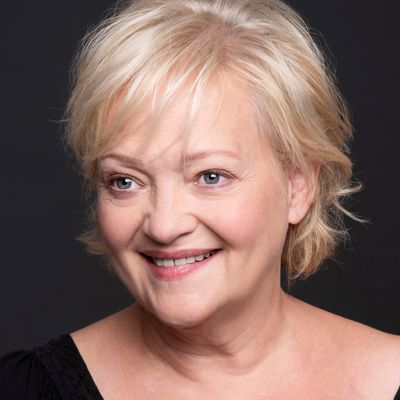
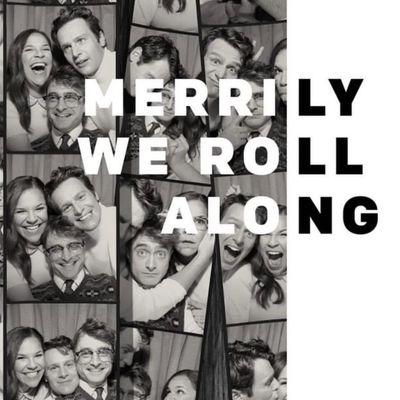
In this episode, Andrew talks to director and performer Maria Friedman about the filmed-for-cinema release of Merrily We Roll Along, which closed on Broadway in 2024. Friedman, whose journey with Merrily We Roll Along dates back to the early 90s, when she played Mary, directed revivals of the show in London and on Broadway... Read More
From the show: Token Theatre Friends
Guests
Featured Shows
About
In this episode, Andrew talks to director and performer Maria Friedman about the filmed-for-cinema release of Merrily We Roll Along, which closed on Broadway in 2024. Friedman, whose journey with Merrily We Roll Along dates back to the early 90s, when she played Mary, directed revivals of the show in London and on Broadway. Maria talks to us about her approach to directing the filmed version of the show, and tells us what she hopes audiences take away from the show's approach to empathy and forgiveness.
Transcript
This transcript was automatically generated and might contain errors.
[0:00] Andrew: Hi, good afternoon, Token Theatre Friends listeners and viewers. I am here with the wonderful actress and director Maria Friedman, and I'm so excited to talk to her about her new film coming up on December 5th, the filmed-for-cinema premiere of Merrily We Roll Along, the revival from last year. And so Maria, thank you so much for taking the time. I can't imagine how excited you must be. So like, what are you feeling right now as the film is about to premiere?
[0:50] Maria Friedman: Um, I'm feeling, I'm really feeling full, in terms of the fact that people are loving it, and they are moved by it. And my friend Stephen Sondheim's work, and George Firth's work, is going to get to the corners of the globe. And it's what he always wanted. He wanted his ideas, his music, his stories to be seen and shared. Because having spent my whole life telling stories, I believe in them profoundly as a way of practicing empathy in this world that we live in, and that we can be allowed in a safe space to investigate our own lives through the lens of other people. And so to be, I've been given this privilege of taking the time and the love and the care with my cinematographer, Sam Levy, and Spencer Averick, this incredible editor, and the sound production people, we just, it was like children in a playpen just going, we are so blessed that we are going to get to rethink this on the big screen.
[2:08] Andrew: It's such a beautiful response. And I can see, you know, how emotionally resonant this is for you. And for audiences who might not know, we know that Maria has a very long history with Merrily. You know, she started as Mary in 1992. She directed the London production with Jenna Russell in 2013. And now here, your third professional iteration with this. I must imagine this must have been really emotionally significant for you, like the stages you've been with this show. So if you could tell me a bit about how your, maybe your perception of the show has shifted in that time, and like, what might have been different when you came to the work this time around, when you directed it for film, after directing it on Broadway, and in London, and performing with it?
[3:03] Maria Friedman: Thank you, Andrew. That's a really good question. Thank you. And it's one that I could spend the next 20 years telling you about, because that's how long I've been with this. You should write a book, you know, Maria's Merrily Journey or something.
[3:13] Maria Friedman: Things that would be in there, unprintable. Well, let me start off by saying, thank you very much for doing all that work about the piece, because it does, it takes place over 20 years. And guess what? That is how long I've been doing it. And it changes. It changes as I grow up, as I grew up with it. Things have happened in my life that allow me to see the thing about a great piece, a piece of genius, which this is, it will continually speak to you, because it's universal. The ideas are universal about the essence of who you are, being distorted through whatever pressure points arrive in your life. We all make mistakes. We all have to recalibrate. It's about whether you can actually have enough distance to recognize what you've lost in yourself along the way.
Reignite it. What you've done to another person, not necessarily with, you know, self-consciously, but inadvertently. We hurt people along the way. We have been hurt along the way. It shifts us slightly. And what happens with this beautiful piece is that you lose your essence at your peril, because light, you know, that you, that's the bit that makes you different to anybody else on this planet. And it's, in this case, it's his music, but it could be anything that the bits that make you, whether it's love of nature, love of, you know, friendship, whatever it is that is your essence, you have to nurture it. Secondly, as we all make mistakes, which we do, you can look down and say, I made a mistake.
I'm really sorry. You can't change it. But by acknowledging it, you are free to take the step into the next part of your life without that burden and freer to make better decisions. And that's the point. The only point of getting old is to try and make some better decisions. And they're still impossible because I contain my five-year-old, my 15-year-old, my 30-year-old, my 45-year-old, kind of stop them. And so I contain all those things. So I can, I can look backwards and go, Oh, ouch. But that's all right. That's about growing up. That's about being in the world. That's about participating. We can't get it all right. But this beautiful film has, we meet these toxic people at the beginning of the film, and we track backwards.
And you watch the film, and you watch the film, and you watch them. We watch them sort of grow like beautiful flowers into these blossoms that they originally were. These beautiful untrodden snow, no boot print yet. And the boot prints that we have on us affect us. And so it's done with beautiful music, incredible humor, amazing heart, and I hope a great deal of empathy, which is the bit that I think is missing in the world. Not tolerance, not understanding, empathy. That's the bit that I think why I want to tell stories, because it can just gently ignite that.
[6:43] Andrew: That's such a beautiful response, Maria. And as you're thinking about tracing your journey with Merrily, I mean, theatre has changed so much in that time also. I mean, 20, 30 years ago, the idea of a Broadway show being released in cinemas was insane. And I know you're from the other side of the ocean, and I was lucky to live in England for a few years. And I know that England has definitely been further ahead in the US in terms of filming theatre for film. Like, I mean, you guys were doing that 10, 15 years ago, and it's now becoming a new thing over in the US. And I'd love your thoughts as a performer and as a director, like, I know there are a lot of discussions on what this means for live theatre, but from a performer and director's perspective, why do you think this is significant for the industry?
[7:30] Maria Friedman: I think it's essential. Not everyone can afford Broadway, and they can't all go there. And great stories belong to us. They belong to everybody. They're not just a specific people with a healthy bank account. They have to belong to all of us. And therefore...
[7:50] Maria Friedman: Putting it... I hope we did more than just capture a show. I don't feel that we have FOMO from this show. I don't feel like you think, oh, I wish I was there, because I go in past the pros into, so we are the voyeurs, we are watching, and it's specific for you, Andrew. I made the film for you, so that you sit there in the dark with a few other people and relate to yourself and find your way through this story for you, wherever you are, whether you're in Japan or the corners of England or the corners of America. This story was written not to just sit with a few people. I think it's universal. I think it tackles incredible ideas, and I think it's played by the most wonderful actors. And why not is the answer.
I mean, firstly, it's always finance, isn't it? Finance is the reason why people don't do things. But I think we'll see more of it. I think we'll see more of it. I think it's very specific about what you can do it with, because front-on is not what we did. We sort of went in and angled around. There's so much mileage you got out of directing glances. There were so many moments where I could see the glances were things that you wouldn't have gotten on. And yet it was happening, and yet it was happening every single night, because these are live. So I wanted to give an add-on, so that if you hadn't seen it, you didn't think, I wish I was there. And if you had seen it, you're like, you're getting something different.
I just loved your response earlier on the value of this, because Token Theatre & Friends as a podcast, many of our contributors, we got to theatre from out of the US. I'm from Ghana originally. I got to theatre, I don't know how, from like finding, you know, cast recordings. I remember, you know, renting those PBS copies of Sun in the Park with George or Into the Woods. And so for persons who are out of the metropolis, you know, I think right now when creating art is so important and so important to protect that, it's important to ensure that, you know, it's reaching as far as possible. And I think, you know, I could have been as a child to go to the cinema and like, I've seen this. So this is my point, is that when I first, I did another kind of little version of it with nine cameras, but it didn't have the nine month time that I spent, we edited it in six weeks.
But I got letters from Oklahoma, from where, like people who'd gone to a local shopping center who'd put a screen up. And I got letters saying, I found my tribe, that they went to see We Roll Along, thinking they'd be the only person there. But there were dozens of people like them, and people have formed little clubs. And, you know, they found friends who were like them, from when they kind of might have felt a little bit isolated in their own communities, their own families, that stories can allow you to remind yourself, you're not alone. There are many people like you, and you don't, yes, we're alone, we might go to sleep alone, we may go to the shops alone. But our ideas, you'll find people like you, like-minded people who are interested in one another, you know, interested in the difference, interested in transformation, interested in stories, interested in conversation. This movie will find those people.
[12:19] Maria Friedman: No, I didn't. I have a lot of anxiety about lots of things in life. But it's somebody else's story that I am custodian of. And I have new people in front of me who know nothing about its history. You can't play history. You can't play a notice. You can't play a review. You've just got what you've got in front of you. And I spent a long time casting incredible, beautiful souls. And I honor them and owe them my dedication. But honestly, the person that I do it for is the audience. We are all only there to serve the audience. So I go, writer, audience, and all of us in between, are there pushing along to make sure the story reaches you. And I mean that. And I'm not just saying it, I mean it, that that's our job, our job.
So the anxiety on my first night on Broadway, I sat calmly because I had given my heart and soul and thought and dedication. And so had everybody in that team. So we couldn't do any more. And if people didn't like it, I would have been absolutely crestfallen. But I felt there would be enough people that got it. Because if I got it, and my cast got it, and our creative team got it, there has to be many more of me. There has to be many more of me. And it's turned out there are millions more of me, which is amazing.
[13:43] Andrew: That's a great response. And I'll just ask you one more question, Maria, especially from your process perspective, like directing the London version versus the American version. Within that time gap, Lonnie Price released his film, you know, The Best Worst Thing That Ever Could Have Happened, which I know, for many persons who weren't like immersed in theater, that was new information about Merrily. And so I wonder when you came to it this time around, like, I could recognize so much more anticipation, because persons now knew Merrily was a very popular thing. Did you have any kind of nervousness, you know, coming over here? Or were you just excited to like, put this out into the world?
[14:04] Andrew: That's such a beautiful response, Maria. As we wrap up, 13-year-old me would knock myself if I don't tell you how much your Fosca in Passion was an important cast recording for me. That wail you let out at the end of I Wish I Could Forget You is pierced in my head. So I was just listening to it before I came on. And so we are so happy to have you being the custodian for this show, Maria, giving back to the theatre now as a director. And I could see how much your knowledge as a performer informed your work here. And I'm so happy to talk to you. I hope you have more directing for film ahead of you. I thought it was so great that you got the opportunity to be the one to direct it on film, giving you a lot more control as a director of the stage show.
I'm so lucky that people gave me that opportunity. I love because I was nervous. I was like, I'm wondering who's doing the film, but it was you. And I thought that was so great to give you the chance to really put your vision on screen. And we're so lucky to have it. And we are going to be in cinemas on the 5th to support you entirely. And listen, all of you, all of you watching, the more you give, the more you'll get. So laugh, clap, cheer, feel, just allow yourself to open up to this thing. Because Sondheim requires you to concentrate and offer yourself to the piece. The more you give, the more you'll get. I mean that. Thank you so much, Maria. And thank you to our theatre and friends audiences for watching. Have a good day wherever you are. And see Merrily in cinemas when it's out. Yes, please.
© Broadway Podcast Network, All Rights Reserved