

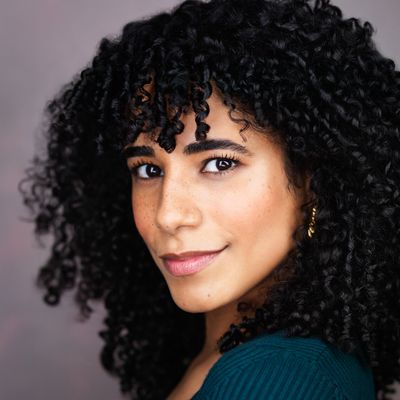
In this episode, Jose speaks to actor Ilda Mason, who is making her big screen debut in Steven Spielberg's sumptuous retelling of West Side Story. Mason talks about how she ended up starring in four different versions of the beloved musical, as well as her upbringing in Panamá... Read More
From the show: Token Theatre Friends
Guests
Featured Shows
About
In this episode, Jose speaks to actor Ilda Mason, who is making her big screen debut in Steven Spielberg's sumptuous retelling of West Side Story. Mason talks about how she ended up starring in four different versions of the beloved musical, as well as her upbringing in Panamá.
Mason is also an artist in residence at Abingdon Theater Company and spoke about the joy she feels when she is collaborating with other artists.
Transcript
This transcript was automatically generated and might contain errors.
[0:20] Ilda Mason: Welcome to Token Theatre Friends. I'm so happy to have you because as you can see, I'm a huge West Side Story fan. And you have so many West Side Stories in your life. You know, like not only are you in the new Spielberg movie, which is fantastic, and you're absolutely amazing in it. You were also in the Ivo Van Hove revival from before the pandemic, but also I saw in your credits that you did it also with Signature and also at Paper Mill. So how could you end up just being immersed? Are you like the world's biggest West Side Story fan? You know, it's very it's it's been the biggest blessing, honestly, because I didn't know, and this is terrible, but I did not know West Side Story when I was back in Panama.
I moved to New York City eight years ago from Panama. I'm from Panama. And I was welcomed with like, oh, you're a Latina, you dance, oh you should be in West Side Story, and which is such a great gift. It was such a blessing to be put into that like category because West Side Story is such a masterpiece, you know. Um, and I was very fortunate that my first professional job that I had here was West Side Story at Signature Theater. It was incredible because it was the first time I was doing it and I was surrounded by such talented people that there was nothing to do but learn and enjoy being there. I felt always so I don't know, I felt like I mattered, like I could tell my story, like I could share my culture because I was the only one in the cast who spoke Spanish.
So that was like they asked me, like, okay, so how do you pronounce this? Or they it was really nice to be, you know, taken into account like that I was like I felt a part of it. Um yeah, that's how I that's that was my first ever West Side Story and I mean the biggest fortune ever since to be able to do it four times.
[2:34] Ilda Mason: I'm really curious and I have to ask you this because it's kind of like you're building up towards another part, like you played different parts every time you've done it. So who are the characters that you're missing that you're like, okay, here's my West Side Story checklist. I want to do this one next. Well, I mean my dream role has always been Anita. However, now that I have done Luz in the movie, now I think no, I to me like Ariana is Anita, you know? It's like Rita is Anita. Like those are like I think for now, I think West Side is like cemented with me. I would say that like my dream roles are now roles that haven't been written. I want to do more acting. I want to do more acting for film and TV, and I dream to do I don't know, a bit of everything.
I want to play characters that are super out there, like in Christopher Nolan movies or Dennis Villeneuve or very down to earth, um, like in Marriage Story or work with directors like Greta Gerwig. Like it's just I feel like the world is my oyster. That's how I feel about acting. Like I wanna be able to explore so much more. So those would be my dream characters, like my dream roles. It's roles that have not been created yet.
[4:06] Ilda Mason: Um I love that. Go conquer the world then. Thank you. I you know, I grew up on West Side Story. In fact, Miabuela Anna, who was my favorite person in the world. I used to call her Anita, and then when she introduced me to West Side Story, it was this like moment of bonding. I mean, like I feel like I'm wearing my Miabuela when I wear like my Anita t-shirt or whenever I'm watching West Side Story. So you said that you weren't familiar with it when you were in Panama. So what was that first impression when you first listened to that score and the incredible Stephen Sondheim lyrics? My god. It was like traveling in time and watching a full movie without like images. It was like the music to this day.
To this day, I like after watching a movie, I cannot get the score out of my head. You know, a full score, a full everything, and the score is ingrained in me. It's so wonderful what music can do to you. Like my favorite part in the whole show is during the prologue when it changes to that's my favorite part. Like I don't even know why exactly, but there is just a visceral reaction to that um it's magical. I would just say it's pure magic.
[5:35] Ilda Mason: I agree. I mean, sorry, you're a professional singer, I'm not, but my favorite little moment is in the gym dance when it's like you know like the mambo. I always get chills when that comes up and I love, you know, like going back to the movies and going back to the theater and just leaving the house during the pandemic has been such a weird experience and it was so refreshing and so beautiful to go to West Side Story and first of all to just like have that score just like it immerses you in this different world like you said. You're traveling in time and assuming you've seen yourself in the movie, what was that experience like? You know, stage performers don't really get that opportunity very often.
Yeah, no, this is it was very surreal. I don't think anyone's ever like prepared for it um but I it's been my dream like I literally left my country to do this, to do film and TV. So to finally see it, it was I it took everything in me to not just cry the whole time. At the end, I then started sobbing when I saw the credits and I saw my name there. That's when I then started sobbing uncontrollably. It just felt like so much like it was the fruit of a lot of hard work and a lot of sacrifice and many things that finally came to be. It just that's what it felt like. And you know, it didn't take my effort. It took so many people's support to have me be here today. So it meant more than words can actually describe.
[7:29] Ilda Mason: Since you've done West Side Story with so many different directors, it means that every time you've done a production of it, you're entering that world through the mind and through the eyes and through the creativity of someone else. So I'm wondering if you're comfortable sharing what are some insights that each of the productions and each of the directors have provided to make this West Side Story universe like take even a more holistic form for you. Because I imagine that Ivo's and Steven Spielberg's's directing styles are very different. Yes, I would say that those two are definitely the most contrasting ones, just Steven's version was more like the traditional, like the story that we all know and love.
It's uh they put a lot of heart into it and into giving the Latinx people a voice and I would say that Ivo's version was a more deconstructed version of West Side Story because you I don't know, they the whole team made it just so that you would have to kind of see West Side Story for the first time ever. Like the dance steps would be completely different. The dance style, everything. Um, the music, the story was all the same. However, by just changing how it looked and how bringing it to 2020 back then, um, it just made it a little more real and less show-like, you know. It was like Officer Krupke was so it dealt with police brutality in such a raw way because the actor playing Action was black, so then you are presented with a whole new point of view.
[9:23] Ilda Mason: Now, Spielberg's version, yes, it is still the original story that takes place in the 50s, however, um it's not just that. You can see a bit more in depth of what the character, not a bit, a lot more, in depth of what the characters are going through by expanding the world of West Side Story. Now you can see where they live and the situation that they're in, how they're being evicted, how they're not just fighting the gangs are not just fighting because like, oh, I don't like you because you're not from here. No, this is a fight for survival for territory that's all they have because they are actually, you know, in such a terrible position. It's way more than we I think had an idea these characters were going through at the time. So it's really nice to see like the history part of what people in San Juan Hill were living in the late 50s.
[10:29] Ilda Mason: I'm gonna ask you for a second to put on your architect hat because I know that you studied architecture, and I've always thought of West Side Story specifically as a very architectural musical and the terms that you know, like you were talking about displacement and gentrification, but also like there's so much in the musical that takes place in like buildings. Like buildings are kind of like this doesn't this sounds like I'm making no sense. Like everything takes place in buildings. But what I mean is like buildings and like fire escapes and construction and things changing constantly. Like, for instance, I love that contrast that exists between you know the building and the creation of a place that's as revered as Lincoln Center is now, but what that meant for all those people who were displaced, and it's like you know, like it's art and culture or people's homes and all of that.
And knowing that you have an architecture background, I'm wondering if you can like share any architectural insights about also the ways in which the dancers move in those spaces. Oh wow. I would say that whoa, that is such a different question, and something that I had not ever thought about because I am as a dancer, I'm used to just dancing on stage.
[11:52] Ilda Mason: However, now we were given the opportunity to be on the streets of New York City, a city so full of culture, so so rich in every single thing that you can think of. And we had to adapt and rehearse in those conditions as well. We got a couple of days of rehearsal on the streets. We rehearsed in Patterson, New Jersey. We actually shot part of the dancing sequence of "America" in Patterson, New Jersey, and I would say that my biggest architectural thing that I noticed was the sets. Just worlds built from scratch. That is a pure art form that we have gotten so used to that we take for granted. I wish the audience members could literally step into the world of our "West Side Story" because the details were so stunning that it would actually take people to go and look at the details that were everywhere.
Yeah, worlds are literally built, and even the interiors at a studio were built to the point that the apartment building would look exactly like any apartment building of the late 50s. It's so beautiful. It honestly makes me really happy to talk about this because it's wonderful to know the many different areas in which you can work or collaborate that will bring together a movie like this, a show, a TV series. It just takes such an amount of talent in so many areas. The best of the best in their own thing. It makes me so happy because when you do things with love, you just get beautiful results, I think. I believe.
[14:21] Jose: I love that you're saying that they shot parts of the movie in Patterson because it's like one of those lovely towns that seems like frozen in time. So I can imagine, and sorry if I'm being presumptuous, it must have been like a marriage of everything that you love about the arts of dancing, music, acting, and then doing that surrounded by historical buildings must have been incredible. I'm so happy for you.
[14:48] Ilda Mason: Thank you. Yes, it was just an absolute dream. Every single thing. I was just before talking to you, I was trying to write a post about one of my many memories. I have so many photos, and I'm like, I don't even know how to put it out in the world, but I want to put it out so that I can have it as a memory, you know, frozen in time. Our costumes were designed by Paul Taswell. It's like how, how, how, how it's so stunning. Just every single detail, every single person that worked so hard to make this movie a reality leaves me speechless. It's so much hard work, so much research, and yeah, I think we sometimes don't think about all that takes place for movies or projects, Broadway shows, regional theater shows, anything to come to fruition. I think it's really important to also acknowledge the crew and the people that are behind the cameras because they are the ones that are making it all possible.
[15:59] Jose: I don't know what it was like for you because "West Side Story" the Evo revival was obviously something that shut down because of the pandemic and unfortunately it didn't come back, and I loved that revival so much. Considering that you started the pandemic with a show that was put on hold and now as we slowly, fingers crossed, are emerging from what was a much darker period with more COVID infections and more death, you're coming out of that moment with the "West Side Story" movie. So it's this full circle kind of thing. How do you feel about that? What were those two strange years like for you?
[16:50] Ilda Mason: Well, I mean, we only found out that our show was not coming back, I believe it was this year, late this year. Yes. Which was nice. I'm very thankful for it because it gave us still a little bit of hope. We just had a little bit of hope. Even last year when they announced that the movie would not come out, I was happy with that decision because I trust our team; they know what they're doing. I also wanted to have the experience that we're having now. I wanted to be able to share it with our friends and family in the movie theaters. I wanted to go sit in a movie theater and watch our movie and the celebrations that have happened because of it is incredible. I've never been to a world premiere of anything, and this was out of this world completely.
It was incredible. It's been also very odd because we waited so long that then it felt kind of like it didn't happen. It felt like I was in a moment of growth and yes, yes, yes, and then it all came to a halt. So it was odd, but I have to say that I've been very grateful because I've had health and my parents have been safe. At the end of the day, that's all that matters. Our show closed, yes, it's sad, but it's a job; there will be another one. Right now, I think what matters is life and health and to have it so that we can enjoy moments like this one now. Now that it's come full circle, now it's actually here, we're actually seeing it. It actually feels very surreal because we waited so long that now it's like, oh, it's actually happening. It actually feels weird. But this going to the movies with my parents who flew from Panama to see the movie with me, that's what it's all about. This gets to be shared with the ones we love.
[19:07] Jose: That's gorgeous. Have all your peoples and primas and tios been calling you and texting you nonstop to be like, you went to see your movie?
[19:15] Ilda Mason: Yes, yes, yes. I know that my family in Panama, they're gonna go see it, I think this week. I'm very excited. They're all having t-shirts made and everything. They're so cute. I'm so excited.
[19:27] Jose: I love that. So you're Panameña and I'm on Cureño, and we grew up in the same part of the world, and it's a part of the world where unfortunately theater and film and television are not an industry. We don't have an industry for that. I always knew that I had to leave my home country in order to be able to work in what I wanted to work. Can we just talk about being an immigrant and leaving and how, especially with something like "West Side Story," it touches upon that? Having to leave your home, like in this case Puerto Rico, and arriving at a new place that's so different and where you don't have any family. I wonder what were some, you know, like you said that you wanted to leave Panama specifically to be able to work. At any point when you were little, did you hope that Panama would be able to provide those systems for you in order to not have to leave?
[20:36] Ilda Mason: You know, I think I always wanted to leave because I love exploring. I love traveling, and I love meeting new cultures and new places, and I was very fortunate that I was actually able to do so. But absolutely, I would love for our countries to be able to provide that so that we did not have to leave. Absolutely, 100%. I think that we are working towards it. I know that theater in Panama, even though you cannot live off of theater like you do here, it is made with so much love and so much passion that you know you're in the right hands, that you know that the art is being made by people who love it with their whole hearts and souls. It's what inspired me to do this professionally and as a career.
It also makes me really happy to know that there are many movies, and I think it is starting. There's more that is starting in Panama. Just to speak of my country, there are movies that are being made there, and there's a lot of talent, and I am so excited to see it shine internationally. Yes, I am just so excited for that, and I hope that I can somehow be able to help also in that moving forward to making our industry stronger somehow. I don't know how exactly yet, but that's what I aspire to do.
[22:27] Jose: Absolutely. People have been talking a lot about the fact that Steven Spielberg's decided not to subtitle the Spanish scenes in "West Side Story," which I personally loved. I felt that I was, you know, like I felt like, oh my god, Hollywood is addressing me directly and not putting any barriers. It's so strange because we grow up raised on thinking that we are the other, that we're always the other. What was your reaction when you found out that that was going to happen in the movie?
[23:01] Ilda Mason: It's like, you know, catch up, everyone else, learn some Spanish. You know, it was really wonderful. It wasn't even like when I knew about it; it was when I was watching the movie, and I did not realize it until like the second, third, or fourth time that I watched the movie. I've watched it now five times. That I realized, oh, wait, to us it feels like they're repeating some things, but to the English-speaking audiences, it's like, oh, they're catching up to something, and it felt like a gift to us because half of this story is about our experience as immigrants and as Latinx people. I think it's really wonderful to be able to give us just that little nod of like this is for you, and only you will understand it, and I hope that people who don't understand it then they will reach out and be like, oh, what was it that they said here?
[24:07] Ilda Mason: Like, why did you laugh at that part? That's my hope for this, that the audience members can come together and talk about it and see what like bridge that gap in a way, but it's also I think might give the English speaking audiences just a little bit of how we feel sometimes, and not in a bad way, but just like oh, I see kind of like oh okay, this is what it feels like when you're somewhere and you don't understand everything, just it's just a little taste because you don't miss anything like Tunakushner made a very specific choice to what would be said in Spanish and what like key things to the plot that would be said in English. Um, you're not missing out on anything but it's I think it's really special. It's a wonderful gift to us um Hispanic audience members.
[25:09] Ilda Mason: Yeah, it's also like living in New York right like when you're in a subway like there's people from all over the world like speaking like a hundred different languages and it's always so beautiful because it's like almost like an invitation to learn about other cultures and try to be I don't know like have more empathy with people who don't come from your same background.
[25:27] Ilda Mason: Yeah, yeah, I love also that the like it's good to have the Spanish just as it is because so many people in this country speak Spanish and it should never be like a like speak the language here that you know like speak American it's that is such a I don't know I think narrow minded way of thinking because why wouldn't we want to share more languages? Why wouldn't we want to bridge the gap between each other? It I think yeah is just I love languages and I love the ability to be able to connect with people from other cultures and the same reason why I love traveling, you know.
[26:17] Ilda Mason: Um, so I think that that's very important and that it should not be chastised, you know, like speaking another language. It should never be, especially as we're making such a big effort to learn their language, of course.
[26:32] Jose: Uh Ilda, can you talk a little bit about the work that you're doing with Abingdon Theater Company right now?
[26:39] Ilda Mason: So I am an artist in residence at the Abington Theatre Company. So I'm so excited about it because I get to work for the other my fellow artists and residents, and residents. And I personally I love learning from them. So I love being inspired by their work and their creative auras and energies. We've already worked in developing a play. Um, and it was just so wonderful to see that part of the process, you know, again, like the behind the scenes, the like the yeah, it's especially as someone who like I am very much in love with acting. However, I do want to be able to create in the future. Um, so this is such a great experience to grow and learn about so much more in the industry and in theater, and I believe that it will make me like a more wholesome artist at the end of the day.
We are also working on this um passion project that I cannot say much yet. Um it's in the works, but I'm very excited because it also talks about some incredible and important themes. Um yeah, I I don't want to like mess up and say something that I shouldn't. Um but I'm just so thankful for um this opportunity and the Chad Austin, the Abington Theatre Company's artist director for choosing me to be a part of it because it's just such an incredible, incredible experience to yeah.
[28:25] Ilda Mason: It just is I'm really curious because you know I'm a journalist. I'm a critic. So my life and my work usually are very lonesome. Like I spend most of my time in front of my computer or going to performances, but I don't get that opportunity that artists and performers have to create together and to collaborate like you were saying about West. So given the period of lockdown and the period of the pandemic that forced us to be at home what is it like to be back surrounded by people just like getting those creative juices flowing? Was it something easy for you to like you know like yes I needed this so bad. I'm back.
[29:08] Ilda Mason: You know it I never stopped and I still not I cannot stop saying it. I like acknowledging it like the first audition the first in-person audition was like we are here in a room all together the same in every first coming back like every of the first coming back um have been so beautiful I think everyone has come back with such a like a I don't know like recharged energy and just it's been so wonderful because yes, the rest, I'm gonna call it rest was was good to figure some things out and to let our bodies heal, um, you know, um however it was so wonderful to finally be back in a room sharing with artists and learning from them and being in awe of them. Like that is such a special thing, but it's it cannot be created.
The energy, the nerves that you feel at an audition, it's just it's nerve-wracking in the moment, but it's truly special. There are not many professions that you actually feel that so often. That feeling of like, okay, I hope I get this, or I'm you know, I love this with all my heart. I just you know, um, so it's so nice, nice as an understatement to finally be back in a room with real humans sharing our art.
[30:50] Ilda Mason: You know, you've been talking about sharing and all of that beautiful love that you get from being with people. So with the holidays here already, basically, please talk to me about Navidad and Panama and what foods you miss and what foods you're planning to cook in New York City for Navidad, you know, Chiboya so I'm so excited about this question. So my parents are here, and um, we're gonna share with my uncle, and I am planavida and panama is the best thing. First of all, the smell, it smells delicious because it's um verano, like it's summer there, so there's a lot of like um the burning of like dead grass. It's such a weird thing, but I love it. It to me it smells like vacation, so it's just warm and delicious, and the food, okay.
So the food, I'm gonna make arroz con pollo very very simple but I finally nailed down my mom's recipe and uh some platinum and my boyfriend makes a delicious like ensalade papa um his is incredible he's from Spain so he's it's delicious um I don't know if we're gonna we normally make like my mom makes like ham I don't know if we're gonna make one we'll see maybe we will because my parents are here so I don't know maybe maybe we'll ask if they wanna like make a ham I've never made a hamcient and I think other than that oh and uh and a new favorite adopted tradition coquito I'm gonna make coquito which I know I am in love yeah yes okay now I'm gonna start like salivating so I hope you have it happy holidays feliz and de nuevo and I'm looking forward to hear from that secret project coming soon I hope and in the meantime congratulations on the website story it's now playing in theaters everywhere and I would suggest to go see it in the biggest screen possible it's it's a one yeah it's an incredible experience it's a holiday booty yes yes no this needs to be experienced on IMAX I watched it on IMAX the other day and it was incredible it was amazing yeah no no I love that yes thank you so much for the beautiful wishes thank you so much, Ilda, and much as well and all y hasta la proxima.
© Broadway Podcast Network, All Rights Reserved