

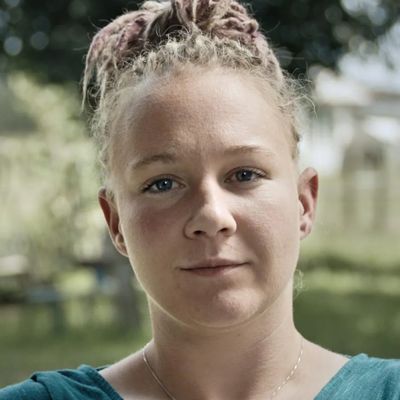
Reality Winner details her traumatic experiences as a prisoner in Lincolnton, Georgia County Jail…while awaiting her trial for espionage. The inhumane treatment has inspired Reality to fight for Prison Reform... Read More
From the show: This is Reality - The Reality Winner Podcast
Guests
About
Reality Winner details her traumatic experiences as a prisoner in Lincolnton, Georgia County Jail…while awaiting her trial for espionage. The inhumane treatment has inspired Reality to fight for Prison Reform.
TRIGGER WARNING: This episode includes discussion of self harming behavior, including suicide and disordered eating.
TO LEARN MORE
- Press Release from the Department of Justice: https://www.justice.gov/opa/pr/federal-government-contractor-georgia-charged-removing-and-mailing-classified-materials-news
- Affidavit for Arrest Warrant- Reality Winner: https://www.justice.gov/opa/press-release/file/971331/download
- CRIMINAL COMPLAINT- Reality Winner: https://www.justice.gov/opa/press-release/file/971336/download
Visit bpn.fm/ThisIsReality for more info, to sign Reality's petition for clemency, and to get tickets to any productions of Is This A Room.
Transcript
This transcript was automatically generated and might contain errors.
[0:00] Sally Horchow: We'd like to warn our audience that this episode includes discussion of self-harming behavior, including suicide and disordered eating.
[0:09] Dori Berenstein: Welcome to Episode 8, Reality's Reality Part 2, Surviving the System. How and why did a 25-year-old with a Pikachu bedspread become the number one terrorist in the United States? In 2017, Reality Winner, a highly decorated former Air Force linguist, was charged with leaking proof of Russian interference in the 2016 election. Her goal? To help protect democracy. Reality received the longest sentence ever imposed for unauthorized release of government information: five years and three months. This Is Reality is a real-life true crime podcast, recently recommended by Apple as new and noteworthy, which takes a deep dive into Reality's life, her time in the Air Force, her decision to protect America by releasing that information, her interrogation, trial, imprisonment, and the extreme obstacles she faced along the way. Reality Winner has been depicted as a traitor and a terrorist. Our podcast, This Is Reality, sets the record straight. I'm Sally Horchow.
[1:23] Dori Berenstein: And I'm Dori Berenstein. And This Is Reality. Reality Winner is finally able to tell the world her story in her own words. Last episode, we heard from Reality about her interrogation and arrest in June 2017. Upon her arrest, Reality was taken to a small county jail in Lincolnton County, Georgia. Reality would be held there without bail for over a year. The conditions were horrendous. This particular county was a one-room cell. I want to say it was 20 by 30. And on the most busy weekend, they would put up to 13 of us in there. It was a three-tiered bunk bed. And so many women were not able to get up into the bunk, so they slept on the floor. And there was one toilet. Because it was such a small, casual jail, they never objected to the fact that we hung a bed sheet up over the toilet.
But in most other jails, that would not have flown. And the toilet faces the table at which we eat. There was one sink. Sometimes it worked. Sometimes it didn't. Two phones. Usually at least one of them would be working, but one of them was broken for a really long time. And one shower. So it was very awkward all the time. Like you immediately become desensitized to any general sense of privacy. And then the idea of, oh, well, the cameras, the video feeds from the cameras are actually visible in the lobby to anybody to walk up and stand at the front desk of the jail to see. The women's cells, this one cell, they kept a piece of paper taped over the one window leading to the hallway. The men had more windows.
The men got to go outside five days a week. Maybe the women got to go out three days a week. It wasn't until I showed up and started demanding it that they let the women out at all. It was not a given. If they were low on staff, they wouldn't take us at all. As an inmate, you start to hate holidays because you know they're going to be short on staff. You know everything's going to be closed and you know you're going to be locked in the unit longer than any other day. So why even bother celebrating? Like, you know, it's just like another day to be locked down.
[4:00] Billie Winner: After several months of trying desperately to support Reality from afar, Reality's mother, Billie, moved to Georgia to be her full-time advocate. Billie recalls, that was probably the hardest time because I was there in Georgia and I knew that I couldn't just leave and leave her there by herself. I needed to be there to be some sort of a lifeline to her. It meant always being available for her calls. Billie wanted to be there for her daughter. Meanwhile, Reality felt guilty that her mom was having to uproot her entire life.
[4:32] Reality Winner: When my mom made the decision to stay in my house, I was infuriated. I did not want that. I felt like it was tearing the family apart. I felt like the one thing I wanted when I got locked up was for this to not affect my parents, was it to not change their day-to-day life. And so when she moved into that house, it was the complete opposite of what I had wanted. And it was around that time where we had made our final pitch for bond in that October. And that went up to the appellate court in Georgia. And we thought maybe this could be it. Like there had been enough neutral publicity about me and there had been enough people asking why I was detained pretrial. And it was a seven and a half hour hearing where we presented all these arguments as to what we could do.
That was when my parents offered everything up, ankle monitor, constant monitoring, everything just to get me out of this jail where I was deteriorating. And that was when they denied it again. Then it just became there's no way out. I could not see another month of surviving. I have seasonal affective disorder. My circadian rhythm's off. You can distinctly feel, even if you're locked in a box and not left outside, not let outside ever, you can feel the seasons changing. So this was my first seasonal shift locked up. So severely depressed, fully bulimic by this time. And then also just having it affirmed by yet another court that my own government thinks I'm a monster.
[6:19] Brittany Winner: Brittany reflects on how excruciating this time was for her sister. So for Reality to be locked away when she hadn't been convicted, when she hadn't had her day in court was totally wrong and just really served to make her feel like she had no hope that there was no way that she was going to get out of there until she gave the government what they wanted. And what they wanted was for her to plea out.
[6:46] Reality Winner: After months of being held without bail, Reality's mental health took a turn for the worse. I began practicing how to commit suicide in jail. And it's all about who's working when, the time between rounds, what days they do certain things. And it's just a dance of timing, right? And that's where my mind was. It wasn't even about should I, shouldn't I, it was timing. And that was when I was trying to tell my family, like, okay, move on. Y'all need to move on. Sell everything, get rid of everything, leave it on the side of the road. Like, just go home, just go home. And so that's why like week after week, mom just wouldn't leave. Like to this day, she can't tell you why she stayed. And for me, the weekend visits, I hated them.
It was so demeaning to have her go, like, just to have my mom in a county jail, like physically be in there, like, like you are related to something that's tainted and filthy that you have to go in there. And like, she has to be locked in her side of the visitation and she has to talk through glass. And sometimes they would be nice and sometimes they wouldn't. Sometimes they would, nobody else would be there, but they would cut us off 15 minutes in and say, well, we have to keep the room open.
[8:20] Reality Winner: Visitation for females was at eight o'clock in the morning on Saturdays and Sundays. So I would get up early in the morning. I would drive 50 minutes from Augusta to Lincolnton for a half hour visit. And then I would drive the 50 minutes back. And then we always had to use these phones that were very, very staticky. They were all we had. And so we did it, but they were not enjoyable. They would play games. One time it was the night before, like our parents, mom and Gary were going to drive home that day, but they stopped by to see me or they were going to. And overnight a new woman was brought in and she was sick. And we kept telling the officer she's sick. She's got stomach pain. She's throwing up.
We don't know what she has. She's sick. She can't even stand. And their solution was like, they told us, oh, well, she's faking. And I'm like, well, she's literally lying on the floor by the toilet. You guys need to do something. You guys really need to take this seriously. And so their solution was me and another inmate carried her into the solitary confinement cell and left her there. And, you know, one of the things I had kind of noticed is like, okay, well, when a white inmate has any type of medical malady, it's seen immediately. And this woman was black and they're telling us she's faking and they ordered us to carry her to the isolation cell. And so that was kind of, it set one of the other women off.
And so she's yelling at the white male officer. And so his response is, is y'all are on lockdown, no visitation. I was the only person that day that was even going to have visitation. It didn't affect anybody but me. And I wasn't even part of it. No, I don't want these fuckheads playing games with my parents' emotional health. Like I just wanted them to go back to Texas and live their lives and not be affected by this. My plan was for them to abandon me completely and everybody move on.
[10:29] Brittany Winner: But Reality's family would never abandon her. Reality's sister, Brittany, explains. She probably didn't think that my mom was going to, you know, quit her really good job that she had with Child Protective Services for over 25 years to move to Georgia. She probably didn't think that my marriage would end. She probably didn't think that she was going to face such adversity and that we were going to suffer along with her.
[10:55] Billie Winner: Reality's mother remained in Georgia the entire time, advocating for better conditions as Reality's situation continued to deteriorate. She would call and she would be frantic and she just needed somebody to be there for her. And that's what I was. Everything about that place was so torturous for her. There were many times Reality feared for her life.
[11:24] Reality Winner: There was a night I remember distinctly and I woke up shortly after midnight and there was this smell. And a lot of times people will say, oh yeah, that smells like shit. No, this smelled like straight up medical fecal matter. And there was this woman there and she was talking to herself. And she was really agitated and talking to somebody that wasn't there. And she gets up and she uses the toilet. It's a one room cell with the toilet in the middle of everything. And then she goes and is just like standing in the middle of the room arguing with this person. So I just remember making like these tactical hand movements to like everybody who was awake because we were all like peering over our covers at this woman who was becoming more and more agitated with whoever she was talking to.
And so we all kind of decided that we were going to make a run for it. And this jail cell, it had an extra little phone booth towards the front. So technically there were two locked doors. And so we went into the phone booth and go figure the emergency button to notify an officer had been broken the entire time I was there. And we didn't want to catch her attention, this crazy woman. We don't want to get her attention by banging on the door. So I held the other door shut, the door to the cell, and we had people waving at the camera. And so finally, the officer, the jackass that threw her in there with us comes to the door like, what's wrong? And we're like, she's covered in feces and talking to someone who's not there. How did you think this was going to turn out? The five of us were like, we're willing to sign a statement saying we're not safe. You can put all five.
[13:41] Billy Winner: It's important to keep in mind that Reality endured this ongoing inhumanity for over a year before receiving her conviction.
[14:08] Billy Winner: Reality shares her experience. She was sentenced to prison in December, and she was diagnosed paranoid schizophrenic. She was heavily medicated, and every Thursday, she would actually get an injection. And so, when I tell you that, like, she would get her injection sometime Thursday. We wouldn't see her eyes, like, she wouldn't open her eyes until Sunday. Everything she did would be with eyes closed. She would just, like, we put her food right by her bed, and she would just reach out from and eat. Everything she did was with closed eyes until she finally, the medication wore off. She would be herself Monday through Wednesday, and then by Thursday would need to be medicated again. Like I said, in December, she was sentenced.
By early January, I guess they had canceled her prescription. They were waiting for the state prison to come pick her up. So, the first week went by, they didn't give her the shot. Okay, whatever, because, you know, she'll be on the next week. Next week go by, didn't get the shot. Finally, it's towards the end of the month, and we had noticed by Monday, she was very agitated. And people started saying something, and she actually started asking, when am I going to get my shot? Like, I don't like this. I don't like how I feel. I'm agitated. Like, she started asking for a medication. So, the nurse gave her Benadryl, because that's what you do to calm people down. So, by Wednesday morning, I, seriously, I pulled the nurse aside.
I said, hey, look, we are living with a loaded revolver right now. Like, we are playing Russian roulette. One of us is going to set her off, probably today. Doesn't get her shot. Wednesday night comes around, and there's a new inmate. Not a new inmate, but she comes in, she's a transfer, and she had been here over the summer. So, an old face coming in, wants to catch up on all the drama, what happened in the cell since she left. And I had kind of just said in passing, like, hey, don't talk shit about this other woman, because the one who was agitated, the one with the illness, had got really close to her, you know, while you were gone. And I said, that's why she's not talking shit anymore. And so, I'm on the phone with my dad, and I guess she had gone and told that woman what I had said.
And so, this woman is, like, yelling at me while I'm on the phone, saying, like, get out of the phone booth, I'm going to kill you, like, it's going to happen. And so, my stepdad's like, what is going on in there? I was like, oh, this woman's probably going to kick my ass, but it's going to be okay. Like, she's really upset, and, you know, I'm going to take care of myself. And he was just like, are you sure? I was like, yeah, I mean, there's nothing I can do. I told them that she wasn't medicated, and now she's upset, and I'm the one that kicked the hornet's nest. So, yeah, not really how you want to end a jail phone call with your dad, right? So, yeah, she attacked me. And the first time was she pushed me by my bed, which wasn't in the camera.
But I'm not fighting back. Like, she's mentally ill. Like, we knew this was going to happen. The only thing I did was I put my hands up so she couldn't hit my eyes, because she had really long fingernails. Like, that was my only thing that I was worried about, was like, man, I just don't want to get a thumbnail in my eyeball. Like, I don't have time for that. That's how you get infections. But I'm just like, OK, so I'm just going to stand in the camera and let her hit me until somebody cares. So finally, the officers came in, and I mean, I was pissed off because they pulled me out. And I'm like, dude, I just got my ass whooped. Like, are you seriously going to pull me out like I'm the aggressor and let her stay in there?
Do you know what that does to the dynamics of the cell? And they're like, well, we need you to write a statement. And I'm like, OK, fine. She hit me, but I told you guys to medicate her. And then all of a sudden they're like, oh, we don't want you to write a statement. And I'm like, can I please just go back to my cell? So they pack her out and they put her in isolation, which is directly across the hall. But the thing is, is for three days before that day and night, we were telling the nurse, hey, she's off her fucking rocker and she needs to be medicated. You guys have known for three weeks now that she's still here. She needs to be medicated. I'm glad it was me because I can take a hit. But I wish nobody had set her off. I wish her last week with us wasn't spent in solitary confinement. You know, it's just really unfortunate. But also, it didn't come out of nowhere. And Lincoln County is completely liable for that.
[19:15] Reality Winner: The harsh conditions and extreme disappointment upon being denied bail wreaked havoc on my mental health. That suicidal tendency, that extreme imbalance in my brain, it got to the point to where there was a day in which I was pulled out of the cell, shackled and sent to the courthouse. And I had no idea why. Was there a hearing? I'm sitting there in the basement of the courthouse waiting, like what's going on? And then he, the marshal, takes me across the courthouse to the secured briefing room so I could talk to my attorneys. No one had told me that I had an attorney meeting or that I would be going to the courthouse to talk about something. I just told my attorneys like, no, I don't want to talk to you guys.
They had like literally gotten on planes to go because anything regarding the case had to be in that room, in that courthouse. And I just said no. So they took me back to jail. And I had literally missed my chance to go outside by 20 minutes and they were not taking me outside. And I had a meltdown. We're talking about punching and kicking and screaming a metal door. And finally, Charlie came by and he's just like, look, winner, it's just, it's not your day. And I just, you start to realize like immediately then everything became crystal clear. Like I am kicking on a door crying because I didn't get to go outside. And I'm just like, my whole life is on the line in this case. And so that was when I got on the phone and I, jail called him, like not even attorney client confidential, jail called Matt Chester, my attorney.
And I came out to him. I said, I'm bulimic. I'm not okay. I'm not stable. And I need to see a doctor. So, you know, they did put me on an antidepressant. Uh, but it takes like six weeks for that. So it's not like it was overnight, but that placebo effect. But then also just coming out and for once telling somebody like, yeah, so I'm actually not okay. And I'm not functioning in here and I can't do this. Like just being able to come out and say that, that was the turning point. Like just being completely triggered by having to go to the courthouse, like unleashed everything.
[21:30] Reality Winner: In that moment, I decided it was time to call my lawyers and cut a deal. So I accept full responsibility. I competently and fully pled guilty. Um, there's just no ifs, ands, or buts about that. That was my conduct and that's for which I was convicted. I would say the turning point in our defense process though, was having 40 out of 41 subpoenas denied by the court. And basically being told, no, you are not allowed to have any information that you might need to defend your client. So that was kind of when things were like, okay, so we are going to take this to trial. We have nothing, literally nothing. To clarify, because I was being charged under the Espionage Act, my defense attorneys were not allowed to present any information regarding my motive or intent for releasing the document.
Without the ability to subpoena character witnesses on my behalf, the defense was left with the cards stacked against them. Weren't allowed to make any arguments because Section 7093E, Willing Retention and Disclosure of National Defense Information, doesn't allow for argument for intent. It doesn't allow you to argue the basis on which national defense information is defined. And you don't get to argue whether or not you cause damage. That's not part of the law. That's not a cause and effect part of what you're convicted for. For what I was charged, I did, so I pled guilty. But there was just no moving forward with mounting any type of coherent defense after those subpoenas were denied. So that was when it was kind of apparent that we need to cut a deal because if not, they are within your right, their right to give you the full 10 years.
And so by that time, the prosecution was like, yeah, 10 years or five years. Take it, you know, they added three months. So that's why everyone's like 63 months. Like, what is that from? The three months were for the effort of preparing for the hearing about the subpoenas. So basically, you guys wasted that much of our time. They tacked on three months to the deal simply for that hearing. From the start, I was looking at five years. You confess to the FBI. You never denied the conduct. That's what I was looking at. It doesn't feel good, but I took responsibility. And that's something that I can be proud about from the get-go is that I may have violated my agreement with the NSA and I may have actually let a bunch of people down. And I am sorry, but I never lied about my conduct. And I never backed away from pleading guilty when it was time to plead guilty.
[24:21] Reality Winner: The conditions of my detainment in Lincolnton led to my commitment to advocate for prison reform. More on that in future episodes. Thank you for joining us for this episode of This Is Reality. In our next episode, I continue to share my experiences while incarcerated, including surviving both COVID and sexual assault in federal prison. You can support me by signing my petition for clemency at StandWithReality.org. Please join us for the next episode of This Is Reality, and make sure to check out all the podcasts on the Broadway Podcast Network. We're incredibly grateful to our special guests, Brittany Winner, and Billy Winner Davis. Reality's interrogation by the FBI was captured in the critically acclaimed Broadway show, Is This a Room?, conceived and directed by Tina Satter.
This podcast is created, written, and produced by Dori Berenstein, Sally Horchow, Rebecca Aparicio, and the Broadway Podcast Network. Sound engineers are Alan Seals and Kimberly Garris. Podcast editor is Alan Seals. Executive producer is Liz Armstrong. This Is Reality is part of the Gotham's fiscal sponsorship program under the Sound and Light Project. Please join us for our next episode of This Is Reality by following and finding out more information on bpn.fm slash thisisreality. And finally, special thanks to Bea Westby, Ayanna Prescod, and the rest of the team at the Broadway Podcast Network.
© Broadway Podcast Network, All Rights Reserved