

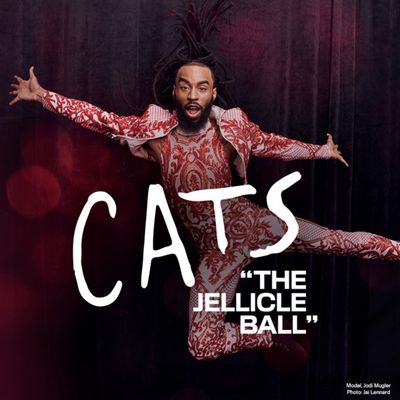
Throughout June and July, we are working with the Perelman Performing Arts Center reimagined production of CATS called CATS: "The Jellicle Ball" to bring you a series of episodes with the cast and creative team... Read More
From the show: The Wrong Cat Died
Miniseries Inclusions

Featured Shows

About
Throughout June and July, we are working with the Perelman Performing Arts Center reimagined production of CATS called CATS: "The Jellicle Ball" to bring you a series of episodes with the cast and creative team.
"When we were building, the connection between us (Macavity & Grizabella) was that he used to be in the House of Glamour at one time." This episode features "Tempress" Chasity Moore who plays Grizabella in the production. Hear Chasity discuss her experience being back on stage, how she's tackling Memory each night, and a dive into the ballroom history as the founding mother of her own house. Plus, Tempress shares a fun ballroom character aspect their production has between her and Macavity.
- Check out Tempress on Instagram: @i_am_tempress
- Check out Tempress' podcast on YouTube: www.youtube.com/@FQCrazySexyCool
- Check out CATS: "The Jellicle Ball": pacnyc.org/whats-on/cats-the-jellicle-ball
Produced by:
Alan Seales & Broadway Podcast Network
Social Media: @TheWrongCatDied
Transcript
This transcript was automatically generated and might contain errors.
[0:00] Mike Abrams: There's a cat over here. There's a cat over there. And the wrong one died. And the wrong one died.
[0:15] Mike Abrams: Welcome to The Wrong Cat Died, the podcast breakdown of The Cat's Satisfy. I'm your host, Mike Abrams, and today we have another amazing guest. We are working with the Perelman Performing Arts Center reimagined production of CATS: The Jellicle Ball to bring you a series of episodes throughout their run. I am honored to have a Ballroom Hall of Famer, Tempress Chasity Moore, with me here today. Tempress is an actress, singer, ballroom icon, and the queen mother of her own house, which I cannot pronounce, so I'm going to have her say it for us. And while she has yet to change my mind about naming my show, her Grizabella is the closest I've been to changing my mind and will have you rooting for her to return to the runway at the end of this production. So I'm excited to have her here. Thank you for joining me.
[0:59] Chasity Moore: Thank you for having me.
[1:02] Chasity Moore: I'm excited. I always like talking to Grizabellas because my show centers so much around the arc of your story. And the version of this is the clearest picture I've had. I love it. And we'll get into that. But I want to actually start us on the other side because you're a ballroom icon and a legend in the ballroom world. But what was your familiarity with CATS? This production, how much did you know about the musical?
[1:29] Chasity Moore: To be honest, I mean, of course, like as a child, I always seen the promos and I've always seen and I've always heard Memory. And, you know, I've seen the Grizabella part, but I hadn't really, I didn't really know a lot about it. I didn't know so much about it.
[1:48] Mike Abrams: Yeah, I mean, I kind of was, I've been wondering because, I mean, you get the biggest number and you have like the most important part, but there's so much to that story that did they, in this rehearsal process, go through a lot of that with you and kind of go through the whole CATS aspect of it?
[2:08] Chasity Moore: So like somewhat, but a lot of people, there was a couple of people who told me not to actually watch it because my Grizabella was different, was a lot different and that they liked that aspect of it. And so I seen as much as I could, I didn't want to, you know, because like we are re-imagining it. So it was coming from ballroom. So I have a lot of knowledge on ballroom. So I wanted to kind of tell my story from the ballroom aspect of it.
[2:42] Mike Abrams: No, I love that. And so let's start there with the ballroom aspect of this. So I thought when I heard about it, that this is a perfect vehicle for telling the CATS story. As someone who knows nothing about ballroom, but knows way too much about CATS, I love the idea of the competition aspect that you brought into this. So when you kind of heard about this production and you were, you know, joining on, what was the ballroom lens? Like, I guess, how did you bring some of your ballroom experience to that?
[3:09] Chasity Moore: Well, first I was like, you know, at first I didn't know how, you know, I was like, what is going to be the correlation, you know, and then especially I didn't want to be there, like a lot of appropriation going on, you know, coming from ballroom. And so, you know, it being like a marginalized community, you know, people came to ballroom because of, you know, seeking love that they weren't getting from their family and or society, period. And so a lot of times now that ballroom has crossed over to mainstream, a lot of people are using ballroom and doing ballroom and they have no idea of the backstory of ballroom. So I was a little like, wait a minute. But then when I started thinking about Grizabella and I seen how when Grizabella came back to her community, she was shunned because of, you know, age and, you know, things, ageism runs rampant in ballroom, like it's the same thing, you know.
And so I started building off of that. Girls who fell on hard times, not only that, I just, a lot of the character for me was like me being a trans woman, you know, and growing up in society where as a lot of people wasn't accepted of us, we had to be stealth at one point. So a lot of us left ballroom community because we didn't want to be associated with it. And so then now that it's being more accepted, there are girls who come back and sometimes they don't get the reception that they want.
[4:40] Mike Abrams: Yeah. And I think that's the beauty of the arc too, of Grizabella. And I thought the storytelling, I don't want to spoil too much. I think people know the Grizabella story, but your production does a beautiful job of bringing the ballroom, bringing her back, you know, like, like you said, with the ageism. And, and that is a, where I thought was as someone who's spent 170 plus episodes arguing against Grizabella as a choice to, to see that full story as like, that kind of makes a lot more sense of being able to kind of be back on the runway, being back in the spotlight and being celebrated for that. Um, which I thought was such a beautiful moment to be able to bring that in the story.
[5:20] Chasity Moore: Yeah. She had fallen, she falls on hard times and, you know, a lot of the girls have, because, you know, a lot of trans women didn't because of the discriminations in the workforce and stuff. Some of them, you know, fell to sex work and, you know, that led to drugs or what have you, they had to do what they had to do. And some of them, they didn't have the best outcome. So for me, that was just kind of Grizabella's backstory, like, you know, but she's coming back to ballroom still trying to feel this grandeur of who she once was. And she feels like everybody should just accept that because she once was an icon in ballroom and they, and she doesn't really get that reception at first or in her head. She doesn't feel like that, you know, completely, completely.
[6:11] Mike Abrams: One thing I think is always really interesting in the musical CATS productions is the relationships between all of the different cats and especially with Grizabella, because there is this, this, um, you know, almost fear at first and then curiosity and then acceptance and that kind of story that goes throughout. I'm very curious about this production, how you weaved between the ballroom aspects and the cats, um, musical aspects. I think that was kind of a more, I mean, definitely you had to, I feel like, you know, the cats, Andrew Webber's people, like, you know, there were things that you definitely, you couldn't go outside of the lines or you had to stick to or whatever. I would have loved to see, um, a ballroom person.
I mean, even though you had us or whatever, and then you did, and Junior does not allow anything to go past, like, you know, if it's not ballroom, he's going to speak up and most of us do, but we kind of did our own research. And then, you know, a lot of the cast of the ball, the, um, Broadway people just went and started watching balls and doing their own research, or we would sit down and talk to one another, or we just spoke up and said, no, this wouldn't happen like that. So it was kind of like our own research type of thing.
[7:31] Mike Abrams: Okay. Okay. Yeah. I love the mix between the cast too, of just having a wide range of experience kind of brings it to life. So I want to talk a little bit about Memory because it's the, it's the iconic song of the show that everyone knows. Um, what was your first thoughts when you kind of realized that when you're getting cast for this, that this is going to be, you know, you're going to be on the spotlight and get to belt this number?
[7:55] Chasity Moore: Listen, I thought I had anxiety. I was waking up with night sweats at three o'clock in the morning. You know, um, it was, you know, I haven't been on stage in over 20 something years and, you know, in singing. So it was just something that I really had to dedicate myself to, um, getting a vocal coach, like going just really like, at first it was very scary for me. I would get on, I would just get so scared, but everyone has been so welcoming and helpful. Um, William, who has definitely worked with me a lot. And, um, you know, it was a lot of pressure, but the pressure is going away. I think I'm like getting into my groove now. It did take me some time to like, really, you know, get out of my head and just go ahead and do what I do and realize that I was there for a reason. And there was something that I brought to it that they seen that I bought that I didn't want to compare to anyone else.
[9:00] Mike Abrams: Yeah. I mean, your memory is amazing. So I, you know, this is such an iconic number and, you know, I was, we were waiting as we were getting to that moment and, you know, you kind of build and build and build and then you just belted it out and it was, it was beautiful. So I love to, I was, I was curious because it is, it's one of those numbers that everyone knows, like no matter who walks into that theater, they're going to know memory. They might not know the rest of the stuff. They might know the overture, but they, you know, they might not know Skimbleshanks or Mungo Jerry or some of these other songs, but they know memory. And so it's gotta be that, that whole all eyes on you.
[9:38] Chasity Moore: No, and I definitely have room to grow and I'm only getting better and better. So just tell them to be on the lookout.
[9:41] Mike Abrams: Yeah. Well, that's the beauty of doing it, you know, so many times a week is you just, you get to, you get practice exposure doing this. And, um, and I think that's, with a short run, it's also such an interesting aspect to it too, because you're doing it for two months versus, you know, years at times for some of these shows. Going into rehearsals and going into that, we were rehearsing and tech, like, you know, all of that was new for me. So it was like, oh wow. Like, you know, rehearsing from one to five and then a show that night, you know, for two weeks straight, but it was great. I'm so glad that we premiered now.
[10:17] Mike Abrams: Yeah. Now that you're officially open and through and yeah. And, and with incredible, um, reviews, which is amazing to see. And then I, I mean, we dropped our review, uh, while the day we're recording this, we dropped ours and we raved about it, but we were waiting to see kind of what the critics were and the critics raved about it as well. And I think, um, rightfully so. I mean, it does a beautiful job telling the story.
[10:44] Chasity Moore: Yeah. I spoke to a lot of people who, and some people said that they, this is the first time that they really understand cat. Like, you know, I've seen people say that. Yeah. I've had people say that to me. So I, you know, we have been getting a really, really good reception. The audience has been amazing.
[11:00] Mike Abrams: So I would love to talk a little bit about the audience because I have, again, as someone who knows cats too well, I did think that this told the story in a very beautiful way and really actually made, I thought your story, one of the easier ones to follow that wasn't always as clear in other ones. And again, not unclear. It's just, they're different with the way it's told in the musical. Um, but I found that this is a great particular production for some of where those kind of quote unquote cats haters. Um, because there's a lot of them out there. Cause it's an easy punchline for a joke. You know, cats is easy to poke fun at. And we've, uh, I've heard a few who have went and they've loved how this actually, again, tells the poetry through a different lens, but also it sounds like, you know, the energy in the audience is just infectious.
And so as a performer, how are you feel like, are you feeling that energy as well? Are you feeding off of it? Because I loved in the beginning, they even stated like, this isn't a musical. You don't have to just sit there, like get into it and like, just to be in. And I felt that from the moment I sat down to the moment we left.
[12:06] Chasity Moore: Absolutely. We love it. Like you never know what's going to happen for me. I, you, like I said, I hadn't been on stage in a while, so I was hoping that the audience would be engaging because that does help you, especially with so much energy. The cast is amazing the way they're out there dancing and voguing and singing and doing all of that. It would just be horrible if no one was engaged. Like, so I love that, you know, I, they've been, even with Grizabella, like people are feeling so connected to her and, you know, giving, I've been, they've been standing up clapping for me and stuff like that. It has been so heartfelt and it just makes me want to go even harder.
[12:48] Mike Abrams: So as you experience this type of show, how does this like, how, how would you describe Ballroom for the musical theater people that are coming to this? Like what's the baseline of what they need to know as they walk in? So that way they understand those aspects. Cause I feel like that's a part that maybe I missed. Like there was judges behind me. I was like kind of following some of it. But like, what is the, like, if you don't know anything about Ballroom, this is what you need to know to really understand the, the, the nuances that are added to this production.
[13:08] Chasity Moore: Okay. So, um, so Ballroom was like a bunch of underprivileged kids, like who, you know, it's like modulized community that comes together that felt like they couldn't have, it was basically like an underground Hollywood. And so it was for a lot of kids who were kicked out and LGBTQIA plus kids who were kicked out back in the days from their homes and lived on the streets. And, you know, so you started these chosen families and these chosen families, you had the mother, the father, the kids, and they would come together. Crystal LaBeija actually was a big part of it because she was in a pageant scene and they were in, you know, she was a black, well, a color, a brown girl. And she, she was tired of losing to, you know, her white counterparts.
And she was like that she wanted to start her own thing. And so the House of LaBeija started, and then they started the ballroom scene, which was the chosen families that came together and they competed. And so you have your judges, you have your different categories, like the vogue category, like, so, and when
[14:31] Chasity Moore: It's been such an incredible experience being back on stage, especially in a role as iconic as Grizabella.
[14:59] Chasity Moore: The connection between Macavity and Grizabella in our production is really interesting. He used to be in the House of Glamour at one time, which adds a layer to their relationship.
[15:25] Chasity Moore: Tackling "Memory" each night is both exhilarating and challenging. I try to bring something new to it every performance, connecting with the audience in a different way.
[15:53] Chasity Moore: The ballroom history is fascinating. As the founding mother of my own house, I feel a deep connection to the themes of acceptance and identity that run through the show.
[16:19] Chasity Moore: It's important to me to portray Grizabella as a character who has depth and complexity, rather than just a tragic figure.
[16:49] Chasity Moore: I love the fun aspects of the ballroom culture that we've incorporated into our production. It really brings a fresh energy to the character dynamics.
[17:17] Chasity Moore: Each night, I find new ways to express Grizabella's journey, and I think that resonates with the audience.
[17:47] Chasity Moore: The collaboration with the cast has been amazing. We all support each other, which enhances the overall performance.
[18:07] Chasity Moore: I think the audience can feel the love and energy we bring to the stage, especially during the more emotional moments.
[18:37] Chasity Moore: Being part of this reimagined production has given me a chance to explore Grizabella in ways I never thought possible.
[18:57] Chasity Moore: I hope that people leave the show feeling inspired and connected to the themes of resilience and hope.
[19:21] Chasity Moore: It's a privilege to tell this story and to be part of such a beloved musical.
[19:41] Chasity Moore: I think the journey of Grizabella is one that many can relate to, and I strive to honor that in my performance.
[20:05] Chasity Moore: The support from the audience has been overwhelming, and it really fuels my passion for the role.
[20:15] Chasity Moore: I want to make sure that every performance is a unique experience for both me and the audience.
[20:35] Chasity Moore: The character of Grizabella has so many layers, and I enjoy peeling them back each night.
[20:45] Chasity Moore: I feel like I'm learning something new about her every time I step on stage.
[21:06] Chasity Moore: It's a journey of self-discovery, not just for Grizabella, but for me as an artist as well.
[21:26] Chasity Moore: The themes of love and acceptance are universal, and I hope they resonate with everyone who sees the show.
[21:56] Chasity Moore: I think the audience appreciates the authenticity we bring to our performances.
[22:26] Chasity Moore: Each character in the show has their own story, and I love how they all intertwine.
[22:56] Chasity Moore: It's a beautiful tapestry of experiences that reflect the human condition.
[23:24] Chasity Moore: I feel honored to be part of this production and to share this story with the world.
[23:54] Chasity Moore: The camaraderie among the cast is something special, and it enhances our performances.
[24:22] Chasity Moore: I think that energy translates to the audience, making for a memorable experience.
[24:52] Chasity Moore: I'm excited for what the future holds for this production and for my journey as Grizabella.
[25:22] Chasity Moore: It's a role that challenges me and pushes me to grow as a performer.
[25:52] Chasity Moore: I hope to continue exploring the depths of this character and sharing her story.
[26:22] Chasity Moore: The feedback from the audience has been incredibly positive, and it motivates me to keep pushing my boundaries.
[26:50] Chasity Moore: I believe that every performance is an opportunity to connect with the audience on a deeper level.
[27:18] Chasity Moore: I want to leave a lasting impression and inspire others through my portrayal of Grizabella.
[27:46] Chasity Moore: It's a journey of vulnerability, and I embrace every moment of it.
[28:16] Chasity Moore: I'm grateful for the chance to be part of this iconic story and to bring my interpretation to life.
[28:42] Chasity Moore: Thank you for having me and for supporting our production of CATS: "The Jellicle Ball."
© Broadway Podcast Network, All Rights Reserved