

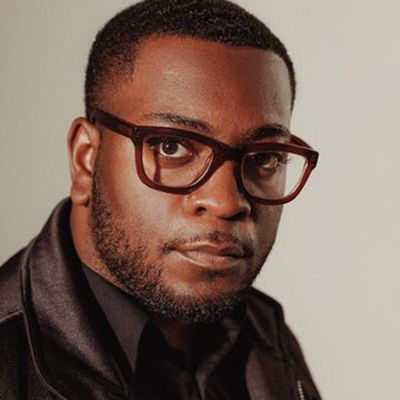
Zhailon Levingston joins the show to discuss his incredible trajectory from selling concessions in Broadway houses to becoming the youngest Black director in Broadway history with Chicken and Biscuits... Read More
From the show: The Theatre Podcast with Alan Seales
Guests
Featured Shows

About
Zhailon Levingston joins the show to discuss his incredible trajectory from selling concessions in Broadway houses to becoming the youngest Black director in Broadway history with Chicken and Biscuits. He dives deep into the "cosmic synergy" of his career, explaining how a chance meeting at a concert led to a Broadway debut and how he managed to stage a production during a global pandemic by building a set literally on top of another show's equipment. Zhailon also shares how his ADHD serves as a creative asset, allowing him the high capacity and patience required to lead a room as a director.
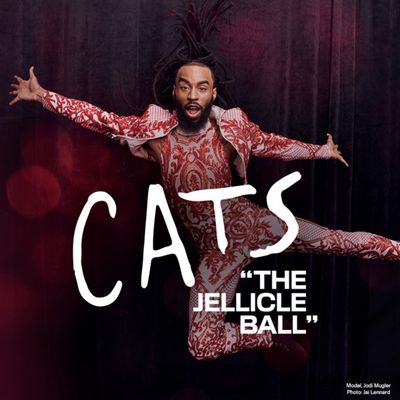
The conversation centers on his current hit, Cats: The Jellicle Ball, a production that marries the legendary score of Andrew Lloyd Webber with the vibrant, radical joy of Ballroom culture. Zhailon explains the meticulous process of ensuring authenticity while moving the show from a downtown "happening" to the Broadhurst Theatre. From the "human spectacle" of live performance to the profound connection found in "chosen families," he illustrates how this reimagining invites a multi generational, cross cultural audience to see themselves in the poetry of the text.
Zhailon Levingston is a director, writer, and activist who serves as the Artistic Director of Inheritance Theatre Project and sits on the board of the Broadway Advocacy Coalition. In addition to his historic work on Chicken and Biscuits, his directorial credits include the Obie Award winning Cats: The Jellicle Ball at PAC NYC and the acclaimed Table 17. He co created the Theatre of Change course at Columbia University School of Law and has served as a resident or associate director on major productions including Hadestown, Tina: The Tina Turner Musical, and Reconstructing.
Connect with Zhailon:
- IG @zhailon
Connect with The Theatre Podcast:
- Support the podcast on Patreon and watch video versions of the episodes: Patreon.com/TheTheatrePodcast
- Instagram: @theatre_podcast
- Facebook.com/OfficialTheatrePodcast
- TheTheatrePodcast.com
- Alan's personal Instagram: @alanseales
- Email me at feedback@thetheatrepodcast.com. I want to know what you think.
Transcript
This transcript was automatically generated and might contain errors.
[0:00] Zhailon Levingston: Hey, what's up? It's Zhailon Levingston, and welcome to The Theatre Podcast with Alan Seales.
[0:12] Alan Seales: Hey, everyone. Welcome to another episode of The Theatre Podcast. I'm your host, Alan Seales, and our guest today is a visionary director who is currently setting the Broadway stage on fire by turning one of the most famous musicals of all time into a high-stakes, high-energy ballroom competition. Of course, we are talking about Zhailon Levingston, the co-director of the massive hit Cats: The Jellicle Ball. Zhailon's journey to the Broadhurst Theatre is nothing short of cinematic. He actually started out selling concessions and tickets on the street in New York just to pay the rent on this tiny apartment he had that he compares to basically a closet, which most people get when they start out in New York.
And now he's returning to Broadway after making history as the youngest Black director on Broadway with Chicken and Biscuits. We dig into how he managed to stage a Broadway show on top of another production set pieces during the pandemic in Circle in the Square and why he thinks Shreveport Divas might be a little easier to handle than the New York variety thanks to some Southern hospitality. He also opens up a little bit about his ADHD and how he uses it as a creative superpower to approach a room with high capacity and patience. This conversation is all about the human spectacle, as he puts it, the power of chosen family, and why you should never be afraid to send your resume even when you feel insecure about it.
You can never make any of the shots you'd ever take. All of that. Make sure to follow me online on all the socials, of course, and you can watch the video version of this on Patreon and Spotify. And now, everyone, please enjoy this episode with Zhailon Levingston. Our guest today is an award-winning director and advocate whose work spans from the halls of Columbia Law School to the bright lights of Broadway. He's the artistic director of Inheritance Theatre Project, a board member of the Broadway Advocacy Coalition, and made history as the youngest Black director on Broadway with Chicken and Biscuits. His recent work includes the acclaimed Table 17 and the multi-award-winning reimagining of a theatrical classic, Cats: The Jellicle Ball. Zhailon Levingston, welcome to The Theatre Podcast.
[2:28] Zhailon Levingston: Hey, good to see you.
[2:30] Alan Seales: Dude, youngest Black director is a big deal, and we are going to get to that. But I want to rewind even farther and go back to Shreveport, Louisiana.
[2:44] Zhailon Levingston: Oh, yes. Yeah, my stomping grounds.
[2:48] Alan Seales: Shreveport? Shreveport?
[2:50] Zhailon Levingston: Shreveport, named after Captain Henry Miller Shreve, who really, you know, just a white dude who stumbled upon the land.
[3:00] Alan Seales: And said, this is mine now.
[3:02] Zhailon Levingston: Yeah, it's a port city, and it's where I grew up.
[3:06] Alan Seales: Well, what was your family life like back down there? Were you involved in theater a lot when you were a kid?
[3:12] Zhailon Levingston: Yeah, so I went to this elementary school that was called South Highlands Elementary Performing Arts Magnet, and it was a performing arts school. But I didn't go there because I was showing any signs of talent. I just went because it happened to be the best school, and I was raised by a single mother, and she wanted to make sure that I was in the best school I could be in. And so I tested and got in, but it was because of going to that school that I was introduced to musical theater specifically at such a young age. But also, my mother is a DJ, an on-air personality.
[3:47] Alan Seales: Really?
[3:48] Zhailon Levingston: An emcee. So I grew up with music all around me. I grew up with a variety of different types of music all around me. And, you know, being taken to culture at a very early age. And so I think that was a big part of what it was like to grow up, is going to cultural festivals, celebrating holidays. I grew up in the Southern Black Baptist Church, and so that is its own kind of theater that I was around. And then also, I did a lot of community theater. So, like, every year I would try to be on like three or four shows in the community. I was just obsessed from fifth grade on with this thing called Broadway.
[4:30] Alan Seales: So when, oh, fifth grade on, you were obsessed with theater, so then you went to this school not for musical theater specifically. It was just kind of a happy coincidence that you came into a performing arts school already loving the performing arts?
[4:45] Zhailon Levingston: I guess. I mean, it also instilled some of my love in the performing arts, right? So, like, I remember the drama teacher in second grade playing A Sound of Music, and I remember the next year learning what The Music Man was, and I remember the next year learning, you know, what Les Mis was or whatever, you know. And so it was just, and it seemed like a normal thing that people got exposed to because that's what my school was. And we did, you know, the second grade play, the third grade play, the fourth grade play, and then the fifth grade play was like the production. And I remember the fifth grade play from when I was in kindergarten, so that's how deeply it impacted me from such an early age. So, yeah, it's a big part of it for sure.
[5:32] Alan Seales: And, well, all the musicals that you just listed off are very predominantly performed by white people, so...
[5:41] Zhailon Levingston: Turns out, yeah.
[5:42] Alan Seales: Turns out. So, like, in Louisiana at the school where you were, was that something that was talked about or acknowledged at all? Like, the kind of...
[5:53] Zhailon Levingston: Oh, not at all.
[5:53] Alan Seales: No?
[5:54] Zhailon Levingston: No, no. Didn't even know that was a thing to think about. But like I said, I was also brought up around a lot of cultural institutions. So, you know, there was as much exposure to Black art and Black live entertainment in my growing up that there was, you know, predominantly white entertainment. But I think I got both of them because I went to a school that was predominantly white as an elementary school, and I lived in a neighborhood that was predominantly Black and had a family that really cared about preserving and exposing me to my history. So it wasn't ever like, I didn't have this moment of being like, wow, I've been inundated with only this information, except for as much as any Black person in America can feel that way, which, you know, of course, is definitely some part of the journey, is waking up at some old age and realizing your teachers taught you what about Indigenous people?
Your teachers left out what about the Revolutionary War? Your teachers said some slave owners were quite nice? You know, you wake up and have all of those flashbacks eventually. But in general, I felt like I had a pretty, or at least my experience of my growing up was that it was pretty balanced. But growing up, you then realize, oh, it was kind of just balanced between Black and white. And there was this whole other spectrum of identities and culture and things to be exposed to that I didn't start to get exposed to until after I left Louisiana.
[7:28] Alan Seales: And is it true that you go back to Shreveport once a year to direct community theater?
[7:35] Zhailon Levingston: Yeah, so every year in December around Christmas time, I go back to my home community theater, and I make theater in the community, working with people who aren't, you know, necessarily professional actors who have day jobs and leave their work at five to come to rehearsal at six. And we do a piece of theater that either I direct or sometimes I act in with them. And it's my way of kind of giving back to the roots that poured into me and ensures that I'm at home for Christmas.
[8:08] Alan Seales: So who's got the bigger divas? Shreveport or Broadway?
[8:12] Zhailon Levingston: Oh, that's a deep question. You know what? There are some divas in both places.
[8:19] Alan Seales: I know.
[8:21] Zhailon Levingston: But the divas in Shreveport also come with Southern hospitality, which can soften the blow sometimes. So I will say that New York has the bigger divas.
[8:32] Alan Seales: All right. I'll take that. Well, so you did leave. You left Louisiana at some point, obviously. What took you out of there? And was leaving the kind of inspiration to... Sorry, was it the need to leave Louisiana that you were like, this is what I want to do as a job? Or was it a job that took you out of Louisiana?
[8:54] Zhailon Levingston: Yeah. From fifth grade on, I knew I wanted to work on Broadway. And because Broadway is both an industry and a location, I just knew there would be no working there in Louisiana. And I felt like I made peace with that at a very, very young age. And of course, I wanted to get out like all young people want to get out of their hometowns. But also it felt very black and white. It's like, well, I have to go because I want to work over there. And over there is not here. But I really thought that I would be performing for much longer. I went to school for musical theater performance in Los Angeles. And yeah, I just thought that I was supposed to like perform for 50 years and then someone gave me permission to direct. I thought that that's how that pipeline worked.
[9:41] Alan Seales: Well, how did you make it happen then? And why did you kind of direct with a capital D versus pursuing the performing path?
[9:49] Zhailon Levingston: Yeah, I mean, I definitely did try to pursue the performing path. But I think I just realized very quickly after college that I think the way that I put it is, I have a talent for acting, but my gift is in directing. And I think I differentiate the two based on like, what can I do and continue to get more life from versus what has a time limit to it. And so it's like, I can be an actor for a few hours a day. But can I commit to the lifestyle of an actor? I don't have the capacity for that or the patience for that. And it takes capacity and patience to be a director. I just happen to be able to have a much higher capacity and patience for all that comes in that line of the work. But I think when I moved to New York, I got my equity card a few months after graduating college.
So I got the card and I moved to New York. And it was in a very kind of tumultuous time in this country, much like the time we're still in. But it was really when we all started to have a collective vocabulary around the fact that like, maybe we're stepping into another era of division that is going to be more long lasting than we all think. And I just felt like if I ever had kids and they asked me, what was I doing in this time? I want to say I was doing more than just kickball changing. No disrespect to kickball changing, not trying to get Timothy Chalamet out here in these streets. We know you like ballet. It's cool.
[11:36] Alan Seales: Yeah, I love ballet. Vital and important. But I was like, I need to be responding in some kind of way. And so I just started to kind of devise my own work and make my own things. And I only had a handful of people I knew, but I would bring those handful of people with me everywhere. And we do pop up art in Central Park and at stage doors and at churches and school programs and nonprofits. And I learned that in New York, if you just say you do something, no one's going to question you. They're just going to be like, all right, well, let me know when you're doing it. And so I kind of realized that, oh, okay, I don't have to act for 50 years to say that I'm a director. I can just be one. And the day jobs I had when I moved to New York were selling Broadway tickets on the street and selling concessions.
And I just knew that I wasn't going to be in those positions very long. And so I worked just enough to pay the little rent that I had for the little closet that I was living in. And then everything else was every other piece of time I had was spent trying to figure out how to let the city know I tell stories too.
[13:01] Alan Seales: Well, what was kind of the first thing you did to plant your flag where the city took notice?
[13:07] Zhailon Levingston: Well, it really was in the lane of arts and advocacy. I started this arts advocacy campaign called Words on White, and it was this kind of guerrilla art movement where we would do kind of politically charged art on a white 25-foot long canvas. And we would unroll that canvas in public space. We'd do a pop-up performance of some kind of text that helped us grapple with the moment. And instead of having a talk bag in a kind of traditional way, we would pour like markers and crayons all over this canvas and invite the crowd to kind of bum rush the canvas and respond to what they had just seen. And the first time we did it, what I saw was, oh, this 13-year-old Black girl and this 40-year-old Jewish woman, they're looking up at each other and meeting for the first time around this really difficult conversation, but around this soft space that is encouraging imagination and creativity and curiosity of difference, and that maybe there's something in this technology.
And so I continued to do it. And I think people started to initially invite me onto committees and to be a part of campaigns to kind of bring a kind of artistic technology to the conversations around how can artists be more in their advocacy bag in this time that we're living in. And so I kind of started to make relationships with people I didn't think that I would get to know without a degree or a grad degree or without being in the industry for years and years and years or having made in New York some huge major work. I started to still be working with these people very intimately, and I think people started to just learn about my imagination through that way. And so that was kind of a backdoor way in was actually making my own work and being a space where people could come and really experiment with what it means to bring the arts outside of the proscenium.
And then from there, I was kind of simultaneously having as many coffees and hangs and whatever, as many playwrights as I could. And I would go to readings and workshops and be like, can you just send me a scrap of a piece of a scene that you have written? And I realized if you read something, most likely a playwright will want to talk to you about it. And so I started to have this other lane of work that was really around new work development and kind of did this thing that I didn't know was unusual for a director, particularly with my background, who did not graduate from a program in directing, to just kind of try to plant my flag in New York. Because as a kid, I was like, oh, that's just where I want to work.
I think traditionally you work in the regions and you build the muscle of production up there and you hope that something that you make can come to New York or you're tending to your thing in New York while also trying to pay your bills. But I wasn't so much on the pay my bills thing. I was just like out here struggling. But it was so important to have time to build a name for myself in this city specifically. That was a long answer.
[16:36] Alan Seales: No, it was a great answer. And it's obviously something that was important to you. And it's part of who you are and it's defined who you still are, I think, and how they come and how your peers view you and respect you. And so then that kind of put, we'll say, planted the flag, right? They used my metaphor from earlier. And when did you really get the first sort of directorial break? I mean, does one just all of a sudden be like, hey, I'm just directing this thing and it just happens to be going to Broadway? That doesn't normally happen.
[17:14] Zhailon Levingston: Yeah, I mean, my career has been unusual from day one, so none of it really makes that much sense. But the one thing I'd say, though, before even talking about how I would answer that question directly, it's just like in New York, the breakthrough is the relationships. Actually, the breakthrough is like, whoa, I really vibe with this artist or whoa, I didn't know that this community had some space for me. And whoa, I can't believe I'm doing this little two-day assistant job with this person. That's actually in New York where the breakthroughs really are born. And then it's like something gives you the space, the time, the resources to really hunker down on one project that just happens to be being made in the right time with the right people and the right amount of ambition and persistency and resilience to take something seemingly impossible over the finish line.
And I think the first biggish thing that did that for me was Chicken and Biscuits. But that started by me just walking over to this guy at a Mutual Friends concert and being like, hey, what's up? I'm Zhailon. What's your name? And him being like, oh, I'm Douglas. What do you do? And me with nothing really on my resume being like, I'm a director here in New York. And him not having many credits as a writer yet being like, I'm a playwright. And I think what we didn't know that we were meeting each other in a moment where it was still very new for us to identify as those labels first. And I just think something very kismet and I don't know, there was a synergy between us. And we just started to develop the play together.
He had a draft and however many drafts later, through so many just kind of, I don't know, there's all these different random ways that a thing goes from one point to another. It's just really not linear. I think the only thing that was persistent is the creator's persistency, right? And our just doggone itness to try to say yes to as many opportunities as we could as it related to the show.
[19:38] Alan Seales: Don't go anywhere. We'll be right back after this break.
[19:43] Zhailon Levingston: Welcome back to the episode. And then when the pandemic happened, one of the things that was offered to us was to be able to go into Circle in the Square. So long as the show that was loading in when the pandemic was happening could keep most of their equipment backstage, so that they didn't have to pay for loadout. And that we pretty much built our set on top of the set that was already there. And we had to not use any of their set practically. So if something was a door, it couldn't also be a door in our show. Pretty much the lighting rig, I'd say the same pretty much, you know, a lot of the plot, we were working on someone else's plot. But we just thought that like, when is the next time that we're just going to be asked to come bring, you know, a show on to Broadway, where all of these people who hadn't worked on Broadway yet, we made 33 Broadway debuts on that show.
And we just kind of were like, as long as we laugh every day and have fun, like this shit may be hard sometimes, but let's just do it and see what happens. And it was just like with that spirit that it happened.
[20:52] Alan Seales: Wait, what show came in after you then? I'm trying to think of...
[20:56] Zhailon Levingston: I'm trying to remember, it was a Mammoth play that was supposed to be coming in. And I think one of the actors had to pull out for a certain amount of time.
[21:04] Alan Seales: American Buffalo?
[21:06] Zhailon Levingston: Yeah, I think they had to reschedule.
[21:07] Alan Seales: Yeah.
[21:09] Zhailon Levingston: Huh. I saw both Chicken and Biscuits and American Buffalo. I mean...
[21:15] Alan Seales: Yeah, Lawrence Moten, our set designer did a very good job.
[21:17] Zhailon Levingston: Dude. Yeah. Wow. I would have never, never thought about that if you had not said that. Wow. Good job to everybody involved there. That's crazy cool.
[21:29] Zhailon Levingston: It was a massive feat. And at that time, I was also setting the Korean premiere of Hadestown for Rachel Chavkin. I was like working 13 hours, you know, either ahead or before, whatever I remember.
[21:42] Alan Seales: How'd you get connected with Rachel then?
[21:44] Zhailon Levingston: Through advocacy work. So Rachel was one of the big connections and relationships that I built early on in my time in New York, working with her company, The Teen. I was her associate on a couple of projects. And we just kind of vibed intellectually. And I started as the assistant on a project called Reconstructing. And it was a years, years, years long, massive devising project that by the time we premiered, I had been the co-director of for a number of years. And so we have a very close kind of artistic relationship. But at that time, she was pregnant and unable to go to Korea to set it. And they didn't have a super big associate team yet. And because I had just finished being the resident on Tina, I had the muscle. And so I went and I was doing pre-production for Chicken and Biscuits while setting Hadestown in Korea.
[22:51] Alan Seales: That's insane. Okay. Then you're the resident at Tina. I mean, okay. So you got to Tina. How did you even get to Tina then? Something must've been like, hey, we're going to put you in a Broadway house. What was that break? How did the Tina break happen?
[23:04] Zhailon Levingston: I mean, honestly, I think I just sent my resume. She showed up. Hey, guys. I think another director friend knew that they were looking for someone. And they were like, do you have a resume? Can you send it? And I was really insecure because I was like, I don't think this resume is that impressive. But whatever, I'll send it. But luckily, I mean, I had like three rounds of interviews, but I also had worked with Adrian Warren before with the Broadway Advocacy Coalition. And she's the leading lady of that show. And I think very important to her that she had an associate on that show that she had some kind of connection with as well. I don't think I got that job purely on that, but I do think that it was helpful.
And who knew that I was breaking open in that relationship way before Tina had even started on Broadway. But I think that yeah, that was a big thing. And I don't know that show. It was a family like my best friend in the world was in that show. And we went about getting into that show completely different paths. You know, it wasn't like we were both like, let's go do this. And so yeah, I interviewed and met Phyllida Lloyd and Ola Ince, who was the international associate at the time. And then they said, yes, somehow. Daniel J. Watts was also a friend that I had created work with in the advocacy space. And so I just think there was a lot of goodwill from people in the room that this was the right energy to stay with the show after Phyllida left.
[25:02] Alan Seales: It's funny. Michael Urie, of course, who's been in Chicken and Biscuits, great man. We love Michael Urie. He told me on this podcast, part of the key to success, right? His advice to others is to be the person that others want to work with the next time. And it sounds like you have nailed that. You know, you've got this relationship building skill. And I think it is a skill, right? You got to know when not to push too hard and when to follow up and when to not seem needy and getting over your own fear of, I don't think my resume is this good. I guess I'll submit it anyway, right? So I agree with you. Breaks come from relationships. I totally agree with that. And it's not linear. It's a stair step.
Because like you said, you just go to a concert, you'd be like, hey, Douglas, I'm Zhailon. What's up? Let's go do a thing. And all of a sudden, there you go. And then that unlocks other things, which unlocks other things. Yeah, that's crazy. So then you've got experience now, and we'll get to Jellicle Ball here in a second, but you've got experience taking things from Off-Broadway to Broadway. And then what you're doing or what you did with Table 17, of course, was another big production out on the West Coast. But how do you maintain the intimacy and the soul of a piece when you're putting it into a giant house that has to make commercial money?
[26:19] Zhailon Levingston: Oh, that's interesting. I mean, I think that I believe in the human spectacle. I believe that people come to theater to see live human beings doing something extraordinary. And I think that trying to focus on how do I get a room? How do I get a company? How do I get a play? How do I get a playwright to be so vulnerable and open in the work that that level of courage is actually the energy that is pulsating within the size of a room? And I think when you create a space like that, you actually create a kind of emotional immersion for the audience, where it's actually not even about how the space might be configured or not, but they're having this kind of immersive experience where they're inside of both a story and an event.
And so I believe in the spectacle that's inherent in every artist. And I believe that every artist can be on stage telling both a story and participating in a live happening. And I'm always looking for what's the happening inside of the story, because even if an audience isn't articulating that, I think subconsciously, they start to experience theater than the live arena Olympic sport that it is. And people start to vibrate and resonate with it as if they're watching tennis.
[27:54] Alan Seales: Hmm. That's really interesting. And not unusual for a director to say that.
[28:02] Zhailon Levingston: Yeah. Directors really want to bring that energy, bring that emotion from the stage and pour it out over the audience, because you're right. In a live performance, you don't feel that energy in any other way.
[28:16] Alan Seales: Yeah. Anna Shapiro, the director, has this quote I love, which is that, the playwright is the author of the play, the actor is the author of the night, but the director is the author of the event. So I think a lot about that.
[28:30] Zhailon Levingston: That's cool. I like that a lot. Was it purposeful? Obviously, Chicken and Biscuits was Circle in the Square, which is a thrust stage, and then Jellicle Ball. I'm going to get to the origins of this, but that is also... It's an immersive thing where people feel like they're watching people walk a catwalk and whatnot, right? So is that the kind of stuff that you really like to do conceptually, or do you still have a place in your world for a traditional proscenium stage kind of thing?
[29:05] Zhailon Levingston: Yeah, it's a good question. And I don't know if I'm as intentional about that, except for, I think I generally believe that the fourth wall should be quite malleable. Whether the show is environmental or immersive, or is presented in a kind of traditional proscenium framing, I think I always want to create an energy that, if I just leaned a little more forward, something in this whole world could pop. And so I think that's part of it. And so I think that's probably, or hopefully true in the work that I do, and I hope continue to do. It's like what I'm striving for. Maybe I don't always hit the mark, but I want to create a kind of theater that has a consequence for the audience in it, which is if I lean forward, oh my god, it gets even clearer.
It gets even clearer. And if I lean back, it's not affected. Its potency isn't affected by my ability to be courageous or not courageous in the space. And yet, it's still safe enough for me to take my own time to get to it. So it's an interesting kind of dance I'm interested in. I'm not actually trying to create as much manipulation as I think people sometimes think directing is, or can be about, or orchestrating. I'm actually trying to create an opportunity for people to make choices in the room.
[30:29] Alan Seales: For the audience to make choices or for the cast?
[30:33] Zhailon Levingston: Both.
[30:35] Alan Seales: Interesting.
[30:36] Zhailon Levingston: We're creating a pop-up society. And so a society is not really a society without people who can make choices in it. And it's interactive.
[30:44] Alan Seales: Yeah. I like that all so much. The choices the audience make in every show affect the show, affect the cast, affect the overall performance every night. Yeah, that's a brilliant little epiphany that you just gave to me. So, okay, Jellicle Ball, this thing, it's a juggernaut. It's becoming a juggernaut. Fingers crossed, man. At the pack off-Broadway, it just kept... Downtown, it just kept getting extended and extended until it couldn't get extended anymore. And then what's the next logical step, right? And the first place I thought it should go was Circle in the Square. I was like, it can't be a traditional proscenium, right? So when the conversation started happening for this, I guess, what were their debates about, well, we're going to take any house we can get or we can only have certain houses?
[31:43] Zhailon Levingston: Well, I think certain houses just were out of the running by the numbers. We have a lot of people in our show, which means our show is an expensive show to run. And so, in some ways, it just comes down to the math of how many seats, how many tickets. And Circle in the Square, though I love Circle in the Square, but it's actually smaller than what our producers had budgeted in terms of how to make the show successful given what might need to happen in the space and given the space's capacity. And I think what we have in the Broadhurst is a beautiful balance of this because it's definitely way more people than were downtown at pack, yet it somehow feels more intimate than it did at pack. So there's this interesting thing where I think my hope for a Broadway transfer was two things.
One, we could frame the show around the fact that these cats had come from downtown and got the keys to the Broadhurst and are going to throw their Jellicle ball this year at the Broadhurst Theater. It felt like the only way to lean into Broadway was to not run from the idea that we're on Broadway. And that felt like in the spirit and the energy and the campiness of Cats, our show that we had built downtown at least. And so it was always about never tricking the audience into thinking they're not where they are, but using all of these other ways to transport them so that they can't believe they get to be this way where they are. And so that was a big part of the thinking about how to make going to Broadway work.
And I think to also our producers credits are really pushing us to try to be creative and make this show at a proscenium because it makes it more possible knock on wood that the show could go out to many other kinds of audiences. And I think we believe in the power of the show so much that we want it to be able to go to Ohio and Chicago and Atlanta. And this is no announcement, right? This is above my pay grade whether or not it will actually do that. But we want to do our due diligence of making sure we're making a show that has at least its best chances to be seen by as many people as possible.
[34:11] Alan Seales: Well, that kind of leads me to the next question then and takes us full circle back to one of the original things we talked about, which is representation, right? And Cats traditionally has been a predominantly white show for the most part written by a white creative team originally and...
[34:30] Zhailon Levingston: Don't go anywhere. We'll be right back after this break.
[34:30] Alan Seales: Welcome back. Now the ballroom culture is just amazing and phenomenal and something that as a, you know, in my circles as a white person, I don't get experience. I don't get exposure to a lot. And people who love Cats, you didn't change a note of the music, right? It is all the original score, but it's a completely different show because of this vision you've had. So just kind of walk me through all that and deciding like, all right, we're going to do this thing and it's going to be different or how different or way different. Okay. And so how are we going to market it? I mean, because you're talking about producers and Broadway is a business. So how do you market this to a collection of people who may not traditionally know what ballroom culture is or even care about it?
[35:27] Zhailon Levingston: I think the connecting link between all the different demographics that are resonating with this show and resonated with the show off Broadway was the fact that there was a big question mark that probably sat at the center of all of their experiences walking into the theater and that they're actually connected by their shared sense of what's about to happen, right? And that that actually crosses so many demographics. It's like the diehard Cat fan who knows nothing about ballroom. It's the ballroom person who's maybe never been to the theater or has been to the theater, but doesn't know what Cats is. It's the person who thinks they really hate the show and come with their hands folded to see, okay, how are they going to do this?
And then there's people who've never seen Cats and have never seen ballroom before, who are just going because they hear something's going on in that room. And so that energy is preceding the cast before they even walk out on the stage. And that is, I think, an electricity that our producers have been really smart about framing. Our catchphrase is, come one, come all. And I really see that as a real invitation to the city and a test. Let's see how much we can hold each other. Let's see how different we can make this room. Let's see how multi-generational we can make this room. Let's see how cross-cultural we can make this room. How much can this little form of musical theater actually hold? And I think that ballroom is such a perfect backdrop and conduit for even that kind of questioning of our own industry, because that's what they're asking of life.
Can you really hold me in my bigness, in my enoughness, in my self-worth, in my imagination, in my persistence, in my resiliency, in my ambition, in my theatricality? I know I am enough. Do you know that I am enough? If you don't, I'm about to show you. And it's not a question, it's a demand. How does that energy couple with what can so often feel like scarcity on Broadway? And sometimes even scarcity in terms of the points of views that are even around you. And so I think that actually we have this opportunity with the show being on Broadway to actually get to the heart of this kind of social experiment of Cats and ballroom being together more than we even could off-Broadway by the nature of us complicating the space that people are walking into.
[38:18] Alan Seales: What originally, at the pack off-Broadway, what originally happened when you said, this is clicking, we got something here, right?
[38:35] Zhailon Levingston: When were we confident in it?
[38:37] Alan Seales: Yeah. You're going into this, sometimes you got ideas, you're putting it together, and you're like, I don't know if this is going to work. I don't know if this is going to work. When did you know, without a doubt, this is freaking working?
[38:48] Zhailon Levingston: Oh, that's a great question. Because I remember when I joined the production, there was a pitch deck that Bill Rauch, my co-director, my dramaturg, Josie Kearns, and one of our choreographers, Amari, had been working on. And basically just trying to create a draft of how could this be in a ballroom context? What could be categories that are in this show? How could it move? I remember seeing that pitch deck and being like, there's a lot in here that seems clear, and there's even more in here that seems existential, and I have no clue how we make this work. I was reminded by a friend yesterday that one of the things that I said when I joined the production was either this is going to hit and everyone will know about it, or it is going to not hit and everyone will know about it.
But either way, me doing this will equal everyone knowing what comes out of this. I would say that I didn't know necessarily that it was all going to work until deep in the preview process. It wasn't like we showed up to the first workshop being like, look at our brilliant idea. It was like, we think that maybe, I don't know, it could go like this, but maybe it's wrong. Maybe that's complete. Maybe we're dumb. Maybe we're the stupid ones. But what if we just tried to do, and then it would be like, whoa, that's kind of interesting. And that's kind of interesting. Okay, let's just put those things together. And I don't know, maybe it's stupid still. We could all go home and just be like, whoa, that is something we've never seen before.
And so the whole process for years and years of making the show is just trying to discover and learn more about this big, big idea that really started as a prompt more than it started as a set of certain ideas we had about the show.
[40:55] Alan Seales: That's very cool. And the audience feedback too, from diehard Cats fans, from people who've never seen the show, to the ballroom culture. What's been the consistent audience feedback you've been getting?
[41:06] Zhailon Levingston: I mean, joy. People are having the time of their lives, which I love. A lot of fans clacking at the Broadhurst. I think there's been a... I don't know. I feel the energy of people walking out taller than they were when they came. And I think the reasons behind that could be varied, but there is a kind of shared sense of, whoa, we all did that together, that I feel every night, which is fun. Not we did that, it's we experienced that. That's what you were talking about earlier. We just went through that together.
[41:49] Zhailon Levingston: Yeah, we went through a thing together that was real, that really happened. That really happened tonight. And I was a part of it. I think people are really impacted by a lot of different things in the show. And they come up to us saying many different ways in which they have an entry point. One of the most poignant responses that I see a lot are between actually older queer folk who think about the fact that they didn't have this space growing up or didn't have this outlet to process. And the show becomes this opportunity for them to show up in the world in their full capacity and identity at an age where maybe the world has told them, your book has been written.
[42:36] Alan Seales: I'm letting that process for a second. Yeah. I really enjoy that. And then are there still just the Die Hard Cats fans that come in cosplay?
[42:53] Zhailon Levingston: Totally. We get OG Jellicles dressed up. And I love it because it's like, they're like, I don't care that it's ballroom. I am coming dressed up like an OG cat. And they said, come one, come all. And that includes this timeline. And it becomes a kind of spider verse situation. But it's great. I love it.
[43:09] Alan Seales: That's so cool. Did you have any trouble getting anybody from the ballroom scene into the cast? They're like, what's this shit? I'm not going to do cats.
[43:22] Zhailon Levingston: Well, there's actual ballroom dancers. Oh, yeah, for sure. Everyone who was in our room wanted to be there, but everyone also in our room was like, what the hell is this? So it was about finding the people who were crazy enough to be like, what the hell is this? And okay, let's see. So the casting actually was quite rigorous and took many years to get right. Our casting director was just incredible thought partner and creative partner on building this show, X casting. And yeah, like, it wasn't necessarily any harder to find ballroom people than it was to find musical theater people because the ask in both directions was pretty massive. And so I would always be surprised actually about the musical theater people who were kind of like self-select themselves out of consideration because they just knew there was no way they could do this.
And then on the opposite spectrum of that, where people would be like, I've never done this. And I'm about to earn the respect of these ballroom people by taking this so seriously and figuring it out. And the ballroom people conversely, it was the same thing. Like the ballroom people who ended up being in the room wanted to be taken just as seriously as musical theater performers. And I think it was the shared respect for each other that really is at the heart of why it's working on stage.
[45:03] Alan Seales: I like that a lot. Yeah. And as the collaboration with the ballroom consultants and these icons, has that taught you about anything about the performance of identity versus the performance of character?
[45:11] Zhailon Levingston: Yeah. I mean, like I said, there's so many great overlaps in terms of what does it mean to make theater? And what does it mean to make a ball and be in ballroom and the elements of ballroom? But our cast, our creatives who also span ballroom expertise, they teach us every day. They teach us all the time about what it means to have chosen to be who you really are and to make that decision every day, even if the world doesn't acknowledge your status, that the status is something you bestow on yourself because you are worth it. And that is ultimately the thing that allows for the culture of ballroom to marry into Cats. Because in the material, Cats are talking about, you will call me by my name.
And I have three different names. And there are some names that are given to me, but there's certain names that I contemplate, and I choose myself. And I've chosen very specifically and very directly about what I want to be called. And so now, the text and the culture are having a different kind of conversation that allows now for my ear to hear the show in a completely different way without changing any of the words. So when Junior LaBeija, as Gus says, I once saved a child when a house is on fire, and you start to think about a ballroom house, and you start to think about what could have made a ballroom house catch fire, and what kind of fire is he talking about? Now we're having a relationship with the poetry.
[46:59] Alan Seales: It could be like energetic fire, like this house is off the hook. I get it. All right. Well, that's a great place to transition into our closing here. We're going to put 60 seconds up on the screen and play a little game.
[47:15] Zhailon Levingston: Okay. Games, we love.
[47:17] Alan Seales: Let's put it in. All right. I have a list of 17 popular musicals in front of me.
[47:22] Zhailon Levingston: Oh, no. Okay, here we go.
[47:24] Alan Seales: Oh yeah. You're going to choose one through 17, which will pick a musical, and then you'll give me the plot to what you chose in 60 seconds or less.
[47:29] Zhailon Levingston: One through 17. Make it up if you don't know it.
[47:37] Alan Seales: Okay.
[47:38] Zhailon Levingston: Give me a number. One through 17.
[47:39] Alan Seales: 12.
[47:40] Zhailon Levingston: 12. All right. You should know this one. All right. Give me the plot in 60 seconds or less to Wicked. Go.
[47:46] Zhailon Levingston: 60 seconds remaining. Okay. So the plot of Wicked is the story of the green girl. You know her, you love her, or maybe you didn't know you loved her, but her name is Elphaba. And this is the story of how the little green girl from Oz became what you may perceive to be as the Wicked Witch of the West.
[48:03] Alan Seales: 45 seconds remaining.
[48:04] Zhailon Levingston: And her surprising relationship with Glinda, or Gulinda, the good. More on that later. And the show tracks their very complicated relationship as she is, which is their university where they learn magic.
[48:19] Alan Seales: 30 seconds remaining.
[48:21] Zhailon Levingston: And Elphaba wants to meet the wizard because she wants to save the animals, because she is a boss like that. And Glinda really just wants to be good and wants to be liked. And when justice and a sense of egoic, you know, self-centering collide, all kinds of wickedly delicious things start to happen in Oz.
[48:45] Alan Seales: 5, 4, 3, 2, 1.
[48:47] Zhailon Levingston: All right. All right. All right.
[48:50] Alan Seales: That's Wicked.
[48:51] Zhailon Levingston: That was pretty good. That was pretty good. Directed by John Chu.
[48:54] Alan Seales: That's right. That's right. All right. So three standard closing questions I use to wrap up every episode. First one simply is just what motivates you?
[49:06] Zhailon Levingston: The collective we.
[49:08] Alan Seales: The royal we.
[49:10] Zhailon Levingston: That's right.
[49:10] Alan Seales: The collective we. What advice would you give to your younger self and younger people listening now starting out down a similar path?
[49:15] Zhailon Levingston: If you want to be in this industry, become a nerd about it and make sure that the work produces dopamine in you, because there will be so many things that make it really, really hard. But if you can rely on it as also a special interest in your life, then you will continue to have a certain kind of persistency to even push through the bullshit that can come your way.
[49:49] Alan Seales: All right. Last question. Hardest one. If you could only see one show for the rest of your life, but you can see it as many times as you want, what would you see?
[49:56] Zhailon Levingston: Passing Strange, the musical.
[49:59] Alan Seales: Good choice. Where can we connect with you online and play all of that game?
[50:04] Zhailon Levingston: Yeah, you can follow me on Instagram at Zhailon. DM me, say what's up. Or right now you can see me at the Broadhurst and previews for Cats: The Jellicle Ball.
[50:15] Alan Seales: That's right. And go down this show. It is a spectacle in all the best ways. Like, it is just the best. And you can get more of me on Instagram threads, TikTok, Facebook. I'm out there. Leave a rating, leave a review. Tell your friends, be like, hey, I listen to this podcast. Let's go see Cats. Thanks to Jukebox the Ghost for the intro and outro music. And Zhailon, thank you so much. This has been such a great time.
[50:40] Zhailon Levingston: Thanks for having me.
© Broadway Podcast Network, All Rights Reserved