

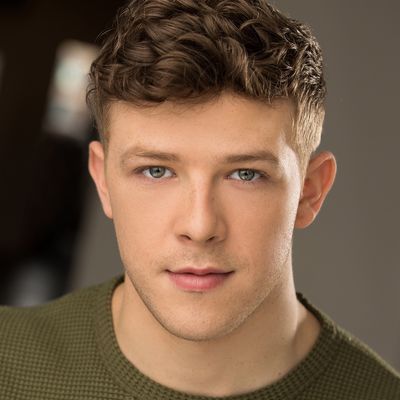
Kevin Csolak shares his journey from growing up in his mom’s New Jersey dance studio to starring as Tulsa in the Broadway revival of Gypsy. He opens up about performing alongside Audra McDonald and Danny Burstein, the artistic influence of the live orchestra, and how the cast is breathing new life into a classic... Read More
From the show: The Theatre Podcast with Alan Seales
Guests
Featured Shows
About
Kevin Csolak shares his journey from growing up in his mom’s New Jersey dance studio to starring as Tulsa in the Broadway revival of Gypsy. He opens up about performing alongside Audra McDonald and Danny Burstein, the artistic influence of the live orchestra, and how the cast is breathing new life into a classic. Kevin also reflects on what it means to approach each show with intention and curiosity—even months into the run.
He takes us behind the scenes of his whirlwind audition for Steven Spielberg’s West Side Story, including the surreal moment of dancing in front of the director himself. Plus, he recalls the unexpected overlap between his commercial dance career and Broadway—like performing at the Super Bowl with Justin Timberlake just hours before starting Mean Girls rehearsals. Throughout, Kevin shares insight into how rejection can fuel reinvention, and why staying creatively sharp is non-negotiable.
Kevin Csolak is a Broadway, TV, and film actor known for playing Tulsa in Gypsy, Diesel in West Side Story, and Aaron in Mean Girls. His screen work includes roles on Jessica Jones, Boardwalk Empire, Animal Kingdom, and the Apple TV+ series The Crowded Room. He's also danced in major live performances with artists like Justin Timberlake and Hayley Kiyoko.
Follow Kevin on social:
- Instagram: @kevincsolak
Connect with The Theatre Podcast:
- Support the podcast on Patreon and watch video versions of the episodes: Patreon.com/TheTheatrePodcast
- Twitter & Instagram: @theatre_podcast
- Facebook.com/OfficialTheatrePodcast
- TheTheatrePodcast.com
- Alan's personal Instagram: @alanseales
- Email me at feedback@thetheatrepodcast.com. I want to know what you think.
Transcript
This transcript was automatically generated and might contain errors.
[0:00] Kevin Csolak: Hi, I'm Kevin Csolak, and welcome to The Theatre Podcast with Alan Seales.
[0:10] Alan Seales: Hey everyone, welcome to The Theatre Podcast with Alan Seales. That is me. I'm Alan, and our guest today is Kevin Csolak, who has carved out a career that bridges passion, precision, and pure joy. He's currently playing Tulsa in the revival of Gypsy, alongside theater legends like Audra McDonald and Danny Burstein. He just opens up about what it's like to bring this character to life in this amazing revival. Of course, Tony nominated at this point as I am recording it. No idea if it's going to be Tony winning or not. I'm sure something will hit. We also dive into the differences between doing the film adaptation of West Side Story, directed by Steven Spielberg, of course, and the Broadway revival of West Side Story that opened and closed actually, I guess, right as COVID hit.
But growing up as a child around a bunch of dancers in a dance studio, he of course has that incredible background that led him to perform at the Super Bowl with Justin Timberlake, which actually happened the day before starting rehearsals for Mean Girls the musical. So that story's kind of wild. But being a young dancer in LA, it just shaped his approach to performing now here in Broadway in New York. His conversation's great, seems like a grounded guy. If you haven't seen Gypsy yet, of course, go see that. Find me online on all the social medias. Leave a rating and a review wherever you are listening or watching this episode. Speaking of watching, you can watch it on Spotify or Patreon. Special thanks to Welcome to Timesquare.com. We recorded in their studio. Check them out, and you too can be a star for a day. And now everybody, please enjoy this episode with Kevin Csolak. Here you go.
[1:57] Kevin Csolak: Today we join more talented actor, dancer, and singer. He's crossed Spain's Broadway film and television. I don't know why I did it Australian actors. Come on, yeah. His impressive stage credits include roles in Mean Girls, West Side Story, and currently he's captivating audiences as Tulsa in the Broadway revival of Gypsy. On screen, he's appeared in acclaimed series like Boardwalk Empire, Jessica Jones, and Animal Kingdom, and he brought the character Diesel to life in Steven Spielberg's film adaptation of West Side Story. Beyond acting, Kevin has shown his dance talents in high-profile performances with artists just like you know, Justin Timberlake at the Super Bowl and Hayley Kiyoko at the VMAs. Kevin Csolak, welcome to The Theatre Podcast.
[2:37] Kevin Csolak: Thank you, thank you. Why did that make me nervous? Did you write your own resume makes you nervous?
[2:41] Alan Seales: Yeah.
[2:41] Kevin Csolak: I'm like, okay, now I have to be extra on. No, but thank you. Thanks for having me.
[2:46] Alan Seales: Well, so I've got a surprise guest, Steven Spielberg is on. No, I'm kidding. Wouldn't that be great? Oh, he's so great. I miss him. He was the best.
[2:55] Kevin Csolak: Hey, screw you from being able to say that.
[2:56] Alan Seales: Yeah, but also that's super cool. Yeah, my no, I pinched myself. It feels like a fever dream.
[3:02] Kevin Csolak: Yeah.
[3:02] Alan Seales: Looking back at that time. What did you okay? Well, let's start there then. Like I know we know you've got acting, singing, dancing experience, but then coming and bringing Diesel to life in such an iconic story with a director that has created so much of the things that have just defined our childhood and adulthood. Yeah, right? Like how did you get the audition? When did you know he was involved? And then, like, third part of this long-winded question. Yeah, when you got it, how the hell did you celebrate?
[3:29] Kevin Csolak: Oh, I mean, I got the audition actually when we were doing a workshop of the West Side Broadway production, which, if anyone has seen it, was set in 2017, 2018. Like we all were tatted up. It was like, you know, this day and age, we had phones and screens and all. So doing that and then getting the audition for this or for Steven's, I was kind of like, okay, cool, like the traditional, like, all right, what's this gonna be? Well, what can I take into the audition? But I tried to just kind of separate the two. But we went through what we went through six or seven rounds of auditions. My first audition was a self-tape for Tony, actually.
[4:05] Alan Seales: Really?
[4:05] Kevin Csolak: That I sent him to Cindy Tolin's office. I haven't found that self-tape, but I don't know if I want to. But it got me a callback to come in for Riff. And then I was auditioning for Riff all the way up through the final callbacks. Yeah, it was like two or three rounds of just vocal and scene work, and then we had the dance audition, and our first dance cut when we had came back, Steven Spielberg was in the room. We were like learning the combo and he came in. I think his face was just like lit up. He was so excited to be there. I think it must have been his first or one of his first dance calls that he had to go to. But there was a whole film crew, of course, filming him. We had to sign NDAs, and but he was so fun.
He was just smiling from ear to ear the whole time. You could just tell that like we were kind of igniting something with our movement, and like he was like looking left to right. He had a little camcorder that he was recording us already. It seemed like he was just someone in an instant, you're just like right, you are someone who are just so enveloped in this medium of storytelling through the lens. But yeah, and then the last couple calls, the callbacks were just us like doing these like long eight-hour days where we were dancing in the morning and then doing scene work, and then we were doing like, okay, now we're all gonna sing the Jet song, but we're gonna run around the room and jump off of things.
Like they were just they wanted to see, I think, all like we did some improv games. I think Steven really wanted to see just who we were as artists, but also I think as just like you know, just little musical theater boys. I should imagine Steven Spielberg being like, All right, circle up, time for zip zap zap Zop. All right, let's do this.
[5:30] Kevin Csolak: All right, no, yeah, yeah. We it wasn't that I mean, but basically, honestly, you know, those games are for something, you know. Yeah because it definitely we all were in that room, like, okay, where was Steven Spielberg? You just have to go for it. People were like, there was I remember we were at a dance studio rehearsal space, and there was like ballet bars, and people were like jumping like off of those, and I was like, wow, if those ballet teachers could see what was happening in this room. But it was remarkable, man. And then the last, you know, the last couple auditions were just it was it was like four of us who were down to riff, they were using the rough material, and you know, I got to Steven, I got to sing the Jet song in front of like they lined up like the producers and like and like some of the in a line so you could sing at them, and that was crazy to do that to look like looks at someone right in the eye, you know, and have to do that, and Steven's over their shoulder looking at.
And then right after that I celebrated in the stall of the bathroom at the rehearsal studio. Because I finished and the one producer looked at Steven and was like, Well, I believed him, and he went, Well, he gave me chills, and I was like, Okay, um, thanks. Like, is that is that it? They're like, Yeah, like, okay, thank you. I went into a stall and just like freaked out for a second. And then when I found out, long-winded answer. When I found out, I of course just called my mom, and it was just like me, my mom, my brother in my apartment, just crying, you know, just because like it's that moment of just like right, wow, that whole process happened, and now we're about to like open ourselves up into this whole other world, you know, over the next year.
[6:57] Alan Seales: Yeah, um, and it was crazy. So the West Side Story revival, what that was 2015, 25.
[7:04] Kevin Csolak: Um, no, it was actually a little bit later. The revival, we were rehearsing in 2018 for the workshop, and then we started 2019. We only we ran for three months of previews. We ran for two and a half weeks of actual shows. And then the pandemic hit, it was right before the pandemic.
[7:20] Alan Seales: Right, right, right, right.
[7:21] Kevin Csolak: Yeah, that was that was in the Broadway theater.
[7:23] Alan Seales: Mm-hmm.
[7:24] Kevin Csolak: Yeah, the Broadway, yeah.
[7:26] Alan Seales: Right. I remember that. That was because we were all like, why isn't that coming back?
[7:29] Kevin Csolak: Yeah.
[7:30] Alan Seales: Yeah.
[7:30] Kevin Csolak: So I it was weird because I did the workshop of the of that, auditioned for the West Side Film. Then we shot the West Side Film the next summer, and then after that, we just went into the actual run of the West Side Broadway.
[7:42] Alan Seales: Oh, that's crazy.
[7:42] Kevin Csolak: Yeah.
[7:43] Alan Seales: Well, then where did you get your initial start? Did you start singing, acting, or dancing? Or where did where did they all kind of come together?
[7:49] Kevin Csolak: So um my mom owns a performing arts center school in New Jersey. So I kind of grew up with both of my brothers dancing and like just in the rehearsal studio, like outside watching my mom teach and and choreograph, and that's just kind of where I feel like I came into consciousness in the world was just like sitting there and wanting to dance and be in the studio. But this but the performing arts center had acting classes, had vocal, had people learning how to play drums and and piano. So I was truly just kind of like surrounded by it, and I just kind of wanted to like taste everything. So um, but mainly I would say I started out with dance because I think at you know like four or five, and my mom lets little kids come take dance and you know point their foot, you know, right little ballet slippers.
So I started out with dance, and then around the age of like eight, nine, ten, I started to kind of do those, you know, zip zap zap games, and I started taking some vocal lessons, and then I kind of just everything was just I feel like throughout my career, there's been like when I was younger, there were certain things I focused on more, like dance, and then it was kind of just acting, and then and then vocal and dance, and then more recently, everything just kind of go to college or you know, um, but yeah, so it was my mom's school that really I just was like, Oh, this is exactly what I want to do for the rest of my life.
[8:57] Alan Seales: Really that young. So that it was never a question like going through middle school, high school of like maybe I'll just go get an accounting degree or something else. You always wanted to perform.
[9:05] Kevin Csolak: I always kind of did. It was honestly when I was applying for college, and I was like, okay, we're gonna be spending X amount of money. What should I do? Safety, security, like long-term goals, or or just thoughts of like what I want to do the rest of my life.
[9:18] Alan Seales: That's the smell of the security.
[9:20] Kevin Csolak: Yeah, like let's spend like $50, $60,000 a year to make, you know, it's it's a tough, it's a gamble. But um, I just kind of was like, you know what, my heart's in this, and I had already been acting professionally a little bit too here and there, and I just kind of was like, you know what, I really want to just put all my eggs in this basket.
[9:37] Alan Seales: And then coming out of college, so what was the first thing that sort of uh was a success for you that that led you down to where you are now?
[9:46] Kevin Csolak: Um, I mean, well, so college, I only went to a year of college at Pace University musical theater program. I had to take a gap year for scholarship stuff, and um long story short, within that summer, I really realizing that I couldn't go back to college, I had to take a gap year. I had a mentor of dance in Los Angeles who had like a spare room in his house that was like tiny air mattress, like no dresser, nothing. It was like a spare room for extra cash, and they're like, you can stay there, you take care of our dogs on the weekends because they all were dancers who like flew to different cities every weekend and you paid utilities. So I was like, all right, let me go try that out because that's like that's that's cheap.
I can get a job and pay for it, pay for that. And I what I thought was gonna be three months was like three and a half, four years in in Los Angeles. So I kind of just was like in LA training. That's really where I think I was really hit the ground running as far as my dance training and acting training. And I was auditioning for little TV and film things, but I what would say what kind of brought me back to New York and really launched me back into the city was Mean Girls on Broadway. And that was kind of, I would say that was a good thing.
[10:52] Alan Seales: Mean Girls launched so many people's careers.
[10:55] Kevin Csolak: It really did, yeah.
[10:56] Alan Seales: And you just came in right at the tail end. As we're recording this, I did back-to-back interviews now with you and Erica Henningson.
[11:02] Kevin Csolak: Yeah.
[11:02] Alan Seales: And so to watch the two of you get uh, you know, give each other hugs, and I don't know how long it's been since you've seen each other, but yeah, she was just saying about how uh that is such a unicorn of a cast because it feels like summer camp where you just come in, it's not a job. You come in and you're like, this is what I'd love to do. How can I be so lucky? And now everyone seems to be so close, and and the person that everyone wants to work with again. Like it's this unicorn of a cast that come together and has created content far beyond Mean Girls now that Mean Girls is over.
[11:33] Kevin Csolak: Yeah, yeah, yeah, yeah. Right. No, it really has, you know. I think that was such like a young, like talented cast. I think we all kind of came in fully thinking like summer camp having fun, but then I think in the moment a lot of us didn't realize the results that were happening, or kind of you know, like the the spread of our performances that were really connecting people. But it's so great to see Erica. I haven't seen her in. No, I haven't I saw her a few months ago. We always run into each other. I mean, the theater community we all know it's so small, but also so vast and reaches some.
[12:03] Kevin Csolak: You always meet someone, you're like, oh, you know, these 80 people that I know or I've worked.
[12:07] Alan Seales: Right.
[12:07] Kevin Csolak: Yeah.
[12:07] Alan Seales: Right.
[12:08] Kevin Csolak: It's yeah, Facebook suggestion. You have a six hundred and sixty-two mutual friends like really, but I've never heard of you by the way.
[12:14] Alan Seales: Right.
[12:14] Kevin Csolak: Yeah.
[12:15] Alan Seales: But we have the same common interests.
[12:17] Kevin Csolak: We think almost everything. We love to do jazz hands. I mean, that's just the uh the the TV, the TV and film side is one thing, theater is one thing. Commercial industrial dancing is a whole separate medium.
[12:33] Alan Seales: So talk about how you got involved with like dancing with Justin Timberlake at the Super Bowl. Like that's no small thing.
[12:39] Kevin Csolak: No, it was that was it was one of my when I when I moved to LA after um after Pace, I pretty much I my my my mentor of dance, he was a dancer for Justin Timberlake before, and he kind of was out there training and teaching. So I was LA like a lot of LA or even New York too. I mean it's everywhere now, but it's a lot of just taking class and being very rigorous about trying to get in front of those choreographers who are t teaching class every so often. And I feel like it was maybe even a little easier back then than it is today, because a lot of stuff is direct booked, people just knowing people. But for me, I just like when I was in LA, I just was I I when I got there, I realized I needed to take class a lot and train and get in front of these people, have them see me and see my personality, because a lot of classes out there I feel like are auditions.
Um and it was kind of before people were filming a lot, people started to start starting to film a lot. But yeah, no, when I was out there, I just I got a job at uh Millennium, the dance complex, which is the big red background room that if if you see the dance videos. So I work studied so I can get free classes. So I was just taking climb and I think I was taking class every day as much as I could, um, as much as my body could take. But I really was honing in on kind of the style of Marty Kudelka and Ivan and and people that they were around, as well as diversifying my classes that I was taking. But uh it was really just a slow pace of getting to know them, um, being someone who's in their class a lot, um, and uh and really working hard.
And it really was I actually funny enough, the story is that found out that I I booked Mean Girls because I I happened to be in New York when Casey Nicola was like, Hey, I want you to come in for Mean Girls to audition. And I was like, Okay. Great. Well, how did how did he know you? I knew him because I did um a workshop of the prom. I did the one of the first workshops of the prom. Wow. Talking about like things that took a while to get to Broadway. Yes, I did one of the first ones when I was in when I was at Pace and uh and then he knew that I was moving to LA. So then I got a call from literally from him, and I was in my apartment in LA, and I was like, um, he's like, You want to come back and audition for this?
I was like, yeah, yeah. You're I'll whatever you want. You can imagine if I was like, um, I'm okay, I'm okay, I'm good actually. Casey Nicola. Um, but so I I was just kind of like, yeah. So I came back, I did that, but I had to go back to LA. Um, when I found out that I booked it in LA, I was like, okay, well, all this training and pushing towards kind of dancing with Justin in some capacity, I think is gonna have to be put on the kind of a side burner. And I was like, that's okay, that's okay. At some point, hopefully in my life I'll get to work with him in some capacity. And I think it was about two months before I was leaving LA. I was packing up my apartment when I got a call from the choreographer Marty Kudoka saying, We want to book you on the Super Bowl. And I was like, no. What am I supposed to do? And I the dates worked out that the Super Bowl was on like February 6th and February 7th, literally the next day was our first rehearsal for Mean Girls.
[15:30] Alan Seales: Oh wow.
[15:30] Kevin Csolak: So I I because they were two separate worlds and they didn't really, I feel like if it was like, you know, maybe another Broadway contract, they might have been like, mm, you need to pick one. But because I just kind of like didn't tell either of them about the other until I figured out that I could do it. I just was said yes, and then I was like, uh, and I figured out there was like a couple, it was like one or two red-eye flights from Minnesota to New York. So I did the Super Bowl, went to the hotel, got my bags, went right onto a floor, and I got in at like 5 a.m. or 6 a.m. dropped my bags off at my friend Teddy's apartment in Queens. Like I was staying on his couch, and then I went to 10 a.m. rehearsal with Casey.
And at that point, once I figured out it could happen, he knew and they knew that I was doing that. Because I was just like, just so you know, I might be a little tired, but I wasn't. I was I was buzzed, I was very much awake, and it was a crazy experience. You know, I I think it took me a couple days to like kind of come down from the high because the Super Bowl was it was my first time performing in a stadium of like 60,000 people.
[16:26] Alan Seales: I was gonna say, yeah, that is a massive audience.
[16:29] Kevin Csolak: It was, but it was so beautiful. I got to I got to dance a lot, like everyone who was in the number for the Super Bowl, like were a lot of my I had looked up to and trained behind and and lived with, and those are the guys that I was taking care of their dogs on the weekend. You know, they were it was it was a big kind of moment for me that like I could kind of look left and run and see those guys, and um it was it kind of wrapped up my training in that those three and a half years in LA with a crazy bow performing in Minnesota and then coming to New York to jump into Mean Girls with Tina Faye and Casey Nicolas.
[17:01] Alan Seales: So the hard-hitting question then is do you know who the person was in the shark suit for Katy Perry who was dancing in the wrong direction?
[17:08] Kevin Csolak: I don't. I wish I did. I honestly, through all of my through all of my like good uh commercial dance friends, I probably could find figure it out and I should.
[17:16] Alan Seales: You should because a lot of the dancers are are um they work for multiple artists, so I'm sure someone knows.
[17:22] Kevin Csolak: Like, damn it, Steve. He's always starved on his left instead of his right.
[17:26] Alan Seales: Yeah, yeah.
[17:26] Kevin Csolak: Oh my god, classic stuff. I forgot about the shark.
[17:29] Alan Seales: Yeah, that was a meme for the show.
[17:30] Kevin Csolak: We should never forget the shark.
[17:32] Alan Seales: Never forget.
[17:32] Kevin Csolak: Don't forget the Katie Perry shark.
[17:34] Alan Seales: Don't go anywhere, we'll be right back after this break.
[17:39] Alan Seales: Welcome back to the episode. So now coming into to Gypsy, uh, gosh, alongside such a cast of seasoned actors. I mean, just Audra and Danny Burstein alone, right? Like two people that I have the utmost respect for. You know, even comparing that to the cast of Mean Girls, you said was young and just kind of fresh, right? Like coming back into a show that's not only part of so many people's theater canon, but now has these two icons that have just won almost every Tony that's ever been given out.
[18:12] Kevin Csolak: Yeah, right.
[18:13] Alan Seales: Like talk us through that that process.
[18:15] Kevin Csolak: It's I mean, it was, I would say, yeah, to your point, yeah. I've done a lot of young shows, young young theater shows, like Mean Girls or or West Side Broadway, or when when I was younger, I did how the Grinchlow Christmas, which was I was a I was a kid doing that. I didn't really, I wasn't really aware. I feel like Mean Girls was kind of felt like my Broadway debut from my heart and my butt no, it it day one, like I just it you just felt like you're like, oh, these are titans of our industry doing it, and the love that they have and the passion that they have is unfathomable. And you just let me put it this way watching like Audra day one come in and do the table read, like she was ready for opening night.
[18:52] Alan Seales: Really?
[18:53] Kevin Csolak: Right then right then, like like the performance was, and we didn't we weren't singing any of the material. We had to, we were had to monologue everything. So to watch her monologue all of her songs and be so invested and so in it, and then from then on, every single day, seeing her and Danny kind of come into the space and rehearsal, and it felt like every day was like a performance with like a full audience. We're really giving their all every single day. So I think that is something that I'm taking away from this experience. It kind of like it she just she and him especially just set the bar from day one of like this is the kind of work we're gonna be doing, and you step up to the plate, you know, or there's the door. Um but they was no they were the sweetest. They were so amazing and it's just uh yeah I'm pinching myself instantly even now what six months into the run.
[19:40] Alan Seales: Yeah six five five months and still like every day I'm just I'm just so enthralled by the work that they do and their work ethic.
[19:47] Alan Seales: Well you you too I mean you have an incredible number and the character of Tulsa is is pivotal to the story.
[19:54] Kevin Csolak: Yes.
[19:54] Alan Seales: Very pitiful.
[19:55] Kevin Csolak: The most pivotal actually and so approaching this from your standpoint from compared to the other things that you've done and it it it's probably I guess it's way less of a dancing role than of course dancing at the Super Bowl.
[19:55] Kevin Csolak: Well I i it it very much uh it give poses um a similar or they're different so different so different but it's still but also difficult, you know it's a stamina game. Even even after seven months you still find parts difficult?
[20:24] Alan Seales: Well uh no I like to I like to challenge myself, I'll say what do you do?
[20:29] Kevin Csolak: I mean for me I just I never I think it's this is my first time with a principal role on Broadway and I think because of what how Audra approaches every show I kind of never want to settle and be like, okay now I'm just like sitting back into my like you know eight show a week show. I I think I'm kind of I always try to push and find new moments and um and yeah so I just kinda try to like every day before the show or before my number really just kind of go, okay like who is this for? Um what part of me can I I explore in this um and what what moment I don't know, I love to listen to the orchestra. I always keep telling like the sound department. I'm like, can you please just turn the orchestra up a little bit more on stage.
Like you give me a little bit more of them. Can I have a little more drums? Like, is it possible? I should honestly probably give bring them a gift. Um, or some coffee. Because I I love to just hear the different accents and different things and what different colors, or how did that person play that today, and how can that be represented in my body and in the in the numbers. So I try to, I don't know. I'm trying not to just like go out there and be like, all right, well, let's just see what it is. I'm trying to really excavate and explore everything.
[21:32] Alan Seales: You're listening that closely, I guess that intuitive intimate intimately.
[21:37] Kevin Csolak: Well, you'll you're listening that intimately with each individual instrument of the of the orchestra.
[21:42] Alan Seales: Well, I kind of I would say it's not I'm not like fine-tooth combing it, but I'm just I'm just aware and noticing. Like there is one moment that I do where I do a little like double heel click, and the other day within the two heel clicks, there was a little cymbal crash that wasn't usually there, and I was like, oh, that's interesting. So then the next day I kind of was at a little double heel click, and then I added a little like look to the right to like accent that little like moment. So there's I don't know. I think eight times a week, I think that's how I kind of find my ways to explore, I think, is with the music, and I'm not fully changing too much choreography, Camille. I'm not changing.
Um, but I think I'm just noticing the textures of it, and I think that's the beauty of uh performing with a live band and a live orchestra. Especially, I think this is one of the biggest orchestras on Broadway right now. So for me, yeah, I I really just try to like kind of open my ears a little to kind of see what else I can hear, what else happens.
[22:35] Alan Seales: That's interesting. And in the hundreds of interviews I've done, I think you're one of the few people. I mean, uh the only of recent that I can remember that that talks specifically about using the orchestra to make the the performances fresh every night.
[22:49] Kevin Csolak: Yeah, it's such an interesting perspective. Yeah, well, it's the I mean it's Julie Stein. Like, come on. I think it's just, you know, I I think what what was it a couple of weeks ago? I got to sit in the pit for the overture. And like even just doing that, I just closed my eyes and I was just hearing the different melodic lines that just the strings do. Cause I think there there was a seat that I could sit by the strings, so I sat by the strings and now next week I want to sit by the brass. But yeah, I think just little things like that. I think it's just like playing within every aspect and element that I can that I can play with, you know. I mean, even in another aspect, my um my the bottom of my shoes that I wear for my number keep getting worn out really really quickly.
So uh one of the things that they have to do is they have to keep rubberizing them and do with different textures to kind of figure out because the when the humidity changes, like it changes how I feel on the ground with my feet. Yeah. So like even ha having more grip or having less grip. Like there was one show a couple days ago where it was so slippery, but I was like, okay, well, then that means I have to pull this part back because that that part I would probably fall if I did that a little too full out. And then that means that I can accent this part a little bit more. But then that made me notice the strings in the number a little bit more. Like there's little, you know, as well as storytelling and all the things, you know. But you know, he's like, well, I'm like thinking, I'm like, right.
[24:01] Kevin Csolak: But um, but no, it it's just fascinating. I think uh for me it's being able to have this moment where in the show that's so just me, and I get to sing and do a little dance, and then I get to really just dance for like it's like three minutes, three and a half minutes of just me. I think there's just so many because he's a he's in a he's in a dream, right? So I think it's like that thing of like, okay, he's imagining the orchestra, right? He's imagining that little symbol hidden, you know, he's imagining the floor. Oh, the floor's slippery. Okay, that's a that's a that's a maybe, you know, is he uh dancing on water in that moment? You know, I think I I try to kind of create the canvas every night and allow the things that might make me mess up or feel weird to be just like gifts. I don't know. Oh my god, I feel like I'm just doing such actor talk right now.
[24:44] Alan Seales: No, no, no, no. It's fascinating to me.
[24:46] Kevin Csolak: Because the dancing, dancing is the weakest of the triple threats that that I possess, if I'm even a single threat. And oh so the we're all triple threads.
[24:56] Alan Seales: Okay.
[24:57] Kevin Csolak: There you go. Yeah, we're all triple threats in our hearts. You know, uh yeah. So to think about how the music colors what you're doing in your mind to then add to your performance. I think it it's this extra layer that I hadn't considered before. And I think it probably comes from like being such a kid in your mom's dance studio.
[25:17] Alan Seales: Yeah.
[25:17] Kevin Csolak: Where you're just hearing you sing dancing and movement, and it's all about connecting with the music. Oh my god, yeah, yeah. Yeah, yeah, yeah. I I feel like that's what like really when someone is not speaking of myself, but when I've seen like Colton Krauss and like these other performers, my one of my best friends, Jacob Guzman and like other people or these dancers, uh, shout out Curtis Holland. But you see Christine Shepard, oh my god, they're all coming to my brain now. But like when you see how they manipulate the sound, like you know, you watch a dancer and they make you hear all the little tiny things in the music, you know. Yeah, it's those kind of things that I want to try to do. And I think that's what makes that's what makes I think like dance and then like artistry when you really are crafting, you know. I think it's uh it makes it remarkable, and I think that's what makes dance such an uh important storyteller.
[26:02] Alan Seales: Do you play an instrument?
[26:03] Kevin Csolak: Instruments? I can kind of play the drums. My dad's a drummer, so he's so I grew up with like drum sets in my basement. So I can I can't read music, but I can mess around. I used to play the saxophone in school. That was my like middle school, you know. Um, and then I I can I can play the piano a little bit more and guitar, I can do.
[26:18] Alan Seales: No, it's just interesting. Because you said that you know, now in the overture, you get to sit down and and you want to move around. And I know I was seeing like, do you do you play violin? Do you is that why you want to sit there next to them? Or is it just being immersed in that sound?
[26:32] Kevin Csolak: It's just being immersed in the sound, man. Like I just I can't wait. The album comes out on the night of the 24th at midnight. Everyone's gotta go listen. Um, because I think like what Andy Einhorn and what they the with the it's just it's just giving like it feels like you're listening to like a classic Broadway album for the first time, you know. I think like a lot of the times I always say that about like music that I love, like the BGs, Earth, Wind & Fire, like Michael or um anyone prints, and I'm like, oh, I really wish I could listen to like 1999 by Prince, like just for the time, you know. And I think that's what this album I think is gonna feel like. It's like hearing these songs kind of for the first time.
[27:06] Alan Seales: Did you did you see uh the Laura Bonanti production for the last time Gypsy was with Patty and Laura?
[27:12] Kevin Csolak: I've seen the bootlegs and then the and then the videos online. I haven't gotten a chance to actually I have never seen a production, I've ever seen a production of Gypsy really in a seats, yes.
[27:21] Alan Seales: So you gotta call out and see your.
[27:22] Kevin Csolak: I know, I gotta be like.
[27:25] Alan Seales: Yeah, yeah.
[27:25] Kevin Csolak: It's in the back.
[27:26] Alan Seales: I know, I really, I really want to. But I'm always I'm always peeking out the curtain to watch like ever any number that I can.
[27:32] Alan Seales: Well, I was asking because I feel like the the the message is is consistent and sort of timeless. Like parents want the best for their kids and the kids are gonna grow up and do their own thing. And no matter what the parents try to do, the kids are always gonna grow up.
[27:46] Kevin Csolak: Yeah.
[27:46] Alan Seales: And so that that sort of thing is timeless. But uh I I wonder, like the the Gypsy of today, the the Audra Gypsy.
[27:54] Kevin Csolak: So what a friend of mine told me the other day, she was like, My friend texted me and said, What's Audrey Gypsy? Is that a new show?
[28:00] Alan Seales: It is, it is you gotta it is it definitely is Audrey Gypsy.
[28:04] Kevin Csolak: Um so you're Audrey Gypsy.
[28:06] Alan Seales: Yeah, uh the the feedback you're getting as like as a principal of this version with Audra, uh, you know, because like Patty has left behind a legacy, period, but especially in Gypsy and now being taken over by an equally elevated, if we want to diva in a good way. I use the term diva in a good way.
[28:25] Kevin Csolak: Yeah, yeah, of course. You know what I mean? Like how how has that been for you observing the audiences observe the show?
[28:32] Kevin Csolak: It yeah, I think as far as like friends who have come to see it who are in the industry, strangers at the stage door, I think everyone is kind of like it feels like their eyes are open to like just the text. It just feels like everything has just this new light to it. Um people who knew the show or people who had no idea. There's a lot of people who've come to see the show, even in the industry, who are some of my friends who are like, I had I actually didn't know the show at all. So I think like I think that's why this show gets brought back every like 10 years with like a new Titan of the industry taking the helm. It's like the King Lear for women on Broadway. Um, but the reaction truly has just been that like I think what George Seawolf has done, and I think he's I think he's like added this extra layer with every character.
Um, and also all of the female leads being women of color, like it it just adds a whole new perspective of like what uh uh you know, a woman of a woman of color who's trying to get her daughters famous in like the late 1920s around the United States and in this country, like what does that it just adds an extra element when she's singing Rose's turn? When is it gonna be my turn? Do I want to get a dream for myself? Like all of these aspects. Um, I think because of that and because of what Audra was doing day one, it just feels like, yeah, like this text is just has this brightness to it and darkness that I think um made us all kind of look at each character and go, okay. Well, how we can honor what has been done before, but how do we also put that on the shelf and go, okay, that wasn't that was great.
Now what is this for me? Um one of those things for Tulsa is me and the director were talking is like, well, what if he's actually not like a confident guy? He's only confident when he really is dancing, but he's actually kind of a little bit awkward, and maybe him and Louise can kind of connect in that way. Um, and that was a beautiful thing that we both kind of went, huh? He's always been this like presented guy, like let me do this. I'm gonna show you, do that. But what if he's this guy who's kind of like a little bit awkward? And then I think really me and Joy Woods have found really beautiful that it's like I think a lot of people come across my role after talking about it, and they're like, wait, we really thought you were gonna go with Luis.
I thought you and Louise were really gonna be like you guys are so good for each other, they'd be mad at me. Like, why didn't you why would you why'd you go run away with June? And I'm like, we gotta ask Arthur Lawrence that.
[30:45] Alan Seales: Um right, yeah.
[30:46] Kevin Csolak: Like that wasn't my decision. It was not my decision. But um, but yeah, I guess to wrap up all that, it's just I think it was it's been a really beautiful thing being like, okay, we know this show, everyone's gonna know it coming into it. But how do we really make everyone kind of go, okay, wow, this is this feels different? So 15 years from now, the show's still running, you're still in it, you've been these knees are still in it, okay. But you're you're doing you're doing the Danny Burstein's left, and you're you're doing the Danny Burstein role now, right? Like, because you're gonna age out of Tulsa and you age into that. So who who who now would you say 15 years from now is gonna age into a perfect rose?
[31:23] Kevin Csolak: A perfect rose? Oh my god. 15 years from now. Like, is is Patty Murrin? Uh maybe do maybe even Joy. Joy, Joy, Joy could really be doing Mama Rose. Mm-hmm. I mean, this woman would still look the same, but she would be an amazing Mama Rose is still A Pfeiffer. She's gonna be so mad at me. She's gonna be so mad at me that she'd be like, You think in 15 years I'm ready to baby, you'd be amazing. Saleia, you'd be amazing at Mama Rose. You would crush the material, and you would still look the same as you do today. Yeah, there are some powerhouse belt. Ooh, Bonnie Milligan. Ooh. Bonnie Milligan would sing, right? Joy would sing that down too. Jordan Tyson, too. Oh my God. Jordan Tyson, I feel like she contains multitudes.
And I feel like she's in like 40 minutes of this show, but she's everyone walks away really talking about Jordan Tyson. I have to tip my hat to her. So I think she could really, really go somewhere with Mama Rose. I'm excited to see Jasmine Amy Rogers beyond poop.
[32:30] Kevin Csolak: Yes. Yes, yes.
[32:31] Alan Seales: Because I think the way she has created this, if she can embody a character to the extent that she has embodied. Have you seen that?
[32:37] Kevin Csolak: I haven't seen I have a lot of friends. They're our neighbors. I know, I know we have to, I think we're on the same schedule. It's just how it happens. It's always these amazing shows. If you're in a show, it's double edged sword.
[32:48] Alan Seales: No, there's so many, you're so right. There's so many women of the generation right now who are in incredible talents that I think could all attack Mama Rose in a beautiful, interesting, different way.
[33:01] Kevin Csolak: So you've had the string of successes, obviously. We've talked about so many of the stuff that's worked for you. Like in at a young age, you knew what you wanted to do, but it seems like it's come easy and nothing ever hit in this world. So, like, what's what's been those moments when you've been like, did I make the wrong choice? How do I deal with this? What am I doing next?
[33:22] Kevin Csolak: Oh my God. I mean, I think uh it happened, it happened so much, I think, to anyone in the industry in this industry or just the entertainment industry, I'm sure, and as actors or or any other it's it's just consistency is is rarely the case. Um and I think if like l even when you were listing off my credits, I'm like, right, wow, that's I it's been it's been a I've been so blessed and honored, but it has not been consistent. I feel like it's every few years, you know, you have a year or like a year, you know, right before I did um right before I did Gypsy, I did Outsiders and right before Outsiders, I was I didn't work for about a year and a half. It was like it was kind of like I was kinda like, okay, and it was a moment of like, did I make the right decision?
Do I have to go back to school? No, I should, you know, I think it's but I think it's in those moments that I think you really really kind of take a second to go, no, this is what I loved. And um if it means doing some sort of avenue that keeps me around the same industry, I think I would. But for me, I think it's a lot of the times that like I know I've had a lot of rejection in my career as well. And I think a lot of the no's, you know, when you get really close to something and you get a no or you get something and then they're like, mm, actually we're gonna shift to this. You know, I've had a couple times in my in my career where I've had a job and then they've been like, actually, we're so sorry, thank you very much.
And we're I'm like, Okay. But George Seawolf actually quoted this in reference to Gypsy. He said, um he said, It takes someone else telling you no before you can tell yourself yes or say yes to yourself. That's what it is. It takes someone else telling you no before you can say yes to yourself, before you can fully say yes to yourself. Okay. And I think in those moments of rejection, I think it made me really just grind kind of into myself and go, no, no, no, this is exactly where I'm supposed to be. This is what I'm supposed to do. I love this thing, and now let me get to work and you know, work harder. Cause it's a it's a it's a career path where you have to kind of if you don't use it, you need to keep sharpening your tools and sharpening your knife.
And I think because it's an ever-evolving uh medium, both TV film and stage. So I think that's what I kind of love about it. I kind of love that like it's never over. You have to keep learning and keep getting back in the studio. You know, I think growing up in my mom's studio, I think that's she really instilled like the process is what you need to fall in love with. Because if you don't, then you know, you're gonna you you might drive yourself insane.
[35:43] Alan Seales: Don't go anywhere, we'll be right back after this break.
[35:47] Alan Seales: Welcome back to the episode.
[35:49] Kevin Csolak: Oh yeah, rejection is your friend, and you learn it. Like, but to put that in practice is so difficult. I think it's I think she just did such a great job, I think, of in like the small ways and the and big ways in instilling that, you know, whether it was when I was in high school and you know, I had an audition, but I wanted to go to the friend's birthday party or things like that, you know.
[36:09] Kevin Csolak: I think she really took those moments to be like, okay, let's slow down and really talk about this. You know, what is it? But it also was, you know, in the ways of making in this in the dance studio in the rehearsal studio, making working hard and then the success and like feeling that kind of the fruits of your labor, really. I think like celebrating that. I um, but I mean, there was also times where when I was a kid when I was getting thrown out of that class because I was talking too much, you know, it's different things. I think she definitely instilled, like, okay, you know, I well, you know what one of the things she really instilled, I think which was really great is like we're all a piece of a puzzle.
That really is like when someone's like creating like you are a part of a bigger whole. And I think that kind of theme is I think what makes especially stage and Broadway, um, I think something that I love is that you come in, it's such a community, and you're all driving at this one goal, you know, Audra came in giving all of her heart day one, and we all were like, Okay, um, let's go. You know, like we all said, yeah, I want a ticket to that ride. Like, let's let's jump on and let's let's really see what where this thing can go and let's see how hard we can push. I mean, I was just kind of as Tulsa does as he's you know, his he's practicing in the alley and he's coming up with choreography and training on the side outside of the group.
I mean, I was staying, I was coming in early for rehearsals, staying later. I was at least during previews, even I was twice a week. I think I was getting a studio outside at like Ripley Greer or Pearl to like practice my number and really train. Um, so I think all that, all those themes that my mom instilled in me, and then getting to watch Audra, I think this was been a process of me being like, okay, how can we really upgrade ourselves as much as possible?
[37:50] Alan Seales: That's beautiful.
[37:51] Kevin Csolak: Yeah. Well, so you know the next thing you're in has to be Oklahoma because you were an outsider that takes place in Tulsa.
[37:58] Alan Seales: Yes.
[37:58] Kevin Csolak: Now you're Tulsa and Gypsy.
[38:00] Alan Seales: The only thing left is Oklahoma.
[38:01] Kevin Csolak: Oklahoma, okay. You gotta keep it with the Tulsa.
[38:03] Alan Seales: Yeah, and then I just have to move to Oklahoma.
[38:06] Kevin Csolak: I start a theater company, Saleya, we're moving to Oklahoma. Uh, you know, maybe that is the case, you know.
[38:11] Alan Seales: There you go.
[38:12] Kevin Csolak: People have said like you didn't you need to go visit Tulsa now. And I'm like, you know what? Maybe I do need to visit Tulsa.
[38:17] Alan Seales: Yeah, you know, go take a road trip.
[38:19] Kevin Csolak: I don't know. Uh we the part of Jersey you grew up in is it very rural?
[38:22] Alan Seales: It was actually rural.
[38:25] Kevin Csolak: Rural. It was. Um, we uh I I famously always say in every interview, we had a dirt racing track in my hometown when I was a kid, so I could hear it when we were going to sleep.
[38:34] Alan Seales: Same.
[38:34] Kevin Csolak: Now it's like a really I grew up in in North Wilkesboro where NASCAR was invented. So I heard the NASCAR racing.
[38:41] Alan Seales: Okay, yeah.
[38:41] Kevin Csolak: This was like the dirt track where they were like drifting kind of with like the I don't even know what it's called. But I but I knew when it was I knew when it was race day because 10 miles away you would hear it and the walls would shake.
[38:52] Alan Seales: Those are no, that's that's your own little earthquake right there.
[38:55] Kevin Csolak: No, it was yeah, it was it was very, very, very rural. Like all the back roads are farms. There's a buffalo farm near my house. Um but now but now of course it is all commercial. We got our first Starbucks a couple weeks ago.
[39:04] Alan Seales: Can you smuggle me some eggs?
[39:06] Kevin Csolak: Yeah, I don't want to pay for eggs anymore. Definitely during the pandemic, we almost got some chickens. We we were very close. My mom was like, no, and we were like, okay, okay, okay. Um but no, yeah, but very definitely, definitely small town. Like I was, I think when I went to high school, the guy one of the only boys who at least maybe outward facing was singing and dancing. So, you know, I got all the little pokes from the kids and stuff. And but also I was, you know, I I talked to the kids in our show. I'm like, how do you how do you handle going to school and doing a show at night? Because I it was tough for me. It definitely kind of ostracized me from I think friends and stuff when I was in middle school because they were like, Who how come you only get to come?
Who do you think you are? But um, but yeah, but seeing these kids in our show and seeing them be like professionals just coming in and doing their show and doing their schoolwork. You know, I asked them like is it hard? They're like, No, I'm tired, but it's it's you know good for you. I it was tough for me. Um I mean, a lot of the stuff in high school, no offense to high school, is just it's prerequisite, it's foundational. You know, and then you get to college and you figure out what you really want to do, and then you focus on that. And even that, like you gotta take biology to get a biology credit. You're not gonna use that on the on stage.
[40:12] Alan Seales: Yeah, I mean I mean you never know.
[40:14] Kevin Csolak: Maybe.
[40:15] Alan Seales: Yeah, you never know.
[40:16] Kevin Csolak: You never know. There's always something, but no, yeah. No, yeah. I I definitely requisite rural and pre-requisites. I don't know. I don't know how to say it. Um but um yeah, a lot of those, man. Yeah, a lot of those in the back of the classes, honors bio. I remember in high school at nine. No, it's like 7:30 in the morning. Just like I want to be dancing and morning.
[40:36] Alan Seales: Yeah, right.
[40:36] Kevin Csolak: I would, yeah. Maybe not singing, but dancing. You know.
[40:39] Alan Seales: All right. It is time now for plot in 60 seconds.
[40:42] Kevin Csolak: Oh no.
[40:43] Alan Seales: Yeah, they're right.
[40:44] Kevin Csolak: I'm nervous.
[40:45] Alan Seales: Dial up the anxiety. Don't judge me anyone.
[40:48] Kevin Csolak: No judgment here other than the judgment from the audience.
[40:50] Alan Seales: Okay, uh, let's see. One through sixteen. I have a list of sixteen musicals right here in front of me. If I have no idea what the plot is, can we pass and go to another one?
[40:58] Kevin Csolak: I'll uh I'll give you a couple of things. Or do I just I mean if you feel like Do I just cry? If you feel like you can cry, hide and make up the plot, we'll take that.
[41:06] Alan Seales: Okay.
[41:07] Kevin Csolak: Um or or pretend you're pitching me a new show as a producer.
[41:12] Alan Seales: That's named the same thing.
[41:13] Kevin Csolak: The same thing. Yes. Okay. Uh one through sixteen. Give me a number.
[41:16] Alan Seales: Three.
[41:17] Kevin Csolak: Three? You should know this one.
[41:19] Alan Seales: Okay.
[41:20] Kevin Csolak: That corresponds to the very popular musical Aladdin. Go.
[41:23] Kevin Csolak: 67. Oh, okay, okay. Oh, yeah, yeah. Okay, okay, okay. Um there's this poor kid and he um his dreams are uh as high as the sky, just like Tulsa. Um and he really wants to um just have some food on the table. He just wants some bread, but no one wants him, no, no one wants to give him some bread. And he's it tells me the time as I'm doing it. Um so he's dancing around, he's like, Oh my god, he he happens upon this uh uh this lamp and he and this this genie pops up and grants him three wishes and he wants to become a prince so he can woo over the uh the princess and win her over. And uh uh there's also though, um Jafar, who is the the the the not the king, the Sultan's uh head advisor. And he also wants he he finds out about the lamp because this kid kid who he notices was poor is now fa is now famous.
He's a prince, and then he tries to get the power so he can take over the the the country and then oh my god I hate the time four three two one oh my god I'm sweating Alan that was terrible. I i if it wasn't telling me the time, I almost got there.
[42:33] Alan Seales: Almost did, almost did.
[42:34] Kevin Csolak: I may have invested in that. Jasmine figures out they go on a magic carbo ride, jasmine figures out that he wasn't really a prince after all, but she loves him for his heart. And isn't she mad of like briefly when she's gonna be a chance to get away?
[42:46] Alan Seales: Oh, yeah, yeah.
[42:47] Kevin Csolak: He lied. Like, you guys can't control me. I'm my own person.
[42:50] Alan Seales: Yes, yes, of course.
[42:50] Kevin Csolak: Yeah, and lying is bad. Um lying is bad, yo. But then don't, but then don't they have to then Jasmine and uh Aladdin have to uh I was gonna say attack Jafar. They have to defeat him, defeat Jafar is the genie's power, yeah, and they have to save Robin Williams, and that's the plot of Aladdin. Sorry, Casey Nicola. That is sorry, Casey Nicola. Sorry, Brandon Burks. Um you were in the show. Oh no. Oh my god. Izzy McCallow is in this show, too. I have so many friends around the show. I've seen the show so many times. I love that movie. I love Robin Williams. Oh, I'm sweating. I'm sweating more than I do in the JC.
[43:25] Alan Seales: Yeah, that's this is a hard hard segment. The people need to know that it's like a big red screen with with counting down the number, and it says it in your ear.
[43:33] Kevin Csolak: Yeah.
[43:34] Alan Seales: 45 seconds.
[43:36] Kevin Csolak: 45 seconds.
[43:36] Alan Seales: 15 seconds, you idiot.
[43:38] Kevin Csolak: 10 seconds, you bloody fool.
[43:40] Alan Seales: I'm so glad I got Aladdin.
[43:42] Kevin Csolak: Where's the monkey?
[43:43] Alan Seales: I know.
[43:43] Kevin Csolak: Oh my god. No, wrong. Not we're talking stage showing. We've got the monkey movie.
[43:46] Alan Seales: Well, there's no monkey in the stage show.
[43:50] Kevin Csolak: No, they got rid of E of Iago.
[43:52] Alan Seales: Of Abu.
[43:54] Kevin Csolak: Abu. Abu. A boo. That's what it is. Now I'm gonna go watch Aladdin.
[43:57] Alan Seales: Right?
[43:58] Kevin Csolak: And just be so I'm ashamed. I'm ashamed.
[44:00] Alan Seales: You should.
[44:00] Kevin Csolak: You should be very ashamed of your stuff. I hope that was entertaining that was all right. That's gonna go viral.
[44:04] Alan Seales: All right. So three closers closing closer standard. Close.
[44:10] Kevin Csolak: Three closer standard questions.
[44:12] Alan Seales: Three closing standard questions.
[44:13] Kevin Csolak: Yeah.
[44:14] Alan Seales: First one. Simply is just what motivates you.
[44:17] Kevin Csolak: What popped in my head right now is just kind of the my litter, my my litter. My little inner child, I think like the little Kevin, who just like what you know, wanted to be on stage and then just dance and sing and just dance some dance in my bedroom to show tunes. Um uh uh uh my family, um, um, um uh the little kids or you know, I I feel like there's a there's a few moments in our show where I get to like kind of see, you know, like the little kids out there. You notice like you know, an elderly couple of coming to an elderly elderly couple who's coming to see the show, and it's just like glancing at them and just seeing, you know, people who are maybe seeing their first Broadway show for the first time.
Um I think little things like that really motivate me because I think I can't I'll never forget the feeling of being that little kid in the audience and having that rush of feeling or of emotion. And I think theater, live theater is kind of one of the last places where we can really change people or give people perspective. Um it's undivided attention, you know. Um it's it's church. So I think I think that feeling of that feeling of inspiring someone is really something that I love that.
[45:25] Alan Seales: All right. So what advice would you give to your younger self and younger people listening now, starting out down a similar path?
[45:31] Kevin Csolak: Um uh uh uh own and be so confident in your uniqueness, and within that, like honey on your creative uh uh not opinions, but your creative likes and dislikes thing, you know, like find the specific show that you love, find the specific song or musical theater song or or specific actor. I think like we live in a time, I think I'm sure a lot of people talk about it where like we're comparing each other to ourselves, to other people. Umcial media, social media of it all. So I think just like really just what really is is your heart gravitating towards um musically, theatrically, and just kind of like hone in on that and hone in on your quirks.
[46:11] Alan Seales: Do you have a favorite show?
[46:13] Kevin Csolak: It's a West Side story.
[46:15] Alan Seales: Well, that leads to my next question. If we can only see one show for the rest of your life, you can see it as many times as you want. What would you see?
[46:16] Kevin Csolak: As many times as I want. If it's not West Side's story, guilty pleasure is Shrek, the musical. Um it was my grandpa's favorite movie. Um and like Brian Darcy James, I'm sorry, like who I'd be, that song. Come on. I listen to it sometimes to like get me amped up for either gypsy or an audition. Um I know that's such a funny. There's so many other I mean, okay. No, I could really watch that a lot. But West Side Story, I could really watch a lot. Oh, Spring Awakening. Could really watch Spring Awakening all the time. Thing, thing, thing, big, thing. I'm just gonna just give you eight answers for the one show.
[46:56] Alan Seales: The other one show that you would watch the rest of the show.
[46:58] Kevin Csolak: All right. Um, all right, where can we find you online on the social media? Plug out your projects.
[47:01] Kevin Csolak: Oh my god. Um, you can find me um just uh Kevin Csolak on Instagram. Um and come see Audra Gypsy. It's Audrey Gypsy. Come see Audrey McDonald, Danny Burstein, Joy Wood, Jordan Tyson, Leslie Margarita, all the people. Um come see us in Gypsy because I think it's um you're really gonna be that little classic Broadway heart of everyone's. I think it's really gonna be lifting. I hope Lily Thomas plays her own trumpet. Lily Thomas plays the trumpet. She plays Melinda Hole is a comedic genius. I mean, it's and an ensemble we're really great. We're dancing. This ensemble is dancing.
[47:37] Alan Seales: Well, find me, the theater podcast, online on Grand's Instagram, TikTok, Facebook, all the places. Leave a rating and a review. You can comment on Spotify now. You can watch this on Spotify or watch it on Patreon. Thanks to Jukebox the Ghost for the intro and out for music and Kevin Csolak. Thank you for this wonderful chat.
[47:51] Kevin Csolak: Thanks for having me, man. It was a pleasure. Take the deep breath, make the world a little colorful.
© Broadway Podcast Network, All Rights Reserved