

Sydney Lemmon brings her authentic charm and deep insight to this conversation, sharing her journey from growing up in an entertainment family to her Broadway role in the thought-provoking play JOB... Read More
From the show: The Theatre Podcast with Alan Seales
Guests

Featured Shows
About
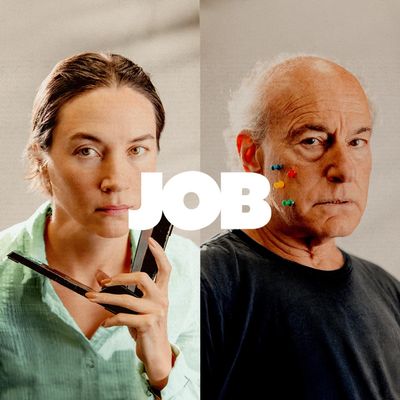
Sydney Lemmon brings her authentic charm and deep insight to this conversation, sharing her journey from growing up in an entertainment family to her Broadway role in the thought-provoking play JOB. With an impressive background that includes rigorous training at the Yale School of Drama and roles in hit shows like Fear the Walking Dead, Hellstrom, and Succession, Sydney opens up about the challenges and rewards of pursuing a career in acting. She offers a candid look at how she balances the demands of heavy roles, the importance of self-care routines, and the role mentors have played in shaping her path. Her dedication to her craft shines through as she shares advice for aspiring performers about staying committed and following their passion.
We dive deep into what it means to stay grounded while navigating the highs and lows of a performer's life. Sydney’s genuine approach to handling intense roles, coupled with her light-hearted love for reality TV, makes her journey relatable and inspiring. She reminds us that while the road may be tough, it’s filled with unexpected moments of joy, growth, and self-discovery. Whether you're looking for insight into the acting world or simply want to be inspired by someone who’s living her dream, this episode has something for you.
Sydney Lemmon is a talented actress with a rich background in both stage and screen. She earned her master's degree from the Yale School of Drama, where she was the recipient of the Julie Harris Scholarship. Sydney made her Broadway debut alongside Uma Thurman in The Parisian Woman and has captivated audiences with roles in Fear the Walking Dead, Hellstrom, and Succession. As a singer and guitarist, she also writes music with her brother, actor Jon Lemmon. Currently, she stars in the provocative Broadway play Job, which has been extended through October 27th.
Follow Sydney Lemmon:
- Instagram: @sydney_lemmon
Connect with The Theatre Podcast:
- Support the podcast on Patreon: Patreon.com/TheTheatrePodcast
- YouTube: YouTube.com/TheTheatrePodcast
- Threads, Twitter & Instagram: @theatre_podcast
- TikTok: @thetheatrepodcast
- Facebook.com/OfficialTheatrePodcast
- TheTheatrePodcast.com
- My personal Instagram: @alanseales
Transcript
This transcript was automatically generated and might contain errors.
[0:00] Sydney Lemmon: Hi, I'm Sydney Lemmon. Welcome to The Theatre Podcast with Alan Seales.
[0:11] Alan Seales: Hey, everyone, and welcome back to an all-new episode of The Theatre Podcast. I'm your host, Alan Seales, and our guest for this episode is the incredible Sydney Lemmon. Sydney is no stranger to both the stage and screen, having starred in shows like Fear the Walking Dead, Hellstrom, and Succession. Right now, she's captivating audiences on Broadway in the provocative play Job, which has just been extended again until October 27th. Make sure you get your tickets before it ends. In this episode, Sydney opens up about everything from her early days growing up in an entertainment family to her intense training at the Yale School of Drama and how she balances the demands of heavy roles like the one she's currently playing now.
Of course, we have to get into self-care routines and navigating the highs and lows of a performer's life and a little bit of how she unwinds at the end of a busy day with a little reality TV. Hello, Love Island fans. This conversation is full of insight and heart, and I think you'll really enjoy hearing Sydney's thoughts on staying grounded while tackling these tough roles. So as always, don't forget to find me on social media and share this episode with your friends. For those of you who want the video version of this conversation, head over to my Patreon. And now, everyone, please enjoy this episode with Sydney Lemmon.
[1:28] Alan Seales: Today's guest received her master's degree at the Yale School of Drama in 2017, where she was the recipient of the Julie Harris Scholarship. She has also studied at the London Academy of Dramatic Arts and Boston University and made her Broadway debut alongside Uma Thurman in The Parisian Woman in 2018. Her TV and film credits include starring as Anna Hellstrom in Hellstrom, you guessed it, Fear the Walking Dead, The Good Fight, Succession, and you can even find her portraying the queen in the Bud Light Dilly Dilly commercial saga. She is a singer and a guitarist who writes music with her brother, actor Jon Lemmon, and can now be seen back on Broadway in the provocative play Job, which was just extended again until October 27th. Sydney Lemmon, welcome to The Theatre Podcast.
[2:10] Sydney Lemmon: Thank you so, so much. Thank you. Thank you. It's always sort of mortifying to hear yourself described, but thank you very much.
[2:15] Alan Seales: You look like you got a little, you got a little, you blushed a little with the Dilly Dilly commercials, the Bud Light commercials.
[2:20] Sydney Lemmon: Sir Jeremy, you are a true friend of the crown. Dilly Dilly.
[2:26] Alan Seales: Madam Susan, you are an even truer friend of the crown. Dilly Dilly.
[2:31] Sydney Lemmon: Dilly Dilly. My finest work.
[2:36] Alan Seales: I thought it was incredible. I mean, I could tell you went deep into your soul to find inspiration for that.
[2:42] Sydney Lemmon: I mean, you know, it's not something that gets talked a lot about these days, but when it does, I just feel so prideful, so glad. Honestly, actors will, all actors will tell you commercial work, it's what keeps us afloat. So I'm so grateful to have had that.
[3:01] Alan Seales: A national commercial in general is a good paycheck, but a series that then continues, yeah, I'm sure that's nice.
[3:09] Sydney Lemmon: It was really good. And honestly, that was the first job that I booked outside of graduate school.
[3:14] Alan Seales: Really?
[3:15] Sydney Lemmon: It was just a lucky thing. It was my first commercial audition that I ever went on. I haven't booked one since. It was just a lucky thing.
[3:20] Alan Seales: Wow. I mean, it's just funny to me, because you've got this incredible resume with this intense training, and then to play this comedic character in the series. Dilly Dilly.
[3:31] Sydney Lemmon: Yeah, Dilly Dilly. Dilly Dilly.
[3:38] Alan Seales: I don't have cable, and there is, on YouTube, there is, I think it's a 28-minute compilation of every single commercial in the entire series. So you can watch them in order and see the Dilly Dilly saga play out.
[3:48] Sydney Lemmon: They knew what they were doing with that.
[3:55] Alan Seales: They had plans.
[3:58] Sydney Lemmon: They did.
[4:02] Alan Seales: This episode brought to you by, no, just kidding. I wish, no, I just wish I had Bud Light money.
[4:08] Sydney Lemmon: Okay, so let's back up. We're going to get to Job, obviously, because I spent 11 years at Google and know that the job you portray in Job is a real job, and it is hard, and it is rough, and it's usually contractors that are rotated through, because you can't have somebody full-time looking at that stuff all the time. But we'll get to that. So let's rewind back to the beginning of Little Sydney. You come from an entertainment family, but where did you grow up, and what started you out?
[4:39] Sydney Lemmon: I grew up, I was born in California, but my family moved to Connecticut when I was young and grew up in Glastonbury, Connecticut, which is a small town, middle of the state. It was, you know, you could find me in the school plays, going to the Arts Magnet School. It was sort of just like this beautiful young life of lots of friends and lots of art, and that was really the beginnings of all of this.
[5:11] Alan Seales: Well, what got you into performing in the first place? I mean, you personally, because your grandfather's Jack Lemmon, famously. So you have entertainment in your family, but a lot of people are like, I don't ever want to do that. And some people are like, I want to do that. But then what made you decide to carve out your own path in the entertainment world?
[5:28] Sydney Lemmon: I don't know that I had a super polarizing response, one way or the other, of like, I must, or I shan't. It was more so just led by curiosity. Like, I was doing sports in high school, and then, you know, they were going to be doing Midsummer Night's Dream, and I felt curious and wanted to take a shot at it. And, you know, they were going to be doing The Crucible, all these sorts of plays that I was interested in. So it was just really led by an interest of my own.
[6:03] Alan Seales: Okay, so you go in with these plays, and was it always plays and non-musical sort of thing? Or were you ever interested in the singing and the dancing?
[6:14] Sydney Lemmon: I was in Thoroughly Modern Millie. I was in the chorus, but I can sing those songs front to back. Not beautifully, but I really, with a lot of heart, and definitely did some musicals. Even in graduate school, we did some musicals, and they were so much fun, and I fucking adored doing them. But I can't say that I'm just sort of like that powerhouse soprano. That's not going to be me, but I have a lot of fun doing them.
[6:44] Alan Seales: Did you, you and Sutton Foster are both on Broadway now at the same time. Have you been able to run into her and tell her the story about this?
[6:51] Sydney Lemmon: If I saw Sutton, I would faint.
[6:53] Alan Seales: Really?
[6:53] Sydney Lemmon: I would faint. I would faint. I think that I played that CD so many times that, like, it smashed in my boombox. I am just waiting for the chance to get to kiss her feet, really. I'm just the biggest fan.
[7:06] Alan Seales: Well, I think you're going to have the chance. The job was extended through October. It says final extension, so I don't know if that's final, final, final, or just final by your tickets now. But if Job closes before Mattress does, then you need to go see Mattress. They know they will get you backstage. You know that.
[7:27] Sydney Lemmon: No, I will be there with bells on. I'm planning on seeing it, you know, for 100%. There's so many shows I cannot wait to see this season. It's such an incredible season.
[7:37] Alan Seales: Are you based out of New York or do you live in LA normally?
[7:40] Sydney Lemmon: Yeah, I live in Brooklyn.
[7:42] Alan Seales: Me too.
[7:43] Sydney Lemmon: Yeah, I've lived here my whole life. I've never lived in Manhattan, actually.
[7:47] Alan Seales: Wait, so where did you come from Connecticut to New York then?
[7:51] Sydney Lemmon: Well, when I graduated from my undergraduate program at BU, the first nine months out of school, I did a non-equity national tour. There are lots of stories I could tell you about that. And then after the tour, where I played Lady Capulet and Benvolio in R&J, and I played Clover the Horse in Animal Farm. Did that for nine months. Non-equity tour, man. That's how you earn your stripes. Being four people to a motel room, two to a bed every single night. It was really, honestly, the best year.
[8:28] Alan Seales: Two to a bed? Remind me not to do a non-equity.
[8:31] Sydney Lemmon: We had to. That was the financial structure. It was cool.
[8:41] Alan Seales: That's like cruise ship status without the water and the fun of being on a cruise ship.
[8:45] Sydney Lemmon: Totally. Honestly, there's a crossover here with, have you seen Below Deck? Below Deck is that reality TV show about people who do yachting, and it's about the crew. And I think apparently that show is what it said, rumored that that's what was the inspiration for Triangle of Sadness, that film by Ruben Oswald a couple of years back. It was like that, except theater, because of the nature of the traveling of it, there's a show in there. Maybe I'm going to write it.
[9:15] Alan Seales: You should. Do you write too?
[9:18] Sydney Lemmon: You're a songwriter too with your brother, but do you write plays and screenplays and stuff?
[9:23] Sydney Lemmon: I've written screenplays, was getting going with that a lot, but then Job has taken over in a completely total way. So that's been the focus, of course, for the last year and a half.
[9:36] Alan Seales: What a great transition. Okay, so let's talk about Job. Good segue. This has been through multiple incarnations. It was off-Broadway twice, right? And then before coming to Broadway. So when did you get involved? How far along ago was that? And did you see it being on Broadway at any point?
[9:55] Sydney Lemmon: No. God, no. All that I knew of this project was I had read the script, and it looked quite different from the script that you see today on stage. And I thought, what a fascinating character. Gosh, she has so much dimension and complexity. It will be such a gift if I get the opportunity to get to figure her out. And when I got the part, Peter was not attached to the project at all. So I don't know. It was going to be at the Soho Playhouse. It was collaborating with all these people who I had never met before. We just were going to work really hard for six weeks, or maybe four, and then it was going to be done. And it will have been a really good actor's workout, basically. I remember the phone call when Max called me and was like, we really want Peter Friedman.
And I was like, what? Oh, okay. Oh my gosh. Wow. Okay. Maybe people will see this. And maybe this will have attention because Peter is beloved and so good. And then we just tried as hard as we could to sort of bring the play to life, bring Max's wonderful words to life. And Michael Hurwitz, our great director, carved so hard with us and with Hannah Getz, who was producing and dramaturging. We just got in there, into the text as much as we could, tried to solve all of the sort of questions that Max had put forward, all the provocations that he had written into the play. And we tried to figure them out and bring humanity to the words, which was not a hard thing to do, because the words are already giving so much.
So anyways, it was very surprising to us. I mean, you never know if anyone's going to come. You never know. I mean, that's always the risk, especially with an off-Broadway play that was as sort of off the beaten path as ours was. It was totally indie, renegade punk, not attached to any institutions, freewheeling out there. And so you just keep your fingers crossed and you say, I hope that the audience finds us. And by the grace of God and the internet, they did, and they kept coming. And six weeks turned into eight, and then nine, ten, it just kept extending. And then when it ended, I think we all sort of just like, we were giddy but broken and went home. We were like, oh God, trying to piece our lives back together from such an incredibly intense run.
And then pretty soon after, it was like, oh, we're going to be doing this again. There's still an audience for this story. So to say that, no, none of us thought that Broadway was... No, I think that we are all still humbled and just shocked that we've found ourselves at the Hayes.
[13:30] Alan Seales: So for those who haven't seen it or those who don't know, I mean, I guess, disclaimer, trigger warning, there's a lot of talk of, I guess, pedophilia and sexual abuse. And in the... I'm not going to spoil anything more than that, because it's such a story with so many twists. And I guess you came out of this, out of the eight weeks or whatever the initial run you said, ended up being tired and broken. This is heavy, heavy subject matter. And side note, I want to comment real quick. You said there's an audience for it. That's because your performances, yours and Peter's are phenomenal. Just incredible the way that the two of you play off each other and with each other and bring the text to life. You're welcome. But what are you doing? What does Sydney do when you are done and you do this heavy, heavy material eight times a week, four weeks and now months and months? How do you get back to who you are? How do you kind of shut off and become happy Sydney again?
[14:43] Sydney Lemmon: It's a really important question. It's a good question. It's one that I'm still trying to figure out how to balance. I think any actor would tell you some nights, the play just comes out of you and it's easy to do. Other nights, it's not as easy. On those nights, you sort of rely a little bit more on your technique. Similarly, sometimes shedding the play at the end of the night is easy. For some reason, you've given it away and it's gone. It's out of you. Other nights, it's not as easy. You've given it away, but it lingers. Those are nights when I just try to have grace for myself and appreciation for my body for being able to carry some of the heavy content and still show up. It's easy to be like, I'm so tired.
Why am I so tired? It's like switching those narratives to just being like, thank you body for carrying me. I know that you're tired. It's time to rest now. A lot of it is trying to be kind to yourself mentally. Then there's just practical things like all of my nighttime routines of taking a bath, steaming my vocal cords, watching RuPaul's Drag Race, watching trashy, trashy reality TV that makes me feel so blissfully detached, and eating warm foods and nourishing and knowing that I'm surrounded at the play by people who are so supportive and all in on this together. Those are some of the things.
[16:44] Alan Seales: Is that training that you learn formally in the education? You've got such a wonderful education experience in your life, but the self-care and thanking your body, taking the bath, just realizing warm foods instead of cold foods, are these all things that teachers have said you have to focus on yourself, your body, your physical health to make sure your mental health is okay? Or is this just something you've learned through experience on your own?
[17:11] Sydney Lemmon: It's a good question. I can't take the credit. I've been so blessed to have incredible mentors, especially going back to my training at BU and at Yale. I called on those mentors in my mind. Even literally, I'm so lucky to be able to send a text to Grace Zandarsky, who taught us voice and speech at Yale, and know that she'll respond. Or to know that just last week, James Bundy, who's the Dean of Yale and the Artistic Director of the Yale Rep, was there. Just seeing him fed me so much because it reminds you of who you were, and that's so nourishing. It makes me feel plump.
[18:03] Alan Seales: Don't go anywhere. We'll be right back after this break.
[18:06] Sydney Lemmon: Welcome back to the episode. Now on this project, Molly Kearns, who does physical therapy for so many shows on Broadway, is a goddess, and is a magician, and knows what to say and what to do to help your body relax, unstick emotional blocks. Gigi Buffington, who's my guru slash vocal coach on this play, has done God's work in helping me stay sane. Yeah, there is a lot of gratitude and thanks owed to these individuals, and it's also trial and error on my own part, because when you do something for as long as I've done this role, there are seasons within it, personal growth, and also moments of complete failure to yourself, really, of like, gosh, I'm not doing my best when I'm not at the play.
How do I address that? Honestly, because I think a lot of actors would probably, at least the ones in my community that I've called on, echo the real sacrifice when you work to your personal edge, which is the beautiful work that I get to observe of other actors, and it's what I'm hoping to do in my own work. When you work to your personal edge, there is a lot of discipline required and a lot of sacrifice, so it is certainly a personal journey of trial and error and one where I get to use a lot of the wisdom that you learn in graduate school, but you think, you know, the most that you do a play, the most we ever performed a play at Yale was like most eight times, 10 times, and when you do a run that's that short, there's so much adrenaline in it, and it's almost impossible to separate the adrenalized performance from what it would be like to approach the play when your body is more used to it, when you don't have that sort of superhuman pump of adrenaline that makes you feel so powerful.
So when the teacher say things to you, like in a long run, you really can't be using too much tension because in time that's really going to hurt your body. At least me, when I heard that at that time, you just kind of go like, yeah, yeah, yeah, yeah, that's fine, I'll use the tension, I'll be fine, but I had to learn the hard way. They always use Richard III as an example with the hump. It's like if you actually, if that actor playing Richard III was actually using so much tension to create that hump, he's going to really mess up his body. So it's like taking the shape, but taking the tension out as much as you can. So yeah, these sorts of things I'm really trying to employ.
[21:03] Alan Seales: That's fascinating. There is so much mental work going into physicality, and what's that called? The Alexander technique or something?
[21:08] Sydney Lemmon: Yeah, Alexander technique. And I think back to a couple of things that I've heard or firsthand or through whatever, like I know Ben Platt with the Irving Hansen, he had to get PT all the time because he was always just hunched over and his shoulders were bothering him. And then Carrie Butler went to physical therapy for Beetlejuice because her psoas muscle in her side or something was just constantly tightened up from pretending to be scared. Not pretending, from being scared. Your body doesn't know you're pretending.
[21:41] Alan Seales: That's right.
[21:44] Sydney Lemmon: Yeah.
[21:44] Alan Seales: No, that's right. That's right. Yes, yes. I'm not going to give you my laundry list.
[21:53] Sydney Lemmon: Yes. Well, something you said earlier was that you, I think, struggle to balance feeling like you're being your best self when you're not working. And as a younger person, were you always like that as a kid too? Because speaking for myself, I want the validation of accomplishing cool things, of doing cool things and helping others. That's my fuel. And probably led to an unhealthy obsession with performing because it was a quick fix and an addiction, if you will. So as a kid, I didn't realize that's what I was doing as an adult. Same thing. I've had to balance like, if I'm not working, if I'm not completing a project, if I'm not fixing something or improving something, am I still as good as I feel I should be? So I'm wondering what your experience with that is because it's tough to realize that and then it's tough to deal with it.
[23:05] Sydney Lemmon: Hmm. I think with this project, it's more so just the fallout. What I'm left with after I do the play and what I'm left with is me. But it's like, you know, I think I listened to this interview with Emma Stone when Emma Stone was doing Cabaret. And Emma was like, you know, you think that film and TV would be so difficult because it's 12 hours a day plus the morning and the evening and theater is just three hours a night. So obviously, that's going to be easier. But she was like, what you don't realize is that your entire day is, and I'm paraphrasing, but spent like under the crushing weight of knowing what you have to do tonight and preparing yourself in every single way to go and do that job, what you eat, how much you are active that day versus how much you allow yourself rest.
It's just like dominating your whole life. So that's kind of what I mean in terms of being my best self when I'm not at work. Because it's only an 80-minute show and it's like those 80 minutes are totally dominate the whole rest of my entire life. And trying to take back a little bit more for myself and even have some boundaries with myself with my own process.
[24:30] Alan Seales: What do you mean by that?
[24:34] Sydney Lemmon: Well, it's like someone said this to me. Actually, one of my physical therapists last week at NeuroSport who does laryngeal release with me, she was like, you're not getting paid overtime when you're home. And I was like, that's so fucking true. That's true. I can spiritually put it away, put it down for a moment.
[25:02] Alan Seales: Huh. And dive into trashy, trashy reality TV.
[25:07] Sydney Lemmon: Or take a walk, brother.
[25:10] Alan Seales: Walk. Go look at the sun. Go outside.
[25:15] Sydney Lemmon: Fair. Very fair. What's your go-to reality show?
[25:18] Sydney Lemmon: Oh, my Lord. We're going to go there?
[25:22] Alan Seales: Yeah, let's go there.
[25:22] Sydney Lemmon: Well, because Chris Steckle, one of the SMs, one of two SMs, we have Rachel Zucker and Chris Steckle. He told me to watch Love Island UK. And I had been kind of like on my five being like, I'll do Bachelor and Bachelorette, but I won't do Love Island. And I did it. And I'm really glad that I did.
[25:46] Alan Seales: I have not watched it myself because it's one of those things that I know I won't be able to look away from because I've heard very similar things.
[25:55] Sydney Lemmon: They're just so fun. They're such fun people. I love them and I want to be one of them. I feel like I draw the line. I have to draw the line that love is blind. I crushed the first season of that in a way that was just like a hungry person devouring steak. I was like, this is food. I really liked that. But then after the first season, it lost its magic for me.
[26:20] Alan Seales: Yeah.
[26:21] Sydney Lemmon: Tirely.
[26:22] Alan Seales: Yeah. Well, I think a lot of stuff came out about the producers were looking for people who were basically, I don't know, maybe this came out just in the latest season specifically, but were casting people who they knew had significant others, but were doing it because they knew it would cause drama.
[26:42] Sydney Lemmon: Producers will do anything. These producers will ruin your life with a smile on their face.
[26:48] Alan Seales: Truly, I just actually finished Cat's Eye.
[26:51] Sydney Lemmon: What's that?
[26:52] Alan Seales: And Cat's Eye is a new docu-series on Netflix, and it's about the making of a K-pop group, except it's not just Korean people who are eligible. They were, quote unquote, taking the K out of K-pop. But it's like all of these pillars of K-pop who had created BTS, and they were all behind bringing in these young women ranging in age from 14 to 20, at the top 20, but really many of them are much younger, from all these different nations and seeing who they could train in this trainee program to become a pop star. But then I had a tough time with this show. I just felt for these women, these young women so, so much, because it just felt like the producers were just taking them on a ride. And it was revealed that it was going to be a survival show. And they were made to be sisters, but then getting cut, and it was a tough watch.
[27:55] Sydney Lemmon: Yeah. I binged Dirty Pop a few weeks ago, too, about the guy who made Backstreet Boys and NSYNC and all of that. Yeah. It's a nasty world, especially... Theater, at least, I think, has the benefit of not having gigantic multinational budgets. So the amount of abuse you can do to people is limited to how much you can spend on marketing of their exploitation, I guess. Going back to Job for a second, the role that you have... The character that you play has a job that... The literal job of the character in Job is tasked with watching and screening the internet for content that shouldn't be on the internet, to put it nicely. And these are real positions that actually exist in big companies. And I imagine that it's never spelled out.
It's never confirmed. But I imagine that your character works for a company that starts with Goode and ends with Oogle, and might watch videos that are on some video platform that's popular by Google. And again, these positions of the character you're playing are real positions in real life. And did you get to talk to anybody or read about any of this stuff from the people who are actually doing this sort of thing?
[29:19] Sydney Lemmon: I certainly read about it. I didn't talk to anybody because I couldn't really... I didn't know anybody who actually did this. But since I've met many, many people who come to the stage door just last night, I'm telling you once a week, more than that even. Certainly every night, there's somebody who's at the stage door who works in tech, but sometimes it's as specific as doing this job. Last night, a girl said that she did content moderation for Pinterest. And I was like, my God, how are you doing? And she's like, I'm leaving in a week and a half. I quit. So I read a lot about it. The articles make me very sad, because most of them are about the PTSD that these individuals suffer with, or the lawsuits, or the suicide rates. It's really bleak.
[30:28] Alan Seales: Wow. Yeah. That's why, as far as I know, these positions are short-term contractors that every six months, maximum, they're rotated through. Because for those reasons you were talking about, they can't do this forever. It's looking at content that shouldn't exist.
[30:39] Sydney Lemmon: No, it's a really tough job. And honestly, the majority of this work is done by people in countries outside of America, Sri Lanka, these countries where, for whatever reason, these people are tasked with this work. It's a human rights problem. It's really just dark.
[31:20] Alan Seales: Yeah, it is dark, and it's really hard. And that's why I was asking about your getting back to reality practice that you pursue. And I've heard other stories from other people, very similar. It's something that Elizabeth Stanley told me once after Jagged Little Pill. Did you ever get to see that?
[31:40] Sydney Lemmon: I wish I had seen Jagged Little Pill. I think I was out of New York at that time.
[31:45] Alan Seales: So her character, the character of Mary Jane Healy, is addicted to opioids, and it deals with sexual assault, it deals with white supremacy, and interracial adoption, and all sorts of things. It's a very heavy role. And she literally was telling me she would go off stage, and at the end of the night, literally just shake, just get all the wiggles, like you do for preschool kids, just to get all the wiggles out. She would just wiggle and leave Mary Jane on stage. And then she would feel like Elizabeth again. And it's really cool to me how the different routines are. And I love that you're coming home, eating lovely warm food, taking a bath, watching... I imagine you're in the bath with a giant chicken leg and your phone above you watching bad reality TV.
[32:35] Sydney Lemmon: I'm going to try the wiggles tonight. That's a good tip. I like that. It's like how deers shake in the wild when something stresses them out, they shake to get it out of their system. I like that.
[32:43] Alan Seales: Oh, I didn't know that.
[32:54] Sydney Lemmon: Yeah. That's why you see gazelles after they get chased by a lion and they survive, they shake.
[32:59] Alan Seales: Maybe I should do that after bad business meetings.
[33:02] Sydney Lemmon: Yeah. I think we should all be doing that a lot.
[33:04] Alan Seales: If I'm just frustrated after something, I'll stand up and shake it out.
[33:08] Sydney Lemmon: It's really good. I think that we... It's like I'm obsessed with all of these... It's like you forget that that's an option. Sometimes you don't have to think through the problem. You just need to move your body and let your body handle it, because the body has wisdom too.
[33:23] Alan Seales: Don't go anywhere. We'll be right back after this break.
[33:27] Sydney Lemmon: Welcome back to the episode. I think we have evolved beyond the ability to still listen to our basic instincts.
[33:35] Alan Seales: I'm going to go out there and say that.
[33:38] Sydney Lemmon: Wow. Wow. You do?
[33:42] Alan Seales: I think, yes. My theory is that because we have higher cognitive function and the ability to make rational choice and analyze and evaluate that when, for example, you walk into a room and it doesn't even have to be romantic. You just click with someone. What is the scientific reasoning behind that? Is it pheromones? Is it energy? Some people are like, oh, we're soulmates. We were together in a past life. There's all these ways people have classified it. I think there's a scientific explanation at a basic biological level, and we just don't know how to truly shut our brains off and listen to our bodies anymore.
[34:24] Sydney Lemmon: You think it's just like dopamine, serotonin?
[34:30] Alan Seales: Well, pheromones. It could be as simple as pheromones. It's like your pheromones are compatible with my pheromones, and so something unexplained.
[34:38] Sydney Lemmon: And then we have to explain it away with all of it. Is that what you're saying?
[34:42] Alan Seales: Yeah, yeah, yeah.
[34:43] Sydney Lemmon: It's a complicated thing.
[34:44] Alan Seales: Right. Look at how all these religions were invented, and we have Greek gods and Roman gods and religions galore. Back in the day, when a hurricane came, you didn't know how to explain a hurricane. Back in the day, you didn't know how to explain a hurricane. You didn't know how to explain flood. What was a tsunami? A sign that you didn't sacrifice enough people that month? People are trying to rationalize this stuff as we become more and more evolved as a species. I think that we've just tried to pigeonhole previously existing ideas into modern techniques, and it doesn't make sense. I would love to just close my eyes, shut my brain off, and just experience what my body's telling me. Is that what meditation is? I'm not a good meditator.
[35:34] Sydney Lemmon: You can definitely still do that. I don't think that you've lost that ability.
[35:38] Alan Seales: But are you saying that you would rather know less, not more?
[35:42] Sydney Lemmon: No. I'm saying I want to have the scientific explanation behind everything we can't explain right now. I want so much more. That's so cool. It makes me so sad to think about in the future how they're going to know so much more, and I just won't know it.
[35:57] Alan Seales: I know. I know. In movies where it's just, stand in this little scanner over here. Okay, so right here, that hurts. That's going to turn into cancer. This is going to turn into a brain aneurysm.
[36:09] Sydney Lemmon: It's a double-edged sword, though, too, because also, I'm rabbit-holing so hard on this.
[36:18] Alan Seales: Pigeonholing, rabbit-holing, rat-holing, whatever.
[36:22] Sydney Lemmon: I think we're also sciencing out evolution, evolutionary advantage.
[36:28] Alan Seales: Tell me more. What do you mean?
[36:33] Sydney Lemmon: So let's take a basic thing. If you're born with a trait that's different or gives you an advantage or even a disadvantage, right? If someone is born and is super sick, but now we have modern technology to nurse them back to health, and I'm not saying we shouldn't do this. Take the ethics out of this. That someone is super sick, we nurse them back to health, they live up, and they grow up, and they reproduce and pass on that bad gene. So now, if it were hundreds of years ago, would this particular trait that is making these babies sick, would that be completely evolved out after millions of years, right? Not hundreds of years ago, millions of years ago, right? Let's take a basic example. You're born with six fingers or six toes, and it doesn't fit in shoes, and it makes you a bad dancer, and so you take surgery and cut it off. So not that you lose that gene, you might pass the gene on to your kids, but we're always trying to fix and keep people from changing, but keep them exactly how they are now.
[37:46] Alan Seales: Lord almighty.
[37:52] Sydney Lemmon: Oh yeah, that's definitely something to think about. But if you had a sixth toe and you couldn't fit it into any shoes, you'd want that thing gone.
[37:58] Alan Seales: Right, but what if, just spitballing here, like a million years from now, the six-toed people are the ones who can survive the earthquake apocalypse?
[38:05] Sydney Lemmon: It's a good question.
[38:10] Alan Seales: Well, it's definitely coming for us, so we need to do everything that we can to prepare for that.
[38:17] Sydney Lemmon: All right, well, let's get us back on track, talk about theater. Okay, so as we wrap up here, I want to play a little game called plot in 60 seconds.
[38:21] Alan Seales: Oh, okay.
[38:29] Sydney Lemmon: And so I'm going to put 60 seconds up on the screen here for you, and you're going to give me a number one through 16, and I have a list of 16 shows, and so whatever number you give me, you're going to give me the plot to that show in 60 seconds. Okay, this is fun.
[38:47] Sydney Lemmon: Okay, well, I'm going to have to go with my lucky number 13, please.
[38:54] Alan Seales: All right, lucky number 13, that corresponds to Aladdin. Go.
[38:59] Sydney Lemmon: 60 seconds remaining. Okay, Aladdin is, I believe, oh God, it's been a while. Aladdin is about Princess Jasmine who falls in love with Aladdin, and it's their love story, and oh my Lord, it's been truly a long time.
[39:12] Alan Seales: 45 seconds remaining.
[39:12] Sydney Lemmon: But there's something about a magic genie in a bottle, and there's something about a really scary sand cave, and a cute little monkey, and bread.
[39:29] Alan Seales: 30 seconds remaining.
[39:29] Sydney Lemmon: That monkey steals bread. Boo. And they find a whole new world, and they take a magic carpet ride, and I honestly don't remember how it ends, but I remember that Robin Williams was really, really, really funny as the genie. It was such a joy to watch him do that.
[39:52] Alan Seales: Five, four, three, two, one.
[39:53] Sydney Lemmon: That's funny. What did you say? A genie in a bottle. That's a little too Christina Aguilera.
[40:02] Alan Seales: Oh my, I'm sorry, dude. I haven't seen that movie since I was six.
[40:06] Sydney Lemmon: It's okay, it's okay.
[40:06] Alan Seales: Genie in a lamp. Genies come in lamps normally, unless you're Christina Aguilera, but it's okay. All right, so now the final closing questions that I ask everyone to wrap up the episodes. The first one just very simply is what motivates you?
[40:19] Sydney Lemmon: Love.
[40:22] Alan Seales: Okay, simple. I love it. Get it? See what I did there? What advice would you give to your younger self and younger people listening now starting out down a similar path?
[40:29] Sydney Lemmon: I would say that nothing happens overnight. It takes time. If you feel the calling inside your heart, you have to respect that and honor it and keep going. As soon as this play's over, I'm going to be taking my own advice. It's just a lifetime full of unexpected surprises in this industry. The best thing that you can do is hang on and enjoy it and try to be present as a human being more so than being present as just an actor.
[41:11] Alan Seales: That is lovely. Okay, last question. Hardest one. If you could only see one show for the rest of your life, but you can see it as many times as you want, what would you see?
[41:21] Sydney Lemmon: Well, it would have to be one of the classics. It might be a Greek play. It might be... This is tough. No, maybe it would be Shakespeare, probably Hamlet.
[41:37] Alan Seales: That's a good answer. That's a good answer. I like that.
[41:42] Sydney Lemmon: Come on. You can watch that every day for your entire life and still pick up on what Shakespeare was doing and hear something a new way. It's like you're never going to be like, oh, I've mastered that one. That's always going to be revealing itself to you.
[41:58] Alan Seales: Are you a big Shakespeare fan?
[42:00] Sydney Lemmon: Of course. I'm so excited to see Romeo and Juliet this season. I've heard great things about it and I cannot wait to see what they're doing.
[42:13] Alan Seales: All right. Where do you play the social media game? How can we find you online?
[42:17] Sydney Lemmon: Yeah, you can find me on Instagram. I think that's my only social media. I don't do Twitter or any of the other stuff. So you can find me on Instagram. My handle is Sydney underscore Lemmon, L-E-M-M-O-N.
[42:31] Alan Seales: Lemon. And I'm on Threads, Instagram, TikTok and Facebook. Leave a rating and a review wherever you are listening. Share the podcast. It helps it grow. Thanks to Jukebox the Ghost for the music we are hearing right now. And thanks to Sydney Lemmon for the wonderful conversation we just had.
[42:46] Sydney Lemmon: Thank you. Thank you so, so much. Thank you.
© Broadway Podcast Network, All Rights Reserved