
Andrew Barth Feldman and Alex Boniello are a power duo who have most recently teamed up for "Foul Play", a new online murder mystery series that's reinventing how the internet works... Read More
From the show: The Theatre Podcast with Alan Seales
Guests

About
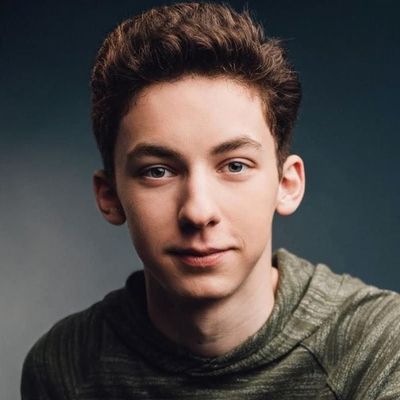
Andrew Barth Feldman and Alex Boniello are a power duo who have most recently teamed up for "Foul Play", a new online murder mystery series that's reinventing how the internet works. The two share where and when their friendship began and why Andrew thinks the two of them are an unlikely pairing—one that works so well. The story behind Foul Play is an interesting one – listen in as they discuss how it all started, how much of it is improv, and how they accidentally found themselves developing an entirely new online technology for entertainment in the process. Alex and Andrew also share what it was like finding the right people for the project through vibe check alone, what makes "Foul Play" special, including not counting on any one person to be a star and allowing them to be exactly who they are and letting people do their thing, which isn't far from what motivates the two of them: doing what makes you happy and supporting other people.
Andrew Barth Feldman is an American actor, singer, and songwriter. He rose to fame for his portrayal of the lead role in the Broadway musical "Dear Evan Hansen" at the age of 16, becoming the youngest actor to do so. Aside from his Broadway debut, Feldman has also appeared in several theater productions, including "Romeo and Juliet" at the Guthrie Theater and "The Phantom Tollbooth" at the Kennedy Center. He took a role in "High School Musical: The Musical: The Series" and starred in "Ratatouille: The TikTok Musical", "A Tourist's Guide to Love" on Netflix as well as in the upcoming comedy film, "No Hard Feelings". He has also performed at various events and benefits, including the Tony Awards and "The Jimmy Awards," where he won the Best Actor award. Feldman is also a talented songwriter, having written original music for "It Could Be Worse: The Musical" and "Normativity," two off-Broadway productions. He is a vocal advocate for mental health awareness and is passionate about using his platform to support various charitable causes.
Alex Boniello is an American actor, singer, and musician who’s won Tony Awards for co-producing “Hades Town”. He is known for his work on Broadway and off-Broadway productions, as well as in film and television. Boniello made his Broadway debut in 2011 as the understudy for the role of Moritz Stiefel in the musical "Spring Awakening". He later played the role of the voice of the skateboarder in the Broadway musical "American Idiot". In 2018, he originated the role of Connor Murphy in the Broadway production of "Dear Evan Hansen". His other stage credits include “21 Chump Street: The Musical”, “Cruel Intentions: The '90s Musical”, and “I Am Harvey Milk”. Aside from his work on stage, Boniello has also appeared in films such as "The Intern" and "Friendsgiving", and in television series such as "Unbreakable Kimmy Schmidt", “Ghosts” and "Jessica Jones". In addition to acting, Boniello is a musician and has released original music as a singer-songwriter. Alex will be seen in the upcoming follow-up to Disney's "Descendants" franchise.
Andrew and Alex co-created and hosted Broadway Jackbox and Broadway Whodunit and recently, they have launched a new online murder mystery series called "Foul Play".
Connect with Andrew and Alex:
- Watch Foul Play: foulplay.live
- Instagram: @alexboniello, @andrewbfeldman_, @foulplaymystery
- Twitter: @AlexBoniello, @andrewbfeldman
- TikTok: @andrewbfeldman_
Connect with The Theatre Podcast:
- Support us on Patreon: Patreon.com/TheTheatrePodcast
- Twitter & Instagram: @theatre_podcast
- TikTok: @thetheatrepodcast
- Facebook.com/OfficialTheatrePodcast
- TheTheatrePodcast.com
- Alan's personal Instagram: @alanseales
- Email me at feedback@thetheatrepodcast.com. I want to know what you think.
Transcript
This transcript was automatically generated and might contain errors.
[0:00] Alan Seales: Hey, everyone. Welcome back to the Theatre Podcast. Intimate personal conversations with the industry's biggest names. I'm your host, Alan Seales, and our guests, guests, plural, that's hard to say. Our guests today for this episode are Andrew Barth Feldman and Alex Boniello, who are here discussing a brand new online whodunit murder mystery project that they've put together that just launched called FOUL PLAY, which is very interesting. I didn't realize this. It was filmed entirely back in 2021, which, as you recall, is in the middle of the pandemic. Broadway was pretty much shut down still, and they recorded it and didn't realize how they were going to get it out. So they needed to invent a new technology to actually get their content out, which just launched.
And it's absolutely incredible. It's like you can click between multiple camera angles all at the same time. It's sort of like you're the producer director for a Big Brother type of production, where you can just click around between different rooms and try to figure out whodunit in the moment, like you're just at Alex's house and Andrew's house having a little murder mystery. So they are two tech nerds that have a love for playing games and just sharing the fun with the world. And as a fellow tech nerd, I highly respect that. This is great. So, as always, find me online, Instagram, Twitter, TikTok, Facebook, and make sure you watch FOUL PLAY, because it's just this incredible new thing that they've created. So now, everybody, please enjoy this episode with Andrew Barth Feldman and Alex Boniello. Here you go. One, two, three.
[1:52] Alan Seales: As two guests, are no strangers to your ear balls. Having co-created and hosted many episodes of Broadway, Jackbox, and Broadway Whodunit, Andrew Barth Feldman won the 2018 Jimmy Award for being totally cool, which led him to kick out whoever was starring in Dear Evan Hansen at the time and take on the title role while still a high school junior. Thinking he screwed up his actual high school experience, he took a role in High School Musical, the musical, the series, to try to make up for it. But being a true Gen Z-er, he then starred in Ratatouille, the TikTok musical, a tourist guide to love on Netflix, and the upcoming comedy film No Hard Feelings alongside Jennifer Lawrence. And not to be outdone by his bestie, Alex Boniello has literally done anything you need and everything, including acting, writing, and winning Tony Awards for co-producing Hadestown.
He, too, is in Dear Evan Hansen as Connor Murphy and will be seen in the upcoming follow-up to Disney's The Descendants franchise and the CBS hit show Ghosts. He's, since a total workaholic, also authored a children's book, A Case of the Zaps, and claims on the credits including the Tony-nominated Broadway revival of Spring Awakening, Lin-Manuel's 21 Chump Street, Cruel Intentions the musical I Am Harvey Milk, and of course, the national tour of Green Day's American Idiot. Together, they have now found 30 spare minutes each and every day when avoiding a good night's sleep and have launched a new online murder mystery series called Foul Play. Holy crap, guys! I'm tired just from reading those bios. Welcome to the podcast.
[3:19] Andrew Barth Feldman: Yeah, that was great. You did a really good job. You got it all in there.
[3:25] Alex Boniello: When you're a person who does lots of, uh, lots of things in lots of different forms, people generally pick the one that they understand the most to lead with, I have found.
[3:35] Andrew Barth Feldman: No, but you told the whole story. It was the narrative. It was great.
[3:40] Alan Seales: And we are now five and a half thousand minutes into the episode. That's all the time we've got. You two are both incredible people and, uh, relatively young depending on what perspective you're looking from, and you've done...
[3:53] Andrew Barth Feldman: From mine, whenever I, like, have a conversation with Andrew, I'm like, no man, I'm very, I'm very old to nine-year-olds.
[3:59] Alex Boniello: Yeah, that's right. I remember, Andrew, when we met, right, when we first met, you were 16, right? You were doing, or 16 or 17.
[4:10] Andrew Barth Feldman: Yeah.
[4:11] Alex Boniello: And, you know, that was like last year. And so, but you've done so much since then. And, and Alex too, like the, the two of you, um, I mean, I want to talk about Foul Play, which is this new online murder mystery series you've got, and you've reinvented how the internet works, and we're totally going to get into that. But, uh, I guess the two of you together, where did this friendship come from? Where did you meet? And then we'll get into the why behind the murder mystery stuff, because you won't let it go, and I love it.
[4:45] Andrew Barth Feldman: Nope. Not at all. What a great question. Whose perspective do you think is, whose perspective do you think is objectively funnier?
[4:51] Alex Boniello: I think it's yours. I, I think it's yours, Alex.
[4:54] Andrew Barth Feldman: Okay, great. Yeah. So, I mean, like, I was in Dear Evan Hansen for just under a year, already before Andrew had joined the show. And I remember, um, I remember kind of knowing that this was going to happen for a minute, because like everybody, I watched the Jimmy Awards that year. Um, and I just started hearing, uh, you know, to quote, uh, the Broadway musical parade, uh, I heard some rumbling and a rolling that, uh, the kid who won the Jimmy would be joining the show. And I remember, and I've said this to Andrew, I was like, oh no, like, are we sure? Like, and of course, like, you know, like leaning into the joke of that aside, of course, that's a big, a really big ask. Um, because, you know, it's Evan Hansen is one of the harder roles ever kind of made for anyone ever, you know, we're just going to yank this kid who has never done a show for more than two weekends and make him do it.
So obviously I was like, I was like, oh my God, what are we sure? And I remember this is taking a long time, but it's worth it. I remember, uh, seeing be more chill off Broadway to, uh, to see, uh, our friend will roll in. Um, and I remember Andrew was at the show that night. Uh, you knew you were doing dear Evan Hansen. I knew I was doing Devin Hansen, but we didn't know that each other knew.
[6:12] Andrew Barth Feldman: Yeah. Yeah. Yes.
[6:13] Alex Boniello: So I like saw him from afar and I remember turning to my then girlfriend, now wife April and being like, that's the kid he's that's the guy. And I remember being, she's like, oh my God, you're going to look so old. He's so little, like, you know, but so, so that's, that's like the, the very true. Yeah. And then, you know, he starts showing up at work, which is also really in retrospect, funny. He, cause you know, Andrew's young now, but he was like a, uh, or young looking 16 twos, like a little boy walking around, you know, the halls of this, of this play. And he'd like, be like, hello. And I'm like, Hey, and there was this thing of like, you, you and I have always been, uh, uh, I would say an unlikely pairing.
I don't, I don't know exactly what it is that kind of like drew us to one another, but it was, it was definitely time more than anything else. But I think, yeah, I just, I just started coming to Alex's room and being like, did you hear the news about star Wars land and stuff like that? And like, we would like talk about that stuff. And, uh, over that time, especially, I think as leaving together, we left the show at the same time. We, we, we built a relationship over the year to be sure we were really close, um, this kind of like sibling relationship that we had, but leaving together really cemented something I think. And then, uh, over the pandemic, it was Broadway Jack box. I, I, when we started doing that, I just did it once and I invited my friends and Alex, Alex being one of them came.
And, uh, the next morning I woke up to like a hundred texts from Alex that were like, we're going to do this twice a week now. And we're going to raise money for the actor's fund. And, and we're just going to do that until Broadway comes back in, let's say three weeks. And then of course it was, it was multiple years, but we did it. We did it twice a week for six months and we ended up raising over a hundred thousand dollars for the actor's fund. And, and so all those things leading to each other, we just knew we were a good team to then tackle this, uh, murder mystery idea, which guy has got its own origin story that I'm sure we'll get into. But yeah, that's kind of, that's kind of how this odd couple came to be.
[8:12] Alex Boniello: Yeah. And I think it's, I think it's also too, like, like any, like it's very funny to refer to what we do as a legitimate working relationship because it, everything we do feels so silly, but you know, like we're like finding ourselves on marketing calls no less than a month ago, we were literally on a marketing call in Epcot, like in a, in a corner, like that's kind of what's going on. But, um, yeah, no, I find that I have, I have found that I think that it functions probably the friendship, but more so the working relationship, because, uh, I think whenever you frequently collaborate with a person, there is a, what are this person's strengths and what are the other person's strengths? And I think that Andrew's little anecdote there about the, um, Broadway Jackbox thing is actually exactly why we work really well together because Andrew is kind of a never ending fountain of like idea and kind of like, this is the idea, this is what I think it is.
And I think that I'm pretty good at the wrangling of it, um, which is exactly what we said. It's like, he had the idea and I said, okay, we're leaving something on the table here. This is what I see this being. Let's do that. Um, and I'm realizing in real time that that's also, I think my strength is like, uh, when I write songs too, I actually think I'm better at the, uh, less good at the writing of the song and better at the sculpting of the sound of the song, which is funny because you, when you send me songs, you actually are looking for me to do that. That's funny. Never. I'm noticing that in real time right now. Look at us being, we're collaborating on everything all the time.
[9:41] Andrew Barth Feldman: And, uh, that's why we're here today talking about foul play.
[9:46] Alan Seales: Yeah. All right. Well then foul play is okay. From my perspective and I've gone through episode one, it is, I didn't know that. That's great to know. Yes. Yes. I have, I have, I have been sent by the time this comes out, uh, you guys will be live, but I have an advanced screener. So I've been okay. Great. So we can talk spoilers and stuff then.
[10:05] Andrew Barth Feldman: Oh, totally. Totally.
[10:06] Alex Boniello: Oh, great. Great. Let's totally spoil everything.
[10:10] Alan Seales: So I know who done it. And the format though is so incredibly cool because, uh, you log into the portal and it actually has a little desktop app too, that I installed. So I opened up a little desktop app. Alex is like, what? That's kind of news to us, but we're going to act like we knew it. Oh, cool. All right. Yeah. The little browser is like, do you want to open this in its own window? And I'm like, yes, I do. So I opened it in my little thing. And it's basically a multicam feed, uh, of let's see it, uh, video village for those who, who know the, the, uh, I'm going to use that. I'm going to use that in the right rooms going forward. I haven't thought to use that. Thank you. Yes. So, uh, for, for those who don't know video village is like where the director, usually the creative team will sit there and watch all the feeds coming in from multiple cams when you're shooting a multicam, a movie or TV show.
So we, as the audience are looking at this multicam feed of it's three different rooms of all of your actor, four different rooms. Yes. Four different rooms of all of your actors, uh, improvising. And I want to, I want to get into how much of this is improv versus how much of it is like, you know, outline, uh, this entire merger mystery simultaneously from all these different rooms. And we can click through to different rooms at any time to start eavesdropping on the different conversations, hoping we, we pick up on the clues of who done it. So did I get it right? Didn't leave anything.
[11:39] Andrew Barth Feldman: That was great. No, I mean, that's pretty much that. That's the summary that I was happy to hear you explain it instead of us, you know, having to explain it for the billionth time. That's great. All right. Um, so I'm excited about, uh, okay. The origin story, like you said, well, you teased that earlier, but where did this idea come from to do yet another, who done it? And then where, where, where was the moment? How was the moment done? How did that spawn? When you were like, let's just
[12:07] Andrew Barth Feldman: Yeah, that was never, that never happened. Like that, like, never was our goal, let's do something crazy technologically. It was really the most natural and organic genesis of something ever. The history of Broadway, whodunit, doesn't really need to be said, but I was, I've been doing murder mystery parties at my house since I was really little. Alex came to one of them when we did them at Dear Evan Hansen. They became so elaborate that I had, like, fog machines and, like, cardboard structures that I had, was building and, like, strobe lights. And so, like, that had its own genesis. And then over the pandemic, we wanted to do it on Zoom. That's how Broadway whodunit got born. And that was kind of a breaking of a lot of different softwares that we were just doing on our own.
We broke Zoom, Vimeo, Squarespace, and this thing called Century Login to make Broadway whodunit happen. And that wasn't, let's make some crazy technology. That was, how do we give you the digital experience of a murder mystery party?
[13:01] Alex Boniello: And I think what's funny too, really quickly, is we're probably going to use this exact anecdote in most interviews we do about it. I know we already have. But there's something kind of funny about that, because when Andrew told me about all of this, my brain immediately went to where we are right now with foul play. And I said to Andrew, I was like, we can't, can't happen. Like, what I, what I am envisioning for this to be the coolest possible version of this, we can't do it. It's not doable. And it's kind of amazing to be sitting here having done it. And also, yeah, we made the dinky version to manifest the giant version. And that's exactly right. And, and here we are. So, so then we, we went to Hunter Arnold and TBD Theatricals and we said, hey, we have this thing, like, I don't know if this is interesting, but these are kind of like the number of people watching it and how we've been doing it and how it functions and all this stuff.
And he was like, it's here. We were kind of like, what's the next step? What's, you know, can we do a live production? Can we do something like that? And he's like, no, let's just do this, but I'll give you money to like actually do it and really, really do it. So we worked with him and his amazing team at TBD Productions, namely Tyler Newhouse and Tina Cocamelli to film this on a set over the course of five days and just make the interface that was what we had already had in our heads at Broadway Who'd Done It, a live stream murder mystery. So it was never like, let's pioneer a new entertainment technology, ho ho ho. It was instead, let's expand this murder mystery idea, make it like you're doing surveillance cameras and accidentally along the way we've stumbled ourselves into developing an entirely new technology for entertainment.
[14:40] Andrew Barth Feldman: I remember having conversations with Hunter early on where he was like, you know, this exists. I think I know what I can license to make this fun. Do you remember these early conversations, Andrew?
[14:53] Alex Boniello: Yeah, of course. Yeah. And it was, you know, again, like, I wonder if we would have gotten it made if we knew then that we would eventually have to invent the tech. That's right. I don't know the answer, but yeah, to sort of like hammer home Andrew's point, it was story and entertainment came first. And then there was a day where we were like, oh, my God, I think we might have to like invent this. And this was after we filmed it. It was after we filmed these five cases, not knowing how we were going to present it to you. We had the idea. We had the vision. We didn't have the team that was going to build it. Luckily, lo and behold, I would say a year and a half later, we found Sigma Software, this incredible team in Ukraine that has been working with us.
We've been on weekly calls with them. Yeah, Ukraine, like fucking Ukraine. We've been on weekly calls with them and they're the best and having the greatest time and they're just unbelievable at what they do. And so, yeah, we didn't know that it was ever going to get made, let alone what it was going to look like. And it's exactly what we dreamed. And in the meantime, you know, in that big chunk of time between filming. So we filmed in August of twenty twenty one. In between that period of time, we just kind of kept plugging away. We had editors editing clips that like we just kept doing work. But this sort of nebulous what is this work for? What is it leading toward? How are we going to apply what we are doing?
Because, you know, we've committed there are investors in much like in a Broadway show, like money had to be raised, right? Like so like how do we make good? And it did take a while to find the solution. But much like this project has been a kind of magical thing of if we don't find this group of people or this person, this project is dead in the water tomorrow. That happened like three times. And every time we found the person like and so Sigma is the people not only in their skill set, but Andrew would absolutely back this up in their kindness and their senses of humor. And they're and they're like like we are not the typical people who these companies will be sitting on a Zoom call with, right?
Like, you know, we're sitting there like laughing and making jokes the whole time while having very serious conversations about like user interface. And they got it and they get it. And we genuinely like delight in meeting with these people every week. And honestly, one of the things I'm proudest of, if I can pat Andrew myself on the back, it's that on more than one occasion, we've received emails or texts like from the people we work with who will be like, this is my favorite meeting of the week. And like that idea is sort of always what this whole thing was founded on, right? Like, if we're not having fun, if we haven't, because we also hired people like we were hiring people, which is so like funny in retrospect, less funny now, because now I think we're both more comfortable with that idea.
But like, you know, that was part of it. Finding the people who would understand the vibe of this project, understand that it's always meant to be silly. It's always meant to be inclusive, like the jokes will never punch down at a group of people like we really wanted to build this big communal thing. And I don't know, I'm speaking for myself, but I think Andrew agrees. We're just really proud of the group of people we put together because we were running on fumes and vibes. You know what I mean? All we can do is like a vibe check because these people were qualified already, but we just had to hope.
[18:38] Alex Boniello: All right, welcome back. And the vibe check, the people that you've hired, in the case that I watched, all worked so well together. Are they people that you knew would already be able to improvise? And I guess people you've worked with in one form or another, because it's an incredible cast of people.
[19:03] Andrew Barth Feldman: Yeah, for the most part. So a lot of the folks you'll see throughout the season of Cases- Except Will Rowland. We know he just can't improvise at all. No, he's absolutely the weak link of the series and that's just something we have to live with. But no, a lot of people you'll recognize from work we've done before, especially Dear Evan Hansen, there's a lot of those folks in there. But a lot of them too are seasoned improvisers who Alex's wife April, who was our improv czar, has worked with before or pointed us to, like Lou Gonzalez, Erica Hernandez in that first case. They were just brilliant. And folks who were just friends of ours, like Sis and Ryan Haddad, who we knew were so, so, so funny.
And what's so great about foul play is we're not counting on any one person to be a star. Everybody can be exactly who they are and who they want to be on the day. And you, as the viewer, can follow whoever you want and whoever's appealing to you. And that's going to be completely different depending on who you are. So like one person might not be as strong in improvising and they might be like trying to solve the case in earnest. And that's great, too. You can do anything.
[20:41] Alex Boniello: Yeah, we were. I think we're also really proud, too, of like, it was really no accident who we paired with, who, where we employed actors. Because for those of you listening, we kind of have it's like a the fun way to think about is like we had actors in rep. So we had a big group of actors that we would then build each episode. We'd be like, OK, these seven people will be in this one, whatever. And yeah, what Andrew's saying is, you know, we had like legitimately professional comedian improvisers littered throughout our group of friends who might have been like, hey, I've literally never improvised before. Am I going to be OK? And again, like on the day, what that came down to was, again, my wife April, who's in one of the episodes, would lead everybody through like a warm up of this is the improv language for the show.
If you ever need help, just step out of a room like on more than one episode. April was running around fully with a headset on, just being like, just just ground yourself. Don't even worry about it. Just like remember what you're here to like. And other people were like other people are like, I got it. Don't even worry about me. And that combination, I felt like rolling. Yes, that was. Yes. But oh, yeah. Like, oh, yeah, totally. It led to amazing moments because it had there was a lot of trust on display, too. And I found, Andrew, you can probably corroborate this. Some of the people who were the most nervous about improvising did some of the funniest stuff that happened ever because it was a Clayton Garrett.
Dude, Garrett Clayton got off of a red eye for us, went straight from the plane to this studio in Greenpoint where we were filming. He was like, I literally don't even understand what I'm here to do. I'm like watching, watching like Andrew and our producers hand him like a Trenta iced coffee and say, OK, you're playing a fictionalized version of yourself. All you really need to know is we were hoping you were Henry Winkler and you're not. And then he just went, OK, I know I was watching him a lot of the time, but he just kind of like he plays this really intelligent, doofus version of himself. And it's brilliant. It's he delivered you that that role. We knew it was going to be like, you know, a celebrity.
And we had to cast someone who was comfortable with laughing at themselves. And we didn't know Garrett Hunter actually knew Garrett, our producer. And so for him to show up and be as crucial to the episode as he was, was a surprise to all of us. I think him included.
[23:11] Andrew Barth Feldman: Yeah. And like, again, like, you know, sorry if you hear the police coming. It's foul play. It's just simply too funny. They've got to lock me up. No, but. Garrett was another thing that really killed me about him and why I was so happy he was there is that was again, we didn't know him. It was just trusting people to say that this person's going to, you know, do it. And again, like that energy he showed up with was accidentally the exact energy we needed that person in that role to show up with. He just came was ready to play. I mean, here's a spoiler. If you don't want to hear this, skip 15 seconds. Spoiler, spoiler. Here it comes. The dude started taping pictures of Henry Winkler to himself.
We didn't tell him to do this. Going to ask about that. No, he proposed out of nowhere this idea that he says, oh, I am here to become Henry Winkler and everybody in the room. I don't even remember this happening when I was watching back. I was like, I was in the room for that. No, me, me, Alan, me seeing it in real time. The first time you see me as again, spoiler Bibble debop discovering that this is what Garrett is doing is the first time I Andrew Barth Feldman in real life knew that this was happening. Like it's like wild. You know, we as the creators of this thing and more to the point, Andrew, who wrote all of them, along with an amazing writing team, he would not let me know anything that was going to happen because Andrew, quote, wanted my experience to be pure. I, you know, to see there are moments where you see Andrew and I specifically get delighted.
[24:14] Alex Boniello: In real time by what these people decided to spend their time doing, because again, as actors, we don't see each other. Sometimes we might not. You know, I might not check in with like Celia, for example, for like 45 minutes because it just doesn't happen that way. So then I show up and all of a sudden she's like exploded this character out into some wild thing. And we just my favorite thing will be when Andrew asks an actor. So can you just for clarity, please repeat to me what you just said, both so that Andrew can understand where these people have taken his characters and two so that we're all on the same page that this person is now supernatural or something.
[25:03] Andrew Barth Feldman: When you first came out, Andrew, did you know you were going to be Bibble Debop?
[25:05] Andrew Barth Feldman: I did. I did.
[25:07] Alex Boniello: Because that I don't think anybody else knew other than your writer writing team, because I went back specifically when you introduced yourself to watch everybody's individual reaction because nobody could hold it together.
[25:19] Andrew Barth Feldman: That's right. Yeah, I nobody knew I was going to be Bibble Debop or even that I was going to be the investigator that I was going to come back in the second half as a new character. Only the person who's going to die knows that they're the person who's going to die and me and that they're going to come back as the investigator. That happens every case. So me as Bibble Debop. Yeah, everybody who was the investigator, that's the one role where everybody got to choose their own name. And I named all the characters anyway, of course, with help. But that was one where I was like, what's my name? What's my name? What's the name? And the first thing I said was Bibble Debop. And that was it. They was never going to go anywhere.
And I needed I knew I needed to look directly at Alex and tell him not to laugh and that it would make him laugh. And I that was my bit for the entire second half. And I think it's one of my favorite characters I play in the whole season, actually.
[26:01] Andrew Barth Feldman: Well, it's unbelievable, too, because again, like I'm not to get like too actory and dorky about it. But, you know, comedy is only funny when it's based in overwhelming truth, right? Like if you are trying to make something funny, it doesn't really happen unless you're coming from a place of truth. So like in retrospect, there's something so funny to Andrew going, my name is Bibble Debop. Don't laugh because this character's whole life people have been laughing at when he says, yeah, it's you immediately fill it with that. And that's why we're so happy and proud of the actors that we hired is everybody figured out how to operate on that level really, really quickly. And it was just it's a testament to everybody that we had. And also a testament to like the crew and again, the people we hired that like, the environment felt safe enough to just like, do stuff. And it was it's almost all funny.
[26:54] Doug Blount: I enjoy it so much. And the ability to again, to switch between the different rooms to see what's going on. And speaking of the overall, I guess the outline, right? So when you're writing it, Andrew, and are you are you talking to everybody individually? Or does everybody come together for that group improv rehearsal? Because you do rehearse improv, you have to to be good at it. So you like you rehearse the language and you rehearse the concepts. But how did you know how long it was going to be? Are you like at this time period, you're going to have to hit this beat so that we can get to this later or the fact that like Garrett's coming in with with Henry Winkler pieces all over his face that just adds another 30 minutes of extrapolation or exposition that's that's super cool.
[27:42] Andrew Barth Feldman: I'm glad that it seems this organic because it is but the structure of the thing is as well defined as it could possibly be. So it's formatted exactly like your any old murder mystery party. Every actor before they come to set gets a character description. And that's it. Just a description of what their character is going to be the relationships they need to know about. And then they you know, get fitted for their costume and all that. And then when they get to set on camera for the first time, they read their objectives. That when they open their envelope at the beginning of the case, that's the first time any of them know what they're going to be doing. Wow, cool. The murderer doesn't know they're the murderer yet.
The person who dies already knows they're going to die. But you're just walking between the rooms and completing these objectives, like talk to this person about the money, etc., etc., etc. Outside of that, you can do literally anything you want, as long as it doesn't undermine any of those objectives. It's pretty rare that that would ever mess something up. I don't think it ever did. Like, like screwing with that. But no, everybody it works that the engine of the mystery runs itself for everybody to just improvise around. And then in terms of the timing, we discovered through it the run a light there's like a light that we have on for each like section of the murder mystery to run for a certain amount of time.
So it tells us when we all need to gather in the main room for the next part. And then after the murder, everybody gets their second set of objectives. That's when the murderer finds out they're the murderer. And everybody knows what they're doing for the rest of the evening. But nobody knows who the murderer is going to be not a single person except for me knows who the murderer is going to be.
[29:10] Alex Boniello: Oh, wow. So yeah, so they all start and they go through part of it, they still don't know who the murderer is.
[29:14] Andrew Barth Feldman: Right? That's right. Even the murder, not even the murderer. Yeah. Bum, bum, bum, bum, commercial break.
[29:23] Alex Boniello: And now we're back. And I'll give you a I'll give you a hot steaming off the presses exclusive for this year show. To say what Andrew was saying about that little light that tells you where to go. I would love viewers to enjoy knowing that for our first case murder Vanguard mansion, we had not yet locked down the light thing to be like, the time is up, everybody get to the main room. So there is like a false getting everybody to the main room led by both Andrew and myself. And then I'm like, everybody, you have a little more time like and we all stupid. Yeah, yeah. I don't think Yeah, it's great. It's great. I don't think you'd really notice it. But like now that I've said it, this will be after if you have a ticket, go back and watch it again.
And you will see me and Andrew being like, we'll pick this up later. Let's start with a talent show. And then we realize it's absolutely not time for the talent show. Because I think Tyler, our director was off camera going. You have 10 more minutes. Yeah, like, wow, wow.
[30:34] Alex Boniello: I love I love all of this going on behind the scenes, because the behind the scenes of how the stuff works always fascinates me. And I thought that this was because what we're now in April 2023. You said you filmed it in 2021, right?
[30:47] Andrew Barth Feldman: Yep. Yeah. So 2021. That's insane. So we were still in the midst of like COVID quarantine testing every day and all of this stuff. And I guess it also is not so to me that you filmed it, got it all done. And then you're like, well, how do we put the tech into it? That's Yep, that's nuts. And I do agree that there are many things, myself included, that I would not have done and other people would not have done had they known how complicated it was going to be in the long run, because you're like, oh, that's gonna be too hard. I'm not gonna do it. But once you're halfway through, you're like, well, I got to finish it. So you're, you're 2021, you're filming this and you're hiring your friends. And then when you're done with all this footage, you're like, now what?
And you said, like the product, the one point Alex, you were like, if it doesn't happen tomorrow, like it's gonna hit the shitter. We got to close it down. Yeah, but are you? Yeah. So are you at that point end of 2021? When you're done with it? Are you expecting to have it out 2022? Or are you expecting this time frame?
[31:46] Andrew Barth Feldman: Yeah, I mean, we really didn't know like there were a ton of times we were like, okay, it's gonna be in the next like two months. And then the more and more we understood what an undertaking you're gonna be it was like, oh, no, it's not gonna be the next two months. It's gonna be the next year. And then I was like, maybe it's not gonna be in the next year. You know, like, we really didn't know we kind of not gave up gave up. But emotionally, we were kind of like, I don't I don't, I'm feeling as though I'm releasing the expectation that the world is ever going to get to play this thing. And yet, here we are, which is what makes this so wonderful. And also, I think so sort of calm or like, it's just a miracle that that people get to play.
[32:22] Alex Boniello: Yeah. And also to like, on top of on top of the very real, you know, truth of the matter of it being an unbelievably difficult thing to technologically create, there's a lot of real world stuff going on, right? Like, you know, Broadway was not open yet, when we start like, like, Broadway shows had not even started performing yet, after we had filmed this. So there's the very real thing of like, you know, Hunter and his team primarily do theater. And we were like, yeah, of course, they have to bring be part of bringing Broadway back to life. This project is going to sit for a second. And then like, you know, no joke. This is like the real world implications of having like a real world military conflict involving the people who are helping us make this thing.
So we all needed to like, batten down the hatches, wait for the right moment, wait for the right time, make sure everybody was feeling ready to create, right? And feel ready to because it's like, at the end of the day, that's the most important thing, especially with this project, we need people who are like, ready to do it and have fun with it. And so, you know, it's almost great that we that it took so much time, you know, like, because now here we are. And also the timing of things like, Andrew and I got hilariously busy in even just the last handful of months, after what was a long time of silence, which is the truth for a lot of, you know, performers, right? So to like, be, you know, taking meetings for this while like, you know, Andrew was saying like, No, Jen, you can't come in my trailer to hang out now I got to do a foul play meeting.
And like, you know, I'm like, hanging from like, stunt cables in Atlanta for Mickey Mouse, like this is seriously how we were making this thing. And I think that I actually don't know what we're gonna do with our brains when when when when you people are watching this, because it it's been a threat for like, it's been hanging over our heads foul play for years. And we're just so excited for people to see it. And like, yeah, there will I wonder if there will be like a post show depression after like, every every case is out. And we're like, staring into the void of being like, who can we kill next?
[34:48] Andrew Barth Feldman: That's what that was my next question of like, are you gonna get it like start thinking about the next set of cases of season two, this actually like partnering up with something like a Netflix where they're doing the interactivity. And you can put this online, you're shaking your head, Andrew, I want I want to Oh, Alan.
[35:04] Alan Seales: Let me hear it.
[35:10] Andrew Barth Feldman: Of course. I mean, yeah, this has always been I mean, the first goal is for as many people to play and enjoy this thing as possible. And that's the only thing that can really lead to us being able to do any more of it. So please, you know, if you like it, you know, tell your friends and stuff, and then we can make more on our own or, you know, bring it to a larger streamer. But it's really gonna just going to be right now riding the wave of letting this come out, letting us play it. And then we say, who do we murder next? I think, yeah, we have a lot. We have a lot to learn, I think, like, and we're excited to learn it. We're excited to see how people interact with it. Because at the end of the day, like when you make something like this, you got to put it in people's hands, they have to.
And I've personally been delighted, like what you said, I've been delighted by the responses of people. One of mine and Andrew's favorite things to do is to like corner somebody, it's like, Hey, come here, sit down at this computer and look at this thing. And we like, it's very exciting to see to see it work.
[36:05] Alex Boniello: You know, what I would love to see is, you can you can use this as long as you cast me in your next season, or next couple cases, is build a set with four walls. And, you know, with some two way mirrors, you can have cameras in for your
[36:21] Andrew Barth Feldman: So, we are here to talk about "Foul Play," which is our new online murder mystery series.
[36:51] Alex Boniello: Yeah, it's been a wild ride creating this project together.
[37:21] Andrew Barth Feldman: I think what makes it so special is how we both come from different backgrounds, yet we found a way to collaborate seamlessly.
[37:51] Alex Boniello: Absolutely! It's like we balance each other out, and that dynamic really enhances the creative process.
[38:19] Andrew Barth Feldman: And the way we developed the show was quite organic. A lot of it was improv, which kept things fresh and exciting.
[38:43] Alex Boniello: Right! We didn't want to stick to a strict script; we wanted to allow room for spontaneity.
[39:11] Andrew Barth Feldman: Plus, we had to find the right people for the project, and it all came down to vibe checks.
[39:35] Alex Boniello: Exactly! We wanted to work with individuals who shared our vision and could bring their authentic selves to the table.
[40:03] Andrew Barth Feldman: And that’s what makes "Foul Play" unique. It’s not about any one person being the star; it’s about everyone shining in their own way.
[40:31] Alex Boniello: Yes! We really wanted to create an environment where everyone felt comfortable being themselves.
[40:59] Andrew Barth Feldman: It’s all about supporting each other and doing what makes us happy.
[41:29] Alex Boniello: And I think that energy translates into the final product. You can feel the joy in the performances.
[41:59] Andrew Barth Feldman: For sure! It’s been a journey, and I can’t wait for everyone to see what we’ve created.
[42:27] Alex Boniello: Same here! It’s exciting to think about how we’re reinventing online entertainment.
[42:53] Andrew Barth Feldman: And the feedback we’ve received so far has been incredibly encouraging.
[43:21] Alex Boniello: It really motivates us to keep pushing the boundaries of what we can do.
[43:47] Andrew Barth Feldman: I think we’re just getting started, and there’s so much more to explore.
[44:17] Alex Boniello: Absolutely! The possibilities are endless, and I’m thrilled to be on this journey with you.
[44:47] Andrew Barth Feldman: Likewise! It’s a partnership I truly value.
[45:17] Alex Boniello: And I hope our audience feels that connection too when they watch "Foul Play."
[45:47] Andrew Barth Feldman: They definitely will! It’s all about creating a shared experience.
[46:17] Alex Boniello: Exactly! We want people to feel like they’re part of the mystery.
[46:47] Andrew Barth Feldman: And we can’t wait to hear their theories and reactions!
[47:17] Alex Boniello: It’s going to be a fun ride, and we’re glad to have everyone along with us.
[47:47] Andrew Barth Feldman: Here’s to "Foul Play" and all the adventures ahead!
© Broadway Podcast Network, All Rights Reserved