

In theater, balance is everything. From meeting the unique needs of performers to making sure mental health is a priority during rehearsals, the industry is always evolving. One of the biggest challenges is pushing back against the toxic idea of perfection and instead embracing the excitement of discovery... Read More
From the show: The Spotlight Series
Featured Shows
About
In theater, balance is everything. From meeting the unique needs of performers to making sure mental health is a priority during rehearsals, the industry is always evolving. One of the biggest challenges is pushing back against the toxic idea of perfection and instead embracing the excitement of discovery.
This is exactly what EPIC Players is all about. Founded by Aubrie Therrien, who was named "New Yorker of the Week" in 2016 for her incredible work, EPIC Players is a neurodivergent theater company with a clear mission: to create professional opportunities for artists with disabilities and give them the tools and support they need to thrive. They're also tackling the stereotypes that often get in the way of access and opportunity.
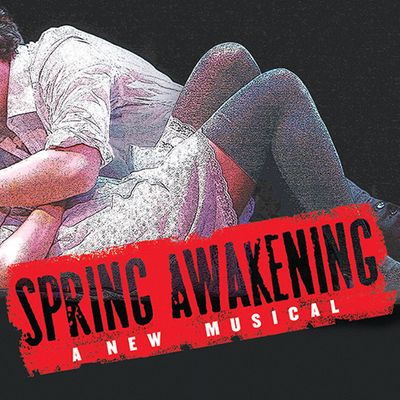
Earlier this year, EPIC put on a production of the Duncan Sheik musical Spring Awakening, and I actually did a special episode all about that show. If you missed it, you can listen to it here.
Donate to support EPIC’s paid employment initiatives and free programming.
Transcript
This transcript was automatically generated and might contain errors.
[0:00] Patrick Oliver Jones: In the realm of theater, balance is crucial, from managing the unique needs of performers to ensuring mental health support during rehearsals, and the industry is constantly evolving when it comes to this, as we must continue to challenge the toxic idea of perfectionism, and instead embrace the wonder of discovery. This is part of the distinct vision behind Epic Players, a neurodivergent theater company founded by Aubrie Therrien, who was named New Yorker of the Week back in 2016 for her work in this field. The mission of Epic Players is to offer professional opportunities to artists with disabilities and provide them with the skills and support they need to succeed, all while challenging the stereotypes that often limit their access to such resources and opportunities.
And earlier this year, Epic did a production of the Duncan Sheik musical, Spring Awakening, and I had a special episode all about that show. You'll find a link to that episode in the show notes. Well, I'm your host, Patrick Oliver Jones, and I'd like to welcome you to the second season of the Spotlight Series, a podcast all about those making a difference in the arts and beyond. After the break, you'll hear about Epic Players and what makes this such a special and unique theater company.
[1:26] Patrick Oliver Jones: Well, welcome, Aubrie. It is such a great pleasure to see you again, and so happy to bring you on to the Spotlight Series.
[1:40] Aubrie Therrien: I'm so happy to be here. Thank you for having me.
[1:44] Patrick Oliver Jones: Yes, yeah, I'm so excited about Epic Players. It was wonderful to see Spring Awakening earlier this year, and it was such a wonderful production. You must have been so happy with how it turned out.
[1:55] Aubrie Therrien: Oh, yeah, it was great. And I just love how our players kind of take over the material, and it's such a collaborative process, and we really see the spirit of Epic through the performance, without having to change anything in the show.
[2:10] Patrick Oliver Jones: Yeah, it was the, what I remembered, it was the exact same script and story that I saw on Broadway years earlier.
[2:18] Aubrie Therrien: Yeah, same script, same song, same music, same material, same everything, just with a bit more of our personality and our community involved.
[2:28] Patrick Oliver Jones: Exactly. Well, to start off today, I actually wanted to take a step back before Epic Players, and this is to May of 2016, when you were named New Yorker of the Week by New York One, which is a local news network here in the city. So tell us about that honor.
[2:45] Aubrie Therrien: Yeah, it was so lovely, and so kind of News One to spotlight me and my work in that way. I'd been working with a local community group doing neuro-inclusive performances for people with disabilities, but also people with developmental disabilities, autism, Down syndrome, etc. And we had worked really hard to start increasing visibility for that community in the arts. And News One got wind of it, and we were nominated for that, and I was nominated for the work that we were doing with the community, and they spotlighted us, which was so lovely. And the more I can do to spotlight the fact that neuro-inclusion should be everywhere, the more I will do. So I was really happy that more people got to learn about the work we were doing, and then from that point, Epic was founded after that as a jumping-off point for, now we really want to get into the more professional theater world. How do I make paid opportunities for artists with disabilities and continue to push for inclusion on a higher level of the industry?
[4:02] Patrick Oliver Jones: And what is it about specifically disabilities and neuro-diversities in particular that drew you to this type of performer?
[4:09] Aubrie Therrien: I've lived with disability in my family. I have a neuro-divergence around me for a long time. I also just got diagnosed as neuro-divergent, and my mother is a teacher for students with developmental disabilities. And when I was an actor, I would go on tour, and I would come during breaks to her classroom, and we would write plays based on the books the students were reading, and then put them on. And my mother and I just saw such changes in these students. These are students who did not have a lot of social skills, had some behavioral challenges, were not also very verbal, lacked a lot of confidence. And we saw these students who barely communicated with anyone in the class, all of a sudden take on the role of director, learn everyone's lines, like be the star for the entire school.
And it was really transformative. So I thought, you know, this is what theater is about, you know, to give people confidence, to tell stories, to be heard, to be seen, to be valued. And it's really also a scary process, right? It's terrifying getting on stage for anyone. So you have someone with a disability who's maybe been told all their lives they can't participate in this, or they can't do something, doing this amazing thing that neurotypical and non-disabled artists are also very fearful of and fail at. And they're doing it with confidence and grace and professionalism. It's a huge transferable skill and transformative moment. So that's what kind of drew me to that work and wanting to continue making art in this way.
[5:55] Patrick Oliver Jones: And as you said, it was just a few months after that feature of being New Yorker of the Week that you founded Epic Players. This was in August of 2016. And describe those early days and what exactly led to the establishment of this theater company.
[6:13] Aubrie Therrien: Yeah. So, you know, we grew really rapidly. The early days, I had left the other local theater group and a lot of my actors were like, what are you doing next? I want to do something else and I want to continue to learn and I want to do these shows. I was like, okay, well, I'm going to continue doing this work. So me and some colleagues and allies and board members formed a very small company. We had like 20 members. We had auditions and we wanted to do stories that they wanted to do. You know, before sometimes people with disabilities tend to be really infantilized and art and drama and theater is looked more as like therapy rather than, you know, something that somebody is born with that they love to do and they have talent to do and giving them the abilities to do that.
So that really is a difference of what Epic does is we do establish shows, you know, Into the Woods, Spring Awakening. So our players get the opportunity to play roles categorically denied to them. And then that role is neurodivergent. So that was a big difference with Epic. So our first season we did Dog Sees God, which was our first show. It's a hard, you know, it's a really in your face show. And we wanted to show like the disabled community wants to talk about this stuff and they want to be a part of it. And then we did You're a Good Man, Charlie Brown, which was much tamer. But we had sold out audiences. Our company after that year grew, like doubled in size, our supporters double. So we grew really rapidly. You know, we from 20 members in 2016. And now we have 140 members nationwide.
[8:05] Patrick Oliver Jones: Wow, yeah, that is quite a growth. And it seems like that you were filling a void that was there. And it seems like that that's why you grew not only as a company, but also from supporters as well.
[8:16] Aubrie Therrien: Yeah, a lot of people and it's so it's so amazing. And it reminds me why we do this. It's so worthwhile. Like, we there's a need. There's a need there. They're not opportunities for this community. They're growing, which is great. There's not as many opportunities as there could be. And a lot of people hear about us from word of mouth. You know, especially in those early days, they would come see a show they had no idea existed, saw themselves reflected on stage treated with respect, professionally paid, and doing their favorite roles. I mean, why wouldn't you want to be involved? We're also free. And we pay our actors. So that's a big perk, I think.
[9:00] Patrick Oliver Jones: But also, it can be a big headache and a challenge to you. How do you bridge that gap between, you know, being a free company, but then also paying your actors? How do you manage the financial side of that?
[9:10] Aubrie Therrien: I mean, it's a huge part of our mission. So it's not something we're going to negotiate on, you know, it's, it's, this community has been barred access from theater training and programs due to financial challenges, plus inaccessibility in general for accommodations. So it's not something that I could ever say, like, you have to pay for this, unless it's something that is, you know, highly specialized that we have to buy equipment for or something like that. But so that's one. And number two, paying people for their time and talent lets them know that we have confidence in them, we're hiring them as a professional, we have standards that we're upholding. And it creates a whole different dynamic within the company.
Now, financially, it is very hard to commit to this for sure. So we have a lot more resources per show. I don't even want to say that, because I don't want to deter people from doing their own show. But it's more so we have a lot of other line items as a nonprofit that you maybe wouldn't have. However, we have a really supportive community. And our donors and fans love this part of us and wants to keep helping to fund it. You know, Epic is a very mission first organization, and our money goes directly to our players, which sometimes it's very rare to see where exactly your money is going when you donate to a nonprofit. So I think that is important to our donors. We have a lot of institutional and government donors who are also pretty passionate about paying artists right now and paying artists with disabilities.
So we're lucky that that is, that is what is part of the conversation now. And for sure, when it comes to any theater, it can be very expensive to put on a show. I remember I did a musical last year, 42nd Street. Now it's a big show. It was a $2 million production. Isn't that crazy? I mean, it's crazy what some people will pour into. Now, for your company, obviously, you don't you don't need budgets that big for the small productions that you do. But at the same time, are there different, as you mentioned, certain line items in the budget? Are there certain things that you have that maybe another theater company wouldn't have?
[11:22] Aubrie Therrien: Yeah, that's a good question. So definitely our budgets are not $2 million per show. Maybe one day they will be. But our right now we invest a lot in access. So we have an access coordinator in our budget. And it's a really important line item for us. And that is a person who can be in the room and rehearsals and be somebody that our actors can say, like, you know, Jamie,
[11:45] Aubrie Therrien: I really couldn't access the script Aubrie sent around because it didn't fit with my screen reader. Is there a way we can adjust this? And Jamie will come to us and work with us on a solution. Or, you know, Jamie, I was unprepared for this rehearsal because I didn't get the agenda in advance. I really needed it in advance. Then it'll help with my anxiety. So Jamie will come with us and we'll work with a solution. It's just helping us to see those invisible ramps we can build that sometimes are hard to identify, you know, access isn't perfect, and it's always evolving. So that was a really important line item. Also access in terms of interpreters, captioning, audio description, those are important for our community, sensory tools, and even just the support in the room.
Not everybody is created differently. And sometimes people have conflicting support needs, right? So having our mental health counselor there to support our actors who maybe are feeling anxiety about certain things, or even their relationship with another player. And I would argue that any rehearsal room, having a mental health coordinator there to support you when you're feeling anxious about the process would be helpful for anyone. So we have that. And then we also have, because we have an adaptive timeline, and we really rehearse the same amount of hours as any Broadway or professional show, right? The six weeks, the blah, blah, blah. But we do it on an adaptive schedule because we're aware that our players have programs and jobs they fought for, and that we can't tell them to choose between us and them.
It's not fair. Our show is going to run for two weeks, even if our show ran off Broadway, six weeks. We can't tell them to give up their lives, right? So by having that adaptive schedule, sometimes we'll have to book extra space. So that is typically a line item. And accessible space right now in the city is at a high premium. Rents have quintupled. So it's been very hard. And then to that same vein, we might have multiple assistant directors on a project to help support actors who might need more one-on-one support or might need to have material broken down in a different way. Like instead of doing music, dance, and blocking in one day, we can separate it out or separate it into different rooms.
And that becomes more easily or easily digested by our players. And so it's a matter of bringing everyone together to do the same show, but recognizing their different place in the show and in theater in general, right?
[14:27] Aubrie Therrien: Absolutely. And I mean, at Epic, we try to do shows and we try to cast to show the unique diaspora of disability and the intersectionality. So for example, Spring Awakening, you saw folks of all different ethnicities, all different gender identities, all different sexual orientations, and all different disabilities. And within disability, you also have folks with lower support needs, higher support needs, different skill levels, different challenges. And we all share the stage. The kind of focus on equity, you know, that we all want to access this material, we just need to figure out how to access it in different ways, doesn't mean anybody is less than or unprofessional, or shouldn't have access to those things. So that is what I love about Epic, is you can see a show and you can go, I have no idea who identifies as what, it's just a really great show. And everybody's just so talented.
[15:28] Patrick Oliver Jones: Yeah, that was one of the things that I found so remarkable about that Spring Awakening production. And one of the standouts to me, he was a deaf actor and had a female actress doing his words as he signed it. And then they did a scene together. It was really so well done. And you know, everyone did such a great job. But that particular moment, that scene with the two of them doing it together, really stood out to me. So yeah, it's a matter of casting the show, so as to get as wide an array of people as possible, but also making sure that each role will be a success for each of those actors.
[16:08] Aubrie Therrien: Exactly. So we want to make sure anything we're putting on stage, our actors are shining. So when they're cast, you know, we are also teaching theatre, right? We're meant to, a lot of our actors have never had access to the stage before or training again. So we want to cast people who maybe have never been in shows, but have this talent want to do it. So in those situations, we'll cast them and maybe they'll be cast in a smaller role. But it will be an opportunity for them to shine and we'll figure out how to make sure they can access the material. You know, sometimes we'll cast folks in much larger roles and who also have higher support needs and that we need to make sure they can access the material in different ways, but they're going to shine.
So I think it's really important to share the stage in that way and make sure we're setting all of our actors up for success. I think sometimes in theatre, the show is all about the director, the director's vision and the ego and whatever going in the producer's vision, money. And for us, it's really actor focused. You know, how can we make sure our actors feel heard, respected, involved in the process and shine?
[17:35] Patrick Oliver Jones: Not only is it an acting company, but it's a training company as well. You do classes and you bring in artists to teach various aspects of theatre. How are those classes going?
[17:44] Aubrie Therrien: We're very excited. This year, we're working with the Society of American Fight Directors. We got a grant where the first organization in New York City has been granted a full stage combat class. So our company and I think 16 members are going to get certified in unarmed stage combat. I'm so excited. But we're also working, you know, with Stephanie Torrens from Broadway doing our musical masterclass. We have our songwriting class with Tavana coming up, scene study. We try to give our actors, you know, as much of a broad access to training as we can each year. All the classes are free. We work with our actors to figure out what they want. So they fill out a survey every year and let us know what other classes do they want to see, what skills do they want to learn. And if we can make it happen, we will. We had a sign language class two years ago, a year ago, two years ago. It was super popular too. And yeah, we just try to touch it all if we can.
[18:53] Patrick Oliver Jones: And you had mentioned this concept of invisible ramps. And so obviously being invisible means they're not seen probably until you get to that moment. What are one or two of those ramps that you and the company have had to discover over the years and tried to adjust to?
[19:08] Aubrie Therrien: Yeah, it's one of those things that you kind of discover. Because when you ask people their support needs, sometimes they know. And sometimes you're like, I have to think about that. You know, I don't know until I get in this space. I'm like that. And I've learned how to identify things. So it is a learn as you go. But some I think common invisible ramps we see are making sure people have the information in advance. I know that sounds small, but it helps everyone. And particularly it helps our actors with anxiety and knowing exactly what to expect in a class. And also giving that information in many different ways. So whether it's via email, whether it's a flyer, whether it's a phone call, whether it's a text, just making sure people have that information in a very accessible format.
I think another invisible ramp is making sure that everyone is heard in a class. So having some kind of structure. This is in a rehearsal space too. And making sure people aren't talking one over one another, because that can be really overstimulating for people. So having a room where there's a mutual respect, where people know we're not talking over one another, we're going to let another person finish and then we're going to go and we're going to have an established boundary. Yeah, and I think just assuming common competence. I think that is a huge invisible ramp. Again, we've talked about the disabled community being infantilized often, that we at Epic assume competence all the time. So we assume when an actor is coming in the space, they know what they're doing, they want to be here and they're ready and prepared to work. And we treat them as such. And that is a huge, huge access point and level of respect and an invisible ramp that makes our players feel valued.
[20:55] Patrick Oliver Jones: Well, and it's something that even me, whenever I go into a casting office or an audition room, that's something that I've heard from casting directors, that there is that assumed, okay, you have talent, now let's just see what you do with the material. So there's that kind of baseline. And it sounds like from what you're saying, that that's not always the assumption when it comes to someone with a disability.
[21:16] Aubrie Therrien: That's not. And we did a workshop, a couple of months ago, on inclusive leadership with a media company. And they came in and they watched a rehearsal of Spring Awakening. I talked to one person in the group after, they were like, I feel so bad for saying this. I almost feel like if I were a racist or something, that I came into this room and I heard disability and I expected one thing. And what you showed me was completely different than what I ever expected to see from the community that was described that he was going to see. It's like, yeah, that's called ableism. I'm glad that we were able to kind of debunk that stereotype in your mind of what our community is capable of.
[22:09] Aubrie Therrien: Right. And I think that it's so important to not only just realize the broad concept of ableism, but also that disability, as we've been talking about, means so many different things. Autism is so many different things. You know, just because someone's in a wheelchair, that can mean different things. So recognizing and realizing that each person has their own talent, despite whatever disability or challenge there may be in the process.
[22:38] Patrick Oliver Jones: Yeah, totally. That's very true. And so outside of Epic Players, in what ways do you collaborate with the broader theater community and promote awareness and understanding both of your company, but neurodiversity and disabilities in general?
[22:50] Aubrie Therrien: We work with a lot of partner organizations to try to spread the word of Epic. We just also expanded nationwide, which is a big step for us. So we have an Epic LA branch and our company has doubled in size there too recently, which is exciting. So we often try to work with casting directors on things like copy, on things like being inclusive in the audition space, on things like even breakdowns. You know, how are you going to write a breakdown that has the right language, that isn't offensive, that assumes competence, right? That isn't over-infantilizing.
[24:00] Aubrie Therrien: Welcome to The Spotlight Series. Today, we're diving into the incredible work being done by EPIC Players, a neurodivergent theater company that I founded. Our mission is to create professional opportunities for artists with disabilities and to provide them with the tools and support they need to thrive in the performing arts.
[25:00] Stephanie Torns: That's amazing, Aubrie. Can you tell us a bit about how EPIC Players started and what inspired you to create this space for neurodivergent artists?
[25:10] Aubrie Therrien: Absolutely! EPIC Players was born out of a desire to challenge the stereotypes surrounding neurodivergent individuals in the theater industry. I saw firsthand the lack of representation and opportunities for these talented artists, and I wanted to change that narrative. We focus on creating an inclusive environment where everyone can express themselves freely and authentically.
[25:18] Stephanie Torns: It sounds like you’re really making a difference. What are some of the specific initiatives or programs that EPIC Players offers to support neurodivergent actors?
[25:26] Aubrie Therrien: We offer a variety of programs, including paid employment initiatives, workshops, and free programming that focuses on skill-building and professional development. Our goal is to ensure that neurodivergent artists have access to the same opportunities as their peers, and we work hard to create a supportive community where they can thrive.
[25:34] Stephanie Torns: That’s fantastic! I know you recently put on a production of "Spring Awakening." How did that experience go for the cast and crew?
[25:42] Aubrie Therrien: The production was a huge success! It was an incredible opportunity for our actors to showcase their talents and tell a powerful story. The experience was transformative for everyone involved, and it really highlighted the importance of representation in the arts.
[25:50] Stephanie Torns: I can only imagine! What feedback have you received from the audience and the community about the impact of your work?
[25:58] Aubrie Therrien: The feedback has been overwhelmingly positive. Many audience members have expressed how moved they were by the performances and how they appreciated seeing neurodivergent artists on stage. It’s heartwarming to know that we’re changing perceptions and opening doors for more inclusive storytelling.
[26:06] Stephanie Torns: That’s so inspiring! What do you see as the future for EPIC Players and neurodivergent representation in theater?
[26:14] Aubrie Therrien: I envision a future where neurodivergent artists are not only included but celebrated in the theater community. We’re working towards expanding our reach and creating more opportunities for collaboration with other organizations. The more we can advocate for inclusion, the more we can shift the narrative in the industry.
[26:22] Stephanie Torns: It sounds like you’re on the right path! For those who want to support EPIC Players, how can they get involved or contribute?
[26:30] Aubrie Therrien: There are several ways to get involved! People can donate to support our initiatives, volunteer their time, or even attend our performances to show their support. Every little bit helps us continue our mission and create more opportunities for neurodivergent artists.
[26:38] Stephanie Torns: Thank you, Aubrie, for sharing your journey and the important work you’re doing with EPIC Players. It’s truly inspiring to see how you’re making a difference in the lives of so many artists.
[26:46] Aubrie Therrien: Thank you for having me, Stephanie! It’s been a pleasure to share our story.
[26:54] Stephanie Torns: And thank you to our listeners for tuning in to The Spotlight Series. Be sure to check out EPIC Players and support their incredible work in the theater community.
© Broadway Podcast Network, All Rights Reserved