

Tom Kirdahy is a successful Broadway producer with several shows running in New York concurrently. He brings his extraordinary experiences as an activist and leader during the AIDS crisis, as well as his many years as loving husband to playwright Terrence McNally to the work he does today... Read More
From the show: The Quiet Part Out Loud
Featured Shows


About
Tom Kirdahy is a successful Broadway producer with several shows running in New York concurrently. He brings his extraordinary experiences as an activist and leader during the AIDS crisis, as well as his many years as loving husband to playwright Terrence McNally to the work he does today. It is through enormous loss that he moves forward with grief, but also with gratitude and passion.
Transcript
This transcript was automatically generated and might contain errors.
[0:00] Bobby Steggert: I'm Bobby Steggert, and this is The Quiet Part Out Loud.
[0:15] Bobby Steggert: Loss is something that, ironically, we are losing the capacity to face head-on. I think it must have something to do with an ultra-materialist society like ours, one that is now buying and selling our most valuable assets, our time and attention, and perhaps because of this distraction, we tend to forget how little of it there ultimately is. I think about the denial of death a lot. It's a psychological phenomenon, even before this century hurling forward at breakneck pace, enables people to literally get through the day without constantly thinking about their demise. We tend to be protected by an assumption of invincibility that can obstruct our actual transience. There's a line in my favorite musical, Caroline or Change, at its very end, when Caroline is taking leave of Noah, the little boy who she's basically raised and who she'll never see again, and her final words to him are so strikingly straightforward as to belie their power.
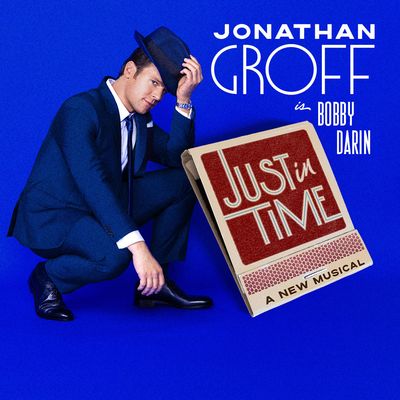
You'll be okay. You'll learn how to lose things. And now, in my middle age and in my job as a therapist, I've come to a clearer understanding that to live a satisfying life is not simply to attain and ascend and succeed, but to let go and release and accept. We grow through loss. There are some people who, only after a longer expanse of time, reveal themselves to be central to who you've become. Tom Kirdahy is one of those people for me. You likely know him as a wildly successful Broadway producer. This year alone, he had Ragtime, Hadestown, Just-In-Time, and Little Shop running concurrently. He began his career as a producer right around the time I was beginning mine as an actor. And it was through an earlier Ragtime that I met his then-husband, Terrence McNally.
Terrence was many things to many people. To me, he was a champion and a friend, and we would go on to work together on one of his final plays, Mothers and Sons. Tom produced both of those productions, and over those years we would have so many conversations about his life prior to Terrence, prior to the theatre. He'd been a lawyer during the AIDS epidemic and was central in the battle against it. When we met, he was a theatre person who was entirely present in the world we inhabited, but he was someone with a deep and profound commitment to much larger principles, values of justice and representation, and a belief in humanity. Without knowing it, he was teaching me that meaningful contribution is possible in many places, and that the values in one's work is far more important than the visibility.
This was a core lesson for a young actor who just wanted to be seen. Tom and I discussed a whole range of losses, from early childhood to AIDS to Terrence's passing in 2020. In listening to the conversation again, I was struck by how grounded Tom is in expressing his loss, and how he's able to find such surprising gratitude through it. I hope he offers the same for you as he does for me, a perspective that makes it a little less impossible to face the inevitable loss that awaits us all.
[3:34] Bobby Steggert: So, as I've been thinking about you since we've emailed, I've been thinking about this idea of loss, of course, and how we evolve through loss. I would really love to talk about how you learned about loss through the AIDS crisis. Before that, as a kid, did you know loss? Was there anything about loss as a young person that you confronted and grew to understand?
[3:45] Tom Kirdahy: I think yes, and it may sound strange, but I really remember we had a dog growing up, and Peaches got hit by a car, so it was a very sudden loss.
[4:03] Bobby Steggert: How old were you?
[4:15] Tom Kirdahy: I think I was six. I was just heartbroken. And we buried her in our backyard, and my brother made a gravestone for her, and it just said, Peaches was loved. And I really remember that being a sacred place in the yard. And that remains a very vivid memory and a very painful memory.
[4:43] Tom Kirdahy: Then my father was probably my favorite person who ever lived. And his father, my grandfather, was just an angel. And we had a wonderful relationship. And when Pop died, it was the first time I ever saw my father cry. And I really remember in that moment understanding I would never see my grandfather again. And not necessarily really fully grasping what that loss meant, but there was a realization that my father felt loss, and that the kind of abstraction of their father-son relationship became very real to me. And his pain made me understand something, I think, about the permanence of loss and the necessity of spirituality.
[5:41] Bobby Steggert: At that age, when kids can't quite engage in the idea of permanence, it actually downloaded into your understanding?
[5:48] Tom Kirdahy: A hundred percent. I remember my grandfather was Lebanese, and my brother said to me, Pop's on his favorite hill in Lebanon right now. I remember that like it was yesterday. And that notion gave me a kind of comfort that he was still with us somehow, but he was in a place of peace.
[6:09] Bobby Steggert: And so your first instinct towards spirituality was that connection being alive?
[6:14] Tom Kirdahy: Yes. Yeah.
[6:15] Bobby Steggert: The loss I know you two have confronted, of course, is the AIDS crisis, as everyone in your generation did. But I think it's important for people to know how you engaged in it. They might think of you as just a theater artist. And what would you like to share about how you confronted that enormous loss?
[6:32] Tom Kirdahy: Yeah. I went to NYU, and I arrived, I applied to one school. I knew there were gay people in Greenwich Village.
[6:41] Bobby Steggert: That's exactly what I did. That's why I came here.
[6:45] Tom Kirdahy: And it was 1981. And I grew up in suburban Long Island, very middle class, knew I needed to be around gay people, applied to one school, came to NYU.
[6:55] Bobby Steggert: Did you study history?
[6:58] Tom Kirdahy: Politics and dramatic literature. And the summer of 81, I got a job at NYU Medical Center. So before I moved in, I got a job at the hospital. And that summer, in July of 81, was the first time the New York Times wrote about this mysterious disease that was...
[7:16] Bobby Steggert: Page six, and it wasn't even on the page.
[7:23] Tom Kirdahy: Exactly. And it was gay-related immune deficiency. And I had come to New York to come out. And all of a sudden, I was admitting gay men. I was still closeted, but I was admitting gay men into the hospital, sick already. And most of them were leaving sicker than when they entered. And I remember seeing these men wasting, and so many of them, so beautiful. And even as I knew that they were sick, they had something that I didn't have, which was freedom, a sense of identity. And I just clocked all of it.
[8:07] Tom Kirdahy: So during my college years, 81 to 85, I was president of student government and got very active in AIDS education. We were the first school in the country to have condoms in dormitories. And I was president of the student government. I was like the prince of prophylactics. And we did a lot of AIDS education or HIV education on campus and safer sex information. And then I graduated and went to law school at NYU. I still thought, by the way, that I was going to be either a civil rights lawyer or an entertainment lawyer, specifically in theater. I studied dramatic literature and politics. I had these two passions. And by 88, I was a full-blown activist when I graduated law school. By the time I graduated, AIDS was ravaging the community. And I was negative and realized I needed to do something to help the community. People my age were dying everywhere.
[9:13] Bobby Steggert: Were you in relationships? Were you avoiding them?
[9:16] Tom Kirdahy: No. Wow, it's such a good question. I was in a long-term, wonderful relationship with someone I'm still very close with. We were together for seven years. And he was working at a bank and couldn't be out at work, but really supported my activism. And so I wound up taking a job providing free legal services to low-income people living with HIV and AIDS. Specifically, it was the first project on Long Island. At the time, I thought, I'll do this for two or three years. We're going to get this thing under control. And there were no protections for people with HIV during law school. So sometime between 85 and 88, the city council finally passed a human rights law that gave protections for people based on sexual orientation.
There weren't even legal protections. It's like a lifetime ago. But I took this job, I made $23,000 a year, and I did a reverse commute. I stayed in Manhattan because I was living with my partner and created the first HIV legal services project on Long Island. I did that for about two and a half years. Then I got a job at Gay Men's Health Crisis, creating with others, again, and not all by myself, the first Immigrants with HIV project and the first Bronx legal services project for people living with HIV. Those projects were specifically, obviously, the Immigrants with HIV project was for immigrants in New York, documented and undocumented. And in the Bronx, we were creating a Woman with HIV project.
I worked at GMHC for a few years, and then I became director of legal services at Bronx AIDS Services and was there. I did HIV work for almost two decades. I thought it was going to be a short stint. And when I think back on it, my best friend died from AIDS when we were both 30. That was in 1994. And so it was doing the work all day and then taking care of your friends at night. It was hard. It was your whole life. It was my whole life. It was genuinely my whole life. I wouldn't trade it for anything. And it was enormously painful. It was also joyful. I felt the kind of deep connection with community that I think few others get to experience.
[12:02] Bobby Steggert: Okay.
[12:03] Tom Kirdahy: And I feel like what a blessing that was and remains for my life.
[12:08] Bobby Steggert: And were you always someone who responded to what probably felt like insurmountable challenge with action?
[12:15] Tom Kirdahy: Yes.
[12:16] Bobby Steggert: What is that about you?
[12:17] Tom Kirdahy: I don't know. In elementary school, we had a snack time and that got taken away. And I formed a group called Kids' Rights. We wanted our snack time back and we got it back. And I'm lucky because I also always had teachers and parents and people around, adults around me who admired the sort of belief in democracy.
[12:44] Bobby Steggert: You were justice-driven too.
[12:46] Tom Kirdahy: Yes. I was very justice-driven. I do not, when my parents were away and my sister and I could stay up late one night and watch To Kill a Mockingbird. And when I saw that movie, I wanted to become a lawyer. Like that literally, there was a very specific moment I wanted to be like Atticus Finch. But I think of Terrence passed away in Florida and I became very active. We were together in Florida at the time. And when he died, I stayed down there for a while. And when I see books being taken off shelves and the kind of crap that's going on in schools down there, I think, even when teachers didn't agree with my beliefs, I just always had, I was surrounded by educators and parents and people who thought, it's great that this kid believes in democracy and in change and in being a part of the system that was always celebrated.
[13:43] Tom Kirdahy: And so I weep at what I see happening in this country right now and how kids and young people or even not young people, the way that this particular government is getting in the way of the exercise of free speech and a belief in democracy. I really, it makes me sick to my stomach. And it's always been in my DNA. I don't particularly know where that comes from. I was raised in a Catholic household where service to others was really important. Like we went to soup kitchens and it was love thy neighbor and feed the hungry. That makes me think about.
[14:21] Tom Kirdahy: The real ethos of Catholicism is about those less fortunate.
[14:25] Bobby Steggert: Yes.
[14:26] Tom Kirdahy: Did that prepare you in any way to face what was happening during the 80s with less fear?
[14:32] Tom Kirdahy: I believe it did.
[14:34] Bobby Steggert: Yeah.
[14:34] Tom Kirdahy: No, I really did. I didn't think about it a lot. Like, I wasn't afraid. I was afraid to lose more friends. I was afraid of heartache, but I wasn't afraid of... I understood I could be fired for being gay. I understood that people would probably not love me because I was taking care of people with AIDS. That equation I got. And sure, I guess there was some initial fear around that, but I was much more afraid of loss than being judged. And that was really an engine for me.
[15:10] Bobby Steggert: This might be an overly simple question because it can't ever encapsulate what it must have been, but what did it teach you about loss? Seeing so many people that you loved and cared about so unfairly taken away?
[15:23] Tom Kirdahy: Oh God, that's not a simple question. I think I'm still figuring that out. For me, it certainly taught me that no life should be lost in vain and that in order to find purpose or make sense of any of it, I needed to make sure that the clock wasn't turned back. I sat... Edie Windsor, the plaintiff in the Defense of Marriage case, was a good friend, and I attended the Supreme Court hearings as her guest. And this may sound corny, but Terrence and I were in the hotel with her the night before the arguments, and entering that courthouse was really a reminder of all those lives, all that loss. That was not in vain. They informed her courage. And every moment, every time I still, every time I see two men or two women getting married, I cry at weddings, period. But there is a kind of added beauty to it.
[16:32] Bobby Steggert: That's amazing to me that you can draw the line from the young men and young people who died all the way to marriage equality.
[16:38] Tom Kirdahy: Without a doubt.
[16:39] Bobby Steggert: Of course.
[16:40] Tom Kirdahy: Without a doubt. So I had a case in the Bronx where my client, who had AIDS, lived in a rent-stabilized apartment and his partner died. At the time, there was no marriage. Actually, at the time of this case, there was a domestic partnership registry in New York City, which was really a public recording of a private commitment. It was just saying to the world, we are domestic partners. And you could use that to get insurance in certain instances. But during the crisis, very often in the absence of marriage, landlords wanted to get surviving partners out of the apartment so that they could raise the rents and especially control the rent-stabilized apartments. There was a case where a couple had been together for many years, and the landlord wanted to evict the surviving partner because there were no successorship rights.
There was no family. They argued that they were not a family for purposes of the rent stabilization regulations. The highest court of New York, the Court of Appeals of the State of New York, found in Brodsky v. Stahl Associates that if a couple could show financial and emotional interdependence for over two years, successorship rights could be granted, which really was an indignity. So you had to show up in court and present the court with anniversary cards and prove it, prove it, prove that you were in love. And there was no way of doing that. So in the case of my client Orlando, they had not been living together for two years, but they were a couple for 16 years. And we went into court, and they were domestic partners.
And I was about to litigate a case with a guy in a wheelchair who was saying, yes, I did love this man, and I can prove it. They had a domestic partnership certificate, and they had done about 13 months earlier. This is going somewhere. And if we won that case, it would have reduced the two-year obligation to just the showing of a domestic partnership certificate. And the landlord settled, and the judge wouldn't let me litigate the case because it would have created precedent. And so at the Supreme Court, I really remember thinking, like, we had to fucking show that we were in love. And a couple that went to Vegas and got married overnight that had never known one another, a straight couple, had more rights than we did. And so my presence was very much about all those lives lost. It was for Orlando, specifically.
[19:47] Bobby Steggert: Orlando. And of course, when you and I met, people might not know this, but I was a young actor, and you were a young producer, right? You had just started producing, God Tells What I'm Here First, Maladuce by Terrence.
[20:00] Tom Kirdahy: Yeah.
[20:01] Bobby Steggert: This is a question that came to me today. You two were so in love, and I could tell it was so important to you to give him, as just the sliver of your relationship, a wonderful final chapter, not only personally, but professionally. But I've always wondered how conscious it was between the two of you that you were so much younger and that you would lose him.
[20:20] Tom Kirdahy: We were aware within seven months of us meeting, Terrence was diagnosed with lung cancer.
[20:28] Bobby Steggert: That's right.
[20:28] Tom Kirdahy: And so our first date was in July. We met in June. Our first date was July 29th, and it was going well. We both knew something extraordinary was happening, but then he went out to Chicago to do The Visit with Kendra Nebb and Chita Rivera. I was still doing HIV work. 9-1-1 happened, and it was just like, oh my God, what's going on? The Visit was opening in October, so a month after 9-1-1 happened, and he said, I'd really love for you to come to the opening, but I understand if you don't want to get on a plane. No one was getting on planes. I got on a plane. There were three of us on the plane. I thought, this better fucking work. And that was a magical weekend, and it was very clear that we were falling in love.
It was truly clear that we were falling in love. Terrence really said it before I was able to say it, but then in between that early October experience and Thanksgiving, he was guiding us with lung cancer. We made plans to be together for Thanksgiving in Key West. He had a home down there. I got down there. We had the greatest weekend of our lives, and on that Sunday when I was flying home, he said to me, I have to tell you something, and it was that he had lung cancer, and he said, this may be more than you need or want, and I just said, listen, if you're telling me to go away, I understand, but I want to be with you and for you, and so began a really unusual love story where we just fell more deeply in love.
A lot of our courtship, a lot of the early days or the first year of our relationship was spent at Sloan Kettering Hospital, so yes, mortality hovered over our relationships and the age difference. We talked about it, and we never felt it, strangely. Every now and then, we'd look at a photo, and Terrence would make a joke. Wow, look, it just wasn't in the room. There are some people who just aren't them. Yeah. He was just Terrence. Yeah. 60, 80, 70, who knows, but Terrence. He had such a naughty twinkle in his eyes and a deeply loving one. He was, he loved you, you know that.
[22:44] Bobby Steggert: I think the only time I felt it most acutely, the age difference, was when he met my parents, and because he was closer in age to them, he was younger than them, but I had never dated someone older. It wasn't like I had a type. I felt so madly in love. It just worked. There were two things that went through my mind when he met my parents, which was my mom's still alive. They were very Catholic, and I wondered if they would feel the age difference, but I also was nervous that they would Google him before meeting him and read about Corpus Christi. The gay Jesus place.
[23:22] Tom Kirdahy: Yeah, and I have to tell you, my parents were crazy about him. The minute they saw us together, and I think that was with anyone who saw us together. We were just, we were in love. Yeah, there was no question. When it came to producing, how aware were you of wanting to make sure his voice was given its due?
[23:40] Tom Kirdahy: Very, yeah. I'm the litigator at heart. I learned how to do that in a very scrappy way. I had no resources. I was always the underdog in court. I didn't have a paralegal or an assistant or an army of associates. It was me against big firms most of the time, but I really had a passion for justice, and so to me, Terrence's work, Terrence's voice mattered, and so yeah, it was mission-based.
[24:09] Bobby Steggert: His voice rhymes with yours.
[24:17] Tom Kirdahy: I think so. Yeah. Yeah. It was just a different use of his voice.
[24:22] Bobby Steggert: Yeah, yeah. We had a lot of fun together. Did you feel like part of your role was protector?
[24:27] Tom Kirdahy: A hundred percent, yeah. How could you not if you're in the hospital with them for the first year? I always helped out with my friends, with my community. I just had some skills that I feel like I had an obligation to use, and I'm very protective.
[24:42] Bobby Steggert: Hearing your stories about early New York, I have to assume that you were less afraid of doctors and hospitals.
[24:46] Tom Kirdahy: Here's the funny thing. Yes and no. When it comes to myself, utterly terrified. Yeah, yeah. Or far less so now, but in high school, I was the president. Unsurprisingly, I was president of the student government. I did a blood drive, like always community-minded, and so we had the high school newspaper come, and I was going to donate blood, and they took my blood pressure, and I passed out. I feel like I could see other people giving blood. I just, I'm a bit of a wimp when it comes to my own stuff, but completely fearless when it comes to anyone else in a healthcare setting, like utterly fearless.
[25:32] Bobby Steggert: And really then seeing people at their truly most vulnerable.
[25:34] Tom Kirdahy: Yeah, yeah, and that tend to bring out the best in me.
[25:39] Bobby Steggert: Yeah. Was Terrence afraid of being exposed to you in his most vulnerable states?
[25:44] Tom Kirdahy: I think early days, yeah, but he was, do you know the play Frankie and Johnny? He was Johnny. He, from day one, said that I keep telling love of me at first sight, and I don't really consider myself love at first sight material, and he meant it. He was in love, and he was also deeply trusting, and so he became able to be vulnerable in front of me pretty quickly, and we got through that very quickly, and I think that my aides were, helped that a lot. It was not unusual for me to have to bathe people and really achieve a level of intimacy, non-sexual intimacy. Obviously, Terrence and I had sexual intimacy as well, but I don't think I had the capacity to be vulnerable in the way that he did. He developed so quickly our relationship.
[26:41] Bobby Steggert: Yeah, gosh, that's so beautiful to hear, because I thought of him as transparent, extremely transparent, but to also be so vulnerable with you was probably such a huge gift.
[26:49] Tom Kirdahy: It was amazing, and you really cut to the chase when you have to handle bedpans and all of it.
[27:00] Bobby Steggert: When we did lose him, when you did lose him, at the worst possible time, were you alone?
[27:06] Tom Kirdahy: We were in Florida. It was March 24th of 20, so it's six years ago, and it was hell. It was literally nothing short of hell. We knew he was getting worse, and I took him off a respirator. I got to be in the room with him. This was early days of COVID. No one knew what was happening, and when he passed, I was hazmatted up, and I said to the physicians and nurses, what happens now? Shouldn't I be tested? They were unable. There were no tests at the time, and you had to have symptoms in order to get a test. I had to go home and quarantine for 16 days, so I couldn't hug another human being. I was literally alone, and it was headlines everywhere. The fear, I don't know if you can remember what it was like, so it was very public.
He was on the cover of the Sour Stone of Paper three times in a row. It was every ... I was quarantining in my condo, and I did have some really lovely neighbors that left food for me, but there were protocols in the building, and I could not leave, so it was like early days of AIDS. I was a potential carrier. I didn't know. My mother wanted to come and visit me, and I said, Mom, I don't want you anywhere near me. It was hell. It was agonizing. It was terrible. It was truly terrible. Weirdly, in hindsight, I actually am.
[28:43] Tom Kirdahy: Grateful for the time I got to be quote alone with him because it was on some strange level it was on my terms like I could just cry with him. I could sit on my balcony with him. I could have conversations with him. Terrence was never subtle as you know, and I felt his presence in a way that was intense like he was in the Bardo. He wasn't quite gone. He was not like he was it was I like it. I don't want to sugarcoat this it was hell. Yeah, but when I think back, I'm actually grateful for some of that time because I had certainly some of the most profound moments of my life and deeply spiritual. It's felt him. I still feel her. Yeah, I still talk to him and doesn't really feel like conversation as opposed a hundred percent.
Yeah. Yeah. Yeah. I'm fun, by the way again this week was the anniversary of his passing and I was braced for a really hard day and the weather was gorgeous and I'm in a wonderful new relationship and John said are you okay? I know I just said honestly I'm just having the most beautiful day. I heard from people from all over the world, but I just laughed to most of the day and I had my pride but it was beautiful. I have so much gratitude. I'm sober as you know I'm in recovery for 25 years. I think that was some of the fallout of AIDS. I put my grief into a bottle and a vial but yeah, Terrence remains very present and John my partner is very welcoming of place in our God better be he's here. Yeah, remember mothers and sons? Of course, yeah, just my insurance was somebody who understood lost on a level as deep here as you did. Yeah, yeah, and didn't pretend it didn't happen. Yeah.
[30:37] Bobby Steggert: You're also making me think about how being forced to face a reality without your community's probation and that would have been wonderful, but I wonder if it enabled you to face a bully.
[30:48] Tom Kirdahy: I think he did Bobby. I remember literally lay on the kitchen floor almost a fetal position. I didn't know that emotional pain could be so physically painful and I really remember it'll just sobbing. Sobbing. I don't think I was aware of it at the time, but I am now grateful that I didn't have to always put up a front for other people.
[31:14] Bobby Steggert: Yes.
[31:14] Tom Kirdahy: I could zoom zoom connected us during those days and but I could get off a zoom and allow myself the tears that I wanted to feel and have the conversations and I really remember one night which a thing what are you trying to tell me? I just need to understand what it because I really felt him just all around me.
[31:34] Bobby Steggert: Did you get any sort of answer about that?
[31:36] Tom Kirdahy: No, but I felt comfort. I felt him protecting me but not no.
[31:41] Bobby Steggert: No, I think one of the last things I want to talk about is evolving with grief. I know you can't accordion several years six years into a moment but with a little bit of perspective, how did you find your way into the next chapter or Aaron?
[32:01] Tom Kirdahy: Oh, you I think probably a great therapist. I again, I'm what one interesting thing is when Terrence died and remember I'm alone for all this time if you never occurred to me to drink or do drugs.
[32:25] Tom Kirdahy: That's wonderful. And we had booze in the apartment like literally never occurred to me and my younger brother my amazing brother Neal said to you like can I just ask you a question? Are you okay and then like meal I'm in a lot of pain. He said do you feel any tempted to drink and I just said? Actually, it never occurred to you and it did and I think that kind of being in the program helped me not run away from processing grief and I do have a very spiritual side. I don't know it lacks definition but significant and it's always been a you know in this conversation I tapped into stuff I hadn't thought about in the years so I felt very comfortable talking about my pain early in my recovery. I went to Betty Ford's and I had a wonderful counselor could see right through me and she understood that for me gratitude would be a key to my success and sobriety and a citizen of Denver 90 of she thousand I have literally made my bed every day and just done a gratitude prayer and I did that throughout my grieving process. I remain so grateful for the time I had with Terrence and I think that helped profoundly.
[33:50] Tom Kirdahy: For three years I wore his ring. I didn't even consider going on a date.
[34:03] Bobby Steggert: Did you work a lot?
[34:03] Tom Kirdahy: I worked like yeah, like total workaholic. And something I'm very proud of is through all of kovat I understood I had an obligation to my staff and I kept everyone on full-time. Wow, and we met every day via Zooming even at the darkest time because I felt responsible for other people's lives and but selfishly it gave me some structure and on some level I think what are we doing? I don't even know but we filled the time and I worked a lot and like just in time which is now a smash hit on Broadway. We were putting that together. It was just my dad. It was yeah, and we worked on that a lot during that time interestingly, and that was very healing and the hardest thing of moving from doing HIV work to producing theater was I worried that suddenly I wasn't gonna maybe making a difference and I did understand intellectually that telling stories and reaching a big audience you can really change hearts and minds and have a massive impact but emotionally I didn't buy it and now I did now I really even sitting with you right now I haven't seen you in so long but doing mothers and sons.
We were reaching people we were you could feel it every single day. You could feel it and started this for a while it was just such a what was it? It was a group effort. It was really harmonious. Yeah, too. Yeah. Yeah.
[35:42] Tom Kirdahy: It's so after three yet like there were some things like I did need to know that I still knew how to have sex so even figured that out me. It's been a few years does my body even respond a little bit like oh my god this is so strange. And so figured that out before the ring came off. I'm like I had means but that was weird and the most interestingly during that I didn't want to have any I didn't want to make love or have any sex tied to any emotions so it was like but I wanted to make sure that I still had an aptitude and that so that was good and then after three years, I took the ring off. I'm not that I wanted to ever leave Terrence or Terrence to leave my side or even I still wasn't interested in meeting anyone, but I understood that there was no way I could entirely move on or grow properly in a healthy way unless I at least took Terrence's real.
[36:47] Bobby Steggert: Do you believe that he totally gets it?
[36:48] Tom Kirdahy: Yeah. Yeah, I think he is very happy. I was devastated. Yeah, no, and I think he really would want me to be happy I know that and we had conversations about it. I just wasn't ready and then but Bobby I've never been on an app. How did you start dating then?
[37:10] Tom Kirdahy: I like met cool. I had just out and about yeah. Yeah, and then year four not planned I had become friends with John my partner. I got to know him a little bit in Provincetown. He was performing one night and his hands went in the air and I saw a ring on his finger and then he went thunder damn and I had no idea had a crush on him. I had never felt anything like that since Terrence's passing had gone on date where I really liked people but and then his hand went up in the air again and the ring was on the middle finger and I thought I had a shot. It was just like a fashion statement. Yeah. Yeah. It was a family like his grandmother's. Yeah, and then we just got to know each other better and things evolved and several months after that we fell in love, but the first thing that speaking of spirituality and Terrence the first time he came to my house he was gonna place the music for me that he had written and I just wanted sort of notes and thoughts on it and he said don't be put off by this dot.
I'm not really a wool person but I brought you something and I don't want you to think less of me because I'm not just a new-age guy, but I brought you this. It's an elephant God. His name is Ganesh and Terrence wrote a play called a perfect Ganesha. There are Ganeshas all over my home and I just got very choked up and I was like, you know the Indian God can I know Ganesha? I've been reviewing her of obstacles and I really literally felt like Oh Terrence is weighing in here and approves of this was it was so random and so began an amazing love story I'm truly in love. I feel like my heart has been resurrected and I really I'm so grateful to John for just making so much space for Terrence and their relationship, but I'm grateful for Terrence for I think sending John to me so really there since then has been a sense of freedom to be in this new face.
[39:18] Bobby Steggert: Yes.
[39:18] Tom Kirdahy: Yeah, there's new era. Yeah. Yeah. Yeah.
[39:21] Bobby Steggert: So final question you were talking about gratitude and you even talked about the gratitude of getting to be of service to people on their most vulnerable times. What are you feeling most grateful for today?
[39:34] Tom Kirdahy: I'm grateful for the work I get to do. I'm grateful for John. I'm grateful for my 95 year old mother who's still alive and sharp. I'm grateful. There's a no King's Rally tomorrow. I'm really grateful at this. I'm literally I'm so grateful to the people of Minneapolis who I think have woken this country up in a way that we may not have been so awake. I am really distressed about the state of our democracy. I watched what happened in Minneapolis and I'm like so inspired. I'm grateful ragtime is on stage at the Beaumont. I'm grateful for Hadestown, which is being released and little shop and just in time. I want to tell you how grateful I am for you for a very specific reason which is that you and Terrence but you even more especially for part of the reason I have such a great career but also part of the reason why I have my great career now because when I was younger we would always talk about your service and how important justice work was to you and you were instrumental in helping me understand that social work was the thing that I needed to get to next. So not only did you write my recommendation letter for school? But you were like a template for me and I'm not sure if I'd be here without you so I really I'm grateful to know that's amazing.
[41:01] Bobby Steggert: I really remember our conversations like a lot. You've just always been such a thoughtful human being and sometimes it's hard to I think it's important that we tell our stories and that history is remembered and I sometimes worry that next generations of queer folks don't quite understand what life was like during AIDS and certainly before then again, it's so hard to imagine that we didn't have any protection like you could be kicked out for being gay and like they could say we don't house faggots here and there was no recourse and you were always interested in history in our history and in our place in the world. And I'm honestly really grateful for that because it's sometimes it's like oxygen.
[41:51] Tom Kirdahy: Oh my god, so we can't.
[41:51] Bobby Steggert: Oh, that means a lot.
[41:55] Tom Kirdahy: Yeah, and I worry about this next generation, too and I'm inspired by the freedom the big experience so inspired by it. Yeah, it's wild. I hope that they're curious to meet you and look it's not ours to determine. I mean, it's their world and I think it's so exciting sometimes it's but also it like the level of freedom is really I love that people don't even come out anymore coming out was a specific act for us.
[42:23] Bobby Steggert: Yeah, I stopped my parents down after an episode of Cheers cuz they'd be in a good mood. They loved cheers and it's like mom and dad gotta tell you a good time.
[42:33] Tom Kirdahy: Yeah. Yeah, and they were great, but I have a nephew who just never came out. I mean, yes. Yeah, and right he's amazing, he's absolutely brilliant and just like utterly comfortable in his skin and just never felt a knee.
© Broadway Podcast Network, All Rights Reserved