

One of the most fun and most productive events we had this year was our “Take Charge of Your ’21” Challenge in January. Over 500 TheaterMakers joined us to hear tips and strategies on how to have your best year yet from super successful people in the business... Read More
From the show: The Producer's Perspective Podcast with Ken Davenport
Guests
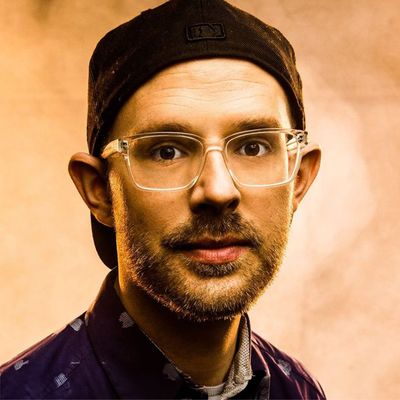
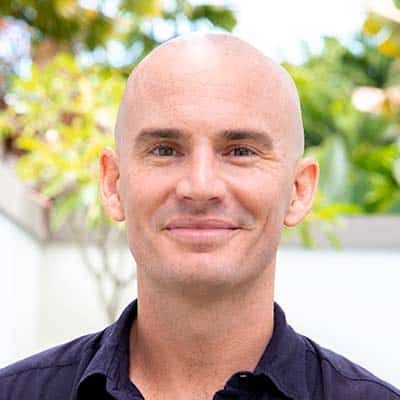
About
One of the most fun and most productive events we had this year was our “Take Charge of Your ’21” Challenge in January. Over 500 TheaterMakers joined us to hear tips and strategies on how to have your best year yet from super successful people in the business.
We learned how to crush writer’s block, how to squeeze a few more hours into each day for your REAL work (not that day job work), how to increase your confidence . . . and more.
We got such great feedback on this free event that we decided to do it again! But better. 🙂
I’m proud to share our free “Places, Please” Challenge which will kick your theatermaking in high gear!
Why now?
Two reasons.
First, I don’t know about you, but even though I’ve been out of school for (mumble, mumble) years, I STILL think the start of the school year is the start of a NEW YEAR for me.
So what better time than RIGHT NOW to re-evaluate where we are, and develop a plan on how to accomplish all that we want to accomplish as we sprint toward the end of the year.
Second, this is a PIVOTAL time for the theater and for theater-making. First, we’re finally opening up again. So not only do we need to be ready to get out of the zoom rooms and into a rehearsal room again, but I believe that a renaissance is around the corner. And that means opportunities. Opportunities for more new voices in the theater than ever before.
And you want to be ready, right? I mean . . . we just went through a crapper of a year. Well, the sun is coming out tomorrow, so let’s take advantage of it.
That’s why I assembled some of the smartest and most motivational and inspirational theatermakers I know to give you strategies on how to be ready for the renaissance.
And they are all coming to you for free as part of the “Places, Please” challenge!
Referenced in this episode:
- Check out the TheaterMakers Summit: www.theatermakerssummit.com
- The TheaterMakers Facebook Group: www.facebook.com/groups/theatermakersstudio
- Continue the conversation: www.instagram.com/kendavenportbway
- The Producer's Perspective: www.theproducersperspetive.com
About me:
Ken Davenport is a Tony Award-winning Broadway producer and writer whose credits include Once On This Island (Tony Award), Gettin’ the Band Back Together, The Play that Goes Wrong, Groundhog Day (Tony nomination), Deaf West Theatre’s Spring Awakening (Tony nomination), It’s Only a Play, Macbeth starring Alan Cumming, Godspell, Kinky Boots (Broadway - Tony Award, National Tour, Toronto, Australia, and West End), and more, including multiple Off-Broadway productions! Ken’s shows have been produced internationally in over 25 countries around the world.
He is the founder of TheaterMakersStudio.com, a one-of-a-kind "masterclass" community that provides training and inspiration from Broadway's best to writers, directors, producers and more.
Ken also serves as the Executive Producer for North America for Andrew Lloyd Webber’s Really Useful Group. Outside of theatre, he has produced award-winning content for both film and TV. Ken’s unique production and marketing style has garnered him international attention in numerous publications, including Vanity Fair and The New York Times.
Upcoming projects include Broadway Vacation, Joy the Musical, My Life In Pink, Harmony: A New Musical written by Barry Manilow and Bruce Sussman, a musical based on the life and songs of Neil Diamond, and a musical based on the life of Harry Belafonte.
Keep up with me @KenDavenportBway on Instagram.
Check out my blog for daily content: www.theproducersperspective.com
This episode was produced by Mary Dina.
Transcript
This transcript was automatically generated and might contain errors.
[0:00] Ken Davenport: Hey, everybody. Guess who? I told you I'd be back when I had something very important to talk about. And listen, we are debuting right now a very special six-part mini podcast series. Here's what we did. We did a live stream Theater Maker Challenge on Facebook recently called Places, Please. What theater makers can do right now to get ready for the rebirth, the renaissance, the reopening, whatever it is you want to call it, of the theater. This is a pivotal time of theater going. We need to be ready for it. So we got some fantastic speakers to join us. And all they did was talk about strategies, tips, techniques, hacks, what they are doing right now to get more theater and better theater out there in the world.
That's what we're going to do. We're going to do this six-part audio series now, which is ripped straight from this Theater Makers Challenge. You're going to hear from some fantastic speakers over the next six episodes of this special mini series podcast. And I guarantee you this, you stick it out through the end of this thing, you are going to be ready to make more theater and better theater than you've ever made in your entire theater-making career. So enough of me. This is not about me. This is about these great speakers that are ready to entertain, inspire, and educate you into the rest of 2021 and beyond. So let's get to the Places, Please Challenge. It's the Theater Makers Challenge. Places, please. Places, please. Places, please.
[1:56] Ryan Scott Oliver: Well, here we go. So this little thing that we're talking about today is called Write on Time. Of course, W-R-I-T-E, Write on Time. As Keri said, I'm Ryan Scott Oliver, and we're discussing today the writer's practice. We're creating deadlines and getting to the finish line. You know, I like to think of myself as somebody who gets a lot of stuff done. I made a promise to myself 10 years ago that I would write at least one new musical every year. I've added to that also putting out a recording or an album every single year. And then, of course, that doesn't include rewriting two or three shows every year. And I can only do that by scheduling my time, creating deadlines. I'm a Virgo. If you're a Virgo out there, you probably know.
I'm also a type A Virgo, so there you have it. But if you're not a type A Virgo, if you're a type B person, I have some helpful tricks that will make this hopefully painless for you, but also help you get your work done. So a lot of creative people I know, and I'm sure you're out there, start a lot of things, but they don't finish them, right? Especially early on when you're just starting out. And that's unbelievably normal. We get ideas, they spark brilliantly, we get to work, it's super fun for a moment, and then we get stuck, and the idea goes into a drawer, and we probably don't ever pull it out and finish it. And this is really sad because a lot of writers think that that is because their idea is bad, but their idea is not bad.
They don't have bad work ethic. It's actually because writers, like every other person that works here, need a schedule, they need a deadline, they need something to get them to that larger finish line.
[4:02] Ryan Scott Oliver: Another thing is that a lot of writers, because you know, art is so beautiful, and nebulous, and great, don't think that they have to have a relationship with time. They don't have to have a real understanding of like, what they're able to do as a human being, in the time that they've been given. So we have to create deadlines. And it creates accountability. One of the first things that I, one of the most important things I heard really early on in my career, I was the assistant to Marcy and Xena, Taylor the Latte Boy, ever after, we love them. And I'll never forget Marcy Heisler saying to me about writing, she said, just get to the end. Because only when you get to the end, right, you can actually see what you've written, and then go back, hopefully, and do some rewrites.
For a lot of writers, you some of us are lucky enough to occasionally have producers and corporations and project managers who are giving us deadlines. But most of the time, regardless of if we're at the top of our career, or just starting out, we have to be our own boss. And what's better than being your own boss, but that does mean that you have to give yourself a deadline the way that your boss would in another scenario. If you're a type A person, you totally get this. If you're type B, it's less like this. And that brings us to something that we sort of have to reconcile with when we start talking about scheduling art, which is the two types of writing, generally speaking, a structured writing, right, where you're creating outlines, you're creating schedules, you're creating all that stuff.
And the other is organic writing, when you're sitting down, and you're just letting it flow freely from you with no expectation of what you're creating, or how much you should create, or all that good stuff. And I'm not here, that's a whole other talk to talk about the differences, and you both of them are absolutely wonderful. But at the end of the day, you know, Chuck Close is something I think about a lot is, he's quoted as saying, inspiration is for amateurs, the rest of us show up and get to work. And, you know, if you want to be somebody who is putting out a lot of work, I think everything you write is a lottery ticket, because you never know what's going to get you all the way, you never know what's going to sell.
So you create as much work as you possibly can. And you can't wait to feel like it sometimes, you know, if you want to be a serious, aka professional, aka making money at your art writer, you have to think of it a little bit more like a nine to five, than the writing you did when you started and I hope nobody's cringing. I hope you can appreciate that because what we do is important and other people are holding us accountable and we have to do it. So let's get started. So with getting organized with our work and our time, Pixar, some of the people who started Pixar wrote a book called Creativity Inc, highly recommend it. And in addition to like going through their initial failures and like how difficult it was to get Pixar off the ground, they introduced to me this idea of person hours, people hours, aka a piece of making one of their films, and like how long it would take one person, how many days, person days, I should say, I think I said person hours, how many days it would take one person to accomplish this thing or how many people over how many days.
And that helps Pixar put out all of the films that they put out every single year through for the last like 20 years, right. So we have to start thinking of ourselves as a person who, who is capable of only so much in a day, but also by multiplying the days, it's also capable of creating stuff regularly on a schedule.
[7:26] Ryan Scott Oliver: So step one, you have to determine the size of your project, break the project into smaller pieces. So I can plays and musicals, we're going to think of them as scenes and songs, right? And if your piece doesn't work that way, then I would consider breaking it up into the major beats of action, like the wedding scene, or the death scene, or the meeting scene, or whatever. You could also do units of time, five or 10 minutes of play, or even a page count five pages, let's say, Stephen King famously has a process of writing 10 pages a day, whether that takes him two hours, or 10 hours, 10 pages, that's his commitment every day. And this, of course, this assumes that you have an outline for your piece.
And that's a whole other business class that I'll do, I'm sure at some point with a theater maker studio. But I highly encourage it, especially for musicals. Step two, determine how fast you write if you don't already know. So generally, how much can you write when you sit down to focus gently pushing yourself to the day's a creative end? You know, getting through your well without pushing yourself and just writing a whole lot of crap at the end of the day, because you're so tired? How much can you write? So determine that. And I'll share a little bit about my timeline and practice in a second. Number three, determine how much you have to offer how much time you have to offer the project. And how many days a week it what month can you start?
So for example, some people write a novel in November, right? Novel November, or whatever it's called. And other people like, you know, my regular year is so crazy. And when it's the summer, that's what I'm gonna write. So you're gonna have three months to write, you're gonna establish that. And for other writers that are writing freely and regularly, we write 52 weeks of the year, we write the entire time. For me, I write five days a week, five hours a day, which is totally not true. Because generally speaking, it's like six to seven days a week for like a little bit less time. But I try to commit to 25 hours a week. And over the course of my life so far, that has worked out for me. And it has helped me meet my deadlines. But that's a lot of trial and error. And you have to do that if you haven't yet to determine how much time you have to give, and when can you give it.
[9:32] Ryan Scott Oliver: Step four, now calendar your project out being real, some days, you're not going to get as much done as others, others, you're going to get a lot done. But the compromise to me is not to schedule your work by the day, schedule it by the week. So the month is to focus on something large. You know, you when we're thinking about the week, what I'll do is I'll actually break it up as like September one, like Roman numeral one, September Roman numeral two, September Roman numeral three, and September Roman numeral four, a couple months are going to have a fifth week, right, just depending on arbitrarily what we're looking at with the calendar. And I will say, okay, September two, I'm going to write this scene, and this song, let's say, and I'm just going to assign them to that week.
I don't really use a physical calendar, I actually use a list, like it'll just be like September one underline, and then things will be placed underneath that. And I'll keep that as sort of a running list of my things. And once I have the list, and I've assigned I've collected scene one, scene two, Sherry's song and the wedding dance and the da da da, like all the little bits and pieces, I'm now going to break that up over the amount of time I've decided to get to this project, and how quickly I think I can write it. I also will add buffer time, this is super important. These are weeks to catch up when you inevitably fall behind throughout the process. To me, I will put a buffer week every four to six weeks, roughly, because I know I'm going to get behind.
And at the end, I'm going to always put at least two weeks if I can maybe a month, just so that I have the time to sort of finish up loose ends, maybe do a read through of it, whatever. So now you're looking at your work by the week, you've done this project, you've done this process, and now you're entering your first week where you said you were going to do something, you're going to write that scene, that song, whatever. So you've laid it all out. And then I will further break down the assignment that I've given myself into smaller parts. So for a song, my process is always a day of sketching, then it's two to three days of writing. And then it's two to three days of finishing the song, notating it and filling it out, which takes roughly a week.
The sketch day is super important because you're brainstorming, you're collecting ideas, but you're not pressuring yourself to finalize anything, you're just having a good time. On the first day of writing, you're actually starting to put things together. And I might say, write a verse and a chorus of the song, lyric and music. Let's say that's my first writing day and my second writing day, write the rest of the song, whatever. So I'm breaking things down this way.
[12:08] Ryan Scott Oliver: Some days I have to take the whole day off and I can't get any writing done. Other days I'm going to cram two person days, Ryan days, into one day and hopefully catch up. And of course, again, I'll always fall behind. With calendaring things out, eventually I will put the song, the scene, on the Monday if I'm going to use a physical calendar which I set up my own little way. I'll place the micro project that I'm doing on the Monday of the week as opposed to plotting it out every single day, especially if I'm handwriting on a calendar, which, why? Because if you do that, then you get behind, then you have to move everything, and that's such a hassle. But if everything's just on the Mondays, then it's just much easier to move things if you get behind and you have to reshuffle your schedule.
[12:59] Ryan Scott Oliver: So in this final section, I want to talk about tips and tricks and other factors that come into scheduling our work. So you may have a collaborator. Congrats if you do. Somebody likes you, and hopefully you like them too. If you have a team, whether that is a team of two, a team of three, a team of more, much like if you were working for Pixar, everybody has to do the same process. How fast do you write? How much time can you give to this? And how much is there to write when you break the whole thing down? And now collaborators can look at a calendar together and get, you know, while I'm writing a song this week, my collaborator will be writing the scene, let's say, and we're going to write it at the same time. So now something that would have taken me if I was writing a book and using lyrics, six months, will now take us maybe three months because two people are doing the work, right? Obvious.
[13:52] Ryan Scott Oliver: Tips and tricks. Golden hours. If you're not familiar with the concept of golden hours, get hip to it. There's a lot of self-study, and it sounds like a lot of the other speakers are really encouraging us to look inside ourselves with this. Your golden hours are the hours in your day when your brain is at its absolute best. It's when you do your best thinking. It's when you have the most energy and spirit to get the things done that you want to get done. For me and most sane, rational people, it's 10 a.m. to 3 p.m., roughly, right? For absolutely insane people, beautiful people that are out there, I know that you're out there. I don't understand you, but you exist. I hear it's like 10 p.m. to 3 a.m. That's like the night owl that gets all the work done. That's amazing. Congratulations. Whatever your golden hours are is when you want to do your best. That's when you want to do your writing.
[14:44] Ryan Scott Oliver: And a whole other conversation that we can have at some other Theater Maker Studio event is if you have a survival job, I highly encourage you to do whatever you can to get your survival job outside of your golden hours so that you're not giving your best hours to the man. Your best hours for the thing you really want to be doing are yours, and you get to use them when you want. Make sure to add a research and outlining phase to your writing schedule when you've broken the thing down, which honestly might be as long as the schedule itself. So I try to, like I said, I try to write one musical every single year, and I will, and normally I try to give myself historically like four to six months to write the first draft of the musical. But I also will add four to six months, yes, you heard me right, four to six months of research before I do any serious writing.
[15:34] Ryan Scott Oliver: And the research phase, I love. I can't talk about it enough. I think I actually did talk about it last time, so I won't go back into it, but do add a research phase if you possibly can. I also want to note that you can work on multiple projects at the same time, but I highly recommend that the projects themselves be at different stages. So I will write, I'll do the first draft of a musical in one year, but I'll be rewriting two or three other musicals at the exact same time. And in a whole other project, maybe a novel, I'm outlining it and researching it at the same time that I'm actually writing something else. Similarly, you can do multiple kinds of tasks in the same day, right? So for example, you might be reading, but again, don't do a lot of the same task every day.
You might be reading what you wrote yesterday and reviewing it and editing it, while an hour later you're going to write something new, right? While an hour later you're going to notate that song, right? Three completely different skills.
[16:28] Ryan Scott Oliver: Think of it like going to the gym. If you are working different muscle groups, you can do a bunch of stuff in one day, but if you're just using your biceps, you're going to get really tired really quickly and it's not going to be all that effective. All right, circling the end here. I strongly advise you to set up a reward for yourself at the deadline, right? When you run that marathon, you want to know there's a lot of food and a cocktail and your spouse, hopefully, at the end of that finish line. And similarly, often people will make a deadline just before they leave for a vacation. This is a real thing, because they know that they can't or won't work on the project for the week, and they also know that they will want to enjoy their vacation and not think about the thing that they have to finish, right?
[17:27] Ryan Scott Oliver: So whether you've got a vacation coming up or you choose to schedule one at the end of it, make that deadline right before you leave. Then you start packing, you go on your Tahiti vacation, you have a great time, and it feels like a little bit of a reward for everything you've made. I personally, because I'm not one to go to Tahiti all the time, I will always schedule a reading of my work, even if it's just at home, even if it's a table reading or a Zoom reading or whatever, before I've even finished the thing. So if I'm a month out from my projected deadline, I will contact, you know, a bunch of friends and say, come on over a month from today and we're going to read my play and I'm going to wine and dine you and spend tons of money, not tons, you know, 100 bucks, 200 bucks, on food and drink to make them feel like they're not just, of course, giving their time for absolute free.
[18:05] Ryan Scott Oliver: These are your friends though, they're safe people, they're people who care about you, who want to support you anyway, they become the reward at the end of it. And also I will say, especially you probably have actor friends who are very talented, the excitement of knowing who you're writing for becomes, and knowing that they are going to hold you accountable because you've told them that you're, you know, you've set it up that you're going to write this great thing that they're going to read in a month and you don't want to be that person that writes to them a week ahead of time and says, I didn't do it, right? So you're much more inclined to get it done if you know that someone is counting on you and waiting for it to happen.
[18:43] Ryan Scott Oliver: So there you have it. Here is our assignment. Our assignment is to take something you're writing or creating currently, you're going to break it into scenes and songs or beats of action, pages or time, whatever you want that to be. You're going to estimate or identify how quickly you can write. You're going to determine the writing phase or zone you're going to be writing in, whether that's starting tomorrow or that's next summer or November or whatever. And then you're going to place all of the little elements of the thing that you're creating over this time period. You might even, if this seems overwhelming, start with just four weeks. What can you get done in four weeks? Establish it over four weeks. See if it works. If this, if you, if that works, then start scheduling it over three months, 12 weeks, right? And see how it goes. And don't forget to add a reward at the end of the deadline.
[19:42] Ryan Scott Oliver: That's what I got. When they approached me to share something with you, I took a poll on my Instagram story of what you would want help with most. Authentically standing out for who you are or to tell your story. Because I find that that's the work that I do most with theater makers is helping them really figure out how they tell their own story and stand out from the competition. And this one, that we are going to look at making sure that we highlight what makes you special and different. And I'll share with you the process a little bit of what I do with my private clients.
[20:24] Tony Howell: So we are actually talking about that little thing called purpose today. Simon Sinek calls it your why. The Japanese call it your raison d'être. Correct me if I said it wrong. The Japanese call it ikigai. Spiritual people and artists, we call it our calling. And then Oprah calls it your intention. And I think as parents, it's like meaning. We are always looking for what gives our life meaning. But as we move forward in theater, I really feel like it's important to reconnect to purpose. And it is what I want to share with you today.
[21:08] Tony Howell: I quickly want to go over the big picture with you. So when we are talking about this, there are five stages to look at. And this is all on my website for free. Business is really something to think about. I've heard a lot of people say as we're moving forward that they're reminded that it is a business, that they're having to take care of themselves. So I'm looking at you to tell you, you are the CEO of your own small business and you have to act in that way. Branding is how we get other people to care. It is how we get people to notice you. And that's what we're going to zoom in on today. Your website is your home where you welcome people 24-7 and highlight your business and your brand. While they're there, ideally they get in touch to do business with you.
[22:08] Tony Howell: And then social media is at the end of that. That's how we find your clients and customers and we bring them into your business. So those are tech and business words and I want to humanize them for you. Overall, I think business is your purpose. You became a writer, an actor, a singer because you listened to that calling and said, this is what I'm meant to do with my life. How we get other people to invest in your business is what we're talking about today. It's sharing your humanity. What makes you different and special and that they say, oh wow, that's really cool.
[22:42] Tony Howell: Your website is a 24-7 showcase of who you are and the things that you have to offer the world. While they're there, email, I like to say it's also like the cash register for your business. That's where contracts, appointments, that's where day-to-day business is done. Even if it starts via text or DMs, email is where business gets done and one email can change your life. And then social media is like the telephone. We can pick it up and receive information and we could pick it up and share information. It's just really, really accelerated in today's world.
[23:22] Tony Howell: Showing you this in the crazy woo-woo way that it is, you're a writer. You are an actor because it is your calling. It is your higher purpose. It is why you are on this planet. How we get other people to care is through your throat chakra. It's how we express who you are, your creativity, and how we inspire them to connect with you. In your heart chakra is your home with hospitality where you welcome people and say, thanks so much for stopping by. I just made this, check it out. Enjoy it. Email, again, in the solar plexus, a place of power and determination and personality. That's where the messaging comes from. And then at the root chakra, a place of energy, stability.
[24:46] Ryan Scott Oliver: Some of you will answer with one word. Writer, director, actor, singer. Some of you will have all of that in one sentence. You are multi-hyphenates. But go ahead, if you haven't, type into the chat, even if you're watching the replay, type into the chat what it is that you do. With that in mind, my next question for you is how are you different? What makes you different as a director? What makes you different as a writer? There are many writers, directors, actors, singers in a theater-maker's studio. There are many pizza shops in the world. But why do you like that pizza shop instead of this pizza shop? And that's part of what we're going to zoom in on today is how to make yourself stand out.
The next question to unlock this is why did you start? You don't have to type this in the chat. It's more for you. But ask yourself, why did you start writing? Why did you start teaching? Why did you start directing? And when you're answering that question, just like freshman year acting class, I want you to look for the verbs. I became an actor in order to inspire, to create. But find verbs that resonate with you. This gives you something to do, to show up to the world and to the World Wide Web with actions to take.
[27:45] Tony Howell: So Simon Sinek says this is the golden circles and that people don't buy what you do, they buy why you do it. But we're going to go deeper than why you got started. And so I want you to keep questioning. Why do you want to entertain? Why do you want to inspire people? Why? Why? Why? For eight years, I've been working with hundreds of creatives. And the through line for me is that we're all attempting to make change and might start initially in our own life. But ideally, we are thinking larger than that and thinking about how we can change the world. Whoa. So my friend and client, Sherry Renee Scott, in her show said that you are a speck of dust, but the world belongs to you. There is such power in party of one, but often we can downplay it.
So over here you are that speck of dust. But I believe when you tap into your purpose or reconnect with why you got started, you begin to radiate. You find the time, like Ryan is talking about, to make the how of how it gets done. And it's not about trying to get eight billion people to care. If we imagine the world is actually just filled with eight billion electrons, branding is about attracting the right people to you. You are pulling them with your why and your how and making a relationship before they spiral out and carry on with their lives and their purpose.
[29:27] Ryan Scott Oliver: So, again, Simon, in the business language, says that people don't buy what you do. They buy why you do it. I don't think you need to share your purpose with anyone. Your homework today is to articulate your verbs, to really dig and say, why did I become a director? OK, but why that verb? Why, why, why? Because as a creative, you are the CEO. And so you are the visionary at the top. You may have people that help you figure out how and they lead you into what you do. But the why becomes your megaphone. It's really speaking from the heart. In my translation, it's really listening to that quiet voice and not only speaking, but acting from that place. From a business lens, if people don't buy what you do, they buy why you do it.
How many people are aware of what you do and are they engaged with you? But the conversion rate, which is one to three percent on the Internet, it's the people that really care that they are invested in the why. So what I would share with you is to really focus on the how, which is the next part of this conversation. It's really creating relationships. So the why is your internal compass. But the how allows you to highlight what makes you special and different and bring the right people to you.
[31:02] Tony Howell: So you are the CEO. You're going to have people. You're the why. You're going to have people that help you with the how. Managers, agents, publicists and a team below you. Those of you that are writers in the room. Here's a visionary, someone with a very clear why of stories that they want to tell, how those stories are told. Take various genres, various mediums. Another great artist had an idea to write a musical about a fairy tale. Now it doesn't matter how the story is told or what form it takes. A junior version, a Broadway version, a film. When the why is clear, the how and the what can take many different forms. As artists, I think we tend to think that we can only be one thing, that we have to fit into a box.
But when you are in tune with your why, what you do will take many different shapes. Beyonce is an example of that with Ivy Park and her music and her films. Lady Gaga is an example of that with her music, her films, her product line. So when we tap into the why, how we put ourselves out there and what we create can take many, many different shapes.
[32:18] Ryan Scott Oliver: To make this practical, I have one more slide. But first, I'll share a quote from Mark Twain. The two most important days in your life are the day you're born and the day you found out why. So for a challenge about mind, body and spirit, I just wanted to remind you to reconnect with purpose of why you do what you do. To help you authentically stand out, this is my final slide I just wanted to share with you. Ultimately, what we are after is a big production. We want to be part of the feature film, the TV show, the Broadway show, the New York Times bestselling author. Within that, there's a lot of different products that one has to create. Ryan talked about scenes and songs. So there's a lot of pieces that make up a larger bit of the bigger production. Within that, the way to stand out is to focus on your process, what makes you different, the people, etc.
[33:21] Tony Howell: So if we start with why, what is your why? To get people to care, focus on how you show up, who you are as a person. Then look at the people that you surround yourself with. They are going to be a part of creating the process. A lot of people skip over this, whether it's sharing on social media. Share your process. Share the people. These are the ways that we get to the production these days. So the other thing I would highlight is watch yourself in the process. Because if it's not enjoyable, then you don't get to the next production and the product. So thank you so much for having me. The homework, again, is to find your verbs. I have a little bit more to share in the VIP room. But I just want to remind you, if you are going to take care of yourself, be a business and follow that purpose as the CEO. Thank you so much for being a part of this special podcast miniseries, The Places Please Challenge.
[34:28] Ryan Scott Oliver: Are you inspired? Do you have strategies? Are you ready to make more theater and better theater? Well, listen, if you enjoyed this series, here's what I want you to do. If you like listening to speakers and getting these kind of strategies, then I want you to check out the Theater Makers Summit. This is a virtual conference that is coming up. Coming up right now on November 6th and 7th with a bonus day on the 8th. It's all virtual. All virtual. Go to TheaterMakersSummit.com. It's our fifth anniversary of what I believe is the largest conference for theater makers anywhere. Last year, we had over 100 speakers and over 1,000 attendees. This year, we've got even more speakers and we're expecting even more attendees.
Lots of education. Lots of networking opportunities. I hope to see you there. The Summit is my favorite event of the year. My favorite event of the year. And now, because it's virtual, you can attend from the comfort of your own bedroom in your pajamas. I mean, what's better than that? Learn about the theater in your PJs. Go to TheaterMakersSummit.com, TheaterMakersSummit.com, or just Google it and you will find it. Grab a ticket. Join us for the Theater Makers Summit. I promise you, you're going to leave inspired and with more knowledge than you came in ready to tackle the renaissance of the theater. I look forward to seeing you at the conference and I look forward to seeing one of your shows on a stage.
[36:04] Ryan Scott Oliver: Thanks again for joining us at the Places Please Audio Podcast Challenge. It's the Theater Makers Challenge. Places Please.
© Broadway Podcast Network, All Rights Reserved