

For theatre lovers of a certain age… my age… it’s impossible to think about a line onstage without thinking about Rent. The 90s musical which transposes the story of the opera La Boheme onto New York’s Lower East Side is a touchstone for many theatre lovers who grew up at the end of the millennium... Read More
From the show: The Ensemblist
Guests

Featured Shows
About
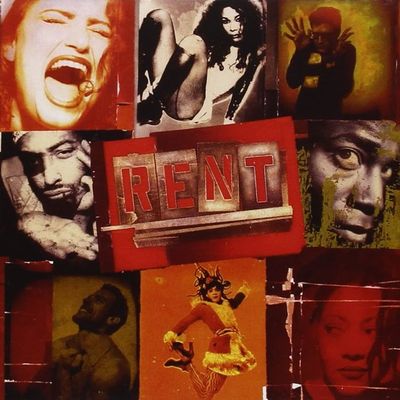
For theatre lovers of a certain age… my age… it’s impossible to think about a line onstage without thinking about Rent. The 90s musical which transposes the story of the opera La Boheme onto New York’s Lower East Side is a touchstone for many theatre lovers who grew up at the end of the millennium.
Like A Chorus Line before it, and Hamilton after it, the show was a cultural phenomenon whose impact reached far outside a typical Broadway audience. Rent expanded the typical theatre audience to those who didn’t think that musicals were “for” them. One of the ways that Rent achieves this is by turning a very specific story into a universal message of community and, of course, love.
Transcript
This transcript was automatically generated and might contain errors.
[0:00] Mo Brady: You're listening to The Ensemblist, the only podcast that shows you Broadway from the inside out. Welcome, I'm Mo Brady.
[0:20] Mo Brady: For theater lovers of a certain age, my age, it's impossible to think about a line on stage without thinking about Rent. The 90s musical which transposes the story of La Boheme onto New York's Lower East Side is a touchstone for many theater lovers who grew up at the end of the millennium. Like A Chorus Line before it and Hamilton after it, the show was a cultural phenomenon whose impact reached far outside a typical Broadway audience. Rent expanded the typical theater audience to those who didn't think that musicals were for them. And one of the ways that Rent achieves this is by turning a very specific story into a universal message of community and, of course, love.
[1:05] Mo Brady: In Rent, the line is used in a memorable moment at the top of Act II in a song called Seasons of Love. Theater historian and friend of the pod Jennifer Ashley Tepper joined me recently to share the importance and the impact of Seasons of Love.
[1:20] Jennifer Ashley Tepper: Seasons of Love is obviously such an iconic moment in Rent. And in Seasons of Love, we see all of the characters, both the characters we know really well, who might be considered the lead characters, and also the featured characters, the ensemble, in the same line singing about time and the passage of time and basically living every moment to its fullest. One of the things that's so powerful about it is that it's at the beginning of Act II and it surprises you. So you've been watching the show this whole time that does not break the fourth wall where the characters are very much in their story. After you come back from intermission, it opens a new layer to Rent that you're watching them sing about this.
And in some cases, you're probably thinking about Jonathan Larson, if you're an audience member who knows the story of him and of his writing Rent. But just the idea that in this moment, you're seeing the actors and the characters and you're seeing the story, but you're also seeing people in front of you in the room commenting on the story. It just adds such a layer to it that I think wouldn't be as powerful if it was in the middle of Act I or at the end of the show. It's really that it's at the beginning of Act II that's part of why it's so powerful.
[2:24] Mo Brady: Jen's point about the importance of Seasons' place in the show got me wondering about the intentionality of that placement. Was the top of Act II a happy accident? Or did director Michael Greif know that Seasons would be the show's most memorable moment from the get-go? So I reached out to an artist who started as a Rent head, but has now had a decades-long relationship with the show. Actor-director Andy Señor Jr. spoke to me over the phone from his home in Barcelona about what he learned about Seasons of Love as an actor in the show in the 90s, as well as how he teaches the show to companies of new actors across the world today.
[3:04] Andy Señor Jr.: Hi, would you introduce yourself and tell us where you're calling from today?
[3:33] Andy Señor Jr.: This is Andy Señor Jr., and I am calling in from Barcelona.
[3:38] Mo Brady: And what is your relationship with Rent?
[3:41] Andy Señor Jr.: First and foremost, I was a Rent head. Right when the show came out, I was obsessed with it. And then six months later, I was cast in the second national tour, which was the LA company. I toured with that company for about a year. Then I was sent to London to do the West End company, where I was there for about a year and a half. Then I took over for Wilson Aurelia on Broadway and did the show on Broadway for many, many years. Then did a tour that went all through Asia, and then became the associate director on the Off-Broadway revival, and then went on to stage the show in Japan, in Korea, the Cuban production in 2014, subject of the documentary that I created. You know, I started Rent when I was 22, and I'm now 46. So it's been part of my life for a very long time.
[4:25] Mo Brady: Tell me how you would describe Seasons of Love to someone who has never seen Rent before.
[4:32] Andy Señor Jr.: Seasons of Love is the moment in Act Two, I think it's the most iconic moment in Rent and of Rent. The cast lines up downstage, completely from stage left to stage right, right in front of the audience, and they sing the most anthemic and most memorable song of Rent.
[4:48] Mo Brady: What do you remember being told about that moment when you were learning the show? Or perhaps when you were staging the show elsewhere as an actor?
[4:59] Andy Señor Jr.: As an actor, I remember that I had always seen performances, the Rosie O'Donnell show, or Rent on Jay Leno, and would see the cast in the Seasons line or on the Tony Awards singing Seasons of Love. And it seemed like such a huge, joyous, epic moment. When I got cast in the show, I couldn't wait to stand in the line and do the clapping in front of the audience. When we got into the rehearsal process, I learned that although Angel is part of the line, the feeling of the tone of it is more Angel's memorial. And the idea behind it is really that in that moment is the line as a memorial, it's a tribute. We really went around and expressed who we were singing about in our lives that we have lost. After going through that process, we came together in a circle and sang Seasons of Love in a circle.
[6:04] Andy Señor Jr.: How the line actually originates for the experience of the cast is as a circle for the whole company. When we put it on the stage for the audience, we just open up the circle and we include the audience into that circle. It looks like a line, it occurs as a line, but it's really the experience for us is circular.
[6:22] Mo Brady: Is that something that you added, that you've added was always part of the experience?
[6:28] Andy Señor Jr.: That's always been part of the experience.
[6:30] Andy Señor Jr.: In diapers, report cards, in spoke wheels, in speeding tickets, in contracts. I texted Michael real quick. I was like, hey, Michael, what inspired you when you originally staged it? And Michael said, it just seemed the best way for the actors to be the most vulnerable and most open to the audience. It was also a great way for the audience to celebrate the actors after the first act, like a curtain call. It was an homage to A Chorus Line.
[7:08] Mo Brady: Why give an homage to A Chorus Line in a musical that is not about dancers?
[7:14] Andy Señor Jr.: My personal opinion on that is A Chorus Line is definitely a groundbreaking musical and spoke to and about our community at a specific time. There was a lot of real things each person in the chorus line was dealing with. They were really expressing their vulnerability and their humanity in a way that was very forthcoming and just very transparent. The reason that so many people connected with A Chorus Line was that people really saw themselves on that stage. And I think that's what Rent did incredibly well. It put marginalized and quote-unquote the other on stage, people that you didn't necessarily put in a musical and really lined the people up at that particular moment, very face to face. And I don't like to use the word presented, but shared. Shared who these people were in a way that the audience member could sit and really look and be with that person.
[8:20] Andy Señor Jr.: I know for myself as a cast member, it was absolutely the most magical moment to be part of. I know for myself, just standing there looking into the audience, looking into everyone's eyes and singing and especially having played Angel, who was the drag queen. And they're looking at me a very particular way. And I'm just looking right at them in a way that they may not have ever been looked at by somebody who played that kind of character. They would just melt looking at the cast. And I have tons of stories of people that have written fan letters at that time. There was this one girl who I'll never forget this. She had bought the ticket to go with her best friend to the show on Broadway. And then her best friend ended up dying a few weeks prior to the show.
She had a real hard time whether she was going to go or not, but she was like, I have to go. But she went alone and had the empty seat next to her. And she said that she happened to sit right in front of me in the fourth row or something. And that during the song, I looked at her and that I smiled while singing Seasons. And she was sobbing, but that moment she felt like really healed her and shifted her mourning process. It was just such a beautiful letter to receive. People will take away whatever it is that they take away. But it's three and a half minutes where you get to really be with these characters and be with these people in that particular song. And I think it's incredibly powerful.
[9:40] Mo Brady: You bring up an interesting question. In Seasons, are you Andy? Are you Angel? Are you both?
[9:46] Andy Señor Jr.: In Seasons, I am both. I am Andy, the performer, but I'm also Angel, knowing that he's in a theatrical device. It's a good question because that's how the show starts as well. We start from this place, which is very neutral. As Tune Up A and Tune Up B comes together, we fully assume these roles and these characters. In Seasons of Love A, it's this neutral kind of place. Once the reprieve happens, which is the Alcove reprieve, then we're fully the characters at that moment.
[10:30] Andy Señor Jr.: Yes. I think that once everybody comes on for that, will I lose my dignity moment at the very end, we go back to that neutral place. And then certainly by the No Day But Today, we're back in that neutral place again.
[10:54] Mo Brady: That neutral state, is that how you consider the show to end as well?
[10:54] Mo Brady: As a stager, as a director, as a choreographer, how do you know when to use that trick, that tool? Because you can't use it too often, right?
[11:07] Andy Señor Jr.: I would say that I think you use it when you really want to overflow either the emotion or the text. I think when you just want to break that fourth wall and pour it into the audience, where it's no longer the audience looking into what's happening on stage, but where the action becomes, this is not about it just being on stage, that we now take it from the stage and we put it into your laps. Literally placing it into the audience's laps. I think that's when you use it.
[11:45] Mo Brady: You've been on both sides of the table with learning and teaching this number. When you're teaching the Seasons to a new company of actors, what do you tell them? How do you lead them through the process?
[11:51] Andy Señor Jr.: We get in a circle, and sometimes this takes about two and a half hours. When we just did it in Korea, it took a very long time. I'm rehearsing the show now in Tokyo over Zoom, imagine that. I don't know how I'm going to do this, but we all get in a circle. The accompanying band, the opening chord, in a very slow kind of way. Everybody goes around and has a turn at speaking about somebody in their lives that they really love, that they want to sing the song to, and that they've lost, or they just want to memorialize at that particular moment. Mostly everyone is just bawling when it's their turn to speak about their person. By the time everyone has gone, we then sing the song, and everybody's just holding each other in one big circle.
No one can make it through the song. It's so beautiful. It's so, so, so beautiful. We basically tell them, when you're lost, when you're tired, when you don't know where you're going to do the next show from, this is where you go. You come back to here. This is what the show is about. Then we immediately just now open up the circle, and we put them in the line, and then say, now just include everyone else that comes to see you in that. Then that's what you get when you see the show.
[13:17] Mo Brady: Does the moment work differently in different countries?
[13:22] Andy Señor Jr.: Absolutely not. It's always just as powerful. There's a way that you can just do the song. There's some people that just do Seasons all happy, and you could feel the difference. When it comes from that place of loss and deep love, the faces change. The way they approach the song changes. It's sacred, and I think that's probably the most sacred moment of the show.
[13:47] Mo Brady: Special thanks to Andy Señor Jr. and Jennifer Ashley Tepper for sharing their stories with us today. The Ensemblist was produced today by Jackson Klein, Anna Altide, and me, Mo Brady. There are two great ways you can be helping The Ensemblist right now. One is by leaving us a rating and review on Apple Podcasts, and the second is by becoming a Patreon member, which you can do at patreon.com slash The Ensemblist. Please follow The Ensemblist wherever you listen to podcasts, on Spotify, on Apple Podcasts, or at bpn.fm, the home of Broadway Podcast Network. You can also follow us on Instagram. Thanks for listening. Until next time.
© Broadway Podcast Network, All Rights Reserved