

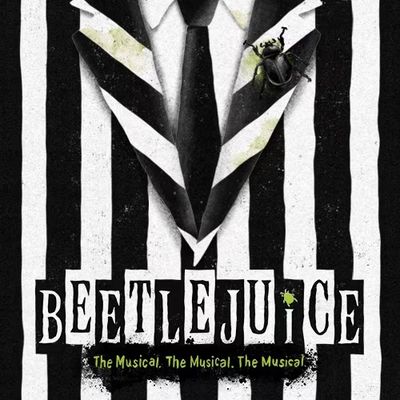
Jill Abramovitz slayed Beetlejuice audiences in her duel roles of Maxine Dean and Juno. She’s so incredible that we here at The Ensemblist bestowed her one of our first ever Season Standout awards... Read More
From the show: The Ensemblist
Guests

Featured Shows


About
Jill Abramovitz slayed Beetlejuice audiences in her duel roles of Maxine Dean and Juno. She’s so incredible that we here at The Ensemblist bestowed her one of our first ever Season Standout awards. We asked this veteran of Broadway’s Cinderella and 9 to 5 into the studio to talk about how she developed those roles into some of the funniest moments in what is already a very funny show. Here’s our conversation…
Transcript
This transcript was automatically generated and might contain errors.
[0:04] Mo Brady: You're listening to Creating Characters from The Ensemblist, the only podcast that shows you Broadway from the inside out. Welcome.
[0:11] Mo Brady: I'm Mo Brady. From Nellie Forbish to Evan Hansen, the libretto of Broadway musicals have been filled with complex characters for almost a century. And while those roles were originated and revived by astonishing actors, much of what made those characters so fascinating is on the page, meaning written into the script itself. That's what makes the work of our guests for this miniseries so remarkable. They've taken small supporting parts and turned them into fully realized characters, ones that feel just as developed and grounded as their leading counterparts. And what makes them even more spectacular is that they're often doing this for multiple characters within the same show.
[0:59] Mo Brady: Jill Abramovitz is currently slaying Beetlejuice audiences in her dual roles of Maxine Dean and Juno. She's so incredible in the show that we here at The Ensemblist bestowed her with our first ever season standout award. We asked this veteran of Broadway's Cinderella and Nine to Five into the studio to talk about how she developed those roles into some of the funniest moments in what is already a very funny show. Here's our conversation.
[1:35] Mo Brady: Hi.
[1:36] Jill Abramovitz: Hi.
[1:36] Mo Brady: Would you introduce yourself and tell us what neighborhood of New York City you live in?
[1:39] Jill Abramovitz: Oh, what a great way to start. I'm Jill Abramovitz, and I live in Harlem.
[1:45] Mo Brady: And who are all of the characters that you play?
[1:48] Jill Abramovitz: Okay, so let's say unnamed character at the funeral. I'm in the choir, the Beetle choir. And I play Maxine Dean, and I play the neighbor lady, and I played Juno.
[1:59] Mo Brady: So when was the first time that you heard about Beetlejuice?
[2:03] Jill Abramovitz: Oh, I was doing the Fiddler revival. And I got an email from my agent saying it had an offer to be in the 29-hour reading of Beetlejuice. I think it was December, the very end of the year.
[2:14] Mo Brady: What was the offer? Just ensemble?
[2:16] Jill Abramovitz: It was just ensemble. I didn't do any of the things that I do in the show now.
[2:20] Mo Brady: Oh.
[2:20] Jill Abramovitz: Yes. I was in the ensemble. But at that point, the show was so early in its development and there were all sorts of different characters. I mean, John Lennon was in the show at one point. I think he was in the Netherworld. Dead Mom was a real character. So things were still evolving and changing, and I really didn't do much of what I did now.
[2:41] Mo Brady: When in the process were Juno and Maxine becoming a part of your roles?
[2:48] Jill Abramovitz: Well, first things first, I have to give a massive shout-out to the love and legend, Carol Shelley, who was the original Juno.
[2:56] Mo Brady: Oh, yes.
[2:57] Jill Abramovitz: And she is no longer with us. She was Juno from the beginning, and a lot of my performances Juno is based on her and inspired by her. So there would be a reading like every six months or so.
[3:09] Mo Brady: Okay.
[3:10] Jill Abramovitz: And each time Maxine was a little weirder, like some iteration of something that she is now, but not quite what she is now. There was one where she didn't say anything and she just sort of stood there and had a weird laugh.
[3:23] Mo Brady: Were these additions happening in between readings and workshops, or was it the kind of thing where you were getting you would leave rehearsal one day and you'd get new pages with the other thing?
[3:31] Jill Abramovitz: Oh, that's a great question. No, I think they were happening in between. We'd come back for another workshop and I'd go, Oh, Maxine got different lines, or um, oh, neighbor lady is now a thing. And then Juno happened because prior to when Carol passed away, she wasn't going to be coming with us to Washington, DC. And I got a call from Alex Timbers, and he told me that they'd like to let me take a crack at the role in DC. And that was very exciting.
[3:59] Mo Brady: So when you got into rehearsals for the pre-Broadway tryout in DC.
[4:03] Jill Abramovitz: Yes.
[4:04] Mo Brady: What did your roles look like?
[4:07] Jill Abramovitz: Well, first at that point, Juno was still named Eileen Shogith. She was Mrs. Shogith.
[4:13] Mo Brady: Okay.
[4:13] Jill Abramovitz: I think because at the time when they first started writing it, the film Juno was still in the ether, and I think they didn't want to use the name. So I don't know where they got Eileen Shogith. Anthony King and Scott Brown geniuses coming up with a really fabulous name like that. But I think they realized enough time had passed that we could go back to using Juno. So my track basically looked like what it is now, but Juno was different. She had a different name.
[4:40] Jill Abramovitz: They made fun of Maxine Dean's first wife's. And these changes that were happening to the character, were those happening through the preview process?
[4:49] Jill Abramovitz: They were happening through the preview process. It was new pages all the time, every day. You'd wait you'd go to sleep at night and wake up in the morning and go, like, oh, I hope they I hope I still get to keep that line, or you know, oh my gosh, I got a great new line. That was a constantly shifting process.
[5:05] Mo Brady: Did you feel like you were in much conversation with the writers?
[5:09] Jill Abramovitz: Yes, they were fantastically receptive, and I always knew I could go to Alex and the writers and pitch something or push for something or give them feedback. Like, for example, um, in between DC and New York, we had a reading, and there was um there was a great line for Juno where she's introducing the Netherworld and she said something like, fun fact, it smells like coconut, which I really loved, but I also really missed. Also, no liquids. Drink it or throw it out. And I pushed for that.
[5:41] Mo Brady: So tell us about Juno. Who is Juno?
[5:45] Jill Abramovitz: Oh my gosh. Well, she's the goddess demon of the nether world. She's got a business to run and she's got rules to follow. I suppose she would seem heartless to some, but she is a stickler for the rules and keeping the world order or underworld order, as it were. And she is somehow somewhere, she must be from Long Island.
[6:09] Mo Brady: Was that something that you brought in, or is that something that Carol?
[6:12] Jill Abramovitz: That was something Carol brought in. And it just was so inherent to the I couldn't imagine doing her without that accent.
[6:20] Mo Brady: So then alternatively, who is Maxine Dean?
[6:23] Jill Abramovitz: Okay, so Maxine, it's so interesting. I mean, she definitely is a trophy wife, but I the thing that I think is interesting about Maxie and Maxine is that I think they really love and respect each other. Like I don't think it's just like sh I don't think she's just arm candy to him. I think they really love and respect each other. I mean, Danny and I have had many conversations. We believe that Maxine probably worked for Maxie at some point the relationship evolved into this wife, but she really took a while. She used to be sort of in my head, she was like a Studio 54 jumpsuit wearing like almost offshoot of Liza Minelli. And then we saw the sketches, William's sketches, and the wig and the makeup, and in fact, in William's sketches, he gave her those gigantic lips.
And so that informed so much of her physicality and how she could move in those dresses. He was always very concerned that I want to make sure you do everything you can do. Because always in all the readings, I always had her sort of with her legs up and oozing around and crawling over things. And she still does that, but she's got a little bit more affeigned elegance because she's wearing this floor-length dress, and that affects how she moves and how she operates. But I think for me, the moment she snapped in is when I realized that she had to have a specific voice. And she's got this sort of low, oily is how I describe it. It's kind of a gross voice. And for me, that made her like snap into existence. That, like, oh. It's really gross.
[8:01] Mo Brady: Give us a give us a line in Maxine's.
[8:07] Jill Abramovitz: Um Maxine says, Oh, tiramisu. Like it's really icky and far back in her throat.
[8:15] Jill Abramovitz: It feels like between you and William Ivy Long, the costume designer and the book writers, it's all an Alex. It's it's not like there's a distinct journey that these characters go on. They're being developed by everyone simultaneously.
[8:33] Mo Brady: Right.
[8:33] Jill Abramovitz: I almost think of it as like concentric circles that are happening and blobbing out on one side first and then in the other, and then becoming a bigger circle. It's it was a constant conversation, like it it's not a flow chart. It didn't start with the writers and then go to Alex. It's such a collaborative atmosphere.
[8:52] Mo Brady: So Beetlejuice is a comedy.
[8:54] Jill Abramovitz: Yes.
[8:55] Mo Brady: And your two large standout roles are comedic roles. So the audience, getting the audience feedback must have been a big part of the development and the solidification of those roles.
[9:07] Jill Abramovitz: Oh, a thousand percent. I mean, just in terms of like you get that instant response, like, okay, that's getting a laugh. That's consistently getting a laugh, and that is consistently not getting a laugh. Are you coming backstage and like, oh my god, I'm going to die.
[9:21] Jill Abramovitz: Like I'm not getting that laugh, or I'm not waiting long enough to let that smoke exhale. Like I notice I'm getting that's one of the great things about comedy is you can calibrate right in the moment and you can adjust right there in the show. You can adjust show by show and look at the broader trends. Um, and not only that, I think you know, when we were in the preview process, some things might have gotten laughs, but they're the wrong kinds of laughs, they're mean-spirited laughs, and so the writers would sense that and feel that and push it in another direction.
[9:52] Jill Abramovitz: Well, we think about the creation of a new Broadway musical. The distinct character traits of an ensemble moment are probably pretty low on the hierarchy of things that those at the head need to be thinking about, right? They're thinking about structure and they're thinking about the flow and a thousand percent.
[10:12] Mo Brady: Right.
[10:12] Jill Abramovitz: So are you getting very much feedback about or are you just going with your gut? I think it's it's push and pull. I think it's both. Like at like I said, it's a it's a conversation at all times with Alex and the writers. Like I said, William and Chris, our music director, everyone in the room, um, they, and again, Alex hires people who he trusts to bring their full panoply to empty their pockets onto the table. And um, he brings people who he knows are gonna bring ideas, even if they're bad ones, even if they're too big, and people who are flexible.
[10:47] Jill Abramovitz: And so I think there's an element of trust in the room. Like, listen, I can't get to this right now, but keep trying stuff, keep throwing stuff against the wall, and I'll get a note if it needs to come down, or but like there was definitely an element of like play and and see what you come up with, and based on our feedback, you'll know if it's working, you'll know if we're happy. But you have to trust your own gut at that point to know that you're yeah, or you just have to jump. I mean, trust slash lunacy. You just have to go for it. They make you have to be able to do it in a safe room, and that room is completely safe.
[11:22] Jill Abramovitz: And it's not just it's not just the creatives, too. It's it's also the your fellow actors. I mean, I'm on stage with some of the funniest, most sophisticated comic minds. And so if you're getting laughs from the room, you're like, okay, that's a pretty good gauge. I mean, it was a long time before we were in front of audiences. So that's all you'd have to go by. And if the whole room was laughing consistently, you're like, okay, they're gonna let me fly in this direction.
[11:49] Mo Brady: Talk about the physicality of these characters and how you found they how they each move through space.
[11:55] Jill Abramovitz: Great. That's just such a great question. Some of them happen very naturally. Like Maxine for me, I had an image of this woman I met when I was, I must have been 10 years old, and I remember being astounded by her how she was so completely comfortable, like a jungle cat on top of people's kitchen counters in someone else's home. And I was fascinated by that. And she, so you'll see Maxine sort of puts her feet up. She's just met the Dietz's for the first time, and her legs are up, and she's draping herself all over, and that to me felt very right. Neighbor lady, I knew would be timid and awkward, walking in, and you know, if sometimes when you can snap into a character, your body just follows.
[12:34] Jill Abramovitz: Juno took a little bit more work, and we had the incredible Lorenzo Pizoni, who's our movement coach. He's a professional clown, not an actor, but also a trained clown who comes from a family of trained clowns, and they are I don't know if you've met any trained clowns. They're amazing. I mean, they're incredible people. Their skill set is wild. He was able to really work, show me some really interesting things like, oh, here's a great little tidbit. When we first started using the cigarette, he suggested holding the cigarette in the opposite hand.
[13:09] Jill Abramovitz: I'm a lefty, so I hold the cigarette in my right hand, which makes her instantly more awkward. Like try it for anyone who smokes. You shouldn't smoke, but still. Um it it's if you put, you know, or if you hold a pencil in the opposite hand, it instantly changes your physicality. You're more awkward, you're more labored. One other thing we did, which wound up being dropped, was bringing the mouth to the cigarette instead of the cigarette to the mouth. Um, and it makes these little touches make a huge difference in the way she walks, how her knees angle and how her pelvis angles. And then of course you add the padding to it, and that helps a lot for sure.
[13:50] Jill Abramovitz: But we had to work, we had to chip away at it. We had to really get it. There was a while when I think I was my pelvis was completely forward. She we went through so many iterations of Juno's physicality, but I think ultimately she just landed. I think when it lands, it snaps in. And you don't have to think about these little things. But it for a while it's it's work. It's chipping away at the different elements, her elbows, her shoulders, her face, her hands, all of it.
[14:15] Mo Brady: Is there an Easter egg moment in the show? You know, like a something that audiences might not know, but you just feel is like so much the essence of one of these characters.
[14:25] Jill Abramovitz: I ha I have one that I enjoy is when uh Sophia, Lydia Dietz, comes down the stairs at the dinner party, and I'm at the table with sitting next to my husband, and I really enjoy when I turn to look at her. I sort of grab, put my hand in front of my hair and flip it over my shoulder as if I'm being filmed, as if it's my, you know, like that opening shot of the love boat, and I look up at her. No one can see it because I'm looking straight at her, but I love that Maxine is just so concerned with her appearance that in that moment she's just doing a take upstage to the stairs.
[15:04] Jill Abramovitz: There are also a bunch of really fun interactions in character on stage that nobody sees that I kind of live for because they keep you on your toes. There's a moment in the in the nether world is Juno when uh Lydia Dietz and her dad are talking off to the side, stage left. It's right before Lydia Dietz runs through the detector that can tell she's still alive. And I go over and I check in with Miss Argentina, and of course it's it's very dangerous always if Leslie and I are on stage talking to each other, but we really, I have to say, we stay in character and we keep it small, but there's usually something going on in that scene, like, you know, how come you know, where are your pants? You know, and she then responds to like something that happened to her pants, or we're looking at the clipboard and there are names on her clipboard, and we're discussing the inventory of the underworld of the netherworld that day.
[15:56] Jill Abramovitz: That to me is, I mean, you shouldn't really you shouldn't be looking at that if you're seeing the show because we shouldn't be drawing attention to ourselves. But for us, it's it's fun and it beefs the whole thing up. So imagine that we're in the future. Oh 10 years.
[16:10] Mo Brady: Mm-hmm.
[16:10] Jill Abramovitz: And someone listening to this podcast is playing Maxine and Juno in their high school production Beetlejuice.
[16:19] Mo Brady: Yes.
[16:19] Jill Abramovitz: What's one thing you want them to know? One one piece of advice. The thing that Alex constantly has to stay on me about, which is try not to make it, you know, the Maxine show. I mean, really connect, you know, when you're telling Charles Dietz that you were kicked in the head by a dressage horse, really try to explain to him that's why you are the way you are. I mean, really try to connect with people around you.
[16:49] Jill Abramovitz: It's very tempting to slip into the clownishness of her. I can sometimes do that, and then I'll and then Alex will come to the show and I'll get a little note like, hey, remember, remember, keep her grounded, like try to talk. And it's hard to keep someone like that grounded because she's essentially up in the clouds. But yes, try to really connect to the people around you, connect to your husband. It helps to have someone playing Maxine who you adore, like I adore Danny so much.
[17:15] Jill Abramovitz: Um and we really try to stay connected. In fact, we even do a little we do a little thing before we make our first entrance. We have this ballet we do. Um, just as we're walking up to the steps to the house, and we try to do it in real time as if we were really doing a little husband and wife dance before we ring the doorbell to their home. So just connect to the people around you if you can, because it's very tempting to just lean into those lips.
[18:06] Mo Brady: You can learn more about her and how to connect with her online by visiting our website, theEnsemblist.com.
[18:11] Mo Brady: The Ensemblist was produced today by me, Mo Brady. You can help others find out about The Ensemblist by leaving us a rating and review on Apple Podcasts.
[18:19] Mo Brady: You can also download episodes wherever you get your podcasts or at the Ensemblist.com. And make sure you're following us on Instagram to see the latest posts from our website where we share the stories of talented artists working in ensembles on Broadway and across the country.
[18:32] Mo Brady: Thanks for listening, guys. Until next time.
© Broadway Podcast Network, All Rights Reserved