

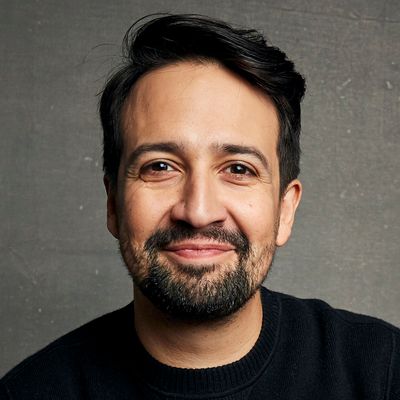
Way back in 2014, co-creator Nikka Graff Lanzarone and I sat down with Lin-Manuel Miranda. This was before Hamilton, before Moana, before Mary Poppins Returns, before DuckTales when he was merely a Tony Award winning composer with three Broadway shows under his belt... Read More
From the show: The Ensemblist
Guests
Featured Shows

About
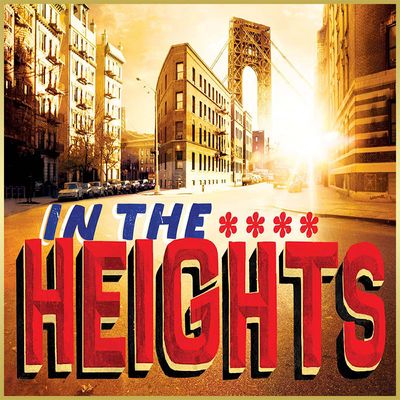
Way back in 2014, co-creator Nikka Graff Lanzarone and I sat down with Lin-Manuel Miranda. This was before Hamilton, before Moana, before Mary Poppins Returns, before DuckTales when he was merely a Tony Award winning composer with three Broadway shows under his belt. When we talked with him he shared why he chooses to deploy an ensemble, the process of writing In The Heights (now in production as a motion picture) and his first steps in writing the opening for Hamilton.
This was five years ago, so it doesn’t have the audio quality of our current episodes. However, Lin is such a sweetheart on mic and is dropping such great truth bombs about ensembles but we felt it was finally time to take the full interview out of the vaults and share it with you. Here, in his own words, is Lin-Manuel Miranda.
Transcript
This transcript was automatically generated and might contain errors.
[0:00] ♪ Musical number: "My Shot" — performed by Lin-Manuel Miranda ♪
[0:05] Lin-Manuel Miranda: Can you introduce yourself and tell us what neighborhood of New York City you live in?
[0:09] Lin-Manuel Miranda: Everybody knows that. My name is Lin-Manuel Miranda, and I live in Washington Heights, New York.
[0:15] Mo Brady: You're listening to The Ensemblist, the only podcast that shows you Broadway from the inside out.
[0:20] Mo Brady: Welcome, I'm Mo Brady.
[0:23] Lin-Manuel Miranda: Raise a glass to freedom, something they can never take away, no matter what they tell you.
[0:33] Mo Brady: Hey fam, we have a treat for you today. Way back in 2014, co-creator of The Ensemblist, Nika Graf Lanzarone, and I sat down with Lin-Manuel Miranda. This was before Hamilton, before Moana, before Mary Poppins Returns, before DuckTales, when he was merely a Tony Award winning composer with three Broadway shows under his belt. When we talked to him about writing for ensembles, he shared why he chooses to deploy a vocal ensemble, the process of writing In The Heights, now in production as a motion picture, and some of his first steps in writing the opening of Hamilton. This interview was five years ago, so it doesn't have the audio quality of our current episodes. However, Lin is such a sweetheart on mic and is dropping such great truth bombs that we felt it was finally time to take the full interview out of the vaults and share it with you. Here, in his own words, is Lin-Manuel Miranda.
[1:41] Lin-Manuel Miranda: Why do you need an ensemble? You need an ensemble because you're trying to immerse the audience in a world, and the richer the ensemble, the more immersive the world. You know, a chorus is always much more fun than a solo, I think. One of the times it's most important to deploy your ensemble, right? Because everything's a tool, or a weapon, depending on how you're feeling that day. Sondheim always says the trickiest thing about writing an ensemble number is what is something that everyone in this neighborhood is feeling at the same time. God, that's good. The only thing they sing in unison is God, that's good. There's all these other crazy individual lines within it. Quintet, West Side Story, counter lines all smashing together.
They're all looking forward to something that night. You know, Anita's looking forward to getting it on with Bernardo because he's horny after he fights. And everyone else is looking forward to the fight. Think of the opening number of Beauty and the Beast. Everyone can agree that Belle's crazy. You know, there's something about that girl Belle, and they find unison lines to sing on that. With Heights, we made it about the grind. Everything is, we get our coffee, we get our paper, we're all working our asses off to get through the day. And so you find those communal moments and build the world.
[2:56] Lin-Manuel Miranda: When do you pull out that tool? I think of To Life from Fiddler, which starts as a toast, and then everyone's congratulating them on, oh, you got your daughter and you are getting married? Fantastic! And then it grows and grows, and then the Cossacks come in, and you're like, oh, shit is about to get real. And then they congratulate them, and it suddenly becomes this cross-cultural celebration that's like insane. I mean, it bumps to this other magnitude. What's great about Fiddler is it used the family moments that we all can celebrate, and that's why that show's universal, even though it's about this tiny town in Russia. Everyone feels like it's about their dad or about their family because the musical numbers aren't weddings. They're, we're gonna get married. They're a baby was born. They're sort of the milestone group events in our life, and they build out from there, which is so sort of genius and a key to the appeal of that show.
[3:52] Lin-Manuel Miranda: What characteristics do you love in a vocal ensemblist? We love people who sing strong. I have found that your musical director and your choreographer will be the most important voices in an audition room because sometimes it's one for you, one for me. You'll have an amazing dancer who sings strong but not always on key. But I would prefer someone who does not have a Raul Esparza voice who sings on key and sings loud over a dancer who's going to stop singing once they're in the safety of an ensemble. And it's like, okay, no one can hear me singing. I can stop singing now. Which happens! And we can catch you because you each have individual mics on. So we can literally, we can go through a night and be like, that person is not singing that track they're supposed to be singing.
You're busted! It rarely comes to that. But, you know, we're looking for people who are not afraid of singing. It seems so impossible in the moment. Tommy always talks about the inherent unfairness of when you go to this open dance call where all of these people have worked their lives off to be the best dancers in the room. And they are. And now we're going to go make them do the thing they're least comfortable. And now we're followed by, here's 16 bars of the thing you worked your ass off to make sound okay. Because you've been working, you've been working on flipping and defying gravity and doing all these incredible things. And now we're going to make you sing Happy Birthday to You. It can be very tough and we're aware of how tough that is.
And we generally find if it's an amazing dancer and they're going to be invaluable to Andy, they can carry a tune and they're willing to sing loud and sing their part, we're cool. And then there are the people who are those genuine triple threats who can just sort of sing and dance and do everything. But generally, the skill sets are all over the map. You know, there are amazing soloists who can't sing a lick and we're like, alright, we'll find a rap lyric for them to sing. But the way they move is like no one else and you want that on stage. And then there are people who are just incredible singers who are just sort of really great at everything. You know, you're looking for people who can sing the score and do these dances.
And sometimes you never have to compromise on either end. We've been lucky to find a lot of people in that camp and sometimes, you know, it's like, alright, that's okay, I have coverage for those. I have tenor coverage here. So you can have that guy who can't sing a lick and does three flips in the air.
[6:27] ♪ Musical number: "Alexander Hamilton" — performed by Lin-Manuel Miranda ♪
[6:56] Lin-Manuel Miranda: How does it feel to hear an ensemble number you've written for the first time? It feels, well, here's the thing. The one thing you cannot do when you're a composer alone in a room with your keyboard or your guitar, whatever you write on, is hear what a company sounds like singing your work. It's actually the most thrilling moment is in the Sitzprobe when all the instruments are playing, all the voices are playing. It's actually the best. I have a moment I'm still trying to work through in Hamilton. I wrote this opening number and left it in a drawer for six months before I wrote any more of the show. And it's this line where originally it was Aaron Burr says, you never learn to take your time.
And he holds time in this very R&B-ish way. Time's a four note time. We put the company on it when we started building the opening number of Hamilton for real. And every time the company, because the show really is so much about time and how much we get done in the time we have and how much this motherfucker got done in the time he had. Every time the chorus hits time, I burst into tears. And it's a real problem. I'm describing it to you because I'm on stage and I can't do that. That's a douchey thing to do. Burst into tears about your own music while you're on stage. If I were a composer sitting safely in the back, that would be fine. But I can't be like, oh, listen to that chord while I'm standing there in character. So I don't know what I'm going to do for that moment. I haven't made it through that moment without getting verklempt. And I will have to work through it. That is my challenge until January.
[9:12] Lin-Manuel Miranda: Within the Heights, we were very much trying to convey a community. We wanted it to feel like you could follow that person down the block and there's another musical happening with Nina LaFarga and Ricky Tripp as they exit.
[9:25] Nikka Graff Lanzarone: Welcome back to The Ensemblist. I'm your host, Nikka Graff Lanzarone, and today we have a very special guest, Lin-Manuel Miranda.
[9:55] Lin-Manuel Miranda: Thank you for having me!
[10:25] Nikka Graff Lanzarone: So, let’s dive right in. You’ve had such a unique approach to writing for ensembles. What draws you to that?
[10:35] Lin-Manuel Miranda: I think the ensemble is the heartbeat of a musical. They’re the ones who create the world around the characters, and they help tell the story in a way that’s so dynamic and engaging.
[10:45] Nikka Graff Lanzarone: Absolutely. In "In The Heights," you really utilized the ensemble to bring the neighborhood to life. Can you talk about that process?
[10:55] Lin-Manuel Miranda: Sure! The ensemble in "In The Heights" was crucial. I wanted to make sure that every character, no matter how small, felt like they had a voice and a story. It was about creating a tapestry of experiences that reflected the community.
[11:05] Nikka Graff Lanzarone: And now with "Hamilton," how did you approach writing for the ensemble differently?
[11:15] Lin-Manuel Miranda: With "Hamilton," I wanted to use the ensemble to reflect the historical context. They’re not just background dancers; they’re part of the narrative. They represent the people who were there, the voices that were often left out of the history books.
[11:25] Nikka Graff Lanzarone: That’s such a powerful way to think about it. What was your first step in writing the opening for "Hamilton"?
[11:35] Lin-Manuel Miranda: The opening was all about setting the tone. I wanted to introduce Alexander Hamilton and the world he was stepping into, but also give a nod to the ensemble’s role right from the start.
[11:45] Nikka Graff Lanzarone: It’s fascinating how you weave those elements together.
[11:55] Lin-Manuel Miranda: Thank you! I think it’s essential to have the ensemble be part of the storytelling from the very beginning.
[12:05] Nikka Graff Lanzarone: And it really shows in the final product.
[12:15] Lin-Manuel Miranda: I appreciate that. It’s a collaborative effort, and I’m grateful for the incredible talent in the ensemble.
[12:25] Nikka Graff Lanzarone: Speaking of collaboration, how do you work with your ensemble during the rehearsal process?
[12:35] Lin-Manuel Miranda: I love to hear their ideas and input. They bring so much creativity and perspective to the table, and it’s important to me that they feel empowered to contribute to the storytelling.
[12:45] Nikka Graff Lanzarone: That’s a great approach. It must create such a positive environment.
[12:55] Lin-Manuel Miranda: It really does! When everyone feels like they’re part of the process, it elevates the entire production.
[13:05] Nikka Graff Lanzarone: Absolutely.
[13:15] Lin-Manuel Miranda: And it’s also about trust. I trust my ensemble to bring their characters to life in ways I might not have imagined.
[13:25] Nikka Graff Lanzarone: That’s a beautiful sentiment.
[13:35] Lin-Manuel Miranda: Thank you! It’s all about collaboration and creating something special together.
[13:45] Nikka Graff Lanzarone: I love that.
[13:55] Lin-Manuel Miranda: And I think that’s what makes theater so magical.
[14:05] Nikka Graff Lanzarone: It really is.
[14:15] Lin-Manuel Miranda: The energy of the ensemble can transform a show and make it unforgettable.
[14:25] Nikka Graff Lanzarone: Well, thank you so much for sharing your insights with us today, Lin.
[14:35] Lin-Manuel Miranda: Thank you for having me!
[14:45] Nikka Graff Lanzarone: It’s been a pleasure.
[14:55] Lin-Manuel Miranda: Likewise!
© Broadway Podcast Network, All Rights Reserved