

There isn’t a theatre choreographer more associated with their own unique style than Bob Fosse. The infamous Oscar-, Emmy- and Tony-winning director and choreographer created his own signature technique that distinguished shows like Chicago, Pippin, and Damn Yankees into dance masterpieces... Read More
From the show: The Ensemblist
Guests
Featured Shows

About
There isn’t a theatre choreographer more associated with their own unique style than Bob Fosse. The infamous Oscar-, Emmy- and Tony-winning director and choreographer created his own signature technique that distinguished shows like Chicago, Pippin, and Damn Yankees into dance masterpieces. This April, FX launches a new limited television series Fosse/Verdon, based on the 2013 biography by Sam Wesson with a focus on his marriage and collaboration with Gwen Verdon.
Here on The Ensemblist, we are also taking the opportunity to speak to some of the Broadway ensemblists who are working on the series. First up is Hamilton and Bandstand's, Morgan Marcell, who worked as an associate choreographer on the series in addition to appearing on camera in three episodes.
Transcript
This transcript was automatically generated and might contain errors.
[0:00] Mo Brady: You're listening to Showbiz Kid, a new miniseries from The Ensemblist, the only podcast that shows you Broadway from the inside out. I'm Mo Brady.
[0:18] Mo Brady: There isn't a theater choreographer more associated with their own unique style than Bob Fosse. The infamous Oscar, Emmy, and Tony-winning director and choreographer created his own signature technique that distinguished shows like Chicago, Pippin, and Damn Yankees into dance masterpieces. While it was derived from East Asian dance, Jack Cole's movement, traditional theater dance, Fosse created an entirely new style of movement, a style so singular that it is still taught today and known only as Fosse.
[0:48] Mo Brady: This April, FX launches a new limited television series, Fosse/Verdon. It's based on the 2013 book by Sam Wesson, with a focus on his marriage and collaboration with Gwen Verdon. Since Bob Fosse's work is so pivotal to the history of American musical theater, I wanted to take an opportunity to learn about the series from some of the Ensemblist who are participating in it. So over the next few weeks, as the show is rolling out on television, we will also be producing podcast events about the show's creation with Broadway Ensemblist who have worked on the series.
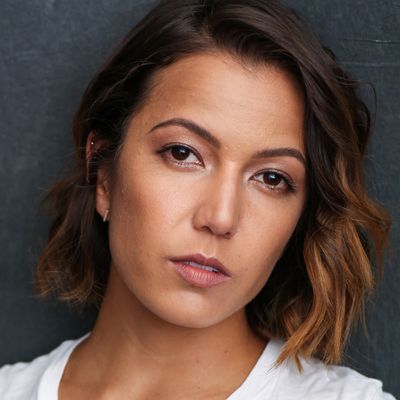
[1:22] Mo Brady: First up is performer, choreographer, director, extraordinaire, she wears so many hats, Morgan Marcell. She made her Broadway debut as one of the original swings on Hamilton. She became one of the dance captains there and has worked side-by-side with Andy Blankenbuehler, the show's choreographer, on Bandstand as well as on Fosse/Verdon. She'll also be seen later this summer in Moulin Rouge! the musical. It's a collaboration with choreographer Sonia Taya, who she also worked with on Rent Live on Fox. I sat down with Morgan to ask her about how she was brought on to the project, what she thought has been particularly special for her about the experience, and what she thinks that audiences will really get most out of the show. So here's my conversation with Morgan Marcell. Hi. Hi.
[2:19] Mo Brady: Will you introduce yourself and tell us your role on Fosse/Verdon?
[2:24] Morgan Marcell: Sure. I am Morgan Marcell, and I was the assistant choreographer for the first three episodes, and I was also an actor in the other three episodes.
[2:35] Mo Brady: So what was your relationship to Fosse prior to working on the show? Had you done any of his pieces before?
[2:41] Morgan Marcell: I actually had never performed Fosse material, insert gasp, but I was really familiar just kind of with the style. I think I've worked with Andy Blankenbuehler a lot, and I really admire the Fosse style, and so I think it's kind of just, it's a foundation that you should have if you're going to pursue musical theater, in my opinion. And so I had kind of studied it a little bit, but I had never gotten the pleasure of performing it, so it was very cool to learn from the Fosse legacy what we were going to be doing.
[3:15] Mo Brady: And for those of us that don't know your relationship with Andy Blankenbuehler, like prior to this, kind of walk us through.
[3:22] Morgan Marcell: So I was the dance captain of the tour of In the Heights for Andy, and he was in rehearsal, the rehearsal process with us for that. So he kind of got to see me work, and I got to see him work, obviously. And then I had done a lot of pre-production with him, which is where you go into a studio and you're creating a vocabulary for the choreographer that they can then mold and shift and use and adapt for their work on Broadway or for their piece, whatever it is. And then I was the dance captain, originally a swing, but eventually a dance captain for Hamilton on Broadway. And so I had a great relationship with Andy then, understanding, bringing my previous knowledge from In the Heights in, and just really learning a lot on that job.
I emailed him in the fall before Moulin Rouge even went out of town to Boston in the summer, and I said, hey, if you have anything that's going to be on film or film for TV, I would love to be an assistant because I'm trying to get my eye more into directing, and I know your vocabulary so well. I think it would be easy for me to assist you, and you would gain as well. And he called me in April and said, hey, we're filming this thing this fall. It's this project I can't talk about. Tommy is directing it. Lynn is a producer. Alex is working on the music, and all these people also worked on Hamilton, obviously. So I'd love to have you assist me. And he said it was an eight-part miniseries, and then eventually he said, it's about Fosse.
I mean, I basically died and went to heaven. This is more than I asked for. I was thinking like a commercial, but great. And so I then started working on the project and kind of started researching and overseeing the training of Michelle Williams and Sam Rockwell. So at that point, I had only ever met Michelle and Sam very briefly just to kind of introduce myself as the assistant choreographer and someone they could rely on for questions and reference and just kind of build myself into the team. We had someone named Marianne Lamb, who is extraordinary. She should be every dancer's hero. She's so full out all the time. And she was training them in Fosse-ography. And then we kind of switched off, and I was teaching them some jazz.
Ryan Kasperzak was teaching them some tap. And then I was overseeing all the scheduling and just talking to Michelle's manager and then coordinating with Marianne Lamb and Andy on what exactly he wanted them to learn. So that was my role prior to Moulin Rouge. Went away to do Moulin Rouge, came back, and then Marianne and I were switching off training with them, you know, three days a week whenever they really could. And then it got really rigorous when we got into filming in October because, you know, they were filming six days a week. And so if it was just a scene with Sam Rockwell, then we would pull Michelle to train with her and vice versa. So they, I mean, they worked their butts off. It's pretty crazy.
[6:18] Mo Brady: And what was your relationship to being on the other side of the camera prior to working on Fosse/Verdon?
[6:23] Morgan Marcell: I have always kind of seen things in frames. That's just been my whole life. And I always, those that are close to me know, I always have a camera with me. And I had directed my first short film, Sharing Your Stories. And it's a 10-minute documentary about the Eliza Project, which I founded in, while I was in Hamilton. And so that was kind of my first real taste of what it was like to produce something myself and to really see what goes on behind the camera. And now this was like, take that and multiply it by like a million. And, you know, you have Tim Ives as the director of photography who, you know, did Stranger Things and Girls and some of House of Cards. And you're like, wow, they are the best of the best. So it was really cool to learn from them in this project. So I went from like little me and two camera guys to watching what was going on and, you know, a real TV set.
[7:23] Mo Brady: Talk about the Fosse legacy. You mentioned that and you mentioned Marianne Lamb sort of, how did you get, not in doctrine, but like, what did you learn about the Fosse style?
[7:34] Morgan Marcell: I can only imagine that I would feel as protective about Andy Blankenbuehler's work as these men and women feel about Fosse's. Though Fosse is, you know, has proven to be more extensive because Andy is still living and creating and all those things. They manage it with such pride. And they're so meticulous about the kind of person that you are in the room as well. Not only, you know, are you getting the, you know, shoulder, elbow, wrist, hand, but are you also attacking it as an actor and not just as a dancer? And so they use a lot of Bob's words, a lot of Bob's stories, his examples. I mean, the stories that they brought into the studio were mind blowing. You know, there's a story that they told us about Bob taking the pianist to a grocery store on lunch and he was like, you have to keep the time consistent.
You know, while we run this stuff, the pianist was like, yeah, yeah, I get it. And Bob said, put your hands on the conveyor belt and try to stop the conveyor belt. And this pianist did it and he obviously couldn't. And he was like, see, the conveyor belt is time. It always keeps going and it's consistent and you'll never stop it. And just like those, you know, kind of larger than life stories and, you know, they were there and they experienced those things. It was really cool and it felt like we were continuing a legacy and we were hopefully doing it justice and telling another side to the story because I think a lot of people know that Fosse was really successful. He was a great choreographer.
He might have been like a little bit of a maniac, but the other side of the story is, you know, his personal life. And the other side of the story is Gwen. You know, that's why the series is called Fosse/Verdon, because I think it was equal parts and people don't necessarily know that.
[9:32] Mo Brady: I'm intrigued by this idea of like doing training with an actor like Michelle Williams or Sam Rockwell. I would be kind of nervous or I wouldn't. How do you approach working with, you know, like the star of the show and also like what are you teaching him if it's not just choreography, if it's not just what's going to be on camera?
[9:44] Morgan Marcell: I think I'm able to make it about the work and less about who they are. Right. Because at the end of the day, all three of us, if it's Sam, Michelle and I, all three of us are just artists trying to be the best at what we do. And that's what they bring into the room. Like, they don't care that they've been in movies and inhabited roles and all these things. They're like, what do you need me to do and how do I look exactly like you or how do I look exactly like this Fosse legacy person or, you know, whatever it is. And so Marianne and a lot of other, you know, legacy people came in to teach them and they were teaching them actual technical things and the actual choreography of what Fosse taught.
[18:32] Morgan Marcell: Michelle got it. She relied on me and Marianne so heavily in terms of, you know, go over this with me. What was the step? She is a drill sergeant. She is so great about being on top of it and disciplining herself and practicing. When she let loose and she didn't need us anymore and she was on set really living in the moment, that was like, as a cool, I did my job. That's really awesome. I gave her the confidence that she needed to inhabit this character. I think the other, the last thing that I'll say is there's a woman, her name is Wilda, and she is a camera operator. I was so inspired by her. They would call it going fishing and they would say, just go fishing, Wilda, do whatever you want.
And so she got to make up her own shot, what it looked like, what she wanted to focus on. And watching that camera, camera B, I was just so inspired by it and I was so grateful that she's a female and she's very successful. And she came up to me afterwards and was like, you're so good at what you do. I would love to film dance and theater more. How do I do that? And it was just this cool thing of like, you do this for a living and you're great at it. And this feels like I'm stepping into a world, but really you're holding me accountable for the information that I do know. And you're coming to me with a lot of respect. And that was really cool too.
[19:46] Mo Brady: Okay. So what episodes can audiences look for you in?
[19:51] Morgan Marcell: They can look for me in episode one and episode six and seven.
[19:57] Mo Brady: Awesome. And it starts, it comes out April 9th?
[20:00] Morgan Marcell: April 9th.
[20:01] Mo Brady: I'm very, very excited.
[20:02] Morgan Marcell: I'm very excited too.
[20:03] Mo Brady: I'm sure you're more excited.
[20:06] Morgan Marcell: As a theater lover, I'll say that I'm excited too. It's going to be really cool.
[20:09] Mo Brady: Awesome. Special thanks to Morgan Marcell for sharing her stories with us this week. You can learn more about her and how to connect with her online by visiting our website, theensemblist.com. The Ensemblist was produced today by me, Mo Brady. Please help others find out about The Ensemblist by rating and reviewing us on Apple Podcasts. You can also download wherever you get your podcasts or at theensemblist.com. Follow The Ensemblist on Instagram to see the latest posts from our website, where we are sharing the stories of ensemble actors from Broadway, film, TV, regional theater, West End. Really, if you can think of it, it's happening on our website. So check it out, theensemblist.com. Thanks for listening, guys. Until next time. Bye.
© Broadway Podcast Network, All Rights Reserved