

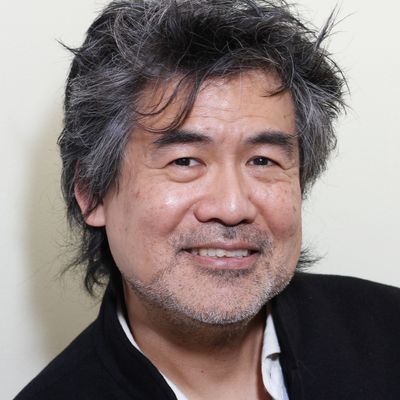
Christine talks to another fellow Guild Council member and pioneer, David Henry Hwang. In this episode they discuss how naming some of his characters after himself changed David's perspective on telling his own story, breaking the cycle of Asian Americans portrayed as “perpetual foreigners” on Broadway, writing for ourselves, and how the Guild is fighting for us... Read More
From the show: The Dramatists Guild Presents: TALKBACK, sponsored by the Dramatists Guild Foundation
Guests
Featured Shows
About
Christine talks to another fellow Guild Council member and pioneer, David Henry Hwang. In this episode they discuss how naming some of his characters after himself changed David's perspective on telling his own story, breaking the cycle of Asian Americans portrayed as “perpetual foreigners” on Broadway, writing for ourselves, and how the Guild is fighting for us.
Playwright, librettist and screenwriter David Henry Hwang is a Tony Award winner and four-time nominee, Grammy Award winner and two-time nominee, and three-time Pulitzer finalist His award-winning works include: YELLOW FACE, M. BUTTERFLY, AIDA, SOFT POWER, and the opera AINADAMAR.
*Note: You can watch the filmed version of the Roundabout's Broadway production of YELLOW FACE at pbs.org
The Dramatists Guild of America is the national, professional membership trade association of theatre writers including playwrights, composers, lyricists, and librettists, whose mission is to protect the economic, legal, and creative interests of professional writers in the American Theater. Visit www.dramatistsguild.com to learn more.
This podcast is supported by the Dramatists Guild Foundation (DGF), a national charity that fuels the future of American theater by supporting the writers who create it. DGF fosters playwrights, composers, lyricists, and librettists at all stages of their careers through educational programs; awards, grants, and stipends; free space to create new works; and emergency aid to writers in need of immediate support. DGF is a 2024 recipient of a Tony Honors for Excellence in the Theatre. By supporting and nurturing the creators of today, we protect the stories of tomorrow. Visit www.dgf.org or follow @DGFound to learn more about DGF's grants and programs or ways to donate.
Talkback is executive produced by Christine Toy Johnson and edited and recorded by Bruce Johnson. Our theme music is by Andrea Daly. Distributed by the Broadway Podcast Network.
Transcript
This transcript was automatically generated and might contain errors.
[0:00] Christine Toy Johnson: Welcome to Season 6 of the Dramatists Guild Presents TALKBACK, sponsored by the Dramatists Guild Foundation. I'm your host, Christine Toy Johnson. This season is all about reinvention. I'm so excited to get to talk to another true pioneer in our field, who's also another fellow Guild Council member, David Henry Hwang. In this episode, we talk about how naming some of the characters after himself changed his perspective on telling his own story, breaking the cycle of Asian Americans portrayed as perpetual foreigners on Broadway, writing for ourselves, and how the Guild is fighting for us. Playwright, librettist, and screenwriter David Henry Hwang is a Tony Award winner and four-time nominee, Grammy Award winner and two-time nominee, and three-time Pulitzer Prize finalist. His award-winning works include Yellow Face, M. Butterfly, Aida, Soft Power, and his opera, Ainadamar. Here we go. David, thank you so much for being here. I'm so happy to talk to you.
[1:01] David Henry Hwang: Of course. See you in your vibrant green.
[1:04] Christine Toy Johnson: Yeah, at the time of this taping, it's quite warm. It's August.
[1:09] David Henry Hwang: Yeah, but way to bring some color into my usual black and white attire.
[1:14] Christine Toy Johnson: So I have been thinking a lot about this concept of reinvention. And it occurs to me that as artists, we are always in flux, hopefully, not static. And even the idea of us being sort of intrinsically shapeshifters, as we're chasing a story that we're going to be working on for years and years of our lives, and what it teaches us about ourselves. And then I was thinking about you specifically, and how you have these two major pieces of work that I've been fortunate enough to see in the last couple of years, Soft Power and Yellow Face, that you put on a journey of reinvention.
[2:05] David Henry Hwang: Yeah. Both the shows that you refer to, you're, I guess, referring to the fact that there is a character named after me in each of them. And so this idea of creating an autobiographical character, and then naming that character after myself, was particularly the first time I did it in the original production of Yellow Face, was a little intimidating. There's a line in Yellow Face, when you write an autobiographical play, no one names the character after themselves, that would be self-indulgent. And we all write autobiography, we just don't name the characters after ourselves. And I think with Yellow Face, it felt like, oh, I'm doing this kind of stage mockumentary. And the real-life incidents that are sort of the tentpoles of the plot of the show are the Yellow Face protests against Jonathan Pryce, or Miss Saigon, when I originally came to Broadway, and then the charges that were brought by Republican congressmen in the New York Times against my father in the 90s for allegedly laundering money for China.
And it just kind of felt like, oh, it makes sense to name the character after myself, because I literally am the link between these two incidents. And to the extent that I'm going to be quoting real-life sources, like newspaper articles, it seems silly to change my name. But the script went through a lot of iterations. And initially, I thought, oh, if I'm going to do that, then I have to give equal time to the co-protagonist, Marcus. And then over the course of development, we realized Marcus is only interesting as a kind of foil or doppelganger to the David character. And so when I revisited this in Soft Power, again, that wasn't really my intention. But at a certain point, it's a musical I wrote with Jeanine Tesori.
It's a sort of reverse King and I was my concept. But as we were developing it, two things happened. One, the 2016 election. And two, I got stabbed in the neck about 10 years ago, on my block around 9 PM. And my attacker severed my vertebral artery, and I walked to the hospital. And anyway, everything turned out fine. But I just started writing about that. And I thought, oh, this is never going to get into the show. This is just something I need to do. But it ends up being quite pivotal to the show. And so again, it doesn't really make sense for me to name the character after someone else. And in each of these, particularly as I've rewritten them, like rewriting Yellow Face for the recent Broadway production, in a way, the character continues to shapeshift and evolve. Because I am seeing him through different lenses based on where I am at any given time in my development as a human being and writer.
[5:01] Christine Toy Johnson: That's so interesting. And really also kind of mind-blowing, right? Because you're not writing completely like a documentary of your life, right? So there are fictional pieces of it. And how is that for you to rewrite some of your own history?
[5:49] David Henry Hwang: So I think that we all write autobiography in one sense or another, but we tend to, sometimes I like to say, hide in plain sight as authors. So you stick in something about your breakup and you hide it with another character. You're like, oh, people are never going to know. But then once I named the character after myself, I started feeling, oh, I have to make stuff up. Because otherwise I'm not hiding. I'm not just going to name the character after myself and then just tell the truth. And in a way that made it easier to write, because autobiographical characters are hard, I think. I think it's hard to get that much distance on yourself. And once I realized I was going to make stuff up, then he became like any other character. He had to have an arc. He had to have problems and flaws, which then get resolved in one way or another by the end of the play.
[6:43] David Henry Hwang: Yeah. When I first started writing something like 20 something years ago, like many actors, I started writing something for myself. And then I wanted to write some more things. And I quickly, fortunately realized that the characters I was writing for myself to play were the least interesting, because I think I was not willing to get them into enough trouble.
[7:02] Christine Toy Johnson: And were they autobiographical characters?
[7:06] David Henry Hwang: No, they weren't. Well, like as you say, always something of ours. But I think I had to really distance myself completely from the idea of writing for myself. In this case, it's different because I would be playing that character, right? But it took me a long time to finally learn enough about my own writing and grow as a person, I guess, to distance myself enough. I mean, one of the shows that was very helpful to me as a form reference for the original Yellow Face was Lisa Kron's Well, which is also directed by Lee Silverman. And that's kind of how Lee and I met. And again, it's a character in that case, it's named after herself, she performs it herself. And the character has sort of a meta crisis in the play.
[8:05] Christine Toy Johnson: And so, I mean, that's another example of how to do it as a performer, right? I have written a solo piece for myself to do that's about my dad. And I do tell the basic facts. I think I fudged a little bit. But yeah, it's such an interesting idea. I really wanted to ask you also how... So in the time, you mentioned the 2016 election, and I do think that everything, there's no such thing as writing in the present, right? Anymore, you have to define what present you mean. How did both pieces change in reaction to the political landscape?
[8:52] David Henry Hwang: Well, I mean, with Soft Power, it was really clear that the original plot of Soft Power was, again, a reverse King and I, where a Chinese national comes to the US and helps President Hillary Clinton solve the problem of gun violence. And we had a reading of that version on the day of the election in 2016. And then the next day, I remember calling Lee Silverman and saying, okay, I think this is going to be bad for the country, but it could be good for the show. So that plot had to be completely rejiggered. And then in terms of redoing Yellow Face, I would say that in 2024, the reason we were hoping that the play would be more accessible to a Broadway audience than it was when we did it off-Broadway in 2007, was that the issues which are at the heart of the play, and which generate all the comedy, things that we now call DEI or wokeness or whatever, were somewhat niche issues in 2007, and then felt very much at the center of the national discourse by 2024. And I think what we hoped would be true, that the culture had moved towards the play turned out to be true.
[10:20] Christine Toy Johnson: That's so interesting.
[10:21] David Henry Hwang: And also, a not such good reason is because, well, A, that's not so great in a lot of reasons, because 2007 was a more hopeful time. But the other thing is in 2007, there was still, from the general audience, non-Asians, the notion that Asians don't experience racism. And by the time we got to 2024, because of the spike in anti-Asian hate during the pandemic, everybody was much more aware that we do get targeted.
[10:57] Christine Toy Johnson: How do you feel like things are changing, continuing to change, especially in 2025? And how does that impact your creative work?
[11:11] David Henry Hwang: Yeah, I mean, you know, things are pretty terrible right now. And in a way, I feel like it's an affirmation of what we do and the importance of what we do. And I was saying in a speech where you presented me with a fantastic introduction to an award.
[11:35] Christine Toy Johnson: The Lifetime Achievement Award from the Dramatists Guild. Yes, I was so excited to be able to do that.
[11:39] David Henry Hwang: And, you know, that if you have any doubt that what we do is important, just look at how much it pisses them off. I mean, so much of what's going on right now is about culture, and it's about history. And it's about, you know, soft power. So we just have to keep doing what we do and do more of that. Even though it's harder to do now in some contexts. And you personally have seen so much of change over the decades of your career.
[12:17] David Henry Hwang: Do you see patterns and cycles? Or how, how are you, how are you responding? You know, there's sort of a natural pendulum swing in society. And one can certainly argue that, you know, the 80s represented a pendulum swing away from, you know, liberalism and the notion of that economically, we have to take care of each other as a society. And even the idea that there was such a thing as noble poverty, you know, when I grew up, artists, there's a phrase in a Joni Mitchell song, artists in noble poverty go like, Jesus, Jesus are beggars to the grave. Anyway, that really doesn't exist anybody, nobody thinks that you're supposed to, it's okay to be poor as an artist. So that sort of pendulum swing happened in the 80s. And we are continuing to navigate a lot of the economic fallout that happened during the Reagan years.
But, you know, this current administration is just more extreme, and more ruthless, and revels in the cruelty, and wants to trample on democratic norms, and it's not fundamentally democratic. So that hasn't happened in my lifetime. So there's sort of the national context, in terms of what it means to be an Asian American artist now. Yes, in a lot of ways, things have gotten much better than when I started, oh, for sure. You know, my first play was produced at the public in 1980. And there just weren't a lot of Asian American playwrights. And so it, I just had to navigate a lot of things that come around, being, you know, a first.
[14:11] David Henry Hwang: And now, the great thing is, I always hoped back then, that there would be this proliferation of Asian American writers, and artists, and performers, such that no one of us had to bear the burden of representing the entire ethnicity, the entire community, because it's impossible to do that. Like, you can only represent who you are. And then you need a bunch of people to represent the diversity of points of view and experiences within any given community. And by and large, that has happened. Also, the fact of Yellow Face being on Broadway for the, you know, that was my ninth Broadway show. But I'd always thought, with the exception of Flower Drum Song, which has the Roger and Hammerstein pedigree, I'd always thought, you know, if the plays that make it to Broadway are the plays where, of mine, are the plays where we are foreigners. And in general, like, if you think about shows on Broadway with Asians, up until Allegiance in 2015, the only show in Broadway history that ever featured Asian Americans was Flower Drum Song.
[15:35] Christine Toy Johnson: Right. Right. And that's one of the very few that I've ever been in.
[15:39] David Henry Hwang: Yeah. So my question about that, question slash statement, is that it seems that the idea of us being represented in stories that are in the quote unquote mainstream Broadway arena, skew heavily towards us being portrayed as foreigners. And the beautiful thing about your career and your status, I feel, is that, not to put the burden on you to represent, but you do, I think, probably have a chance to speak up a little louder than some of us who are still trying to get our foot in the door, right? So that's a very windy question, but how do you feel it's possible to underline the idea that we're not the perpetual foreigner, even though some people insist that we be seen that way?
[16:50] David Henry Hwang: Yeah, I mean, do you try to say that as much as possible? Yeah, to the extent that we have platforms, and our platforms reach more or fewer people, we all, however, whatever the size of one's platform, we can all make that sort of statement and look at, elevate examples of APIs as Americans. And I thought, up until now, I can write plays where my characters are Asian Americans, they're just not gonna get to Broadway. And so Yellow Face was really a breakthrough in that regard, having a play where we are just Americans, so to speak, that did go to Broadway and did well.
[17:47] Christine Toy Johnson: Yeah, yeah, amazing. I remember also sitting in the audience at opening night of Soft Power at the signature NDC, at the end, just literally weeping at some of the truth to power that you had your DHH character say, really about the truth for so many of us, of what it's like to be Asian American in America, being perceived the way we are, have the assumptions made about us. And how have you... This is a leading question. How empowering is it for you to be able to say those things? And or, have you gotten any pushback when you've tried to do that?
[18:45] David Henry Hwang: I mean, I think it's incredibly important and cathartic for me to say those things. I think I do my best work when I'm doing things I'm not supposed to do. When I feel like, oh, there's something naughty about this, then that usually means I'm on a good track. So to say, I mean, at the end of Soft Power, David's talking about being stabbed, and he says something like, all my life, I've waited for this to happen. I've walked down streets where people have assumed I don't belong. All my life, I've thought I was marked for some terrible fate or something because of this face. So yeah, to be able to put that into a play, and have I gotten pushback? I don't think I've gotten pushback per se. What I have gotten is that it's harder to have these works produced around the country, with the exception of M. Butterfly, which has a white lead, which has been done all over the place.
A lot of times with the Asian, or particularly the Asian-American plays, I usually am fortunate to have a wonderful premiere in New York, off-Broadway or on Broadway, and they kind of get done around, but they don't get done, I think, as much as shows that are similarly visible, that are not Asian-focused, because a lot of people in local theater communities feel, I think, incorrectly, that they can't cast them.
[20:32] Christine Toy Johnson: Wow, that's deep. Have you found that has changed over time? Has programming in your estimation changed, or has it been sort of this way all throughout your career?
[20:51] David Henry Hwang: Certainly programming in New York has changed, and certainly the desire to, opportunities to premiere new works by Asian-American authors have really expanded, and that applies both in New York and to some extent around the country. I think what hasn't changed as much is the sort of secondary, you know, once the thing is is no longer virginal, there, as I said, there's just, I think they get produced less. On the other hand, you know, I look at, you know, I could be wrong, because I look at a lot of Lauren Yee's work, and Lauren's work gets produced all around the country, so, you know, maybe it's just me. I don't know.
[21:46] Christine Toy Johnson: Do you want to talk a little bit about how representation has, I know I'm kind of saying this similar question, but how it's changed from your perspective, especially as you remain to be one of the very few Asian-American playwrights produced on Broadway. Yeah. And so, and I'm curious to know what your perspective is on the representation factor.
[22:16] David Henry Hwang: Yeah, I'm somewhat surprised after, you know, my first Broadway show was in Butterfly in 1988, so what, that's almost, I'm not good at math, but almost 40 years ago, right? Yeah. And it's wonderful that I've been able to have a career and do more shows on Broadway, but I'm kind of surprised that it still remains so difficult for AAPI playwrights in general to get to Broadway. You know, we've talked about Lauren Yee, like Lauren should have a show on Broadway. Yeah. And, you know, things are better. English was on Broadway. That's right. You know, Ayad Akhtar has had a number of shows, Rajiv, Young Jean, so, you know, there are more, mostly in the past 10 years, I would say.
[23:25] David Henry Hwang: I also wanted to talk to you, since we've brought up the Dramatists Guild, you've been part of the Council, you were for a long time, and then I was off for a while, and I'm back. And so I'm talking to other fellow counselors this whole season, and I wanted to know if there are some burning issues that you have that you wish or hope that we can address as the leadership of the Guild on behalf of other theater writers.
[23:56] David Henry Hwang: Yeah, I mean, some of this is kind of inside baseball, but I do feel that there are, you know, the Guild is struggling financially, which is a change from when I left.
[24:14] Christine Toy Johnson: Well, the pandemic had a lot to do with that.
[24:22] David Henry Hwang: Yeah, and I don't understand why we don't assess international commercial tours. Those of...
[24:32] David Henry Hwang: I have been fortunate enough to do a show for Disney or whatever. That show continues to have a lot, those shows continue to have a lot of life, most of them, in the European market and the Asian market, and it's not that different from a national tour. Like, I wrote the Broadway adaptation of Tarzan, and it didn't do so well here in New York. We only ran a year, but we're up to 4,700 performances in Germany, and Germans love Tarzan. So I think that that makes sense to me, and I also think we need to look at, the membership has gotten very large, and I don't know that we can serve that size membership, particularly given our budgetary limitations. And so I think we need to look at the question of membership, and I also feel that advocacy, and I mean advocacy for copyright and author's rights, as well as political advocacy for issues that affect us, are things that the Guild feels very well situated to take on, if we can afford to do it.
So for me, that's why all these things are related. I wanted to know if you could speak to your feelings about the impulse to want to give back to the community, not only by service, but through your assessments of your work.
[26:06] Christine Toy Johnson: Yeah, so I feel like part of our problem at the Guild is that we haven't had a really visible advocacy campaign, whether it's for Broadway, or Off-Broadway, or the government, or arts funding in, you know, a few decades. So those of us who are older lived closer to the moment when the Guild fought for the APC, you know, the Broadway contract, essentially. And when our copyrights were in danger, and the Guild fought for that. So if you're part of that generation, you kind of understand the legacy of what the Guild does. Part of the reason I feel like, oh, we need to ramp up our advocacy efforts in all these areas is for this very reason, so that authors understand, oh, it's not, I'm not just, you know, paying backwards something that happened in the 20s, that I am, that the Guild is fighting for me now.
[27:31] David Henry Hwang: Right, right. That's a really good point. And I think that there have been a lot of efforts to do that, to bring more of the council and direct interaction with the members to show that we are listening, and we are interested in knowing the current experiences of people.
[27:55] Christine Toy Johnson: Yeah, and you know, listening is really important, and a great first step. And then what is the campaign that we embark upon?
[28:06] David Henry Hwang: Yeah, they're all of those things. So now you can never leave the council, because you have to continue the work. Thank you. So circling back to this idea of reinvention, how have you managed to keep doing that over these years, and stay so creative, prolific? You, you write in very many different genres, opera and television, and of course, stage, plays and musicals, probably other things I don't know. But how, so how have you managed to do that and keep buoyant?
[28:42] David Henry Hwang: Oh, first of all, I don't feel like I have to write a play all the time. And plays are specific for me, and that they're the things that I feel that I have to write. And if I don't feel that need, I don't need to write a play. And I can work in a lot of these other fields. And I have a lot of pride about being a good craftsperson, as well as hopefully a good artist, and I can bring my skills to other people's visions and try to realize that. And by the way, doing those usually makes money. So I feel really privileged that I can make a living doing stuff that's not necessarily my vision, or, you know, of course, I try to connect to it as much as I can. And then when I write a play, I'm really doing it largely for myself, and that the experience of creating the play, hopefully, helps me to understand myself and my place in the world better.
And that's the real reward. And then everything else that happens, you know, whether it gets produced, whether it gets good reviews, whether it's a hit or flop, that's the icing on the cake, but it's not the cake itself. Somehow that balance seems to work for me.
[30:17] Christine Toy Johnson: Yeah, I really love that. I think that I read something that I really disagreed about in the paper of record, about a play only existing when it was in front of an audience. And I disagree, because I think for exactly the reasons you say, that hardly anybody, I can't think of anybody who would say, I'm going to write a play to make money. Yeah, that would just be dumb. I mean, people say, I'm going to take a job on a musical.
[30:50] David Henry Hwang: Sure, sure. But that's a different story, right?
[30:53] Christine Toy Johnson: Yeah, that falls into a different category for me.
[30:56] David Henry Hwang: Yeah, or if you're getting a commission, that's a different thing. But if you are just sitting down, I have a burning desire to write down this thing. That seems worth getting up in the morning to me.
[31:10] Christine Toy Johnson: So I'm just curious, because I know that you're working on this Fusong musical. And did that, what categories does that fall into for you?
[31:22] David Henry Hwang: It's an adaptation. Yeah, it started as a commission. This musical is based on a novel by Geling Yan, called The Lost Daughter of Happiness. The director, Gabriel Barry, wanted to do something with that property. And she said, go ahead, find a team. And Gabe found Cecilia Lin, who wrote the music, and myself, who wrote the libretto and lyrics. And so that process began in 2022. And then over time, it takes a while, we wrote the first iteration of it, we did some readings, we did a presentation of it, I rewrote the entire thing, probably, I don't know, half dozen times since then. And so it has become something that I care deeply about on a personal level, as well as a professional level. Part of it is because the story, I know that you're quoted on the book jacket, so...
[32:37] Christine Toy Johnson: Yes, I have my own Lost Daughter of Happiness story.
[32:40] David Henry Hwang: Oh, okay. Well, we'll have to talk about that if you want. So when Gabe first contacted me to ask me if I would consider talking about the project, I read the book. And while I was reading it, it takes place mostly in San Francisco Chinatown in the 1860s, centers of Chinese woman who becomes a prostitute. And I thought, no, I'm not, no, I'm not interested in that. But I couldn't stop reading the book. It was so compelling, her writing, and there was this very lightly sketched character of the author, of an author of this story in the novel. And so when I talked to Gabe about it, I said, this is the only way I can see myself being able to get a real window into this story, to frame it with how these images, and it's really my own reaction, how these images of Chinese women as prostitutes impact Asian American women of today, and contextualize it that way.
[34:54] David Henry Hwang: And so that's what I've done and framed it. It used to be, in the version a year ago, it was framed by a young woman and her mother being attacked during COVID. And it starts with a 911 call and her having to navigate that. Since then, it's now framed with novelist who is being banned, and the censorship, and how that relates to the lessons that this character must learn about accepting the past and the generational trauma, and how that relates actually to her generational resilience and fortitude. And so it has become a really deeply personal journey for me to be able to express that. And as you might know, a commission three years ago is long gone. So it has become more of a passion project. And we did record a concept album, and we're sending that out there. So now is the part of the journey where we're trying to find a home for the piece, a place that will be as excited and compelled to tell the story as we are.
[35:16] Christine Toy Johnson: Yeah. So my history is quite brief, but Joan Chen was thinking of directing it as a movie, and they had a screenplay. And I've known Joan for a while, and she asked me to polish on it, and I did. And then, you know, for whatever reason, the movie didn't get made. So I'm pretty familiar with the novel.
[35:37] David Henry Hwang: Yeah, that's so interesting. We're tied in so many ways. It makes me happy. Thank you so much for always inspiring me. It's just a joy to talk to you.
[35:48] Christine Toy Johnson: Thanks for your own work.
[35:50] Christine Toy Johnson: Thank you so much to all our guests this season. This podcast is sponsored by the Dramatists Guild Foundation, a non-profit organization that fosters playwrights, composers, lyricists, and librettists at all stages of their careers. DGF supports these writers with financial grants, free space to create new works, and career resources and programs. If you are a dramatist seeking support, or are a lover of theater who wants to support the future of storytelling, visit dgf.org or follow at dgfound to learn more. Talkback is executive produced by me, Christine Toy Johnson, and edited and recorded by Bruce Johnson. Our music is by Andrea Daly. As always, To Be Continued.
© Broadway Podcast Network, All Rights Reserved