

In our final episode of Season 3 Christine sits down with celebrated director Leigh Silverman about her ongoing commitment to form teams that have intersectional inclusion. Leigh shares candidly both her own efforts to create parity on her teams, and her personal learning curve... Read More
From the show: The Dramatists Guild Presents: TALKBACK, sponsored by the Dramatists Guild Foundation
Guests
About
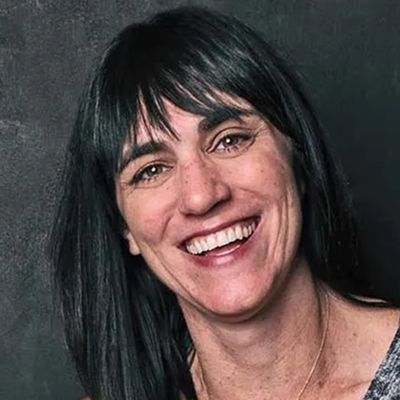
In our final episode of Season 3 Christine sits down with celebrated director Leigh Silverman about her ongoing commitment to form teams that have intersectional inclusion. Leigh shares candidly both her own efforts to create parity on her teams, and her personal learning curve.
Leigh will be a part of New York City’s Vineyard Theater 2021/2022 season. Visit (vineyardtheatre.org)
TALKBACK is a production of the Dramatists Guild of America. It’s produced by Amy VonMacek, Sarah Storm, and me, Christine Toy Johnson. Robare Delaney Pruyn mixes our show. Our theme music is by Andrea Daley. The Dramatist Guild Presents: TALKBACK is distributed by The Broadway Podcast Network. This is our final episode for the season, but we’ll be back next fall. Who should we speak to next? What topics should we cover? Let us know by using hashtag #DGTALKBACK and as always to be continued.
Transcript
This transcript was automatically generated and might contain errors.
[0:01] Christine Toy Johnson: Welcome back to Talk Back, the Dramatists Guild podcast about building the theater we want to see.
[0:07] Christine Toy Johnson: I'm your host, Christine Toy Johnson.
[0:10] Christine Toy Johnson: This season has been all about collaboration.
[0:13] Christine Toy Johnson: In this episode, I talked to celebrated director Leigh Silverman about her ongoing commitment to form teams that have intersectional inclusion.
[0:22] Christine Toy Johnson: Leigh speaks candidly about her efforts to create parity on her teams.
[0:27] Christine Toy Johnson: Here's Leigh.
[0:28] Leigh Silverman: Will you please introduce yourself to our listeners?
[0:33] Leigh Silverman: Sure. My name is Leigh Silverman, and I am talking to you today from Brooklyn, New York, from the land of the Lenape, and I go by she/her.
[0:45] Christine Toy Johnson: So Leigh, I just have been following your illustrious career for all of these years, and I'm so impressed by so many things. And of course, the artistry, but also that you have been such a champion of intersectional inclusion. And I wanted to talk to you about how you have managed to keep advocating for it and why it's important to you.
[1:10] Leigh Silverman: Wow, that's so nice of you to say, and certainly it has felt like the central ethos of why I direct at all and the nature of how I hope I lead. I have felt a deep personal responsibility to try and bring stories and underrepresented communities forward as best I can in whatever way that I can. And that has been, I think, sort of part of why I do theater at all.
[1:46] Christine Toy Johnson: I wonder if you could talk about your process for how you assemble your team. What happens first and how do you proceed finding the right fit?
[1:57] Leigh Silverman: I endeavor with designers to simultaneously, you know, develop vocabulary with people that are exciting to me and mix that up with people who I've already spent years developing vocabulary. And so, like all of us, I have people that I love to work with. I've done, you know, a million shows with Clint Ramos, Rachel Hauck, and I have done over a dozen shows together, and then I try and mix that up with people that are new to me. As a mission for a design team, I'm always striving to put all kinds of diversity together, both in terms of age, race, lived experience, who's worked together, who hasn't worked together. I had this experience when I was younger and was assisting, and some of the directors that I assisted worked with the same design team over and over again.
And I saw the incredible possibility in that because you've already kind of worked out the ways that you talk to each other, how the dynamic works, you've worked out like what you like to do after a show, how you get notes, what restaurants you like to go to, what your favorite drinks are like. I get it. And then, you know, I also think I've pursued a kind of hybrid version of that, which is to say that there's, you know, generally I like to have somebody who is new to me, or potentially two people or three people, or sometimes an entire team, depending on the project. I also try and match, of course, what the show is about with ethos and aesthetic. I really try and hold a sense of scale, scope, possibility, possibility for meeting new designers.
I'm always, every time I go to see a show, I'm always trying to figure out who's everybody, who's that person working with. And I need to work with that person. And like an example of that is, I will say that I went to see the production of School Girls that Rebecca Taichman did at MCC, and that I love the sound design so much for that show, and then wrote to MCC, got Palmer's email address, wrote to her, and then hired her for the next three shows that I did without having just one copy just because I was like, she is an amazing sound designer and now she's too busy, I'll never work with her again. When I'm putting a design team together, I'm also all the time thinking like whose point of view do I need to bring that's different from everybody else in the room, and whose point of view is gonna match so beautifully with everybody else in the room and try and put that interesting dynamic collision together.
[4:36] Christine Toy Johnson: I'm so glad to hear you talk about that and how you find people that you don't know, because I've heard if you look in the same pools, you're only gonna find the same people, right? And then also on the other hand, other people saying I don't have time to go see everything, and so I tend to use the same designers over and over. And that doesn't seem to really create many opportunities for expanding your circle, right?
[5:04] Leigh Silverman: It's true, it's true. And I will say that earlier in my career, you know, I was very focused on having a lot of women in the room, women in positions of power, women, you know, stage managers and designers. I had a real blind spot about racial diversity and age diversity. And I think certainly in the last I would say 10 years, that I have really tried to make sure that there's at least 50% diversity inside of my teams, if not more.
[5:32] Christine Toy Johnson: Do you start that conversation with the playwright first and then the producer, or how does that conversation go and how has it changed as you've obviously gathered more clout in the industry?
[5:46] Leigh Silverman: So it really depends, you know, every process is a little bit different. You know, sometimes the show will get produced because I've had a long relationship with a writer, and then we kind of are developing a piece at a place. Sometimes I'm asked by a theater to come in and work with a writer, you know. So every process is slightly on a different trajectory, but I have made it very clear with the producers that I work with, and of course it's different in the commercial world versus in the not-for-profit world. But I try and say pretty early on to whoever's in the producing position to say, I will not move forward unless there are certain conditions, and I would say that those conditions are related specifically to diversity, and also I would say to how a show, certainly in more recent years, as I think I've gotten more confident in my ability to issue some requirements, which I think that is a thing that is so hard earned and won, but related to marketing, related to process inside the room, people that we might, I feel might be important to, you know, whether it's some kind of advisor or consultant, an anti-racism coordinator, a gender consultant, you know, that there's a variety of people who I will frequently want to bring into the room to help make sure that the process feels safe and inclusive.
And the more I think directors, and of course, all those relationships take time to build, but I think the more that directors can step into a position of requesting and insisting on certain elements of care within an institution or in a commercial production, the better the room could potentially be.
[7:34] Christine Toy Johnson: I love that you are your own inclusion writer.
[7:37] Leigh Silverman: You know, it's crazy, you know, like when we did Life Span of Effect on Broadway, we had the first all-female design team on Broadway, which also I put together not knowing that that was true, because how could that possibly have been true? In 2018, like, how is that a thing that could have been true? When I went to hire Lucy McKinnon, our projection designer, she said, you know, I really want to do this show, but I don't think you're gonna want me because I will have just had a baby. And I said, Well, why wouldn't I want you? And she said, Well, you know, I'll be breastfeeding and I'll have a hard schedule, and she had another kid, and I said, Well, do you think you can commit to the time that you would need?
And she said, Yes, but you know, there's and I said, Why are you taking yourself out of the conversation then? Because it's not a problem for me if it's not a problem for you. And it turned out that three of the women on the design team were moms and had young kids, and one of actually four, four were moms, one had sort of older kids. But it was very interesting to be then involved in the conversation around motherhood inside of our industry. And when I went to the production manager and said, you know, we need to have a room where there can be breastfeeding, and it would be really great if we had a separate fridge for their breast milk so that they weren't putting like their breast milk in the green room with people's lunches.
Like, you know, let's just do this. And literally, the production manager who, you know, has done every Broadway show, he said, no one has ever asked for this. And I was just like stunned. First of all, I was embarrassed that I had never done it for a collaborator before. I certainly have worked with other women who are breastfeeding. And I was appalled at myself that I had never done it before. But I was also, I was frankly shocked that that is where we are and have been. And I think the inhospitable environment for women in general, and exponentially more so for, of course, women of color in our industry is just a thing that I, you know, that injustice just makes me insane with rage and activism. So I just am devoted to the, you know, getting rid of this, you know, unbelievable. I mean, glass ceiling doesn't even begin to cover it what women in our industry have been through.
[10:03] Christine Toy Johnson: That's incredible. Have you ever encountered pushback?
[10:07] Leigh Silverman: Sure. I mean, pushback comes in all forms. It can be blatant and obvious, and it can be insidious. So I would say, like an example of insidiousness is when I ask, who else is directing in your season? Because I really want to make sure that you have parity, racial parity amongst directors, and there's kind of pushback around like we don't know our whole season yet, or we're not sure. Or when you ask about certainly when you ask about money and where money's being spent, there's a kind of pushback because mostly what people are saying is like that's none of your business, and focus on your own, you know, small thing. And I think that is part of the transparency that people are calling for, which is to say, how do people get paid when I ask for one of my assistants to be paid for pre-production work to be part of design meetings so that they can have a better experience overall, and they say that's not precedent, that's a kind of pushback.
When people basically say stay in your lane, right? Which happens all the time. Right that's a that's a that's a pretty strong sort of pushback. I would say the other major pushback that you get when I offer designers that I'd like to work with or stage managers that I'd like to work with, and you're told that they don't have enough experience. And I think that's another way that women and people of color have been kept out of the business and systematically kept down and kept in smaller roles. So I think all the time you have situations where men and specifically white men do small shows, direct small shows off Broadway, and then the next thing they do is a giant show on Broadway, and whereas women and certainly people of color and women of color specifically do successful shows off Broadway and then are never vaulted forward.
[11:51] Leigh Silverman: There's this amazing quote that I use all the time from Joey Soloway, which is women are hired for their experience and men are hired for their potential. And it's I think that's completely true. I think you see it all the time every day, and certainly exponentially more true for women and people of color. Yes, really fascinating. I was just reading a study. So there's a website that the Guild and the American Theater Wing have helped sponsor called counting together.org, and people that have been collecting numbers about hiring stats. And SDC has a great, very, very long report attached to that. And I was looking at it yesterday and noting the lack of parity in salary and looking at gender specifically.
You mentioned something about that, about how you address that in asking for your assistance and your associates to be paid. How else do you see trying to push for more pay equity? This is such an important question, Christine. And I don't really know the answer, except that studies like the ones that you just quoted, which bring to light the discrepancy, is the first step. And then for people like you and people like me to talk about it all the time, because I think that money specifically is so rarely talked about in theater. You know, I have part of a variety of different directing groups, and I am constantly, constantly amazed at the feelings that people have around, well, you know, how much did you get paid for that, or what did your assistant get paid?
You know, that there's so much, there's shame in asking, it feels distasteful to ask, it doesn't feel like we are we're not practiced at bringing some of these questions to light. And I think that we're not practiced at it because we've all been told that we're just lucky to have a job. And so if you've like eaten that sentiment for breakfast, lunch, and dinner since the first moment you dreamed of being a theater person, that you just be lucky to be there, then definitely you are not practiced at being like, Well, how much did you get paid for that? Or what did your assistant get paid for that? Or any of those things. We've been kind of, you know, our brain can't take it in that we can in fact bring some of these questions into the conversation and actually not make them so weird and not make them so crazy.
And I think particularly, you know, it and again, this is the big divide between commercial theater and not-for-profit theater. So in non-for-profit theater, there's minimums, those theaters pay those minimums. People never get paid really above minimum in a not-for-profit setting. And for by not-for-profit, of course, I mean like regional, I mean off-Broadway in New York and smaller theaters in New York and Chicago, and like anything that's institutional. And then it's really when you get closer to the money, when you get into commercial situations, Broadway and commercial productions, off-Broadway, touring, that that's really where you start to see this kind of discrepancy. You see that discrepancy in hiring practices, of course, in the not-for-profits, but not in actual money.
And I think the closer you get to the money, the more you see the same people making the money over and over, and those people are generally white men. But I truly think that the antidote to it is talking about it, talking about it all the time. And for directors specifically to say to their assistants, how are you making money while you're assisting me? How much are they are you getting paid? You know, I want you to have, you know, do you want to be part of the casting process? Do you want to be part of the design process? If you want to be part of those early parts of the process, how can we get you compensated for your time? And if the um won't do it or a producer won't do it, then what responsibility can I as the director take to make sure that that people are being compensated for their time.
[16:10] Christine Toy Johnson: We'll be right back with more from Director Leigh Silverman.
[16:17] Christine Toy Johnson: Welcome back to Talk Back. Today, Leigh Silverman and I are talking about the importance of creating non-homogenous creative teams. I asked Leigh to open up about more of the initiatives she participates in to make the industry a much more welcoming and just place. If you're not working all the time to make the industry a more equitable and just place, I'm not really sure really what you're doing alongside of whatever the work is. So it feels like as important to me as talking about, you know, what my next projects are. This is the mission, I think, of a theater artist working today, how to leave it a more equitable, just, sustainable place for more people. I have a few different director groups, one with the Mercury Store, which is an intersectional group of people of different races and different ages who have come together.
We meet once a month, and we've been doing that over the course of the whole pandemic. The Mercury Store has been funding it very generously, and that has been an incredible space. The goal to be to yes, talk about race and talk about race inside our industry, but mostly to center us as directors and to really talk about the craft of directing from an intergenerational intersectional point of view. I also am part of an intersectional group of mid-career directors, primarily who work in New York, who work on new work to talk about accountability and anti-racist practices, to come up with some agreements and then to share those agreements around with artistic directors with each other, with directors in other places, but it really started as this intimate group of mid-career new play directors.
And our thought was that if we could come up with similar ethos, practice ways of doing work that was accountable and measurable, actionable, and we were able to then say, well, I'm gonna do it this way. So if you want me, and then if you don't want me, that's fine. But the next three people you go to, and the three people who came before all have the same ideas about the way to work, that we could make some change happen sort of quickly in the new work community in New York. I also am very involved at SDC. I was on the board for 13 years. I just rolled off and was the vice president and continued to chair committees there related to issues around workplace, workplace safety, and feel very passionately that although the union is it's a labor union and focused on, of course, most importantly, contracts, and but that also there's a SDC is very committed to the rights and responsibilities, and they take those words very seriously, the rights that we have, but also the responsibility that we have. And I believe directors and choreographers need to lead the way and continue to be at the front of change and progress.
[19:19] Leigh Silverman: That's wonderful. So one of the things that I just learned about you is that you have your MFA in playwrighting.
[19:26] Leigh Silverman: Yeah.
[19:28] Christine Toy Johnson: So are you still do you still have time to write at all? Or are you so busy?
[19:31] Leigh Silverman: You know, I don't write, and I actually have a double degree in directing and playwriting. And I was at Carnegie Mellon and I was an undergrad in directing. And when I started my junior year of college as an undergrad director, I was desperate to meet the playwrights. And there was no intersection at that time at Carnegie Mellon between the directing program and the playwriting program. And partly it was because the playwriting program were grads, and we were just like, you know, kind of nerdy undergrads. You know, we spent a year working on ground plans for Hamlet and Picnic, and we never sort of had the opportunity to do new work, and my eyes were just huge. Like, just please let me in. I was so anxious to meet these incredible people.
And so my only option was to apply to be a playwright. And was I guess I was sort of good enough to get into the program and where they thought it was sort of a joke or something. But I got in and I learned so much about directing while I was a grad playwright. I learned about character and story, I learned about how to talk to a writer. I felt like I could I could really, especially because I'm not a great writer and I've had the incredible privilege of working with like truly the greatest writers in the American theater. So I really know that I'm not a writer, but it did give me insight into how difficult it is to write, what it is to face that blank page, what it is to share work, what it is to receive feedback, to be met with people just being like, yeah, yeah, yeah, like nodding their head, like without anything to say.
Like I understood from the inside out. And I think that it has helped my, it's helped everything about my directing because I understand writing in a different way. And I'm so grateful for that time. And I also think when I was younger and I first sort of came to New York and I was able to say to a writer, you know, I have this, I have this dual degree. I think it gave me a little bit more legitimacy because they were like, Oh, you understand my suffering. So it was that was great. That was very useful. But truly that time that I was writing was so helpful to understanding how to collaborate with writers. And now I teach at Adjunct at Columbia, and the class that I teach is a fundamentals of directing class for playwrights and producers and dramaturges.
And really it's a sneaky collaboration class because they don't really care that much about directing, which is great, because I don't have to teach them any of the boring stuff like ground plans. And instead, what I'm really doing is teaching them this thing that I feel like I learned when I was a playwright, which is what is the nature of the collaboration between a new play and a director, and how does that relationship develop? How does it form? What are the pitfalls? What are the traps? And so to teach fundamentals of directing to playwrights, dramaturgs, and producers. I feel like I'm getting in some of what I learned while I was, you know, undercover as a playwright.
[22:51] Christine Toy Johnson: That's so brilliant. That is really brilliant. Another thing that I've heard about you from so many of my friends and colleagues who are actors is how amazing you are to work with as a collaborator with their skills.
[23:07] Leigh Silverman: And I wonder if you could talk about your approach to working with actors and casting too.
[23:14] Christine Toy Johnson: Sure.
[23:15] Leigh Silverman: Um, that's so nice of you to say, Christine. Thank you. I feel so out of practice after all this, you know, after this year and a half, I'm just like, I'm like, what am I gonna do with all these bodies in a room? It feels so terrifying. But I feel incredibly grateful for, you know, the many deep relationships that I have with actors. The experience of bringing a new play or a new musical to life is so heavily reliant on a company's willingness to go forward with you, no matter what you put in front of them. And it is, I can only imagine a terrifying experience, and you have to be a certain kind of actor to sign up for a show that when you audition for may not be finished, maybe has never had any, you know, it's such a different process, you know, it's always groping around in the dark, always, no matter what kind of art you're making, what kind of live art you're making, you have no idea how it's going to be received or interpreted.
But when it's something new and when it's an ambitious piece that is new, there is literally no floor, like anything can happen over the course of the time that you're working on it. And I've just been in, you know, I don't know, I've directed like 57 new plays and musicals or something in New York. It's like, I don't know, some crazy number. Somebody just told me that number, and I was really like, well, that seems excessive. I just think like the number of times that I have had the experience of actors saying, like, where'd that scene go that I auditioned with? That doesn't exist anymore. Or like, where's the, you know, the number of times that I've come in after a dress rehearsal and said to a company of actors, like, great, great, like a lot worked, but a lot didn't. So here are the scenes that are getting cut, like take out your pen, like take out your pencil, you know, the number of times that we've taken material away from actors and then, you know, worked through the process of that loss and grief of whatever it was that was important to them, and then put it back or put it back in a different place, or rearrange every word in a sentence.
And I just have the utmost awe and respect for performers who are able to do that, who are able to roll with that, who are able to put their egos aside and to say what's best for the show, which I trust you with to be able to know what's best for the show and then to follow you. And that trust takes time. I feel like I have to earn it. I really try and keep actors very much in the loop of what and why decisions are being made as much as, you know, seems it worthwhile and important. I try and really build in time into my process for us to talk as a company. I try to hold everyone's anxiety and not let any leak out. Of course, sometimes that happens, but you know, I also take that part of the job very seriously.
And I think that the kind of inclusive captaining that I like to take on involves people really understanding where we're going. And so I will always really try and make sure that there is conversation and time for input and for a true dialogue, both in terms of what my vision is, where they intersect with that, what their feedback is about that vision.
[26:46] Leigh Silverman: And I would say, particularly in the experiences that I've had where I've been in rooms where I'm one of the only white people or person in the room, or an experience where I'm directing a piece that is not about my own lived experience, white or not. And I think that in those situations, it's leading from behind is always why I like to move through a process and the people that I hire, being able to be transparent with them, sort of as you asked about in the casting process, being able to say, this is what I imagine the process is gonna look like. Do you feel up for that? And leave people with the most opportunity to make sure that this is the right intersection for them. So when I know that a part's gonna change, or when I know that a process is, you know, we're really like in the stew on it, I like to just say that because I want to make sure that people feel both engaged in the struggle that we will all be in and part of it, but also completely clear about what's being asked of them and why.
[28:00] Christine Toy Johnson: That's great, thank you. And one of the things I want to go back to, if you don't mind, and I think we sort of touched on this, how the conversations changed over the years with producers, acknowledging that it's going to be different with the nonprofits and the commercial producers, but how have you seen these conversations about making sure that you have the kind of inclusive team that you want? Have they changed or how have they changed?
[28:29] Leigh Silverman: Yeah, how have they changed? I will say change is so interesting, right? Because there's kind of the big continuum, and then there's like what's happening in the moment. And just to say that when I directed Lisa Kron's play Well in 2006, I was the seventh woman to ever direct a straight play on Broadway. Wow. And that is shocking, right? Like that is because there were so many incredible women who came before me who I stood on their shoulders, and I think like none of them were able to direct a play on Broadway. Like why, how is that possible? There have been, of course, since 2006. I mean, I think there were like seven women last year or the year before. We've had women, you know, win the, like there's been change in that way.
Then you look at how many people of color have directed on Broadway, and the stats have stayed relatively the same, which is like basically one. Yes. Sometimes one. In 2010 it was one. In 2020 it was one. Like so, so there's change, and there's change, of course, that will, that is already different in this upcoming year. I mean, we're already looking at, you know, at least seven, if not more, plays and musicals directed by people of color. And I just like that is a long overdue correction. I will say that in terms of my own sense of where I fall in the continuum, you know, it in 2006, having the opportunity to direct Lisa's play on Broadway. So to be a gay woman and direct a play written by a gay woman, like that dealt openly with her being gay.
It wasn't about that, but it that also felt kind of subversive. And Jane Howdy Shell, who at that time had not been, you know, now Jane is like, you know, the queen of Broadway, but certainly at that time, you know, to have us three unknown weirdos, you know, only we could only have been brought to Broadway by someone like Liz McCann, who is was, you know, totally out of the box Broadway producer, and was also singular in her vision and was one of a kind. And I think we have, I think if she was coming into the scene now, we would call her a creative producer. But at the time there was no name like that for her. So I, and now there's a fleet of young, cool, interesting, forward-thinking individuals who are gonna change Broadway.
And I think like I think about Liz, and they stand on the shoulders of somebody like Liz McCann, who had the like guts and Kutzpa and like frankly, like insanity to bring a show like Well to Broadway. But I do, I do think things are changing. I think that artists are taking more in general more responsibility for themselves. I think they're trying to, you know, eat less of the candy that's like you just are lucky to have a job and to instead focus on the bigger picture, the bigger ecosystem, their place in it. And also, you know, this question that I get asked a lot, particularly from younger directors, which is what how do you balance work and self-care? And I always say like, what balance?
You know, like that's like that's and I will say that that's also something that's part of this change, which is that people's emotional life, their mental health is also being talked about. And I look at the next generation or the two generations now who follow and I think they actually are talking just like we're starting to talk about financial transparency. It's also where is the mental health initiative inside of our business? Where is the care being taken for individuals and what is the personal agency that people have? And this is all feels like part of the change that is forward moving and that is I'm so grateful for it. I'm just in, I feel so inspired when I talk to younger directors and they have these questions around, I mean, I could just, I never would have said to a director who was before me, I never would have said what's what do you do for self-care?
I mean, it just never would have occurred to me to as a real question because I thought like the whole point was to turn yourself into a robot. So, you know, I think like when I think about that, I think, oh yeah, change is possible and it's happening and it is moving, and like twenty twenty-one and twenty-two, that season on Broadway is just like I can't wait for it. And, you know, I just look at this next generation of theater makers and I'm like, I'm just amazed.
[33:38] Christine Toy Johnson: Thank you to Leigh Silverman. Leigh will be part of Vineyard Theater's upcoming season off Broadway. Visit VineyardTheater.org for more info. Talkback is a production of the Dramatists Guild of America. It's produced by Amy Von Masick, Sarah Storm, and me, Christine Toy Johnson. Robert Delaney Pruyn mixes our show. Our theme music is by Andrea Daley. The Dramatist Guild presents Talkback, is distributed by the Broadway Podcast Network. This is our final episode for the season, but we'll be back next fall. Who should we speak to next? What topics should we cover? Let us know online by using hashtag #DGTALKBACK. As always, to be continued.
© Broadway Podcast Network, All Rights Reserved