

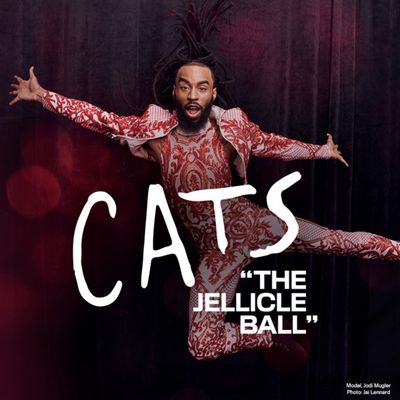
Behind the scenes with three of the creators of "Cats: The Jellicle Ball," the colorful, queer reimagining of the Andrew Lloyd Webber musical that's become a breakout hit of the summer... Read More
From the show: Stagecraft with Gordon Cox
Guests


Featured Shows
About
Behind the scenes with three of the creators of "Cats: The Jellicle Ball," the colorful, queer reimagining of the Andrew Lloyd Webber musical that's become a breakout hit of the summer.
Transcript
This transcript was automatically generated and might contain errors.
[0:00] Gordon Cox: Welcome to Stagecraft, Variety's theatre podcast, your backstage pass to revealing conversations with stars, creators, and industry leaders, on Broadway, off Broadway, and beyond. I'm Gordon Cox. On this episode of Stagecraft, I'm talking about Cats, the Jellicle Ball. If you've been following New York theatre this summer, you've probably already heard about this show. It's Cats, the iconic 1980s Andrew Lloyd Webber musical that's one of the most popular and longest-running musicals of all time. But in this production, it's Cats as seen through the colorful, queer lens of drag balls and ballroom culture. It's a surprising mash-up that, judging from critical and audience response, really works, honoring the storied history of the ball culture seen in movies like Paris is Burning and TV series like Pose, while also bringing new depths and emotional textures to Lloyd Webber's long-running hit.
The production has been a breakout success at the Perlman Performing Arts Center in downtown Manhattan, where it's currently playing an extended run through August 11th. Now, three of the creatives integral to the conception of the show are in the virtual studio with me to reveal how this unexpected pairing of musical theatre and ballroom came together and share what's next for the show. In this conversation, you'll hear from co-directors Jalyn Levingston and Bill Rauch, and the show's dramaturg and gender consultant Josephine Kearns. Here they are to take us behind the scenes of Cats, the Jellicle Ball. Hello, Jalyn, Josie, and Bill. Thanks for joining me.
[1:36] Bill Rauch: Hi, thanks for having us.
[1:38] Jalyn Levingston: Yes. I wonder if we could just start at the beginning, because the pairing of Cats and ball culture is, for so many, a pretty startling idea, and then audiences see it, and they're, you know, surprised by how well the two fit together. So I wonder if we could just start with the beginning question. Whose idea was this initially? When did you have it? What was the inspiration?
[1:57] Bill Rauch: It started with me.
[1:58] Gordon Cox: Yeah, that's what it sounds like. Tell us about it, Bill.
[2:03] Bill Rauch: It's been so collaborative, but it is true that I first had an impulse about Cats and queer culture and thought about an older gay man singing Memory in a bar, in a gay bar. And then as I got to spend time with the material, it was really clear that it was a ball and not a bar, because literally the text is constantly about ball. And Josie was the first person to start talking with me about this project. And maybe, Josie, you could pick up from there.
[2:41] Gordon Cox: How long ago was this, before we get to when Josie joined? How long ago was this that you had this idea, Bill? Do you have any sense of what inspired it?
[2:50] Bill Rauch: Gordon, here's what's funny, is that I've been telling people all along that I had this impulse around the time I was doing the Queer Oklahoma that we did at the Oregon Shakespeare Festival that I know you and I have spoken about.
[3:02] Gordon Cox: Yeah, that was in 2018 or thereabouts?
[3:04] Bill Rauch: 2018. But my husband said, No, Bill, you talked about this 20 years ago. And I was like, Absolutely not. You're totally wrong. And then I got an email from a director in LA who happened to be in New York and who saw it. And he said, I was so excited to see it, because I remember you talking to me about this 20 years ago in Los Angeles. So once again, my husband is right, and I am wrong.
[3:28] Gordon Cox: And it's just an idea that sounds like it sprang from your brain like Athena, and it's stuck around ever since.
[3:36] Bill Rauch: Just an impulse that has been realized and shaped by lots of brilliant people, especially the two that are on the call with us right now.
[3:45] Gordon Cox: Yeah. And so Josie, if you were the first to sign on after that, when was that? And what did you think of the idea?
[3:52] Josephine Kearns: That was in lockdown, so about four years ago. And I was super intrigued. I'm really passionate about taking existing work and placing it in a new context. And so I think the idea, as you presented it to me at the time, Bill, was pretty much just like cats, but people, and more explicitly queer. And that was maybe the whole thing. And we started out throwing around different ideas of like, maybe it's like, one of my earliest impulses was that it was set in like the disco scene, like a Studio 54 kind of place. But Bill had the idea of it being in ballroom, and we landed on that fairly quickly, and then brought Omari on as our choreographer. And the three of us sort of just like, we have like a 50-page long planning document or something that we were compiling over time.
[4:47] Gordon Cox: Wow. And how did you connect with Omari? And actually, if you could tell our listeners who Omari is and how you found him.
[4:56] Josephine Kearns: Omari Wiles is a ballroom legend, an icon. He's amazing. He's a choreographer and runs a company called Les Ballets Afriques. And he was recommended to me by Aaron Maddox, who was at the Joyce Theater at that time. And I had mentioned this idea to Aaron, and Aaron said, you should talk to Omari. And so, Josie and I talked to Omari. And as Josie said, the three of us just kept going.
[5:28] Gordon Cox: Yeah. And so, Jalyn, at what point did you get on board?
[5:33] Jalyn Levingston: Yeah, I was directing a play at Second Stage. And a mutual friend, who is also the casting director of the production, Victor, and another friend of mine named Larry were all at a bar after the show. And they told me that they had been in conversations about this show. And the crazy irony is just like, two weeks prior, I had been in my living room with my then roommate. And we were just like watching cats and literally joking about what if they weren't cats? What if they're just calling themselves cats, like people used cat as a slang term in the 20th century? And so, we were just like playing with that idea just for fun. And then heard about this idea and was like, whoa, that's crazy. What a random thing to also be happening as I'm just joking with my friends about cats, but it's not cats.
Couldn't that be crazy? And so, I just had a real strong impulse to connect with Bill and hear more about what he and the team as it stood had been thinking about. And the part of me that really was leading me was not some kind of sophisticated pitch around how to make the thing work, because I think it took a long time to figure out how to make the thing work. More than anything, it was just like the childlike part of me that connected with the material in second grade wanted a chance to be able to reconnect with that part of myself. And I think it was that part of myself that boldly asked for a Zoom meeting with Bill. And we connected over Zoom and talked about the idea and talked about where the story was at that moment, talked about the outstanding dramaturgical questions that Josie and Omari had been wrestling with thus far.
And more than anything, me and Bill were connecting over a creative ethos around how we both see process making. And I was just like, hey, I don't assist or associate direct anymore, but if you're looking for a co-director, I'd love to do this with you. I think I bring this, this, this, and this to the table. And if not, that's totally fine, and I can't wait to see what y'all do with the show. And I think after about an hour and a half on Zoom, we both were like, okay, let's do this, which is just wild, and to Bill's credit in terms of the courage it takes and took for him at that point in the process to bring on another director. Two of the best decisions that were ever made on this project were reaching out to Josie and then saying yes to Jalyn.
[8:49] Gordon Cox: Yeah. All three of you have mentioned the process of kind of putting it all together and figuring out the kind of dramaturgical questions and, you know, figuring this sort of beat by beat, you know, figuring out how these two things fit together and how it works. Can you walk us through a little bit about how the three of you and others in the room kind of collaborated and what some of the outstanding questions were that you were like really had to wrestle with?
[9:06] Jalyn Levingston: Yeah, I mean, I can say a few things. There's a billion things to say, so I'm sure we'll just ping pong. But one of the things that was really leading for me is just what would the actual theatrical event be? That there were multiple things that, you know, I think when I came on, we were still kind of wrestling with in terms of how much of a real literal world we're in. How much of an abstracted world are we in? Where are the balance between the two? How much narrative needs to be clear or not clear? What is the function of the music? When is it literal? When is it, you know, poetic or abstract? And I'm just leading with kind of those broad buckets and umbrellas because those were the kinds of questions that were like sustained over the course of all the years that it took to make the thing itself.
And I think in some ways we probably are still asking in terms of certain moments of the show and things that we might continue to look at. And so I was really, I as a creative, I'm really interested in the idea of the event. What is the event and why have we called the audience here? And in digging in this material, it seemed as if that was a prompt on a question that was as bottomless as the poetry itself. And then there were all of these, like, incredibly specific, pointed, you know, kind of dramaturgical questions that had to be answered in terms of what character fits with what category and what is that category trying to say? And musically, what does that mean and what is the story? And, you know, that evolved over time as well. And I'm sure Josie can talk a lot about how, you know, exciting but yet rigorous and hard it was to really land on, you know, some of the final story points that ended up in the show.
[11:23] Josephine Kearns: Yeah, I think Jalyn coming on helped us think so much more deeply about, like you were saying, like the container. We talked about, like, is our audience watching from the outside or are they participants in the ball? Are they literally in a ball that is literally taking place in PAC-NYC or are we transporting them to another location? Those sorts of questions. I think the things, the questions that we spent the most time on up front and that we sort of, like, brought in and, of course, modified over time was like, how do ball and cats fit together to make a story?
[12:05] Bill Rauch: You know, Cats is largely a parade of characters, and I think it was super clear to us very early on that this parade of characters was actually a series of categories that the Cats were participating in. But then a lot of the question became, A, which categories fall where and what stories are they telling? And then B, for all of the other songs that surround those, how do those fit into this world and how do we make sense of them? And some of those answers were very clear very early on and never changed. We always knew that Mistoffelees was going to be runway to bring down the house at the end of the show. We always knew that the naming of Cats at the beginning of the show was going to be what in ballroom is called the LSS, the Legend Statements and Stars, which is when the commentator or MC sort of welcomes everyone and names all of the legends and stars in the space.
And other pieces shifted a great deal over time. And to give an example of things shifting, Skimbleshanks is a number we worked on a lot and went through a lot of iterations. But it was only if I remember right, Jalen and Josie, it was only like a couple days before we left the rehearsal room that we decided Skimbleshanks was actually going to lose her category instead of winning it. And that was a big breakthrough. But the gracious loser who actually was supporting the person who beats her in that category actually became a really important story point on many levels. Again, that was a very, very late breakthrough. So it was very, very much an iterative process. And I think really, you know, to think about the spirit of how the original Cats was made, so much of it was devised, that there was so much of that devising spirit in our process as well.
And so part of what, you know, we were doing over time was really trying to create the container by which really brilliant performer artists could come in and fill out the kind of very specific relationship-based details that actually are the thing that make watching these bodies that do Cats so extraordinary, that they really are living in this world. And, you know, as much of the kind of creating of the story that we as creatives could do behind the table, there was just as much that needed to come from finding an extraordinary group of storytellers who could meet us and then elevate, you know, the theories and ideas to a place of something that really is, you know, greater than all of us.
[14:47] Bill Rauch: Yeah, that leads well into my next question, which was going to be how, you know, all three of you are theatre people by trade. How did you go about connecting with the ballroom community? And did you have any connection before that? And then, yeah, just tell me about, walk us through your sort of ethos for compiling this group of performers that comes from, you know, multiple backgrounds.
[15:08] Zhailon Levingston: Omari was the one who really was our lifeline to the ball scene. He knows everybody in that scene. And honestly, generated a lot of excitement for the project among folks who are of that world. And, yeah, I think the process of deciding who was in the room, I think this is the most challenging show I've ever encountered in that way. We knew one of the other things that was very clear to us early on was that we needed all of these characters to be authentic. You know, in the original Cats, all of the performers are very much of a similar type to one another. And when they need to play an older character, they change their appearance. And when they need to play a character of size, they don a different costume.
And it was really, really important to us that all of these roles be authentic, and that our cast be a mix of folks who were from ballroom backgrounds and folks who were from musical theatre backgrounds. But that meant that almost universally, we had people stepping into the room who were doing something new and scary. Because I don't know that there was anybody on the process who had done ballroom at an extremely high level and musical theatre at an extremely high level. There were some people who had done bits of both. But yeah, and figuring out what that combination of people needed to be was an extraordinary undertaking.
[16:34] Zhailon Levingston: Definitely the hardest show to cast of any show I've ever been part of.
[16:37] Josephine Kearns: Yeah.
[16:38] Zhailon Levingston: And just to speak on the casting a little bit, so much of it takes casting directors who believe in the ethos as much as we do, because we get just as burnt out in our own imaginations. And there's moments where we may want to sacrifice the integrity that we've put forth ourselves, just to be like, can we get this over with? And so to have casting directors who at every moment would remind us, no, this is the kind of show you all hired us to cast. Okay, okay, well, let's go back to the table. Okay, well, let's continue the hard conversations. And I just really felt on this project how crucial having a casting team as relentless as the ones we had was to the process in terms of making sure that authenticity stayed true the entire time. Because it was such a matrix of needs between each design and creative position behind the table, and so much had to be negotiated. And so, yeah, just real big shout outs to them.
[17:47] Zhailon Levingston: And just to name them, it was Victor Vasquez and Sujana Pace from X Casting, who were both phenomenal.
[17:55] Bill Rauch: Yeah. Was it an unusually long casting process? Or how did the difficulty manifest in terms of getting it done?
[18:03] Zhailon Levingston: We ended up doing five different workshops over the last two years. And two of those were dance focused. One was music focused. And then two were kind of two-week, you know, full cast workshops. And there are people who were part of, you know, many of those five. And then there were people, a few people who joined us after those five had happened just in time for rehearsal. So it was a real mix of people having different degrees of exposure. But, you know, we can't say enough about the cast and their gifts and their abilities and their generosity and their brilliance.
[18:43] Bill Rauch: And now, here's more with three of the theater makers behind Cats the Jellicle Ball, co-directors Jalyn Levingston and Bill Rausch, and dramaturg and gender consultant Josephine Kearns. How did you find in the room that these people, you know, of different experiences and different backgrounds, and how did you find them to work together?
[19:02] Josephine Kearns: Well, I think it was a great experience. I mean, it was a great experience to work with Josephine Kearns. How did you find in the room that these people, you know, of different experiences and different backgrounds began to interact and cohere? And how did that then help the show develop and evolve in terms of what it became and what we see on stage right now?
[19:21] Zhailon Levingston: I think it was important to see from the very beginning that the cohesion was really theoretical and that there was a real material practice that had to be implemented in order to get to a place where everything felt and seemed inevitable into a certain sense. That really what you're watching on stage is the product of people fighting through their fears, jumping off of cliffs with their hands towards their fellow actor with a trust that they will be held the whole time. And that is not something that you can get, you know, three years prior to opening night. You kind of have to learn what the stumbling blocks will be, why it can be difficult, and then have a team. Thank God, you know, so many people on our team were so game for the learning curve of what it would mean to put these two cultures in a room together.
Because they have their own kinds of ethos and trainings and expectations and ways of working. And one of the things that were really important, you know, from the beginning is that we didn't sacrifice ballroom for musical theater, and we didn't sacrifice musical theater just for ballroom. That actually what was happening was that we were trying to create an emergent language using both cultures in a certain kind of way. So that really what you see on stage is a new space, a space that is conducive for all of these worlds coming together. There are still some theaters out there in this city where if certain people enter them, they won't feel comfortable, probably. And there isn't the same kind of invitation to participation across culture and experience.
And I'm sure there are some underground spots in Brooklyn that, you know, not everybody might feel like they know how to be in. And so, you know, what I hope is that when people come see the show, the space that we have created is like manifestation of all of the work it took to actually create a space where people across different kinds of value systems and beliefs can work through something hard together. And that what's on the other side of that is joy as a possibility, as opposed to some kind of like inevitable, well, let's just disagree, let's agree to disagree. That like we can agree to disagree so hard that we actually create something new to agree upon. I have a very vivid memory of the first full workshop we did the first couple of days of it, everybody walking into that space.
And during breaks between rehearsal time, a lot of the ballroom folks would get up and just vogue, just move, just have fun together. And a lot of the musical theater folks were just sort of sitting on the sidelines like, oh, I don't know if I can do that. And then we would get into music rehearsals and musical theater folks are in their elements and a lot of the ballroom folks are like very wide-eyed in that moment of like, oh, what is this? And we probably had...
[23:37] Zhailon Levingston: I want to add too that two of our real icons and elders were Andre De Shields from the musical theater world and Junior LaBeija from the ballroom world. And having... Josie talked about authenticity and casting and wanting elder iconic characters to really be played by elders who are iconic. And that balance of both having that particular expertise in ballroom and that expertise in the musical theater world was really meaningful in the process as well.
[23:47] Zhailon Levingston: And they told us we need to slow down.
[23:49] Bill Rauch: They did.
[23:49] Zhailon Levingston: I mean, there was that moment in the first workshop where Naomi, who became one of our associate directors, who was then an actor in the workshop, was like, I'm hearing from a lot of ballroom people that we are moving way too fast. There are people in this room who have never read sheet music before. This can't be learned in a traditional way. And so we all took a tin and we as a creative team decided to come back, sit in a big circle and kind of talk about what makes this challenging. What do y'all need as a room? Why is this working and why isn't this working yet? As opposed to shutting down the process. And I think doing that so early on really kind of created an energy in a space where people knew that we may run into speed bumps and it's not ever enough to stop us from investigating.
[24:10] Gordon Cox: It brings such texture to the material as well, right, for the audience. I have never responded to the Gus the Theater Cat song in that way, I can tell you that. I wonder also if you could tell us a little bit about, there's a rotating cast of judges, a couple of judges who are in the show each night, it sounds like. It sounds like you've got well-known ballroom names. Cynthia Arifo was one of the judges one night, it looks like. What was the idea there, and how is that cast and orchestrated, and how do you fit that into all the proceedings?
[24:39] Zhailon Levingston: I think we had that idea a long time ago, too. And the intention behind it was wanting the show to live authentically in a ballroom setting, and wanting the ballroom community to have access to this show. You know, I think it's so easy for a huge institution like the Perlman Center, it would be so easy to produce this show. And you know, the tickets are the price that they are. And the show is about a very marginalized community of people. And I think it would be very easy to do that without giving that community access to the show. So part of our very early planning, you know, as much as we were talking about the story, we were also talking about, we need to make sure that there are comp tickets set aside for this community every night at top seats.
And we also talked about, oh, how cool would it be if our judges panel included people from the scene, who could then, you know, participate in the show in their own way as well. And also, I mean, we mentioned Naomi earlier, so much credit to her for putting that panel together night after night, because that was an enormous amount of work. But I hope, and from what I've seen, I think was a very positive experience for those guest judges, or continues to be. And it certainly adds a beautiful, beautiful layer to the show.
[26:03] Bill Rauch: I also just would say, you know, from a kind of story point, just to see the ways in which both the process of making this and the product itself are always dancing with each other. You know, Old Deuteronomy takes a while to enter the story, and there's categories before Old Deuteronomy comes. And so there was the process question of, like, how do we justify this? And what do we do about those categories before Old Deuteronomy is there to judge? And so having the answer be both an answer that could fit into our story so inevitably, and also be so much a part of the community engagement work on the piece. To me, those kind of forces dancing together find their ways in so many aspects of what people are now seeing on the stage, that the process is as much of the content as the content itself. Yeah.
[26:58] Gordon Cox: So at what point during all of this, did you approach Andrew Lloyd Webber? Because in order to be able to do this at all, you would need his buy-in, and he would have to give you the, you know, the right to do the show. At what point did that conversation begin, and how did that conversation go?
[27:12] Josephine Kearns: Well, like the entire process of making the show, the process of our relationship with the Really Useful Group, which is Andrew Lloyd Webber's company, has also been slow and thoughtful and had multiple layers, for sure. But specifically, Josie and Omari and I, from that work that we did originally, did create a deck that we began to share with people at RUG, RUG being Really Useful Group. You know, there are too many people to name there, frankly, but there are so many amazing people, some of whom are not there anymore, and some of whom are still there, who believed in this and who were willing to give us advice, share their concerns, their excitements, and kind of work a way up the organizational ladder to Andrew.
One of the culminating points was that I was lucky to give a tour to Andrew himself of our construction site before our building ever even opened. And that was a key part of the yes. But even once there was a yes, what does that mean about every stitch of music, and every character choice, and every pronoun change? You know, so it's been a very, very collaborative process, and continues to be, honestly.
[28:30] Bill Rauch: Yeah. Is there an insight from them or a note from them that really felt illuminating or useful for you, or do you think that really yielded something surprising?
[28:42] Zhailon Levingston: We had early on imagined all of the music completely reimagined and completely remixed. And one of the things that Really Useful Group helped us to realize is that if you change all of the score, then you're not actually interpreting Andrew's, really what the script of the show is, is the score in something like this, as opposed to just the words, which are T.S. Eliot's poetry, actually. And so, you know, Bill took a heroic journey over to London and met with them. And so many great things came out around how do we compromise the musical integrity of the show and ballroom. And I don't know if Bill, you want to talk more in detail about that conversation, but it really kind of opened up our entire process.
[29:34] Bill Rauch: Yeah, a lot. And it was, you know, pretty late in the process that that particular set of meetings happened. It was after our second full workshop. And really, what was born out of that was there's no reason to change a song musically, if it's not a moment of competition in a ballroom context, that the ballroom beats and that idea that the ballroom beats that exist in the score now for our production are really about moments of competition on the runway. And that many, many, many moments musically exist, just as they were originally orchestrated and arranged. And to realize both that that was, you know, the recommendation from our colleagues, but also that it really allowed to have people inhabiting a ballroom world to the score as it existed.
And to not think, oh, we have to reorchestrate every moment for this to work. But actually that the ballroom context worked, and that voguing and other ballroom choreography worked to the original score in its original arrangement was one of the most important breakthroughs. And that was absolutely a result of collaboration with the Really Useful Group.
[30:57] Zhailon Levingston: Yeah. I remember when we first started having those conversations of like, oh, maybe we shouldn't or can't change all of the music as dramatically as we wanted to. I was devastated because that was, I think a lot of us were in varying ways. And it ended up being one of the best, one of the most important pieces in the development of the show. One of the immediate next steps in the creative processes after that was doing a dance workshop to even see if we could look at that. Can we watch ballroom choreography and vocabulary on the original score, even without the beats that are currently in the show? And it was a challenge, but there was a moment where, and I'll just speak for myself, I saw both Omari and Arturo, our co-choreographers, I saw their eyes widen at the possibility of seeing this thing that they knew so well, this vocabulary that they are bona fide experts in, and seeing how this prompt allowed their own imaginations to expand.
And I think that early on, we still didn't really know why it would all work together. But I think just seeing that sense of like, whoa, you know, was enough for me to trust that, okay, let's keep going down this road with a sense of like joy and possibility.
[32:21] Gordon Cox: And Andrew Lloyd Webber himself came to see the show not too long ago. Tell us about that. How'd that go?
[32:28] Zhailon Levingston: Well, it was a question about whether Andrew would get over to see it. And so the fact that he wanted to see it was really exciting to us, you know, that he had obviously heard enough that was positive that he wanted to come and experience it for himself. And he was very, very generous in his response to it. And, you know, he met with the cast afterwards. Jalen, you were there. Josie and I were both out of town. So you should pick up that story.
[32:53] Bill Rauch: Yeah, no, it was very, you know, our cast are just so energetic and charismatic and excited about the work that they're doing. And so it was just so sweet to see them kind of bum rush Andrew after the show and him respond to their energy with his own peppiness and his own sense of excitement and his own kind of like just immediate, you know, validation and support for those actors specifically, I thought was just a really beautiful thing to bear witness to. And he, you know, let them know in the moment that he thought that the work that they had done was great. And I think that that gave them the, you know, dopamine boost they needed to keep, you know, doing this very difficult thing that they have to do every night.
[33:35] Gordon Cox: Yeah. And so what does that mean for what's next for the show right now? As we're talking, the show runs through August 11th, which was already an extension of its original run.
[33:46] Zhailon Levingston: Two extensions.
[33:48] Gordon Cox: And so what's next?
[33:50] Zhailon Levingston: We have no idea is the honest answer, but I can probably speak for all three of us on the Zoom to say that we're all committed to it having a longer life. And there's so many ways and places and possibilities of what a longer life could be. But in terms of what shape that takes, you know, that will, again, be a collaboration with the Really Useful Group, of course, because it's their intellectual property, the original material. And, you know, I think we all recognize that we've been blessed to be part of creating something that's really precious. And we want to treat it with the respect that it deserves in terms of what happens next. We want to hold it with love and care, as we figure out how more people can experience it, because we certainly want more, especially queer young people and their allies, to experience this project.
[34:54] Josephine Kearns: Just supporting everything Bill said.
[34:56] Zhailon Levingston: Yeah. And it just remains to be seen where and when that will happen. Well, thank you to all three of you for joining me. It was great to chat about this. And for the moment, Cats the Jellicle Ball runs through August 11th. And next stop, TBD.
[35:13] Gordon Cox: Thanks, Gordon.
[35:14] Zhailon Levingston: Thanks to all three of you. Thanks for joining me.
[35:15] Josephine Kearns: Thank you.
[35:16] Bill Rauch: Thank you, Gordon. So fun to talk to you.
[35:25] Gordon Cox: That was Josephine Kearns, Zhailon Levingston, and Bill Rauch, three members of the team behind Cats the Jellicle Ball, now playing at the Perlman Performing Arts Center in downtown Manhattan. If you enjoyed this conversation here on StageCraft, I'd really appreciate it if you took the time to rate and review us wherever you listen to podcasts and on your favorite podcast app. It really does help. Or tell a friend about StageCraft. Find past episodes and subscribe at all the places you get your pods, including Apple Podcasts, Spotify, and on the Broadway Podcast Network, a great place to find more theater for your ears. Until next episode, find me on Instagram and Twitter at Gordon B. Cox. You can also check out my newsletter about international theater. It's called JQueez, and it's at gordoncox.substack.com. Thanks for listening, and see you at the theater.
© Broadway Podcast Network, All Rights Reserved