

On this episode of “Stage Left: The Podcast”, anchor Rob Russo is joined by David Gordon, theatre critic, senior features reporter, and principal photographer at Theatermania.com, and Casey Mink, senior staff writer at Backstage, for a roundtable conversation about three top shows on Broadway: “My Name Is Lucy Barton”, “Is This A Room”, and “A Soldier’s Play”... Read More
From the show: Stage Left: The Podcast
Guests
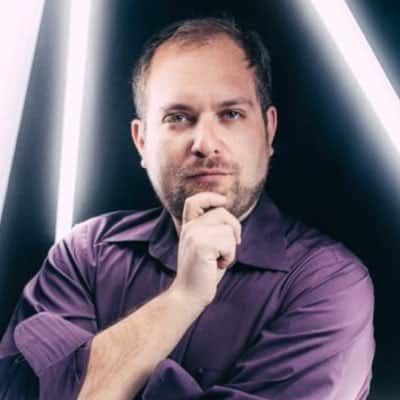
About
On this episode of “Stage Left: The Podcast”, anchor Rob Russo is joined by David Gordon, theatre critic, senior features reporter, and principal photographer at Theatermania.com, and Casey Mink, senior staff writer at Backstage, for a roundtable conversation about three top shows on Broadway: “My Name Is Lucy Barton”, “Is This A Room”, and “A Soldier’s Play”.
Music by Jason Robert Brown, "Wait 'Til You See What's Next".
Rob Russo
@StageLeft_NYC
Transcript
This transcript was automatically generated and might contain errors.
[0:05] Rob Russo: Welcome to Stage Left, a bi-monthly podcast where we talk about the latest shows on Broadway and beyond.
[0:11] Rob Russo: I'm your host, Rob Russo, writer, theater critic, and founder of Stage Left at NYC, and co-host and co-producer of the Fabulous Invalid Podcast, also on the Broadway Podcast Network.
[0:21] Rob Russo: This podcast provides a platform for younger critics and theater journalists with the goal of broadening the cultural conversation to elevate and include as many diverse perspectives as possible.
[0:31] Rob Russo: I'm dying to know what's across the road, what's behind the wall, what's around the corner, and what will it take till I find my way?
[0:43] Rob Russo: Will it be today?
[0:45] Rob Russo: Will it be too late?
[0:48] Rob Russo: Wait till you see what's next.
[0:50] Rob Russo: Just be on the book.
[0:51] Rob Russo: Joining me this week is David Gordon, theater critic, senior features reporter and principal photographer at Theatermania.com, and current president of the Outer Critic Circle.
[1:00] Rob Russo: Welcome to the show, David.
[1:01] David Gordon: Thank you for having me.
[1:02] Rob Russo: Yeah, delighted to have you.
[1:03] Rob Russo: Um and returning for round two is Casey Mink, senior staff writer at Backstage.
[1:08] Rob Russo: Welcome back, Casey.
[1:09] Casey Mink: Thank you so much.
[1:10] Casey Mink: I'm so excited to be back.
[1:11] Rob Russo: Yeah, I wish this was this was the kind of show where I had a couch, so I could be like, welcome to the back to the couch.
[1:16] Casey Mink: Honestly, speaking of bad angles, a couch.
[1:20] Rob Russo: Oh, I like couches.
[1:20] Casey Mink: Yeah, I just like sitting.
[1:22] Rob Russo: And we're already disagreeing.
[1:24] Rob Russo: I love it.
[1:24] Rob Russo: I love it.
[1:25] Rob Russo: Um perfect.
[1:25] Rob Russo: All right, so this week, uh for this episode, we're gonna take a look at three different plays um that are at three of New York's best nonprofit theater companies.
[1:34] Rob Russo: So first up, we'll talk about My Name Is Lucy Barton, which is playing at Manhattan Theater Club.
[1:39] Rob Russo: Um, then we'll talk about Is This a Room, which just finished a run at uh the Vineyard Theater off Broadway.
[1:45] Rob Russo: And then we'll finish with A Soldier's Play, which is currently at Roundabout Theatre Company on Broadway.
[1:50] Rob Russo: Um excellent.
[1:51] Rob Russo: So to kick us off, uh, My Name Is Lucy Barton.
[1:55] Rob Russo: Um this is a one-woman show uh adapted by the book um by Pulitzer Prize-winning author Elizabeth Strout, in which Laura Linney plays Lucy Barton.
[2:05] Rob Russo: Spoiler alert.
[2:06] Rob Russo: A woman who wakes up after an operation to find her estranged mother at the foot of her bed.
[2:11] Rob Russo: Also played by Laura Linney.
[2:13] Rob Russo: Also played by Laura Linney.
[2:14] Rob Russo: Spoiler alert number two.
[2:15] Rob Russo: Exactly.
[2:16] Rob Russo: And during their days-long visit, uh Lucy tries to understand her past, works to come to terms with her family, and begins to find herself as a writer.
[2:24] David Gordon: That's publicist speak right there.
[2:26] Rob Russo: There you go from the show description.
[2:28] Rob Russo: Alrighty.
[2:28] Rob Russo: So what did we think of My Name Is Lucy Barton?
[2:31] Rob Russo: Who wants to go first?
[2:33] David Gordon: I am still asleep.
[2:34] Casey Mink: Yeah, yeah.
[2:36] David Gordon: Oh, what a bore.
[2:37] David Gordon: The funny thing is, because just my I guess my quote unquote reputation, everyone thinks that any play written by a woman, I'm just gonna fucking love it.
[2:45] Casey Mink: Right.
[2:46] David Gordon: And so I have to sometimes just let people down very easy where I'm like, hey, I don't actually love everything just because it's by and about it.
[2:52] David Gordon: It also has to be compelling and interesting storytelling as well.
[2:57] David Gordon: Which I'm not saying this isn't it's none of that, but I don't know if it was enough.
[3:03] Casey Mink: Right.
[3:03] David Gordon: I don't think it's a play.
[3:05] Casey Mink: Well, that's that's an interesting question, right?
[3:07] David Gordon: I mean, so so it's adapted from this book, which I have to admit I didn't read.
[3:10] Casey Mink: I read the book because I did the press junket for it.
[3:14] David Gordon: Okay.
[3:14] Casey Mink: And Rona was there, and Elizabeth Strout was there, and Laura and I'd read the book.
[3:18] David Gordon: Yeah.
[3:19] Casey Mink: Because it's very short.
[3:19] David Gordon: It's very that's what I've heard at the end of the day.
[3:21] Casey Mink: You know, 120, 130 pages.
[3:23] David Gordon: It's nothing.
[3:24] Casey Mink: A novella, if you will.
[3:25] David Gordon: Yeah, right, right.
[3:26] David Gordon: That's the length of a play.
[3:28] Casey Mink: Right, right.
[3:29] David Gordon: And this to me was just like sitting in a theater listening to, you know, an audiobook lull me to sleep, which is fine.
[3:38] Casey Mink: Is it?
[3:39] David Gordon: Yeah, I don't know.
[3:40] David Gordon: An audiobook lulling me to sleep is fine, right?
[3:43] Casey Mink: Right.
[3:43] David Gordon: Not in a theater at prices that people pay.
[3:47] David Gordon: And it's one of the best-selling shows in the theater club history.
[3:50] Casey Mink: Yes.
[3:50] David Gordon: It's unbelievable.
[3:51] David Gordon: I mean, I will say, thank Goddess for Laura Linney.
[3:55] David Gordon: Because she tries so hard.
[3:56] David Gordon: In less competent hands, I mean, that play wouldn't even be.
[4:00] David Gordon: I will say that I think it's worth seeing only because she really tries her damnedest.
[4:05] David Gordon: She it's worth seeing specifically because you're watching an actor really try to sell material.
[4:11] Casey Mink: Right.
[4:11] David Gordon: And she does so well.
[4:14] David Gordon: Right.
[4:15] Casey Mink: I mean, I was just completely rapt by her performance.
[4:18] Casey Mink: And it's amazing because the character itself is not particularly memorable or impressionable.
[4:24] Casey Mink: And that's almost kind of the point, right?
[4:26] Casey Mink: She's sort of this like average woman who's had this awful traumatic, you know, upbringing and is coming to terms with it now.
[4:34] Casey Mink: She's like sort of plain Jane from the Midwest.
[4:37] David Gordon: Um yet Laura Linney was just absolutely compelling.
[4:42] David Gordon: I mean, I don't know if this was true at the performance that you guys were at.
[4:45] David Gordon: Uh maybe it was like her allergies.
[4:47] David Gordon: I don't know, but she kept like gently wiping away tears throughout the 90 minutes of her performance, and it felt like it's like really poignant, vulnerable, you know, uh performance.
[4:56] Casey Mink: So I don't know again if that was just you know, I mean that day, or if it's like I think they got really lucky that Laura Linney agreed to do it and carry it on her back.
[5:05] David Gordon: Yes.
[5:06] David Gordon: I mean, I feel like it's comparable in some ways, even though it wasn't a one-person play to The Sound Inside, which so heavily relied on Mary Louise Parker.
[5:14] Casey Mink: But the difference is that was an incredible actor rising to meet incredible material.
[5:19] Casey Mink: In my opinion, I loved that play.
[5:20] David Gordon: I loved that play.
[5:22] David Gordon: This was the unfortunate other side of that coin, which is an incredible actor is single-handedly elevating material herself.
[5:31] David Gordon: And that's just, I don't know, Laura Linney could be put to so much better use.
[5:34] Casey Mink: Yes, I agree with that.
[5:35] Casey Mink: I'm even gonna I might even be the detractor that says, I've always loved I love Laura Linney in theory.
[5:41] Casey Mink: Like I love Laura Linney.
[5:43] David Gordon: Wow.
[5:43] Casey Mink: I love I know, I know, I know, I know.
[5:45] Casey Mink: Lines are being drawn.
[5:46] David Gordon: Yeah.
[5:47] Casey Mink: Yeah.
[5:47] Casey Mink: I love watching her on stage, but there's something about her that I always find very cold.
[5:53] Casey Mink: And I thought that really didn't help this production.
[5:56] David Gordon: Yeah.
[5:56] David Gordon: Well, again, because it helped with the role in the mother when she was playing the mother.
[6:00] David Gordon: I thought that worked.
[6:01] Casey Mink: I can see that.
[6:01] Casey Mink: Yeah.
[6:02] Casey Mink: I mean, honestly, I walked out and just texted a friend who had seen it a few days prior and was like, okay, so she just wanted to sleep with her doctor, right?
[6:09] David Gordon: Well, yeah.
[6:10] Casey Mink: That's kind of my big thing.
[6:11] David Gordon: But that's Casey's takeaway.
[6:13] Casey Mink: Well, also, I had seen it the same, and unfortunately, we're not talking about this play, but I saw the same week that I saw um Grand Horizons.
[6:19] David Gordon: Yes.
[6:19] Casey Mink: And I was just like a much better play, also about female sexuality.
[6:24] Casey Mink: Well, and dealing with parental parent-child relations.
[6:27] Casey Mink: And I was just like, damn, rough week for anyone who's had contentious issues with their parents, every single person on earth.
[6:33] David Gordon: Yeah.
[6:34] David Gordon: But that play is much better, but we're not talking about it.
[6:37] Rob Russo: No, I agree.
[6:37] Rob Russo: I mean, David, you've touched on something earlier, which to me is like the key takeaway, and it's what I wrote about mostly in my review is anytime you're adapting something for the stage.
[6:47] Rob Russo: I feel like you need to have a reason why you've chosen to adapt it.
[6:50] Rob Russo: Why can't it just live on its own terms?
[6:52] Rob Russo: And this to me, I mean, the biggest tell of this entire production is the fact that Penguin Random House Audio is recording it as like a live, you know, taping of a show, which is just like an audiobook.
[7:03] David Gordon: Well, which I find really interesting that Penguin is doing it, not Audible.
[7:07] David Gordon: Well, right, that's the thing.
[7:07] David Gordon: Audible does this at the Minette Lane Theater downtown, and they do it, I think, incredibly well most of the time.
[7:14] David Gordon: I mean, they did they presented that Kerry Mulligan play, Boys and Girls.
[7:17] Casey Mink: Girls and Boys, yes.
[7:18] David Gordon: One of those.
[7:18] Casey Mink: Which I did not like.
[7:20] David Gordon: Okay.
[7:20] Casey Mink: Oh, well, it's a really good.
[7:22] David Gordon: Oh my gosh.
[7:22] Casey Mink: Okay.
[7:22] Casey Mink: I didn't.
[7:23] Casey Mink: I'll watch her do anything.
[7:24] David Gordon: I think about that play all the time.
[7:26] David Gordon: And it it was very impactful in the room.
[7:28] David Gordon: And I think there was there were moments that were synesthetic and they worked with all of the visual and the audio and everything, but it also does work as an audio play.
[7:37] Rob Russo: But this, you're totally right.
[7:38] Rob Russo: It just could be an audio play, and you don't get anything additional from having seen it as well.
[7:43] David Gordon: I also think I think I think the they went into it specifically saying we are going to do this as a vehicle for Laura Linney.
[7:54] David Gordon: That's just what I've gathered from the beginning.
[8:00] David Gordon: And I think they specifically wanted to keep it in this format.
[8:04] Rob Russo: Why I don't know, but everybody I know that has seen My Name Is Lucy Barton has walked out and said, why just one other actor?
[8:13] David Gordon: Just put another actor in.
[8:15] David Gordon: Right.
[8:15] David Gordon: Make it a play.
[8:17] Casey Mink: Right.
[8:17] David Gordon: I mean, cast an amazing actor like Holland Taylor as her mother.
[8:21] Casey Mink: Cast on anybody, yeah.
[8:22] David Gordon: We're good.
[8:23] David Gordon: Seriously, yeah.
[8:23] Rob Russo: Well, that's I mean, that's the thing about a one-person play that can be so incredible.
[8:28] Rob Russo: I don't know if either of you saw um, speaking of Audible, Harry Clark.
[8:31] David Gordon: Yeah, which I mean, Billy Crittett played like what, like eight different characters, and he summoned.
[8:37] David Gordon: I think more than like 25 or something.
[8:38] Casey Mink: Yes, it was unbelievable.
[8:40] David Gordon: And he summoned each one so specifically, and also that show, unlike this one, was basically him on an empty set.
[8:45] Casey Mink: Right, yeah.
[8:46] David Gordon: And right, yeah.
[8:46] David Gordon: Everything that you saw was in your head.
[8:48] David Gordon: And what drove me crazy about the design of this production, it's Bob Crowley, right?
[8:53] David Gordon: Who's like one of the greatest designers, you know, to work on Broadway in theater generally in general, and literally, she would be like, and then we were in the cornfields, and then a cornfield would be here in the background.
[9:03] Casey Mink: It's like, I don't need to see a picture of a cornfield.
[9:05] David Gordon: Right.
[9:05] David Gordon: Just talk about a cornfield, and I can be complicit in the theater making.
[9:08] Casey Mink: There were a lot of bizarre directorial design choices.
[9:12] David Gordon: Yeah.
[9:12] David Gordon: It reminded me of when they did Heisenberg, which made Louise Parker.
[9:17] Casey Mink: We're just gonna talk about Mary Louise Parker.
[9:19] David Gordon: This is a Mary Louise Parker show.
[9:20] Casey Mink: When they did Heisenberg at City Center, and it was in the tiny space.
[9:20] David Gordon: It was in the really tiny space.
[9:26] David Gordon: It's a two-character play, stage two.
[9:28] David Gordon: And they had the actors on all sides.
[9:31] Casey Mink: Right.
[9:31] David Gordon: And then they moved it to Broadway, and they had the actors, uh, they had the audience on stage again.
[9:37] David Gordon: On stage.
[9:37] David Gordon: And for this one, they had audience on stage also, but they brought the set out a little bit and changed the seating configuration in the front orchestra by putting by making it a thrust, but ever so slightly.
[9:51] Casey Mink: And so it just struck me as they were trying to just get into to create intimacy in a way that just felt really artificial and just made it worse for me because I still wanted to be in.
[10:02] David Gordon: Well, I spent that entire show looking at people dozing off on stage.
[10:05] Casey Mink: Oh, a girl legit fell asleep in the front row on stage, which is very unfortunate for Laura Linney.
[10:12] David Gordon: And very distracting for me because I kept saying to myself, God, I wish, God, I'm not, I'm glad I'm not there, but God, I wish I could also doze right there.
[10:19] David Gordon: It's such it's hollow, it's you're it's exactly what you're saying.
[10:23] David Gordon: It's like these really hollow gestures of intimacy where it's trying to say, look how intimate we are.
[10:27] David Gordon: And actually on stage seating for that play is entirely, it does, it's ill-fitting, it doesn't work at all.
[10:33] Casey Mink: And she doesn't play to them very much either.
[10:35] David Gordon: No, she doesn't.
[10:36] David Gordon: Honestly, I've never thought of her as being a cold actor, but she was cold in this.
[10:41] Casey Mink: You're right.
[10:41] Casey Mink: Damn.
[10:42] David Gordon: It's revelations happening on Stage Left.
[10:44] Casey Mink: Sorry.
[10:44] David Gordon: I don't want to change your opinion of Laura Linney, because I love Laura Linney too.
[10:47] Casey Mink: We all love Laura Linney.
[10:49] David Gordon: She's one of the greatest actors of her generation, if I can say so.
[10:52] Casey Mink: Right?
[10:53] David Gordon: Yeah, yeah, I definitely think so.
[10:55] David Gordon: I also certainly think she's probably very likely to get a Tony nomination for this.
[11:00] Casey Mink: If not when.
[11:02] David Gordon: When?
[11:02] Casey Mink: Well, take it easy.
[11:03] David Gordon: I think Mary Louise Parker.
[11:05] Casey Mink: Just one more thing about Mary Louise Parker.
[11:06] David Gordon: I'm worried that Mary Louise Parker is gonna cancel herself out.
[11:10] Casey Mink: Oh, that's right.
[11:11] David Gordon: But that's that's a conversation for four months from now.
[11:13] Casey Mink: Yeah, yeah.
[11:15] Rob Russo: This is the second time you put in the plug for the Tonies episode.
[11:18] Casey Mink: You're invited.
[11:20] Rob Russo: You guys hear that? It's binding if you say it's happening.
[11:22] Casey Mink: I also I also just want to bring up, and this is something that I've made fun of to friends at work everywhere.
[11:29] Casey Mink: That play is staged.
[11:30] Casey Mink: My Name Is Lucy Barton is staged in such a way where she's sitting on the bed and she's one character and then she turns her back.
[11:36] David Gordon: Yeah.
[11:36] Casey Mink: It's staged like a 30 Rock one person.
[11:38] David Gordon: Yeah.
[11:39] Casey Mink: Or it's like, I'm gonna stand to my right and I'm gonna be one character.
[11:42] Casey Mink: Then I'm gonna stand to my left and be another character.
[11:43] David Gordon: And then there is that one moment where she says, and my name is Lucy Barton.
[11:48] Casey Mink: And that's just like she did the thing.
[11:48] David Gordon: She did the thing.
[11:52] Casey Mink: That's it.
[11:53] Casey Mink: It was the lead of my review.
[11:54] Casey Mink: It's like that moment you dread where the titular line is said aloud.
[11:59] David Gordon: You know, and I literally she said it and my mind I said, nobody asked.
[12:04] Casey Mink: Literally, is that supposed to be some revelation what your name is?
[12:06] David Gordon: It's all my ticket stuff.
[12:07] David Gordon: This truly has been A Soldier's Play.
[12:09] Casey Mink: Right.
[12:10] Casey Mink: It was the real Marilyn was in front of us all along, not smash.
[12:13] David Gordon: Um died the death of a salesman.
[12:15] Casey Mink: Yeah.
[12:16] David Gordon: Yeah.
[12:16] David Gordon: I think that maybe I don't know what about this all made it not work, but the direction, I think, really sealed the deal as far as his being just really forgettable.
[12:28] Casey Mink: Yeah, yeah.
[12:29] Rob Russo: Okay.
[12:29] Rob Russo: Well, let's forget.
[12:30] Rob Russo: Well, that's true.
[12:33] Rob Russo: And it's interesting because there's a cool.
[12:35] Rob Russo: There's a crossover of Laura Linney fans and fans of the book.
[12:38] Casey Mink: Yeah.
[12:39] Rob Russo: And it's like a really sweet nexus.
[12:40] Rob Russo: There are a lot of books.
[12:41] Casey Mink: There are a lot of book clubs going to do that too.
[12:43] Rob Russo: Well, and it's like very hard to get because it would be so cool if a book that needed or that called for being seen in a different medium were adapted and they didn't follow this model of like a bestseller, we're just gonna put it up exactly the same.
[12:55] David Gordon: Yes.
[12:56] Rob Russo: Let's do something that deserves another dimension.
[12:59] David Gordon: Yeah.
[13:00] Rob Russo: Yeah, the whole thing feels a little too contrived and commercially driven.
[13:03] Rob Russo: Okay.
[13:04] Rob Russo: So let's move on now to our second play of the episode.
[13:07] Rob Russo: Um we're gonna talk about Is This a Room?
[13:10] Rob Russo: Which, like I said at the top, um, just completed uh a return engagement at uh the Vineyard Theater downtown.
[13:17] Rob Russo: Um, in this piece of documentary theater constructed uh verbatim from the FBI transcript of the June 3rd, 2017 interrogation of 25-year-old former Air Force linguist Reality Winner, which seems like a fake name, but it is in fact the character's name and the person's name.
[13:34] Rob Russo: Uh, in the show, the audience witnesses the interview and charging of Winner with leaking top secret evidence of Russian interference in the 2016 election.
[13:42] Rob Russo: It's a real-life story that is still unfolding because Winner is still in prison, uh, serving a five-year sentence for uh violating the Espionage Act.
[13:50] Rob Russo: Um so this was a really, really interesting piece of documentary theater.
[13:55] Casey Mink: I thought it was really cool.
[13:56] Casey Mink: Yeah, I'm obsessed with it.
[13:58] Casey Mink: Yeah, absolutely obsessed with it.
[14:00] Casey Mink: It was like at the end of last year, all I was telling people to do was go see Is This a Room and go see Our Dear Dead Drug Lord.
[14:05] Rob Russo: Yes.
[14:06] David Gordon: Which they're both gone now.
[14:07] Casey Mink: They are both gone now, unfortunately.
[14:08] Rob Russo: But that's where we're uh that's why I wanted to talk about this piece because I feel like it was it was a bit of a toast of the town last fall.
[14:14] David Gordon: Slow burn.
[14:14] Casey Mink: It's slow burn and then all of a sudden towards the end of the run, everyone was freaking out about it so much so that it came back.
[14:22] David Gordon: And it's very polarizing.
[14:23] Casey Mink: Yeah.
[14:24] Rob Russo: You either really love it or you really don't.
[14:27] David Gordon: I have some thoughts that we that we're gonna get into.
[14:29] Casey Mink: Exactly.
[14:29] Rob Russo: Yeah. Because I I'm not I don't love it as much as I as I suspect uh the two of you did.
[14:34] David Gordon: Uh well, first of all, I mean I I I love documentary theater, and I'm like here for any time someone wants to take a verbatim anything and put it in the past.
[14:40] Casey Mink: I've been seeing a lot of documentary theater this month, actually.
[14:42] Rob Russo: Yeah. What else?
[14:43] David Gordon: Did you see the courtroom?
[14:44] Casey Mink: No, I didn't see I haven't seen the courtroom yet, but you know, from Fires in the Mirror back in the fall.
[14:50] David Gordon: Yeah.
[14:50] Casey Mink: Then I saw How to Load a Musket.
[14:52] David Gordon: Oh, yeah.
[14:55] Casey Mink: War reenactors, which was really interesting.
[14:57] David Gordon: Yeah.
[14:57] Casey Mink: And then I saw something at the Art New York theaters last night called Border People, which is like Fires in the Mirror, and it's one guy playing 11 different characters.
[15:07] David Gordon: Uh immigrants, uh people in the South Bronx, African American, Latino, Muslim.
[15:15] Casey Mink: And it's just stories of borders and not just like physical borders, but racial, cultural, religious.
[15:21] David Gordon: And I don't know if it's uh just something in the ether that all of these shows are starting to pop up, or if documentary theater is making a resurgence, but I feel like is this a room is at the forefront of a movement that's beginning.
[15:34] Casey Mink: Well, in an age when like we're like questioning truth and fact, I mean, perhaps there is this desire, this yearning to like get to the root of things and and put live real stories on stage verbatim.
[15:48] Rob Russo: And it's funny because it's it's the fact. It's diametrically opposed to sort of the escapism, which is also something that we're all craving a little bit more right now in these uh these times, we'll call them that.
[15:59] David Gordon: Yeah.
[16:00] Casey Mink: Um well it's interesting. So first of all, I loved Emily Davis's performance.
[16:06] David Gordon: She was so she was unbelievable.
[16:08] Casey Mink: I think it's one of the most incredible performances I've ever seen in my life.
[16:12] David Gordon: I've never seen a performance like that in all my years of life.
[16:15] Casey Mink: It's so trite to say, but it felt like one of those performances we're like, she wasn't acting, like she was living in the world.
[16:19] David Gordon: Well, it's so it's so unassuming.
[16:21] Casey Mink: Yes.
[16:22] David Gordon: The naturalism of all these. I mean, obviously, in documentary theater, you hope that naturalism is just sort of implicit, but oftentimes I have seen it.
[16:31] Casey Mink: The actors aren't.
[16:32] David Gordon: It's it's tough. It's really tough thing to do.
[16:35] Casey Mink: But her performance as reality winner, it's haunted me.
[16:39] David Gordon: I saw it in December, and I I have not stopped thinking about it.
[16:42] Casey Mink: It's just it is so, it's like just a roller coaster ticking very slowly, and all of a sudden it just the bottom falls out, and you're I don't know, give her, give her trophies.
[16:53] David Gordon: Yeah, it goes from it goes from zero to a hundred really quickly.
[16:57] Casey Mink: Yeah. Like in a way that you don't even realize. It's like, oh shit, it just something just happened.
[17:01] David Gordon: Yeah.
[17:02] Rob Russo: So the so the the thing I do have an issue with with this show though.
[17:05] Casey Mink: Okay.
[17:06] Rob Russo: Is I feel like it would benefit from more of a frame, which is to say that you arrive at the theater, you sit down, you witness this interaction between the FBI and this woman.
[17:20] David Gordon: Um you don't necessarily know unless you bring to the theater your own knowledge of the scene.
[17:26] Casey Mink: Because it just because it just stops.
[17:27] Rob Russo: It doesn't, it just ends.
[17:28] David Gordon: Because the story hasn't ended.
[17:29] Casey Mink: Right.
[17:30] Rob Russo: She's still in prison. And this is this is like, you know, it's still unfolding before our eyes.
[17:33] David Gordon: Um but it's also nothing other than the transcript.
[17:36] Casey Mink: So it goes where the transcript goes, and bring the transcript.
[17:39] David Gordon: There are some really sort of jarring moments where there are omitted sections from the transcript that they have a really cool way of speaking of great direction, they have a really cool way of letting us know that they're things that were redacted.
[17:49] Casey Mink: Yeah, we don't know.
[17:50] David Gordon: From the transcript.
[17:51] Casey Mink: But but that's part of it too, because you know, I read in the intro that it's, you know, that she leaked this document referring to Russian interference in the 2016 election.
[17:58] David Gordon: I don't believe that's ever said in the play.
[18:02] Casey Mink: I don't recall hearing it.
[18:04] David Gordon: I I think the I believe the substance of the intelligence was in fact one of the redacted moments, unless I'm misremembering.
[18:12] Casey Mink: I think you're right.
[18:13] David Gordon: Casey seems a lot more of a diehard than I am on this.
[18:16] Casey Mink: I I only saw it the one time because I was I was late to it.
[18:20] Rob Russo: So yeah, so again, I mean what I think this play is trying to do, and very nobly so is be a part of a very important and urgent conversation about how we how we interact with our government and how uh secrets and information are processed and shared or not.
[18:38] David Gordon: Um but the problem is that I have with the play is that like I don't think it's doing that necessarily because it doesn't have any sort of larger frame and all the details are redacted from the story.
[18:50] David Gordon: So if you walked in not knowing anything and you didn't read anything else after, you'd be like, Oh, okay, this woman took some documents and got arrested, and that's it.
[19:00] Casey Mink: When the story itself is far more complicated than that.
[19:03] Casey Mink: Well, and and to some degree it's it's a similar question to my name is Lucy Barton, and the is this a play?
[19:09] Rob Russo: Right.
[19:10] David Gordon: Right, yeah. I mean, I I do think it was incredibly much more compelling than Lucy Barton was a very good thing.
[19:14] Casey Mink: Most certainly necessarily but I think any sort of like you know, police interrogation or the CFBI or whatever is gonna be, you know, it it isn't more inherently dramatic because there are characters interacting with each other, not just one person flipping side to side, pretending to be two other people.
[19:27] David Gordon: I mean, I do think that this is a play.
[19:29] Casey Mink: I think that um Tina Satter, did we say her name?
[19:31] David Gordon: Yeah, Tina Satters.
[19:32] Casey Mink: Tina Satter, director, director, creator.
[19:35] David Gordon: Yeah, she's half straddle.
[19:36] Casey Mink: Right. It's there's no there is no credited writer of this play, which is you know, uh it's super notable.
[19:43] David Gordon: But I I agree that there is no frame, but I definitely don't think there is not structure.
[19:49] Casey Mink: I think there is absolutely a structure in place, and directorial choices have been made to contribute to this very, very eerie sort of haunting piece of theater.
[20:00] David Gordon: It's very well crafted.
[20:01] Casey Mink: I my my my just concern is that it seems untethered from any sort of larger conversation about the morality or the ethics or the legality of what actually occurs in the show itself.
[20:11] Rob Russo: I kind of wish it was one of those plays where it ended and they bowed, and because there it is no ending, because life is still happening, right?
[20:19] David Gordon: No one really knew it was over.
[20:20] Rob Russo: And to me, it just sort of felt like maybe to some degree of what you were feeling.
[20:25] Casey Mink: I wish there was more like I wish there was a second act.
[20:28] Rob Russo: Right. Or like a second act.
[20:32] David Gordon: To like make it more of a conversation.
[20:34] Rob Russo: I don't know, I know I you you say talk back in everyone's eyes, just sort of glazing everyone like, no, I don't want to witness a talk back.
[20:39] Casey Mink: Right.
[20:45] Rob Russo: It's a but it's a play that's clearly calling for a conversation.
[20:49] David Gordon: Yeah, I do. And I feel like you don't, you're not given enough information to intelligently have that conversation unless you do your own research.
[20:55] Casey Mink: Which maybe we should.
[20:58] David Gordon: Yeah, no, I mean I certainly did my research.
[21:00] Casey Mink: Don't you think maybe the play is asking us to do that?
[21:02] David Gordon: I mean, I've heard some rumblings that um it's going to have another run.
[21:06] Casey Mink: Yes.
[21:07] David Gordon: And prior to the election, and with the intent of this needs to be seen before the election.
[21:15] Casey Mink: Is that not asking your audience to lean forward, do the extra research, figure out what's going on here, be an engaged civilian and know what you're what's on the line here, what you're voting for, how everything affects everything else.
[21:29] Rob Russo: Right.
[21:29] David Gordon: And production wise, you can do it, you could do it anywhere.
[21:33] Casey Mink: You don't it's not really there's staging, but it's not you know, it's not a huge set.
[21:38] David Gordon: You can do it on folding chairs, you could do it as a reading, you could do it right to do it on Broadway on Broadway, right?
[21:44] Rob Russo: You should do it on Broadway.
[21:44] David Gordon: Well, in that way, it reminds me of the courtroom, right?
[21:47] Casey Mink: Which has been done in a variety of different settings.
[21:49] David Gordon: I still need to see that in the city over the course of the past year, and that is a verbatim transcript of a trial of an immigration trial, and then act two is the appellate version of it.
[21:58] Casey Mink: See so, but but there was more of an arc to the story because you get the more complete story.
[22:02] David Gordon: Here the story is similar to another play that I love, which I brought up last time I was on the case.
[22:09] Casey Mink: Stacy, what play would that be?
[22:10] David Gordon: Um, have I told you about what the constitution means to means to me?
[22:14] Casey Mink: No, but actually just excerpting those those Supreme Court cases.
[22:18] David Gordon: Right, that I guess is sort of to your point, it's used in that play as evidence in a much larger sort of structure.
[22:29] Casey Mink: Right, right.
[22:30] David Gordon: And I I think that your criticism is a valid one, but I also think that my opinion is the right.
[22:36] Casey Mink: But also you're right.
[22:37] David Gordon: No, well, I mean, also I should put my cards out on the table.
[22:39] Casey Mink: Full disclosure, you know, I come to this A as a lawyer, because I I do go to law school and I am licensed to practice law in New York State.
[22:46] David Gordon: Um and it's not an ad.
[22:48] Casey Mink: That's good to know.
[22:49] David Gordon: And um, I spent four years at a national security agency earlier in my career.
[22:53] Casey Mink: I was at the State Department for four years.
[22:55] David Gordon: Um, and I had a top secret section.
[22:57] Casey Mink: How did you get into theater?
[22:58] David Gordon: I know exactly.
[22:58] Casey Mink: Yeah, right. We'll talk about that later.
[23:00] David Gordon: But I had a top secret security clearance.
[23:02] Casey Mink: And with that comes a lawful obligation to handle material responsibly, right?
[23:06] David Gordon: And there's a question. I mean, to the Vineyard Theater's credit, after you see the show, I bought tickets, so I got the email from them, you know, saying thanks for coming to the show.
[23:15] Casey Mink: And they they linked to several articles uh about this case.
[23:19] David Gordon: And they included one from the Washington Post that said, reality winner is not a whistleblower.
[23:25] Casey Mink: And it was an opinion piece by a lawyer for whistleblowers who says she's actually not a whistleblower.
[23:30] David Gordon: She's someone who irresponsibly leaked information that she was not entitled to leak.
[23:34] Casey Mink: Right.
[23:34] David Gordon: And you know, definitionally, a whistleblower is someone who observes waste, fraud, abuse, or unlawful activity, and you know, calls it out, right?
[23:41] Casey Mink: This is an intelligence report.
[23:43] David Gordon: There was no waste fraud, you know, or unlawful activity.
[23:46] Casey Mink: It was just an internal document that she decided on her own to release, right?
[23:50] David Gordon: But then they also share, you know, uh a great uh New York magazine profile about her that goes into her whole story, her life, her upbringing, and her motivations for doing what she did.
[24:01] Casey Mink: Um so I guess you know the conversation is sort of happening there, but I wish there was just a little bit more of that in the play, but maybe that's just my own.
[24:07] Casey Mink: This is so shallow, but I just wanted her Pikachu shoes.
[24:10] David Gordon: Sorry?
[24:11] Casey Mink: I just wanted the Pikachu sneaker she was wearing.
[24:12] David Gordon: And that's the most shallow thing I could say about the team.
[24:14] Casey Mink: I mean, I think that my biggest takeaway of the play is just her performance is oh my god, is unbelievable.
[24:21] David Gordon: Yes, nominators snotting everyone voters remember Viola Davis and just crying, snotting like, oh my god.
[24:27] Casey Mink: I will take this, I will take this into consideration.
[24:29] David Gordon: That's right. It's we're sitting with the president of one of the uh organizations.
[24:32] Casey Mink: So amazing.
[24:34] Rob Russo: Cool. So that was this is the room. Perhaps we'll see it again in New York.
[24:38] David Gordon: I've heard, I've heard of it.
[24:39] Casey Mink: We've we've heard things, things have been said.
[24:42] David Gordon: Yeah, uh whispers, murmurs, shouts.
[24:44] Rob Russo: So I guess we'll stay tuned for that. Moving on to our third show of the episode, we're gonna talk about a soldiers' play.
[24:52] David Gordon: So this is a play that's uh currently uh roundabout theater company production at the American Airlines Theater.
[24:57] Rob Russo: Uh I should say Lucy Barton is currently playing at the Samuel J. Friedman Theater.
[25:01] David Gordon: Um is this room is closed, so you can't get a ticket.
[25:04] Rob Russo: Um but a soldiers play uh takes place on an army base in central Louisiana in 1944, at the height of World War II, uh, as a black sergeant's mysterious murder triggers an investigation by a fearless black captain who clashes with his white counterparts in a still segregated military and chases down the truth.
[25:21] David Gordon: Um so this is, you know, in one one way of looking at it is that it's uh it's a crime procedural, it's a murder mystery that's it's a great episode of Law and Order, right?
[25:31] Rob Russo: Right, it's really it's an episode of Law and Order, right?
[25:33] David Gordon: Minus Marushka.
[25:34] Rob Russo: Yeah, right.
[25:35] David Gordon: Um but it also was uh sorely missed, I will say that much.
[25:40] Rob Russo: Yes, well, I know exactly what you're gonna say.
[25:42] David Gordon: Yeah, I know you know what I'm gonna say too.
[25:44] Rob Russo: But I mean, you know, the the the thing about it though that makes it that that I think keeps it from being just a you know a straight up episode of Law and Order.
[25:52] David Gordon: Blair Underwoods Pex.
[25:53] Rob Russo: Well, Blair Blair Underwoods PEX for sure.
[25:56] David Gordon: Well received and noted.
[25:58] Rob Russo: Um, is the fact of its setting, right?
[26:01] David Gordon: Uh a very specific milieu of of African American soldiers during World War II in a segregated unit in the military, which to me just layers on an entire, you know, uh facet to it that makes it so endlessly interesting.
[26:15] Rob Russo: And I this is a play that was written in 1981, um, premiered at the Negro Ensemble Company, uh, won the 1982 Pulitzer Prize for drama, uh, was made into a 1984 film, and is just now in 2020, receiving its Broadway debut.
[26:30] David Gordon: Um, and I have and it's still a controversial play.
[26:34] Rob Russo: Yeah, I mean, I I have to say, kudos to the Pulitzer Prize board of 1982 for having the like prescients to see that this was a work that that would continue speaking to generations for decades to come and wasn't just a flash in the pan.
[26:48] David Gordon: I mean, they've always been more progressive than the Tony's.
[26:50] Rob Russo: They awarded three women last year.
[26:52] David Gordon: There you go.
[26:53] Rob Russo: Okay, so you you are you've already alluded to one story.
[26:55] David Gordon: Okay, yes, well, but you've just you've just said so like so many true things, and I don't in any way, shape, or form want to undercut the historical significance, the I mean, just the theatrical significance of everything you just said.
[27:12] Casey Mink: However, any play that could exist exactly the way it does right now, with those on stage and those off, if every woman on earth disappeared, I'm just I'm never gonna be able to get all the way behind.
[27:28] David Gordon: And obviously, the it this is not about you know straight white men, so that's cool.
[27:34] Casey Mink: Sorry, as the as a straight white man.
[27:37] David Gordon: I accept your apology somewhat, but it's and I I did write this on Twitter, so it's not surprising, but I just there were yes, it is a story about about non-white soldiers, but there were also you know, non-white women uh in war adjacent times as well.
[27:59] Casey Mink: And obviously, we're not going to retroactively go back and you know add them into this play.
[28:04] Rob Russo: It was a different time, but I mean, just it's also there's a male director. Like, like and it had me thinking about how many times that's happened on Broadway where the entire cast and creative team were women, and the only thing I could think about in the last decade is Eclipsed.
[28:24] David Gordon: Lifespan of Effect. Didn't that have an entirely female?
[28:27] Casey Mink: But there were two men in the cast.
[28:29] David Gordon: And then driven by three guys.
[28:30] Rob Russo: Yeah. Okay, all right. I just gonna bring the press release. And actually, I want to clarify what I mean by because there are female uh creatives in the on the technical side, but when I say all female principal creative team, that means writer, right, director, and in musicals composer.
[28:49] Casey Mink: Um yeah, it's just a bummer. And then I I posted this on Twitter, and then it came to my attention that there are four plays this season of which that is true.
[28:58] David Gordon: Really?
[28:59] Casey Mink: Where there's I I saw this and I was trying to think of them off the top of my head. Um, it's a soldier's play.
[29:05] David Gordon: Yeah, um, the new base or the baseball revival.
[29:07] Casey Mink: Oh, take me out.
[29:08] David Gordon: Take me out.
[29:09] Casey Mink: Um, that that mammoth play, unsurprisingly.
[29:14] David Gordon: Uh American Buffalo.
[29:15] Casey Mink: Um spelled G-R-O-A-N.
[29:19] David Gordon: Uh you'll have to come back for that episode with a pleasure. And then there's one more.
[29:24] Casey Mink: It'll come. It'll come.
[29:24] Rob Russo: But we I hope it doesn't. Uh yeah. Okay, well, that's I mean, completely completely fair. And I just want to say it one more time.
[29:33] Casey Mink: Yeah.
[29:34] Rob Russo: This what everything you said about this play is true. It's a story worth telling for sure. It's just a little bit of a bummer that it's one of four.
[29:42] David Gordon: Right. You know.
[29:43] Casey Mink: Right, right.
[29:44] David Gordon: Well, I mean, roundabout theater Company, to their credit, I I think three or four seasons ago, there was a lot of criticism, and very much deserving that they had produced yet another all-white season where every single castle was.
[29:58] Rob Russo: Yeah, this is very unlike Rabbit.
[30:04] David Gordon: Kenny Leon has said that he's, you know, he's been working with Todd Haymes to like, you know, have a conversation and you know, be involved in like bringing some works by artists of color and casting people of color to be on their stages because they are one of the preeminent nonprofit theater companies in New York. They've been around for over 50 years.
[30:20] Rob Russo: Maybe the.
[30:23] David Gordon: Yeah. I mean, uh certainly I I think they're they might be the oldest.
[30:27] Casey Mink: Yeah.
[30:28] David Gordon: The public.
[30:28] Rob Russo: I will say, as far as round as far as roundabout productions go on that level, this one, this one certainly didn't strike me as anything in their milieu for that reason, but also because it felt cohesive.
[30:43] Casey Mink: Nothing.
[30:45] David Gordon: There are very few things that I see.
[30:49] Rob Russo: You know, so be it.
[30:51] Casey Mink: Yeah.
[30:52] David Gordon: Uh I'm a critic.
[30:54] Rob Russo: Right.
[30:54] David Gordon: You are true. And I've been, you know, I grew up in New York. I've been seeing roundabout c theater company shows since I was a kid.
[31:01] Casey Mink: Yeah.
[31:01] David Gordon: And, you know, for a while back in the early to mid 2000s, it often felt like they would have three dartboards: the dartboard with the play, a dartboard with this cue list celebrity that they can cast in it.
[31:13] Casey Mink: Yeah.
[31:13] David Gordon: And the dartboard with that I'm gonna get in trouble for this. Uh but in the past couple of years, they've been, and well, and to some degree, the Rose Tattoo sort of feels that way.
[31:25] Casey Mink: Yeah.
[31:26] David Gordon: Which incohesive.
[31:27] Casey Mink: Right.
[31:28] David Gordon: That production was all over the place.
[31:29] Casey Mink: Was terrible.
[31:31] David Gordon: It was it was awful.
[31:32] Casey Mink: Yeah.
[31:33] David Gordon: It was so bad. No one knew what play they were in. Least of all poor Marissa Tillman.
[31:38] Rob Russo: Let it be known that I'm not saying any of this.
[31:39] David Gordon: Yeah.
[31:41] Rob Russo: Uh but a soldier's play had a cohesive idea.
[31:47] David Gordon: True.
[31:47] Casey Mink: Yes.
[31:48] David Gordon: And it was one that it just it had me from the start. It could be my love of procedurals, because it is at heart a procedural. It is a lawyer coming in and interrogating people until he finds out and ruling out suspects until he finds out the story.
[32:02] Casey Mink: I don't know about you guys.
[32:04] David Gordon: I did not know how it was gonna end. Like I I was completely on the edge of my seat until the end of the show and totally wrapped up in the mystery of the story.
[32:12] Casey Mink: Although I read afterwards that it's uh it's uh loosely bud. It's Billy Bud, which I you know, of course I should have seen that coming, right? And then I would have known, you know, sort of what the I'm glad I didn't know though.
[32:22] David Gordon: I mean fun.
[32:22] Casey Mink: Me too. And I had fun.
[32:23] David Gordon: Yeah, I feel like I everyone's gonna think I shit all over the show. I did not mean to at all. I had a fun time.
[32:27] Casey Mink: Yeah, and I love the ending that I don't want to give away. It's a f it's a fun watch, and that's the thing. It's it's the sort of play where you go and you want a bucket of popcorn because it's like, oh, this is like really good.
[32:40] David Gordon: Also, please don't do that.
[32:42] Casey Mink: Right, no, I don't advocate that at all. But but it's like mel it's like good fun like melodrama.
[32:47] David Gordon: Yeah.
[32:48] Casey Mink: Yeah, yeah. I think that's really fun to say, and those actors are great collectors.
[32:54] David Gordon: What a terrific ensemble. I mean, you mentioned earlier his pecs, but the rest of him, Blair Underwood is doing phenomenal work, as is David Alan Greer.
[32:55] Casey Mink: David Alan Greer.
[33:02] David Gordon: Who was a replacement of the original production of the show and was in the film. Uh and is now the lead in this play. I don't know. I hope he gets nominated. I don't actually think he's gotten a fair shake by a lot of the critics who don't think he's as men as he's playing, he's playing an African American sergeant, Lieutenant, Captain, sergeant.
[33:21] Casey Mink: Sergeant.
[33:21] David Gordon: Sergeant. And his character is an unrepentant racist.
[33:28] Casey Mink: Right.
[33:28] David Gordon: And I mean, just in terms of what this play does, you rarely see any sort of material in the entertainment industry where you have a black character that is racist to other black characters.
[33:41] Casey Mink: Right.
[33:41] David Gordon: And again, speaking of how just ahead of its time this play was, I mean, this was forever ago. 40 years.
[33:47] Casey Mink: Yeah, 40 years ago.
[33:49] David Gordon: And a lot of the critics have said that they didn't think David Allen Greer was menacing enough, or maybe they did that. Or maybe they were looking at it through the lens of his, you know, his comedy work.
[34:00] Casey Mink: Right.
[34:00] David Gordon: But I feel like their hangout.
[34:02] Casey Mink: Right.
[34:02] David Gordon: That exactly. Leave what this is all about, I mean, this is obviously part of a much broader conversation, but everything that we bring with us into the theater is so informs our reviews?
[34:12] Casey Mink: Yeah.
[34:12] David Gordon: For example, I mean, just in our heads, or I just pointed out is this a room, right? The fact that I'd worked at the State Department for four years totally informed the way I witnessed that story.
[34:19] Casey Mink: Also, I went to see what speak speaking of David Alan Greer. I went to see Porgy and Bess at the Met the other night. And the only thing I couldn't get Audrey McDonald and Norm Lewis out of my head is I was watching Porgy and Bess hang ups.
[34:32] David Gordon: Yeah.
[34:32] Casey Mink: Anyway.
[34:34] David Gordon: Yeah, I thought David Allen Greer was great. I thought Blair was Blair was great. All of those actors who were played the members of the Bluton. I just learned that one of those actors uh used to be a famous pro a professional athlete.
[34:47] Casey Mink: Nom D Nom D.
[34:49] David Gordon: He's married to Kerry Washington.
[34:51] Casey Mink: Oh my god.
[34:52] David Gordon: Oh, it's a lot of people.
[34:53] Casey Mink: That's how I think of it.
[34:54] David Gordon: Kerry Washington's uh husband.
[34:57] Casey Mink: Yeah.
[34:57] David Gordon: Yeah, I just want to so cool though. While with a public platform, I just want to give a shout out to a guy on the ensemble named Jay Alphonse Nicholson, who played a soldier who was driven into madness by the twants of David Alan Greer's character, and I thought that guy was phenomenal.
[35:15] Casey Mink: I've seen him before but I thought he was phenomenal.
[35:17] David Gordon: They're all really they were really good. There's so much truth and humanity on that stage. And it's a testament to the writing of course. I mean Charles Fuller, the playwright um who's uh still alive. Um yeah he and Doug Turner were the original director for from Negro Ensemble Company were there on opening night.
[35:32] Casey Mink: Oh cool.
[35:33] David Gordon: Yeah. Oh that's great. Um yeah I mean it is so so incredibly written giving such rich material for these actors to play. Not not a single one of those characters was stock.
[35:42] Casey Mink: Right.
[35:42] David Gordon: And and then the t the the skill that they brought to their performances and then the the singularity of the vision of the piece. And they all and all of the every actor in the play you know some of those actors have three lines. You know Jared Grimes who's this great tap dancer uh is in it. He was in After Midnight he was in the Radio City musical Spring Spectacular several years ago and he's largely not and he was this he's this great tap dancer and he's given like tap moments in this but every role is just so well tailored by Kenny Leon to the distinct personalities of each actor in it.
[36:17] Casey Mink: Which for a large scale ensemble piece you never really see anymore.
[36:21] David Gordon: True.
[36:22] Casey Mink: Yeah.
[36:22] David Gordon: There are there are not that many directors that can manage to do that with such finesse. And honestly what a perfect tie in to the first show we talked about which was lacking that entirely and they had it it that piece had a brilliant actor to work with and it just didn't take advantage of it at all.
[36:39] Casey Mink: I think this play does the exact opposite of that and really sort of recognizes and distills every person's talent and it makes just a really strong cohesive end product.
[36:49] David Gordon: Yeah. It's a perfect perfect example of where the the sum is greater than the no the the total is greater than the sum of its parts. Or not mathematics. Whatever that whatever that's saying is. I went into theater for a reason. That's how my brain don't work.
[37:01] Casey Mink: Yeah, but kudos to Roundabout. I mean, I I I was very impressed with this. I this to me, this is one of the best roundabout productions I've ever seen in a lifetime of theater going.
[37:10] David Gordon: And so it doesn't sound like I'm completely shitting on roundabout. I value roundabout. I do like roundabout a lot, specifically the off-Broadway stuff, which always is.
[37:19] Casey Mink: And the underground stuff is great.
[37:21] David Gordon: Yeah. Yeah. They've championed a lot of great playwrights who've gone on to do really cool stuff.
[37:25] Casey Mink: Yeah. 100%.
[37:26] David Gordon: 100%.
[37:28] Casey Mink: Sorry, Randall. I don't hate it.
[37:29] David Gordon: You know what? No, but I mean it's it's it's an open secret in New York, right? People criticize. And there is an inherent tension in on all these nonprofit companies, right?
[37:40] Casey Mink: Exactly the same thing, which is they have to be able to do that.
[37:43] David Gordon: You have to get celebrity theaters, right? They have to get they they exist purely on the money that they can raise from people buying tickets and from their generous donors.
[37:54] Casey Mink: Correct.
[37:54] David Gordon: So there's that tension. Right?
[37:56] Casey Mink: Yeah.
[37:56] David Gordon: And and you know, well, and it's that's fascinating. I mean, that's a larger conversation, but I did a thing, not to not to uh go full case in bank, but I I did a thing with Carrie Kuhn. I did a feature with Carrie Kuhn the other day because she's doing the Tracy Let's Play bug in Step Involve. And it was really it was really interesting to hear her talk about how when they were starting production of the play, they were going through any celebrity name they can think of that has theater chops that would be willing to commit to doing the play in July, and then they couldn't find one, so she was just like, I'll do it.
[38:29] Casey Mink: Yeah.
[38:31] David Gordon: Yeah. Meanwhile, she's she's a bit of a celebrity herself.
[38:33] Casey Mink: She doesn't think so.
[38:34] David Gordon: I mean, like 200 of us watch the leftovers, so they're not gonna fill a Broadway theater.
[38:39] Casey Mink: But that's her point, but I still disagree.
[38:42] David Gordon: Uh she I mean, she's one of the greatest living actors in the world. I'm still thinking of her performance in that play I'm forgetting the title of that was at New York Theater Works.
[38:48] Casey Mink: Mary Jane.
[38:48] David Gordon: Mary Jane. Oh my god. I'm so glad that I got to touch on Gary Kuhn this week.
[38:54] Casey Mink: Yeah, I did that specifically for you.
[38:55] David Gordon: Thank you so much. Would you like to say anything about Katrina Lang while we have a lot of things?
[38:58] Casey Mink: Whoa, whoa, we're just getting all your themes, Casey.
[39:04] David Gordon: They're in rehearsals for company right now.
[39:04] Casey Mink: There you go.
[39:04] David Gordon: Okay.
[39:04] Casey Mink: Those company photos are really hot.
[39:06] David Gordon: The like the marketing for the code.
[39:08] Casey Mink: I am wearing hoop earrings and Katrina Lang wears hoop earrings in the company promotional.
[39:13] David Gordon: There you go.
[39:14] Casey Mink: All right. So it's all all coming in.
[39:18] Rob Russo: We're done.
[39:18] David Gordon: Oh, and Amy Adams.
[39:19] Casey Mink: Okay.
[39:20] David Gordon: Helen Hunt from me.
[39:22] Casey Mink: Okay.
[39:22] David Gordon: And my wife.
[39:23] Casey Mink: All right.
[39:23] David Gordon: There you go.
[39:24] Rob Russo: We've gone off the rails.
[39:28] Rob Russo: Okay. Well, um that I think concludes our our uh our conversation for the week uh for this week uh of um these three shows. Um before we wrap up, I was wondering if both of you could share with folks listening to this where they can find you and your work online. Casey, we'll start with you.
[39:45] Casey Mink: Oh God, as everyone knows, I'm just on Twitter all the time.
[39:51] David Gordon: Me too.
[39:52] Casey Mink: Extremely online, I believe is that. I gotta get the hell off it. Anyways, please follow me at Casey underscore Mink. And you can I tweet most of my stories that I feel like you should read, but um, you can find all my work at Backstage.com and uh in the old magazine.
[40:06] David Gordon: Fabulous.
[40:08] Rob Russo: Excellent. Uh David.
[40:09] David Gordon: You can find me at theatermania.com, theaters build with an E R not an R E. Uh, I also spend way too much time on Twitter and Instagram and any sort of social network I can think of, but not TikTok. Uh Mr. David Gordon G-O-R-D-O-N.
[40:24] Rob Russo: Perfect. Awesome. Um, and I have to put in a little plug um for Off Broadway Week, which uh runs from February 10th to 23rd. Uh yes, that's technically two weeks, but uh we can't go over too much. Uh during this time you can get two for one tickets for 33 participating shows. So you should check it out. Uh support off Broadway Theater. We love off Broadway Theater. Uh you can go to nycgo.com slash off Broadway week for more information. There's a dash between all this, so I'll say nycgo.com slash off dash Broadway dash week. And that's off Broadway week.
[40:55] Rob Russo: And that's Stage Left for this week. Thank you guys so much.
[40:58] David Gordon: Thank you.
[40:58] Casey Mink: Thank you.
[40:59] Rob Russo: Back for the donates.
[41:04] Casey Mink: Just behind the wall, just around the corner.
[41:08] David Gordon: A new bit of history there.
[41:11] Casey Mink: Right.
[41:11] Rob Russo: Something you owe my underestimate.
[41:16] Rob Russo: That's it for this week. Stage Left the Podcast is a co-production of the fabulous Invalid LLC and OM, etc., and a proud member of the Broadway Podcast Network. This episode was edited and engineered by Jamie Dumont and Charles Van Kirk. And special thanks to Jason Robert Brown for our theme song. Wait till you see what's next from his spectacular album, How We React and How We Recover. You can find this podcast online at stage left.nyc and find me on Twitter at stage left underscore nyc. Thank you for listening. I hope you'll tune in next time. Wait till you see what's there.
© Broadway Podcast Network, All Rights Reserved