

Did you know Andrew Lloyd Webber was not the first famous composer to consider turning Sunset Boulevard into a musical?.. Read More
From the show: Singular Sensation: The Podcast
Guests
Featured Shows
About
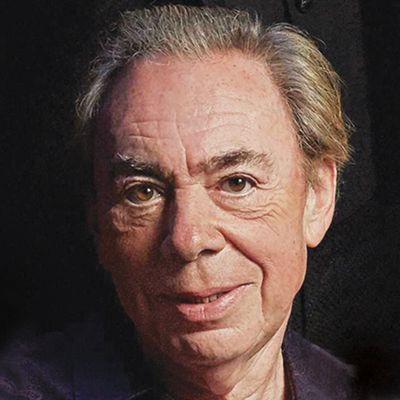
Did you know Andrew Lloyd Webber was not the first famous composer to consider turning Sunset Boulevard into a musical? Join host Michael Riedel in a rarified, behind-the-curtain conversation with legendary composer Andrew Lloyd Webber as he recounts the decision to hire Patti LuPone to star as Norma Desmond in the London production of Sunset Boulevard and how bringing the musical to Los Angeles before Broadway ignited one of the biggest feuds in Broadway history.
This episode features never-before-heard excerpts from the interviews Michael Riedel recorded while writing his 2020 best-selling book Singular Sensation: The Triumph of Broadway.
Transcript
This transcript was automatically generated and might contain errors.
[0:00] Michael Riedel: Michael Riedel here, and welcome to my podcast, Singular Sensation, the triumph of Broadway, based on my book that pulls the curtain up on all the great and juicy gossip from Broadway in the 1990s. When I started doing the interviews for Singular Sensation, the triumph of Broadway, podcasting was just kind of in its infancy, but I remember as I was sitting with Patti LuPone and Andrew Lloyd Webber and Don Black, the lyricist, and hearing their stories in their own words and their own voices, I thought, you know, as best as I can do as a writer, I'm going to try to capture it, but there's nothing like hearing those people talking about what they lived through, and I think those interviews now get to live here on this podcast in a way that makes them even livelier, even juicier than they do.
As good a writer as I am, I'm not as good as Patti LuPone just talking to you guys in this podcast. I went to the opening night of Sunset Boulevard. I was a kid reporter, and I remember I had two terrific, terrific seats on the aisle, and all of a sudden, this older, balding man tapped me on the shoulder. He said, Michael, you're in my seats, and it was Jerry Schoenfeld, the chairman of the board of the Shubert Organization. He actually had the aisle seats with his wife, and I was two in from him, so I had to move down to make way for Jerry and Pat Schoenfeld, and Sunset Boulevard began, and I must say, I think of all of Andrew's scores, Sunset is really, really one of the best. There are two theater songs, With One Look and As If We Never Said Goodbye, that are among the best musical theater songs you're ever going to get. Dramatically correct, great melodies, terrific lyrics by Don Black.
[2:11] Michael Riedel: With one look, I can break your heart. With one look, I break your heart. Sunset had its ups and downs. I did not know at the time all of the drama that was going on behind the scenes, as you will learn about in this podcast, but I remember when those two songs came out, you thought, wow, that is musical theater at its best. So as I got into the story of Sunset Boulevard, what I learned was that Andrew Lloyd Webber was not the only composer who wanted to write a musical based on Sunset Boulevard. We'll hear that story after this break. So I met Andrew at his apartment in New York City, and I was going to have dinner with him that night, and he said, well, why don't you come over an hour or so before dinner and let's talk about Sunset Boulevard. I think it was, he was very candid and open with me, but I still think even for him to relive it was still painful. It's still a painful experience in his life.
[3:15] Michael Riedel: How did you get the idea for Sunset Boulevard?
[3:19] Andrew Lloyd Webber: Well, Sunset Boulevard's idea was Hal Prince. He brought that to me. And when I first talked with Hal about Evita, before Evita was staged, Hal was very keen for me to meet, which is in my book, was very keen for me to meet him and Hugh Wheeler about doing Sunset. So this would be 1976, seventh time. I can't remember precisely when, but it was before Evita or roughly the same time as Evita was happening in the theatre. And he wanted to talk to me about doing the music. And he had an idea of updating it. And his idea that it would be about Doris Day and that it was going to be one of Hal's metaphors, as he calls it, where it was going to be about a 1950s woman who had lived in a house with no windows and was a recluse and blah, blah, blah. And he wanted to send for me and I actually decided that I wouldn't do that, that I'd pay my own way, as it were, and listened to him and Hugh. And I left thinking, I'd seen the movie because he'd arranged for me to see it.
[4:48] Andrew Lloyd Webber: You didn't know the movie growing up?
[4:50] Andrew Lloyd Webber: No, I didn't know the movie. No, it wasn't a movie that one knew in Britain particularly. And I left feeling two things. One, most importantly, was what was the point of changing the time. And the second thing I thought was, hang on a moment, I mean, surely Hugh Wheeler, Hal, Little Night Music, Sondheim. I mean, I'm curious, why has he asked to see me when he didn't really know me well at all? And anyway, I was left at that.
[5:25] Michael Riedel: Well, it was not Andrew's idea to do Sunset Boulevard. It was Hal Prince and Hal wanted to do it with Stephen Sondheim. And Stephen Sondheim loved Billy Wilder and loved Sunset Boulevard and was interested in doing it as a musical. And Steve met with Billy Wilder and Billy Wilder said to Steve, it's not a musical. Well, Billy had a German accent. So he said, Hal Sondheim, it is not a musical. It is an opera. And right away, as Stephen told me, he realized he's right. It is an opera. And I work in musical theater. The character is too big. The character is on the level of Tosca, shall we say, in a Puccini opera with these gigantic, oversized emotions. And the big, lush Puccini-esque kind of character that Billy Wilder saw was not the kind of brittle, tough, cynical kind of character that Steve was writing back in those days.
[6:32] Michael Riedel: And now we'll hear from Stephen Sondheim.
[6:37] Stephen Sondheim: It's a long but kind of funny story. Bert Shumlin and I decided that we wanted to write Sunset Boulevard as a musical. And we wrote the first scene. And then I found myself at a cocktail party where I was introduced to Billy Wilder. So very shyly, I went up to him and said, oh, Mr. Wilder, I'm a great admirer of yours. And a friend of mine and I are embarking on a musical version of Sunset Boulevard. And he said, but you can't do that. And I assumed that what he meant was we couldn't get the rights and things like that. He said, no, you can't do that. It has to be an opera. And I thought, that's why he's Billy Wilder and I'm not. It's so smart. And so about a year later, Hal said to me, you know, you were writing, you've got to write Sunset Boulevard or whatever.
I said, Hal, it can't be. He said, wouldn't it be great to do it for Angela? And she's a musical comedy star. And I said, no, it wouldn't be, Hal, because it should be an opera. And I told him the anecdote and he said, right. He's absolutely right. And that was the end of that.
[7:44] Michael Riedel: When Hal Prince had dropped the idea and Stephen Sondheim had dropped the idea, the British playwright, Christopher Hampton, who had been writing for the English National Opera, librettos for the English National Opera, he thought Sunset Boulevard would be a good idea as an opera. So he happened to be having lunch, and this was totally by happenstance. He was having lunch with Andrew Lloyd Webber and they were talking about various projects they might work on. And as they were probably having a few glasses of wine back in those days, Chris said, you know, one thing I'm toying around doing is Sunset Boulevard. He said, but, you know, the English National Opera, they looked around and they can't, the rights seem to have been taken by somebody. And Andrew broke out in this big smile and he pointed to himself. He said, I have the rights because Andrew had understood what Steve couldn't understand or couldn't crack, that it was an opera.
[8:34] Andrew Lloyd Webber: And who better than the man who had written The Phantom of the Opera to take on essentially what is a female version, if you will, of The Phantom, a woman who is, let's say, past her prime, but who still sees herself as this beautiful person, but is dolled up in this weird makeup to keep herself young again, to hide from herself what she really looks like to retain her beauty of another era, who lives alone in this murky old castle. You know, she might as well be living underneath the Paris Opera House by herself. And so that, I think, topic, that kind of character, I should say, appealed to Andrew and his incredibly brilliant ability to pull together elements of grand opera and musical theater. So I think that's why he was attracted to it.
[9:31] Andrew Lloyd Webber: And so then he and Chris Hampton set out to do Sunset Boulevard. Some years later, I ran into Chris Hampton, who was a great friend of Tim Rice's. They'd been at school together, and Chris said that he'd been approached at some point to do an opera version, a libretto for an opera version of Sunset Boulevard for the English National. And I said, well, that's curious, you know, because it's something that's never really quite left me. And even during the time when Cats was going on, I was still saying to Hal, he was still interested in Sunset, but that kind of, it didn't seem to be on his radar then. And I'm talking quite a long time later, so it's got to be 10 years later.
[10:51] Andrew Lloyd Webber: Did you know that I was not the first famous composer to consider turning Sunset Boulevard into a musical?
[11:21] Andrew Lloyd Webber: It’s true. There were others before me who had their eyes on that project.
[11:51] Andrew Lloyd Webber: When I finally got involved, I knew I wanted Patti LuPone to star as Norma Desmond in the London production.
[12:21] Andrew Lloyd Webber: She was perfect for the role, and I felt she could bring that character to life in a way that was truly special.
[12:51] Andrew Lloyd Webber: But bringing the musical to Los Angeles before Broadway was a decision that ignited one of the biggest feuds in Broadway history.
[13:21] Andrew Lloyd Webber: It was a complicated time, and the stakes were incredibly high.
[13:51] Andrew Lloyd Webber: I remember the tension in the room during rehearsals, and how everything seemed to hang in the balance.
[14:21] Andrew Lloyd Webber: The anticipation was palpable, and I knew we were on the brink of something monumental.
[14:51] Andrew Lloyd Webber: But with that excitement came a lot of pressure, especially with the expectations surrounding the show.
[15:21] Andrew Lloyd Webber: I had to navigate not just the creative aspects, but also the business side of things, which was equally challenging.
[15:31] Andrew Lloyd Webber: There were many opinions on how to proceed, and not everyone agreed with my vision.
[15:39] Andrew Lloyd Webber: It was a time of intense negotiations and discussions, and I had to stand my ground.
[16:09] Andrew Lloyd Webber: Ultimately, I believed in the story we were telling and the music we were creating.
[16:39] Andrew Lloyd Webber: I knew that if we could get it right, it would resonate with audiences in a profound way.
[17:09] Andrew Lloyd Webber: And that was my goal from the very beginning—to create something that would leave a lasting impact.
[17:39] Andrew Lloyd Webber: The journey was not easy, but it was certainly worth it in the end.
[18:09] Andrew Lloyd Webber: I look back on those days with a mix of nostalgia and pride.
[18:39] Andrew Lloyd Webber: It was a transformative experience, not just for me, but for everyone involved.
[19:09] Andrew Lloyd Webber: And I think that’s what makes Sunset Boulevard such a significant part of Broadway history.
[19:39] Andrew Lloyd Webber: It was more than just a musical; it was a reflection of the times and the challenges we faced.
[19:46] Andrew Lloyd Webber: I’m grateful for the opportunity to have been a part of it.
[19:53] Andrew Lloyd Webber: And I hope that audiences continue to find meaning in the story for years to come.
[20:06] Andrew Lloyd Webber: Thank you for letting me share this journey with you.
[20:22] Michael Riedel: Visit bpn.fm/singularsensation for more insights into this incredible story.
[20:26] Michael Riedel: This episode was edited by Sarah Goodman and produced by Dory Berenstein, Kimberly Garris, and Alan Seales for the Broadway Podcast Network.
[20:34] Michael Riedel: Special thanks to Liz Armstrong and the entire BPN team.
© Broadway Podcast Network, All Rights Reserved