

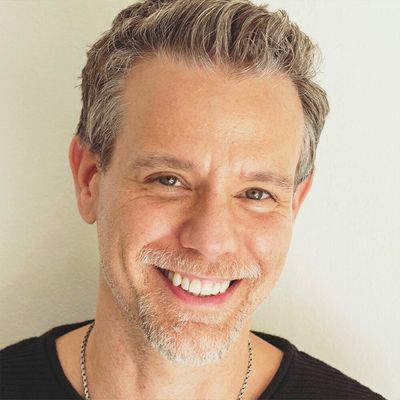
Original star of Rent, Adam Pascal, joins host Michael Riedel live at Sardi's for this special bonus episode... Read More
From the show: Singular Sensation: The Podcast
Guests
Featured Shows
About
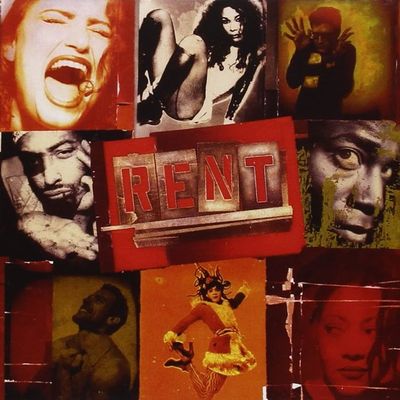
Original star of Rent, Adam Pascal, joins host Michael Riedel live at Sardi's for this special bonus episode. Adam reflects on how he went from playing guitar in his basement to being on the cover of magazines across the globe after Rent catapulted him and his castmates into stardom, changing their lives and the lives of audience members the show has touched since opening at New York Theatre Workshop nearly thirty years ago.
Transcript
This transcript was automatically generated and might contain errors.
[0:00] Michael Riedel: Here, and welcome to my podcast, Singular Sensation, the triumph of Broadway, based on my book that pulls the curtain up on all the great and juicy gossip from Broadway in the 1990s.
[0:54] Michael Riedel: So the Broadway Podcast Network hosted a fun event at Sardi's a few months ago. My friend Adam Pascal, the original Roger in Rent, was there, and we just got together on stage to talk about Rent, and we wanted to add this little bit of a bonus edition, if you will, of my chapter on Rent from Singular Sensation. Hi, everybody. Hi. Hello, hello, hello. Hello. Oh, yes. Hi. It's a date crowd this afternoon.
[1:22] Michael Riedel: It's been a long time since I've seen you, Adam, actually.
[1:24] Adam Pascal: It's been a long time. Absolutely. You look wonderful.
[1:26] Michael Riedel: Thank you.
[1:27] Adam Pascal: Absolutely.
[1:28] Michael Riedel: Thank you. Now, I saw Adam down at the New York Theater Workshop. It would have been, what, February 96?
[1:34] Adam Pascal: February of 96.
[1:36] Michael Riedel: 96. February of 96. I was a kid reporter at the New York Daily News covering Broadway, and I got a call from Richard Kornberg, press agent, and Richard said to me, I've got some really bad news. I said, what? He said, Jonathan Larson, this kid working on this new show, he died. He died last night. I'd never heard of Jonathan Larson. I'd never heard of the show. And I remember saying to Richard, it's not really a story for the Daily News. Nobody knows who anybody is.
[2:19] Michael Riedel: And so I said, I can give you, and we would do inch counts back in those days, and I said, I can give you three inches, and that was it. And if you can find the Daily News, probably only on microfilm now, and it's like, show about to open at New York Theater Workshop based on Puccini's La Boheme called Rent. The composer, Jonathan Larson, died last night. Last as in morning, I think that's how it was. That was it. And then Richard called me. He said, why don't you come down to see the show? And so I thought, well, to be honest with you, I was not even remotely interested in it.
[3:02] Adam Pascal: I'm not offended.
[3:07] Michael Riedel: Another night out. Got to see some other little rinky-dink show downtown when I'm covering Broadway where the action is. Shows you how much reporters know. And I went down, and I have to say, Adam, that there are moments in your life in the theater where you do feel things changing. And you think there's something going on here that has not been going on in the theater in a long, long time. And while one could, and I did, and critics did, quibble with Rent because Jonathan hadn't finished it. There would have been changes made in the second act.
[3:45] Adam Pascal: Oh, yeah. Absolutely.
[3:46] Michael Riedel: No question about it. There was energy and rawness. And what was the most exciting thing about it was there was youth. You suddenly thought this old Broadway world that when I grew up, it was my grandmother's world. It was the world of Rodgers and Hammerstein and Cole Porter. And then it was a good world financially of Andrew Lloyd Webber and Cameron Mackintosh and those big musicals. But all of these shows were in no way connected to what was going on in the world today and in the world of young people.
[4:24] Michael Riedel: And out of nowhere came this show about kids and struggling artists and what it's like to make your way in a city in the middle of a previous pandemic. And you thought, wow, Jonathan Larson, and I never met him, he got it. And it was a great gift to all of us that he chose the Broadway world to express those feelings. And did you have a sense of that when you were working on the show that this was something for your generation, for our generation?
[5:00] Adam Pascal: It was really hard to internalize all of those external things that now all of these years later we're able to look back and say it had this effect and this was going on and that was going on and all that stuff. But when you're in it at the time, it's hard to experience anything but being in it. And it was such a whirlwind. And so there was so much going on, certainly once Jonathan died. And every event and every performance, it was so wrought with sadness. There really was like, at least I speak for myself, there was a real black cloud, emotional black cloud over my entire time in that show. But in reference more specifically to your question, I knew that it was really special. I knew that we all loved it.
I knew that everyone who saw it loved it. But I didn't know what that meant. I didn't know that, oh, well, when you have something like that, well, then the natural next progression is that it goes to Broadway. Because I wasn't from that world, I didn't know what to expect.
[6:13] Adam Pascal: So everything that happened, everyone in the cast, everyone around was like, the Tonys and then the Pulitzer, and then actually starting from going to Broadway. And then I was always like, in a way numb to it, because it was all so surprising to me that I was even in this world. I was like, how did I get here? And it was wonderful, but it was so surprising. I just like, you know, I think my mother probably I'm sure felt the same way. Like, this is so weird. Like, you're on Broadway, and now you're a Broadway Tony winning, Tony nominated actor. Like, this is so not what any of us ever pictured for my life.
[6:50] Michael Riedel: Well, I think aside from-
[6:52] Adam Pascal: Anthony Rapp.
[6:53] Michael Riedel: Right, yeah. None of you guys were Broadway people.
[6:55] Adam Pascal: Right.
[6:56] Michael Riedel: You were sort of like a grungy wannabe Bee Gees rock singer.
[7:00] Adam Pascal: Wow, that was a nice combination of different various things. Yes, all to all of that, yeah. But I mean, you weren't a musical theater kid, were you?
[7:09] Adam Pascal: No, no, no, no. I didn't grow up seeing a lot of musical theater. I loved movies. I loved musical films. So that was, you know, I had come to it with a huge love of musical storytelling. But no, I had no real connection to it. Other than interestingly enough, right before I got cast in Rent, I was working as a trainer at Equinox on 74th Street. I was a personal trainer at Equinox.
[7:33] Michael Riedel: I remember you.
[7:35] Adam Pascal: Well, one of my clients, at the time, Tommy was on Broadway, the first Tommy. And one of my clients, his name was Anthony Borrelli. He was cousin Kevin. And so, and I grew up listening to Tommy, to the, you know, the album. So I loved it. And it was so intriguing to me. I was like, oh, wow, what's that like? And I would see him every week. And he would talk about what it was like to be on Broadway and all this stuff. And I remember one time he got me tickets, and I went to see it. And then he and I lost touch. And then the next time I saw him was like in the alley at the Nederlander. He had come to see Rent, like, you know, and he came backstage. So, right, right.
[8:08] Michael Riedel: And we'll be right back with Adam Pascal.
[8:10] Michael Riedel: And we're back at Sardi's with Adam Pascal. So the disorientation where suddenly you're doing a show downtown, off-Broadway, no expectations whatsoever. And within a few days of his death, the publicity, the opening, all of a sudden everybody in the world wants to interview you guys and talk to you guys. And you're people who, you had no publicists, you had no profile. What were you thinking? What was going through your mind at that point?
[8:44] Adam Pascal: Again, such an incredible whirlwind, but for such a horrible reason, in a way. Not that the show didn't merit the attention on its own, but clearly the majority, certainly in the very beginning of the attention that we were getting was because Jonathan died. And so, and we had to come up with thoughts about that. We had to, we had to come up with things that people wanted to hear about Jonathan dying from us, the cast, and articulate these feelings that we couldn't even articulate in our own minds, much less, you know, sort of out loud. And so it was, it was a really wild experience to, and, and, and, and again, and in all the sadness and, and it's, and it's like the joy of the show, everyone loves the show.
And then, but, but Jonathan's dead. And like, you're being, you're being pulled in both in, in these directions of like this incredible experience of the show itself. And then the sadness of losing Jonathan and like, you know, in the course of a five minute interview, you know, you're literally going from like the highest high to the lowest low. And like, it's, so it was really, it was difficult, you know, and, and I, as, as one of the, you know, the principles in the show and one of the, you know, the lead actors was, was very much often looked to, to have some kind of answer, to have some kind of, you know, again, articulate thoughts that I can, you know, and I didn't always have that, you know.
And, and also, you know, there were certainly most, the most, many people involved in the cast and crew knew Jonathan way better and longer than I did. You know, I, I kind of, quite frankly, barely knew him. You know, he, I was cast in December of 95 and he died in January of, of 96. And, and so most of the time that I was with him was in a rehearsal scenario where he was kind of quiet sitting in the back and we were doing our thing. Right. So you know, I was put in a, in a position, I think, you know, understandably so, but nonetheless a difficult position of, of not being a spokesperson, but being one of the few spokespeople for the show.
[10:55] Michael Riedel: Did you find that the producers and the press agents were respectful of that? Or did you find that they were trying to push you out to be kind of a front man on the show to get publicity to, let's face it, sell tickets on Broadway?
[11:07] Adam Pascal: No, I, I never felt that. I, I, I, they were very respectful and, and they, you know, Kevin and Jeffrey and like, they were just as heartbroken as anybody else, you know? And, and I, and I, I, I don't think that that was their prime motivation, you know what I mean? And it also became quickly clear that they didn't need us to go out and push and sell tickets. This was, this was gonna, this was gonna go and it was gonna go in a big way. And I think, and I'm not thinking for them, but I would imagine that they weren't particularly concerned about that in that moment.
[11:37] Michael Riedel: And I have to say, as a reporter, how exciting to come and see Adam Pascal, Daphne Rubin-Vega, Idina Menzel, Taye Diggs, all of these people just jumped right out at you. Every single number that you had, each one of you sculpted perfectly by Jonathan. We thought, I mean, I think I wrote an article for the Daily News, Stars Are Born, featuring all of you.
[12:04] Adam Pascal: Well, you know, I think that for a show to have any kind of big success, a big part of it is the alchemy of the cast and the material and with each other, you know what I mean? Like all of them. And you can't plan for that. You can only hope that, that you achieve it. You know, it's, it's, it's like, it's like trying to plan for timing. You know, your timing just happens. You either have, you're either lucky or you're not, you know, and so that you can't plan for it because you have no idea how to, you know, how things are going to go. And so we, you know, we were just, we were, we were lucky to, to have all been thrust together. And I remember hearing, you know, when we, the first day learning Seasons of Love and then the 15 of us singing it together, like it was so magical, like, and I don't use that word, but that's really what it was.
It was like the sound of us singing that song was just like, it was just like, we were all like, oh my God, this is like, you know, we were all real. And that's why I was saying before, like we knew what we had was special. Right. And, you know, I knew that this was going to be a really fun, exciting four weeks.
[13:05] Adam Pascal: And then I'm going back to the basements where I played my guitar.
[13:12] Michael Riedel: Exactly.
[13:13] Adam Pascal: Being a rock star.
[13:13] Michael Riedel: Which ironically enough is where I still live in the basement, playing guitar. But yes, so, you know, that really was my thought, like, you know, this is going to be an incredible four weeks, you know, and then obviously turned into what it turned into, but, you know, you don't know until you know.
[13:29] Michael Riedel: That's right. So we'll just wrap up this mini-podcast. Thank you very much.
[13:59] Michael Riedel: Coming up next on Singular Sensation, the podcast, we'll hear the story of the 1992 Guys and Dolls revival featuring never-before-heard interviews that I did with Nathan Lane and Jerry Zaks. Thank you for listening to Singular Sensation. I'm your host, Michael Riedel. To find out more about Singular Sensation, the book and the podcast, visit bpn.fm slash Singular Sensation. This episode was edited by Sarah Goodman and produced by Dori Berenstein, Kimberly Garris, Alan Seals, and Sarah Goodman for the Broadway Podcast Network. Special thanks to Liz Armstrong and the entire BPN team.
© Broadway Podcast Network, All Rights Reserved