

Rent is one of those super rare musicals that permeated pop culture all over the world. The show was on Broadway from 1996 to 2008 and is still produced throughout the world today... Read More
From the show: Singular Sensation: The Podcast
Guests


Featured Shows
About
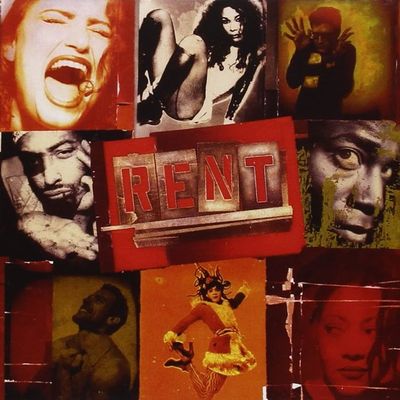
Rent is one of those super rare musicals that permeated pop culture all over the world. The show was on Broadway from 1996 to 2008 and is still produced throughout the world today. In this episode, members of the original cast and creative team, as well as creator Jonathan Larson’s sister Julie Larson, discuss how the musical forged an incredible connection with young people in a way that no musical had in decades, bringing a whole new generation of creators to American musical theatre, including Lin-Manuel Miranda, Bobby Lopez, Benj Pasek and Justin Paul and more.
This episode features excerpts from Michael Riedel’s interviews for his 2020 best-selling book Singular Sensation: The Triumph of Broadway.
Transcript
This transcript was automatically generated and might contain errors.
[0:00] Michael Riedel: Welcome back to Singular Sensation: The Podcast. Today, we’re diving into the legacy and impact of the groundbreaking musical Rent.
[0:20] Michael Greif: But you had no hesitation about 41st Street at that point. I mean, even though it was right for the show, there was still that perception. I remember, you know, maybe Warren Morehouse in The Post would say, you know, no one will go on this block. It's dangerous. Was there any concern there for the typical Broadway audience? Would they go? I didn't have that. I thought it was perfect. I thought that that fact would make it appealing to the people that I thought would be the first and most likely ticket buyers. Right. It wasn't Broadway. It was sort of Broadway. Right. It wasn't. But it wasn't the premiere of Broadway. It was down the alley. I thought that was an advantage, at least to start with. And then the audience would finally understand. Oh, it's OK. We can go there. It's fine. We can do that.
[1:17] Michael Riedel: Kevin McCollum, one of Rent's producers, talked about the challenges they faced bringing Rent to Broadway. Kevin spoke about working with theater owners Joey and Jimmy Niederlander as set designer Paul Clay was trying to get the show ready for the Niederlander Theater.
[1:43] Michael Greif: But we only had eight weeks. And to Joey Niederlander and Jimmy's credit, because Joey was also involved in making this deal, as well as Jimmy, they got it done working around the clock. In fact, the funny thing is, at the end, they were finishing the painting of the ceiling. And Paul Clay called me and said, they're painting the ceiling. I said, yeah. He goes, no, no, I don't want them to finish painting it. So, I actually had to call Joey. Yeah, I said, we want to stop painting. They're like, what? I said, stop painting. Why? I said, we like how it looks like this. So, they stopped painting. And then Manny's like, are they going to charge us to paint it when we go? I'm like, well, maybe we'll never go.
So, we ended up forcing them not to finish the renovation. Because we wanted to have a club kind of feeling. And we opened it and the set was basically the back wall of the New York Theater Workshop. Because we painted the back wall of the New York Theater Workshop blue brick. So, we basically took the New York Theater Workshop footprint and put it on the Niederlander stage. And that's how we created Rent, 3.5 million capitalization, 2.8 to open. I should have done eight months non-recoupment. Not either or.
[3:11] Michael Riedel: How long did it take to recoup?
[3:56] Michael Greif: 14 weeks. One of the things that really got people upset when Jeffrey and I decided to just call it Rent, we didn't put a musical. And some people said, people like friends of ours who are older, said, everyone thinks you're arrogant. It's like, why are we arrogant? Well, I mean, you're not calling it a musical. You call it a musical. It's a musical. Is it? I don't know. If I don't go to Broadway, I might think it's a concert. If I'm an opera lover, I might be coming because it's inspired by La Bohème. It's Rent. It is unique to itself. Well, how are people going to know what it is? I said, it's Rent. That's the point. You decide what it is.
[4:41] Michael Riedel: Another one of the producers of Rent on Broadway was the legendary producer, Manny Azenberg. And he shared with me the irony of the deal he made with the Nederlanders.
[4:52] Manny Azenberg: Was there anything unusual about that deal?
[4:54] Michael Greif: Yes, it was extraordinary.
[4:55] Manny Azenberg: What was it?
[4:56] Michael Greif: The actual deal was no rent until recoupment.
[5:00] Manny Azenberg: Really?
[5:01] Michael Greif: And 50% of the interest on the advance. And four.
[5:05] Manny Azenberg: You guys?
[5:07] Michael Greif: No, I made it for both sides. The Schubert's were offering the Belasco mistake.
[5:13] Manny Azenberg: Right.
[5:15] Michael Greif: In Jeffrey's hand was a note from me, because I was very even-handed about that, that if they offer you the Broadhurst, take it. But they offered the Belasco.
[5:24] Manny Azenberg: Why they didn't?
[5:25] Michael Greif: It was a mistake. It was kind of arrogance.
[5:29] Manny Azenberg: Was there the perception that Rent was an off-Broadway show and would not necessarily be such a hit, huh?
[5:33] Michael Greif: No. All three theater owners were bidding for it. Jude Janssen said that they were going to buy the Selwyn on 42nd Street and make it valid for so I went over for the Selwyn and had been condemned. And this was five weeks away from when they were going to go into rehearsal, so it was unlikely. And the Niederlanders, plus the theater, which was in terrible shape.
[6:01] Manny Azenberg: Yeah.
[6:02] Michael Greif: They put a million dollars into it to make it into a reasonable slump. But the play takes place.
[6:09] Manny Azenberg: Exactly.
[6:10] Michael Greif: So it didn't matter. But the real reason was that it had 1,200 seats and one balcony, so that those extra seats in the first year, which was almost a guaranteed show out, was worth $4 million. And I sort of made the arm for both sides. The Niederlanders needed it. They had nothing there. They had a one balcony theater. It didn't matter what that location was and the condition because of the nature of Rent. And the idea of getting no rent until recoupment was our character. And it precluded all competition.
[6:43] Michael Riedel: Right.
[6:44] Manny Azenberg: Everybody came out ahead. The show paid off in four months.
[6:49] Michael Greif: It paid off in four months. Yes. It was an enormous success. You know, something like a 20 to one payoff. But did you feel when Rent opened that there was suddenly, I remember in the air, a sense that this was a show that young people could go to, that Broadway was not for this show. Broadway was not just your grandmother's show. This is something contemporary.
[7:07] Manny Azenberg: Right. It happened with Hair. However many years earlier, there's always something that comes along that points up the generational issue. Hamilton is another one.
[7:18] Michael Greif: Yeah. But at $100 a ticket, you may be for them, but they're going to have to wait for the discount to go. But nobody can doubt that if you have to spend $150 to buy a ticket, people who are making $300 a week are not buying a ticket.
[7:34] Michael Riedel: What did you think of when you first saw it? When Jeffrey and Kevin asked you to come in, what was your?
[7:38] Manny Azenberg: The absolute truth was, this is going to be a rock show about whose essence was La Bohème. And they asked me to come down to the workshop to see it. So I brought my oldest daughter. I saw it. I said, the only thing that was attracted to me is when he takes out the guitar and he goes, that's good. I like that. The Bohème part, I like, but my daughter said, this is good, dad. So I said, this is good, dad.
[8:11] Michael Riedel: Much of Rent's success was due to the enormous media buzz around the show. It was stirred up by people like my good friend, Don Suma, the show's press agent.
[8:19] Manny Azenberg: Our strategy was, and Richard and I actually sat down and talked about this for 30 seconds. My idea was, I said, this is an unusual work. This is a work whose subject matter is not really for everyone. Let's just get it as far and wide as we possibly can. Because it wasn't really a show for everyone, you know? The subject matter was not going to appeal to the average theatergoer. My feeling was that unless we make it the show you have to see, not everyone's going to come to see this show. And the only way to make it that was to get it as far and deeply into as much as we possibly could.
[9:04] Michael Riedel: Yeah, it was certainly a smart move to do it right away. But it was not easy on the cast and the company. Because they were doing photo shoot after photo shoot and interviews. And we would organize days where, because they were such international. I remember there were times when I'd be in the office on weekends, working 12 hours for the day. And I'd be getting calls from all over the world. I was getting calls from Sweden and Egypt. Everywhere. I mean, like Brazil or Japan. So we would organize days of just foreign international press, where we'd do two or three hours. We'd get a few of the cast members. So it was a lot on them.
[9:53] Manny Azenberg: Were they all willing?
[9:54] Michael Greif: Yeah, I mean, mostly sure. But I mean, it was, it's a lot of, it's a lot of, that's a lot of work. You know, when you're like doing bad show, you're probably demanding. I seem to recall Ward Morehouse back in those days saying, no one is ever going to go see it on 41st Street at the Atlanta Theater.
[10:14] Manny Azenberg: He called me. He called me and said, do you think people are going to, I said, I think we could do the show on Mars. Okay. You know, I don't understand what you're talking about. You know, I said, I don't know what you're talking about. And you know, to be fair, 41st Street was really gross back then.
[10:36] Michael Greif: Yeah, it was true. I remember right around that time, a few years before, New York actually had their offices before they bought the theater on East 4th Street. Their offices were on 42nd with an exit or entrance on 41st. And I remember going to their offices a lot, and exiting or entering on 41st. And it's being not a terribly pleasant street to be on.
[11:02] Michael Riedel: We'll be right back with Singular Sensation after this break. And now we're going to hear from Angela Wendt. Now, she was the costume designer for Rent. And as you'll hear, I interviewed Angela over lunch at a rather crowded restaurant.
[11:15] Angela Wendt: So the rush to Broadway, what was that like from the costumers' point of view?
[11:20] Michael Riedel: I'll try to tell them.
[11:21] Angela Wendt: Insanity. Suddenly have a budget now of what? 110 or somewhere there. You know, we have to fight a lot to get money for the show, because a lot of the old-time Broadway managers, you know, they're like, well, these are just clothes.
[11:38] Michael Riedel: Oh, tell me about that.
[11:41] Angela Wendt: So people didn't see them as costumes. They saw them as, these are just regular homeless people.
[11:47] Michael Riedel: Exactly.
[11:47] Angela Wendt: These are just homeless people.
[11:50] Michael Riedel: Rent had a profound impact on young people. It really brought kids to the theater in a way that no show had done for many, many years, probably not since Hair. Jonathan Larson's sister, Julie, and his dad, Al, talked to me about what it was like once the show opened on Broadway and had a much larger reach than anyone had ever expected.
[14:50] Julie Larson: It was sort of, again, we were still, you know, it was just, it was three months, and we were, I had gone back to work. I had realized I, once it moved to Broadway, I couldn't do my job, and I quit, and there were, all of a sudden, it was awards season, and then there were these, the hospitals that we were dealing with, and it was just, I just remember, again, my older son, Matt, was there, and so he was there, you know, and he was the only child. He was six and a half, you know, it was so inappropriate for him, but he was, but he absolutely was probably the only child in that theater, but the theater was a combination of dear, close friends and relatives and every celebrity on the planet. I mean, it was just this bizarre, you know, looking, oh my God, you know, you know, it's like, so it was just this, you know, it was surreal.
There's, everything is, and I think for all of us, it's because of what's happened, people, you know, over time, we never can have, like, a clean emotion. You know, when something good happens, it's like, it's amazing and wonderful, or when people tell us that it changed their lives, and it's like taking in everyone else's emotion or their own experience, and they've taken ownership, their own ownership of the show, which is what is wonderful and should happen, but it's also very hard emotionally sometimes to be the recipient of all of that and not be able to just be, you know, when people say, well, isn't this great or whatever? It's like, yeah, it is. It's also really hard, and it's, so it's just, there's never a clean emotion attached to anything that happens, but there's a lot of, a lot of schools, I've talked to a lot of different groups, you know, usually when it's a friend's kid that's in it or something, I've seen many a production, and I've got to say, you know, regardless of how good or, you know, accomplished the production or the people in it, the passion that these kids have for it is like, I had two kids in theatre, I've lived in, you know, in theatres my entire adult life, and seen them do millions of shows, but there's something, if it grabs them, that it holds, that it, in a profound way, it sort of, you know, grabs them and holds on tight in terms of being a profound thing for them.
[17:05] Jim Nicola: See, like, lives on the stage that they never stopped, I mean, like, they always go back to the lesbian love duet, and I'm like, you know, there have been many before or since, you know, like, there are two lesbians, and by the way, one's white and one's black, and they're like screaming their passion and love to each other. The other thing about Rent, which a lot of people forget, is that he wrote in a lot of different idioms. You know, he wrote a rap song, he wrote a gospel song, he wrote a tango, you know, I mean, I wrote pop standard. There aren't a lot of guys who know how to do that.
[17:42] Michael Riedel: So when it moved to Broadway, did you have any, Phil Smith said with A Chorus Line, they thought, oh, it'll run maybe five years, they didn't think it would run 18 years. Did you have any perception of how long Rent could be viable on Broadway? Did you think in terms of 15 years?
[17:58] Jim Nicola: No, no. And still, I am every time I, like, so many of the young interns that come here, it's about, this is the place where Rent came from. And it still means something to them really strongly. And I'm shocked at the, and surprised at the impact it has on somebody who's 13 or 14 years old now in the world that with so much progress in terms of social attitudes and so forth about the world that those characters inhabit, that it's still meaningful. It feels to me like, is it a relic now of a time that's gone by of, you know, attitudes of LGBT people, for example, is so much different now. But it still, it still lasts. And it still, it still reaches teenagers, which is, I guess, a good thing. And the impact on this theater, I mean, transformed your fortunes, right? I mean, you were struggling before Rent.
[19:07] Jim Nicola: Yep. Oh, yeah. We were really that, and even in a very specific way, that fiscal year was really not looking good. Really? And then that extension of four weeks turned that around. Right. And then over time, that income was really...
[19:26] Michael Riedel: Much like, I guess, for the public theater with A Chorus Line?
[19:31] Jim Nicola: Yeah. It was not on that scale.
[19:36] Michael Riedel: No, because the public theater was a producer of A Chorus Line on Broadway.
[19:41] Jim Nicola: Yes. Yes.
[19:42] Michael Riedel: And here's director Michael Greif on the lasting impact of Rent.
[19:46] Michael Greif: You know, it never really hit me until years later, when I started working with people, with young people who've told me about, you know, Lynn talking about it was unbelievably meaningful, but Justin and Ben, I mean, it was like, oh, you know, it was really... I can't imagine really when it hit. You know, I remember like being in California and getting, you know, GLAAD awards and things like that. And it was all still too big to recognize that it was permeating the culture in a way that even other more sophisticated Broadway offerings were. You know, this was hitting people and young people in a way that perhaps other plays were too sophisticated for them to be hit by, you know, because there was always that dichotomy, you know, certainly by the time we were doing Rent on Broadway, Angels in America.
Yeah. It was, you know, a monumental play about AIDS on Broadway. Right. Right. And yet it was hitting a different crowd. Yeah. Yeah. Yeah. Absolutely. Absolutely. Yeah. It really took me a long time to get it. You know what I mean? I was too caught up in keeping it going.
[21:26] Michael Greif: Rent had a tremendous impact on American popular culture on Broadway, on the musical theater. I think the most important thing it did was it brought a whole new generation of kids who may have thought the theater was antiquated and old-fashioned. It brought them into the theater. They fell in love with Rent. They fell in love with the characters. They fell in love with the music. And among the people who fell in love with Rent were people like Lin-Manuel Miranda, who would go on to write Hamilton, and Bobby Lopez, who would go on to write The Book of Mormon. So I don't think you can underestimate the impact that Rent had on the musical theater. Jonathan Larson died, sadly. His goal was to really change musical theater, and that's what he did.
But it's the great tragedy that he never lived to see the influence that he has. But the work lives on. Rent ran on Broadway from 1996 until 2008. It is still produced all over the world, and I think a whole new generation of theatergoers and writers will fall in love with the struggles of the characters in Rent. And with any luck, they will become the next generation of audiences and writers for the musical theater.
© Broadway Podcast Network, All Rights Reserved