

Many warned that the musical Rent did not belong on Broadway! Nonetheless, the show blasted past those naysayers to become one of the biggest hits of all time... Read More
From the show: Singular Sensation: The Podcast
Guests



Featured Shows
About
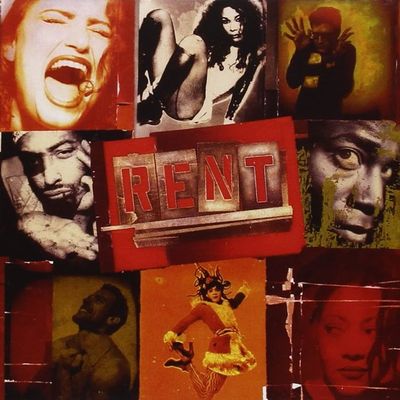
Many warned that the musical Rent did not belong on Broadway! Nonetheless, the show blasted past those naysayers to become one of the biggest hits of all time. Join Rent star Daphne Rubin-Vega, Tony Award-winning Director Michael Greif, Press Agent Don Summa, New York Theatre Workshop Artistic Director Jim Nicola, along with Producer Jeffrey Seller as they share their very insider memories of Rent’s road to Broadway. Plus Creative Director Drew Hodges shares the fascinating story behind Rent’s marketing campaign, and creator Jonathan Larson’s father and sister - Al and Julie Larson - share the significance of Rent opening at the Nederlander Theatre.
This episode features never-before-heard excerpts from the interviews Michael Riedel recorded while writing his 2020 best-selling book Singular Sensation: The Triumph of Broadway.
Transcript
This transcript was automatically generated and might contain errors.
[0:00] Michael Riedel: Welcome to Singular Sensation: The Podcast. Today, we’re diving into the incredible journey of the musical Rent and how it made its way to Broadway.
[0:20] Daphne Rubin-Vega: I remember the first time I heard the music. It was unlike anything I had ever experienced before. The raw emotion and the storytelling were just so powerful.
[0:46] Michael Riedel: And you were part of that original cast. What was it like to be in the room during those early rehearsals?
[1:01] Daphne Rubin-Vega: It was electric. There was a sense of urgency and passion that filled the room. We all knew we were part of something special.
[1:13] Michael Riedel: Michael Greif, as the director, how did you approach bringing Jonathan Larson's vision to life?
[1:32] Michael Greif: Jonathan had such a unique voice, and it was important to honor that while also making it accessible for a Broadway audience. We focused on the authenticity of the characters and their stories.
[1:34] Michael Riedel: Jim Nicola, as the Artistic Director of New York Theatre Workshop, what were your thoughts when you first saw Rent?
[1:41] Jim Nicola: I was blown away. It was a bold, daring piece that tackled issues that were often swept under the rug. It felt revolutionary.
[1:49] Michael Riedel: Jeffrey Seller, as the producer, what challenges did you face in getting Rent to Broadway?
[1:53] Jeffrey Seller: There were many skeptics who believed that a show like Rent didn’t belong on Broadway. But we were determined to prove them wrong.
[2:07] Michael Riedel: Daphne, can you share a memorable moment from the rehearsal process?
[2:38] Daphne Rubin-Vega: There was a day when we all gathered to sing "Seasons of Love" for the first time. It was a moment of pure magic, and I think we all realized the impact this show could have.
[3:05] Michael Riedel: Michael, how did you keep the cast motivated during the tough times?
[3:30] Michael Greif: Communication was key. We had to remind each other of the importance of the story we were telling and the lives we were touching.
[3:50] Michael Riedel: Jim, what was the audience reaction like during the early performances?
[4:12] Jim Nicola: It was overwhelming. People were moved to tears, and there was a palpable sense of connection between the cast and the audience.
[4:40] Michael Riedel: Jeffrey, what was the marketing strategy to get people to see Rent?
[4:56] Jeffrey Seller: We wanted to create a buzz that reflected the energy of the show. We used grassroots marketing and word of mouth to spread the message.
[5:24] Michael Riedel: Daphne, how did you feel when Rent finally opened on Broadway?
[5:44] Daphne Rubin-Vega: It was surreal. All the hard work and dedication paid off, and we were finally able to share this story with a larger audience.
[6:06] Michael Riedel: Michael, what do you think Rent's legacy is today?
[6:34] Michael Greif: Rent opened the door for more diverse stories on Broadway. It challenged the status quo and inspired a new generation of artists.
[7:04] Michael Riedel: Jim, how do you think Rent changed the landscape of musical theater?
[7:35] Jim Nicola: It showed that musicals could tackle serious issues and still be commercially successful. It paved the way for future shows to explore similar themes.
[7:57] Michael Riedel: Jeffrey, what advice would you give to aspiring producers looking to bring bold stories to the stage?
[8:27] Jeffrey Seller: Believe in your vision and don’t be afraid to take risks. The most impactful stories often come from the most unexpected places.
[8:57] Michael Riedel: Daphne, what do you hope audiences take away from Rent?
[9:27] Daphne Rubin-Vega: I hope they feel a sense of empathy and understanding. Rent is about love, loss, and the importance of community.
[9:58] Michael Riedel: Thank you all for sharing your insights and memories of Rent. It’s clear that this show has left an indelible mark on Broadway and beyond.
[11:10] Drew Hodges: The buzz of New York carrying you through. And then it was like, well, okay, now we're covering Newsweek. We need to communicate a lot to people who haven't heard of it. So we decide, I said, I want to shoot these. I didn't do the logo. A designer worked for me named Naomi Mitsosaki. She does the logo. I mean, we're all working together, but she does it. I do the color. I'm like, it's just my thing. I have the most experience with photography. Aipha Gaming. She's just great. And one of the things that happened was it was the first time that she ever works digitally. She takes the pictures, she prints them, she colors them, and then we scan them all so that we can make it. It's like a big mosaic. So we can digitally assemble into that. So in some ways, that grid, the Brady Bunch grid.
[12:00] Michael Greif: Is that what you guys call it?
[12:01] Drew Hodges: We did not call it that. We probably should have. But that grid ends up being a way of harnessing the existing logo in the center and getting all the people in. And there was a huge thing about who the people were going to be.
[12:14] Michael Greif: Yeah. How did you sift out?
[12:16] Drew Hodges: Well, I just picked them. And Jeffrey said, OK. And then Michael wouldn't speak to me for six months. Michael Greif. Because he had worked really hard to create this ensemble of everybody. And he didn't do the leads and the non-leads. I don't know what he did to do that, but he felt he'd go into great pains to create this sort of tribe to use the hair parlor. And then I picked out the leads and put their picture on the poster.
[12:43] Michael Greif: Were you picking them out because you thought, OK, these are the main parts? Were you picking them out because these are the best images?
[12:47] Drew Hodges: Really both. I mean, I knew they were the leads. It's not like we... In Hamilton, we actually have photographed the entire cast in those silhouettes, and you will see them for added item. You just haven't seen the other. You've seen a few of them. But in there, we elected, we'll just take every character because they're all interesting in shape. In this case, that wasn't the case that I picked out. They were the leads. I mean, if you're Adam Pascal, he's a good looking guy. Idina Menzel is a good looking...
[13:15] Michael Greif: Yeah, I know.
[13:15] Drew Hodges: So all that to take... I mean, the funny thing is they all end up becoming famous. But no, I picked them all out because they were the leads and because they were the most expressive. And so to get them to do the thing that they do, they're young. They haven't done these photo shoots before at all. Most of them hadn't been in the theater before. But they did it and it was so raw and it was so real to them that they could just do it. I mean, they could just be... Anthony had more experience.
[13:41] Michael Greif: Yeah, he was one way better.
[13:43] Drew Hodges: Yeah, he was the level-headed one of everybody, but everybody was okay. So Amy shot them and we picked our favorite ones. We shot all kinds of things, everybody in costume, and then we put them together in that grid. And then we knew that the grid would come apart. That by scanning them individually and putting together, I knew that I could go from a tall vertical to a butt side. The marquee had just bulbs. Remember, it was clear and it said Rent. And the bulbs that are inside the marquee, you could see. And it's an accident. It was such a cool deconstruction. But we had put the logo on white and King display. And if you had done a lot of work at King display, you would know that this is completely believable.
King display prints it on clear and they go put it up. And Kevin said to me, oh my God, have you seen the marquee? It's a total disaster. And then we both go there and we all say, no, it's actually amazing. And so it's sort of more deconstruction, the un-rent. You can see the bulbs.
[15:03] Michael Greif: So it was really going to be a black background?
[15:06] Drew Hodges: It's going to be a white background.
[15:07] Michael Greif: A white background.
[15:09] Drew Hodges: Like a white marquee with the black logo.
[15:11] Michael Greif: But instead it ends up being a clear piece of plexi with the black logo on it.
[15:15] Drew Hodges: And you can see the bulbs.
[15:16] Michael Greif: Yeah, you can see the bulbs in it. And that creates another kind of, you know, that theater was so forgotten. And so all that stuff was adding up to the decrepitness of the theater in a good way. And that sort of happens organically. It has to be, let me tell you how you're going to feel after you go. So it's always emotional selling. It's always trying to make the most, and from the very beginning, from Rent on, we're trying to make the most emotional poster we can make.
[15:25] Drew Hodges: Did you put them in the subway cars as well?
[15:26] Michael Greif: Yeah, this was in the car. This was above in the cars. And there were a whole bunch of these. And this was the square right by the door. And there were several.
[15:36] Drew Hodges: It's amazing how Dena-ish it is, considering that the time's total enough.
[15:41] Michael Greif: Totally.
[15:41] Drew Hodges: But she brings that energy and we're there and it's a blast. And all things of, you know, I had nothing to say but joy about everything about it. It was just amazing. The phrase in the subway was, don't you hate the word musical?
[15:54] Michael Greif: Right. But you are using the word musical deliberately.
[15:56] Drew Hodges: Yes.
[15:57] Michael Greif: To let people know it is a musical.
[15:58] Drew Hodges: Yes. And then to sort of Stephen Colbert, like just to kind of like eye roll like Oklahoma Inc. was what we were trying to say. But I did, I was really passionate that in fact, we were talking to musical goers and just trying. I just wanted to talk to a different musical goer. I basically started off being lucky to be marketing to myself. And when you start off, that's the easiest. And when you get better at it, you're able to kind of slip into somebody else's skin and imagine what they need. But in the beginning, it was me. I was the Rent buyer. So I was like, well, what would I like? And that's what I did.
[16:35] Michael Greif: Right.
[16:35] Drew Hodges: And it was really that simple. Jeffrey, Kevin and I were all basically the Rent buyer.
[16:40] Michael Greif: Right.
[16:40] Drew Hodges: So we just did what we would like.
[16:42] Michael Greif: Right.
[16:42] Jeffrey Seller: Jeffrey Seller, one of the producers of Rent, talked to me about the decisions they had to make after Jonathan's death and the chance they had to bring Rent to Broadway.
[16:56] Michael Greif: How did the decision come about where we're going to leave it as it is?
[16:59] Jeffrey Seller: Well, A, I think we knew that you're not going to rewrite a song or anything like that. What was happening was in the morning, Jim and Lynn, that dramaturg, and Michael got together. We all knew you couldn't change it, but they got together and said, well, I think it was Michael's idea that in places where the show is not clear, we'll just have Anthony read the stage directions. And that's how we proceeded.
[17:29] Michael Greif: And because Anthony was already the narrator, it made perfect sense.
[17:33] Jeffrey Seller: It's seamless. And then the only other change we actually made was that in between Off-Broadway and Broadway, we cut one very small interlude in Act One that took place in the apartment somewhere on the way to the Christmas bells or something like that. There was one small 45-second recitative that we cut.
[17:54] Michael Greif: How intense was the discussion about, because I remember covering this, Broadway or Off-Broadway?
[17:59] Jeffrey Seller: Oh, it was incredible.
[18:01] Michael Greif: Where did we go?
[18:02] Jeffrey Seller: It was incredibly intense. By the time we opened, Kevin and I were like, we're going to Broadway. We just have a momentum. We just felt like, oh, it's interesting. One doesn't know what a show is until they start seeing it night after night in front of an audience. That's what tells us. Certainly, I remember standing in the back of the workshop with Jim McClellan going, look at this. This is a Broadway show.
[18:30] Michael Riedel: We'll be right back with Singular Sensation after this break.
[18:34] Julie Larson: Julie Larson, Jonathan's sister, and his dad, Al, told me how special it was that Rent ended up at the Nederlander Theatre on Broadway. Jonathan Burkhart and my brother, Jonathan, there are way too many Jonathans in our life, by the way. It is like there's so many Jonathans. Jon was originally at Writers and Artists, which at one point was on 41st Street. He had gone over there with his friend, Jonathan Burkhart, to pick something up or drop something off. They walked past the Nederlander, which was boarded up, but there was a way. There were lots of theatres that were empty at that point. Burkhart talks about Jon was railing against, I have a show. I could just give me this theatre. They walked and they found a way into the Nederlander.
And Jon went on stage and clapped to hear the acoustics. And Burkhart, who really didn't know musical theatre at that point, was sitting there and Jon was explaining. It's like if they just, you know, there are all these empty theatres and it's dying and it's just like, just let me put on a show, you know? So he absolutely had Broadway in his sights.
[19:38] Michael Riedel: Were you involved at all in the decision to go to Broadway and that kind of thing, or did you leave that to Manny Azenberg and Jeffrey and Kevin?
[19:48] Julie Larson: I think they may have run it past us. But I think technically they had the rights to do it. I had two little kids, so I kept coming back and forth. And sometimes then my then-husband would come and, you know, be with my dad in terms of looking at theatres. My dad went around and looked at theatres, including some of Jon's friends, and when the Nederlander was a possibility, and Jonathan Burkhart was like, this is where Jon, it's like that's where they had snuck in. So it just felt like kismet.
[20:28] Michael Riedel: Rent was moving quickly to Broadway at the Nederlander Theatre. Now, in the next episode, the last of this miniseries about Rent, we're going to find out how Rent became one of the biggest smash hits on Broadway and inspired a new generation of theatregoers and theatre writers who would take the musical theatre in a new direction.
[20:51] Michael Riedel: Thank you for listening to Singular Sensation. I'm your host, Michael Riedel. To find out more about Singular Sensation, the book and the podcast, visit bpn.fm slash Singular Sensation. This episode was edited by Sarah Goodman and produced by Dori Berenstein, Kimberly Garris, Alan Seals, and Sarah Goodman for the Broadway Podcast Network. Special thanks to Liz Armstrong and the entire BPN team.
© Broadway Podcast Network, All Rights Reserved