

How did the groundbreaking rock opera Rent get its start? New York Theatre Workshop Artistic Director Jim Nicola, Director Michael Greif, and Producer Jeffrey Seller dive back in time to share what initially drew them to Jonathan Larson and to his revolutionary new musical Rent... Read More
From the show: Singular Sensation: The Podcast
Guests



Featured Shows
About
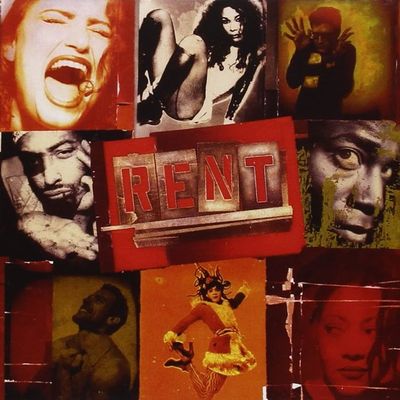
How did the groundbreaking rock opera Rent get its start? New York Theatre Workshop Artistic Director Jim Nicola, Director Michael Greif, and Producer Jeffrey Seller dive back in time to share what initially drew them to Jonathan Larson and to his revolutionary new musical Rent.
This episode features never-before-heard excerpts from the interviews Michael Riedel recorded while writing his 2020 best-selling book Singular Sensation: The Triumph of Broadway.
Transcript
This transcript was automatically generated and might contain errors.
[0:00] Michael Riedel: Singular Sensation is the triumph of Broadway, based on my book that pulls the curtain up on all the great and juicy gossip from Broadway in the 1990s. No show is perfect, and certainly Rent was not perfect, and Jim Nicola knew that. He had some issues with the structure of the show, and he really went head-to-head with Jonathan Larson about how to fix the show, and he's going to tell us about that right now.
[0:53] Jim Nicola: I've always felt it had a very odd structure in that the first act, which is longer than the second, is all one night, and then the second act, which is shorter in theatrical term time, actual elapsed time, is a year of time and storytelling. You have this really bizarre storytelling issue. That was one of the core questions we had is how do we sort of help to balance that a little bit more satisfyingly.
[1:33] Jim Nicola: That was something in flux and discussion before he died. That probably would have been addressed at some point. It had been discussed right from the first read-through, through the workshop, and then a significant amount of things changed between the workshop and the first production. We had committed to producing it after the workshop in the second slot of our season, so October rehearsals. We asked for a July 1 final script, a new script, so that we would be clear about where we were headed, and it was not until about mid-September, so not too far from rehearsal's beginning, that we actually got a script.
[2:21] Jim Nicola: That first version, Mark was breaking up with her, and she was seeing another man, so she was heterosexual, mostly, and there was no Joanne. We said, that's one of the communities that's missing in your portrait of the East Village are the lesbians. They are here. If you're going to do an authentic piece about the East Village, they need to be in your song. That was one of the many things. The two women's song, Take Me or Leave Me, that was the last song to finally arrive. I remember the relief we felt like week three of rehearsals then. Because you heard attempts at it before. Yeah, there were, no, no, no, no, they're not good, and then this really great thing. So we felt like, well, I guess the torture was worth it.
[3:09] Michael Riedel: Where was the Sarah Schulman in this now?
[3:09] Jim Nicola: Sarah wrote a novel about the East Village, and that was a book that he read, right, actually suggested to Linda Chapman, who's the associate director here, so lesbian, and she said, you've got to learn about who we are, and said, here's the book to read.
[3:24] Michael Riedel: Oh, so when he needed lesbians in there, he went to Sarah, the lesbian?
[3:28] Jim Nicola: Yes, yes, and that's where she claims that he took stuff from the book.
[3:34] Michael Riedel: Did she get anywhere with those claims?
[3:35] Jim Nicola: No, she never, I think. She wrote some angry something.
[3:39] Michael Riedel: Yes, she made a lot of noise, but decided in the end to not take legal action.
[3:43] Jim Nicola: So there was one song that Jim Nicola didn't like. He thought it was a kind of a fake gospel song, and he wanted to toss it out of the musical, and well, here it is.
[4:10] Jim Nicola: This is a great story on me. I was one of the first things that I questioned about the piece, because I felt like this is a big gospel-y number, and it feels totally inauthentic in this context. It feels like, why do we have this fake gospel number in here? Because nobody in this is black. The roots are not here. Why do we have this song? And looking back in my defense of my challenge of the song that went on to be the great one that everyone remembers is it had no dramatic root. It was just like suddenly we're singing this song, and it had no storytelling.
[4:57] Jim Nicola: Well, it was unlored, and that was another part of that stretch of work after that big workshop of making it be about time passing and about to fit the storytelling. Jim Nicola knew this young director named Michael Greif, and he thought Michael would be the perfect person to help Jonathan Larson bring Rent to the stage.
[5:07] Michael Riedel: And so Michael was your idea to bring in?
[5:11] Jim Nicola: Michael has been around the New York Theatre Workshop longer than I have. Michael was in the New Directors Project, which was from the previous artistic director. I came in 1988, so that must have been about 86, 87. I had been aware of Michael. He was this interesting young director coming out of UCSD and working with Des McAnuff, who I knew. So when I came here, I was intrigued that he was a part of the community here, and we became good friends, and I thought he had the smarts of a good… Some directors have a real innate and strong sense of editing and dramaturgical editing, storytelling editing, and he does have that.
[5:52] Jim Nicola: And Randy did that.
[5:53] Michael Riedel: Oh, yeah, very much so.
[5:55] Jim Nicola: But Michael and I, after the workshop, said to him that if we're going to go ahead, you either need to commit to a writer coming in to finish. These songs are glorious and beautiful, but if they're not set up right by a competent dramatist, they're not going to land in the theatre. They might be great in a recording, but they're not going to land in the theatre, and you don't have that skill yet. So you can either bring in somebody because you're equal as a writer to who you are as a songwriter, or we have to get a dramaturg in here who's going to really teach you about the fundamentals of playwriting and storytelling, aside from the songs. And that was the option that he chose.
[6:39] Jim Nicola: We brought in Lynn Thompson, and she did indeed do a wonderful… She had a wonderful working relationship with him, no question of that.
[6:45] Michael Riedel: They were friends, right?
[6:47] Jim Nicola: They became fast friends. She was really terrific with him, and she's a very smart dramaturg. Really smart. So I think she did great work with him.
[6:56] Michael Riedel: We'll be right back with Singular Sensation after this break.
[6:59] Jim Nicola: Michael Greif, a young director, was very important to the success of Rent because he understood what Jonathan was getting at, a show about what was going on in the world today with contemporary rock music. And Michael and I talked about that at, I remember, a very fine lunch with lots of clinking of the glasses in the background.
[7:20] Michael Riedel: Do you remember Jonathan's feelings about sort of that era of the British invasion, of these big shows, the Les Mis, the Saigons, the Sunset Boulevards?
[7:30] Jim Nicola: I know that what Jonathan was very interested in doing was writing something local. I think that was the first different perspective. He just wanted to write a show about his time and people he knew. So I think that it was exciting for him to get away from the historic or the epic or the big local and actually write something that felt very contemporary. And something, even though we're in a heightened form, about people that he really was in touch with, he came into contact with.
[8:05] Jim Nicola: Right. So it was about locality and familiarity and reflecting his moment. He wanted to unite popular music and Broadway music again. And he felt like they had moved away from one another. And perhaps some of those musicals that you referred to, they were moving in a more rarified or a more classically influenced place. And he really wanted to get the musical back to pop music.
[8:32] Jim Nicola: I think, although I'm sure we had met during some of those Naked Angel years.
[8:37] Michael Riedel: Right. This was like 89 to 93.
[8:41] Jim Nicola: I'm sure there were some social engagements. I actually think that the closest I came to him was, he did a reading at The Public when I was an associate at The Public. This was when Joanne and George and David and I and Amelia were all working as resident directors. Right. We were the artistic staff. And I think I volunteered, or perhaps Joanne suggested, that I actually go to this reading of this musical that Jonathan was presenting at The Public. And I think it was a superbia or some version of superbia.
[9:19] Jim Nicola: Which was a big, sprawling, science fiction-y type of thing. Yes, exactly. I think I was supported enough or smart enough or we did well enough, although I have very little recollection, at least to keep me in the running for when Jim decided he wanted to produce Rent and they were looking for a director.
[9:37] Michael Riedel: Right. So we had actually had a little moment of a professional, you know, we had a professional meeting before we actually started very specifically speaking about Rent.
[9:48] Jim Nicola: And of course, what Rent had, which the public doesn't, is, you know, that focus on... I think Jonathan was very upfront early on about, you know, I'm writing this because I'm coping with my friend's illnesses.
[10:05] Michael Riedel: Yeah.
[10:05] Jim Nicola: I mean, if it wasn't immediate, it was one of our earliest conversations. So there was always something that was deeply, you know, passionate and resonant, sorrowful, you know, in it. And it felt very connected early on.
[10:22] Michael Riedel: Right.
[10:22] Jim Nicola: And it was easy to look at it and to want to edit it or to want to focus it. But what it always had was it had a really sort of hot connection to his heart.
[10:35] Michael Riedel: Right.
[10:36] Jim Nicola: And to people who clearly was missing and struggling with imagining not being a part of his life anymore.
[10:43] Michael Riedel: All right. And the more I knew him, the more, you know, those things became specific. And I understood, you know, I understood more of the connections. But right away, that was sort of it. I saw Jonathan perform Tick, Tick, Boom at second stage.
[10:55] Jim Nicola: I knew of that. I knew of that struggle within him.
[10:59] Michael Riedel: And it was real.
[11:01] Jim Nicola: And yes, and we felt it. And it was all, yes, it was a part of our process. And it's like, what happens if this doesn't? I remember having those moments, you know, right? I'm at Makanal time. I was at a grad school six years and I got some regional work, but nothing was holding. And, you know, you have those moments. So is this that terrible moment of reckoning and reassessing? And can you, is it possible to be happy doing anything else? Can you make a living doing what you want to do?
[11:34] Michael Riedel: Yeah.
[11:35] Jim Nicola: You know, and how do you define a living and how do you define happy? Certainly Jonathan was experiencing that. And when Rent started feeling like at least it was a work he could completely live in, he had that famous wedding of the moon dance night, which was so significant and such a moment for him to say, you know, and maybe to reassess what happiness means. But what I'd like to think is our remission process was so rewarding that even if you weren't making a living out of it, you were still being rewarded in very significant ways.
[12:12] Jim Nicola: And our process was like that. I mean, both the workshop and rehearsing the play in 95, it was a blast. I mean, it was fun. You know, the music was infectious. The spirit and generosity of the characters was infectious. It was good to rehearse.
[12:32] Michael Riedel: Yeah.
[12:33] Jim Nicola: And I think we all felt that. And I think Jonathan felt that too. And I'd like to think that was part of the diner quitting. You know what? Maybe I won't. Maybe I won't be rich and maybe I won't get to walk. But it's what I want to do.
[12:47] Michael Riedel: When you heard that score, any particular song titles that jumped out at you?
[12:52] Jim Nicola: I thought Another Day was a great song. I thought, this is a great theater song. Like, look at everything that happens in this theater. You know, there's a beginning, there's a middle, there's an end. They've got fantastic points of view. There's a big collision.
[13:10] Michael Greif: Almost, you know, a union, and then there's a real split. And that was like, you got that right off, right out of the cassette. Ultimately, little parts of Roger were trimmed from "Another Day." But you know, stuff that Mimi says in "Another Day," which have become the real beating heart of that, that workshop in '94 was volatile and exciting. And things got moved in and out and taken from Act 1 and put into Act 2. And we did on our feet in '94, in front of, you know, very small audiences. We did a lot of rejiggering and a lot of things came into focus. And when Jonathan stepped away and then started really planning for '95, it was very clear that Maureen and Joanne needed a really good duet at the top of Act 2, which is, you know, in that spot.
In '94, Maureen and Joanne, which was, I think in Jonathan's mind, always a band-aid, they actually sang "Without You." Their breakup song was "Without You." And Jonathan really, really, really, really, really smartly said, it's got to be Mimi and Roger. And as soon as it was Mimi and Roger, it got to be everyone. Right. You know, it was always sort of everyone, but now it really was everyone. So it really became the place where those three couples got to, you know, sing together, even if they didn't also. So he was looking for a duet for them. And it came in really, really late. And we auditioned with songs we didn't really like. You know, lots of Maureen and Joanne sang bickery, bickery songs that didn't do anyone any favors.
And so Jonathan knew that he needed to rewrite it. And he was rewriting it, I think, through rehearsal. And it was really, and I've said this a lot of times, it's because, you know, Freddie and Nadina were so inspirational to him, that he found, you know, exactly the right song for the two of them to sing. Which is fantastic. As far as I know, he wrote on his own. In his studio, we had him with his equipment, with his boxes.
[15:12] Jim Nicola: Yeah. Up in the apartment that he lived.
[15:21] Michael Greif: Yeah. It was a beautiful, almost realized sculpture, to begin with, that we all sort of chipped away at. And we all sort of like, the nose went through 88 incarnations. But it's a lot. You know, he came in with a lot. You know, Jim responded to a lot. I responded to a lot. So I want to be very clear about that. Right. Because, you know, I've been, later I've been parts of processes that really have started from the ground up with a conversation. Jonathan came in with a musical that he wrote.
[16:00] Jeffrey Seller: I mean, yeah. I mean, the tone is there, what it wants to be about.
[16:04] Michael Greif: Yeah, totally. And a hell of a lot of the score is there, too.
[16:09] Jeffrey Seller: Yeah. I mean, a lot of the score that we still hear is there. A lot of it. It is funny when the producer and the director disagree about something.
[16:14] Jim Nicola: I was very uncomfortable with having the homeless people respond emphatically or passionately or in any way positively to the performance piece. She was a little toned down. She was a little narcissistic in her views. And yet, the unseen homeless people were supposed to be inspired by it. That was part of the drama, that she in some way caused a little bit of an uproar. And that was very difficult for me. And Jim ultimately said, and it got to a real, like, well, I don't, and I don't, and I, I mean, it got to one, then I want to do that.
[17:12] Michael Greif: A standoff.
[17:13] Jim Nicola: Yeah. Which we didn't have many of at all. It's really the only one I really remember.
[17:19] Michael Greif: Yeah.
[17:19] Jim Nicola: And Jim was like, well, just let the audience be your guide. And, you know, let the audience move. And then it began very light. Oh, well, she'll just ask the audience to move with her. And once we became the audience, so we were complicit, I had no more problem with, I'm asking of me and the audience what I'm asking of that fictional audience.
[17:46] Michael Greif: Right.
[17:46] Jim Nicola: And if this actual audience wants to move, is inspired enough to go there, then I can believe that they'll go there. So that little meta moment became important to me and was a real, that was a real, real standoff one I did in the process.
[18:28] Michael Riedel: We'll be right back.
[18:42] Jeffrey Seller: So Jonathan Larson needs producers, producers who might take the show to Broadway, and he knows Jeffrey Seller. And this is how Jeffrey Seller became who he is today. My friend Beth Emelson called me one day. She was Bernie Gerson's assistant. And she said, I'm going to see this show tonight. Do you want to go with me? It's called "Boho Days." And it's a rock monologue. I was like, a rock monologue? That's a cool idea. And she took me up to the old second stage space with a brick wall. And there was a band set up and a piano. And then out came this tall, curly-haired, lanky guy named Jonathan Larson, who started singing about his life crisis of turning 30, writing musicals that nobody wants to produce, having an agent that won't return his phone calls, asking if he should break up from the girlfriend he knows he shouldn't be with, but he's afraid to be alone, and being offered a job as a copywriter at an ad agency on Madison Avenue and wondering if I should just throw it all in and take the job all on his 30th birthday.
And of course, that was "Boho Days" that became "Tick Tick Boom." I am 25 years old. I was flabbergasted and crying profusely because here was this man telling his life story that I felt was my life story, and telling it in a musical vernacular that was giving me goosebumps and making the hair on my arm rise. And then I wrote him a letter the next day, and I told him I wanted to produce his musicals. He and I went to a bar and immediately started talking, and he started selling me on I Should Produce "Boho Days." I'm selling him on another new musical idea. And that was 1990. And that was the beginning of our relationship and our friendship and our conversation about the theater that culminated in "Rent."
I was not on a mission to change anything. I was on a mission to please myself. And my history was that I loved everything, but unquestionably, and that meant that when I was 13 and I saw the National Touring Company of "Pippin," I thought it was the greatest thing I ever saw in my life. And it meant that when I was 13, and it was three months later, and I saw "A Chorus Line" on tour at the Fisher Theater, I thought it was the greatest thing I'd ever saw in my life. And then "Evita" became the first show that I memorized the entire album because I had never heard a show sound like that. The sound of "Evita" was absolutely different than any show that preceded it in its ability to kind of meld together rock and roll, flamenco sounds of some strange sort, choral music, and like opera.
I just remember that was the first show that completely catapulted my thinking about how a musical can sound. Though I liked the album of "Sweeney Todd" very much, I still would always go to "Evita." And then "Dreamgirls" was the greatest thing I ever saw in my life. So certainly I was gravitating to the modern musicals, but that didn't mean that I didn't love "The Sound of Music" because I loved that too. When I listened to "Chess" in 1984 as a junior in college, I thought that was the greatest thing. So certainly I was gravitating to the modern, let's call it the modern musicals, because to say they were rock musicals, you know, they were pop musicals. But a contemporary sound. I was certainly listening, you know, I bought the album for "Edwin Drood," but I listened to the album to "Chess" nonstop.
So no question that's where I lived. You know, of course, when "Les Mis" came out, I loved "Les Mis." And when "Phantom" came out, I bought, you know, I was right there in the back of the balcony during previews of "Phantom" on Broadway. And to give Andrew credit, you know, when he wrote that "Phantom" score, nothing had ever sounded like that before. You know what I mean? His ability to meld together opera with pop music. And with his love of Broadway and Richard Rodgers. Yeah, he put it all together to astonishing effect. So all of that was true for me. Jonathan, on the other hand, was on a mission to change the world. Jonathan said to me, those aren't our stories, those aren't our characters, and that's not our music, and I am going to change that.
And when he would say, "Rent" will become the "Hair" of the '90s, I would say to him, stop saying that out loud. No one wants to hear that. Let's prove it. Don't say it, show it. And then they said it, and they did, but he was 100% right. But, you know, Jonathan was pretty sure of himself, too.
[23:43] Jeffrey Seller: At the end of the day, he needed to write "Boho Days" to prepare for "Rent." It was the warm-up act. It was the practice. Every single theme in "Boho Days" is in "Rent," to better effect. Three months later, Kevin McCollum and Paul Blake and I started the booking office. So I was now working by day as a booker, booking new tours, Debbie Boone and "The Sound of Music," and Kevin and I were toiling away as bookers, and we were able to make a living. And in fact, we financed all of the beginning of "Rent" with commissions from our booking agency. The booking agency paid the bills. That's how it happened. Jonathan worked and said, I'm going to do a reading, and it was June of '93, and he did his first reading ever at New York Theatre Workshop that they didn't really pay for.
They just let him do it there, because he had a very strong vision that it must happen at New York Theatre Workshop. That was the place to do this show. He loved East 4th Street. He thought that is the home of this play. That was a reading that Martha Banta put together for him, who ultimately became Michael's associate on the show, and Daphne was not in it. Maybe Mark Centlock was in it as Angel, but I don't think anybody was in it. The title song was in it, and I remember that title song was Fierce. So the first song I ever heard was "Rent," and I thought, that's Fierce.
[25:27] Michael Riedel: In our next episode, I'm going to tell you how Jeffrey Seller, who had no money, brought in his buddy Kevin McCollum, who had a little bit of money, and how they came together and saw the importance of "Rent" and how they changed the American musical theatre. Thank you for listening to Singular Sensation. I'm your host, Michael Riedel. To find out more about Singular Sensation, the book and the podcast, visit bpn.fm/singularsensation. This episode was edited by Sarah Goodman and produced by Dori Berenstein, Kimberly Garris, Alan Seals, and Sarah Goodman for the Broadway Podcast Network. Special thanks to Liz Armstrong and the entire BPN team.
© Broadway Podcast Network, All Rights Reserved