BPN Logo
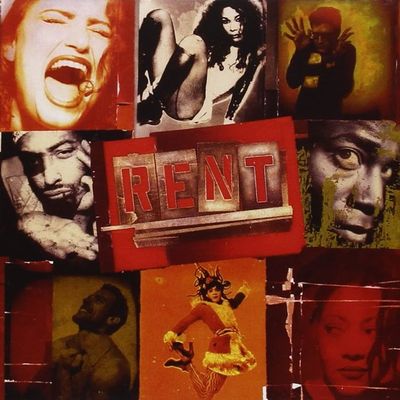
Rent #1: Creator Jonathan Larson, Early Days

Listen in on this never before heard, very candid interview with Rent creator Jonathan Larson’s father, Allan Larson, and Jonathan’s sister, Julie Larson, as they share stories about Jonathan’s early passion for musical theatre, his extraordinary early musical gifts, and Jonathan’s deep desire to make musical theater relevant again for a whole new generation... Read More

From the show: Singular Sensation: The Podcast

37 mins
5/15/24

Featured Shows

About

Listen in on this never before heard, very candid interview with Rent creator Jonathan Larson’s father, Allan Larson, and Jonathan’s sister, Julie Larson, as they share stories about Jonathan’s early passion for musical theatre, his extraordinary early musical gifts, and Jonathan’s deep desire to make musical theater relevant again for a whole new generation.

This episode features never-before-heard excerpts from the interviews Michael Riedel recorded while writing his 2020 best-selling book Singular Sensation: The Triumph of Broadway.

Transcript

This transcript was automatically generated and might contain errors.

[0:00] Michael Riedel: Hey, I'm Michael Riedel and welcome to my podcast, Singular Sensation, the triumph of Broadway, based on my book that pulls the curtain up on all the juicy gossip on Broadway in the 1990s.

[0:29] Michael Riedel: Up next, we will be discussing the landmark musical, Rent.

[0:45] Michael Riedel: As we all know, Rent was a landmark musical in the history of the American musical theater, and on my podcast, you are going to learn of the extraordinary and tragic story of how Rent made it to Broadway, right here on the Broadway Podcast Network.

[1:01] Michael Riedel: One of the best, in a way, the saddest interviews I did for the book, Singular Sensation, the triumph of Broadway, was with Al and Julie Larson. Julie was Jonathan Larson's sister, and Al, of course, was his father. I went to Cheviot Hills in LA really to talk to them, to really understand about what Jonathan, who he was, because I did not know him. I never met him, but I really wanted to understand why he was so driven to write a Broadway musical.

[1:32] Michael Riedel: They said to me that he loved all music. He had music pouring out of him all the time, but it wasn't just Broadway shows. It was everything. It was Billy Joel. It was Bruce Springsteen. It was The Beatles. It was Stephen Sondheim, Cole Porter, and Cy Coleman. That music just flowed through him all the time, and he had this idea to bring contemporary ideas, what he was living through, the music he lived, but also what he was going through in his life, his friends dying of AIDS, New York City kind of falling apart in the 90s. He thought musical theater has to be relevant, and he brought his sensibility, his love of contemporary music, but also old-fashioned musical theater. He brought that into Rent, and that's what he did, and that's what changed musical theater.

[2:34] Michael Riedel: I have to say that Al and Julie, they supported him every step of the way. I mean, I remember Al telling me, at some point, you got to get a job, kid. We love you, but you got to get a job, but as long as you love what you're doing, we are going to support you. It was because of that fundamental love that his family had for his talent, and they recognized that talent before anybody else did, before anybody had heard of Jonathan Larson. It was Al and Julie and his mom who thought, we'll stick with this kid and see where he goes, and he created Rent.

[3:19] Michael Riedel: I remember that wonderful afternoon sitting with Al and Julie Larson, and I did ask them, I said, when did you know that your brother, your son, had musical talent? Julie said it was when he played Jesus Christ Superstar on the piano. The album for Jesus Christ Superstar had come out and listened to it over and over, and I was home sick for a couple of weeks and listened to it. John would just wander by in the living room and hear it, and then after hearing it a couple of times, he just sat down and played it on the piano.

[3:53] Allan Larson: Really? That's interesting. What year would this have been?

[3:55] Julie Larson: Sixteen, let's see, now we're going into the 18th century. I was 16, and I was born in 57, so you can do the math later. Maybe like 1970s?

[4:01] Allan Larson: Yeah, it was right when it came out, and it was such a new and different thing.

[4:10] Michael Riedel: How old would Jonathan have been?

[4:12] Julie Larson: He was 13 or 14.

[4:14] Michael Riedel: And he just heard you?

[4:15] Julie Larson: He heard me listening to it, and he listened to it, and we'd look at the back and the synopsis of every scene and stuff like that, and then he would just sit down and play.

[4:27] Allan Larson: He just could play the whole—

[4:28] Julie Larson: That's the thing. I took seven years of piano and clarinet and all that stuff, and my technique was great, and I could learn anything. My brother took two years of piano and was done with it, because our piano teacher would only do classical. She wouldn't let him do anything else, so he had no use for that. But clearly, he just had an ear, and it could—

[4:50] Michael Riedel: Do you remember recitals?

[4:52] Julie Larson: Oh, yes, because I took for seven years, and again, being the behind-the-scenes person, was terrified. I don't really even remember him in the recital so much. I remember how terrified I was having to— No, I'm trying to remember— Our piano teacher, though, was the local piano teacher. Her son has become a— He teaches at MIT, but he's a big— He went to Juilliard, and he was a cellist and then also a composer in the very avant-garde and Philip Glassian kind of Todd Macover.

[5:31] Allan Larson: Yeah, and we all had crushes on Todd Macover, but you know what it was? He'd drive us home from theory, because I did have music theory and stuff like that.

[5:36] Julie Larson: Yes, with John—

[5:38] Allan Larson: You were taking it to Jonathan, though.

[5:39] Julie Larson: No. It was so annoying. Did he have to play the classical stuff at the recitals?

[5:43] Allan Larson: Yes, but I'm sure because he only took for two years, I'm sure it was very basic stuff. I don't even— I don't remember— Scales.

[5:50] Julie Larson: No, but— Moonlight Sonata.

[5:54] Allan Larson: Exactly. For a lease, probably, or something like that.

[6:02] Julie Larson: But yeah, no, he just— I think there are people that I think just music comes through them, and I've seen it in other people beyond my— And then there are people you can teach, like me, but—

[6:13] Allan Larson: But you get to hear the Jesus Christ Superstar.

[6:15] Julie Larson: Yes, and play it, yeah.

[6:18] Allan Larson: So he liked Andrew Lloyd Webber. Some, yes. Not all of it, but yes, but he loved— That was— But Jesus Christ Superstar was absolutely a pivotal moment in his life, I think, in terms of hearing that, because it was so different from an awful lot of the other stuff.

[6:34] Michael Riedel: Any sense about how he felt about Cats, Phantom, those big shows that he would have been writing his stuff during that period of time?

[6:39] Julie Larson: Again, I think he felt they had a place, but that's not what he was wanting to do. He wanted to do something else.

[6:49] Michael Riedel: But there was a palpable sense that he thought Broadway was not for young people, you would say?

[6:54] Julie Larson: Yes. Oh, he felt that it was dying, that young people weren't going, and young people weren't finding it relevant, and that the sound needed to— It was 20 years behind where young people were, so the sound of Broadway needed to be something that would be appealing to young people to even want to come to, and it was expensive. So you had all those things together, but he also loved the art form so much and didn't want it to die. He was a true fan, and studied other shows, and studied the form, the art form. He had a great deal of respect for the art form and loved it. My Fair Lady, of course.

[7:37] Allan Larson: My Fair Lady, and West Side Story, and Chorus Line, because he was a little older, but still, those were big. Those were huge influences.

[7:51] Michael Riedel: Richard Rodgers, Oscar Hammerstein, some of those?

[7:54] Allan Larson: We had all those albums, and we'd listen to them all, but he didn't see them as much. Fiddler, trying to think, this was the 60s. The first two shows I saw were Man of La Mancha and Fiddler, the original ones.

[8:09] Julie Larson: But Johnny did.

[8:12] Allan Larson: It was West Side Story. He did West Side Story.

[8:16] Julie Larson: He was in it.

[8:17] Allan Larson: He was Riff, and he was in Seesaw.

[8:24] Julie Larson: Oh, interesting.

[8:25] Allan Larson: And for one of the summer theater, and he was as klutzy as they came. I mean, he was horrible at sports, and he was not a dancer. I remember seeing, okay, he's got the Tommy Tune part, and he can't dance.

[8:39] Julie Larson: Oh, he had the balloon number.

[8:40] Allan Larson: Yeah, and the review, we still have it somewhere, and it said, his effortlessly graceful dancing. And we all were like, what? Because it was so far from who he really was. But he sold it. He managed to sell it.

[8:55] Michael Riedel: Did he have an interest in ever being an actor and being a performer?

[8:58] Julie Larson: Oh, yes.

[9:00] Allan Larson: That's it.

[9:01] Julie Larson: Before the music, he was into acting.

[9:04] Allan Larson: We went to Hare when it first opened, and Johnny must have been about six or seven. So that had a huge impact, definitely.

[9:12] Michael Riedel: Pretty racy for a six or seven-year-old kid.

[9:15] Allan Larson: Well, yeah. But my folks were very, it's like we were exposed to everything, all kinds of things. We were big album buyers in those days.

[9:27] Allan Larson: The reality is, we couldn't afford a lot of Broadway. And even though Broadway in those days was for 40 years, it was a little more. But it was always, any time there was a special occasion, that was a special occasion would be to go. And we also, because we lived half an hour outside of the city, a lot of school trips. When 1776 came out, I think three or four teachers could rationalize taking us because it was about history.

[9:53] Michael Riedel: And did you have a lot of musical theater albums around the house that Jonathan would have been listening to?

[9:57] Allan Larson: We would listen. My folks would buy every album for every musical that came out. And John and I would sit there, and we'd just sit and listen, and we'd read the back of the albums. We were exposed to a lot more than we saw.

[10:16] Julie Larson: We could go play it.

[10:17] Allan Larson: And then he could go to the piano, he could play it.

[10:20] Michael Riedel: Were you guys big Tony Award watchers growing up? I mean, you never missed a Tony Award.

[10:24] Julie Larson: We got to stay up late. That was a big, that was definitely a ritual, a yearly ritual.

[10:33] Allan Larson: We were in New York at that time. We indulged them a little bit.

[10:38] Michael Riedel: You let them stay up late? It was on a Sunday night, a school night.

[10:42] Julie Larson: Absolutely.

[10:43] Michael Riedel: And do you remember the first Broadway show that he would have seen?

[10:47] Allan Larson: The first one?

[10:49] Julie Larson: It might have been Hair. I mean, I don't know. I think we saw it when it was off-Broadway, but I think the first professional show, it certainly was around then because—

[10:59] Allan Larson: 69.

[11:00] Julie Larson: Yeah, he was nine then, so 68, so there wouldn't have been much before then. Although we spent our summers on Cape Cod. We had a summer house up there, and probably the first production he ever saw was at the Cape Playhouse, and it was The Wizard of Oz. And it had a profound impact on all of us, our family and another family that was like our extended family. We had summer houses next to each other. We all grew up together and still close to everybody.

[11:34] Julie Larson: And that prompted us to do our own production of The Wizard of Oz on the beach.

[11:38] Allan Larson: And you played?

[11:41] Julie Larson: I was Dorothy, but I wouldn't sing. So Laura, who was the eldest of us, directed, played a lot of other parts and sang for me.

[11:52] Allan Larson: She was your Marnie Nixon.

[11:56] Julie Larson: Exactly, absolutely. And John was the Tin Man, and it's a very famous story in our family of, first of all, Susie was Toto and was getting sand kicked on her face the whole time. And in the middle of it, John, who was probably four or something, was like, wait, I have to go to the bathroom. And so stopped the whole production.

[12:56] Michael Riedel: And we'll be back with Al and Julie Larson after this break.

[13:50] Michael Riedel: We're back with Al and Julie Larson. Do you have any memories of when he would have played things that he wrote himself for you? That he said, I wrote this and I want to play it for you with mom and dad?

[13:59] Allan Larson: Anytime he wrote anything, you didn't have to be there. He'd call you up and put the tape player up to the phone. Listen to this. Or send you, or he'd make cassettes of things and send them as well.

[14:21] Michael Riedel: Did he have a piano?

[14:23] Allan Larson: He had a keyboard.

[14:24] Michael Riedel: Keyboard, right. So it was electronic. He was very prolific then. Was he just at the keyboard all the time, writing songs?

[14:35] Allan Larson: Yeah, and working on little projects. He did some incidental music for Sesame Street and different little things here and there, along with spending a lot of time on his own stuff.

[14:46] Michael Riedel: Was he a theater major at Adelphi?

[14:48] Allan Larson: Yeah, BFA Theater. It was like a conservatory style.

[14:52] Michael Riedel: So there was never any question that he was not going to go into the theater in some way?

[14:57] Allan Larson: Or into the arts somewhere. Yeah, because again, he was a hell of a good actor. There were moments when his mother and I wondered whether that wasn't the way he should have gone instead of the music trail. I guess we were fairly indulgent parents.

[15:20] Allan Larson: There wasn't a, you need a backup plan, you need a more practical approach?

[15:23] Allan Larson: No, I think a lot of my parents' friends would say to them, well, how long can he do this before? But if they had those thoughts, which I'm sure they did. As far as I was concerned, if he was happy doing something, I wasn't going to do anything to change that. This is what made him happy? Fine.

[15:41] Allan Larson: Of course, the interesting thing about Jonathan Larson was he loved Jesus Christ Superstar, but he did not love the later musicals of Andrew Lloyd Webber. He did not like The Phantom of the Opera. And I think he felt in some ways that Andrew brought rock music to the musical theater and then Andrew drifted away. And Jonathan wanted to bring back rock music to the theater the way Andrew did when he would have been Jonathan Larson's age.

[16:08] Allan Larson: And Jonathan was on a mission to make musical theater relevant again to people his own age. He loved Billy Joel to bring that kind of music, American rock music, onto Broadway because he thought Broadway had lost touch with people who were his age back in the days in his 20s. Billy Joel, I don't know whether Billy Joel had come up before then because that was John's idol. And Elton John and all the keyboard players, Emerson, all the keyboard players, among other people.

[16:46] Allan Larson: But he was called Piano Man in high school because any time there was a piano at a party or anywhere, he would just go and sit down and play. So it really was just sort of an innate gift that he... The music part. I mean, yeah, he was creative from the time he was tiny. In fact, I've talked about in the 60s when we were doing book reports, you would stand up there and just talk about the book and it was incredibly boring for everybody. And John, even in second grade, was having none of that.

[17:16] Allan Larson: And he would borrow my dad's Super 8mm camera and make a film or something about the book. And the teachers were fascinated by it and let him get away with it. But now, of course, that's what my kids did all the time. But in those days, it was you stood there and you talked about the book. So from that point, it wasn't specifically music, but creative. In third grade, he wrote a play that was in the newspaper. So it was always creative.

[17:46] Allan Larson: He was in every school production. He got away with murder because everyone loved... He had so much presence on stage. Everyone loved watching him. In fact, there was a picture in one of his yearbooks of... Because he'd always cut gym. There's a picture. Somebody caught... There was a window in the doorway. It was the assistant principal's office. And you see John's back sitting with the assistant principal and all these pieces of paper laid out. And he was getting busted for having written fake notes, getting him out of gym.

[18:20] Allan Larson: But still, there would be no consequences. Like, well, you can't be in the play because everyone loved watching him perform. So when he was cutting gym class, was he going to the music room and playing the piano?

[18:28] Allan Larson: Sometimes. You can ask Matt O'Grady what he was really doing. No, he was. But he did get away with a lot as a result of people loving to watch him perform.

[18:41] Allan Larson: So when he went to Adelphi, it was on this four-year acting scholarship. However, they also did a lot of cabarets. And a lot of them were sort of somewhat political and things like that. And John started writing the music and he became the go-to guy to write the music for all these cabarets.

[19:00] Allan Larson: And that's really when, all of a sudden, there was this shift. Because he had played the tuba in band and, again, he played piano nonstop, but his technique was lousy. Music just came through him. And it was really during those cabarets that it started shifting and he started letting the musical side become more important. More important than being on the stage presence. They were both really important to him, but ultimately he felt like he had to make a choice.

[19:30] Michael Riedel: Did he ever go to New York and say, I'm going to make the rounds of auditions and try out as a performer?

[19:34] Allan Larson: Yes.

[19:35] Michael Riedel: He did?

[19:36] Allan Larson: Yeah. After he graduated, he and another guy put on a show in a tiny little theater on West Broadway that was in the early 80s, 25 seats or something. But in terms of acting, he was making the rounds for acting, playing piano, whatever might be waited. Put some bread in his mouth and he ended up waitering like everybody else.

[20:02] Allan Larson: Yeah, famously at the...

[20:03] Michael Riedel: At Moon Dancer. Do you remember that show that he did, the little one at the 25 seat theater?

[20:08] Allan Larson: Saved.

[20:09] Michael Riedel: Saved, okay. Well, I think that may have come from, grown out of one of the cabarets at Adelphi, I believe.

[20:17] Allan Larson: I think, yeah. Maybe. But he did piano, he spent two years, two summers at the Barn Theater to get his equity card with Maren Mazie.

[20:28] Allan Larson: Oh, sure. And so they scrubbed toilets together, got their equity card and then the two of them and Scott Burkell, the three of them, when they all ended up in New York together, started a little trio called the Jay Glitz Band. And they would perform in these little tiny places. Usually my parents were mostly the whole audience.

[20:49] Michael Riedel: Right. And they would do some Broadway standards and some stuff that John wrote.

[20:54] Allan Larson: Right. And, you know, it was right when they were starting out. But he only really pursued the acting part for the first couple of years after college and then really felt like he needed to choose one.

[21:07] Allan Larson: Concentrate. And... I think that's about the time Sondheim sold them. They're more out of work actors than composers.

[21:14] Michael Riedel: Yeah, that's right. At that time. Because he had a course.

[21:17] Allan Larson: Yeah.

[21:18] Michael Riedel: Did he ever go to Steve's house? Did he ever spend time with Steve? Or was it mainly letters that he...

[21:22] Allan Larson: No, they did... I think when he was in college.

[21:27] Allan Larson: Yeah, well, and after. I don't know where they met or, you know, where they... But there were times that they did get together and John was invited to sit in on the rehearsals for Into the Woods when he was working on that. So it was around, you know, that period. But I don't think it's like he spent every Saturday night at...

[21:46] Allan Larson: No. At Steve's house or anything like that. Steve has always been generous with young people.

[21:50] Allan Larson: Yeah, but he was definitely, you know, a huge influence and mentor. And Sondheim was, of course, one of those albums you guys listened to a lot.

[21:58] Julie Larson: Company.

[21:59] Allan Larson: Absolutely. Everything.

[22:01] Michael Riedel: Did he have a particular favorite Sondheim album? Did John?

[22:04] Julie Larson: I, you know, well, I'm not sure. Just, anything Sondheim was already something that, you know, I'm sure he had favorites. I remember, you know, seeing Sweeney Todd with him a bunch of times.

[22:17] Allan Larson: Yeah.

[22:18] Julie Larson: But, you know, my mom was really, I think, the first person in our family to, like, introduce Sondheim into everybody's lives. And I, you know, I think her favorite was Pacific Overtures.

[22:28] Allan Larson: Really?

[22:29] Julie Larson: I think, you know, so, but... But certainly, anything Sondheim was something that he, you know, would gravitate towards.

[22:39] Michael Riedel: And had he been, I know he liked the musical theater, but had he been an opera fan at all? Was opera part of the albums that you had growing up?

[22:43] Julie Larson: You know, we rarely, it's not like my parents would go to the opera, but had a lot of, had some opera albums, and my dad would be, was like a tinkerer. And Sundays, he would be, like, on a ladder, tinkering around, and have live at the Met. And it was the opera, so, there'd be whatever opera, yes, it's whatever opera was on, you know, and so, we were exposed that way. Not so much in going to the opera, but, yeah, the albums that we had were mostly a lot of Paul Robeson and the Weavers and Woody Guthrie and Broadway musical, I mean, and Broadway.

[23:27] Allan Larson: And now John and Billy Joel. And, well, those were the things, yeah, I'm talking about what my parents had, and then, you know.

[23:32] Michael Riedel: Right, right. Matt O'Grady has a very, you know, a story of sending John out to get tickets for Peter Frampton.

[23:37] Allan Larson: He was tasked with getting them tickets to Peter Frampton, and John came back with tickets for Sweeney Todd. Which, and Matt was not a musical theater person at the time, was not happy, was not a happy camper.

[23:53] Allan Larson: Yep. So, at the same time that Jonathan Larson loved Bruce Springsteen and Billy Joel, he also loved Stephen Sondheim, because he saw, as a kid, Sweeney Todd, that original production with Angela Lansbury and Len Carriou, and that knocked him for a loop. And he wrote a letter to Stephen Sondheim saying how much he admired that show. And this kind of knocked him, this also knocked him out.

[24:20] Allan Larson: He got a phone call from Stephen Sondheim saying, I got your letter, come on over to my house, and let's have a talk. And I will tell you this, I put it in the book, Jonathan did go over, because he knew that Steve smoked a lot of pot. And Jonathan brought a very, very big marijuana cigarette, the biggest cigarette that Steve Sondheim had ever seen in his life. They lit it up, and they had a good time.

[24:45] Michael Riedel: We'll be right back.

[24:52] Allan Larson: Reached a point where he had to recognize that it wasn't going to happen.

[31:57] Michael Riedel: Do you remember when that finished? Was it difficult?

[32:00] Allan Larson: Oh, it was huge. He was devastated by that because he really believed that he... One of the early readings starred Roger Bart, who is nobody that... It was a huge frustration and that sort of led him to deciding... He was told it was really great, but it's too big for off-Broadway and it's too advanced or ahead of its time for Broadway and there's no real place, and so what are you going to do next? In his frustration, he wrote what became Tick, Tick, Boom. It started as either 3090 or Boho Days because it was turned 30 in 1990. It had different... He just decided, fine, it's too big, it's too this, it's whatever. I'm going to be me and a piano and a band, and I'm going to do a rock monologue, and nobody can tell me that it's...

[32:53] Julie Larson: Too big or too...

[32:54] Allan Larson: Yeah, exactly. That started in part out of his frustration of nothing happening, but it morphed over time into something positive as well.

[33:05] Julie Larson: Yeah, I remember seeing it with Raul Esparza who did it off-Broadway. It seemed quite autobiographical to me.

[33:12] Allan Larson: That piece is very autobiographical. I mean, I did not turn out to be a lawyer even though I thought I was going to go to law school, but he got my dad down really well. But no, that of all... Rent has a lot of autobiographical pieces to it, throwing down the key and the way the... The Friends sort of represented all different people in his life, including himself, including the world that he saw. But Tick, Tick, Boom, which again, started with Jonan and piano, and then it was only after he passed away that Victoria Leacock, who had been his champion for so long, really, really, really wanted us to do it. We especially, I didn't feel comfortable. The idea of just somebody alone on stage playing my brother, that was too painful. But then David Auburn adapted it and created it, the three-person piece that it became, as Tick, Tick, Boom.

[34:14] Julie Larson: Yeah, the Jane Street Theater, I think, I remember seeing.

[34:17] Allan Larson: That's right, yes. Superbia, what was that about?

[34:19] Julie Larson: A lot of the same themes, alienation, and it was The In's and The Out's.

[34:25] Allan Larson: Boy, girl.

[34:26] Julie Larson: Yeah, a love story, but kind of...

[34:30] Allan Larson: Set in the world of Rent?

[34:31] Julie Larson: No, it was set in the slight future. It was slightly futuristic, which again, made the sets would have been expensive, all that kind of stuff. It was a lot of the same themes about being isolated, alienation, the current world being so materialistic and used a lot of the same themes, a lot of...

[35:00] Allan Larson: And a big cast.

[35:01] Julie Larson: Yeah, a big cast.

[35:02] Allan Larson: Yeah, yeah. Any songs from that, that he used later on in Superbia? Anything come out of that that would go into Rent or Tick, Tick, Boom?

[35:12] Julie Larson: In Tick, Tick, Boom, the moment where they're Come to Your Senses, which is a song that in Tick, Tick, Boom, he's doing a reading and that song came out, was actually from Superbia.

[35:27] Allan Larson: Oh, I see. Okay. Because composers never let a good song...

[35:32] Julie Larson: Right, right. Oh, absolutely. They wait to find the right... And I'm sure there would have been other things...

[35:36] Allan Larson: That would have made...

[35:37] Julie Larson: Or again, had he lived, perhaps he would have been able to find a way in to reboot that and the timing might have been right then to pursue it in a different way.

[35:48] Allan Larson: So in many ways, Rent is autobiographical for Jonathan Larson. He was a struggling composer, a struggling musical theater writer in the city in the 1980s, and he moved into a very dumpy walk-up apartment on, I think it was 508 Greenwich Street back in those days. And everything that you hear in Rent, all of the struggles that the characters have in Rent are the struggles that Jonathan had himself as he was trying to figure out, how can I make a living writing musical theater?

[36:19] Julie Larson: We're not going to make rent, because everything is rent!

[36:32] Michael Riedel: And in the next episode, we'll hear more from Al and Julie Larson about how Jonathan Larson got his show Rent to the New York Theater Workshop, where they launched a show that would change Broadway as we know it today.

[36:50] Michael Riedel: Thank you for listening to Singular Sensation. I'm your host, Michael Riedel. To find out more about Singular Sensation, the book and the podcast, visit bpn.fm/singularsensation. This episode was edited by Sarah Goodman and produced by Dori Berenstain, Kimberly Garris, Alan Seales, and Sarah Goodman for the Broadway Podcast Network. Special thanks to Liz Armstrong and the entire BPN team.

© Broadway Podcast Network, All Rights Reserved

An error occurred