BPN Logo
Chicago #2: Ann Reinking in a Never-Before-Heard Interview

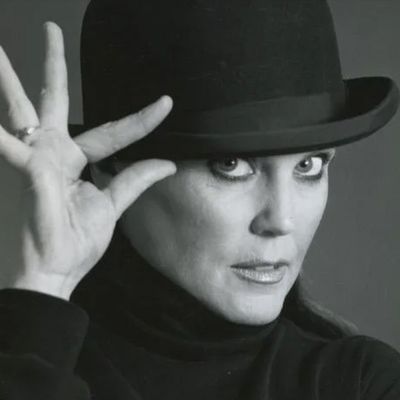
Iconic triple-threat, choreographer, and film star, Ann Reinking, speaks with Michael Riedel about choreographing and starring in the 1996 smash hit Chicago revival. That year, Ann Reinking won the Tony Award for Best Choreography, and the show has since gone on to become the longest running revival on Broadway... Read More

From the show: Singular Sensation: The Podcast

33 mins
3/20/25

Guests

Featured Shows

About

Iconic triple-threat, choreographer, and film star, Ann Reinking, speaks with Michael Riedel about choreographing and starring in the 1996 smash hit Chicago revival. That year, Ann Reinking won the Tony Award for Best Choreography, and the show has since gone on to become the longest running revival on Broadway. Ann shares her stories about her relationship with Bob Fosse during the original 1975 production and how she eventually replaced Gwen Verdon in the show. Years later, Ann was approached to choreograph Chicago for Encores and ended up starring as Roxie herself!

This episode features never-before-heard excerpts from the interviews Michael Riedel recorded while writing his 2020 best-selling book Singular Sensation: The Triumph of Broadway.

Transcript

This transcript was automatically generated and might contain errors.

[0:00] Ann Reinking: And after hearing that, it has to be done in a style of Bob. Blocky was one of the main creators of it. And on course, you know, their mission statement is to try to evoke the vision of the creators. And they were totally fine with that. There was no argument at all. And probably one of the reasons why they did call me, because I had done a production a few years ago, a few years prior. With Rob Marshall, we did our own production of Chicago with Julia Prowse and Phoebe Newerth. Phoebe was Velma then, out at Long Beach Civic Light Opera outside of Los Angeles. And I just loved it. We had a great time. So they may have seen that production or heard about it as to why they called me, but they did call me. And just one of those lucky phone numbers, phone calls. And so they all agreed that that should indeed be, you know, in Bob's style and using their concepts and that Fred and John and Bob came up with, which was so funny and smart.

[4:03] Ann Reinking: We had gotten the cast together and Liza Minnelli was supposed to be Roxy, and she really wanted to do it. She would have been great because she was great in the original production as well. And she couldn't, as I understood it, she couldn't get out of one engagement that she had. And they said that they would, you know, sue her, as she did. And she tried every which way. We all tried because everybody wanted her, but it wasn't going to work. The dates were solid. You know how theaters get their booked years in advance. You can't switch the dates too much. There's not really any wiggle room. So, and this was like on a Friday and we were supposed to start rehearsal on Monday. And you don't have that much rehearsal for Encores!

No, but I did know the show and so everybody looked at me and I said, no, I can't, I'm out of shape. And this is my favorite line of all time. Walter Bobby said, oh, Anne, you can roll your way through four shows. And I laughed hard and then I said, you know, I can, I could do four shows. So, in 10 days, I choreographed Anne, got myself ready for Chicago and a lot of it came back. I mean, it wasn't hard really to remember the dialogue, even though it was 20 years later or the music or lyrics. It was, you know, there's something, you know, that we call muscle memory. And apparently it's true because I really didn't even need my book in Encores! You know, you carry the script and it's like, you know, anyway.

[7:02] Ann Reinking: And that didn't be me because she had already done Velma a couple of years before and she was spectacular. In fact, she, with the choreography that I had done for Hot Honey Rag, and I said, you know what? And I cracked up, it was all written down. And I said, I called Gwen. I said, we have to have something of Bob's that's original. And could it be Hot Honey Rag? And Gwen said, which Hot Honey Rag? Yours? Mine? Candice? Lenora's? You know, because Bob always tailored, you know, to every person. They're all similar, but they all have a different little this and that so that it's your own and, you know, you look your best. So I said, well, the only one I can remember is mine. So I did that and she gave us permission.

And I don't know if it should still be in the program, but right by where it says Hot Honey Rag in the program, there's a small print that says Original Choreography by Bob Fosse. And then, as you know, the credit that I have is choreographed by Ann Reinking in the style of Bob Fosse. And because I just really felt that that was just had to be right. It just had to be. It wouldn't be right any other way.

[10:12] Ann Reinking: How much of the original choreography of Bob's do you use for Encores? Or is it pretty much your choreography, as you say, in the style of Fosse? Well, in general style, but I also used as much as I could remember of certain things. Well, like, for instance, what is different? The Merry Murders of Cook County that was originally done behind bars and the bars broke away. And, you know, and they did all their concessions looking through their bars. And it was wonderful. But the thing about Encores is we had zero money. So, yes, you know, and since Bob is very good at chair dances, I said, let's do it on chairs and we'll get it. You know, so that changed a lot of the choreography. But the intent was the same. And the vocabulary, Bob's vocabulary and style was the same.

[10:52] Ann Reinking: In a never-before-heard interview with Ann Reinking.

[16:22] Ann Reinking: So I think in many ways, and listen, Walter Bobby did a terrific job directing the show, no question about it, but as Walter himself admits, he had to do it with Ann Reinking right there because she had the connection to Bob Fosse. Walter looked at Chicago hard and anything that was, even if it was good, but it wasn't truly necessary like the card game, he trimmed, and he did want it in Bob's style, so we worked very closely together to make sure that we were honoring all three, and he was very concerned and desirous to make it a good representation of Fosse, Kender, and Ebb's work. I think he really liked it. He impressed me as somebody that not only respected their work, but really liked this show particularly.

I mean, he would have been a great Billy Flynn, and then now that we're syncing, I should have said to him, only if you do Billy Flynn, but he said, you've got to do Roxy. Actually, we had a wonderful Billy Flynn in Jimmy Nott. Yeah, he was perfect. Yeah, he was great. I think there's something in Walter that is organic to Bob's work, and he liked it. I could see that, and he respected it. So you know, like one time he said, you know, the piano is so far upstage, and if you sing funny honey, nobody's going to see you. It's not good. It's not good position. I said, well, why don't we do what Bob does a lot, which is put dancers on, you know, to put people on ladders that comes from the side of the proscenium, and then he was really cute.

He says, that's a great idea. We'll do a ladder, and then he walked me over to the carpenter, and he said, tell him how to do the ladder. I said, well, first you buy a ladder, and connect it, and then have it swing out, you know, so we're not conscious of the ladder the whole time. I said, I don't know how you do it, but you're a carpenter. I'm sure you can do it. You should have come up with a ladder. It was really complimentary. He thinks like I'm a carpenter too, that I have that much talent, but I said to the carpenter, I said, I know you can do this, you know, just somehow we, you know, get the ladder to swing out. If the ladder can swing out and swing back, that would be the best, and I'll have a dancer hold it in place, you know.

It really was a lot like, in a way, Mickey and Judy, because we had 10 days to put on a show, and the two of us really wanted to do it, you know, and we were just having a great time, and we had, it was fun. I had a great time with him, and I thought he, I took his directions. Oh, I know. He said, when you're tough, make sure you're adorable at the same time. He said, the biggest threat is that if you go beyond satire, it gets too true, and then the irony is you don't get the moral of the story, you know, which is, you know, we glamorize our criminals, and we make stars out of people, and I mean like celebrity, not genuine talent. Right, right. But we tend to celebrate the most bizarre things, and of course, we had O.J. Simpson and, you know, the whole thing, so art was imitating life, and life was imitating art.

We'll be right back with the story of Chicago, the revival on Broadway. John Kander and Fred Ebb had absolutely nothing to do with the Encore's concert version of Chicago. It was not what they were interested in. They were working on their own new musical, Steel Pier, they barely paid any attention to it. Fred told me this story that, you know, they were tired, they had had a lot of auditions that day, they were tired, but they really, you know, we've got to go, so they went, and they weren't even sitting together for some reason, so at intermission, Fred ran over to John and said, we're a hit! And they were very happy, and I was really glad, because my feeling was a hit, you know, 20 years before that, in the 70s, it just, you know, didn't have, for some reason, it didn't take off the way it did this time, and I was so glad, because I really felt, because I was with Bob when it was being created, when he would meet with Fred and John every day, and then he'd come home and tell me what happened, and, you know, and it was when, it was a honeymoon for all of them, and I just, I would laugh, or I would say, oh my God, that's really good, or.

[21:44] Ann Reinking: I just sit and wait for dinner so I could be entertained for an hour and a half. When Bob told me about his day and what the three of them had done, and Bob would listen to the score over and over and over, so I heard Fred and John singing the entire score for months, you know, because that's how Bob worked. He knew everything by heart.

[22:09] Michael Riedel: He had a tape of them performing the score?

[22:11] Ann Reinking: Yeah. It's like a backers audition or something. Fred is great. He is the ultimate entertainer. As much as I love "All That Jazz" by anybody who's sung it, I still think Fred sang it the best. His heart was in it, and he said, instead of saying "All That Jazz," he would say "All That Jazz." It was him. He was just himself. And everybody was stupendous. I don't mean to say anything bad. It's just that I really got married to his version of "All That Jazz."

[22:53] Michael Riedel: Do you remember the reaction of the audience the very first time you performed it at Encores?

[22:59] Ann Reinking: I guess it would have been that dress rehearsal. Yeah. Yeah, I do. It was wonderful. It was just stunning. It couldn't have been a better reaction, but the reaction was also, it was a dream come true. I just wish that Bob was alive at all.

[23:15] Michael Riedel: How did you feel having Walter say, well, you can bowl through four performances, and now you're faced with a commitment to Broadway? I mean, that was unexpected.

[23:25] Ann Reinking: I had two months before rehearsal started, and, you know, so I had lost the 20 pounds, you know, that I always have to lose, and something like that. I don't know if it's that much, but it's around that. And I'd gotten back into condition when we started rehearsals, because rehearsals maybe were a month. We didn't even rehearse that much, because it was the same cast. So we got everything together, and William Ivey Long was a genius, and just made sure that the costumes stayed together so they were done properly, because even the costumes were duplicated pretty much. And, you know, Denise Faye wore this, you know, bodysuit with a bikini underneath, but she also had a black shawl wrapped around her hips, and that shawl was bought on the street, you know, somebody was peddling on the street.

The person who wore the most expensive outfit, I believe, was probably Jimmy Norton, because he had a rented Armani tux. Right, that's right. Is that right? Yeah, it is. Yeah, sometimes I hope my memory is appropriate, but I'm still going. What was your outfit?

[24:49] Ann Reinking: Oh, I wore a little black suit that we got at Sextus Avenue, and Bebe had a black dress in her closet, which they duplicated for the show. I got a little black lace dress for Roxy, as opposed to the suit, but everything else was the same. On opening night, I wore my own shoes, because the spiked heels that I wear as Roxy, I wore them. And then I think Union said I had to get a pair of shoes that were made for me, so I did, and they just copied the shoes I had. I wanted to go on with my own shoes, because I was getting superstitious, and I wanted good luck.

[25:41] Ann Reinking: Fossey, I guess, was such a fascinating personality, such a charismatic guy, that he was able to have his ex-wife, Gwen Verdon, and his lover, Ann Reinking, become friends. And they were absolutely crucial to the success of Chicago, because they worked together to preserve Bob Fossey's legacy. When did Gwen see the show, and do you remember her reaction the first time she saw it?

[26:00] Ann Reinking: She did not stay on course, to my knowledge. She sent a friend of hers who came backstage. He reported, he said, I'm going to tell Gwen, she's waiting for my phone call. She may have been out of town. The last thing I would want to do is make Gwen not like something that I've done, any way she performed, because, you know, Gwen took care of all of Bob's shows, so not only was Bob my boss, but so was Gwen, and I really like her. So I was very happy when I got a report back that she was pleased, and then she came to see the show and came backstage after we had opened. Now, I'm sure she saw the show somewhere, but I didn't know about it, but she came back. She was genuinely happy, and it's probably why she asked for me to direct Fossey, because she liked what I had done.

I certainly knew I had the potential in the goods. This is why I'm so appreciative of Fran and Barry, because of the marketing that they do, and because they created a style of advertising it with Max Seduco and Drew, and they stuck to it. If it's not broken, don't fix it. They're very smart that way. I think they saw this way before any of the rest of us saw it, but because there are five stars, you can always have somewhat of note in the show, but also, it attracts people who really want to sing and dance and act a lot, and that's one of the things that made me happy, too, is that between Fossey and Chicago, it's now very clear that Bob's work is classic, and it may come from a certain era, but it's not dated, and it will always be entertaining. If you do it right, it will be a wonderful evening.

[27:57] Ann Reinking: Over the years, because Fran and Barry have put all sorts of people into the show, have you had to adjust the choreography for those who, let's say, are not classically trained dancers?

[28:09] Ann Reinking: Oh, even if they were, I would do exactly what Bob did, just because I was working with him for 15 years, it gets in my bones, and he's right to tailor it, and fortunately, I can do it, too. Now, there are some dancers that weren't, you know, that's not their strong suit, but they were so good in other things, so I would tailor it. The only thing I had asked is that if they can do "Hot Honey Rag," I felt okay about making certain changes, and I've never really had to make any changes in "Hot Honey Rag." Now, granted, the ones who weren't strong in dancing, that's the one we rehearsed the most, because I just wanted that to be represented well, and so did they, you know, so everybody that I have worked with so far just, I think, have an innate sense of knowing that hard work is a good thing.

[29:13] Michael Riedel: Can they all do cartwheels?

[29:15] Ann Reinking: Every once in a while, people get injured, so we do the little, you know, stag leap, but yeah, they all can do a cartwheel, except Mary Lou Henner couldn't, and I gotta tell you, she tried, but she did a beautiful, you know, stag leap, and I was very pleased with it, and it was just fine. It was, you know, absolutely no problem, and, you know, so I was pleased, and actually, there was one point where I had ripped my hamstring in the original production, you know, in the 70s, and so I could do the cartwheel, but I couldn't do the split afterwards, so, you know, when you dance, you never dance whole, and so you always have to change choreography accordingly, you know, just to get the curtain up.

[30:07] Michael Riedel: Before you went into Chicago Encores, what was the last show that you had been in, and did you intend to keep performing, or were you sort of stepping away from that before Chicago took off?

[30:19] Ann Reinking: Well, I had been stepping away from it. I had, I still have a son, but my son was really quite young then, and, you know, I had been teaching and choreographing, and, look, how many parts are made for women of a certain age, you know, so this part came along. I knew I could do it. I was glad that I got to do it, and I was actually, in my opinion, even, I was, it was better for me. It works on a young person. It really does, but I believe it works better on a person of a certain age, only because it raises the stakes, because if Roxy doesn't get her break then, she never will, and she knows it, so it makes the razor a little sharper, and I was really glad that I had the opportunity to do it at really the appropriate age that it was designed for, and it meant a lot to me.

[31:36] Michael Riedel: All right, that's it for this episode of Singular Sensation, but coming up next, you are going to meet two dear, dear friends of mine and two of the most colorful, hilarious people on Broadway, the producers Fran and Barry Weissler, who basically took a flyer on the Encores! production of Chicago, brought it to Broadway when nobody else thought it could work, plus a little bit from Joel Grey, who played Amos in the revival of Chicago.

[32:08] Michael Riedel: Thank you for listening to Singular Sensation. I'm your host, Michael Riedel. To find out more about Singular Sensation, the book and the podcast, visit bpn.fm/singularsensation. This episode was edited by Sarah Goodman and produced by Dori Berenstein, Kimberly Garris, Alan Seales, and Sarah Goodman for the Broadway Podcast Network. Special thanks to Liz Armstrong and the entire BPN team.

© Broadway Podcast Network, All Rights Reserved

An error occurred