

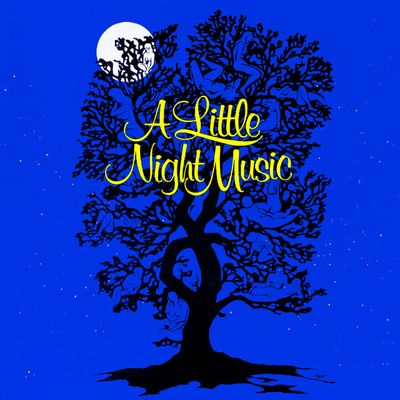
Join Barry Joseph and guests David Spira (Room Escape Artist) and Rachel Allen Duncan (Watson Adventures) to explore why Stephen Sondheim designed treasure hunts for decades, focusing on two with related names: the 1973 A Little Night Music Treasure Hunt at the Shubert Theatre and the 2011 A Little Jurassic Treasure Hunt at the American Museum of Natural History... Read More
From the show: Matching Minds with Sondheim: The Podcast
Featured Shows
About
Join Barry Joseph and guests David Spira (Room Escape Artist) and Rachel Allen Duncan (Watson Adventures) to explore why Stephen Sondheim designed treasure hunts for decades, focusing on two with related names: the 1973 A Little Night Music Treasure Hunt at the Shubert Theatre and the 2011 A Little Jurassic Treasure Hunt at the American Museum of Natural History. Performers George Lee Andrews and Marti Morris recall the Shubert cast-party hunt co-devised with Anthony Perkins, where puzzle-photo team formation led to lyric-based clues hidden around the theater. Event producer Brigid Walsh describes producing the 2011 fundraiser hunt hosted by Sarah Jessica Parker and Matthew Broderick for Friends In Deed, including wax-sealed packets, team coordinators, dinosaur-hall clue cards, a meta-puzzle, and a final reveal involving a freight elevator, toy dinosaurs, and a hidden prize.
Make sure to get the book everywhere books are found, or click here.
00:00 Sondheim Human Touch
01:43 Meet The Guests
03:24 Two Little Hunts
04:55 Show And Memories
06:43 Cast Interview Begins
11:19 Shubert Hunt Story
15:49 Ice Cream Interlude
17:12 Design Takeaways
24:35 Clue Sheet Breakdown
30:43 Weddings And Hunts
32:48 Wedding Puzzle Talk
33:47 Sondheim Museum Hunt Setup
35:47 Designing the Venue
39:20 Watching Players Lose It
41:55 Why Museums Work
43:46 Dino Hall Game Ideas
46:03 Inside the Hunt Packet
50:49 Rules and Meta Puzzle
55:55 Clues and Cheating
58:44 Spoilers Final Solve
01:01:37 Prizes and Reflections
01:04:15 Sondheim Takeaways
01:06:31 Plugs and Signoff
Special Links:
-
AMNH Dinosaurs
Thanks to everyone who contributed behind the scenes to this episode: the Musical Stingers composed by Mateo Chavez Lewis, our line producer Dennis Caouki, and the theme song to our podcast with lyrics and music by Colm Molloy and sung by the one only Anne Morrison, currently on the road starring in Kimberly Akimbo.
Transcript
David Spira: Even in his later years, he's still incredibly tuned in to the way that people operate, strengths and weaknesses, that he's designing around that. Which I really respect because with fame, fortune, success, the world starts to revolve around you more and more as that starts to snowball. And it's very easy to lose track of that humanity and that connection to other people. And. it's clear that he didn't, it's clear that even as he was making this game much later in life, he was still very tuned in to what people were going to need fun with this.
Barry Joseph: Welcome to Matching Minds with Sondheim, the podcast. I'm your host, Barry Joseph. As usual, we'll be joined by some amazing people to respond to audio clips from over 60 hours of my original interviews for the book. This time to focus on the topic of Stephen Sondheim and two of his treasure hunts. One of his first and one of his last, and both of which share a name. Little.
Today I'll be joined by two guests who might help us understand why Sondheim found treasure hunts for over a half of a century to be such a compelling form for designing experiences for friends and colleagues. Our first guest is also a returning fan favorite David Spira.
Along with his wife Lisa, he is a creator of roomescapeartist.com. I never visited an escape room without checking there first. This is David's fourth time on Matching Minds. Previously he helped us look at escape rooms, jigsaw puzzles, and parlor games.
Welcome David.
David Spira: Thanks for having me, Barry. Always a pleasure to be here talking games and Sondheim with you.
Barry Joseph: So this is a new topic for us. Anything you want us to know about your relationship with treasure hunts?
David Spira: I have explored treasure hunts and the adjacent space of puzzle hunts. I've designed a couple of treasure hunts. Mostly, I'm really excited to see what Sondheim was doing with this medium.
Barry Joseph: And I look forward to seeing Sondheim's work through your eyes. Next we have someone new to Matching Minds. Rachel Allen Duncan. Rachel is the hunt producer at Watson Adventures, which offers team building scavenger hunts at museums and historic neighborhoods across the US. When it comes to Sondheim, Rachel used to lock herself in her childhood bedroom to sing all the parts in Into the Woods. When it comes to scavenger hunts, Rachel helps write and produce them for Watson Adventures. And in her free time loves doing logic and jigsaw puzzles. Rachel, welcome. And why did you have to lock your door?
Rachel Duncan: My brother was not as much a fan as I was. Thank you for having me, Barry.
Barry Joseph: Did you have a favorite number to belt back in those days from Into the Woods?
Rachel Duncan: Well, everyone does The Witch's Rap, but I was more a Baker's Wife for sure.
Barry Joseph: Ah, I'm not gonna ask you to share a line today.
Rachel Duncan: That's okay.
Barry Joseph: The topic today is Sondheim and treasure hunts, which extends and builds upon our exploration of the topic last fall. As you might recall in that episode, we looked at a birthday party held in New York City Center in 2013, where Sondheim designed an hour long cocktail party hunt for around 80 people. With the themes connected to the birthday gal and the hunt taking place across four floors and all public locations in the Majestic New York City Center. Those details are important because I think we'll hear some echoes today. And highlight some of the different design decisions Sondheim made. We're gonna start in 1973. Looking at his A Little Night Music Treasure Hunt. Note I said These are two of his little treasure hunts. There's little right in the title. A Little Night Music. Sondheim designed this for a cast party held in the Schubert Theater. Since Sondheim's first treasure hunt, I believe was in 1968. I call this one of his first. And then after we talk about his a little night music Treasure Hunt will jump ahead nearly 40 years to his 2011 Little Jurassic Treasure Hunt. This was held at the American Museum of Natural History as a fundraiser with his final recorded hunt in 2013, that makes this definitely one of his last. And with 300 people in attendance, his largest. So let's start first with A Little Night Music. Let's talk about it first as a show. Have any of us here seen it?
Rachel Duncan: Yes.
David Spira: I have not.
Barry Joseph: So, Rachel, can you please explain to David what is A Little Night Music and tell us some more about your relationship with it?
Rachel Duncan: A Little Night Music is I wanna say pastoral, but it's a story of love interests across different ages and across different groups, they all go out to the country and there's intrigue and.
Barry Joseph: late night shenanigans under covers.
Rachel Duncan: Yes, yes, there's a bathtub.
Barry Joseph: All in Waltz time, is that correct?
Rachel Duncan: Except Petras song, which actually jumps from like, I think 7/8 to 3/4 a couple times. That's insane. But it's amazing.
Barry Joseph: Look at that. So do you have a personal relationship with the show?
Rachel Duncan: I do. When I was in college, we did pieces of a Little Night Music and Dottie Danner this is Blythe Danner's sister-in-law directed a production with us in college. And I sang Petra's song. The Miller's Son. And it was the first time that anyone really got to me as an actor. And we also did a Weekend in the Country, and this is crazy, but when I was in the hospital, my doula giving birth, was my best friend and she was my Ann in that, and I was Petra. And so we literally sang A Weekend In The C ountry, in the birthing room trying to just think about something else. So that's my insane story about A Little Night Music. So..
Barry Joseph: That is the first birthing a Little Night Music story I think I've ever heard. I love it.
David Spira: You asked for a personal connection. Rachel delivered!
Barry Joseph: She did. Literally Ba-dum-bum. So I learned mostly details about this A Little Night Music treasure hunt from two performers: George Lee Andrews and Marti Morris, both of whom were in the show. George created the role of Frid in the production, and Marti would later join the cast in the touring company and take it on the road with George. When the production opened in February of 1973. They had just recently begun dating and soon were married and today still married after all these years. They were the most adorable couple to interview for my book. It was like one of those inserts from the movie When Harry met Sally. Let's join them as they talk about what it was like to be in the show. this is a highly edited down one hour interview. Shrunken . For our purposes today to about eight minutes.
May I ask you each to introduce yourself?
George: Well, Marti and I weren't Broadway actors, but we each got a Broadway show together. We got a Broadway show called Comedy and we met in that. It folded in Boston. But while I was doing that show, I got an audition for A Little Night Music and so wonderfully I got the job. So all of a sudden. I was in Night Music and we were together. And so we became a part of all those golden wonderful people on Broadway. And, uh, , I'm George Lee Andrews, and that's my story. I'm sticking to it.
Barry Joseph: And George, you started in the show as Fred, is that correct?
George: Yes, yes.
Barry Joseph: And then in the touring company, you were in the role of Frederick?
George: Yes.
Barry Joseph: Okay. And Marti, I believe when you were in the touring company you are Frederica, is that correct?
Marti: Yeah. So after George got cast in Night Music, I auditioned for Hal Prince one day for Candide. And he said to me, could you come back in the afternoon and do another audition for Steve Sondheim? And I said, okay. And so I came back and auditioned for the Little Night Music tour, how Prince gave me two jobs in one day. He gave me Candide at Brooklyn Academy of Music, which was the revival of Bernstein's music. And then that afternoon, Sondheim cast me in A Little Night Music. And that tour, of course, I played his illegitimate child Frederica, and we were falling in love. That tour of a little night music was also living in a dream because we just had that piece of theater every single night in the most astoundingly wonderful places.
George: But before that, we had a year in New York. When I was doing night music. But you were there too.
Marti: I was doing Candide. Yeah.
Barry Joseph: I love this project because I get to speak to people about memories that they often haven't had a chance to review for decades. So I'm collecting stuff and that's part of how I came to you. I had no idea that he'd created this treasure hunt for a Little Night Music. I had no idea that someone still had all of the clues. Oh my gosh. Which I now have. I'm so thrilled to have a chance to talk to both of you because. You were there.
George: We were there.
Marti: Oh, it was so much fun.
George: Yes, we were. And it was amazing. We got to go to certain parties at Steven's house and it was, quite amazing when you walked into his apartment because it was full of games and puzzles. Especially, as you probably know by now.
Marti: The chess set with the little boy on the throne for the king. With the cat's cradle. Just a little boy sitting on a throne playing with a cat's cradle.
George: The walls were filled with puzzles. And the tables were filled with puzzles-
Marti: But back to the chess set. The chess set was really a piece of art. It was very big and very amazing. I think I was 25 years old and you were like 31 or two. And here we are in his apartment right down the street from Katherine Hepburn or right next door. In Turtle Bay. And, , it just was amazing to be there. But he treated us like we just had been friends forever and they wanted to play.
George: He had huge scavenger hunts all through the city of New York, as you must know by now.
Marti: It was hard, and sometimes it was dirty and erotic.
George: All of a sudden we were included.
Marti: It was incredible. So that was nice. So then the party, of course, for Glynnis' birthday.
George: I felt that what kicked off that scavenger hunt, was that we were leaving the Schubert Theater and we were moving into the Majestic. It was moving because we were a hit, and they could get more audience. What happened was we were told, we're gonna close out at the Schubert. There's gonna be a last performance, and after the last performance, we're gonna have a celebration. It was Glen's birthday. And we're gonna have a celebration. To celebrate the fact that we're leaving and we're gonna go on to better things. We're gonna go over to the Majestic, but we're gonna leave the Schubert. So we can have the Schubert on that night. And so Stephen and Tony Perkins put this game together and everybody in the cast and in the group. Got to play this game. And that's what we did. We ran around the Schubert Theater, like crazy people. I mean, we did the show, we did the show that night, and then it was, that was the end of the show.
Marti: But there were famous people, I think probably Laura Bacall.
George: All their pals.
Marti: But when you walked in, you were given an envelope with a puzzle piece in it, and you had to take that puzzle piece out and it was a part of a professional photo, you had to take your piece of that one photograph and find other people that were gonna be on your team. And so that's how everybody got together in the beginning.
Everybody had an envelope with a piece of the puzzle . And so then you found your team, then you had to.
George: Put the picture together.
Marti: There were clues on the back, such as where Petra had her skirts. Which the answer was way up high. You had to know the lyrics, had your skirts way up high. So then you figure, well, maybe we should go up to the, balcony or something.
George: But they were in dressing rooms. They were in the costume room. These clues were all over the theater, so everybody was just running around screaming and laughing and having a, a crazy old time.
Marti: The Petra skirts one was under a seat up in the balcony. I do remember that. And you know, the thing about Steven is, he didn't make it easy on you. It was challenging, you know, and people were just dying laughing. Exclaiming so happy that they got something and then the end of it was. Where was the treasure? It was in a ticket box. It was a built box with a slot in the top that they put.
George: The canceled tickets.
Marti: Canceled tickets in the stubs and you had to unlock that and open it up. And then there was mums champagne. I believe it was mums because.
George: Yeah, mums.
Marti: Because it's mentioned in the show and that's mentioned in a little night music. Yeah. So it was bottles of mums champagne was the treasure that you were looking for? Right. Oh my gosh, it was so long ago.
Barry Joseph: Part of what I love about this, and I don't know if you're aware, Sondheim spent almost his whole life making puzzles and games, but they almost never were about his work. Almost never. Which makes it a complete unicorn in the history of what he's done. 'Cause it was designed for people who are the experts 'cause you were doing it every night.
Marti: How cool that we're sitting here with you trying to figure this game out again. That was like 1973. Lord help us. That was 50 years ago.
Barry Joseph: Can I ask you, because you started talking about it, Marti, what's it like revisiting this?
Marti: I'll tell you something. To be 25 years old, 26, and in your early thirties, it was huge. You never dreamed something like this would happen to you, because the musicals in those days were just phenomenal. And this particular intelligent, sophisticated musical, it was so brilliant and so beautiful. It was like a champagne bubble. It was so classy. And it was Sondheim in his luscious, you know? And it was difficult. If you were George Lee Andrews or Len Cariou as Frederick and had to sing the song. Now. As the sweet imbecilities Tumble so lavishly Onto her lap. Oh my God. These songs were difficult. You had to work and then they paid you. And you got to go to parties and play games.
George: It was so sweet, so wonderful. We still love it. We still love the whole idea.
Barry Joseph: Before we respond to the wonderful recollections of George and Marti, I feel obligated to explain to any confused listeners why the tune playing in the background on repeat was an odd version of Turkey in the straw. Anybody who lives in an urban environment or lives by a park will know that meant there was an ice cream truck nearby. But of course that's a great opportunity to remind us all that in 2024, Lin Manuel Miranda shared with us in a tweet that in 2013, he sent a message to Stephen Sondheim. It said, Steve, you help sell ice cream. I hope I'm the first to send this to you. I know I won't be the last. There's an ice cream truck in Queens that only plays "Send in the Clowns" to which Sondheim responded. "Very upsetting. Thank you very much."
Rachel Duncan: Sorry. We just finally are breaking out of this cold, cold weather and it, we have like two 70 degree days. So of course the ice cream truck just sits outside my house today. Yep. Sorry.
Barry Joseph: I presume yours is not playing Sondheim.
Rachel Duncan: No, it was not. No, it was not.
Barry Joseph: So George and Marti.
David Spira: Aren't they adorable?
Rachel Duncan: They're just so charming. I wanna play with them.
David Spira: Same.
Barry Joseph: So when you hear them talking about what it was like being both performers in a Sondheim show and participants in an original one time only Sondheim treasure hunt, what comes to mind for you?
David Spira: There is something uniquely special about a puzzle game that is made around a specific group's unique knowledge. Most of the time when you're building these kinds of things, you have to assume no outside knowledge or a person's ability to look the information up. This is a unique opportunity, that he clearly took advantage of, and used this material that was clearly meaningful to everybody involved and that they knew it well. And I think that's really cool.
Rachel Duncan: And what a great last hurrah for A Little Night Music at the Schubert. Because when you do a show that is your home. That is your home for however long rehearsal period, and you know tech and then you're in the show and you live and breathe every space in there and then to go and kind of turn it on its end is a really fantastic experience, I think.
Barry Joseph: Many of Stephen Sondheim's puzzles and sometimes even his games, invite people to see the world around them in a new way. And so what I'm hearing is what a treat to get to take a place you're about to leave and to look at it and notice it in a completely new way. I have to also remind myself that in a hunt that was designed for performers of a show, where the clues as you'll both see shortly are based around lyrics. This was before the internet. This was a show that was fairly new. The lyrics weren't available in a bookstore. Not only was it designed just for them to be special for them in that space, there's almost no one else in the world who could even have participated.
Rachel Duncan: Not at that time, for sure. If it's only on Broadway, this isn't been done regionally anywhere, so yeah.
David Spira: Another thing that was really interesting to me listening to them is what they were recalling, 50 years later. It was clear that they couldn't, and why should they remember every single detail. But it's something I think about when reviewing experiences on room escape artists. The question that we're always asking is, what about this experience, what about this game are we going to remember years later? And the answer for a large portion of any given game is... not that. But there in, in a great game, there's always something special, something that hooks you, something that decades later you'll be able to recall. And that was really cool to see that there were things that they gravitated to, particularly the ticket box, which, as they were telling the story, that was, I could really picture that in my head.
Barry Joseph: So David, as an escape room reviewer, how do you make that decision? How do you decide what to talk about when you're describing for Your readers to help them decide if they wanna participate or not in that specific escape room, what they might experience that will both entice them to want to go, but at the same time not ruin that experience for 'em, not be a spoiler.
David Spira: Without going down too deep a tangent for you. I would say that we think about what really sung to us in the moment. And we have our three day waiting period before we write a review. So we think about what were we feeling right when we left, but then we let ourselves mellow out a little bit and we look at it a few days later and there's a different form of clarity a few days later. I spend a lot more time watching my teammates than I do playing in most circumstances. So I'm kind of looking around for what are making people's eyes light up. What are they really drawn to versus what are they just doing because it's in front of them?
Rachel Duncan: The way that you can turn a space on its end is what brings us the most joy from Watson Adventures. We started out where. Brett Watson was walking around the Metropolitan Museum of Art and was like, I think that's funny. And he just started writing hunts for his friends because he found a way to... there's a tap dancing Jesus. And there's a saint that looks like Mick Jagger. So the first tent was 80 questions. And it's a really great way for someone who has walked through the met or been in that space. Or been at the Schubert for all this time, and then turns it around on them to make something stick in their mind. And that gives them something to talk about later. 40 years later. That's a good hunt. That's a really good scavenger hunt there.
Barry Joseph: So are you two ready to see some of the same materials I shared with George and Marti-
Rachel Duncan: Yes, please.
Barry Joseph: To get a picture of what they were doing 50 years ago?
Rachel Duncan: Yes, please.
David Spira: Yes, please.
Barry Joseph: So the first thing I'll share is a photo taken of Stephen Sondheim with Anthony Perkins behind the scenes preparing the clue sheets. You see those brown sheets of paper in Sondheim's hand on the table? Those are the clue sheets that he was getting ready.
David Spira: Watching someone do this in 1973 looks just like it does now, except the film is a little bit more grainy.
Rachel Duncan: Before the pandemic actually, we moved most of our games... I would say 90%, 95% of our games onto our digital app. But we used to have commercial kitchen prep tables in our office where we would be just printing out papers and making sure that each team had all the things that they need. So this is reminiscent of that for sure.
Barry Joseph: So then as George and Marti described, they received kind of a jigsaw puzzle, but it was just a photograph cut into a few pieces, and they only had one piece and they had to find who else also had the other pieces. And when they combined them together, it was a promo photo from the show. And that meant there were a number of promo photos, each photo for a different group. So right off the bat, he used a playful activity, which really just had the goal of, can you find who's in your group?
David Spira: One of the questions I had while listening to them say that, because I thought this was a really clever setup, did he choose the groups and distribute those pieces deliberately or was this randomized?
Barry Joseph: That's a great question. We don't know at this point in time, but looking at what he did in the last decades of his life, when he organized treasure hunts, they were often organized intentionally in advance.
Rachel Duncan: Do you know if they were on the same team, did they ever tell you that?
Barry Joseph: They did not. But I know they weren't on the winning team. 'Cause the person who gave us the clue sheet, they saved it. She saved it. 'cause she'd won.
Rachel Duncan: Aha. That makes sense.
David Spira: I was, and maybe I'm wrong here, but from the way they were talking about it, it sounded to me like they had done this together.
Barry Joseph: They lived their life together. So even if they were on different teams, you know, as soon as it was done, they went home together and they were talking. And they spent 50 years talking about it. So I can still imagine that-
Rachel Duncan: Yeah, I could go either way.
Barry Joseph: it would sound like it. Right?
David Spira: That's how Lisa and I would've sounded too.
Barry Joseph: Right? But Rachel, why do you ask? Why is that interesting to you?
Rachel Duncan: I was just curious about it because they talk about it. I mean, they were at the same event of course, but it's such a shared experience. I think scavenger hunts and treasure hunts, things like this are a great way for people to get together and get to know each other even if they don't. And it's something to talk about and take home with you later... is the shared experience of, oh yeah, no, we didn't get that one. How did you solve it? You know, or we were clueless on Petra's skirts.
Barry Joseph: So the reason why I'm gonna be able to show you a clue sheet and specifically a completed clue sheet, is that actress Judith Kahan who co-starred as Fredricka the original production, saved it and pulled it out of her drawer after 50 years and shared it with the world on Facebook, which allowed me to talk with George and Marti to review them for the first time. And I'm gonna share them with you now and we can take a look at the kind of clues Stephen Sondheim created for the performers of A Little Night Music. Let's go ahead and take a look at the clue sheet. You'll see there's kind of like three columns. The first column just says clues at the top. It looks like it was typed on a typewriter, and there's 10 clues there. The right side says ticket numbers with some spaces, and the middle is the space to put in your answers. And at the bottom it says, use the 10 tickets you collect in order to start your search for the treasure. So it suggests with no other instructions that each of the 10 clues will produce an answer. That answer as we heard. We'll take you to a location in the theater where a ticket could be found. And then that ticket number, which was a letter, then a number would go on the right. And then you would somehow use those tickets numbers on the right to then figure out the location of that box where the treasure was hidden. Tell us what stands out to you.
Rachel Duncan: You gotta know A Little Night Music.
Barry Joseph: Can you demonstrate that to us, please?
Rachel Duncan: Well, it looks like it's actually just filling in the lyrics on these. The blank is blank. Blank... can I wait around for later? And he says, "how can I wait around for later?" And then the next, then it's a whole new lyric and a whole new song actually where, he says "she Twitters". And then the response is my blank and word goes in there. And then the third line is another lyric. And that's and the orchards and the... hay. And that's from A Weekend in the Country. And then the last one is that dilapidated blank. Which is inn, and it says plural.
Barry Joseph: So what happens if you put those four words together?
Rachel Duncan: How... howard Hayes. Oh, oh. And that's why it's plural. There you go. Howard Hay-Inns. Haynes. So that's clever. That's fun.
Barry Joseph: For those who don't know the show, Howard Haynes had what relationship to A Little Night Music?
Rachel Duncan: The general manager.
Barry Joseph: That's correct. You win Rachel for 200 points.
Rachel Duncan: Woo-hoo.
Barry Joseph: So that must mean that Howard Haynes was holding one of the tickets.
Rachel Duncan: Holding a ticket. Yeah.
Barry Joseph: And so I love how Sondheim not only made locations in the theater be places that he was sending people, but also to people themselves.
David Spira: Number nine jumps out at me because it doesn't have any blanks. There's only a couple that don't have blanks.
"A spectator should put what Frederick sinks and will save". And the answer is apparently ashtray.
Barry Joseph: What do you like about that one? David? Why does that stand out to you?
David Spira: Well, a lot of these are fill in the blanks, looking for you to put in mostly lyrics. But some of them are almost trivia questions for the show itself. So it is swapping between those two. And I think that that's interesting.
Barry Joseph: You might also notice that there's tape holding this together. Do you remember why?
David Spira: I was wondering why this thing looks cut up and sliced and diced and then taped back together.
Barry Joseph: This is the backside of the photo that was used to organise the teams.
David Spira: Of course it was.
Rachel Duncan: Yep.
Barry Joseph: It's all integrated, right from an object you have that's mysterious a piece of a picture. You don't know what to do with it. You realize you should go find other people with it. You put them all together. You now found your team...
Rachel Duncan: And that becomes a challenge throughout the entire game because unless you have tape handy in the theater, which you know, you do somewhere backstage, but like, you're like, oh no, no, no, no. I've got the top half of this page.
I like question seven.
Barry Joseph: Can you read it to us please and
Rachel Duncan: Sure
Barry Joseph: And tell us what you like about it?
Rachel Duncan: For the man in the mezzanine, one of the places where a little death occurs every day", and that's from the song, Every Day a Little Death. So it's "every day a little death in the parlor. In the bed", and it goes through. And so they would've had to figure out probably all of those different locations, but which of those might be in the mezzanine. And so the answer was curtains, it looks like. And then somewhere they went. I don't know if the ticket was in the mezzanine or if it was near the curtains downstairs, but you know-
David Spira: It looks like there's three blanks in there. The only one that we have written in is curtains, I'm wondering if there's a man in the mezzanine and you have to go and say the-
Rachel Duncan: Mm
David Spira: Three words to him-
Barry Joseph: Oh.
David Spira: And then he will give you something. That is how it's reading to me
Rachel Duncan: Mm mm-hmm.
Barry Joseph: Given the way the song is structured, the first two words were most likely "in the:..
Rachel Duncan: " Every day, a little death in the parlor, in the bed, in the curtains, in the silver, in the buttons, in the bread. Every day a little sting in the heart and in the head. Every move and every breath, and you hardly feel a thing, brings a perfect little death". I love that song.
Barry Joseph: So I mentioned earlier, this is the clue sheet that was held by someone who was on the team that won. So her team went down to the lobby. They found the location where people would put the rip tickets. They opened it up and they found not only the prize, which was some Mum's champagne, but also a card. Let's take a look.
Rachel Duncan: " And best wishes for your happiness. Go eat and don't gloat." Looks like Stephen Sondheim and Anthony perkins. There you go.
Barry Joseph: And the first line, Rachel, of course, is printed on the card like it's a hallmark.
Rachel Duncan: Yeah.
Barry Joseph: or Anthony wrote the "go eat and don't gloat part."
Rachel Duncan: Amazing. But obviously she gloated 'cause she kept the clue sheet right.
Barry Joseph: She, she just waited 50 years. Well deserved. Her patience paid off. Well done Judy. Well done.
Rachel Duncan: What an incredible experience.
David Spira: Structurally... i made something similar for my wedding.
Barry Joseph: of course you did, David.
David Spira: Not around lyrics or anything like that, but the way that this feels and the way that this flows.. When Lisa and I got married, our friends were sort of like hassling us about, you know, you gonna have an escape room or a puzzle at your wedding. And we kept telling everybody that that was entirely too childish and that we would not be doing such a thing. And then we did hide one in there. It was not,, screamingly loud because we didn't really want everyone to do it. It was really just for our friends who would care. And it turns out a couple of, my in-laws friends who decided that they were going to solve this thing no matter what. But yeah, the premise of it was two of our friends had stolen all of the champagne and the only way to get the champagne was to solve the puzzle. And we did not serve champagne at the wedding. We gave bottles out to groups that finished the puzzle.
Rachel Duncan: Wow, that's intense.
Barry Joseph: Nice.
Rachel Duncan: That's funny. 'cause I actually used, one of our Watson adventure scavenger hunts at my wedding too. I did, a hunt at the Met the day before. Most of my family's from Texas and my husband's family's in Boston area. And, instead of doing a rehearsal dinner where you're in New York City and everyone wants to probably go out to their own dinner and go to their own show and all that kind of stuff, we were like, we're not gonna intrude on that. But if you wanna go to the Met. Here you can do, and we did our Met Madness hunt for them. And actually even just last month, someone was saying, God, I remember when we did that hunt. And what it was, what was great was we randomized the teams and so even if they didn't know someone on their team, they would get to know someone and then they would have someone to talk to at the wedding. It was a way for people to connect at the wedding, which I think... it's that piece that you take home with you and that you can talk about later and you've made a connection with someone and you know you can do that in an escape room, in an a scavenger hunt, in a treasure hunt. It's that shared experience that is so amazing.
Barry Joseph: Nice. At my wedding, all we had was a word matching jigsaw puzzle.
Rachel Duncan: I think that's the same thing though. It's a puzzle. It gets people talking, it gets people involved with each other. It gives them a shared experience that they can talk about so that they don't have to talk about politics or, you know, something else.
David Spira: I'll say you want intense, what we were originally talking about was making the invitation a puzzle, And. If you couldn't solve the invitation, you can't come to the wedding, which, my parents and Lisa's parents were not fans of this idea. Yeah, I don't know why. I think it would've been a great cost savings measure.
Rachel Duncan: Yeah, Unless you figure it out, we won't tell you where it is.
Barry Joseph: When I was in my twenties, I often made scavenger hunts and treasure hunts for my birthday parties. And in fact, one I designed was at the American Museum of Natural History.
Rachel Duncan: Hmm.
Barry Joseph: Little knowing that many years later I would actually work there. When I started working at the museum in 2012, I had no idea that just a year earlier, Stephen Sondheim had also designed a treasure hunt. the Museum of Natural History, and that's the next one we're gonna talk about. So for A Little Night Music we heard from people who experienced the treasure hunt, but now for the 2011, a little Jurassic treasure hunt, we'll hear from someone who designed it. The website advertised that the $1,500 per seat fundraiser, hosted by Sarah Jessica Parker and Matthew Broderick, quote, "will send guests on a once in a lifetime thrill ride through the American Museum of Natural History on one of legendary composers, Stephen Sondheim's coveted treasure Hunts. Guests received wax sealed folders upon their arrival. One side featured a map of the museum's famous fourth floor known colloquially as the Dino Hall, but within proper museum nomenclature, the halls were referred to as the Hall of Primitive Mammals, hunt room one. The Hall of Orifice, dinosaurs, hunt Room two. And the Hall of Sian dinosaurs Hunt room three. It also included the names of their team members, a number for their team and a location on the map to find their team coordinator. The evening was to raise funds for Friends in deed a crisis center for people with life-threatening illnesses, and to celebrate its 20 year anniversary. Cynthia O'Neill, an actress, an old friend of Sondheim's, was both co-founder and president of the nonprofit and had asked Sondheim to design it, and he agreed to pull off an event at this scale. And frankly, at his age of 81, Sondheim had need of an event planner at his side. O'Neill recommended Brigid Walsh, an event producer who had worked with friends indeed in the past. Let's listen to her talk about the experience. .
Brigid: Cynthia reached out to Stephen and said, would you be willing to work with us on a fundraiser idea that is a treasure hunt? And she got him to say yes. So then that's when they introduced me to him and we had a couple of meetings at their office and the first thing we did was look for venues. I would kind of scour venues and then I would narrow it down and then Stephen would actually come. And meet us and we would talk about it because obviously the venue is what makes the story right. Of the puzzle he has to build. We looked at the New York Public Library which was cool, and that was a contender because there's so much you could do with hiding stuff in books. And as we're there, he's like kind of saying, well if we started here and then we maybe hide stuff, and then there's a map room. And then there's a papers room. His mind was like, already going with how to create a puzzle out of the New York Public Library. I mean, the New York Public Library was super intriguing to all of us because maybe it was like so broad that it would almost be impossible for people to figure out the clues because every book has a different theme and like how do you even narrow down that? And then we did a walkthrough of the Natural History Museum. He moves fast, and I think the thing that I really loved about it and why it was so great was because we would do these calls and he would describe to me what he wanted to do. So we had a map of the museum and we would kind of talk stuff through. And I think we probably went there a few times, but mainly we would do it on the phone and he would have a map in front of him, and I would have a map in front of me and he would say, here's my idea for how we get from space A to space B. Is that physically possible? Because I like at that point, knew the museum like the back of my hand. I was like, will the logistics be feasible? Let me check that display at the museum to make sure the word you're talking about is actually still on that display card. I would actually double check the facts because that's how detailed it was. I had gone around and taken imagery of every case so that he could look at the card that's describing that dinosaur bone and he's pulling a clue, like out of the wording. So I would have to triple check the work to make sure that it was true.
Barry Joseph: Did you know when you went to AMNM that it was gonna be a dinosaur hall?
Brigid: I think we looked at the whole museum and then narrowed it down to the dinosaur hall. Part of it , was geographic. We could loop people around in a circle and they could kind of do this and figure out the clues and run around and end up someplace. So there was a lot of those considerations, like how do we make this work from a logistical physical space perspective? And also is there enough material here for me to create clues? So he would piece it together and then the eventuality was, we're kind of like, I think we got it. And the, he would make revisions. He'd go, oh, maybe this is better If we didn't, sometimes he would say, yeah, that clue's not that interesting. I'm gonna rework that. And then he would come back to me and go, okay, I reworked clue number five. And then the hunt was on, Stephen just kind of roamed the halls during the whole thing and watched everybody. And kind of giggled at them, losing their minds. Sarah Jessica Parker and Andy Cohen, like freaking out trying to find the clues. He loved it. You could see on his face, he absolutely loved watching people trying to figure stuff out. It was a reputation for being sort of curmudgeonly, but he was enjoying it immensely. I think he really thoroughly, out of all of it, just enjoyed human behavior and kind of like watching how people's minds work or maybe don't work in some instances. It was really sweet. He understood the importance of that charitable organization and the time he took to do this. 'Cause it wasn't like, yes, I'll show up to your event. He worked on this for months. And it was a lot of work. I mean, really, he put a lot of work into it. And it just shows how much he cared about the organization. And it showed how much he really loved Cynthia O'Neill.
Rachel Duncan: The American Museum of Natural History is one of my favorite locations to do hunts... In, in that clip, you talk about how you know everything's there on the page there. You don't have to know what the difference between, you know, a T-Rex and a sour pod. All of it is right there for you. And I also love, the thing that really strikes me in that is, yes, but that's not good enough. I want the "aha" moment. You can do a scavenger hunt or a treasure hunt where you can say, okay, how many toes does the T-Rex have? Okay, fine. But , it's about what new fun thing are you going to find? Where is your "aha" moment? And that is your answer. It's the hunter experience that I think is the most interesting. And I love that he got to sit there and just watch them and watch how their brains worked. He's doing my job. I like, I feel like this is what I do and I love it. That's my favorite part of what we do. I imagine, anyone who creates an escape room, a scavenger hunt is that it, it's not about you. It's about providing fun for someone else. So I love that.
David Spira: What's interesting to me listening to that clip is the wisdom in the path not taken. The New York Public Library is a spectacular place and a terrible, terrible place to set something like this.
Rachel Duncan: I agree.
David Spira: Because every single book is an infinite opportunity for red herrings in so many different ways. You can grab the wrong book. You can find notes written in the pages of a book. You could find a spine broke into a spot and read too much into that. People can put the book back incorrectly so they could be on the correct path. And they can put it back incorrectly by accident or maliciously because they're too competitive. There are so many different ways that running something like this in a library would be a disaster. And reading between the lines there, it's clear that they recognize the potential for disaster there. And museums are so much better for this because museums are very good at building stationary things that recognize that humans are chaotic and-
Rachel Duncan: You can't move those dinosaurs.
David Spira: I mean, yeah, you're not moving the dinosaurs.
Rachel Duncan: Don't touch the Dinosaurs.
David Spira: That is for sure.
Rachel Duncan: Don't touch the dinosaurs.
David Spira: That is for sure. That was the thing that really jumped out at me when they first started talking about the New York Public Library was like, oh, no, no, no. Please. No, no, no.
Barry Joseph: I love us getting into the weeds here on this key design decisions that have to be made when creating a hunt. 'Cause you both designers, so I'm wondering if there's anything else that you hear in these recollections that aren't 50 years ago but just 15 and are using some contemporary design concepts in how this hunt was put together. That for you feels similar to what you do or is different?
David Spira: I mean, I'll go real shallow. I just went deep. Dinosaurs are cool. Dinosaurs are so incredibly cool, and they are timeless. They are joyful, and I think that it is an inspired idea to build around dinosaurs. Anytime.
Barry Joseph: During my six years working at the American Museum of Natural History, I had the grid fortune of designing many games, and I love designing games for this very hall. One of the first things I noticed was that the way the tiles are set on the floor are like squares in a board game. So that meant you can create games where people have to count out movements forward into the side. And we came up with a fun little kind of parlor game that people could do during the night at the museum sleepovers
Rachel Duncan: Oh, fun.
Barry Joseph: Where you had to memorize the longest dinosaur name you could do, but it's Latin version. And you got to walk forward one square for each letter. So you had to try and figure out the longest one that you could keep in your head and spell correctly as you move forward. And you'd have to stop when you were done. And try and be the last one to stop. And so those just looking at the design of the room and the content, but we had so much fun creating ways for people to think about dinosaurs, to talk about dinosaurs. One of the games was about imagining if that dinosaur had a job, what its job would be, and trying to get people to guess the job by you describing it without saying what it was. And another one was just thinking about the fact that these dinosaurs are literally collections of bones that were found on the ground and put together or reconstructed. They are put together in a performance for you. So something performative about it. So how can we get people to also perform? So in the age of selfies, which had just started around that time, one of the games was trying to hide the dinosaur by you and the people with you having to hold your body in a position for the angle of the camera, taking the photo so that no one could see the dinosaur.
David Spira: This hall has some like special importance to me because it is the first memory that I have as a child that is truly wondrous. I don't have a memory earlier than this where I went and saw something as fantastic as seeing the dinosaur exhibit in the American Museum of Natural History. It was just, dumbfounding. I was obsessed with dinosaurs for so many years after that, and still to this day, have a very deep love of dinosaurs.
Barry Joseph: As we heard when guests arrived, they received a packet. Would you guys like to look inside one of those packets now?
Rachel Duncan: Absolutely.
David Spira: I may have already opened it.
Barry Joseph: I could count on you for that, David. Let's walk through it. So the first thing you'll see is the invitation that people received. It's two-sided. Would one of you please describe what we're looking at?
Rachel Duncan: Looks like a dinosaur T-Rex running away.
David Spira: It says save the date. October 3rd, 2011. Sarah Jessica Parker and Matthew Broderick. Invite you to a little Jurassic Treasure Hunt, devised by Stephen Sondheim.
Barry Joseph: Devised? What an interesting word, right, David?
David Spira: It is a very specific word.
Rachel Duncan: Mm-hmm.
David Spira: The front of the invitation is like a very zoomed in bit of what looks like potentially a tyrannosaurus' like hind quarters the back of this is part of a tail. You're not seeing the head and it is, I'll say deliberately disjointed. Rachel, can you read what's on the second page?
Rachel Duncan: Join us for a rare opportunity to participate in one of Stephen Sondheim's famed treasure hunts after hours in the Iconic American Museum of Natural History. Cocktail reception, treasure Hunt, and seated dinner. Invitation to follow.
Barry Joseph: Alright, so then let's move on now and we will see an envelope, to an Edward Hamburger. So people's names were on it. Edward did not pick up his packet.
David Spira: I'm just gonna put this out there into the world. If for some reason there is a $1,500 entry fee for a elaborate puzzle experience created by a cultural icon, and you need someone to take your ticket. Call me. I'll make it work. Don't leave this out there for no one. What do you, come on. Sorry.
Barry Joseph: Edwards name, I believe, was misprinted. And so he, did collect his copy. So this was a backup. With the incorrect name on it?
David Spira: Ok. Ok. That's acceptable. But i'm sure that someone didn't pick up their packet that night. They could have called me.
Barry Joseph: David, would you read what's on the outside of the envelope?
David Spira: Do not open this envelope until you are instructed to do so at approximately 7:30. Inside it is an instruction card. Six clue cards and a treasure card. A coordinator has been assigned to each team. The coordinator's responsibility will be to collate the answers to the clues as the team assembles them and to share the information with each member of the team. If you have questions of procedure or understanding, the coordinator will answer them. That's an interesting structure.
Barry Joseph: Please say more.
David Spira: Assigning a coordinator to the team either implies that you're going to have a complicated structure that people are going to have to go through, and you want them to have that support. Or you are worried that not everybody involved in this is going to be on top of everything.. And so you want to have someone there to make sure that it stays on the rails. My gut is we're talking about the latter, but it is possible that it could be the former.
Barry Joseph: We see this often in his designs where the event isn't the treasure hunt, it is incorporated into some other event. So in this case, it's the cocktail party. That cocktail party is just the beginning of a pretty lengthy evening, which is gonna have a dinner, performers like Raul Esparza and Melissa Erico. They have to be on time. This hunt has to end by a certain time. So having those coordinators is a way to help make sure that no matter what attendees choose to do, whether they're all in to solve it or they're kind of a little bit too inebriated during the cocktail party to do it in a solid way, the party can still stay on schedule.
Rachel Duncan: It's funny, because as hunt producer, yes, I help write the hunts and make sure everything works and stuff. But we do a lot of private parties where part of my job is, all right, so where is the cocktail portion? Where are the tables? Where is the dinner?
Barry Joseph: Yeah, you can see it says enter cocktail party that's next to the elevator
Rachel Duncan: Mm-hmm.
Barry Joseph: And then when you walk in, you're looking at the wooly mammoth there are 18 tabletops.
Rachel Duncan: Yep.
Barry Joseph: In the cocktail party area. And that's where you're going to your table. 'Cause it tells you what number to go to to meet your team. And there will be stuff to drink there. And you're going back to that location, you're finding things out and you're going back. So as you'll go to hunt room one, hunt room two, and hunt room three. You are then going back there and you'll also see in the Astor turret in the lower left hand corner, there's actually five more tables
Rachel Duncan: Oh, there they are.
David Spira: I'm glad you asked that.
Barry Joseph: So then there's the rules. There are 1, 2, 3, 4, 5, 6, 7 rules and then three areas of advice. Why don't you guys take a look at it? It's a lot to read out loud and let us know if there's anything you wanna share that you think is interesting about either the instructions or the advice.
Rachel Duncan: They've been given 12 clues. One on each side of the six clue cards they have. And they don't need to be solved in any order, which is great. If you've got 300 people hunting in three rooms. You wanna make sure that everybody can spread out that you don't like. Someone's over there. I'll go over here and look over here. Some clues are verbal, some photographic. It tells you how many clues are in each room of the hunt.
David Spira: It's really kind to tell people exactly how many solutions you need to derive from each space because it lets you know when you are done with that space and when you can move on. Especially since you can only be solving in the room you're in. It's good to be able to just leave and not have to worry and look back.
Barry Joseph: And I think of that design as like building a Lego kit. When you're building a Lego kit, you see what you're building, but you also see how many pieces you have left. And in bad puzzle design, you can't tell how much you have left. You can't see it being depleted 'cause there are so many possible options. This is what creates an affordance, that gives you a sense of how close you are to being done and that you've actually completed something and you are done.
David Spira: Especially in a place like the Museum of Natural History where each room has so many different things that could be answers.
Rachel Duncan: Yeah, we tend to tell them which room to hunt in on our games, we'll direct them to a place, even if it's a go anywhere, in any order, we still give them a place to look in. And then there are usually visual clues or something that, that helps the team narrow into what they need to find. 'Cause to me that's also part of the game. Is how can I get them to that one spot? And so this is very helpful for sure.
Barry Joseph: The instructions now talk about what is unique about the way this puzzle works, which is that you're not just trying to find the answer that is the name of a dinosaur or some other ancient creature, but you are given dashes for each letter of the answer, which on one hand helps you. It tells you how many letters there's gonna be, but there's also numbers underneath those dashes, and that's what leads to the meta puzzle, which makes this so interesting. There's only four numbers, 1, 2, 3, 4. Under the dashes. The first step is just filling in the name of whatever creature you're in front of. But you then look at the letters with the numbers, and you then reorder those letters based on those numbers. So every single one of the 12 clues gives you four letters as a unit that can't be moved. The meta puzzle is then looking at all 12 of those four letter groups and figuring out how to put 'em together. That takes you to a new location, which isn't even the treasure. It's just a final clue that will get you to the treasure.
David Spira: What's interesting to me with the rules is... the advice has some nuance to it that I think is really helpful. Like telling people to not concentrate on only one clue at a time. Familiarize yourself with a number of them before you go hunting. Allow for serendipity. Reading between the lines there. You should know how many clues are in each room and just familiarize yourself with each room before you go in there. Advice number two, which I think is probably the most interesting. When you locate the creature, which is the answer to a clue, it might be wise not to shriek with delight or yell to a teammate or scribble the name down assiduously while staring at the exhibit. As such, enthusiasm is likely to draw the attention of your opponents. This is interesting to me because thinking back to the episode that we did on parlor games with Sondheim, there is a parlor game that he liked to play, about hidden objects around the home that he kind of gave the same advice for. So it was just interesting that that tied back.
Rachel Duncan: Some of our hosts tell the teams like, on any of our games that have no root. If it's more of a, you can go anywhere hunt. We do give that same advice where we say, come up with a code word, or don't give away your answers because there may be another team behind you. And if they're like, Hey, why are they looking at the T-Rex? You know? Then everyone goes to the T-Rex and gets the answer that you have. You're in this to win. So.
Barry Joseph: and I love the third and last advice here.
David Spira: Don't use Google. It will not be as helpful as you think, and it is cheating!!! With three exclamation points.
Barry Joseph: I love that he is telling us that it is cheating. Now he is the puzzle hunt designer. He gets to decide what is in and outside the rules. Maybe in another context, it's okay to Google, but he is not telling us that in this game it's cheating. He's telling us in general, in life, in solving any puzzle, it would be cheating, which tells us something less about this game and more about Sondheim. So if you look forward, you'll now see the 12 clues. Clue one is one side of a sheet and clue two is the backside. Half the clues are pretty straightforward. The clue one simply says giant wombat, and then we have the dashes to put in the letters for either the Latin name of the giant wombat or the street name, and there's numbers underneath it. 1, 2, 3, 4. And then to the right is the space to reshuffle those four letters. Clue two, instead of saying giant wombat or a word like that, or a phrase, it's a photograph. And that's what you see across the clues. A word or phrase to look for in the exhibit copy or a photograph.
David Spira: I do think I Googled and cheated to get the correct answer off of this clue. One giant wombat I think it is, and I'm gonna butcher the pronunciation of this Phascolonus giga.
Barry Joseph: I don't think it would've minded if it was here with us today.
David Spira: Yeah, I figured. I just Googled Museum of Natural History, giant Wombat.
Barry Joseph: That works. And so do you know David, what four letters you would get from that.
David Spira: It's just gonna be that first word that I have, so that'll be Phascolonus.
Rachel Duncan: In that case, and I'm guessing at spelling Phascolonus, our 1, 2, 3, 4 on the right might be NLCS. Does that sound right?
David Spira: I think it's NOCS.
Barry Joseph: Page, you'll see that you're gonna insert it into one of those 12 locations, which when combined with all of the other four letters, the four letter groups from the other 11 puzzles will reveal itself into a sentence that will tell you where to go to find the treasure.
Rachel Duncan: Ooh, but you don't know which order. NOSA.
Barry Joseph: That sounds correct.
Rachel Duncan: But when you get to that last page is clue one, the first four dashes or no? So then you have to start anagraming this at least your set. Your sets of four to make that into some, Ooh, that's tricky.
Especially with 12.
David Spira: Yeah.
Barry Joseph: As with all of his treasure hunts, I, was able to find the questions but not the answers. I always had to work with other people who had expertise around the content or the space or just new puzzles in general. And so for this one, I was able to work with my former colleagues who were in the education department at the Museum of Natural History. They know dinosaurs, they know that floor. And together we answered the questions. And then when it came to this final page, they had the 12 collections of four letters. And it took maybe 15, maybe 20 minutes for them to land on the answer. 'Cause it wasn't based on your knowledge of the space, it was about playing with the words. But as soon as they came together, bing, they knew exactly where to go.
David Spira: Can you tell us how this solves?
Barry Joseph: Good question, David. So if you don't want spoilers and if you skip this page in my book, jump ahead now about two minutes. You should be okay. So there is a movie theater located on that floor where there is a video that plays on a loop. Kind of like the music you hear from an ice cream truck. And it's Meryl Streep talking about the history of ancient life. But during the party, they turned off that movie and instead there was an enigmatic phrase on the screen. It said "sound out" then it had a bunch of letters with dashes. Four dash. Eight dash. L dash. F and then eight, there was no dash between those. Dash R. So four, eight L, F-eight and R.
Rachel Duncan: Four eight LF. 8.. Elevator. Elevator. Four eight. Elevator. There's an only four floors in there. Freight. Freight.
David Spira: Freight. Freight elevator.
Rachel Duncan: Freight elevator. There we go.
Barry Joseph: There was a security guard sitting in front of a freight elevator that everyone was passing in front of and they would have to approach that guard. And give this clue, well, we just solved it. And then they let them into the freight elevator. The only object in the room was a stand draped in a black velvet cloak in the corner, displaying a glass case filled with toy dinosaurs. After everyone on the team took a trophy, the case was empty. And they thought, are you kidding me? Are these the prizes? And they asked the security guard, they asked the staff member who was helping them, and they said, they never told us. We have no idea. And they were baffled. And then, Daria Begley, who was on the team who won told me,, the guard told her and her team, they'd won. But all we had were little plastic dinosaurs. She thought. They asked their team coordinator, was this really the final clue? The coordinator had no idea. Sondheim wouldn't tell anyone what the final clue was, quote. That's when I went back to the glass case she told me when I asked her, more than a decade later, quote and yanked the cloak off the area that the little dinosaurs were on, and everyone screamed. There it was a small treasure chest with a latch quote. I opened the chest and in it were several small white bags, which contained a Motorola droid and a card saying We won a quote :weakened in the country at a resort in upstate New York.
Rachel Duncan: Back to A Little Night Music.
Barry Joseph: Back to A Little Night Music and back to the name, what was it called? A little jurassic Treasure hunt alluding to A Little Night Music from start to finish. It took the winning team only 50 minutes. Her response to it all. Incredible. What's your responses?
David Spira: It looks like a ton of fun. I really like using the freight elevator and the, guard. I think that that's, that's a really good way to pull this into an interesting ending.
Rachel Duncan: And what a great prize. When we do escape rooms or if we're doing a scavenger hunt for a corporation or something like that, we don't give away Motorola phones. I mean, we actually, in our FAQ we say, , 'cause we run public hunts, scavenger hunts for the public in a bunch of different cities across the United States, we outright say, you don't win a cruise to the Caribbean. For us, it's about the game. You know? Like it is about the journey. It is about the fun. So even if you did lose that game, you go back to George and Marti still talking about it 50 years later. You know, I keep going back to that. But you know, it would've been great to get a little tiny plastic dinosaur.
David Spira: I like the little plastic dinosaur. I think anything more than that, I'm generally not in favor of prizes for puzzles and games. Really for the same reasons that Rachel was just explaining. The prize should be the experience you had, and if it isn't good enough, then it wasn't good enough.
Barry Joseph: And the friends made along the way.
David Spira: Yep.
Rachel Duncan: For sure.
Barry Joseph: Any other thoughts or reflections on the design of this particular treasure hunt?
David Spira: It's just really delightful. The graphic design is really nice on this pamphlet. And it just seems like a nice way to focus in and enjoy exploring the Museum of Natural History and, yeah. I think would've been nice to be there that night.
Rachel Duncan: I think it would've been a lot of fun to tackle this.
Barry Joseph: I enjoy thinking back to his first treasure hunt that he did. Halloween, 1968, designed with Anthony Perkins. The complexities of it. And as you keep talking about Rachel, we know about this hunt because almost everyone there spent the rest of their lives talking about their memories of it and how exciting it was. And yet, here we are now going from 1968 to 2011, more importantly, scaling from maybe a dozen or so people in the sixties to 300 people. And seeing how he was able to simplify the design of it, it wasn't 'cause of his age. Two years later, he devised a treasure hunt for his friend, Perry Granoff at New York City Center. And that one, I think is one of his most complex of his treasure hunts.
Rachel Duncan: For sure.
Barry Joseph: It wasn't due to age. He knew by design to reach those numbers of 300 people to have a fairly, I wouldn't call it a simple design
Rachel Duncan: Accessible..
Barry Joseph: He made something really accessible. That's right. He designed for the audience and he designed for the experience and he designed for what the occasion called for. So we looked at two different treasure hunts. One from 1973, A Little Night Music at the Schubert, and we looked at A Little Jurassic Treasure Hunt, 2011 at the American Museum of Natural History. Both designed for people he cared about. Both designed within classic New York City institutions. Both for people he cared about and spaces that were important to him and to all of us. As you think back about the two hunts that we just explored, when you think about the experiences we heard from people who were there, about what the process was like from someone who designed it with him, is there anything you want us to be thinking about... about what Sondheim's interest in treasure hunts might tell us about him?
Rachel Duncan: I like the way he thinks. It goes back to building something accessible, something that everyone can tackle that is fun. There was joy in what he was creating, and I think that he liked seeing that happen and seeing how everyone responds to that and the things that people take from it. The puzzles. Watching people solve these puzzles is as much fun as creating the game.
David Spira: What I like seeing throughout his kind of semi-professional game design career. 'Cause he's, a lot of this, he's really doing because he wants to, he's not really doing it for a paycheck. He certainly doesn't need it is. Even in his later years, he's still incredibly tuned in to the way that people operate, strengths and weaknesses, that he's building games and designing around that. Which, I really respect, because with fame, fortune, success, the world starts to revolve around you more and more as that starts to snowball. And it's very easy to lose track of that humanity and that connection to other people and that observation of other people. it's clear that he didn't, it's clear that even as he was making this game much later in life, he was still very tuned in to what people were going to need fun with this.
Barry Joseph: David. Thank you Rachel. Thank you as well for exploring this topic with us today. Are there any projects either one of you wanna promote before you go?
David Spira: Oh, if you like hearing me in a podcast, Reality Escape Pod and PGS Playhouse. Reality Escape Pod, we interview creators of all sorts of immersive experiences. If you liked hearing about this stuff, I think you'll like what we're doing there. And PGS Playhouse is a light fun trivia puzzle hosted by my regular co-host PG Law. It is just a really good time. And Barry will have to get you on there at some point.
Barry Joseph: I would love to do that. David. I love being with you guys. Rachel
Rachel Duncan: Watson Adventures does scavenger hunts all over the country. We run hunts for the public in New York, Boston, DC, Philadelphia, Chicago, Los Angeles on every weekend for the public. And then you can also book one for a corporate or a private group and do them in the field museum in Chicago . Or Natural History museum in New York or the Academy Museum in LA. The possibilities are limitless.
Barry Joseph: So pretty much anywhere you can find an ice cream truck, we can find you.
Rachel Duncan: You can find us. Yeah. Anywhere.
Barry Joseph: Thank you listeners for joining us for Matching Minds with Sondheim, the podcast. If you can't wait for the next episode to drop, then please pick up a copy of my book. Hit us up on the socials, Facebook and Instagram, and please comment and like the podcast on whatever platform you use. I would also like to thank everyone who contributed behind the scenes to this episode, the musical Stingers composed by Mateo Chavez Lewis, our line producer Dennis Caouki, and the theme song to our podcast with lyrics and music by Colm Molloy, and sung by the one and only Ann Morrison, who created the role of Mary in Merrily We Roll Along. Rachel, this is where I invite you to join me if you like. Until next time. Remember, someone is on on your side. Especially when Matching Minds with Sondheim.
Rachel, do you know what's coming? Until next time, remember, someone is on your side. Especially when Matching Minds with Sondheim.
Rachel Duncan: It came too fast.
Barry Joseph: Let's do it again.
Rachel Duncan: Sorry.
Barry Joseph: Here we go.
© Broadway Podcast Network, All Rights Reserved