

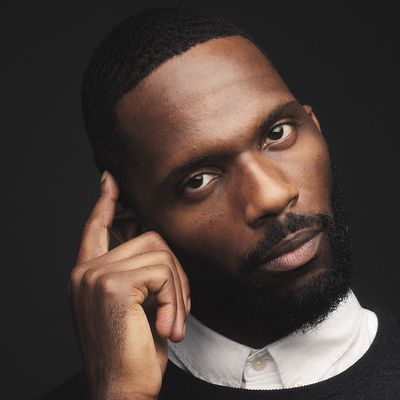
In this Artist Exploration, Calvin Leon Smith, an MTCA Monologue Coach and Clifford Bradshaw in Broadway’s Cabaret, chats with MTCA Director Charlie Murphy about: How an advertising student becomes a Juilliard graduate with a MFA in Acting... Read More
From the show: Mapping The College Audition: An MTCA Podcast
Guests
Featured Shows
About
In this Artist Exploration, Calvin Leon Smith, an MTCA Monologue Coach and Clifford Bradshaw in Broadway’s Cabaret, chats with MTCA Director Charlie Murphy about:
- How an advertising student becomes a Juilliard graduate with a MFA in Acting
- Strategizing with your representation
- Auditioning for Cabaret as an actor first
- How to balance introducing yourself as an artist and auditioning for a role
Check out our MTCA Events HERE!
If you have any questions about the college audition process, feel free to reach out at mailbag@mappingthecollegeaudition.com. If you’re interested in working with MTCA for help with your individualized preparation for your College Audition journey, please check us out at mtcollegeauditions.com, or on Instagram or Facebook.
Follow Us!
Instagram: @mappingthecollegeaudition
YouTube: @MTCA (Musical Theater College Auditions)
TikTok: @mtcollegeauditions
Charlie Murphy:@charmur7
About MTCA:
Musical Theater College Auditions (MTCA) is the leader in coaching acting and musical theater students through the college audition process and beyond with superlative results. MTCA has assembled a roster of expert artist-educators who can guide students artistically, organizationally, strategically, and psychologically through the competitive college audition process. MTCA provides the tools, resources, and expertise along with a vast and strong support system. They train the unique individual, empowering the artist to bring their true, authentic self to their work. MTCA believes that by helping students reveal their potential it allows each school to connect with those who are truly right for their programs, which in turn guides each student toward their best college fit.
About Charlie Murphy:
Charlie is a proud graduate of Carnegie Mellon University’s BFA program. As an Actor he has performed with theaters such as: NY Public Theatre’s “Shakespeare in the Park”, The Pearl Theatre Company, Hudson Valley Shakespeare Festival, Chautauqua Theatre Company, Kinetic Theatre Company, and the Shakespeare Theatre of DC.
With MTCA [Musical Theater College Auditions -- mtca.nyc], he has been helping prospective theatre students through the college process for over 15 years. As a Teacher and Director, he is able to do a few of his favorite things in life: help students to find their authentic selves as artists, and then help them find their best fit for their collegiate journey. Through this podcast, he hopes to continue that work as well as help demystify this intricate process.
This episode was produced by Meghan Cordier and Charlie Murphy. Episode theme music is created by Will Reynolds.
Transcript
This transcript was automatically generated and might contain errors.
[0:00] Charlie Murphy: Hello and welcome to Mapping The College Audition. I'm your host, Charlie Murphy, Director of MTCA. That's Musical Theatre College Auditions. Check us out at mtca.com. And today we've got one of our own, Calvin Leon Smith on the pod. Calvin, along with being an amazing MTCA monologue coach, is currently playing Cliff in Cabaret on Broadway, and we couldn't be happier for him. For our newer listeners, in these artist exploration episodes, we aim to explore the paths to success that artists have forged and are still forging, and tease out how their theatrical training helped them blaze that trail. In Calvin's case, that path has been a really exciting upward trajectory since graduating school, and I really enjoyed this conversation.
I think we got deeper into some high-level concepts in a way that is always easier with someone who I know and where we have a shared vocabulary together. As fun as it is to interview fancy people for the first time, there's always a different kind of conversation on a first date than when you get to be with someone that you've sat in a room with and taught together. So I'm really excited for you to hear us get a little deeper onto some of these issues. I will say for our high school listeners, some of these convos are really geared a little bit more toward your post-college career. I don't think it's a bad thing at all to get an idea of some of that stuff now, but just want to throw it out there that some of this will be a little bit advanced.
In general, these artist exploration episodes, they were conceived as a way for us to continue to give value to our MTCA alumni, many of whom are in college, many of whom are now out of college, trying to kind of tie together the college exploration that they begin with us into their career success. And though some of them, of course, are more focused on the specific college part or just some are focused on all different kinds of parts of the journey. I'm just noting that some of these conversations, as we get into auditioning for pilots and stuff like that with Calvin, it is really a number of years away from you and a different process than when many of you are currently going through. I know many of our listeners are still in high school, some of them even in middle school start listening to this podcast.
So just throwing that out there, some of this may be a bit advanced for you. Again, I don't think anything unhelpful to hear, right? You always hear my million caveats anytime we talk about type or anything that I think it's potentially confusing or actually could be misleading to you. I don't know if I'm supposed to say caveat or caveat, caveat. They all sound pretentious. Literally every way I pronounce that word, I use it all the time and I need to stop using it because I don't feel comfortable saying it anyway. But you hear me give a warning anytime I get to something that I think potentially could be confusing. So here, I really don't think it's about anything misleading or confusing. I just think some of it's going to be not super relevant for you still for some years to come until maybe you're five years out of school.
Some of these conversations are really going to start hitting home for you. But for our high school listeners, if you haven't turned this podcast off just yet after that long morning, I just want to make sure all of you have looked at your calendar and picked out which MTCA mock you're going to do. Our mocks do tend to fill up each year, but this year has been happening a bit faster than usual and I really don't want any of you to miss out. We have them once a month in New York City. Our November is full, but there's still some room in December and January in New York City. And then in November, we have our online mock, our Chicago mock, and our LA mock. The LA mock is also full and the Chicago and online only have a very few spots left.
So please make sure you plan ahead now and sign up for one that works best for your schedule. I really don't care so much which one you do as long as you do do a mock. We hear from our families time and time again how essential a tool they are in their process, getting direct feedback on their entire package of material, and maybe most importantly on their audition skills themselves. You know, how they answer interview questions, take adjustments, walk in the room, slate, talk to an accompanist. None of this is magic stuff, but it all takes practice. Calvin is going to talk about later in this interview this great quote of like, oh this is just a skill, this is just something I can learn, I'm going to go do that, right?
And oh boy, is that a helpful way to think of yourself as an auditioner, right? Anytime I hear a student say, I'm just not a good auditioner, I want to yell at them. You mean you aren't a good auditioner yet. You know, it's not some magic quality that you either have or don't have. It's a skill to be worked on. It's a muscle that can be trained. So please get your butt into a mock audition so you can work on that skill with qualified experts who can help you make your practice into a productive practice. Okay, with that, let's get to our conversation with the wonderful Calvin Leon Smith.
[4:37] Charlie Murphy: Well, we are so excited to be joined by Calvin Leon Smith. Calvin has a BA in theater from the University of Tennessee, Knoxville, an MFA in acting from the Juilliard School. He has played Larry in Fat Ham on Broadway and is currently playing Cliff in Cabaret as of eight days ago he took over that role. He's been on TV and film and stuff like The Deuce, High Maintenance, and The Underground Railroad. Calvin, welcome on the pod. How are you feeling today?
[5:04] Calvin Leon Smith: I feel pretty good. I'm excited to be here. Thank you for having me, number one. I'm really glad that we were able to make it happen.
[5:10] Charlie Murphy: You made me sound like there's a number two. Well, you said number one. So is there a number two?
[5:13] Calvin Leon Smith: Well, number two, I just in general, I feel really good finishing up that first week of the show. And now that we don't have rehearsal anymore, as of last Friday, I might start to live my life a little bit more.
[5:32] Charlie Murphy: Trickle in some actual life.
[5:33] Calvin Leon Smith: Yes, get back to the gym, take care of myself a little bit better.
[5:38] Charlie Murphy: This is someone who, for people who aren't watching the YouTube, Calvin has never left the gym. He's lying to you if ever pretends like he hasn't been going to the gym. Okay, it's very clear this is a man who's been going to the gym plenty. One thing I forgot to leave out of your bio, or I forgot to include in your bio, of course, is that Calvin is a fantastic MTCA monologue coach. So we'll chat a little bit about that too, and some of your teaching work with us. But before we get into that, and before I get to, I want to kind of talk through your college and grad school journey. But can you just give me like a 30 second catch up to like, get you to 16, 17 years old? So let's get you to college, like in terms of where you grew up, your interest in theater, how you discovered it all, like, just give me like the quick cliff notes there.
[6:20] Calvin Leon Smith: I didn't come across theater until I was in high school. But I was always intrigued, like for field trips, we would go see, I think I saw maybe like three plays throughout elementary and middle school. I was always drawn to it, but I didn't think that it was a thing that you could actually do. And then I spent most of my youth as a competitive gymnast, and I made the switch. Once I got to high school, I stopped doing gymnastics. And then I just stuck with, I found there was an audition for And Then There Were None by Agatha Christie in the hall in my high school. And I was like, Oh, that might be cool now that I'm not, you know, playing a sport anymore. So I went on a whim to audition, and I got a part. And I didn't, I still didn't even really take it seriously in high school, in terms of career. I imagined that I was going to go to college and do advertising. And I touched on advertising a little bit, but then I made a, I made the switch once I got.
[7:30] Charlie Murphy: And why advertising? Did that come from parents or just something that you're also interested in?
[7:36] Calvin Leon Smith: Well, I just wanted to make money. I had taken this graphic design class in high school and the woman who ran it, she, Ms. Shamblin, she had worked in the advertising field. And I was really drawn to the idea of being like a creative in that. I also took like APR. I was very artsy minded in high school. And so when I got to college, it was kind of a no brainer that that was what I was going to do. Theater had really taken a backseat. I didn't even see a play until I was like, in college until like my sophomore year. As you look at the Tennessee experience, you know, what sort of led you to, obviously this was not an audition experience, getting into school. You were thinking having to go in advertising. I'm not sure. What was the college experience that then led us into theater? What was that those four years in terms of eventually you're going to be now graduating and applying to Juilliard? How did that sort of transition happen?
[8:31] Calvin Leon Smith: Yeah, I hated my major. And I always tell this when I, when people ask, I kind of tell this part of the story, although as someone who's no longer religious, it doesn't really, it's an interesting thing. So I was a part of this Christian group at my university called the Black Student Christian Union or something like that. And we were off campus at this church and this woman was preaching and she was like, if you want to do a certain major, and it's killing you that you're not doing it because you're doing something else, you're supposed to be doing the thing that you really want to do, period. And I went home and I thought about what she said and I called my mom and I was like, you know, I think I want to be a theater major.
And she was like, Oh my God, thank God. She was like, that's what you're supposed to be doing. And I was like, I think so. It's what I want to do. So I took that energy and that feeling. And I went to the arts and sciences building and I asked to change to a theater major. And they were like, why? And I said, I told them that I had done it in high school. I'd really enjoyed it. And I had this strong feeling that it was what I was supposed to do. By this time, it was my second semester of my sophomore year. I ended up losing like 19 credits. Like I don't have a minor because I spent so much time in the communications department. My school, I went to the University of Tennessee, Knoxville. It is connected to a Lord D professional theater, Brown theater.
So although I didn't get the rigor of a BFA program, and I think I learned a lot by just observation and being in that program at the University of Tennessee, I only took two acting classes. I took two acting classes. I took a movement class, no speech class, no voice class, no singing, no dancing, a theater history, like a play analysis class. Those are some of the core classes that I took. But overall, I'd say a lot of my education came from observing the professionals that came in and being like, oh, I don't want to act like that, or I do want to act like that. I mean, that's the model of acting for thousands of years. So it's kind of funny about the BFA, MFA world, which we'll talk about the MFA of Juilliard, but for so long, that's how we learned. We learned it like a trade, like a carpenter or whatever, like, hmm, this is good acting from watching other people act.
[11:03] Charlie Murphy: Exactly. And I feel like this may not be true. I know we're around the same age, but coming out of-
[11:07] Calvin Leon Smith: Please don't out my age, Calvin. I'm a mystery to them.
[11:10] Charlie Murphy: I could be, sometimes I'm like, I've been doing it for 20 years. They're like, are you 60? It's just not clear. Nobody really knows. And I like it that way. I play 30 to 60 on television.
[11:23] Calvin Leon Smith: Okay. Well, yeah, that's true. I will say, even since graduating grad school, when I was 30 years old, I was going out for 19 to 40.
[11:30] Charlie Murphy: Right. Calvin's like, he goes to the gym. He's live. He's a gymnast. He looks like he's 19. We get it. We get it. He looks like he's 40. Also could be 40. But what I kind of realized was once I had graduated and I had done many, many parts without lines or just a couple of lines, as this was connected to a professional theater where they were hiring people from LA, New York, Chicago, I found out about the Actors Theater of Louisville apprenticeship through someone who had graduated a year before me. So I was like, oh, that might be a great opportunity for me to kind of lean more into acting technique and whatever else I didn't know. The only thing I knew that I needed was acting technique. I didn't know anything about voice and speech.
I didn't know. So I auditioned for that program, which was like kind of like a scary thing in itself. It was like a whole thing. And I got in. Little did I know this program no longer exists, by the way. I don't know if you knew that, but I think it ended maybe 2020. I think that might sound right. But I also didn't get what I was going there to get again, although it was more observation as an apprenticeship in the apprenticeship and they had open rehearsals. So even during the Humana Festival, where they had like five plays going on, we were able in our free time to sit in some of these studios. It was an invaluable experience. From there, we had a showcase. I got an agent. I moved to New York maybe a week later and I just kind of hit the ground running and I actually didn't even apply for grad school until 2014.
So by the time I got to New York, it was 2012. So a couple of years out of school, then we're going to do it. I want to get to MFA, but I'm also kind of curious, you know, speaking to many of our listeners and a lot of their parents who, you know, these are often 16, 17, sometimes they're 13, 14 and considering this process, but often pretty young in the world thinking, I know I want to do this, or I think I'm interested in doing this. I guess I'm kind of curious of like, what was your experience? What was holding you back? And from doing it given, I guess it's interesting to me that when you told your mom, I want to do theater, your mom was like, thank God, this is right for you. It's not like they were saying, no, you can't do theater, do something practical. It seems like, what do you think inside you was making?
[14:24] Calvin Leon Smith: I think it's a couple of things. I grew up in a very middle middle class family with a mom at home, dad worked. I will always be grateful that my parents were always encouraging of whatever it is I wanted to do. My mom, having not gone to college, my dad also did not go to college. So I think the fact that I was going was just exciting. It was expected. I was a good student. I was an A, B student. Becoming an actor, it just felt like this ethereal thing that happened because you got discovered walking in a mall or, you know, like, especially like in the 90s, you heard a lot of those kinds of stories being discovered. You want Star Search to happen. It wasn't going to happen through an MFA. Right.
I thought it was going to be like, oh, you either like get on some talent show or I just never thought that it was something that could be studied. I will also say in high school, this is no shade to my high school director, Chris Lutter. He was fantastic. But he warned us that if you were going to college, going to the University of Tennessee may not be the best thing because they don't take their undergrads seriously. I didn't know what he meant. And I and even when I switched my major to theater, I still don't know if I would say that that's true. That felt like absolutely not my experience at all. I felt like I was taken very seriously. And I had a lot of support from the faculty and staff there.
I loved it. But I think it was this, I think being an actor felt like a thing of luck and not something that was a craft or a skill that could be learned. It even felt, I mean, I was acting alongside people who worked regularly in regional theater, but even then it felt like this odd thing. Even when I was in it, I was like, but how? How? But it's in the doing that you kind of figure it out. All right, well, let's get to Juilliard a little bit. So I'd love to hear, you know, we've had a couple people who've gone to Juilliard on the show, but I'd love to hear, you know, as someone who came in, it seems like had not had a lot of training. And I think most people have not had a full BFA and then the MFA, though I know some people do that.
But I'd just love to hear like now as an older actor, and again, we won't give a specific age, we'll let you stay nebulous, 19 to 40. But as a little bit older going through that experience, how do you feel like you were able to appreciate the four years? And I guess, how did you come out different than you started? So just from the training itself, how do you feel like it changed you over the course of the four years? One, I think it was my first year. My first year, we had this big meeting at the end of the year, where the fourth years kind of imparted wisdom to everybody else. And I remember my good friend, Mallory Portnoy. She was a fourth year. And she said, Juilliard did not make me a better actor.
It made me a smarter actor. And smarter is a better Mallory? What the heck? That's not true. If you're smarter, you're probably better. I think what I think that she was getting at, and what I kind of have maintained and kind of held on to, is that you come in to any of these programs with a certain amount of natural talent. Right? And then what these schools are able to provide to you, and what I feel like I got from Juilliard, were ways and were tools, right? A tool belt. But ways to kind of step in to use those tools when my talent isn't really serving me anymore. Right? When there's, I don't know, a character that I can't quite grasp an understanding of, or I think I'm a wonderful note taker.
Being able to take notes and then execute. I may not always get it right, but I will always change. There's just things that I feel like have made it easier to do auditions, particularly for theater. Juilliard, I think, also gave me a sense of rigor that it sometimes, I don't like to say that this is a hard industry. This is a, because it's not going to be that for everybody. For most of us, it will be, for sure. It's a hustle. It is a grind. It is a lot of that. But Juilliard had, I don't know how it is now, but back when I was there, I was on the tail end of the rigorous curriculum that it's known for.
[19:11] Charlie Murphy: Yeah. And now you feel like it's slightly softened or slightly changed.
[19:14] Calvin Leon Smith: I think a lot of it had to do with, and rightly so in some ways, but in some ways, not so much. I think there are, and I've been back a handful of times either to talk or to just observe. And the things that I feel like were big helps were the long days, the amount of classwork, the lack of days off. And yes, it is kind of like this microcosm of what your life could be like once you leave. It's very much the same, except now in life, you've got, you're back to your social life. You're back to a day job. You're auditioning, you're navigating relationships with your reps. If you have them, you're trying to figure out how to get in room. I mean, it's still, it's a rigor, it's a different type of rigor, but it still takes a lot out of you. But yeah, I would say that I got my money's worth and to follow my friend Mallory, it made me a smarter actor as opposed to changing something about myself.
[20:55] Charlie Murphy: I really love hearing that. And here I am mocking poor Mallory, even though I think I agree with the larger point there, which is like, I think, especially at a place like Juilliard, people would say it's about a Carnegie Mellon or a lot of places where they go, this is very difficult to get in. There's a storied history, man, all those people seem so good. I think sometimes people will think it's like you come to school and then they give you the magic sauce, especially people who haven't been to those programs will be like, there's a magic well that you drink from and talent springs up out of you. And you're saying, I don't think that is true. I mean, certainly I think they're bringing in talented people.
There is a barrier to entry. And so there's often a level of talent that already comes in, but your experience was more, it's like carving away parts of yourself to reveal talent as opposed to them pouring talent into you and, and maybe some technique on top to go, right, how do I get through some of these moments? So here's some tricks, here's some tips, which you could get many places. It was not certainly unique to a Juilliard or that kind of school. I want to say this too. I don't always think they pick. I don't think these schools always pick the people with the most talent. I think that, I think they're, they're picking companies. And I think within that, I think a smart, you know, professor or someone who's an administrator of these schools will know that you also have to think about personality dynamics. Because these are people who are going to be spending day in and day out, long days with each other. But what I do think is that the people must be teachable.
[22:37] Calvin Leon Smith: Yeah. Because, and I say this too, to say like, and at Juilliard, you could have, you know, some of my favorite and most talented classmates aren't working. Yep. You know, and, you know, vice versa, some of the more lazy people that I knew work all the, you know, it's- Let's name those people. Here we are, Calvin. Let's name those people. These three people are. Right. These people, they are, but it's, I say that to say that, um, a lot of things are crapshoots. And sometimes these schools make mistakes in people that they bring in. For sure. Well, the crapshoot, you know, is they have the industry itself, but also, I mean, you know, I've had the, the little bit of the experience on the other side of the table running MTCA and seeing the kind of talent, and we'll talk about you as you apply to a company like this, but like, you know, every time we do auditions, we could cast our coaches 10 times over talent-wise.
There's so much talent. I mean, and I know that's true, especially when you talk about these top end schools, they all could fill their classes many times over from a talent perspective. So, you know, it's not that it's completely subjective. Of course, I think there is such a thing as this person is farther along in their skillset than somebody else. But, you know, I don't think it's like the top 20 people make this 20 school and then the next 20 make this school. It just doesn't, it doesn't work numerically that way, at least from my perspective. Even if I could rank it myself, I wouldn't necessarily pick my top 20 numerical auditions to fill out a class.
[24:03] Calvin Leon Smith: Yeah. I mean, my, one of my closest friends from my group was on a wait list. And to me, she was one of the more talented people in my group. It just, I don't know.
[24:08] Charlie Murphy: You don't know. All right. Well, so then let's, let's jump through. You got your money's worth. And then you also kind of graduated, it seems like from the outside perspective into the truest dream of pretty quickly booking your first Broadway show, which, which in fact, that started as an off Broadway show, right? So you booked it?
[24:20] Calvin Leon Smith: Yeah, that's right.
[24:24] Charlie Murphy: Yeah. At the public and that's into Broadway. Is that right?
[24:27] Calvin Leon Smith: Okay. So tell me about that experience of what everyone would dream of is pretty quickly out of school. I have a show I have, oh my gosh, I'm on Broadway. Like, was it from the showcase at Juilliard that we now have new agents? Did you stick with your same agents that you already had from Louisville? What was that experience of sort of how you navigated launching into the business?
[24:46] Calvin Leon Smith: Yeah, so no, I did not keep, it's funny. So when I left, I signed with this agent, right out of Actors Theatre of Louisville, moved to New York. And I was busing tables at Del Frisco's like, I wasn't a server, I was actually, I was a buser. And during that time, I was being sent auditions. But I think in the year that my first year in New York, I think I only went out from my agent maybe 14 times, which I don't know, I have the only thing I have to compare it to now are the reps that I have now, right? So I don't, I'm not sure like, what is if that's like a normal number or what's not, it's not work for me.
[25:35] Charlie Murphy: Right? That's a terrifying number to hear. But I think plenty, plenty of people, of course, go out a lot more than that. But there are definitely actors who go, once a month is not that unusual. You know, yeah, sadly, true, true that I think that can be true.
[25:48] Calvin Leon Smith: So I mean, what I knew at 23, whatever, I was like, this isn't working for me. And I also don't know if I'm doing this well. So I dropped them, which was a very frightening thing to do. As young as I was, I didn't have any other prospects for representation. And that's actually when I decided to go to school. And then so those four years went by, and then we did have showcase. I knew, so we had a showcase in New York and LA, I knew that I wanted my reps to be based in New York. So I was able to make my decision pretty quickly, which for me was a really, I think it was a very smart thing to do. It was once we got to LA, I just did the showcase for, I mean, not to get reps, but just to show the industry that I'm here, whatever. And then that way, my reps in New York were able to set me up with meetings that I otherwise would not have gotten.
[26:51] Charlie Murphy: Right. Because you already signed on with them. Yeah. So that was really great. And then I came back to New York. I kind of started working kind of immediately. My first thing was like a one line and a indie feature and graduated in May. And then I did a tour with the public. It was, they did like their first mobile unit national tour. I did that up sweat. And then things just kind of kept going. I didn't get, I got Fat Ham, December of 2021. And then I had to get my first day job in a while, which I had for three months. And then we started the production in March. Rehearsal in March. Broadway didn't happen for another six months after that, but we knew we were going to Broadway maybe a week or two before we closed off.
[28:01] Charlie Murphy: What a dream. What a dream. I mean, that's not typical that you do an off-Broadway show and it just goes. I think a lot of people are like, it's going, we think it's going. We're just looking for a theater. And then more often than not, it's like, oh, it didn't actually. It was like, we're looking for a theater. We're looking for more producers. So in my mind, I was like, just pretend like it's not happening until those lights are up.
[28:21] Calvin Leon Smith: Yeah, that's right. I love that. Well, and I really love what you said, you know, in terms of what is typical and atypical. I know, of course you only know your own experience, but you know, the idea of like, I didn't know if I was doing well or not before this, but in the, with the first agents, I think that's a really common and kind of surprising experience for young actors because you're so used to feedback, especially if you go to a BFA program, you're getting like constant feedback.
[29:47] Calvin Leon Smith: And my agent, I love my reps. I just want to say that. I love them so much. I mean, not everyone. I mean, people on this pod probably will say it more often than that, but not every actor is going to say that with their reps. We're all like around the same age. We like, I love them. But Matt told me, and I had a couple of other point people at the time, both of them have since left Paradigm. So I just have Matt now. But he told me, you know, the goal in this year is not to book. And in my head, I'm like, what? That's my goal. I don't know what the goal is, but my goal is to book. And it's a really smart later on. It didn't take me long to figure out the intelligence behind that. But it's we don't know where you're going to land.
You're new to the industry. You're going to be going against your type, but people who are already celebrities. You're going to be auditioning for people who just are out of grad school like yourself. It's going to run the gamut. We don't know where you're going to fall. Is it going to be mostly regional theater? So that was the first thing that I kind of held on to. And then I would say the follow up kind of feedback. So I would go back, I would ask kind of frequently in the beginning, how am I doing? They're like, Calvin, you're being brought back in over and over by, you know, these casting people. That's the feedback. The feedback is they're, they're interested in you, you have something that they want to help.
They want to put you somewhere. So that was the next kind of level where I was like, OK, I'm getting repeat callbacks. Well, callbacks. Yes. But also they're asking me in for different projects. Yeah. And then I would ask about how I did in a room. Right. Which has morphed, and I'll get to that, to like what I do now. But so I used to call and be like, do they say anything like that? And they're like, yeah, you did great. There's nothing that there's, you know, they think you're wonderful, blah, blah, blah, blah. What that has morphed into over and I've been graduated now for six years. What that has morphed into is my agents calling me and being like, how was it? And my saying, I think I did really great.
I feel good about how I showed up in the room. The work that I did, I could have taken this note a little bit further, I think. But I think overall, I had a great showing. I never asked for feedback anymore.
[32:40] Charlie Murphy: Well, you've become a smarter actor now. Now you are able to go, all right, I can analyze it myself. And almost certainly your analysis of your own performance is going to be better than what the casting is going to come back from of like all the different things they were thinking about. They weren't all thinking about your performance. So then now you're actually helping your agent to go, oh, you made a great impression in that room. That's good. That's good knowledge for us to know. Right. And it's not crazy. I think it's to your point. I now have gotten to a point where in those moments where I do, where they do call or text or email and ask me how an audition went. It's because one, they really like me and they're really interested.
Like they're, I would say they're my friends as well. Yeah. That I do pay out of my, you know, out of my thing. We work together. They don't work for me. I think we work together, but they're really interested. And most times, Charlie, I'm not kidding. I book it. Yeah. If, if, if I say like, you think you crashed it. Yeah. Your gauge has become accurate. You go, I know that was, that was a really good audition. Doesn't mean, you know, for sure, but you feel good. You felt the energy in the room. The wind though, is that I feel good about how I went in the room. It's not and it kind of, I mean, this is how it kind of went with cabaret and we can talk about that later, but we'll talk about it next.
Yeah. It literally has it, it is truly how I feel about my work in the room and how well I play in the room. Yeah. That to me is like where my winds are the, and I mean that honestly, I don't mean that in like a, as a, as a coach. No, but that's, you talk about control, which you can control. You can control that. You can control what the, the artists I brought into the room. I can't control what happens behind the table after with, with the artistry I'm giving you, but I can control that. Did I show up with what I wanted to bring into the room and that what else can you do? I do want to give a shout out to your agent. You're this, your second agent here, the paradigm, the gift that it is basically to tell you, we trust you.
Don't worry about booking is like, if only young act, every young actor could get that. Cause I think it's true more often than not that even if you're working with someone, let's say you're freelancing or it's not necessarily the same, Hey, this is a deep, great connection and we're giving you a year no matter what. I do think most agents would say, I'll give them a couple of cracks. They probably were nervous their first time or two, but I think a lot of young actors, they feel the pressure of like, if I don't book this now, my agent's not going to want to send me out for anything else. And then they, they put too much, too much stakes on it that the result has to be about booking and not about their work in the room.
And then I think it can just makes their performances worse that if you told yourself, even if it's not true, you almost lied to yourself and say, my agent said, don't worry about it for a year, just have fun and knock out every audition out of the park. Don't worry about booking. I think it would help actors with their actual performances to just be a little looser and not put that weight on themselves.
[35:34] Calvin Leon Smith: I think so too. And I, I think, I mean, I think it's really on the reps to be able to voice that, particularly if, and Matt and Jess, my agent and manager respectively, they are also known to develop new talent. Yeah. Right. So there's a, also an understanding of that, but you could go to, you know, I'm not going to name any agencies, but there are agencies that will drop you for not booking within a certain amount of time. Of course. But you know, I think a smart agent and a smart agency will know that everybody's path is different and where people land within this industry is going to be dependent on what parts are available. Like recently I'll, I, I wanted to turn down this series regular audition.
This was before like maybe two months ago, three months ago. And he was like, Calvin, he called me. He was like, Calvin, there are, there have been four black male series regulars available for this upcoming season. And you've already auditioned for three. Can you give this a swing? Let's read it again. Let's check out the script one more time. Can we make it work? Can we make it work? I was like, Matt, twist my arm. Let me go ahead and get off book for this little, I love that. I love it. Four and you've auditioned for three. Yeah. I mean, I do think it's unfortunate. I mean, it's just the reality of so many, so much of the sort of nature of a capitalist society, but it's like the, the reality is I think often at those higher level agencies where you're going to be often working with talent, maybe who graduated from Juilliard and doesn't need the level of handholding that you got, that's going to tend to be where you may find more of those people who are really patient and able to be artist centered and able to develop and say, you know what?
I'm okay with developing for a year if you don't book and that's fine. It's unfortunate. I think some of the greener actors who tend to work with the kinds of agents, maybe at the lower levels, which are not necessarily going to, even if they understand that maybe their relationship, they're not going to necessarily have that. The softness of that attitude and the, and the care and the tenderness that I think it seems like you got from Matt, which is, and Jess seems like that was wonderful, but I wish that for all of the young actors. And of course it's not that those people only exist at Paradigm, but I definitely think you, you will have some experiences where the kind of people that you might have access to as a green actor off the bus might not be doing that quite as much, might not be saying, don't worry about it. We'll, we'll have a year and we'll work together and this will be great.
[38:16] Calvin Leon Smith: And yeah, I'll also say like Jess and Matt, I don't think they'll like that I say this, but I, I think it's, I think it says a lot about them because I think that they really believe in my mind and my artistry. I don't make them the most money by far, by far they have, you know, Jess reps Cynthia Erivo, Matt has Oscar winner, like they see something, they see something and they have the roster to hold, to have me. No, they can afford a passion project of going, I believe in Calvin. I do think maybe that's a future Oscar winner, but if not, he's going to have a wonderful artistic career that I'm going to be excited about. And not, not every young agent can do that. Not every agent needs that position to go great.
I'll invest a lot of time in this. If I was to ever give advice about finding a rep, I would, I would tell people like, you really got to like them. Like you must like them. Yeah. There's because these people, I mean, they're, they're fighting for you day in and day out. Well, I feel like mine are fighting, even if they may not be making phone calls every day, but I feel like they are, you know, every time I call they pick up, they don't, they send me a text in two seconds. Like I, I love my reps, but I think the thing is we have a general, a genuine care for one another.
[39:49] Charlie Murphy: Well, there you go. You said, if I would ever give advice and you did it, let's talk about the cabaret experience a little bit. So I want to specifically talk about, cause here we are all these minutes into the interview. We've not really said the word musical yet, or talked about musical theater. I mean, I know fat ham had some, some shimmy in and some singing involved. It was, there was a little certainly play with music there. But did you feel nervous at all, sort of crossing that barrier into a full musical? So both from the audition experience and then in the actual doing of it, what is that experience as someone who's certainly your training is more in the acting world than in the musical theater world?
[40:34] Calvin Leon Smith: Charlie, it's frightening. It was terrifying. I have no, I've gotten, right when I graduated, I got sent Hamilton twice to audition. And I was like, no, I actually can rap. Like I, like before undergrad, I did like a whole, I did a lot of like hip hop plays, workshops and readings, but singing was my, one of my least favorite things to do at Juilliard and my, we had to do a cabaret in my third year and in my review, and this is to my favorite teacher, least favorite class, favorite, one of my favorite teachers, I said, this was the worst experience of my life. I hated the experience of doing this cabaret. So this audition comes around for the original company. And my agent calls cause he knew he had to do a disclaimer because it was a musical.
And he was like, look, they're not looking for a Broadway singer. We want an actor first. You do not have to be, in fact, a good singer to do this part. And I was like, that don't, in my head, I was like, that don't make any sense. I was like, you don't have to audition for it, but it could be interesting. It's something new. He was like, I think you can do it. He was like, but it's completely up to you. I'm not going to push whatever. I was like, you know what? It scares me. So I'll do it. And he's like, great. So he's ecstatic. He's like, have you ever seen it? I was like, no, I don't know anything about this. I've never seen it. He was like, watch the Liza Minnelli. I was like, okay. So I rented it on Amazon.
I was like, I didn't finish it. I auditioned. It was a tape, sent in the tape and didn't get a callback, nothing. So I had talked to another Black, queer actor friend, who has been on Broadway musicals a few times, who also auditioned for it and got called back. And we were both just kind of like, oh, I think they're kind of probably looking for this thing. And I was like, I knew I wasn't going to get it because I don't do musical theater. I don't do musical theater. And then it came back around and a friend of mine booked it, Atu Wood. And then I was like, oh, that totally makes sense. Atu's great.
[43:10] Calvin Leon Smith: Then it came back around for a replacement. And my agent calls again, he was like, hey, they want to see you in person. And I was like, that makes no sense. I didn't even get a call back for the original thing. But he was like, you want to do it? I was like, yeah, why not? Like, there was something in me that was so like, this is so far fetched, and I'm not going to get it. And I'm scared to sing live in front of people. There's just all these factors that made me feel like it wasn't going to happen. So I got all the material and I had like two weeks to prepare. So I did and I, you know, I felt good about it. They gave me an extra scene that they didn't give in the original, when I auditioned for the original company.
[44:04] Charlie Murphy: Which you've never seen because you've never finished the show.
[44:08] Calvin Leon Smith: Yeah, and I was like, okay, so I'm just gonna base everything on just like my instinct, like how I would want to play this character on my one read of the script. And I tried just not to give it a lot of weight. Went in, was so nervous. As soon as the moderator came out, we like talked all the way down. Totally cool. Walked in. This was the most people I had ever auditioned in front of. Musicals different than a play in terms of the panel behind there.
[44:43] Charlie Murphy: Oh my god. Plays, it'll be like three people, I'd say on average. Big Broadway play, maybe it's four or five. It's different producers back there.
[44:55] Calvin Leon Smith: Yeah, and a camera for like three people that can't be there. I think, and I'm not exaggerating, I think there were 10 people. So, did one scene, got some notes, did it again. Did the second scene, got some notes, did it again. Sang the song, got some notes, sang it again. And in the room, they were very much like, how are you feeling? I was like, I'm feeling good. I was like, I am not a singer, just so we know. They're like, oh, you don't really have to. And then I said, and she was like, you can sing? And I was like, yeah, but like, y'all—
[45:40] Charlie Murphy: A lot of it is singer. I can sing. My wife is a singer. There's like, yeah, exactly.
[45:46] Calvin Leon Smith: And then we didn't get to the third scene. So I was like, that's fine. But I was in there for a long time. And I left and I was like, hey, I think I did pretty good. I did. I auditioned for a musical. And I really felt good about that. And then my agent called, or my agent texted me. He was like, how did it go? I was like, I think I did really well. I'm very proud of what I did. And my manager hit me up as well. And I told her, and then I got a call the next day from my agent. And he said, when I left the room, Rebecca Frecknall, the director, turned to Bernie Telsey and said, well, that was easy.
[46:31] Charlie Murphy: Wow.
[46:33] Calvin Leon Smith: And I was like, great. He was like, you didn't book it. We don't know yet. He was like, but that was what was said in the room. He was like, so they're going to be auditioning for the Sally Bowles character coming up and we'll let you know about callbacks and everything like that. By this time, I had another job that I was doing on Little Island and then still hadn't heard anything. Then I went to London to do a workshop, came back, still nothing, picked back up with the Little Island project. And then one day I got a call. This was a month later, Charlie. And my agent was like, how do you feel about going to Berlin? And I was like, oh, is there another workshop? Because I just got back from London. And he was like, no, you're going to be in Cabaret. And I lost it. I lost it.
[47:29] Calvin Leon Smith: And still no callback. Didn't get a callback from the video. Didn't get a callback from the live audition. Just book. No callback.
[47:35] Charlie Murphy: That's amazing. I mean, that is like the dream of an audition any time afterward, if they can say, well, that was easy. You've done your job. If they're like, well, okay.
[47:44] Calvin Leon Smith: It was shocking. And this whole time I'm waiting for callback. And in my head, I was like, oh, it'll probably be like some sort of chemistry thing.
[47:53] Charlie Murphy: Right. They've got to find their people first. And you two together.
[47:56] Calvin Leon Smith: And we're like, mismatching and doing all of this. But no, it was like one and done.
[48:02] Charlie Murphy: That's amazing. That's a great story. And I'd love to hear a little bit from your perception, at least of those 10 people behind the table. You know, because we've had a number of actors on this pod who's done that. You've studied MFA in acting or BFA in acting and that have sort of ended up doing musicals. How do you kind of perceive the like porous membrane of it all, of how porous it is? I guess, how are you perceive when you say I'm not a singer, which I wouldn't necessarily volunteer in the room before singing, but when you say that, like, do you think they are looking at the world of singer and non-singer in the way that, you know, often I'll talk on the podcast of like, you're choosing with the degree of BFA acting or BFA MT. But once you graduate, they don't necessarily split you that way in their heads. How do you sort of perceive casting and how that looks as you've been now as you're seen for a musical now you're in a musical?
[48:50] Calvin Leon Smith: Yes. For this. You know, sometimes you get an audition, and they may be like, Oh, this person doesn't have to be good at fill in the blank, right? I always think that's a lie. But what I've come to realize was that the detail and the nuance of the direction and the work in general of this production was that this was a truism. It was absolutely true that this character does not know that he's in the way that it's being directed in the way he does not know that he's in a musical. And he happens to decide to play ball with Sally Bowles for this perfectly marvelous, what is it? Well, 16 bars, whatever. But there was a lack of believability in that, especially because I too can sing, sing as a Broadway, sing for Broadway, through, but what they were really looking for, also, was someone who could tell a story through song.
[50:02] Charlie Murphy: Yep. And someone who could act, you know, and someone who can act.
[50:09] Calvin Leon Smith: Yeah. I didn't necessarily believe that, which is why I made this disclaimer in the room. And I also felt like I had nothing to lose, because I was never gonna audition for a musical anyway. So the likelihood that Chelsea was going to bring me back in for a musical was probably not going to happen. And now the next three jobs are Broadway musicals. I'm telling you, once you're in, you're in, you're gonna get more of these calls.
[50:29] Charlie Murphy: I believe this.
[50:37] Calvin Leon Smith: Yeah. And now what I've come to understand is that trying to be careful before I say this, but I'm gonna say it. I think that there is something for everyone. I think you have to stick it out long enough. But as someone who really did not think that there was a place for me in musical theater, only this year was it, let's say, that it was possible for a Black man to play Cliff Bradshaw on Broadway. It's like the first time this has happened. But had I quit, I never would have, I would have never known that this could have been possible. And also that, you know, as long as you can carry a tune in a bucket, and you can tell a story through song, there could be a place for you. And if that can happen for me, it can happen for anybody. And now I'm actually kind of interested in leaning into getting a voice coach.
[51:29] Charlie Murphy: I was just going to ask, yeah, are you thinking about maybe trying to sharpen? I mean, we watched Lin-Manuel was not the greatest singer when he started his musical career. He got better and better and better and made a career for himself.
[51:40] Calvin Leon Smith: Yeah. So now it's, I'm betting with myself, for myself, in a way that I never really thought. I had always said to myself, I want to do one musical before I like retire from this whole thing. Something regional, perhaps. But I would like to do a musical at some point. And then this popped up. And, you know, gratefully, it's the perfect thing to kind of dip my toe in, as I sing like, the very beginning of Willkommen at the end in the finale. And then just I have my perfectly marvelous, you know, couple bars. And this is regional. This is a region, you know, the New York region.
[52:26] Charlie Murphy: Come on.
[52:26] Calvin Leon Smith: I will say, not to knock regional theatre at all, because I saw Tommy on Broadway, and I saw a regional production. I prefer the regional production.
[52:38] Charlie Murphy: Hey, now, you know, you're tearing down MTCA's own Tommy there. Okay, so just we got to be careful with Ali Lewis Borski. Come on, MTCA alum. Though you're also, way to mention, you're with MTCA alum Marty Lauder in this production as well. Love them so much. Love Marty.
[52:56] Charlie Murphy: All right, let's take a quick break. And on the back end, we're going to dive a little bit deeper into some of these conversations about type and different roles that you can play. So back in a flash.
[53:04] Charlie Murphy: All right, we're back with the amazing Calvin Leon Smith. And I promise we're gonna talk a little bit about type. We've been doing a bit of a runner on this recently. We kind of did a three or four episodes, we were talking about type in season one, and we kind of gave it a rest. And then we kind of been reviving it. We had a great conversation last week with Marcus Martin about it. He's playing the genie in Aladdin. And so again, for any of our newer listeners, we're going to give the caveat that any conversation about type, we're really talking specifically about the industry and not the college process. You've heard it all before, you've heard it before, if you're a regular listener, we're firm believers at MTCA, that in the college process, it is all about bringing in your own authentic artistry without worrying about kind of solving the equation for the colleges.
But you're just there wrestling with the questions as honestly as you can. Okay, caveat given there. I'd love to hear a little bit about your kind of personal relationship with this, you know, as you're talking to your reps, and as you're graduating school, and you're thinking about, hey, we're going to use this first year to figure out where I fit in the world. How are you thinking about branding and marketing yourself? You know, you obviously had that really quick success. Were you thinking, hey, I think I'm going to fit in this lane, I'm going to try throw spaghetti against the wall, see what sticks? What was your sort of perception of how you were going to use your own brand or your own type or however you're thinking of it that way?
[54:20] Calvin Leon Smith: Oh, this is a good, very good question, Charlie. So I'm here for Calvin, you wait till about the hour mark, and then I bring out the good question. So when I first got out of school, I had this idea that I was only going to be doing things that really made me feel like an artist and that were not necessarily going to stretch me, but things that I felt like I could fall into naturally and things that excited me. And I don't think I was wrong. I don't think I was wrong for that, for feeling that and for operating in that way. There was pushback from my reps about it, which I've come to, you know, now that I'm a bit older, I've come to understand the why behind it. But I feel like I am very much an artist first, which makes this industry a little bit more difficult for me in a lot of ways.
But in terms of type, I never really gave it that much weight or value. And I say that because nowadays, I, in my experience of this industry, professionally, things are not as clear cut as they used to be. So, I mean, I've auditioned for things in which they didn't care if it was men, women, non, you know, gender nonconforming, trans, they didn't care. It was just like, this is the person. And so like, so many people auditioned for this part. In fact, it was a series regular, this particular thing. So, I mean, that's an extreme example. I don't know how many other parts I've auditioned that were quite like that. But you would not have seen that 20 years ago.
[56:21] Charlie Murphy: No, not at all.
[56:22] Calvin Leon Smith: They might have said, we're looking at different races for this. And that would have been it. But it wouldn't have been like races, genders, ages. I mean, that's, yeah, that's a very specific and newer idea.
[56:32] Calvin Leon Smith: Yeah. And I, yes, I mostly audition for parts that are exclusively for Black American men. I don't fully have trust in the industry to view, you know, various groups of people of differing identities with a lot of nuance. A lot of times. So I do get a lot of the same types of things. And this is not an agent or manager thing. It is like what is available, what people are writing, and what is being asked to be produced. So I still get, you know, drug dealers, gang members. This past year, I think there were two auditions in which I hit a woman. It's just like these types of things that are very antithetical to what I think I play well.
[57:33] Calvin Leon Smith: And also what I'm interested in. I also will say this desire to like fight against kind of that broad idea of a type of person has led me to parts that we typically would not see Black men play. I've been a therapist. I've been a swimming coach. You know, those two are breaking ideas about Black men right now. You know, people say Black men don't go to therapy and Black people can't swim. You know, just even that by itself, I feel like was breaking against type. But I think it's because my persistence in saying like, I do not want to play this type of person. It is also something that if I was to play, and I will say it's not because I don't think that I can, but in order to play it in a believable way, I need more time.
And especially for television and film, it can be the audition turnover so quick that I don't have time to do the type of work that I would need to play those types of characters believably. For me, it's I'd rather not waste the time of putting on something that I don't feel great about because I wasn't able to put the time and the work into.
[58:57] Charlie Murphy: No, that totally makes sense. But just to be clear, those are which kinds of roles are these now roles that you're saying, hey, you know what, I'm actually not going to submit that self tape, because that feels too far from my lived experience, or that feels like that's not something that I could see myself wanting to play, to be representing on screen? What does that mean in terms of actuality, if an audition like that comes in? Do you say, no, that's not something I want to do?
[59:18] Calvin Leon Smith: Yes. And it's usually about how I feel like it represents black folks. Or if, and it doesn't have to be close to my lived experience. That's not a requirement. But I do have to, I have to believe me, when I say the words out loud. That's the thing that I get the most frustrated with when I get a script. And I'm like, I like this, it could be a curse word. I'm like, this doesn't sound right coming out of my mouth. Now what I have begun to do, and this is, this is another thing that people are like, what, I will edit sides, yep, I will cut sides, I will move dialogue, I will cross out words. But this is something new that I learned from an actor friend of mine books regularly from and does this regularly. I don't do it that regularly. Um, but it has also helped me to begin to go in for things that I might not necessarily feel right for. But then I've like switched words, taken out, this is my version of it. If you might cast me, this is what it would look like.
[1:00:28] Charlie Murphy: Exactly, exactly. I think that's so smart. Yeah, no question almost exactly that, like how we approach that as actors, because it does feel like it's, you know, we don't have the choice of what we audition for, we can say no to auditions, but we can't just say, I want to audition for this and get that audition always. And we also don't get to make the cast, we don't write the casting breakdown. So we don't get to say, I wonder if they would consider looking at me for this or, or they wouldn't consider what other types of people that consider identity wise, when they're looking at stuff. But I think there's something so interesting about there's almost a version of what the college advice we give of like bringing your authentic self to the room of like, as much as you can bend to what the part is asking for, but fit within something you're like, this is believably how I would do it.
Especially for TV. I'm like, that's how it's gonna be like, there's times when I'll be coaching my wife will be doing an audition. And, you know, it'll just be like, that feels like too much of a stretch. It's not that it's not even good. But I'm like, if it's if they want that, it's not gonna be like if they want that it's somebody else like, if it's supposed to be once they'd be older, if you need to act like a different, you know, sometimes there'll be a dialect that I'm like, that just feels like, if they want that, it's not gonna look like you probably, you know.
[1:01:47] Calvin Leon Smith: I am, okay, I will say this, too. I say no, a lot. I pass on auditions a lot. This has changed the older I get. It's, it's becoming more now I'm like, okay, retirement, health insurance, these things have gotten really important to me over the last year. Again, I'm almost 65 now. So it's fine. Yeah, exactly. As you get your 60s retirement really comes creeps up on you. But I've been really thinking about that, more so. But it is the greatest tool that we have. I was doing this. I was doing this TV show in Atlanta. And my one of the guys that I was acting with, we were being picked up from the hotel and taken to set together every day. And he's older than me, and really well established. And I was telling him how like about these problems that I have with the industry and like, I'm going to audition and blah, blah, blah.
He said, for certain parts, and he said, everything you say yes to opens doors and closes doors. Everything you say no to does the exact same thing. And he gave me this example of a movie that he was cast. So he's an actor, writer, producer. And he was like, they wanted somebody in the MCU, actually, to play the lead of his movie. And he was like, I don't want people coming to see the superhero, I want them to come to see this movie, because they're drawn to the story of what it is. And that and he was like, I have a friend who was on Hawaii Five-O, cannot work. People don't want this, the type of work he now wants to do. They don't want to see him for they don't want to see him for because he did this thing.
And that's what he's known for. Now, I'm not in that place. I even have a hard time being like, I feel like a successful actor. But I, I think that because of my, my resume, I think looks how it does because of how decisive I was. And still kind of am with a lot of more caveats. Now I'm saying yes to more auditions than I ever have. But that has more to do with age, I feel like if I was still in my 20s, I would still probably be very picky, a little bit more. And it's such an interesting way of saying yes to it's a, rather than saying, No, I won't play this role, you're sort of saying, Hey, this is what it would look like. Maybe this character that you've written this way would have a little bit more redemptive quality, or there's a more integrity or it's coming.
This is just what how Calvin would bring his own artistry to this role, right? You're giving them a legitimate option without rather than saying no. So it's like a version of saying yes, but almost a yes. And of like, yes. And also it would look like this if I were to say truly, and now I'm kind of in a space where my auditions aren't about the audition. Yeah, it's about like, well, I'm just gonna ignore the character description. And I'm gonna do my thing. And like I said, it's about like, if I don't feel like the dialogue sounds human to me, or sounds honest out of my mouth, I'm gonna change it up a little bit.
[1:04:49] Charlie Murphy: It's essentially wrapping back a little bit to those early days with your 14 auditions a year and sort of introducing yourself to the industry. I wouldn't necessarily suggest that in your first auditions, you're making a lot of edits. I do think there's something to that idea, though, of like, it's always a tricky balance, all this stuff's a tricky balance. What we're suggesting even here is a tricky balance. But it's like, there's a tricky balance between how well would I do at booking this role, which of course, you're trying to book and introducing yourself as an artist, where if you find yourself putting yourself into the box of what you think the role is, and then this is the first time and maybe the only time casting is going to bring you in.
If they've never really gotten to meet you and what you do uniquely, there's a sadness there too, especially as a young artist, we're going, this is my time meeting Chelsea, this is my time meeting whoever this casting person is. And I want to show what Calvin does, I want to show what Charlie does. Even if I'm not sure that's quite right for the role, it's a tricky balance of like, am I trying to book this? Or am I trying to show myself and my skills and my artistry for all the other roles that could it be?
[1:06:04] Calvin Leon Smith: Right. And I mean, on the other side of that, too, you can be wrong for a part like clearly, I think, but a casting person can say they're good. They're not right for this. Yeah, I will find something else. But I'll say that's good. I'd rather see you do something you do well than try to badly fit into a role that you probably aren't going to book anyway, because it's not it's not yours.
[1:06:17] Charlie Murphy: Yeah. Yeah. All right. Can we make a little pivot to some MTCA coaching experience? We talked about MTCA. So we've had a few old heads on the pod, not necessarily older than you. We're not talking about ages, but some real vets who've been, you know, 10 years plus on the pod. We had one brand new coach at the time who had just started. But here you are someone with you have your sea legs under yourself. We got a couple years, you know, down in terms of the process, but you don't have that 10 year chip with us yet. Right. I just love to hear like, what have you learned about the BFA MT process as someone who didn't go through it yourself in terms of the BFMT or even the BFA acting audition process in college? What have you learned from your first few seasons of getting to sort of participate and be part of and coach young people through this experience?
[1:07:03] Calvin Leon Smith: It is extremely competitive. I wasn't aware at the level of competition going into it. And I also, within that too, it is, I feel like if I was auditioning for BFA now, with the knowledge that I have, I would also be auditioning for several schools. I think it's kind of, I think it's extremely important. I also like have learned that these students really want it. They're hungry. I'd say by and large, they know their musical theater in and out. They may not know where they want to go to school a lot of times, which I think is great to just like remain open to the process of it all. But the desire to be a musical theater performer and to be on Broadway or to do certain shows is really admirable.
I think, especially at 16, 17, 18 years old, I didn't have that foresight about what I wanted to do. And I will also say like, musical theater people are also some of the hardest working people I have ever met. I am always shocked at some of my students, particularly around pre-screen season, where they're like, they're in a show. They also have like dance class or like voice class. They have other coaches for other, you know, things. And they still manage to show up. Like, I'm floored by that. I rarely have people ask to reschedule. And they will show up. They might be tired. They might be a little under the weather. They may not have even gone to school that day because of that. But these students show up.
[1:09:00] Charlie Murphy: That's awesome.
[1:09:02] Calvin Leon Smith: They show up.
[1:09:03] Charlie Murphy: Yeah. You know, I'll say when we first interviewed you, you came, of course, with a glowing recommendation from one of our favorite people. And the thing that stuck out is that recommendation, which is unusual. We often hear about people's talent and how good we think we think they'd be. But it was his description of your heart and your passion for teaching and passing it on to the next generation. You know, obviously, a lot of people want to do this job. I mentioned we cast multiple times over from a talent perspective. I think it is a great gig to get to work with talented young students and pay the bills, not waiting tables. I think a lot of people want to do that. But not everyone necessarily has that level of passion and excitement to teach that comes from that specific wellspring.
Notably, you were in the middle of some real career success as you're applying and as you're beginning to coach and that it was still something that you want to do when you weren't like, hey, I'm out of work for the past three years, something like that. So I guess, where does that excitement come from for you? Is that something that you felt like you've always felt like you wanted to pass it on, like you liked working with young people? I guess I'm interested in what sort of spawned that wellspring for you of wanting to pass it on to the next generation.
[1:10:03] Calvin Leon Smith: I've never thought about where that spark came from. But now that you're saying it, I think one, it comes from, earlier I mentioned my love to learn through observation. I also like how I feel when I, especially when I was in school and I got the thing from my teacher, whatever it was, and I was able to get it, the feeling that I got and the feeling that my classmates got and my instructor. And when I got to Juilliard in particular, I made it a point to sit next to my acting teacher in my first year. And there was something about the scaffolding of our first year that I was really intrigued by, because we didn't even, we improv like the first quarter silently. It was like improv through like imagination and like movement a lot.
We rarely spoke. We rarely did dialogue and we didn't even get full scenes until our last year. I've been cast as spear carriers for the last six years. I'm ready for this. I've been doing dialogue anyway at Louisville, come on. I remember sitting next to Richard Feldman, who was my acting teacher at Juilliard. And one day after class, I was like, this is a lab. We're discovering and trying to figure things out and something that might work for one person may not work for another person. Even if they're doing the same scene. There's just like all this like nuance and different skill sets.
[1:11:57] Calvin Leon Smith: And as, you know, actors, our own given circumstances that we're bringing in, I think I was just always kind of curious about how someone can be led or prompted or prodded or encouraged to get to a certain place and how things get interpreted in people's minds. And then when someone gets it, it's really exciting. It's just, I don't know why. I've gotten chills watching my students. I've cried a couple of times. It just, I don't know what that thing is, but I know that the joy of seeing a student, of seeing things click in students and other actors is really exciting to me. And it's something, I love it. It's so interesting you say that as someone who was formerly religious, but is not now. I mean, I was raised without real religion.
I mean, I'm Jewish, but not really practicing. And to me, it's always felt like a religious experience. It's been the closest, it made me understand like, oh, right, that kind of connection, the human connection that happened in the theater for me was like, oh, this is what other people must be getting in church that I'm not getting or that I didn't have that experience of connecting to humanity sort of until being in a rehearsal room and being like, oh, right, we're doing it. We're doing the thing. I do call, I mean, I tell my boyfriend all the time, I'm like, well, theater is my church. Like, even like backstage at Cabaret, at the end of the first number, when they sing, starting in that last chorus, it's slowed down, but like the music is like banging and it's like, slow and the dancers are like, oh, it just, I get chills every time and the audience is going crazy.
I'm like, yeah, this is how, this is my church. This is where I see humanity coming together, being in agreement under the believability of what is going on on stage. We're all saying, yes, we're all excited about it. And we're all about to let these lights go down, be quiet, watch what's happening and allow ourselves to be affected by it. It's church. Is there anything, you know, in terms of a spiritual practice or just any kind of practice that you do to kind of connect to your own fire and passion as an artist? Like, you know, especially, I guess I wonder in the moments of commercial success or excitement or, here, I'm going to go to the Tony Awards, I'm doing whatever, you know, those, that kind of experience.
Do you have anything for yourself, whether it's a physical practice, whether it's a spiritual practice or anything that helps you, I guess, reconnect to, okay, what is that reason that I wanted to go into this industry in the first place? And what is that part of me that the artistry that you described in terms of stuff you'd say no to and yes to? Is there any kind of practice for you in terms of what that is?
[1:15:04] Calvin Leon Smith: I don't have a, I don't have a practice around, like a spiritual or a, I wish I meditated more. Sure. We can all pretend like we meditate, right? We all meditate. I've been on headspace or whatever before. I don't have, like, are you asking in terms of, like, what's, what, like, how do I keep myself maybe grounded? I do think, I guess I think the, my experience, at least, is that a lot of people at 17, 18 feel locked into that. I want to change the world. This is the kind of artist I want to be. And that by 19 to 45, you know, when we hit that range, it can be a little, it can become a little bit more like, I want my retirement, and I want a certain kind of career success. And I guess I wonder if there's any kind of consciousness, and it doesn't have to be, hey, I do yoga, or here's what the specific practice is, or whatever.
But I guess I'm kind of wondering, like, you strike me as somebody who is still very connected to your artistry. And that is a goal that I think a lot of young people would have that they can carry into their late 30s, early 50s, wherever we are now. And I think, yeah, I'm wondering how you do that, how you achieve sort of staying as connected as you are to sort of the artist of it all, not just the commercial success.
[1:16:29] Calvin Leon Smith: I believe that in how I've kind of begun to look at this career, I've got, there's a practicality to it, as opposed to where I would say, in the beginning, it felt very much like altruism in art, like doing it to change the world, to, you know, all of this. That's, that is a given, I think. Change the world, I think, is huge. But like, change a person, right? Expand someone's capacity to empathize. To me, if I'm doing a show, if I'm acting in front of any number of people, I believe that it is a given. People will come, and by seeing it, by nature, they will be changed. Simply, even if their ideas about something doesn't change, because they came, they are different than when they first arrived.
So I now kind of live under the understanding that I can do this industry as a career and know that the artistry will come. I will, the art will never, will never leave. I will always, I might have to do something that I don't necessarily want to do, that I don't, maybe don't care about. But I know, I know, and I can't be sure, but I know that the things that I want to do, the things that change me, they're going to come. They have, repeatedly, repeatedly. I am so proud of the work that I've done thus far. I've liked and loved everything that I've done. I can't say that I've done a project and been like, oh, I shouldn't have done that. Wish I hadn't done that. You know, that's all we kind of have.
When you sit back and you are 30 plus, and you're looking at the gallery of your work as an artist, I want to be able to go back through that hall and say, I am proud of every single thing that I've done. That may not be so much true, like after Cabaret is done, because my mind is different. My needs are different. But I think just knowing that I'm always going to have the choice to be an artist, it's intrinsic, it's never going to leave. But there are people who are actors. I think most people would not look at their gallery and say, everything I'm so proud of. They might say, that one I did for the money, really loved that one. That was health insurance. I need some health insurance that month.
I mean, I'm not sure every actor would leave their career and say, I mean, it's not that they're not proud of it, like they're ashamed of it, but not that every project had that kind of, I mean, that's a real goal to aspire to, to feel that way.
[1:20:01] Calvin Leon Smith: Yeah. And I do, and I tell my agent and manager this a lot, I do envy the people who just want to work. It's like, wow. And you know, they've got the money to show for it, they've got the, you know, whatever. For those like myself, who, you know, in the beginning, really was very decisive and particular about the things that I did. It's paying off. I mean, it's paid off. But, you know, I have missed out on lots of money and lots of stability because I didn't want to be on the CW or I didn't want to, you know, for, you know, these various things. But just to, you know, beat a dead horse, I believe that my art, that the art will always be available to me.
[1:20:36] Calvin Leon Smith: Yeah. Well, and I think it's, there are definitely people who go, I just want to work or I'm just, just interested in the money or the career success. I do think there's also people who will kind of approach it like, hey, let me do the CW show or do the, you know, NBC show so that I can do the thing I'm really into. Like, they might think like, okay, if I can get to that level in the TV world, then I can break into this world and the theater world. Cause it's, you know, especially you're looking at non-musical Broadway plays. It's like, how many roles are available? I mean, you've done a non-musical Broadway play, but I think if you're not a celebrity, I think a lot of people are like, how do I work at that higher level that'll pay the bills and be the kind of artistry I want to do if you don't already have that name or if you don't already have, you know, so some people are sort of like, but then how many years do you spend trying to build that up before you then get to do the thing that you're artistically excited about?
And then like, you know, people, it's funny, like people, they were like, oh, you're on Broadway. Oh, you're on Broadway again. There's this idea that like, you've hit the pinnacle of what you got into this industry to do when in fact, it's actually, I see it much more on like a horizontal plane and that Broadway is this thing. The only reason I'd say that if anybody's going to place it on a vertical line and put it up at the top is because it pays a lot. Monetarily it's above.
[1:22:08] Calvin Leon Smith: Monetarily it's above, but I'm dying to work with Club Thumb. I've never worked with them. Everything I've seen there, I've been obsessed with and I really want to work, do a Summer Works production. And they don't have like, they don't go on for like two months. But that's like one of my goals. It's not, Broadway, I can't, I'm not even certain if it was like a goal. I think it was something that I thought might happen if I was in this long enough. It happened much earlier than I had expected, but I think as I experienced different theater, different television, short films, features, I'm also, my taste is developing and I'm saying like, yeah, okay, that doesn't Club Thumb, you know, doesn't pay Broadway scale, but they're doing work that I'm really interested in. Really intimate, like smart, beautifully written theater. I want a part of that as much as I, yeah, would love another Broadway show. For sure.
[1:23:00] Calvin Leon Smith: For sure. Let's move toward the end here as we talk about, give a little advice. Before I ask for sort of general advice, I sort of, I've written down, you mentioned being a competitive gymnast. Do you feel like there's anything that you took from that experience of, you know, sort of your athletic background that carried forward into your career as an actor?
[1:23:10] Calvin Leon Smith: Yeah. I, when I was in grad school, I was always like, this is so silly that we're like, this isn't like a thorough warmup to me. Or like, I would be like, this is not like.
[1:23:20] Calvin Leon Smith: You touch your toes. That's, I do a lot.
[1:23:26] Calvin Leon Smith: Yeah, like great. You know, but I'm just so, I was so used to like deep stretching for like 30 minutes, like a real warmup and stretch that lasted 30 minutes. And I still do that like before shows. I mean, it's not quite 30 minutes, but you know, my part in Cabaret isn't that physically demanding. But I still make out and I do it because the relief of tension. Like how much tension can I just like get out of my body before I like come on and, you know, try to be as present as possible. I would say that. And I would say my understanding, it goes back to rigor as well, particularly like gymnastics. I've played many sports, but there's a rigor to it and an understanding of a need. Like you can also be, with any sport, you can be naturally talented, but then you learn the tools that do make you better as opposed to a smarter gymnast.
A smarter gymnast. But you learn what is trainable. I mean, I think in everything there's natural ability, but that the ability to work hard will then unlock that natural ability often much more than just, it's very rare that anyone in anything can just skate by a natural ability. You're going to have to at some point go, how do I get the most out of my God given talents? And that's what I think I also took from gymnastics into theater. It took me a minute to learn that some things can actually be taught. I wasn't, and that's some things that I was afraid I couldn't do was actually skill-based. If you tell me that something is a skill that I'm not nailing at the moment, I will go home and I will work it.
I will work it to death. Like for cabaret, like I said, I'm not a singer, I'm not a trained singer and I have to pick this note out of air because there's no, there's nothing. And I auditioned for it, did it perfectly, started rehearsing and I just like could not do it. Music supervisor, Meg, obsessed with her. She was like, oh, I said, is this a skill? Like be able to like have the note in your head and then sing it? And she was like, yeah. She's like, that's not talent. She was like, you have all the makings of a singer already. The things that we would need to work on are skill-based things. She was like, so I'm going to give you some warmups or some, you know, some exercises and things. Now I've got it. But it was because I was told it was a skill. In gymnastics, it's all skill. You come in with your talent, but you learn skills and they're literally called.
[1:26:21] Calvin Leon Smith: You know, there's a facade with acting sometimes acting and singing where we go. This is mystical talent. This is something some people can do it and some people can't. It's like that's not true. You may have varying levels of ability. There are people who really are tone-deaf who that's gonna be a real challenge. But for most people, it's trainable. Most people, you can train your ear. You can train your body to do more than it could do before. It may not be able to get to the same level that someone else can, but right, they are skills. Yeah, you'd be surprised. I think that learning when she said that, that was where I was like, oh, maybe I will get a vocal coach, a singing room so that I, because I'm enjoying my time in Cabaret from day one and I'm in awe of those triple threats that are in this cast.
I don't think I'm gonna jump into dancing, but the singing part, I'm like, now that I know that I at least have what a singer would need to have naturally to begin, I can start building skills. So I'm like, why not?
[1:27:32] Charlie Murphy: You heard it here, folks. Book your first Broadway show, book your second Broadway show, and then you can start working on singing. It's really possible for all of you to—let's end with a little advice to our young artists there. So I'll let you kind of choose your own adventure. You can either give advice just in general to a young person who wants to follow in your footsteps, or if you want to give any kind of college audition experience advice from what you've gotten to see behind the table with MTCA in terms of, you know, biggest mistakes or biggest successes that you think young people could use, you can choose your own adventure. So either to the college audition or just to the life experience of a young artist. I'll leave it in your hands.
[1:28:06] Calvin Leon Smith: I think this goes kind of with both. I think a lot of times we hear people, I think, yeah, I've heard some students still say this: if there's something else you could see yourself doing, go do that thing. But we are no longer, I don't think we've ever been in that space as artists. I think if you have desires to do other things as well as perform and act, you can do those things. I never intend to not be a teacher. I love it. I want to explore coaching on television sets and film sets as an acting coach. I want to continue to work with MTCA. I want to teach at the college level. That's just a desire that I have that in no way is going to keep me from being an actor in the way that I... you know, we're also seeing people who both do costume design and set design.
I have actor friends who love waiting tables. They'll do that. I have actor friends who work retail. They love doing that, who have their own businesses as graphic designers. I think the idea should be more to create like a full life and not to hinder yourself in that because you have other interests and passions that you can't also be an actor. There are a million ways to be an actor. Just be, I'd say for yourself, be as defined about that as you'd like to be, but you don't have to just do that. If you can see yourself doing other things, you can be multifaceted. Those are, I think, some of the more interesting actors out there anyway.
[1:30:00] Charlie Murphy: Well, we know we can see you each night at the KitKat Club on Broadway or on Instagram at Calvin Leon Smith, where you post about as often as I do. It's very exciting, the Instagram experience of Calvin Leon Smith. By the time this releases, it's gonna be doubled. We're gonna have doubled your followers. Calvin, thanks for the time today, man. This was so fun.
[1:30:25] Calvin Leon Smith: Thanks, Charlie.
[1:30:32] Charlie Murphy: Yes, yes, yes. I love talking to Calvin. What a spirit and a humanity he has, you know? And you notice the skill he has being interviewed. This is really a subtle skill. There's a little pro tip in there if you catch it. Calvin is such a good listener. He's actively listening to the questions I'm asking, and then he's really trying to understand what I mean so he can answer it. But you notice a few times he asked questions like, "Are you asking this?" Right? It just lets the person know that you genuinely want to engage in a back-and-forth and not just kind of talk at each other. It's very easy on a podcast just to kind of talk back and forth at each other, right? In asking for that clarity, I was able to reframe the question, and he could then get that much deeper into the nooks and crannies of things as opposed to him just giving kind of a surface answer that was generally on the topic we were discussing.
In each of these cases, it wasn't that he didn't know what I was asking about, but he was genuinely curious to know the specifics of what I wanted to zero in on, and that is such a rare skill in interview. And I'll say I always love it when guests do it and they use it authentically because it keeps me on my toes too. It makes me really be like, am I authentically engaging this conversation? What do I really mean by this? Oh man, there's so much we could dive into to do a takeaway from today. It was already a long interview, and I don't think I'm gonna succeed at keeping this short. This is just gonna be long, and we'll just make it longer. I will try to start off with the quicker ones, you know?
We said in the interview, but I just want to note the conversation about editing sides. That really is a pro tip. I really wouldn't be leading with that in general as a rule of thumb when you're right out of school. That's not to say that the right person in the right spot that it might not be helpful. Even then, you know, that's of course the subjective nature of art, right? Rules are there to be broken, and when you break them in the right way, it's beautiful. But I just do want to give that warning and be clear that if you were to start rewriting your first few auditions aggressively, you could get an angry call from your agents if you're right out of school. Maybe, but what the heck are you doing here?
[1:32:16] Charlie Murphy: Speaking of agents, I just love that conversation about Calvin calling his agents and giving them feedback on how the audition went versus the reverse. You know, we've talked about this before in college episodes about developing a game tape mentality for yourself and how you continue to seek improvements for yourself. It's so important because you are the person who's in every room. Not that casting director is meeting you for the first time or the director is viewing one of 50 auditions that day. You need to develop your skill set to the point that you're your own barometer of what's good and bad. That doesn't happen instantly. It's why you work with a coach or work with an educator for a period of time to help you kind of hone that process for yourself and help you guide your own feedback process.
But eventually, you have to be the person who's self-evaluating. You know, as an athlete, if you threw a tight spiral on target, regardless of whether the ball was caught, right? You know if you swung at a bad pitch, even if you happened to bail yourself out and get a hit, right? Just so much of the feedback you get in this industry ends up being stuff that is not particularly helpful. If you ask for casting director feedback, if you ask for feedback from a director, they're generally not giving you acting notes. They're generally giving you thoughts on why or why not you might be a right fit for this project that they're casting. Honestly, if they really just don't think much of you as an actor, they are rarely gonna say it that way, right?
It can be encouraging, of course, to hear they loved you, but here's why they're going in a different direction. But that's a different version of feedback than what Calvin's talking about. That's maybe encouragement, but it's not really feedback. It's not helpful feedback. He's using a rubric of his level of preparedness and what he's executed in the room, right? He's talked about was he game? Was he able to play with the director? Was he bringing his point of view on the character in a cogent way? Whatever it is that you're using for the rubric for yourself, but that's his rubric, right? That's what he's using to make potential adjustments for future auditions, not whether he was tall enough for the role or they wanted someone older, etc. Right?
And that first rubric you can only really develop for yourself. It's generally not the way business people are gonna think. It's generally not the way the business people are gonna talk. So that's where you have to trust the part that you bring to the table and let them worry about the business stuff of it. It's not that you can't also worry about some of the business stuff of it too. It's just that you are the only person who is solely responsible for the artistic side of things, right? Unless you're actively working with a coach or actively working with an educator who's helping you in that direction, normally it's gonna be on you to go, am I bringing the kind of artistry I want to this audition? That's why you spend four years in a BFA or three years in an MFA program so that you have the training to self-calibrate in that way, and you need to trust yourself and your taste.
[1:34:48] Charlie Murphy: I will also just say I loved Calvin's quote of, "It scares me, so yes, I'll do it." May we all hold on to that attitude as we go deeper into life, you know? And that beautiful story, that's the other quote I really love, that he's like, "Well, that was easy," right after his Cabaret audition. That really does happen. I mean, obviously, that's the dream. But even in the college process, people assume that a short audition can mean a bad audition. In Calvin's case, it wasn't that the audition was short, but it's just that he didn't get a callback, right? But we assume that more callbacks, more time spent in the room, that that's always a good thing. And of course, it is a good thing if they're curious about you and they want to know more about you.
If they're digging, it means they're interested, right? But if you really do your job and you really bring your own authentic self of artistry into the room, if you show up with vulnerability and gameness and you're really present, they might not have to do that much digging, right? Sometimes your headshot just goes into the S-pile and they move on. I used to tell the story a lot, but one of my classmates was asked to do 11 monologues in their Carnegie Mellon audition, and another one of my classmates did two pieces, got one adjustment, and was out of the room. They both booked the college just with very different audition experiences.
[1:36:03] Charlie Murphy: Okay, and while we're talking about colleges, I've saved what I think is my favorite part of the conversation for last. I think we touched on this in a few different interviews, but I don't remember diving deeper into it. So apologies if we already have, but it's just that conversation about the magic of certain schools like Juilliard or Carnegie Mellon or Michigan. Take your pick of what school you think has the magic juice. I've heard it before, and I think I especially hear it from people who don't attend those universities. From the outside, it can seem like there just must be something in the water. There's some special breed that can attend a certain school, whether that happens in the admissions process or in those four years themselves.
And I'll basically just say no to both. As you heard Calvin say, you know, sometimes they make mistakes. There's not some amazing magic to it. Of course, do the more competitive schools tend to get students who are radically talented? Absolutely, right? And that can lead to some of this self-fulfilling prophecy of thinking these schools have all the answers. Is there something in the water of Kentucky that makes them tend to get some of the elite basketball recruits, right? Is that why they get all their championships or all their success in college basketball? Or do they just happen to get a lot of great seven-footers to show up based on their reputation? But I think this also parlays into the conversation we're having about skills versus what is an innate ability.
I think too often we think about acting ability that it must be innate because it can be so difficult to define. And certainly, it is not as clearly trainable as muscle as like vocal skill is or dance skill might be, right? There are specific dance moves that you go, I know how to break this down, and this is such a definable skill. But there is a great deal of actual tangible acting technique, and that tangible part, I think it's the important part I'm trying to say. That tangible part is the same technique you're gonna get at all of these great schools. Now, I can't speak with certainty that it's truly identical across the board. I'm not saying it's identical at any of these schools, but I can say with confidence it is not necessarily better training at a more competitive school when you talk about what is tangible in terms of technique.
When Ryan Quinn, who's an MTCA model, a coach and podcast guest, shout out Ryan, when he's teaching BFA actors and MTSA at Carnegie Mellon or he's teaching BA theater majors at Pace or at Fordham, the quality of instructor is not changing, right? The class itself could be different by the nature of the students involved, but there's not some magic sauce that Ryan's bringing to his work at CMU and then he's not bringing to his work at those other schools. And the same is true for the faculty at Juilliard, Yale, whatever. Many of those faculty happen to teach at multiple schools as well, right? That's not to say that there isn't magic that develops within a class or a cohort of that unit at these universities.
I want to be clear here. Of course, there is. I mean, as much as we can define magic, right? This is a subjective and ineffable process that can feel truly magical, and it should. I don't mean to strip away all that magic and make it seem like this is a series of zeros and ones and it should be some code that you're just plugging in, right? But what I'm really trying to emphasize is that magic need not be unique to a school that just happens to have named mystique. Right? If you put that idea in your head, then you're gonna make that self-fulfilling prophecy. You can create that magic in a practice room at Shetlar with the right cohort of actors around you in the same way that Calvin talked about the mystique of Broadway, but that he didn't necessarily feel like the quality of work was higher than the work he wanted to do at Club Thumb, right?
In fact, he was saying, I have to go over here. This is where they're doing really exciting work. And I think you'll find a lot of professional actors will say that Broadway is not necessarily the pinnacle of quality of work, even if it is the pinnacle of financial remuneration. It's basically just to say that just because something is difficult to find, like artistic talent or acting talent, doesn't mean it can't be learned and trained like a skill, and that that learning really can happen in all kinds of unlikely places. It can seem like it must be happening, especially in certain hallowed halls, but I think some of that is more perception than reality. And as I've said, I think it can be more of a self-fulfilling prophecy than anything.
[1:39:56] Charlie Murphy: And there you go. Another episode of Mapping the College Audition produced by Megan Cordier and Kelly Prendergrast. Follow us on all the socials: Instagram at Mapping the College Audition, on YouTube, TikTok. Subscribe on your podcast platform of choice and give us a nice rating and review if you're the kind of listener who listens all the way through to the end of the takeaway. It's much appreciated. And of course, please check us out at mtca.com for help with any of your individual college preparation needs. To my young artists out there mapping their journeys, can you believe I didn't ask Calvin any questions about the fact that he's playing opposite Moana on stage? I was a very embarrassed girl dad after that interview. We'll catch you next week.
© Broadway Podcast Network, All Rights Reserved