

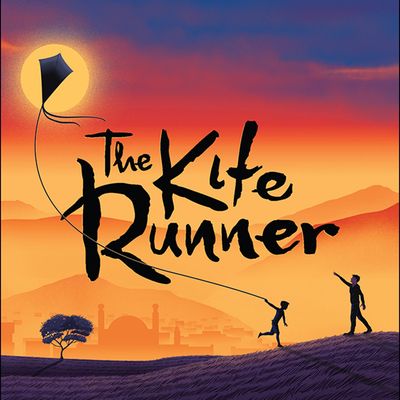
Based on the best selling novel, THE KITE RUNNER makes its Broadway debut this summer, following its successful West End Run. Jeff and Richie explore how this novel translates to the stage, and how a story and message like this really belongs on a Broadway stage today.Share with us, your thoughts, on The Kite Runner on our Instagram and TikTok page... Read More
From the show: Half Hour with Jeff & Richie (Post-Show Broadway Discussions and Interviews)
Featured Shows
About
Based on the best selling novel, THE KITE RUNNER makes its Broadway debut this summer, following its successful West End Run. Jeff and Richie explore how this novel translates to the stage, and how a story and message like this really belongs on a Broadway stage today.
Share with us, your thoughts, on The Kite Runner on our Instagram and TikTok page. @halfhourpodcast
Thanks for listening! Please leave us a review with what you think about the podcast.
Follow us on Instagram: @halfhourpodcast
Follow us on TikTok: @halfhourpodcast
Visit our website: www.twoworldsentertainmentllc.com
If you liked this episode, don't forget to subscribe to this podcast and leave us a review.
Share your thoughts with us on this episode below:
On Instagram: @halfhourpodcast
On TikTok: @halfhourpodcast
On our website: www.twoworldsentertainmentllc.com
Transcript
This transcript was automatically generated and might contain errors.
[0:08] Richie Grasso: Hello and welcome to Half Hour, an entertainment podcast through Two Worlds Entertainment.
[0:12] Jeff Malone: I'm Jeff.
[0:13] Richie Grasso: And I'm Richie. Here to bring you the casual conversations on the shows and music events, concerts, plays, and things that we see and observe throughout our careers.
[0:23] Richie Grasso: What we were about to discuss may contain spoilers.
[0:27] Jeff Malone: So please make sure that you are checking out the show that we're talking about today before listening forward, if you'd like.
[0:36] Richie Grasso: Today we're talking about the Broadway production of The Kite Runner.
[0:41] Jeff Malone: The Kite Runner is playing at the Helen Hayes Theater on Broadway in Manhattan in New York City.
[0:51] Richie Grasso: And it's based on the best-selling novel by Khaled Hosseini.
[0:55] Jeff Malone: I think I said that right. I hope I did.
[0:58] Richie Grasso: And directed by Giles Croft. This was a wonderful production in the West End, coming here to Broadway for a limited engagement till the end of October.
[1:08] Jeff Malone: And a lot of people know this book. It's a very famous book. A lot of people have read this book.
[1:14] Richie Grasso: I think when we were actually entering the line into the theater, we ran into some people that said, "Have you read this book?" And I actually said, "No, I have not."
[1:21] Jeff Malone: So just for listeners listening now, we have not read this book going in.
[1:25] Richie Grasso: So, and actually that might come up a little later in the podcast. I wanted to talk a little bit about like, do you how much homework do you do before a show or not before a show?
[1:31] Jeff Malone: I think that sometimes can really waver. I always say, like, I used to—quick story—I used to listen to Avenue Q all the time, the album.
[1:39] Richie Grasso: Like all the time.
[1:40] Jeff Malone: Prior to going.
[1:41] Richie Grasso: Prior to going.
[1:42] Jeff Malone: And then I went and I was like kind of like, "Oh," because I knew it so well going in. I was like, it was good, but it was like, you know, so I always wonder, like, what's better to go in blind versus not?
[1:52] Richie Grasso: And we—everything.
[1:53] Jeff Malone: Everything I know, I know. You went and I went in completely blind to this and didn't know anything about the plot, the story, the book, nothing.
[2:00] Richie Grasso: And we were able to kind of just dive into it like that. I always find that interesting with people though, because sometimes they're like, "Oh, you should read the book before you go," or "You should listen to the soundtrack before you go."
[2:09] Jeff Malone: And I'm like, listening to the soundtrack is the same thing as a sort of thing.
[2:14] Richie Grasso: Yeah, sometimes it is.
[2:15] Jeff Malone: Yeah.
[2:16] Richie Grasso: I get it if you really want to know all of the words, but the way you experience a soundtrack, or the way you read a book, or the way you see a movie, is the same way you can see a play.
[2:26] Jeff Malone: Yeah.
[2:28] Richie Grasso: Or a musical. So my opinion.
[2:29] Jeff Malone: Yeah.
[2:29] Richie Grasso: So talking about The Kite Runner, what are your thoughts overall as a production?
[2:33] Jeff Malone: For me, overall, I really enjoyed this play. I, like you were saying, I wasn't familiar with this book. I knew about the book.
[2:39] Richie Grasso: I know that it was a bestseller.
[2:42] Jeff Malone: I know a lot of people that did read the book. Maybe it wasn't just on my reading list, or maybe it was after me.
[2:48] Jeff Malone: But for me personally, I thought this was really nice, and it was so important to bring a story like this to the stage.
[2:56] Jeff Malone: I think it's really great for us to see a story like this, and I thought they did a really good job with this production.
[3:02] Jeff Malone: It is a really, really amazing story. I felt like I was on the roller coaster of it, and I say that in a respectful, nice way.
[3:09] Jeff Malone: It was a nice roller coaster of emotion. Some comedy, some drama, incredible sadness, incredible sense of hope.
[3:17] Richie Grasso: Yeah.
[3:18] Jeff Malone: There was a lot going on there, and I felt like that was a nice journey that it took me on.
[3:21] Jeff Malone: I sometimes see plays that the plot moves so slow.
[3:21] Richie Grasso: So slow.
[3:25] Jeff Malone: And I actually really liked the time jumps that we went through. Sometimes you see a play and it's like the whole play is over the course of one day or something, and it's like, "Wow, that's a long day."
[3:34] Richie Grasso: You know, whereas, like sometimes, like when it takes you through a life, it's amazing.
[3:39] Jeff Malone: And I thought that that, to me, the strongest part of this was the story, bringing this refugee story to a Broadway stage, a mainstream commercial Broadway stage, bringing this Afghan story and these stories as so many Broadway debuts in this cast, people coming here and telling these stories.
[3:57] Richie Grasso: That's what it's all about.
[3:58] Jeff Malone: It's about all cultures being told on the stage. And what an amazing time to bring this story.
[4:03] Jeff Malone: So I did really enjoy it, the story being what I enjoyed the most.
[4:08] Richie Grasso: Yeah. And for those, just to kind of touch on that, for those that aren't familiar with the story and are listening to this podcast, I did write a little blurb just to kind of set the setting for this.
[4:19] Richie Grasso: This whole play is narrated by the main character, Amir.
[4:22] Jeff Malone: And the actor playing him, Amir Arsan, also named Amir.
[4:22] Richie Grasso: Also named Amir.
[4:27] Richie Grasso: And throughout the play, he's obsessed with his atoned sin he committed as a child, which was in 1970s in Kabul.
[4:35] Jeff Malone: I think that's how you say it.
[4:36] Richie Grasso: Kabul, Afghanistan. We see Amir betray his childhood friend, which is also his servant, and he's also his kite runner, who is named Hassan.
[4:47] Richie Grasso: And because Amir had this desperate need to please his father, he saw something really happen after him and Hassan won the kite running race, and his childhood friend was essentially raped.
[5:04] Richie Grasso: And he turned a blind eye to it. And he has this sin throughout his whole life. He never spoke up about it, and it crumbled their friendship.
[5:12] Richie Grasso: And then you find out the things about the father, and that that's actually his stepbrother or his half-brother, rather.
[5:17] Richie Grasso: And then later you find out he's passed on, and the son comes back. I mean, it's just an amazing story.
[5:24] Richie Grasso: And it takes you on twists and turns. And I'm like, "Oh my gosh, what a journey."
[5:29] Richie Grasso: It's such a journey. And I think in act one alone, there's so much meaning in act one, and there's so much lesson learning in act one.
[5:37] Jeff Malone: I think, like, for you as a director, sometimes I like to get your director opinion on this.
[5:43] Richie Grasso: What do you think they—the director set the scene or the tone of this play just from the beginning?
[5:49] Jeff Malone: Well, I think that there were some really strong things, and then I think there were things that could have been improved on.
[5:54] Jeff Malone: Having the drummer there, the drummer is the tabla artist, right? On stage the whole time, playing them.
[6:03] Jeff Malone: There was recorded music played in and out, and then there were the drums, and then there were the bowls they were spinning and the wind whips and things like that.
[6:10] Jeff Malone: That was amazing. I think that really set you in. You could almost close your eyes and hear and feel. That's amazing direction in that perspective.
[6:18] Jeff Malone: Having the drummer there the whole time is like the on-stage audience member watching. They were watching the whole time and playing the drums.
[6:24] Jeff Malone: That was really, really special to me. Things that I thought could have maybe changed a little bit. A lot of the direction was like front and center always.
[6:32] Jeff Malone: I liked the kite coming in and out as a projection, like that kind of broke up the stage a little bit, so it wasn't a bare stage the whole time.
[6:38] Jeff Malone: And I liked that half-pipe style flooring. The entrances and exits on that were kind of cool.
[6:44] Richie Grasso: Yeah.
[6:44] Jeff Malone: But there was something about everything being front and center always.
[6:48] Jeff Malone: And I'm like, we couldn't pull anything down right, down left, up left, add some dimensions, some levels, some different.
[6:54] Jeff Malone: I thought there could have been some more artistry and some of that, and just take us on some different, and it just seemed to always be front and center all the time.
[7:02] Richie Grasso: I just thought that got a little monotonous at times.
[7:04] Jeff Malone: A little bit.
[7:05] Richie Grasso: Totally, especially because it's throughout the whole show.
[7:07] Jeff Malone: And he really is narrating the whole show.
[7:11] Richie Grasso: Yeah, it's a lot on him to be like, he's in a white shirt, center always for two and a half hours.
[7:17] Jeff Malone: And to me, I'm like, "Oh, I know maybe a costume change isn't necessary."
[7:21] Jeff Malone: But bring him throughout, have him sit on the edge of the stage and talk to the audience a little bit, maybe.
[7:26] Jeff Malone: Maybe have him stand way up in the back on a big—I don't know. I would have liked some levels.
[7:30] Jeff Malone: I would have liked some different levels because the story took you on levels.
[7:35] Richie Grasso: It did.
[7:35] Jeff Malone: And so I would have appreciated a little bit more of encompassing the—maybe put this in the round, maybe put it in three-quarter thrust, maybe get some audience interaction, maybe bring us in, maybe dance the actors in and out a little more in some traditional way.
[7:49] Jeff Malone: To me, I would have appreciated that a little bit more.
[7:52] Richie Grasso: Maybe not a lot more, but just a little bit more.
[7:54] Jeff Malone: I'm starting to realize something with you.
[7:56] Richie Grasso: Okay, tell me what.
[7:57] Jeff Malone: You love everything to be in the round.
[7:59] Richie Grasso: I like immersion.
[8:00] Jeff Malone: I find theater to be immersive.
[8:08] Richie Grasso: Like we're watching the play, and there it is. And then when it comes to this, this is not that.
[8:13] Jeff Malone: This is immersive that you've taken me on.
[8:16] Richie Grasso: Okay, I'm gonna go there with the cheesiness. I'm on a kite this whole time.
[8:22] Jeff Malone: Okay, sure.
[8:23] Richie Grasso: And we are running the kite and running after it, and we are the kite.
[8:26] Jeff Malone: Take us.
[8:27] Richie Grasso: I know maybe there was a part of me that was like seeing the kites physically, but also in the projection were nice.
[8:33] Jeff Malone: But put a really big kite over the audience, maybe.
[8:35] Richie Grasso: Maybe that would have been too Disney.
[8:37] Jeff Malone: I know, I know.
[8:38] Richie Grasso: I did like the—I did sometimes. I would have liked more actual kite. That's just me.
[8:42] Jeff Malone: Okay.
[8:43] Richie Grasso: I know, I know. I thought there was something in the artistry of having the projections of the kite and having the people holding the kite.
[8:50] Jeff Malone: No, I liked it.
[8:51] Richie Grasso: I did like that too. In that way, it's the suspension of disbelief of what's actually there versus what's not.
[8:56] Jeff Malone: There's real movement of choreography happening around that.
[8:59] Richie Grasso: I actually, for me, I kind of didn't mind it being front and center.
[9:03] Jeff Malone: Okay.
[9:04] Richie Grasso: Because I knew when he was front and center that that was not reality anymore.
[9:08] Richie Grasso: That was him narrating and telling us the story in that way.
[9:11] Jeff Malone: It was kind of filmic in a sense that he's up here and he's talking to us directly.
[9:17] Jeff Malone: And then when he has to go back into the scene, that's when he's not there anymore.
[9:21] Richie Grasso: Right.
[9:21] Jeff Malone: And I thought it was a great choice to make the same actor play him throughout the whole thing.
[9:26] Jeff Malone: Because you feel an emotional connection to now this person on stage.
[9:30] Jeff Malone: And it's not, "Oh, there was the little boy." You know, what we're seeing trending in Broadway right now is like three shares, three Donna Summers, three, you know, and so okay, that didn't need to happen here.
[9:41] Richie Grasso: And I'm glad that it was this one person because he played youth very well, and he played older, mature very well.
[9:47] Jeff Malone: I thought he did that really.
[9:48] Richie Grasso: He's an amazing actor. I said his name earlier, Amir Arsan.
[9:51] Jeff Malone: Really, really stunning stuff he was doing.
[9:53] Richie Grasso: Really great.
[9:54] Jeff Malone: And for me, it also is like, did he write this book?
[9:59] Richie Grasso: You know, for us.
[10:00] Jeff Malone: Yeah, you wonder that.
[10:01] Jeff Malone: Is this him and he wrote his story, and that's why he's telling it to us in that way.
[10:06] Jeff Malone: And that's why he's playing the role throughout.
[10:09] Richie Grasso: It kind of would make sense.
[10:11] Jeff Malone: There is also though, I will say, something about if I didn't know this was a book before, I would have left there saying, Is this a book? Because it felt at times like someone was reading a book to me.
[10:20] Richie Grasso: Yeah.
[10:27] Jeff Malone: I didn't feel like it was like scripty, and at times it felt like, and now we're on chapter four. I did feel like there was a slight stiffness in scene change because it felt a little booky.
[10:40] Richie Grasso: Scene change, yes.
[10:41] Jeff Malone: I didn’t almost like slow.
[10:43] Richie Grasso: Yeah, like now we turn the page.
[10:44] Jeff Malone: Like the next thing missing would have been him holding a book. Because like I felt like that's how close we were to like the narrator into the woods reading a book. And I'm not saying that's wrong. I'm just, and maybe that was done purposefully, like this was gonna be book-esque, and that it was going to be like reading the book. I think that's the style. And that's okay. To me, I was just a little like, oh, okay, we're I don't want to say dragging, but we're getting a little stiff here because it was like scene over, scene begins instead of flow the scenes, flow the scenes to me. That was just my personal take on it.
[11:16] Richie Grasso: Yeah. I wanted to bring something up to you that I was finding in my research after seeing this show that was kind of what you touched on a little bit before and what the music represents throughout. A little interesting fact is that music is currently banned in Afghanistan.
[11:32] Jeff Malone: Oh you um so for them to incorporate music in this, I think was strong. And actually, the actor who we saw last night um playing his name is Salar Nadar. He was interviewed saying the following Afghan music has not been introduced to the West yet, and at its like full-blown capacity, we're just scratching the surface now, and you don't get to hear it coming out of Afghanistan right now. Um but those of us who are here, like here in America, it's our duty to play and perform and speak the language of the music. So I found hearing him say that and those words, it just really like if I knew going into this show that that's what the music really represents throughout the show, I would have received it very differently. But I already knew it to be very powerful. Because how do we know Afghan music?
[12:25] Richie Grasso: Right.
[12:26] Jeff Malone: We don't know it in this country. And now to find out that it's banned, like, could you imagine living in a world without music?
[12:32] Richie Grasso: Right.
[12:33] Jeff Malone: Like, that would be terrible. It's so much such a big part of culture, and that's why putting music in this made complete sense for him.
[12:39] Richie Grasso: Yes.
[12:40] Jeff Malone: And to hear it and to bring those sounds, you know, the Tibetan bowls that they're playing throughout, like, and every time those bowls came onto the stage, it was when Amir was dealing with a moment that he knew he had to make a decision, a good decision, and he couldn't.
[13:01] Richie Grasso: Yeah.
[13:02] Jeff Malone: And that's when his half-brother that we found out later, Hassan always stood up for him.
[13:07] Richie Grasso: Yeah.
[13:09] Jeff Malone: And it that was such a powerful thing as well. There was also like Shakespearean feel to it. There was biblical feel to it. There was this like um rooted dramatic. When when um the son, Sarab, so the same actor, which another really smart move, I thought, from a casting perspective to have Asan and Sarab be the same, the the son the same actor. When he's bleeding out and in the hospital, and they he thinks he dies. I'm like, I I didn't, I didn't know this in the plot. I was like, oh my gosh, this is Shakespearean drama, this is tragedy. And I was like, wow, and then that he lived and that he took him. It was just it just felt so rooted in a really good dramatic place for me. And it didn't seem fake or rushed. Everything seemed like it had its poised moments, and I thought that was really, really special.
[13:59] Richie Grasso: Right. And also leading from that moment into him praying and not being a practicing turning to prayer. And turning to that, yeah, where he's really praying to his God that he really wants him to live, and that he needed that in his moment. That was such another powerful moment. Because it's kind of interesting. We can go into the uh something I wanted to talk about, really is like the whole play of religion here, and how in a country like Afghanistan, as he was growing up, he was part of one religion and his servant was part of another religion, and they didn't like each other, and one was more powerful the other than the other, which we later kind of find out that the religion that he was part of really kind of turned most of those people turned into the Taliban and took over the country.
[14:51] Jeff Malone: And I found something that was so interesting is these kids all learned, and something that I'm finding to be a common theme in a lot of the shows we're seeing recently is like what the kids learn and how they present themselves to the world after. Um really embodied what it meant to be have power and to be part of the religion as much as kind of raping um Hassan.
[15:46] Richie Grasso: Right.
[15:47] Jeff Malone: And then kind of turning away from it, even though some of the other guys of the religion were like, No, I shouldn't do that. They say that's a sin or whatever. So it makes me wonder like, did those guys that he was with turn to the Taliban? Or was it just him? And later we find out, okay, he's now come to that. And he doesn't mind killing people, and he doesn't mind taking the anger out. Why? Because it's what his religion tells him to do. And the generations of those sectors of religion too. And how different the fathers acted from the sons and the daughters. Um speaking of daughters, when you bring up like the wife Sora Soraya, and how you see how strict her father, even in America, even in the future, the father being so strict with her in that monologue she has where she tells that story of um you can't even talk to me here right now.
And he ripped his story up. It it does talk about how certain faiths and religions and cultures of people have some really strict, you know, you can look at that anywhere. There's very strict Catholicism in in elders. You look in Italian culture, Irish culture, so many other cultures, there's strict rooted heritage in older generations. And some of those do pass down into the younger generations, and then you see some generations, you know, it's amazing to see like what refugees in the 70s and the 80s into the 90s in America were dealing with.
[17:10] Richie Grasso: There's that comedic relief moment of the 80s in the beginning of that too, and everyone's like, the 80s in America, and how much of a culture shock that was for refugees coming here.
[17:18] Jeff Malone: But even as a culture shock, it it's so interesting to see him and his father, Baba and Amir come here and they're rich in their country. Yeah, and they come here and they're completely poor.
[17:29] Richie Grasso: Yeah.
[17:30] Jeff Malone: And I always tried to understand that because if someone here today, who's rich in America, left and went to another country, are they still rich? Well, it depends on the dollar value in the country that we're talking about, right? And it depends on the country.
[17:43] Richie Grasso: Right.
[17:44] Jeff Malone: And because they left the country to seek um asylum and to be a refuge and get into America. Did they lose everything or they just couldn't take it with them? Well, it depends.
[17:56] Richie Grasso: Yeah.
[17:57] Jeff Malone: Well, it also depends on what were they leaving. They had wealth there, but they were leaving an unsafe place. And they knew that America was a safe place. And how many times do we hear about refugees over the border and the Mexico border and that crisis that we're dealing with as a country with so many people who need to come here who need help and we want to help? But then you hear about this from a Middle Eastern country, and it brought us right up to 9-11 in 2001 and the war, and this play went there. It didn't, and you're sitting in Manhattan hearing this story. It's amazing. It's really, really amazing.
[18:32] Richie Grasso: I wanted to talk also really quick about the kite runner.
[18:36] Jeff Malone: Yeah.
[18:37] Richie Grasso: Why do you think kites were such a symbol here in this play? And the kite runner being Hassan, you know, if we're talking about that, what does that mean? You know, they talk about to chase the kite, you would run, and Hassan always got the kite. When everyone ran in this direction, Hassan ran in the other direction because he knew he would get the kite. I have some thoughts on it from a theatrical perspective, but why do you think this is called the kite runner and what the kite means to the play?
[19:05] Jeff Malone: I feel like I'm gonna pass that to you.
[19:07] Richie Grasso: Oh, okay. Because I feel like you already have a yeah, I have a I have a vision for it, I have a thought for it. Kites are in pred uh um unpredictable. Okay, and at a and in a moment's notice, they can fly in one direction and fly in the other. Hassan and the friendship that Hassan had with Amir was so steady until it wasn't. And it became so unpredictable the way it fell apart. And the rest of their his life carrying that sin. Was he, was he the kite runner? Was Hassan always the kite runner? Did Amir become the kite runner chasing after the kite? To find out that he died, the regrets that he had, the journey itself was like the journey of a kite. And wasn't kite flying banned then at one point in Afghanistan? They say that in the they said we can't fly kites anymore here. Yeah, it's something we have to stop. And how simple the task is. I could go outside right now and fly a kite.
[20:06] Jeff Malone: And how simple that is, yet how unpredictable it is, is I think a reflection of this person's story and how completely unpredictable this journey was.
[20:16] Richie Grasso: Even the son, Sarab, and how he was in orphanages and then not, and then he can go to America, but no, he can't. That's like a kite whipping through the wind, too.
[20:26] Jeff Malone: I find the kite to be really symbolic here of the journey. And that's just my take on it. I think that's really poetic.
[20:31] Richie Grasso: I like it. It's good. I actually completely see what you're saying now. The kite is almost the relationship because there's two people together, and we see the relationships throughout this whole piece. You know, them together, Amir and Hassan had a great relationship, and they were able to do things together until they couldn't. And when that happened, the kite was cut.
[20:52] Jeff Malone: And how many, and then, like, you know, this you could be pushing the metaphor a little bit, but when how many times how difficult is it sometimes to get a kite up in the air? And that can be it falls, you gotta go get it. It can be cumbersome and challenging, right? Like a relationship can be. This relationship being put into the world, and then what do your relationships meet along the way? When we saw things like their relationship, Amir and Hassan meeting with the other kids in the town, they had to tackle them all.
[21:24] Richie Grasso: Yeah. And they had to cut them all until they were cut.
[21:29] Jeff Malone: Yeah. And you see it with his relationship with his wife, building that relationship. And then you have to see it again when he's building his relationship with his nephew. He had to rebuild that relationship. And as he got the kite up in the air, that's when it finally he got a smile out of him. And that's when they started working together in a relationship.
[21:51] Richie Grasso: And it could be, I mean. And the play is not called the kite. The play is not called the kite flyer. The kite is the play is called the kite runner. And I think there's something really special about that because Hassan was the greatest kite runner. And what a special person that was in the early part of his life. And to take his son now and raise him. What an just an amazing message that to come full circle.
[22:17] Jeff Malone: Yeah. You know, being friends, learning out all of learning all of these details about his life after the fact, and then being like, oh, okay, now it's time for me to raise my half-brother's son.
[22:29] Richie Grasso: Yeah. It's a beautiful story to tell live on a stage for sure. Um, and one other thing I wanted to bring up, because I know we're getting closer, um, that the kite runner is a proud is proud to partner with non-for-profit organizations supporting refugees, providing humanitarian relief and building a better future for communities across the globe.
[22:45] Jeff Malone: So we had gotten a little slip in the uh play bill here that says a portion of ticket sales through benefits, fundraisers, and special sales initiatives will support the following entities. The Khalid Um Hassan Hassani Foundation, um USA for UNHCR, the UN Refugee Agency, Welcome US, and Women for Women International.
[23:05] Richie Grasso: So to hear all these organizations being supported from the ticket sales and the support of this play and the awareness that this play is bringing to these organizations is astonishing, is wonderful, is what art, the arts and theater is all about, and being seeing refugees supported through the arts artistically on stage and then being supported financially through don't sales initiatives. It all comes full circle for me and is an amazing thing.
[23:29] Jeff Malone: It totally comes full circle. And I think it really actually brings and sheds light to a group of people that we've kind of always been kind of taught, like, oh, these were the people that did this, you know, at like 9-11. And for us to see that, and it's like, no, these were not the people. These are just the people of Afghanistan. The people that took over the country are the ones that did that at 9-11, but that was never really taught to us. Or that terrorism is associated with this specific group, and not all people of a country, right? And so as a child, you're growing up with learning about terrorism and you needing and needing to learn the differences, right? Because not all of one place is a specific, you know, yes and not all people are bad. Right.
[24:15] Richie Grasso: You know, so that's why it was super interesting to see. And like you said, too, seeing this in New York and seeing all the people around. I think everyone was really moved by this piece.
[24:24] Jeff Malone: Yeah, I agree. The audience seemed to be really encompassed in it. And it was actually one of the first times also I saw a play where act one was shorter than Act Two. It was it was like Act Two was like a seemed significantly longer, and I was like, oh, that's different too. Um, and I say that too. Um, that this story was so important too, and everyone was kind of really thrilled by it, was because I found the story to be super relatable.
[24:46] Richie Grasso: Yeah. Just because they're these people are doing everything the same, and everything that we relate to normally, you wanting to please your parents, wanting to please your spouse, wanting to do the right thing. Can you do the right thing, etc.?
[25:00] Jeff Malone: Right. Yeah, which was really, really great. I actually um one thing that I was actually quite moved by was seeing it just the lighting and the art throughout the show. There was some beautiful um projection art in the background, too. And that fence wall in the back was beautiful.
[25:16] Richie Grasso: The little bit of a few. Right, because you want to know what was interesting with that fence is like the fence looked like is something that you would probably see in Afghanistan right now, but then it also looked like a city scene.
[25:28] Jeff Malone: Yeah, it became the city with the lighting change. Oh, okay. So this is where he was versus what he now has come to and what he is now learned.
[25:36] Richie Grasso: Yeah, and the way that they brought down like the just like the fabric coming down and telling the story through art and henna um and seeing the trees in that way. I thought the projections were really nice.
[25:49] Jeff Malone: Yeah, yeah, really special. And they have the ensemble piece, the actors were the musicians, they were the set changers, they were the people in multiple roles. Some people are playing three or four or five roles that were showing. I like that ensemble field. And bringing that culture too, even when you have something like the wedding and seeing the colors that they use and the dresses, it just it really looked nice.
[26:10] Richie Grasso: Yeah, it was beautiful, it was beautiful aesthetically for sure.
[26:13] Jeff Malone: Totally.
[26:15] Richie Grasso: Oh, we are out of time, running out of time. So, overall thoughts and conclusions on the kite runner on Broadway.
[26:21] Jeff Malone: Uh oh, my overall thoughts. Let's see. I think that this is a great piece for you know, the average theater goer to go see, but also not the average theater goer. I think that this is a great piece to see this summer while we're in our change over into the next season. And I really think that there's a beautiful message throughout the story. There's a learning, a lesson to be learned, and it's great for families, it's great for all people to go and see. Go learn a lesson, embrace it and enjoy it.
[26:53] Richie Grasso: I would say the same thing. Like I said earlier, I maybe I would have made some different directorial choices. I feel like at times it was a little stiff feeling, it was a little long, but overall, this story is important. It putting it on stage live eight times a week, and it is a limited run. It's playing until the end of October, so you have plenty of months to go see it. Um, it it's it's important. I say that about a lot of the shows we see. I feel like it's important. We have to be telling these stories. Broadway is a place for everyone. I say this all the time. Every story can be, should be, and I do firmly believe will be told. When you see stories like this, a story that I've never really seen something like this, right?
When we talked about Strange Loop a few weeks ago, the same thing. I think it's really important to be telling all stories and bring back the revivals and bring back the comedy, drama, everything in between, the stars and then and then there was no, you know, everything in between. This was just like one of those pieces that make you think and sit there and just to hear another story. You know, and it makes me want to read the book. It does. It really does, actually. And I I'm shocked I never did. And so I really want to now. So this is actually kind of like another one that goes into the group of we're seeing a few like more book to stage adaptations.
[28:01] Jeff Malone: Well, so many people always say, like, oh, uh uh Broadway's full of movies on Broadway. Movies on Broadway. Well, first of all, a lot of movies started as books.
[28:09] Richie Grasso: Yeah.
[28:09] Jeff Malone: And when everyone says, like, what happened to the original stories on Broadway? Like, you know, all those old classic golden age shows are usually based on books. It used that's how Broadway really started so long ago. A lot of Roger Hammerstein, Learner Lowe, those big musicals started as books. West Side Story is based on Romeo and Juliet, everyone. Like, you know what I'm saying? So I think to realize that here's a book on stage.
[28:29] Richie Grasso: Yeah.
[28:30] Jeff Malone: It wor it translates. It's a story.
[28:32] Richie Grasso: Yeah. Right?
[28:33] Jeff Malone: And movies are stories too. We're just, you know, seeing a lot more of that lately, but bringing a book to the to the to the main stage is really.
[28:39] Richie Grasso: Right. But even something similar to this was like Curious Incident or um what was that play we saw in the winter?
[28:47] Jeff Malone: Oh, I don't remember.
[28:48] Richie Grasso: The Little Prince.
[28:49] Jeff Malone: Oh, The Little Prince. Right, right, right. That came translated to the stage too.
[28:53] Richie Grasso: Yes.
[28:53] Jeff Malone: Famous books. And bringing bringing these books to life.
[28:56] Richie Grasso: Yeah.
[28:56] Jeff Malone: Yeah. It's really cool to see.
[28:58] Richie Grasso: It's all very, very cool.
[28:59] Jeff Malone: Well, we hope you enjoyed listening today to our episode of The Kite Runner on Broadway at the Hellenese Theater. It's playing until the end of October. If you want to go check that out, it's a really, really special, special play. Thank you all for listening. Please go to make sure you check us out on all our social media handles at Half Hour Podcast. We are on Facebook, Instagram, Twitter, TikTok, uh through Two Worlds Entertainment. Um, so make sure you check us out. Comment, subscribe to us on Apple Music and Spotify or wherever you listen to your podcasts, um, and let us know what you'd like to hear next. We got, you know, as you've been hearing these last few weeks, alternating between Broadway and Pop.
Some new shows coming, a lot of new theater coming this fall. We're gonna be really pushing those podcasts out this fall with all the new shows, and of course, new pop music. It's summer and into the fall, a great time for new music as well. All new things, um, which is great. So keep listening, keep engaging with us. We'd love to hear from you. So that's all for today. Getting ready to sign off until next time. I'm Richie.
[29:57] Jeff Malone: And I'm Jeff. Saying ta-ta.
[29:59] Richie Grasso: Bye.
© Broadway Podcast Network, All Rights Reserved