

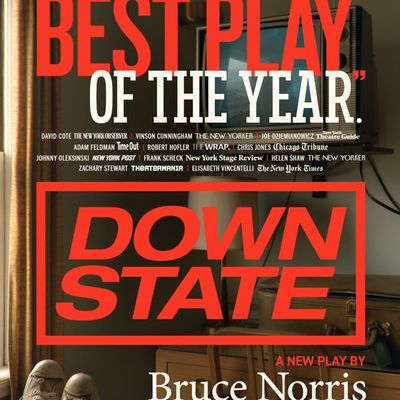
Some subjects most of us would rather not talk about, and Broadway rarely asks us to. Bruce Norris's Downstate does. In this episode of "Half Hour," we discuss the Broadway production of Downstate at the Booth Theatre... Read More
From the show: Half Hour with Jeff & Richie (Post-Show Broadway Discussions and Interviews)
Featured Shows
About
Some subjects most of us would rather not talk about, and Broadway rarely asks us to. Bruce Norris's Downstate does. In this episode of "Half Hour," we discuss the Broadway production of Downstate at the Booth Theatre. It's a dark comedy about four men living in a state-sanctioned group home after serving time for crimes against minors. When a survivor arrives to confront the man who harmed him, a chain of events leaves the audience asking who deserves a second chance. We talk about how the play gives us only some pieces of each character's story and lets us put together the rest. We also get into the uncomfortable laughter in the room and why we heard so much debate at intermission. We cover Joe Mantello's direction, Scott Pask's cell-like set, and standout performances from Liza Colón-Zayas and K. Todd Freeman. Then we make our Tony predictions in what could be either a Best Play or a Best Revival race. Downstate is playing a limited run through February 14, and audiences must be 17 or older.
Follow and connect with all things @HalfHourPodcast on Instagram, TikTok, and YouTube. Share your thoughts on this production in the Spotify comments, and let us know what you would like us to cover next. If you enjoy these post-show discussions, follow Half Hour and leave a rating and review so more theater lovers can find the podcast.
Transcript
This transcript was automatically generated and might contain errors.
[0:00] Jeff Malone: Welcome to Half Hour with Jeff & Richie, the podcast where we explore the latest shows we see, sharing our insights and opinions on the performances, storylines, and everything in between. In today's episode, we're discussing the Broadway production of Downstate. Whether you cannot catch the show in person or you want to expand your thoughts after seeing it, this episode is for you. And as always, we want to inform you that this episode will contain spoilers. So if you're ready to dive into this production, stick around with us. I'm Jeff.
[0:23] Richie Grasso: And I'm Richie, and we're thrilled to be your hosts for the episode today. But before we start the conversation about Downstate, here are a few words from our advertisers.
[0:31] Jeff Malone: Welcome, everyone, to a new episode of Half Hour with Jeff & Richie. Today, we're discussing Downstate. Four men convicted of sex crimes against minors share an uneasy life in a state-sanctioned group home. They've served their sentences, but the freedom they think they've earned proves elusive and dangerous. When a survivor shows up demanding to confront his abuser, it sets off a catastrophic chain reaction. So we're going to save our thoughts and our bold statement for the end. We're going to kind of dive right into some of the plot and concept on this a little bit. So really, really riveting play here with a very, very deep subject matter, right? This did premiere at Steppenwolf Chicago in 2018.
It was co-produced with London's National Theatre. It ran off-Broadway at Playwrights Horizons in 2022, now on Broadway in 2026, which will be a little bit of our Tony Talk conversation later because it had a successful run off-Broadway a few years ago. It'll be interesting to see what the Tony nominators think for best play or best revival of a play and how that goes. So we'll talk about that a little later. But as I gave in the synopsis, as you can hear, this is a really difficult and sensitive subject matter for Broadway because I feel like we're talking about something that maybe a lot of people don't like to talk about or feel uncomfortable talking about, right? And when you talk about just the concept of bringing that subject matter to the stage in the plot that it is, what are your knee-jerk reactions to something like this, just from the concept's perspective?
[1:50] Richie Grasso: From a concept here, it's a very interesting subject matter to bring to the stage because this is something that is never going to go away in our lifetime or any lifetime and has been part of so many lifetimes of sexual abusers in this world, and how do they assimilate back into the world after they have been convicted of the crime? And I think what's interesting about that with this is this is not a wide scope on all commentary regarding that. This is about four people who serve their time and are living back in society and what they're going through and what society is going through in relation to these four people. And I think, you know, when we talk about some of the design choices of costumes and set and whatnot, we know that this home that they're living in is really, really specific.
It's specific. It's almost set, lost, or stuck, I should say, in a very specific time period. And it's interesting to see the people that come in and out of that home and their relations with it. And then, you know, I kept thinking about the title of this play too, Downstate, and what that means. And they referenced it a few times in the play when they say, oh, I guess they're referring to, you know, it seems like they're referring to downstate of the state of Illinois, and that they're down of the Chicago area, so that they've been sent out of the Chicago area downstate to live in this area. And at one point, one of the characters even says, I want, when I'm out of here, I want to go back upstate, back to Chicago.
So it's almost like this otherworldly place that they've been put, and they have to try to live a life in society. And how many times have we seen something like this in film or TV or stage? Not many, because I think it's kind of one of those situations where you say, you know what, I don't know how to talk about this. This is very difficult in society to talk about. So we're just, but for the playwright to kind of say, I'm going to write a play about this. And for the four characters to talk a decent amount in the piece. But then for these, like I said earlier, these outsiders to come in and give their perspectives with some really wild chain of events towards the end of this piece, I think you're just kind of leaving there like exhausted in a good way.
You're kind of mentally exhausted, like this jogged my brain to think and have reactions and to kind of follow this and say, oh, I'm like theatrically exhausted in this like good artistic way. Like someone did this work and I'm here trying to follow it as an audience member. I think it's kind of wild.
[4:28] Jeff Malone: Yeah, I agree with that. You know, I look at this too, and I say like the playwright makes us ask ourselves a question very early on. And what actually like is the play asking us to kind of listen and view on? The victim starts the play off with being in this home and has to confront his abuser. And we have gone so many years and now is asking the question, like, am I going to forgive you? Do I want to forgive you? We are the viewers here saying, like, what are you doing there? Like, what does that make you feel like in this beginning, you know, starting the play off? Well, it feels like we're already I'm sitting there like, oh, this is uncomfortable. This is difficult. The actors are showing the difficulty of this.
And the spouse is trying to support the spouse who's writing this letter and reading this letter to this person. There's like these pregnant pauses throughout that allow you. I think this is what some kind of what's brilliant about Joe Mantello's's direction of this. And we'll talk about that next segment is this like opportunity as an audience member to take. OK, I'm I'm with I'm taking deep breaths, too. I'm trying to follow the pacing of this, too. Don't go too fast because you're going to lose me. Don't go too slow or this will feel too painful, like kind of ebb and flow throughout this. And I think the actors do that in the beginning while the while the victim is reading that letter. And what you're also realizing is then as other abusers who live in this home come forward and have monologues and speak past those first 10 minutes, you then start to realize, oh, what's that story?
What's that story? And you get bits and pieces of these people's stories. And it allows you to play detective as an audience member and sit there and say, oh, I'm learning about this moment. But you're not beaten over the head with like this was the whole story, right? Like they weren't telling it to you. That's what I liked in the writing, because it's almost like if I was putting a 10 piece puzzle together, the play gave me six to seven pieces of the puzzle. You figure out the last three to four. And I'm like, OK, as an audience member, that kind of works. And as a playwright writing like that, I get that you would write something like this in that way and not say, I'll put the puzzle for you together and tell you every detail of this.
And do you feel, though, even at the end, we even got every piece? We did not. And I think that's OK, because what do I say here on this podcast all the time as an audience member? Leave the play with like, I think I got most of that and I'll figure out the rest on my own because I'll put my opinion in. And then how many times do I say in this podcast? Oh, my gosh. OK, we get the message. You've spelled this out a million times in the lyric or in the dialogue. So I think this playwright did this brilliant, brilliant job. The playwright being Bruce Norris, who wrote Clybourne Park, is a Steppenwolf Ensemble member. Some pretty brilliant writing here. And I think what Bruce does and what Joe does is kind of put together, like, if I write this and you direct that, put that in the pot and stir it and then let the audience kind of feel and see and witness this from that perspective. That is art in the sense of theatrical storytelling. And I think that's what's pretty epic about how this piece was told.
[7:49] Richie Grasso: I agree. I think, you know, with what Bruce is doing in giving us certain parts of this play and us having to figure things out is so smart, but also like creating different wants and different obstacles for each character that's in this show. And Andy, being the victim in this piece, he is coming in and he is kind of stirring up all of the actual drama that's happening within the play. And that's what I found interesting, because he comes in and he has a lot to say, but he also has a lot of obstacles throughout this play. And he's only like he has moments in Act One and then he has moments in Act Two. Like there's a lot of things that happen outside of him confronting Fred, his abuser, but he has his wife who shows up with him and he needs to read this letter, but he can't actually physically get everything out in front of his wife that he needs to in front of Fred.
Which later you realize when he goes back by himself. And there was almost this like comedic relief element of the wife to kind of get him through it. Because I think as the audience was uncomfortably laughing, it allowed this piece to say, we do need to have moments throughout this of some sort of comedic relief or else this thing is going to be so heavy. And we're not having comedic relief for the serious subject matter. We're having comedic relief for like these other people that come in and interact in that way. And I think that was representative of like these people who come in and stir up these people's lives. And especially if we're talking about the main character of Ivy and what Ivy's role is in this.
Ivy, played by Liza Colón-Zayas, who's brilliant. And we'll talk about that performance in a second. You have Ivy coming in and saying, by the way, can't go to that grocery store anymore. By the way, new rules. The neighbors have voted on this or on that. And so it's like these people saying, oh, now where do I go? Food shopping. Or now how do I go? And so like their lives are being ruffled up throughout the piece. And I think that what that's trying to say is, look at how society is still treating people even after they've served their time. And whether that's about these specific crimes or crimes in general, I think it goes to show how where we're at as a society with that. And that there are these people living in homes like this and how are they assimilating back into their life?
It's very interesting. And another thing that I wanted to bring up on the writing here on this play is, you know, we have all of these characters in this show that have been created here that have had sex crimes against minors and we're following their stories mostly. We don't have most of the victims in this play. And the playwright does this interesting job to us as the viewer of whose side are you on? And you have to kind of remember while you're watching this play, oh wait, I can't be on their side. Like he almost makes you have sympathy for them in some weird way. And then you kind of like click again and you're like, no, no, no, no, no. That is not okay. The crimes that they made are wrong.
And we need to look at them in this way of saying like, no, they are convicted and like, they were convicted, but like, how do they go back into this world? And then they also ask us this question at the end of like, should they not go back into the world? Should they be in jail forever?
[8:20] Jeff Malone: Well, that's what I found so fascinating about intermission at the end of the show was hearing people around me say, oh, are you supposed to feel for these characters? Most of the time you see a play and you kind of find some characters and there's empathetic moments, right? But then there's something that was like, oh my gosh, no, absolutely not. And you hear the mixed thoughts and the oof and the irks and the cringy kind of reactions, because I think that's what this play is presenting is the spectrum of like, oh, I'm listening to this, but oh no, yeah, you're kind of going back and forth. And it's like a lot of that awkward energy throughout because this is so difficult. And so, yeah, I think the playwright does that on purpose, kind of jolts you and says, well, what am I supposed to feel for this person?
Now, what am I supposed to feel for that person? Well, because they make you do it in the play alone. The character D literally says like, I could kill someone and my crime, my sentence would be different than what I did to a minor. And interestingly enough, then you have someone who actually dies at the end of this play too. And so death is a part of this too, in that way. And we talk about the life or the death of life, but then you watch this and you say, these people are living, they are living. And some people don't even know how they feel about them living in a home downstate, which is the title of the piece. So, well, let's take a quick break. When we come back, I do want to dive into some of the design choices here and the casting and the direction. So we'll be right back after a message from our advertisers.
[13:01] Jeff Malone: Okay. And we're back. So I kind of wanted to dive right into the direction of this. I think when you're directing something like this, you have to realize, okay, one location, we're not moving to a million different locations. There's not 30 people in this show. So we have to kind of pace how we're moving through this. And I think Joe Mantello's does a brilliant job of just setting the tone and the pace of this. You're in a home that looks like it hasn't been updated or modernized in 20, 30 years. It's set in this very sedentary, no updates place. And then you realize we can't have phones here. We can't have internet here. We can't have these things. They're stuck in this landlock of sorts. And then as you realize, like wherever this home is, you are going to have neighbors around you who feel a certain way about how you're living your life.
Even after you have served your time, there are still people in this play and characters that live around this house that say, it doesn't matter if you've served this time or not. I still feel this way about these people. And that's the commentary about that. And I think Joe Mantello's, I've always been really impressed with the way he directs. But I think what Joe does here is he pumps the brakes when he needs to pump the brakes and then he floors the gas when he needs to floor the gas. And I think that's what's really, the pacing of Death of a Salesman last season was the same thing. It was this, oh my gosh, my heart's in my throat and then I drop. And I don't feel that in an exhausted way of like, oh gosh, I just got to go take a nap now. That play was exhausting. I feel it in the sense of like, he knows how to work with actors and playwrights and work the plot and move us through. I think he's very good at that in this.
[14:49] Richie Grasso: Now with Downstate, it is this almost jail cell of a home. It's a home that has no updates to it, that is keeping this locked and you are supposed to feel what these men feel like living in this home. They have to also live with each other. They don't like each other, but they have to live with each other because there's no other place for them to go. They're on almost house arrest until they are done with serving the time that they needed to, even when they're on house arrest. You know, I think people forget about that. And what can you do? You can go maybe to and from work or you have to stay within a certain area. And we feel that in this, this home and what was created there. And this is scenic design by Scott Pask's.
And I think, you know, what they did really well with each other was they built that home. They built this like outdated downstate style home that really works. It's dirty. It's grungy. It's a place that none of us would want to go to. And I think what's also interesting is like, it feels like the other characters get to make the decision on if they want to go into this home or not. They get to now make the decision if they want to be around these men that are in this home. Whereas before, they didn't really get to make that decision. The men were free to do whatever they want. And they decided to make those choices that they did. And now instead, it's like, this is the area that they're going into.
When you're looking at some of the cast as well, I think there's some really big standout performances here. I had said earlier, Liza Colón-Zayas as Ivy is an Emmy award winning from The Bear, playing the officer, the person who has to kind of rope this in and kind of corral these four very different personalities to say, listen to me, I'm going to tell you what's going on. And she has that one moment, one of them kind of talks nasty to her and she says, don't talk to me like that. And I was like, oh, she commands a space when she performs. And then later on at the end of the piece, when there's the investigation of the death, she's back there again saying, okay, what is now next? It's her job.
She has a difficult job, that character in the show to kind of figure out how do I talk to these people and how do I make the rest of society happy with what's going on in this home here and these people. I would also say a major standout to me was K. Todd Freeman as Dee. Really, really strong performance, some really great monologues. I was really captivated by his performance in this and just in the most odd way felt, oh my gosh, some of the things he said were so icky. And then I was like, this actor is really committing to this. And it was just really mind-blowing. And I always say good acting happens when I'm like, wait, is this still a character? Of course they're actors, but I'm like, this is so real feeling that I'm nervous to watch these people talk like this, but they're actors and they're committing to these characters in such a way that I'm just captivated by it.
[17:58] Jeff Malone: Yeah, I wouldn't, a thousand percent would agree with you with both K. Todd Freeman and Liza Colón-Zayas. I think that they both are given star moments within this piece because Liza, she has to come on this stage as an officer that is doing these checks on them to make sure that they are not breaking the rules and she has to monitor them. And she also has to kind of get them, she like plays detective at times by saying like, oh, like were you at the library? You're not allowed to be at the library. Did you go straight to work? What took you so long to come home? Did you get in a car with a female? Wait, how old is she? Can I see ID please? She has to like kind of confront each different person that comes into that house.
What are you doing here? Like, get out of here. Also, victim, you came back to this house? What did you have to say? Like, she really brings that in, in the energy in her performance there. And then, yeah, K. Todd Freeman, you know, exactly what you were saying about his performance is that like, I literally would have thought that he was this character. And that to me is like, wow, your acting is next level here because that performance is out of this world. It's almost like a bit like psychotic in a way, because this character and this role that he had to take on is probably one of the worst, I think, in the show for the things that happened to his victim. And that to me was like the most whoa moment in this piece. And he did an amazing job in this role.
[19:39] Richie Grasso: Yeah, yeah, for sure. Well, I think this is a good time to get a quick break. When we come back, we'll talk a little bit about some of the Tony buzz potential with this and what our experiences was at the show as well. So we'll be right back.
[19:56] Jeff Malone: Okay, and we're back. Okay, so verdict. What would you say your overall verdict is of this piece of Downstate? This has to be probably one of the most riveting and bizarre pieces of work that I have seen on a Broadway stage and kept me so captivated and also made me leave that theater wanting to constantly discuss this piece. So I think it is definitely up for best play of this year. And maybe it might be best play revival, but like highly recommend seeing Downstate on Broadway.
[20:35] Richie Grasso: Yeah, this is gripping. It's captivating. It's very well directed. It's very well written and it's very well acted and designed. The whole thing is a strong piece for a subject matter that is very uncomfortable. And I always say everything belongs on the stage, including uncomfortable theater, because that allows us as a society to make commentary, have conversations, listen to others, give opinions. That's what theater should do. How does theater create that energy? So you don't just leave there and be like, okay. Yeah. And you actually have an opportunity to say, wow, what is going on here? This is crazy and wild. So it's quite the journey of this show. This is definitely a podcast ask that we do on our show sometimes, but like 1000%, this is a playwright that I would want to talk to Bruce Norris, because I think that there is so much happening in this play that I need to know more about the reason for writing things in a certain way.
But it's also a podcast episode of like, I would love to talk to Joe Mantello's. How did you get into the psych and mindset on how to direct these certain characters throughout this piece? And I think he does a marvelous job in direction with this. And when you think about some Tony talk with this, you had mentioned earlier, could this be a best play nomination? Yes. It could be best play revival nomination. I'm not sure. And we have to see how the Tony- Either way it goes. I think it's going into either category. Right. I mean, sometimes when shows have off-Broadway successful runs, within a few years, the Tony nominators say, Oh, I think we're just going to make this revival because it already had a run.
But maybe they won't consider that and they'll actually do a best play for this. It'll be interesting to see. I think Joe Mantello's's direction could be nominated for this. He won for best direction last year for Death of a Salesman. I think the man is very, very good at what he does. And I would love to see some nominations for K. Todd Freeman and Liza Colón-Zayas. I think those two could totally, totally be nominated for this.
[22:30] Richie Grasso: Oh, yeah. One thousand percent. I would say that K. Todd Freeman and Liza Colón-Zayas would be nominated. I also might say that Thomas Sadowski could be in there as well. He plays Andy. He is the victim in this piece. I could see him also getting a nomination. Yeah. And one on a creative side, I also could probably see the scenic design getting nominated in this piece. So, you know, I definitely think that this will not get overlooked. And it had already been extended. It's extended into February. Yeah. We talk about when the fall shows, sometimes those plays get a little overlooked when there's so many more shows in the spring. But this one has been getting great reviews. A lot of people have been talking about it.
And it's also interesting because I find like this play, this play is almost having like the appropriate kind of run right now, like where it's getting a lot of buzz. I don't know how it's going to do and continue in ticket sales where Appropriate became like the hardest ticket to get and then it moved to another theater. I already know that something is announced for the booth after this, but like could this move to another theater if the demand happened? Maybe. We'll see in a few weeks, you know how this runs for sure.
[23:38] Jeff Malone: I would also say our experience, the show is interesting because like I mentioned earlier, I heard a lot of people talking about it. Yeah. Sometimes you get to intermissions that shows people, I'm going to go get a drink or a snack. I'm going to go to the bathroom. I'm going to go on my phone. I'm going to just sit quietly. This was people talking. And there was, like I said, people across the spectrum at this theater where we were saying, Oh, are we supposed to feel for these characters? Are we supposed to not feel for these characters? How are we supposed to? And some people say, Oh, I'm repulsed by this. This is horrible that we're even just the mix of energy across the spectrum of this. When you leave a show like that, I guess my question for you, Jeff would be, is that good theater when people are constantly talking about it during and after?
[24:22] Richie Grasso: Yes, it is great theater. Actually, if you are not talking about the play after you leave, I don't think it's a good play. So because everyone is talking about it, it's a good play. I think the best benchmark there is to say, if you're talking about the play, then it's a good play. Especially when even throughout some of the scenes, there's gasps, there's groans, there's burps. There's also uncomfortable laughter happening in this play. This is billed kind of as a dark comedy and it's dark, all right. And there are funny moments, but a lot of the moments are things that you're like, Oh, I'm very uncomfortable and I'm laughing at this. And I could hear that happening throughout the piece. I'm saying like, should we be laughing at that?
That to me is like, Oh, okay. Well, it's uncomfortable theater. And it's uncomfortable because as human beings, are we in society usually told, Oh, give people second chances. They've served their time or no, absolutely not. That's it. They've made this mistake for the rest of their life. There's even moments where some of the characters at the end talk about death. And I said this earlier, life and death, these crimes are very, very serious. And even after time has been served, we are talking about life and death because I think that's what's brilliant about the playwriting here is then the character actually dies. And so while these people are living, they feel like they're living a life after they serve their time.
Yet people think that their lives are over. And that is what you kind of sit here and wonder. Some, one character says I'm about to get out until he makes another mistake and does not. And so there's this very interesting cyclical moment of like, we'll never get out of this. It's almost like this purgatory state of like, you serve your time, but you're done, but you're not completely free, but you're almost free. And then you're not. And it's this volley back and forth of like, when, what is freedom and how does society view life and death situations for, for people who are human beings that are actually living still. But it's fascinating, but we're left in this moment of saying like, oh, people don't want them back in society because why are they going to make the same mistakes again?
Or does someone not make the same mistakes again? Is everyone supposed to be treated differently, but we're all, you know, treated the same at the end of the day. And they're all treated the same at the end of the day, even though they all did something very different. And that's where we're kind of left on this, like, oh, is that okay? Or is it not okay? And most people don't want them in their area. That's why you hear they're like, no, I don't want them here because they are going to do it again. And you almost hear in some of the characters that they would do it again. What they did was not wrong. And it's bizarre and it's wild to hear the way these actors have to read these lines and what the audience reaction is.
It is live theater to a T. It is live. It is not a movie. And you are watching this and you're just seeing it unravel. The rope unravels throughout the piece. For the metaphor I'm thinking of, just like watching all this stuff, bizarre stuff, to see what happens at the end, it's wild. And it asks a big question. It asks a big question to you. And it also asks a big question to the audience that should you see a play this uncomfortable on purpose? I think why not see things that are making you uncomfortable so that you have the opportunity to create your opinions, hear multiple sides of a story, formulate your own thoughts, go in and see it live on stage and say, wow, this is what theater does. It allows you to have these conversations.
[28:19] Jeff Malone: Oh my gosh, we're just about out of time. What are your final thoughts on Downstate on Broadway, Jeff? I mean, you got this far in the episode. So I would say we definitely enjoyed seeing this piece and that as bizarre as it is and how crazy it is, I mean, the playwriting is fantastic. And the overall production of this piece is just so captivating that it would be a miss if you did not see this on Broadway this season. It is a wild trip. And if you want to see something riveting that makes you just think and sit and kind of just watch stories unravel the way that they do from a great direction and a playwright's perspective, totally give this a chance to go see this on Broadway for sure. And it is an age specific thing. I believe you have to be 17 or 18 and older to even attend because it's a very serious subject just so you all know that.
[29:13] Richie Grasso: Well, that does wrap up our discussion for this episode. We hope you enjoyed our deep dive into Downstate. And remember, we want to hear from you. Continue the conversation with us on Instagram and TikTok at Half Hour Podcast and drop us a comment on Spotify and let us know your thoughts on Downstate. Please also leave us a review. Your reviews mean so much to us. And remember to subscribe to our channel for all past and future episodes. Until next time, I'm Jeff.
[29:34] Richie Grasso: And I'm Richie saying ta-ta for now. Bye.
© Broadway Podcast Network, All Rights Reserved