

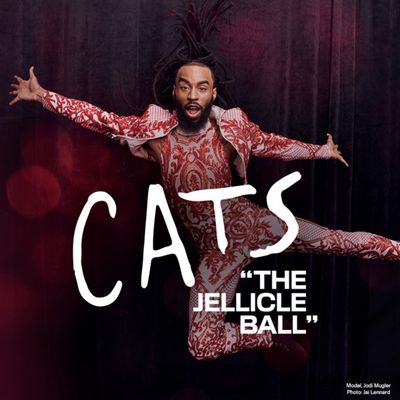
In this episode, we discuss the Off-Broadway production of CATS: “THE JELLICLE BALL”. Please note that this episode will contain spoilers about the show. If you haven't seen the show yet, you can catch CATS playing at the Perelman Performing Arts Center... Read More
From the show: Half Hour with Jeff & Richie (Post-Show Broadway Discussions and Interviews)
Featured Shows
About
In this episode, we discuss the Off-Broadway production of CATS: “THE JELLICLE BALL”. Please note that this episode will contain spoilers about the show. If you haven't seen the show yet, you can catch CATS playing at the Perelman Performing Arts Center.
Follow and connect with all things @HalfHourPodcast on Instagram, and YouTube. Please share your thoughts on CATS on our podcast cover post.
Transcript
This transcript was automatically generated and might contain errors.
[0:00] Jeff Malone: Welcome to Half Hour with Jeff & Richie, the podcast where we explore the latest shows we see, sharing our insights and opinions on the performances, storylines, and everything in between. In today's episode, we discuss the off-Broadway production of CATS – THE JELLICLE BALL, playing at the Perelman Performing Arts Center in New York City. Whether you cannot catch the show in person or you want to expand your thoughts after seeing it, this episode is for you. And as always, we want to inform you that this episode will contain spoilers, so if you're ready to dive into this production, stick around with us. I'm Jeff.
[0:29] Richie Grasso: And I'm Richie, and we're thrilled to be your hosts for today's episode, but before we start the conversation about CATS, here are a few words from our advertisers.
[0:41] Jeff Malone: Half Hour!
[0:46] Jeff Malone: Welcome, everyone, to a new episode of Half Hour with Jeff & Richie. Today we're discussing the off-Broadway production of CATS – THE JELLICLE BALL. A radical reimagining of Andrew Lloyd Webber's iconic musical based on T.S. Eliot's Old Possum's Book of Practical Cats. Inspired by the ballroom culture that roared out of New York City over 50 years ago and still rages around the world. Staged as a spectacularly immersive competition by Jaylon Levingston of the Tina Turner musical and Chicken and Biscuits, and PAC-NYC artistic director Bill Roach of All The Way, with all-new ballroom and club beats, runway-ready choreography, and an edgy eleganza makeover that moves the action from junkyard to catwalk. Come one, come all, and celebrate the joyous transformation of self at the heart of CATS and ballroom culture itself. All right, so let's start with this conversation with our hot take about CATS – THE JELLICLE BALL.
[1:40] Richie Grasso: I'm going first. Okay. So my hot take on CATS – THE JELLICLE BALL is that CATS might just be a perfect musical now, and everyone needs an opportunity to see this show.
[1:55] Jeff Malone: Totally agree. My hot take would be that this might be one of the best revivals I've ever seen in my whole life. Truly.
[2:01] Richie Grasso: Truly. That's a hot take and a bold statement. I'm combining those two and we're going to talk about it right now. Here we go. I actually wanted to start this kind of concept section and the overall show with a few things, just so the listeners kind of know what's going on in this. But CATS are no longer portrayed as felines in this production. They're human contestants in a ballroom competition. That's number one. Number two, each song in the show is represented by a different competition category. So like, for example, Pretty Boy Realness is the Rum Tum Tugger, which is a ballroom category.
[2:35] Jeff Malone: Pretty Boy Realness? Rum Tum Tugger, yes.
[2:41] Richie Grasso: Tugger. Tugger. Tugger. And despite the radical reimagining of this show, the show really maintains respect to Andrew Lloyd Webber's score.
[2:55] Jeff Malone: 100%.
[2:55] Richie Grasso: Well, I think it's also important to look at the legacy of this. So T.S. Eliot writes this book, Old Possum's Book of Practical Cats. Andrew Lloyd Webber gets inspired from that and doesn't write a traditional musical of Thoreau through plot. Everyone always says, what's CATS really about? It's so confusing. It makes no sense. But the music is catchy. And so for so long, don't forget, CATS is one of the longest-running musicals of all time. It's one of his most successful shows. And people were kind of in the 80s and the 90s and the early 2000s like, I don't really know what this is about, but I guess I'll go see it because everyone talks about it. But it was concept from the start. It was a different concept.
It was always a concept. And now someone took a concept and made it another concept. We're just building on T.S. Eliot's work. A lot of this dialogue and lyric is T.S. Eliot. And we can't forget that there's some wonderful creative use of language here. But then there's also what Andrew Lloyd Webber did, which is create ballads, create uptempos, create discovery of character. Each song is a discovery of character. So you can, of course, change the locale, change the setting of this to be literal CATS, figurative CATS. And then this new team comes on and adapts this and says, why don't we do this and do this and do this? But because I'm going to be honest, Jeff, I think when we walked in, we were like, oh, they're probably going to cut half the songs.
They're probably going to really change the orchestrations. They're probably going to cut a lot of the choral vocal. And absolutely not. They kept it all. The whole thing is here, y'all. Like the whole, every song, every orchestral, the overture, the dance, the orchestrations of the dance breaks are all in there. The exit music, we were leaving. I'm like, oh, they're still playing the exit music. Like there's no tracks. Like this is a live orchestra. Like everything is done correct in my eyes of how you should revive and adapt a piece. Reimagine, I should say, regardless of what you're changing. So you're changing things, but you're not changing the integrity of it. You're not changing the heart of it. You're keeping what was originally meant and you're just reimagining it. That's what makes reimagined revivals work.
[5:07] Jeff Malone: Right. And to reimagine it so much to actually say, we always have heard about the jellicle ball in CATS. Like they're going to the jellicle ball. And first I would say, why did this take so long to happen to begin with? Because the idea and concept seems quite obvious to make a show like this and say, oh yeah, ball culture, bring the cats. Category is cat. Hello, I mean. Well, a catwalk, right? And then there's all these, we can keep going, right? With the puns on all this, right? But also there's something remarkable. And I said this when we were leaving the theater, you have CATS on Broadway in the 80s and really around the world. And you have ball culture in the 80s in New York City. So in the same city, on the same island of Manhattan, at the same time, CATS was growing and awakening Broadway musical theater and ball culture was growing and a whole art form.
And now someone has taken what was happening in the 80s in two different parts of the island, coming together and bridging them together. They were kind of doing the same thing, maybe for completely different audiences at a completely different time in American history, but they were doing the same thing essentially.
[6:27] Richie Grasso: And let's not forget, this was always a ball. Someone really smart on this creative team realized that word was being used in CATS. Where else do you hear ball? Cinderella, right? The ball. So we've always heard about the ball with Cinderella and we've heard about the ball with CATS. And then we've heard of ball culture and pose and just what ball culture was for New York City in the 80s in Manhattan and everywhere too in the world. I'm thinking mainly New York, but ball was part, the Jellicle ball, that was like CATS, right?
[6:58] Jeff Malone: Yeah. Well, what's interesting, I did find a little fun fact about that. I was doing some research on the show, but Bill Roach, the artistic director of PACNYC first saw Omari Wiles' choreography, blending African and Vogue and Modern Art Dancing at a Guggenheim Museum performance. And that inspired Roach to approach him and then ask about doing CATS with a ballroom lens. And I feel like that's a big conversation that I would love to personally have with them on the podcast to see how that really developed because this is just something that I found, but it makes sense. He saw the art form of voguing and ballroom culture being performed and said, hey, this would work as CATS. And what transpired after that between their conversations? It's a very interesting conversation to be had.
[7:50] Richie Grasso: Totally. And not to mention, then you get to dive into this. Well, first of all, then you need the Andrew Lloyd Webber estate to kind of give their permission, blessing, whatever you want to call it. I mean, legalities here too, of course. But I think it's fascinating when you see the Roger and Hammerstein organization giving Oklahoma the rework that we saw a few years ago on the stage on Broadway. When you see the Andrew Lloyd Webber organization doing this, it's these older shows and these estates that are allowing this. And thank you for that, because you're allowing visionaries and creatives to put their own stamp on something and you're trusting them to not change the original work. But why would you not?
Why would you not, though? Because this is now, we've had CATS on Broadway for a very long time. Then it left Broadway. Then we had a revival recently, which was basically a restaging for the most part. That revival that we saw was wonderful, but it was basically the same thing we've always seen. Then we had a film that most people don't want to talk about.
[8:50] Jeff Malone: Meanwhile, I secretly enjoy it.
[8:53] Richie Grasso: No, I do not. It's just, you know, anyway. What I'm saying is, though, with a show like this, though, is why would you not want someone to reimagine this piece if it's going to be done right and keep the actual work alive? Because this potentially could keep this work alive for a very long time.
[9:12] Jeff Malone: Totally. And I also want to say, when people create works and their estates and their foundations and themselves maintain it's their baby, it's their pride and joy, how do you know that it's always going to work? This works. We have a sunset reimagining coming to Broadway in a few months. That's clearly working. But maybe they don't always work. And so as a composer and a lyricist and a producer, you may wonder, oh, I hope that someone won't destroy my work for a vision. And I'm not saying that that happens all the time, but it does happen. People say, whoa, whoa, whoa. What is this? And I can't off the top of my head right now think, but there's definitely been things we've seen that was supposed to be a reimagining.
And we're like, whoa, I don't know what's happening. I do get that. But I think a little bit more about what I'm saying here is when we're talking about the actual piece, like Andrew Lloyd Webber was inspired by an original work, then took it and made a new piece. So the text there is fine. And he obviously wrote music to it and whatnot. But when we're talking about the actual.
[10:15] Jeff Malone: I think that from piece to production, there should be many different types of productions out there with the original work's intention.
[10:21] Richie Grasso: Yeah, right. I mean, sometimes it takes a lot of conversation. It says, what are you planning on doing with this? What are you changing? What are you not? Do you, you know, you know, you have to kind of follow most of the script and score, right? Because the script is never really changing in a lot of these reimagined productions.
[10:36] Jeff Malone: Most of the time, the script is not actually different. You know, it's just the productions that are different. And I think a lot of people can't separate the two because they see the original production and they like, oh my God, I love that so much. It needs to be that every single time it's on Broadway. Or you have different people that might want to see something different because they like the work and they enjoy the work. Or maybe people didn't like CATS and now they do. Well, I'm finding that in a lot of the word of mouth that people are seeing. They're like, I didn't really know CATS or like CATS before this and now I love it, right?
[11:14] Richie Grasso: Yeah. I think this is a good time to move into the actual production here. So let's talk about the direction, actor performances, and design. But before we do that, here are a few messages from those that make this possible. All right. So we're going to dive in here with direction, actor performances, and design. And I think we need to start with the direction and choreography first. So, Mr. Director, you go first on your views here.
[11:37] Jeff Malone: Well, it's bookended nicely with, or at least starting anyway, with this man coming out with the creative records. I thought that was so wonderful, dusting the dust off of them, but it's glitter and we're going to put the CATS album on. And he goes up and he goes up there and I guess pretends to DJ, even though it's a live orchestra. And then now we're immersed as records were important of the time and the record of CATS and everyone seemed to have CATS on CD or vinyl at some point in their life, right?
[12:08] Richie Grasso: Well, I was going to say what I loved about that. You said this earlier, what was the marrying of what was happening in ballroom culture and Broadway at the time. And they brought up, you know, different, I think it was Donna Summer or Diana Ross. And then I think it was Grace Jones on vinyl and then CATS. So to see that, it touches exactly what you're saying about how that this was the 80s and this was what was happening. And both of these things were thriving.
[12:34] Jeff Malone: And then not to mention from a director, choreographer standpoint, just the immersiveness of this, you have, you're looking all over the place, literally behind us at times in front of us to the side of these CATS as the stage show of the original had the CATS crawling and immersing on and through. And that was one of the first shows where the CATS coming through the aisles. I remember hearing people seeing in the 80s, they're all around you. CATS in an alley would kind of be like that, too. So listen, I still think there was this like CATS integrity, even though they were humans in the show. Right. But it's the same in ballroom culture. Right. You're around the ball. You come, they appear everywhere to kind of start performing in the ball.
Right. And they come up from the stage and they come from backstage and they come from the front. And then there's like the chair for the judge, the old Deuteronomy, right, who's judging and there's trophies in there. And we're making this so immersive. And then there's people sitting at cabaret tables drinking and then there's actual proper seating. And it's the perfect venue for this. And at the end, I really want to talk about this venue. Don't make sure I talk about that because I loved this venue. But you're immersed and the music is all around you and there's monitors everywhere showing the orchestra director. So you're reminded that there's live music and we're in. Then we have choreo that is, listen, we are pulling on styles of choreo here like I can't believe I'm seeing the ball culture choreo.
I'm seeing Broadway choreo. I'm seeing modern, modern, modern choreo bodies being moved and formations being made and individualization, but also group formations. I don't know a ton about choreo, but I know enough to know that you are giving us pictures, you're giving us beat, you're giving us moment.
[14:17] Jeff Malone: And then I will say on top of all of this, there is incredibly impressive choral singing. There are vocals that are being given in three and four and maybe even five part harmony at times. I'm hearing, you know, the ending is so, it's so like, oh, old school theater, let's stand and sing. And when Andre is there at the end with them and they're just, you know, I'm always a fan of, and they do this in the old shows, like Les Mis. And when you just end a show by standing and singing, you've just danced and told this story for two and a half hours. When you just stand there and sing gorgeous vocal to the audience and just say, we are, whatever they're saying, we're not a dog, we're just cats or whatever.
It's so stupid, but it's so funny. It's like, don't call us a dog. But like the stairs coming down and Grizabella emerging, Grizabella appearing throughout, and I've always loved how the energy shifts so much in this piece when Grizabella comes in. And she comes in throughout and you sink into this, you know, if you watch the others in the ensemble, they don't like her or they want to avoid her for whatever reason. And it's clearly a whole story there, right? And then you see her re-imagining, her rebirth as she ascends to the heavyside layer. There's just so much direction going on here. And you know what? You could sit here and say, well, I don't know where to look. There's so many things going on.
Where's the directorial focus? And I sit here and say, no, no, no, no, no. There is focus. There is so much directorial focus here. You just need to be on it and looking and immersing and feeling and living. But I think that is the directorial choice of being like, hey, let me make sure I'm going to tell you something. You can look at any spot in this room and I directed it. So I'm going to praise J. Lon Livingston and Bill Roche's work here. And I'm also going to praise Arturo Lyons and Omari Wiles' work as well, because those four creatives worked so hard on this piece together. And you can really tell.
[16:11] Richie Grasso: You know, we see so many different shows where you say, did any of these people ever go into a room together and actually come up with the concept or what the vision is? And this one, you said, oh, all of them. And that goes to the costume designer, to the scenic designer, to the lighting designer, to the sound designer, because hello, there was a moment. And there was a moment in here that actually two moments that I did want to kind of touch upon that I thought were amazing. One, the moment for me that really hit was they knew how to pay homage to the ballroom culture in this piece. And even showing up all of the people on projections of who paved the way for this production to even happen, because that's what created it.
And I said, oh, I really hope they do something like in here, because in the lobby, they had, you know, bios and photos of everyone from the balls. But then they still brought it into the show. And it worked still, which is why I always say like, I, one thing I said about softs was I kind of missed seeing actual photos of the actual women. There's I know, that's like a don't beat me over the head with it. But it makes sense and cats to show the photos and videos of these actual people who created this art form. And let us end and end I'm so sorry, Gus, the theater cat is I'm like reading this bio. Wait, I was that's one of my fun facts in here. Yeah, Junior LaBeija, a member of the iconic House of LaBeija for more than 50 years.
And the MC in the 1990 documentary Paris is Burning like, he is O.G. And so Andre de Shields is O.G. to as Older Army for Broadway, and we'll talk about that too. But you have Junior LaBeija, like, I'm so sorry, Junior LaBeija, it's Gus the theater cat. In the character that it makes the most sense to be most sense, Gus, you know, a lot of people, I feel like a lot of people always feel like Gus was the one that could potentially have been the cat that's chosen. In cats. I don't know if you ever feel that way. Because there is definitely a theory because but it seems like he still holds on to the youth of him. But it makes sense. Showing the young performer dancing behind him and in front of him as he was walking down. Yes, it's all there. But to be like, the history and the history of Broadway and to marry those two things together. That's what I'm talking about, like that this was so thought out.
[18:45] Jeff Malone: Not to mention, there's definitely like a spinoff story of Older Army, Gus the theater cat and Grisabella. I think there's a whole story there, right? Like those three connect on that stage and have story while the young ones are doing their thing. Here's the older ones. So anyway, I mean, I could talk on and on about so many people in the show.
[19:03] Richie Grasso: Wait, I had one second part that I did want to talk about in this lighting design, because there was two moments in here. One, I forget what number it is, but they all are turning and every single one of them hit their mark at the same time and the lighting hit them in different colors. And they're all like, painting their face. And they're doing this. And not one of them missed their mark. And that lighting had a moment. But the second moment was, and I don't know if this was intentional, I was telling it to you earlier, but Grisabella is on that stage. And she's looking up at the mirror ball, which is obviously the moon in this whole scenario. And she's singing memory. And she's there. And the moon is going and all of a sudden, when she says, a new day, that light shifted, like the moon was done, and that she was going to be the chosen cat. And I don't know if that was intentional. But if it was, someone tell me, because I said, wait, wait, wait, did that just happen?
[20:02] Jeff Malone: I feel like everything here was intentional with design choices and directorial choices. It makes even the costume changes and the way the wigs were. Everything was so well done here, like everything. And I'm sitting here and I'm watching performances. And I'm like, okay, like Sydney James Harcourt, Rum Tum Tugger. Hello. Yes. Yes, honey. Hello.
[20:19] Richie Grasso: I did see an understudy for Grisabella. It was Garnett Williams. Amazing. Amazing. They were just wonderful.
[20:31] Richie Grasso: Maybe, maybe. I mean, there's a moment everyone is standing ovation. You're understudying the role. I mean, maybe I it's also Robert Silk Mason is Mr. Mistoffelees. Oh my gosh, that is an 11 o'clock number like I've never seen. And everyone loves that song. Everyone's singing. And that's when you look across the runway. We were on the side of the runway when you look across. Everyone's like they're encouraging you to sing and participate, obviously not be outlandish and like be a mess, but to sing and to clap and to be a part of it. They want that. They want you to be doing that. Also, I listen, let's talk about Andre De Shields for a second. This is a Tony Award winning Broadway legend, the original wizard in the original Wiz on Broadway, countless other things.
He is commanding space. That man just has to take a step forward and everyone knows how to respect. So there's this like that is perfectly cast as he is just so I just see Andre De Shields doing this and living his life up there. His bio says that he's 78 years old in a heel, like, you know, in a heel boot. Like, yes. And I just feel like it was when I saw this cast, let's come out and I recognize some names. I didn't recognize others. I was like, OK, good. New faces. Oh, yes. Andre De Shields. And so, you know, we can talk on and on and on. But I'm just really, really impressed with this cast, this creative team. And I'm seeing the crew running around back there. I'm seeing the costume change.
I'm seeing the booth people working. There's a lot of people working back there. So kudos to all those people running and running and running to make that work. So this is a good time to move into our own experience of the show. Maybe we have some fun facts. And what do we think the show's future is? But here are a few messages from our sponsors.
[22:24] Jeff Malone: OK. Do you want to start that off?
[22:26] Richie Grasso: Yes. Let's go into the next section. Does this need to... Well, listen, this has extended off Broadway. This is an amazing space. I'm going to talk about the space in a second. Does this need to transfer to Broadway? A thousand percent. There's rumors that it will. Does it go to Circle in the Square because that's the thrust three-quarter round, you know, or in the immersive Broadway space? I would hope it would go to something like Circle in the Square. A big house doesn't work.
[22:55] Jeff Malone: No, and they did it for, you know, they did it for Here Lies Love. They did Transformer Proscenium. If there was budget to Transformer Proscenium, maybe they could.
[23:02] Richie Grasso: They should have left it.
[23:03] Jeff Malone: Yeah, they could have left it. I know Romeo and Juliet's going into Circle in the Square in the fall, I believe, in a limited run. So maybe this would go in thereafter. I'm not sure. But what I will say is the Perelman Performing Arts Center is an incredible, incredible, incredible building and space. And I've never been before. It's down at One World Trade. And it's amazing that they built this space down there in this really, you know, it's so sad being down there. And I don't go down there very often, but to see the pool and to see the tower, the One World Trade, you know, and then to be in the Performing Arts Center, to bring art and music to this area that was so, so tragic at one point in New York history, to bring this show to this space.
So I'm going to tell everyone listening, if you can get to this space by August 11th, when it's scheduled to currently close at the time that we're recording this podcast, go to the Perelman Performing Arts Center and go see it there. Yes, of course, go see it on Broadway, because I will definitely be going to see this again if it transfers to Broadway. But that space is remarkable. And it is one to go see if you're looking for an off-Broadway space that's not, you know, some basement of a building downtown in the village, which I love off-Broadway spaces like that. But this is just so different. And it's huge. And you go up these stairs and elevators, and it's just a wonderful space. And I really, really liked going here to see this.
I loved going there. It was super easy to get to. I think it's just as much time to get across town to the theaters in the theater district, and then down there. So it's fine. But to touch on what you're saying, I'm going to drop another bold statement about Cats, the Jellicle Ball, and young theater makers in the industry in general. But between Jalon Livingston, playwright Maxwell Freelick, and director Michael Hurwitz of Job, and Colas Colas O'Mary, the young theater makers are making some of the best theater that we have seen all year. And this needs to be the future of Broadway. And it's also proving that off-Broadway works so well to get, you know, maybe that it's dying out that you do it out of town.
You know, Death Becomes, they're doing it out of town. The Notebook, of course, that still happens. But you can do your out of town in town and build your hype with your New York audience, even. I know some people say, oh, why is City Center Encores! just becoming the next transfer to Broadway? Well, it's working for Once Upon a Mattress, too. And that's such a commercial old show. Listen, all these shows we're listing are working to transfer to Broadway. It's working. Everything is definitely happening off-Broadway. Yes, obviously, there's the other shows that are coming from out of town. But I'm talking about the actual creativity that are going into some of these pieces that are missing from a lot of what's going to Broadway.
The cohesiveness of the creative teams sometimes doesn't feel like it's there anymore. It's just they're hired for the job and there's no passion going into it. But what you can see with some of these other shows that we have praised and loved, and now including Cats, is that these teams are working together and are passionate about the product that they're putting out there for us to consume.
[26:09] Jeff Malone: And the only thing I will say is, you know, does Andrew Lloyd Webber say, wow, I have a reimagined Sunset and a reimagined Cats maybe coming to Broadway in the same season? Does that matter for Tony Awards? Does he even care? He had four shows on Broadway at once, you know, when he had Sunset and School of Rock and Phantom of the Opera and Cats. They had four at one time. I think Sondheim and Andrew Lloyd Webber may be the only ones that have had the most at one time running. We're seeing all the Sondheim now. We're seeing now the Andrew Lloyd Webber coming back. Don't be a bit surprised if you are starting to see, we've even heard rumors of a reimagined Phantom coming back potentially. But his works are really well done that you can reimagine them and they still work.
And Sondheim too. But like why would he not want, you know, a lot of these reimagined productions even being on at the same time? It is like Sondheim where a lot of Sondheim shows are either getting reimagined or just revived and they're going up on Broadway. You know, the work that Andrew had put out was great and people are still inspired by it. And I would be proud of that if I was him. You know, I mean, you don't always constantly need to be putting out new works all the time if your stuff from the past is still good and working. And then we can end with this really quick conversation too. I think we could have a whole episode about the revival because, you know, what Lincoln Center does with revival is usually just restage or repurpose something that worked really well in a grandiose, glorious way.
Did it work for My Fair Lady? Yes. Did it work for King and I? Yes. Did it work for South Pacific? Yes. Like literally tears rolling down my face. That's how good that works, right? Did it work for Camelot? Not really. And now all of a sudden we're not really seeing Lincoln Center putting the restagings up. Do I always say yes, there's always room for a Sound of Music on Broadway? Sure. But then you're seeing what Sunset and what Cats and what these in Gypsies coming. And I think there's going to be some really interesting things happening there. So even Pirates of Penzance, what's that going to be, right? I don't know. I think like there's room for all styles of revival, but the way we revive shows is changing.
And I think we need to watch out for that in the best way possible. Revivals and reimagining and creative teams are working with the states to bring these shows back and it's working and it's great. And I think we're just getting, as Patty says in Gypsy, finished. We're just beginning. And I really think that we are just beginning with the revival.
[28:32] Richie Grasso: You know, and to make one final thing about Cats 2 is like, seeing this in Pride Month, or Pride Weekend watching this performance, seeing the queer themes that are being brought into this show was so warming and welcoming, I think, to so many people. And I would hope that a show like this, if it does move to Broadway, where it gets a little more commercial, is still appreciated the same way the audiences are appreciating it downtown. I think so. I have faith. I think so. You know, it's just a thought. Totally. Oh my gosh, we're just about out of time here. Let's give our final thoughts on Cats the Jellicle Ball off-Broadway. Jeff, go.
[29:11] Jeff Malone: Final thoughts are, it's easy. If you don't see this and it doesn't go to Broadway, you're going to regret it so hard.
[29:22] Richie Grasso: I totally agree. This is really, truly one of the best revivals I've ever seen. It is so wonderful. We have to figure out a way to get back there and go see it. Everyone, please, please, please try to go see this before August 11th. Like I said, if it transfers to Broadway, you'll have more of a chance. Great. If it doesn't, just go down to—don't go downtown. It's a summer in the city. Go downtown, even on a weeknight, get a ticket, and go to the Parliament Performing Arts Center and see this. It's truly one of the best things I've ever seen.
[29:48] Jeff Malone: And please give us a cast recording.
[29:53] Richie Grasso: We need a cast recording. Some of the stuff that they did with those arrangements and orchestrations, hello.
[29:58] Jeff Malone: There was not change, but at the same time, there was added rhythmic things, which was really cool.
[30:02] Richie Grasso: Yeah, beats and DJing. We could hear that in the club. Amazing. Well, that does wrap up our discussion on this episode. We hope you enjoyed our deep dive into Cats the Jellicle Ball. We're going to share the link with ticket information in the description here of this podcast.
[30:15] Jeff Malone: And don't forget, we want to hear from you, so continue the conversation with us on Instagram at Half Hour Podcast, and let us know your thoughts on Cats the Jellicle Ball. If you enjoyed our show, please leave us a review as well. Your feedback helps us bring more theatre to you. And remember, you can listen to past episodes and stay tuned for upcoming ones as well.
[30:32] Jeff Malone: Until next time, I'm Jeff.
[30:33] Richie Grasso: And I'm Richie, saying ta-ta for now.
[30:35] Jeff Malone: Bye.
[30:36] Richie Grasso: And meow.
[30:37] Jeff Malone: Meow meow. It's like, meows across the board. Bye.
© Broadway Podcast Network, All Rights Reserved