

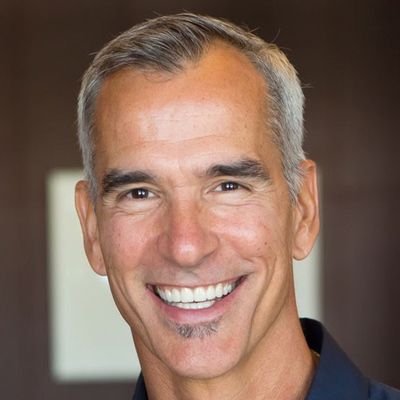
Season 2, Episode 6: Featuring Broadway director Jerry Mitchell and Billy Porter, we explore how Fire Island transformed the AIDS crisis into action through The Morning Party, GMHC and ACT UP, the Fire Island Dance Festival, and the creation of Broadway Bares... Read More
From the show: Finding Fire Island
Guests

Featured Shows
About
Season 2, Episode 6: Featuring Broadway director Jerry Mitchell and Billy Porter, we explore how Fire Island transformed the AIDS crisis into action through The Morning Party, GMHC and ACT UP, the Fire Island Dance Festival, and the creation of Broadway Bares. Plus, the story of how Joan Rivers fell in love with Fire Island while performing a benefit for God's Love We Deliver.
⭐ Watch this episode on YouTube!
⭐ Follow @jessxnyc for everything Finding Fire Island!
_____
Featuring: Billy Porter, Jerry Mitchell, Bob "Rose" Levine, Jay Jurden, Chris Lovito, Ron Martin, Guy Smith, Rob Levy, Hal Hayes, Jovan Dansberry
More: findingfireisland.com
_____
Executive producer & Host: Jess Rothschild
Co-producer: The Pines Historical Society
Editing & Sound design: Caitlin Whyte
Transcript
This transcript was automatically generated and might contain errors.
[0:00] Unknown speaker: As a younger queer person, you kind of go, oh, a lot of gay people love disco so much. And then you get some taste and you go, well, this goes amazing. And then you go, oh, my God, this was the last party for so many of us, too. There is an element of honoring all of the people who aren't here anymore, who loved Diana Ross as the boss, who loved Donna Summer, who loved Anita Ward, who loved Sylvester. There is this celebration of resilience and the power of being a queer person alive in your 20s, alive in your 30s, your 40s, your 50s, your 60s. You know, I'm in my mid to late 30s now. And there's this idea where I go, holy shit, there's a version of the world a few decades ago where maybe I'm not here. Maybe I don't get to see all this. And that hits you on Fire Island in a way that, you know, sometimes you take for granted in New York City.
[1:10] Jess Rothschild: This is Finding Fire Island, season two, episode six, Broadway on the beach. I'm Jess Rothschild. Back in season one, we explored how the HIV and AIDS epidemic transformed Cherry Grove. We saw it. We saw it happen. Right under our nose, we had the restaurants like the Monster and the Sea Shack and they were packed before '81. In '81, we saw the crowds stopped. There were no lines. There were no crowds. That's how it started. It was a complete change from the early days. And then the party stopped. Women often became caregivers to their dying friends. And in the years that followed, many bought homes which preserved the Grove's queer identity. So now we're going to shift our lens to the Pines.
How did they respond to the epidemic? Well, the way it often does, by putting its creative minds to work. The community transformed parties into fundraisers and performances into a lifeline for organizations like ACT UP, GMHC, and God's Love We Deliver. It also paved the way for the Fire Island Dance Festival, the island's longest-running charitable event and a lasting partnership between dance, Broadway, and AIDS activism.
[2:50] Guy Smith: We all just assumed that we were going to live to 35 because everybody who I worked for or with in the nightlife community were dead around 35. We met Guy Smith in episode four, DJs and the dance floor. Although he trained in psychology, Guy built his career in lighting and stage production, working everywhere from Disney to Madison Square Garden. But in the Pines, he'll always be remembered for helping transform the Pines party into the institution it is today. When I was 21 and getting into nightlife, I had a whole plan. I was I had a degree in psychology. I was a family therapist and I had a whole trajectory that I was trying to get my Ph.D. and hang out a shingle and like, I don't know, move to the Upper West Side and have my own private practice.
And then I started noticing that if you were gay, you just didn't live very long. And I was like, well, I'm not really going to have time for this. And I'm not sure if I actually want to spend the rest of my short life listening to other people's problems. Nightlife is a lot more fun. I'm just going to do that. I mean, it's not like a real job or a real career, but it's a lot more fun. And I'm just not going to be here that long.
[4:00] Unknown speaker: News of the epidemic landed on the front page of The New York Times on July 3rd, 1981. So many were preparing for their July 4th weekend. Some remember picking up the paper at the pantry, bringing it back to their house and reading over the article with friends over breakfast. The reaction was largely the same. This will pass. It won't affect us. And so life went on as usual. They went to the beach, they went to tea. And after the long weekend, went back to work. But not everyone was willing to look away. Larry Kramer would go on to create GMHC. He used the Pines as a staging ground for activism, handing out pamphlets at the ferry dock, warning people to change their behavior. But few wanted to hear what he had to say. So in the beginning, it took quite a while for people, especially people in their prime, to really give up the habits they had developed in years before.
[5:05] Hal Hayes: And it took a while for people to really begin to practice safe sex. Many people here, I remember in the beginning there would be friend groups or acquaintance groups and they would just kind of make a pact to just have sex with each other and nobody else. But of course, there was always somebody in the group who was already infected. You never ever knew. You never knew who was going to be back the next year when you came or who might have died over the course of the winter. I was too terrified to get HIV tested for the first six or eight years.
[5:45] Rob Levy: There was no treatment. I had just completed medical school at Brown and was back in New York City. This was the start of my Pines life and also the mid-'80s. And I completed my residency, got my faculty appointment to the medical school. They had a wonderful 403B retirement plan. And at that point, I had not yet been tested. And I thought, oh, retirement, that's a cruel joke. And they matched two dollars for every dollar you put in. So only a complete imbecile does not participate in that plan. And I finally worked up the nerve to get tested. And I was among the wildest of my bunch, and I was also among one of only a handful of survivors of my bunch. My circle of friends now are my second. And for the people I go out dancing with are much younger.
My third circle of friends. Virtually no one remains from my circle. And miraculously, when I was tested and my doctor said, Rob, you're negative. My first response was, whose blood did you look at? And then as soon as I realized that I was negative, the very first thing I did was invest in the retirement plan.
[7:02] Unknown speaker: I asked Rob to compare two very different moments in queer life, the years before AIDS, when condoms were often an afterthought, and today, when medical breakthroughs like PrEP have fundamentally reshaped attitudes toward risk and intimacy. I knew that period of just wild abandon and people came to harm as a result of it. Now people are free like that again. And I think that, you know, the fact that they won't be attending multiple memorial services every week, that they will not have to worry about things like this, that they won't ever have to decide that they won't invest in a retirement plan because retirement is a cruel joke, is a wonderful thing.
[8:48] Billy Porter: As an HIV positive man, I know that the reality of reaching old age was not a guarantee for me. So how has that shaped who I am today? We all really have to live our lives every day like it's the last, like for real, because I have lived my life to the best of my ability. And I still I'm still gagged that I'm four years away from 60. And I'm proud of my age. I lived, I'm here. Like that was not a foregone conclusion. And with all the stuff I got going on in my body, I'm still here and I'm still healthy enough to be alive and engage in life.
[9:36] Unknown speaker: In the Pines, the health crisis created a shared sense of purpose that shaped the community for years. Beginning in 1983, the community transformed the spirit of Beach 79 into something lifesaving. The Morning Party, an annual fundraiser for GMHC. A morning party, by definition, is exactly what it describes. After an all-night event, the crowd would then go back to someone's home. The party would continue as the sun rose, making it even more memorable and heightening the experience. By its final year in 1998, the Morning Party raised over four hundred and fifty thousand dollars in a single weekend, all for the fight against HIV and AIDS. The crisis also sparked a lasting alliance between the Pines and the Broadway community. Landmark fundraisers like Broadway Bares and the Fire Island Dance Festival were born, bringing together Broadway and the beach.
[10:36] Bob "Rose" Levine: That's how the benefits started in the Pines because they never had shows. Cherry Grove legend Rose Levine, Sylvan Cole, and David Baker started the arts project in the Pines. And Laura Eastman called me and asked me if I would like to do a show. And I did the first show for that organization in the Pines. And then that same season, David Baker wrote Pines Needles. And that's how the shows began in the Pines, because now David Baker wrote shows on Broadway and he lived in the Pines. He brought people like Marsha Brushingham from Broadway, Leonard Frye, who was in Boys in the Band. So it became more theatrical at that time. And we still did our own homegrown shows in the Grove. Pines did more show business, real shows, a woman singing or a man singing. And I was in drag. I sang in drag in the Pines because they liked me.
[11:39] Chris Lovito: Chris Lovito started as a bartender and bouncer at the Blue Whale, but as the Pines became a hub for fundraising, he worked his way up, providing private security for some of the biggest names to visit the island. I worked for Dionne Warwick, Leslie Uggams, Melba Moore, Joan Rivers, Peter Allen. In 1988, a benefit for God's Love We Deliver was hosted by Gloria De Man at her home on the bay called Reflections. Joan Rivers was an amazing person and she was at a tough time in her life. She had just lost her husband. It was 1984. So she was still grieving over that. And during the time with her, Peter Allen was performing. And it's the moment that sticks in my head the most with her about how cordial she was, how polite she was, how friendly and open she was.
And we're sitting there and she taps me and she goes, would you take me to the stage? I want to see this crowd. And I said, of course, come. So I walk her through the crowd and I get it to the corner of the stage and she's standing there and she's looking around and she goes, oh, my God, I've never seen so many gorgeous shirtless men in my life. And I'm like, welcome to the Pines. And she's like, do you think they're going to like me? And I'm like, you're Joan Rivers. They're going to love you. She goes, I've never played in front of an audience like this.
[12:10] Unknown speaker: Chris remembers walking Joan to the stage right after Peter Allen finished his set. Then you talk about a star and when that star shifts. So I'm standing there at the stage with her and she's literally she's a small woman and she's literally under my arm and all of a sudden she just kind of releases herself from me and steps away and I watch this woman transform. And Peter Allen announces, you know, ladies and gentlemen, the one and only, the legendary, the incomparable Joan Rivers. And as he's saying, she's going up the stairs. And when she hit that top step, I'll never forget the spark that came off of her when the light hit her. And she became Joan Rivers, the comedian. She does her set. I'm standing there to receive her and she comes down off stage and the first thing she says to me, how did I do? And I was like, oh, my God, they're screaming, they're yelling, they don't want you to go. You're unbelievable. She's like, oh, good. She goes, I love this place.
[13:15] Unknown speaker: After this performance, Joan Rivers went on to join the board of God's Love We Deliver and eventually win five hundred thousand dollars for the organization on The Celebrity Apprentice. Major Broadway hits like Kinky Boots, Hairspray, and La Cage aux Folles earned their success thanks to their director and choreographer, Jerry Mitchell. But in the middle of the AIDS crisis, another production would define Jerry Mitchell's legacy. In 1992, Jerry and some dancer friends created a fundraiser at Splash Bar in Manhattan.
[14:00] Jerry Mitchell: Well, there's a saying in the theater that when you have a hit show, you're able to buy something. And of course, by the time Legally Blonde opened on Broadway, I had several shows that had been very successful and had not quite gotten to the Kinky Boots era yet. So, you know, like my apartment in New York, I was able to purchase it when Hairspray was a hit. And then when Legally Blonde was a hit on the road in London and in Australia, I was able to not only renovate the apartment in New York, but purchase the house on Fire Island. Flashback to 1990. Before any success, I was a hungry young dancer making my first trip to the Fire Island Pines. I was 30 and I was in the Will Rogers Follies on Broadway and I was ripped and I was single and I rented a house out on Fire Island and I went out for my week's vacation and I arrived on Fire Island and I'm heading towards the pantry and the first person I see is Jerry Herman walking down the boardwalk with Carol Channing.
And I said to myself, whoa, whoa, that is unbelievable. And being in the theater, this was like magical for me to see them. Because I was in a Broadway show and I was performing, it was very hard for me to just go and do a share or go for a weekend. I know a lot of kids do it, but basically I don't ever have a day off as a dancer. And at that point, I was transitioning into being a choreographer. So when I wasn't in the show working, I was usually working on a film or working on a play with Paul Rudnick. I did Jeffrey. I did plays for Terrence McNally and choreographed. I did a lot of films while I was waiting to get a job as a Broadway choreographer. And so usually when I went out, I just rented for the week.
When we were in Will Rogers, I remember the boys in the dressing room, we all rented a house for a week and went out. And Jeff Calhoun was staying at Tommy Toon’s house at the time and we had parties there. And it was just magical. It was a great place to let go and be yourself and wear a bikini to the Pines Pantry. I mean, where else can you go shopping in a bikini, right? Or a thong. I mean, and nobody gives two shits. So this was a magical place, right? On all levels. And I always wanted to have a house at the beach myself. So as my career took off and I started to become a choreographer and I started to make a few more dollars than I did as a dancer, I started to rent for more weeks and more weeks.
[17:13] Jerry Mitchell: I explained that the idea for Broadway Bears was born in part from what I encountered in the Pines. It all was part of being in the Will Rogers Follies and starting to visit Fire Island and being sexually free to express myself. I was able to have as many partners as I wanted. And also, I was dealing, we were all dealing with the AIDS crisis and having to protect yourself first, right? The Broadway community rallied around the crisis with Broadway Cares Equity Fights AIDS. By the late 80s, their two biggest fundraisers were the Easter Bonnet Competition and Red Bucket Follies. One day, a friend turned to me backstage at Follies with an idea. So my dressing roommate, Jason Opsahl, said, you should go to Splash Bar on 17th Street, dance on the bar in that costume and make money for us.
And this light bulb went off over my head. Here was a young wannabe choreographer and a friend says, put on a show. And isn't that what art really is? Art is about making something, right? It was the perfect time for me to put all of those things together and create this little burlesque show. So I called seven other guys who were in Broadway shows who had exceptional bodies, and I knew that. And I said, I want to do a strip show at Splash. Will you do it one night, a Sunday night? We'll do one show right after our shows are done, 7:30, 8:30. We'll do it on the bar. We'll charge $10 to get in and we'll go-go dance at the end and get tips and all of the money will go to Broadway Cares. We went down that Sunday night at Splash and there was a line around the block.
It was raining and people weren't leaving and the bar was full. You couldn't get in. It was already full. It had 400 capacity. So we did the first show and Brian and Harry said, Jerry, if you guys do a second show, we'll turn on the lights and kick everybody out. And if they want to come back in, they have to get in line and pay $10 again and we'll do the whole thing again.
[19:25] Jerry Mitchell: Over the next 30 years, I would direct, choreograph and produce Broadway Bears alongside Broadway Cares Equity Fights AIDS. The show grew larger every year, bigger crowds, bigger productions, bigger venues from Splash Bar to Webster Hall to Roseland Ballroom and eventually the Hammerstein Ballroom. And over the years, Broadway Bears became a rite of passage for Broadway itself, with appearances from Idina Menzel, Kristin Chenoweth, Rosie O'Donnell, Nathan Lane, Lilius White and countless others. Most of the people who work on Broadway, I have either convinced some way to either take their clothes off or come sing a song or come tell a joke.
[20:16] Jerry Mitchell: I famously directed and choreographed Billy Porter in Kinky Boots. The two remain close and I regularly host Billy at my home in the Pines, where we've even staged a more intimate Fire Island edition of Broadway Bears. It's a burlesque show at the highest level. A bunch of Broadway people come together, mainly dancers, who are stunningly beautiful with amazing bodies. There's a theme. It's put together like a Broadway show. It's kitschy, it's tongue-in-cheek, it's bawdy, it's naughty, it's sexy. And it's freeing of so much shame that surrounds American sexuality and sex, rooted in religion. Religion that is man-made and about power and control. And Broadway Bears is the antithesis of that. And even in the structure of Broadway, the consistency of Broadway, the thing about Broadway is that you have to come in and do the same thing every night, eight shows a week, every day.
Broadway Bears gives all of those people a moment to break out of the monotony of what that can be sometimes. And I was there for the beginning. I was there for the birth of it. And the first one was at Splash. I was there. A bitch is old.
[21:48] Hal Hayes: Although the Pines party is the biggest weekend of the summer, many residents will tell you their favorite event is actually the Fire Island Dance Festival. One of the things that makes this such a special event is that we host all of the dancers in our own homes. So I always have a room for dancers that weekend. We did a pop-up performance earlier in the season this year, and I was able to host four of the dancers for that. And this weekend, I have two of the DRA and Broadway Care staff who are selling tickets in the harbor, and they're staying with me this weekend too. So it makes it really part of the community, but also part of the world of concert dance, which is exciting.
[22:34] Hal Hayes: The Fire Island Dance Festival brings dancers and choreographers from the American Ballet Theater, the Joffrey Ballet, New York City Ballet, Parsons Dance, Paul Taylor, and Merce Cunningham all to the Pines. Together, they raise funds for Dancers Responding to AIDS, another program of Broadway Cares. Stages are built above pools overlooking the bay, making it appear as though dancers are performing on the water itself.
[23:05] Jovan Dansbury: I remember seeing Denise's daughter dancing the White Swan overlooking the bay, and you just see two swans just swim and float right behind her as she is dancing this beautiful solo. And that was just one of those moments, visually, I was like, who gets an opportunity to watch a soloist at a ballet company dance the White Swan solo overlooking the bay, over the water in Fire Island, and then on plus, here are two swans just floating past. And so I think that that's the most Fire Island experience I would have, where a lot of people would probably think other Fire Island experiences, that to me is something that resonates with me and stays with me, was that visual moment, because I love dance so much, and I love that place so much, and I felt like I got to see two of them come together.
[24:07] Jerry Mitchell: Denise and Hernando had started the Fire Island Dance Festival after Broadway Bears was already a success, but I think it was partially because they saw that, how can we do a show, and where would we do a show that represents the dance community, and I'm talking about the classical and the modern dance community more than the commercial dance community, which is Broadway and video and TV stuff. And so they created DRA, and it's so magical to be out at Fire Island. It's like Broadway Bears, it can only happen there. Everyone talks about wanting the opportunity to do Fire Island Dance Festival. Everybody wants to be on that stage, on that water, and so many people have seen those pictures, and so many people have said, I don't know where that is, but I want to do that.
And so when they get to figure out, oh, that's Fire Island Dance Festival, and they're asked to do Fire Island Dance Festival, it is one of those things dancers in New York City have always wanted to do. So instead of feeling like the audience is expecting something from you, it's a shared experience of, I've always wanted to do this, and they want to experience it as well.
[25:22] Jerry Mitchell: DRA, Broadway Bears, the Flea Market, which was just this last weekend, and the Red Bucket Follies, all of these events, most importantly, they're helping Broadway Cares Equity Fights AIDS. When AIDS was something that you were dying from, every cent was going, now it's something you're living with. And we are supporting AIDS, but we're also supporting the people who have given years and years and years to Broadway Cares Equity Fights AIDS with other health initiatives, the Phyllis Newman Women's Health Initiative. So Broadway Cares has stayed strong by being inclusive, and I think that's really important too, and without turning its back on HIV and AIDS and the people who need that most.
[26:10] Ron Martin: Ron Martin has been in the Pines for more than 50 years. He has seen the Pines through the best of times and the worst of times. Why do you think you survived? Wow. I think one reason I survived is probably why I'm sitting here today talking about the history of the Pines. I think that there needed to be some survivors who would pass along the history and the culture. I had, like I think most people, a kind of survivor's guilt, and I started thinking, but why me? Why did I survive? And I think those of us who did probably sought some kind of more deeper purpose in life. There must be some reason why we're still here, and that reason was to pass along the culture and make certain our history didn't disappear, but to continue to have the community for future generations what it had always been to us.
[27:30] Jess Rothschild: Thanks for watching Finding Fire Island. We have a few bonus episodes in store, so stay tuned in the coming weeks. Finding Fire Island is created, executive produced, and narrated by Jess Rothschild. Co-produced with the Pines Historical Society. Sound design by Kaitlin White. Video editing by Evelyn Dar. Special thanks to the Pines Foundation and Sage USA.
© Broadway Podcast Network, All Rights Reserved