

My guest on Broadway Nation this week is Barry Kester, author of the fascinating new book: Round In Circles — The Story of Rodgers & Hammerstein’s CAROUSEL. I thought I knew a lot about Carousel — and in fact Albert Evans and I have previously devoted several previous episodes to that show and its truly groundbreaking innovations... Read More
From the show: BROADWAY NATION
Featured Shows
About
My guest on Broadway Nation this week is Barry Kester, author of the fascinating new book:
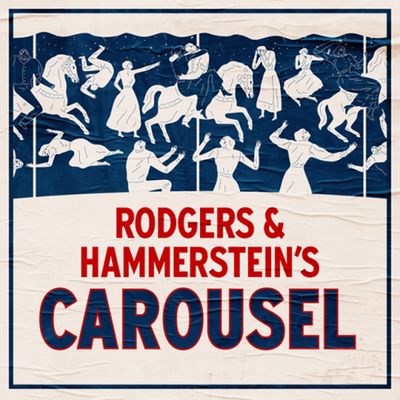
Round In Circles — The Story of Rodgers & Hammerstein’s CAROUSEL.
I thought I knew a lot about Carousel — and in fact Albert Evans and I have previously devoted several previous episodes to that show and its truly groundbreaking innovations. However, we both found this book to be filled with new information, new discoveries, and new insights.
Based on his exemplary research, Barry Kester takes us deep inside Rodgers & Hammerstein’s creative process as they endevour to transform Ferenc Molnar’s dark, fantastical play, Liliom, into their second Broadway musical collaboration, which they know will be compared to their first show, Oklahoma!, which had become the most successful Broadway Musical of all time and was still going strong! So, they consciously set out to do something very different.
At the center of this story is a dynamic woman, producer Theresa Helborn, who was the inspiring, driving force behind the show. In fact, without Helborn there would have been no Carousel or Oklahoma!
This is the first of three episodes in which Barry will share with us not only these fascinating stories but also his own unlikely and surprising tale of how he came to write this book.
Become A PATRON of Broadway Nation!
If you are a fan ofBroadway Nation, I invite you to become a PATRON!
For a just $7.00 a month you can receive exclusive access to never-before-heard, unedited versions of many of the discussion that I have with my guests — in fact I often record nearly twice as much conversation as ends up in the edited versions. And you will also have access to additional in-depth conversations with my frequent co-host Albert Evans that have not been featured on the podcast. And all patrons receive special “on-air” shout-outs and acknowledgement of your vital support of this podcast.
And If you are very enthusiastic about Broadway Nation there are additional PATRON levels that come with even more benefits.
If you would like to support the work of Broadway Nation and receive these exclusive member benefits, please just click on this link:
https://broadwaynationpodcast.supercast.tech/
Thank you in advance for your support!
Transcript
This transcript was automatically generated and might contain errors.
[0:23] David Armstrong: Welcome to another episode of Broadway Nation, the podcast that tells the remarkable story of how immigrants, Jews, queers, African Americans, and other outcasts invented the Broadway musical and how they changed America in the process.
[0:39] David Armstrong: I'm David Armstrong, and I'm very pleased to have as my guest today Barry Kester, who is the author of a fascinating and extraordinary new book that I literally could not put down.
[0:50] David Armstrong: And that book is titled Round in Circles: The Story of Rodgers and Hammerstein's Carousel.
[1:23] David Armstrong: However, both of us found this new book to be filled with new information, new discoveries, and new insights.
[1:30] David Armstrong: Based on his exemplary research, Barry Kester takes us deep inside Rodgers and Hammerstein's creative process as they struggle to find a way to turn Ferenc Molnar's dark, fantastical play Liliom into their second Broadway musical collaboration.
[1:46] David Armstrong: And central to this story is a dynamic woman, producer Theresa Helborn, who was the inspiring driving force behind the show.
[1:54] David Armstrong: In fact, there would have been no Carousel or Oklahoma without Theresa Helborn.
[1:58] David Armstrong: This is the first of three episodes in which Barry will share with us not only these fascinating stories, but also his own unlikely and surprising tale of how he came to write this book.
[2:10] David Armstrong: Here we go.
[2:11] David Armstrong: Welcome, Barry Kester to Broadway Nation.
[2:13] Barry Kester: It's wonderful to have you here today to talk about your new book, Round in Circles, the Story of Rodgers and Hammerstein's Carousel.
[2:21] Barry Kester: Thank you, David, and thank you very much for inviting me onto your wonderful podcast.
[2:25] Barry Kester: It's a pleasure to be here.
[2:26] Barry Kester: I thoroughly enjoyed reading this book, even though Carousel seems to be a subject that I thought maybe had been covered very, very well in other places.
[2:34] Barry Kester: You brought so many new things to the discussion that I found it a real page turner, actually.
[2:39] David Armstrong: I'm delighted to hear that.
[2:41] David Armstrong: I really am.
[2:42] David Armstrong: How did you come to write this book?
[2:44] David Armstrong: You don't come from the theater world originally, is that true?
[2:46] Barry Kester: That's absolutely true.
[2:48] Barry Kester: I spent my working life as a chartered accountant in the UK, which is the equivalent of a CPA in America.
[2:55] Barry Kester: I had my own practice, which kept me pretty busy for all my working life.
[2:59] Barry Kester: By way of background, let's start at the beginning.
[3:02] Barry Kester: I was born in 1944, which you may realize is in between Oklahoma and Carousel.
[3:08] Barry Kester: The music of Rodgers and Hammerstein and the Gershwins and Jerome Kern, Irving Berlin, Cole Porter, was the soundtrack to my childhood, and I just fell in love with it effectively from day one.
[3:19] Barry Kester: Always a passion of mine, and as I got older, I wanted to find out more, not just about Broadway and the theater, but about all the writers.
[3:29] Barry Kester: So over the years I've amassed a sizable library of books on the subject.
[3:34] Barry Kester: So in 2010, I was kind of forced to retire.
[3:39] Barry Kester: My wife was very ill, and I had to seriously take care of her.
[3:42] Barry Kester: I wanted something to occupy my mind, and I decided I'd like to try and write a book.
[3:48] Barry Kester: And they say when you start to write a book, write about something you know.
[3:51] Barry Kester: I felt I knew quite a bit about musical theatre.
[3:54] Barry Kester: Um there was nothing about Carousel per se in my library, so I thought, why not?
[3:59] Barry Kester: I mean, I look back on it now.
[4:01] Barry Kester: It was absolute crazy.
[4:03] Barry Kester: Absolute madness.
[4:05] Barry Kester: I knew I would need to do a lot of research in America, and I knew I wasn't going to go to America any time soon because of my wife's situation.
[4:12] Barry Kester: I knew I would need the help of the Rodgers and Hammerstein organization.
[4:16] Barry Kester: I had no idea whether I would get it.
[4:19] Barry Kester: As it turns out, they've been absolutely wonderful.
[4:21] Barry Kester: Off I went on this mad journey, very interrupted by the circumstances of my life, but here we are finally with a completed book.
[4:30] David Armstrong: And what was your first exposure to Carousel?
[4:32] David Armstrong: Do you remember the first time you saw or heard the music from Carousel?
[4:36] Barry Kester: Uh the first time I saw it was uh the National Theatre's production in 1992.
[4:41] Barry Kester: The music I grew up with.
[4:43] Barry Kester: I can't point to any one pivotal event which made me pick that one out as my favorite more than any other.
[4:50] David Armstrong: Well, and that was an incredible production.
[4:51] David Armstrong: I saw the Broadway iteration of that.
[4:54] David Armstrong: It's interesting from your book Carousel actually was not a big hit in the UK prior to that.
[4:59] Barry Kester: The original production did not run very long.
[5:02] Barry Kester: It ran about 55 odd performances, yes.
[5:06] Barry Kester: They were occupied Drury Lane from 1947 to 1953 with Oklahoma, Carousel, South Pacific, and King and I, and that had the shortest run of them all.
[5:16] Barry Kester: So those shows ran back to back at the Drury Lane continuously.
[5:21] Barry Kester: For that period, Drury Lane was the Rodgers and Hammerstein Theatre, yes.
[5:24] David Armstrong: Phenomenal.
[5:25] David Armstrong: I know that Agnes DeMille talks in an interview about reopening the Drury Lane after the Blitz with Oklahoma and what an amazing night that was.
[5:34] Barry Kester: Apparently it was, yes.
[5:35] Barry Kester: Yeah, she has quite a moving memory of that.
[5:38] David Armstrong: So with that exposure to Carousel with the National Theatre Production, Nick Hytner's production, how do you trace seeing it then to then deciding to write a book specifically about Carousel among all the musicals that you seem to have loved and been exposed to?
[5:52] Barry Kester: Well, I had in my collection a couple of books on the history of Oklahoma.
[5:57] Barry Kester: There were books on South Pacific, books on The Sound of Music.
[6:00] Barry Kester: I had books on My Fair Lady and West Side Story.
[6:03] Barry Kester: Carousel was the one show at that time which uh had no definitive history written of it.
[6:09] Barry Kester: That made the decision for me in a way.
[6:10] Barry Kester: I wasn't going to go where others had already trodden.
[6:13] David Armstrong: So you talked about the challenges of researching the book, especially for the personal situation you were in.
[6:19] David Armstrong: How did you overcome that?
[6:21] Barry Kester: Because now you are embarking on this book and now you have to research it.
[6:24] Barry Kester: How did you go about it?
[6:26] Barry Kester: Started off by going through all the books I had, picking out key facts where I could find them.
[6:31] Barry Kester: Obviously, the internet was another source, and what I found with that was, for example, looking up someone like uh Lawrence Langner, the producer.
[6:41] Barry Kester: He'd written an autobiography about which I had previously known nothing.
[6:45] Barry Kester: So hunting through uh secondhand bookshops here and online, eventually finding a copy of that, another book to the collection, another source of material.
[6:54] Barry Kester: The same with Theresa Helborn.
[6:56] Barry Kester: Agnes DeMille has written a collection of four autobiographies, uh obtained those, and so on and so on.
[7:03] Barry Kester: Every time you go down one path, and this was one of the difficulties, as someone not trained in the discipline of university study and studying for a master's or a PhD, it's so easy to get sidetracked because if you love a subject and you find something interesting relating to that subject, off you go on that tangent and get distracted from your main purpose.
[7:24] David Armstrong: Exactly.
[7:25] David Armstrong: Avoiding those rabbit holes is one of the hardest things to do.
[7:28] Barry Kester: But eventually you did come to America to do research, is that true?
[7:31] Barry Kester: I did, yes.
[7:32] Barry Kester: My wife died in 2013.
[7:34] Barry Kester: I was fortunate enough to find another wonderful partner, and after we moved and knocked our house about, I really got down to serious work.
[7:43] Barry Kester: I suppose it was about 2017.
[7:45] Barry Kester: I'd got to a stage by 2019 when I felt ready to come to the States.
[7:50] Barry Kester: I booked myself a two-week stay.
[7:52] Barry Kester: First of all, going to the Library of Congress in Washington for a few days.
[7:56] Barry Kester: That's where Oscar Hammerstein's papers are all stored, and where Richard Rodgers' music manuscripts are stored.
[8:02] Barry Kester: Then to the Beinecke Library at Yale, I hope I'm pronouncing that correctly, where the Theatre Guild papers were, and then finally the performing arts division of the New York Public Library at Lincoln Center, where Richard Rodgers' correspondence and Agnes DeMille's papers are also stored.
[8:18] Barry Kester: So it was a fabulous trip.
[8:20] Barry Kester: And I also met Ted Chapin of the Rodgers and Hammerstein organization.
[8:24] Barry Kester: He was terrific.
[8:25] Barry Kester: He didn't know me from Adam, but agreed to meet with me, spent some considerable time with me, showed me the RH archives.
[8:32] Barry Kester: It was a fabulous experience.
[8:34] David Armstrong: And how long overall did it take you to write the book?
[8:37] Barry Kester: Difficult to quantify.
[8:38] Barry Kester: I mean, you could almost discount the time prior to 2017.
[8:42] Barry Kester: So I suppose four or five years.
[8:44] Barry Kester: I mean, it was not nine to five every day by any means.
[8:47] David Armstrong: You start the book from a very interesting place, which is with a meeting of what you call, or what they called, I guess, the Gloat Club.
[8:54] David Armstrong: It's four members, two of whom, as you know, everybody knows, were Rodgers and Hammerstein.
[8:59] David Armstrong: And then two people that many people will not know much about at all.
[9:03] David Armstrong: One of whom you just mentioned was Lawrence Langner, and the other was Theresa Helborn.
[9:07] David Armstrong: Who were they?
[9:08] David Armstrong: And describe what the Gloat Club was for us.
[9:10] Barry Kester: The Gloat Club, beautiful name.
[9:13] Barry Kester: Um, they would have a regular lunch at Sardis every Thursday following the opening of Oklahoma.
[9:21] Barry Kester: To gloat about their remarkable triumph in producing Oklahoma.
[9:26] Barry Kester: So Rodgers and Hammerstein, pretty much everybody listening to this will know.
[9:30] Barry Kester: Lawrence Langner and Theresa Helborn were the partners and directors of the Theatre Guild.
[9:36] Barry Kester: The producing company, it was Theresa Helborn who approached Rodgers and Hart as it then was to write a musical based on Green Grow the Lilacs, Lynn Riggs' play, which became Oklahoma.
[9:49] Barry Kester: Hart was not interested, wasn't able to work on that project.
[9:54] Barry Kester: So Rodgers called in Oscar Hammerstein and they produced Oklahoma.
[9:59] Barry Kester: It was supposed to be a disaster.
[10:00] Barry Kester: Everybody anticipated it was going to be a disaster, but as we know, it was anything but.
[10:05] Barry Kester: So they set up the Gloat Club to A Gloat and B, realizing what they had and that it was going to be around for a long time to discuss the finances, look at the returns, plan a touring production, plan an overseas production eventually after the war, a film at some time in the future, and so forth.
[10:23] Barry Kester: So it was part gloat, part genuine business.
[10:26] Barry Kester: Theresa Helborn, I think, is a very important person in the history of the American theater, who hardly gets discussed at all.
[10:33] Barry Kester: I very much enjoyed seeing her being so prominent in your book.
[10:36] David Armstrong: As you just said, she was the impetus behind Oklahoma, and then she becomes the impetus behind Carousel as well.
[10:43] Barry Kester: It's her idea to do these shows.
[10:45] Barry Kester: Yes, she went through the back catalogue of plays that the Guild had produced.
[10:50] Barry Kester: She found Green Grow the Lilacs, first of all, and then there were a couple of plays that she considered as a follow-up.
[10:56] Barry Kester: Liliom, Ferenc Molnar's play, was the one she settled on, and the one that they eventually took to Rodgers and Hammerstein in October 1943.
[10:56] David Armstrong: And with Green Grow the Lilacs, this was sort of out of somewhat desperation of keeping the Theatre Guild alive.
[11:12] Barry Kester: That's right.
[11:13] Barry Kester: They'd made a series of bad choices and were very seriously short of money.
[11:18] Barry Kester: They were down to their last few thousand dollars.
[11:20] Barry Kester: They realized that the only kind of production that would generate sufficient revenue would be a hit musical.
[11:27] Barry Kester: That's why they went somewhat against Theresa Helborn's instinct.
[11:32] Barry Kester: One time she referred to musical theatre as intellectual slumming.
[11:36] Barry Kester: So it wasn't her ideal choice, but it was the only one that was going to save them.
[11:40] Barry Kester: And they put it on for some $83,000.
[11:44] Barry Kester: It's ironic that with her disdain for musicals, she becomes the sort of godmother of two of the greatest musicals of all time.
[11:52] Barry Kester: Yeah, they had done Porgy and Bess in 1935.
[11:55] Barry Kester: So that started to change her mind.
[11:57] David Armstrong: The Theatre Guild had done Porgy and Bess.
[11:59] Barry Kester: Yes.
[12:01] Barry Kester: So just describe a little more exactly what the Theatre Guild was.
[12:05] Barry Kester: I don't know how it correlates to anything we have today.
[12:08] Barry Kester: The Guild was established by Lawrence Langner and his wife Armina Marshall back in 1919 as a not-for-profit production organization to put on quality theatre.
[12:21] Barry Kester: I think you still refer to it as legitimate in the States.
[12:27] Barry Kester: In other words, it was going to be Shakespeare, uh new writers like George Bernard Shaw, Sidney Howard, Molnar, Maxwell Anderson, all this type of straight playwright.
[12:36] Barry Kester: And they played an early part in the success of Richard Rodgers because they built a new theatre in the early 1920s and they wanted to raise money for drapes to decorate the theatre.
[12:47] Barry Kester: And they decided they would do that by giving young new writers and actors a chance to shine.
[12:55] Barry Kester: And they arranged to put on at the Garrick Theatre for two nights only a musical review.
[13:00] Barry Kester: And they chose Rodgers and Hart, who had failed dismally to get anywhere close to Broadway up to that point to write the songs.
[13:08] Barry Kester: We'll have Manhattan.
[13:15] Barry Kester: It's lovely.
[13:17] Barry Kester: Going through Rodgers and Hart duly came up with a score which included Manhattan, and that set them on their path.
[13:31] Barry Kester: So they played a very important part in American theatre.
[13:34] Barry Kester: And had a long relationship with Richard Rodgers.
[13:37] Barry Kester: Well, he did a second edition of The Gayeties with Larry Hart, which produced Mountain Greenery, but then nothing until Oklahoma.
[13:45] David Armstrong: They went back.
[13:45] Barry Kester: They certainly went back, yeah.
[13:47] Barry Kester: One of the chapters you title Helburn's Obsession and her obsession is with this play, Liliom.
[13:54] David Armstrong: First of all, tell us about Liliom and what was Liliom and why was Theresa Helborn so obsessed with it?
[13:59] Barry Kester: Liliom was a play written by Hungarian playwright Ferenc Molnar.
[14:05] Barry Kester: It had its premiere in 1909 in Budapest and failed rather dismally in its original Hungarian version.
[14:13] Barry Kester: After the First World War, it was translated into German by an Austrian friend of Molnar's.
[14:20] Barry Kester: That version was eventually translated into English for the Theatre Guild, who produced it in 1921, very successfully in that English version.
[14:30] Barry Kester: By way of diversion, I am pretty convinced by what I have seen that the translation of that German version into English was actually carried out by Larry Hart.
[14:42] Barry Kester: This is a fascinating sort of mind-blowing thing. I had actually heard this before. I think in some other book, somebody mentioned that possibility. But do you think Rogers and Hammerstein knew that that translation that they're working from was written by Larry Hart?
[14:56] Barry Kester: Impossible to know. Hart maintained it was his, his family maintained that he did it. Unless one could find an original piece of paper somewhere in his handwriting, it would be impossible to prove.
[15:08] Barry Kester: But to me, the story seems entirely plausible. And he was known for doing German translations of other plays.
[15:15] Barry Kester: Yeah, he was actually on his mother's side. He was descended from Heinrich Hain, which is an interesting fact. Yeah, he was an absolute polymath, Lorenz Hart.
[15:25] Barry Kester: Just the irony of Rogers and Hammerstein's potentially one of their greatest works, I'll put it that way, and Roger's favorite work of his. Larry Hart being part of that is so complicated in a way with their relationship.
[15:38] Barry Kester: It seems impossible that if they knew it, somebody wouldn't have talked about it, or it wouldn't have been in a letter somewhere. You wouldn't have discovered it somewhere along the way. It seems unbelievable that they could keep their mouth shut about that to a certain extent, even if you I agree.
[15:53] Barry Kester: The story of Liliom is very much the story of Carousel. Liliom is set in Budapest, so there are no mill workers. Julie was a housemaid rather than a mill worker, but the basic story is exactly the same as that in Carousel.
[16:09] Barry Kester: Anybody who read Liliom, who knew Carousel would recognize the story at once. Beat for beat. Hammerstein stuck very closely to the story of Liliom. The ending excluded to a certain extent.
[16:20] Barry Kester: The ending excluded, obviously. Let's talk a little bit more about Theresa Helborn, though. She is obsessed with this play, and now after the brilliant success of Oklahoma, she's looking for the next Rogers and Hammerstein Theatre Guild collaboration.
[16:37] Barry Kester: And she again goes back through the list of plays that they already controlled the rights to and comes up with Liliom. Liliom was very much on her mind because in 1937 she met Kurt Weill, who knew all about Liliom and had himself approached Molnar for permission to turn it into a musical.
[16:55] Barry Kester: Molnar turned him down flat, but Kurt Weill had serious discussions with Theresa Helborn about doing a musical version of Liliom. In fact, just going back to Larry Hart, he even considered Larry Hart as being a possible lyricist for his version of the play.
[17:11] Barry Kester: But as I say, Molnar turned them down flat, and that seemed to be an end to it. But from 37 onwards, I think Theresa Helborn never let it go, never let it out of her mind.
[17:21] Barry Kester: Kurt Weill was not the only composer that Molnar had turned down for adapting Liliom.
[17:27] Barry Kester: No, he turned down Giacomo Puccini. He turned down France Lehard. There were rumors that Gershwin was interested in doing it as well.
[17:35] Barry Kester: Fascinating. In your opening scene, Theresa Helborn pitches the idea of Liliom to Rogers and Hammerstein as their follow-up to Oklahoma. And what is their reaction?
[17:45] Barry Kester: The way it's described by Lawrence Langner in his book is very theatrical. They turn it down absolutely flat, but I don't believe they were entirely sincere in turning it down, because what they did agree to was a meeting on December the 7th, 1943 to discuss the matter further.
[18:03] Barry Kester: And when they arrived at that meeting, it was very apparent that they'd both given the subject a lot of thought. So although they had said no in a rather theatrical dramatic fashion, I don't think they really meant no.
[18:16] Barry Kester: That's not to say that there weren't several concerns that they had.
[18:31] David Armstrong: And what was their hesitation? What were they concerned about?
[18:35] Barry Kester: First of all, they didn't like the setting. They didn't want to do anything based in Hungary. Oscar Hammerstein said it immediately gave him a mental image of gypsy violins playing and so forth, a setting more familiar to operetta at the turn of the century than a modern-day musical.
[18:53] Barry Kester: There were political issues as well. Who knew what the status of Hungary would be after the war? They didn't like the fantasy element. How do you put that into a musical? And I think the biggest problem that they foresaw was what they always refer to as the tunnel, a dark, depressing story set in drab interiors.
[19:14] Barry Kester: Although they were moving away from the musical comedies of the 1930s, the fact that they grew up in a musical comedy environment was still in their minds, and they couldn't see it working as a musical with that kind of gloom and doom dominating the piece.
[19:33] Barry Kester: And even just from a technical standpoint, even today it's hard to make a musical fly in interior settings. Musicals almost always happen outdoors, or if you're inside, you have to take the walls away and make sure that you're not confined in a tight space.
[19:49] Barry Kester: Kudos to Lerner and Loewe for My Fair Lady for conquering that.
[19:53] David Armstrong: Exactly. Yes.
[19:54] Barry Kester: The other issue that Richard Rogers was particularly concerned about after his experience with Pal Joey was having an anti-hero, which Billy Bigelow certainly is in Carousel, because he's received a lot of flack. Remember Brooke Atkinson's review of Pal Joey when he came out with that famous line, Can you draw sweet water from a foul well? Much to praise about Pal Joey, but he hated the character of Joey. And so that was another concern of Rogers.
[20:23] Barry Kester: So all those elements affected their thinking. And you talk us through in the book the way they overcome these issues that they have. Talk about that process and those solutions that they discover that allow them to then continue with the project.
[20:37] Barry Kester: Well, first of all, let's talk about what they liked. If you read the minutes of that first meeting in December 1943, Hammerstein spoke about the first scene with Billy and Julie and how beautifully it was written and how it would be wonderfully set to music, culminating with a kiss with the lilac blossoms falling, which is exactly what we saw in the finished musical.
[21:01] Barry Kester: And Rogers from the very beginning saw that it would be a terrific challenge for him. He immediately envisaged an orchestra twice as big as anything that you'd seen on Broadway up till then. And he also suggested the soliloquy at that very first meeting. Really singing about having a son and then maybe having a daughter instead. It was all there, so there were those positives which kept them going on.
[21:26] Barry Kester: And that's the famous bench scene, is the first thing you were talking about, what Santine calls the most important development in the modern musical.
[21:34] Barry Kester: He did indeed, yeah. And what's fascinating is it's almost exactly taken line by line from Molnar. Listen, I don't need you or anybody else to help me, huh? I mean, I gotta figure it out for myself. I mean, we're not important. What are we? We're a couple of specks and nothing. Look up there. And there's a hell of a lot of stars in the sky. And the sky's so big. A sea looks small. Until little people under I have typed them out together, and yes, it's incredible.
[22:24] Barry Kester: It is incredible how close the two scenes are.
[22:28] Barry Kester: You're a funny kid. I don't ever remember meeting a girl like you. Are you trying to get me to marry you? No. Well, what's putting it into my head then? Yeah. Yeah, you're different alright. I don't know what it is. You look up at me with that little kid's face, like you trusted me.
[23:02] Barry Kester: It changed the dialogue from the Hungarian setting to the New England setting, but apart from that, almost identical. And that change in setting is one of the things that allows them to discover their version of the show.
[23:15] Barry Kester: That was the key. Before that, one of the treasures that I discovered amongst Hammerstein's papers, they considered moving it to New Orleans at first. And some of Hammerstein's sketches of scenes set in New Orleans were quite remarkable. And he was looking for comedy. Again, going back to what I said earlier, couldn't break away from this desire to have comedy in the show, even though it wasn't really suited to comedy. Funny scenes were in a witchcraft shop with skulls falling on someone's head.
[23:47] Barry Kester: So they go down that path a ways, and why do they abandon Hammerstein went down that path a little way, but then he remembered that one of his failures in the 1930s was a show called Sunny River, which was set in New Orleans, and he decided no, he didn't want to get into all the New Orleans dialogue and so forth and rejected that. Richard Rogers suggested New England, and that was that. It all fell into place.
[24:24] Barry Kester: Yeah. Which I think was an intentional pan on the original title of Oklahoma, which was away we go.
[24:31] David Armstrong: That's funny. So as they're figuring this out, and as we know in the end result, Carousel is groundbreaking in many, many ways. It is a giant step forward, even from Oklahoma. I contend that the golden age of Broadway, and this is nitpicky, but the golden age of Broadway starts with Carousel, not with Oklahoma.
[24:52] David Armstrong: Once Carousel opened, it was clear then to everybody that this was the only way to do a Broadway musical anymore. You had to get on this bandwagon, you had to embrace the musical play and move forward. If they hadn't been able to have a second success, Oklahoma might have been somewhat of a one off the way Show Boat had been. But this is when it just sort of locks in. This is the new system.
[25:16] Barry Kester: But what I'm interested in is they actually decide to do something groundbreaking. This is not an accident that happens. They very consciously are wanting to do something new and different and important. What was in their minds at this time?
[25:30] Barry Kester: I think the overall thought in their minds was their concern that whatever they did to follow Oklahoma was going to suffer by inevitable comparison with Oklahoma. So they really wanted to get as far away from the Oklahoma, I was gonna say formula. I'm not sure they did that, but they wanted to be as different from Oklahoma as they possibly could.
[25:54] Barry Kester: They were also aware that the success of Oklahoma not only brought considerable financial reward, but it gave them considerable power. And I think it also gave them considerable confidence. So they were able to look at something far more challenging than was Green Grow the Lilac and Oklahoma.
[26:15] Barry Kester: One of the quotes you have from a critic, and I can't remember who it was, talks about the Oklahoma formula was getting tired. This was, I think it was in a review of Carousel.
[26:25] David Armstrong: It was, yes.
[26:26] Barry Kester: It was interesting to me because of course this is only their second show, but Oklahoma had been so influential that other shows had opened in between that were mimicking Oklahoma to a certain extent or following the path of Oklahoma.
[26:40] Barry Kester: Yes, as Hammerstein pointed out in a later interview, it was not only going to be their second show that would suffer from comparison with Oklahoma, but every show that opened on Broadway thereafter by all the other songwriters and composers out there, everybody was going to be compared with Oklahoma. And with Carousel, they're not only following Oklahoma, they're following Bloomer Girl and other shows that had come in between in the Oklahoma model.
[27:07] David Armstrong: Yes.
[27:07] Barry Kester: They have inadvertently inspired, I guess. In terms of Richard Rogers, he is also looking to do something new with this show. And you talk about his possible influence from Gershwin and Porgy and Bess as being maybe long simmering, but coming to the surface here.
[27:25] Barry Kester: Yes, I have this theory, and it's nothing more than my personal theory. But the letter that Rogers wrote to Gershwin the day after Porgy and Bess opened, in which Rogers said to Gershwin, and I quote, You licked me, tells me a lot about Roger's state of mind. They were good friends. In fact, Gershwin had played the entire score to Rogers in Roger's apartment prior to the show opening. And a little while after that, Rogers took piano lessons with Gershwin's teacher, studying Brahms and Schumann and so forth.
[28:00] Barry Kester: And I think looking even before Oklahoma, but looking at the music that Rogers wrote with Hart in the late 1930s, leading up to Oklahoma, I think there was a change in the style of Rogers' writing, which shows greater ambition.
[28:15] Barry Kester: And you quote Mary Rogers. Mary Rogers agrees with you on that. I'm not sure she agrees about the ambition. But she agrees that those lessons had an impact on his writing. Yes. And I think one of the reasons that he went with Carousel was he saw here a show or a story equivalent to Paul Gimbest. Oklahoma wasn't, but Carousel certainly is, which gave him a chance to really try out everything that he had learned. He abandoned all Broadway convention. You look at the score of Carousel, there are very few 32-bar AA-BA melodies in it. He's moving far away from Tin Pan Alley with this. Far away from Tin Pan Alley. Didn't lose any of the beauty of his melodic writing, but moved far away from Tin Pan Alley.
[29:00] David Armstrong: In terms of Theresa Helborn, she seems so prominent in the first half of the book and then sort of drops out in the second half. Was there a reason that that happened in life? Is that a fair perception?
[29:10] Barry Kester: I think it's just that nobody recorded anything. There's no correspondence. The guild files for Carousel are full of activity in getting the rights, getting it all set up, but there's very little once they get into the rehearsal stage and thereafter. So I'm sure she was as busy as ever. I'm absolutely certain of it. She would not let go until, well, not even after opening night. It's just that there's nothing once the production is established, all the work fell on the writers and the creatives.
[29:41] David Armstrong: That's what I assumed. And I wasn't sure what her circumstances were, but she was certainly not someone to step aside from being involved with the show.
[29:48] Barry Kester: Theresa Helborn did not step aside. I find that the Broadway musical is filled with dynamic women who just have not been brought to the surface and remembered and talked about enough. It's not that women weren't there, they were there in prominence. They've just gotten lost in the shuffle for many reasons.
[30:09] David Armstrong: One of the fascinating aspects of your book, and obviously came out of your research, is their process of developing this first treatment, is what you might call it today in terms of like a movie script of the show. And you actually include that in the appendix of your book. Talk about that treatment, how it was developed and how it influenced the show that came after.
[30:31] Barry Kester: Yeah, the outline, it's there in the Library of Congress. A four-page typewritten document getting a bit faded now. During the summer of 1944, the Rogers family would move in with the Hammerstein family into the Hammerstein's farm in Doylestown in Pennsylvania for working weekends. By that time, Oscar Hammerstein had done a lot of research. And I think it's important to talk about his research. He wanted everything to be accurate, and with the help of his daughter Alice, acquired a vast collection of books about life in New England during the late 19th century.
[31:10] Barry Kester: And he used these books. He got character names from some, some were fiction, some were nonfiction. He used names from the books to give the characters names like Bigelow, Carrie, Pipperidge, and so forth, Enoch Snow. He used it for the dialogue, for common sayings to make sure that his dialogue would be absolutely right. And some of these are authors like Harriet Beecher Stowe and authors that we know that he's drawing from there, not lifting anything directly, but using it as the building blocks of what he's going to do.
[31:42] David Armstrong: Absolutely, yes. He got the idea for the clam bake, for example, from these books.
[31:46] Barry Kester: This was a real nice clam bake. We're right in the case. As Barry recounts in his book, the lyric for this was a real nice clam bake was adapted from a recipe for a traditional New England clam bake that Hammerstein found in a book called Mainstays of Maine, sort of a combined travelogue and recipe book by Robert P. T. Coffin. This is what Coffin had to say about a clam bake. A good New England cook uses no book. Put in what you think is right. Cod's head chowder, catch the cod and cook them, still flapping in an iron kettle. Onions, salt, and pork. Cook till the fish begin to flake apart. Split sticks or bayberry and clamp them on clam shells. These are the only proper spoons for this chowder.
After that comes the lobsters. They've been broiling on the coals. Rake them out, split them down the back, pour in the butter, salt, and pepper. After the lobsters come the clams. Cook these in rockweed, thrown over coals of driftwood. First cup cottfish chowder. Cooked in iron kettles. Onions floating on the top. Curling puppin petals. And all doing will entry. And lapped them all up with the clam shell, tied on to a baby stick.
[33:17] Barry Kester: So using the benefit of that research, Oscar Hammerstein and Richard Rogers would sit down and adapt the story of Liliom to make it more suitable for New England, getting rid of the dark interiors that we referred to earlier, using a sequence like the clam bake sequence, which would be outside, devising the June sequence at Netty Fowler's Cafe to create something much more appropriate for a musical.
[33:43] David Armstrong: What I thought was so fascinating about that outline is that there are elements like June is busting out all over that are right there already realized, and then other descriptions of possible song spots and possible ideas that are very different. You can sort of see how they got from there to where they got to, but are in process at that moment, not fully clear to them. There was um one reference as a possible song title, which uh was something about I'll bring you sardines for tea or something. I can't remember the exact words, and I thought, what on earth is that? It turned out of course to be the introduction to when the children are asleep, but it took a bit of working out, I have to say.
[34:25] Barry Kester: Yeah, some of them were mystifying, especially when you know where they're going to go, which of course they didn't know at the time.
[34:31] David Armstrong: No, no. They also brought in a character that wasn't in Liliom, a chap called Dwight, who played the guitar as a possible alternative suitor to Carrie Pipperidge, but they got rid of him fairly early on. They realized that it was too close to the story of Oklahoma, the love triangle between Will Parker and Ado Annie and Ali Hakim.
[34:51] Barry Kester: Yeah, they're probably looking for a dancing element and decided that was too close. One of the fascinating things, and you go into this in some detail when they get to out of town, but it's right there in this treatment is the scene when Billy goes to heaven to the other side, wherever it is he goes, and we meet Mr. and Mrs. God, basically, which is a truly fascinating element in the story that eventually will get taken away.
[35:17] Barry Kester: I have to say, I read that scene for the first time in the Library of Congress, and it completely wowed me. I think it is a beautiful, beautiful scene. So much sympathy emanating from these two characters. I can only assume it didn't work in New Haven because of the timing, because the country was still at war at that time. Funnily enough, there was a production of Carousel at London's Regents Park Theatre last year, and Tim Sheeder, the director, was given permission by the Rogers and Hammerstein organization to substitute the original scene for the clothesline scene in the play. And I thought it worked well, and I'd love to see it used more often.
[36:01] David Armstrong: So describe the scene. What's the essence of the scene as it compared to the Starkeeper scene that we know from the finished product?
[36:08] Barry Kester: First of all, en route to heaven, in the very first treatment, there is a dance sequence, the second act ballet, which shows Louise's life from birth to the age of 15. And the way Oscar Hammerstein and Agnes de Mille devised this ballet, it ended up lasting for about 45 minutes in the original production. The first night overran considerably lasted about four hours, and that was one of the major factors. And Billy gets to heaven at the end of that 15 years. The journey takes him 15 years to get from Earth to Heaven, although it only seems like an instant. And he's confronted by this elderly couple, Mr. and Mrs. God, and they interrogate him as to why he did what he did. Was he sorry? Did he regret it? And much of the dialogue remains unchanged.
[36:56] Barry Kester: I guess it was the style, the interrogation, the formality didn't sit well with a wartime audience, many of whom would have had sons and husbands and so forth, still serving and still facing potential death in the forces. Whereas, as rewritten with the Starkeeper hanging out stars on a washing line, much less formal, much more jolly, and much more sympathetic type of character. Although he had an element of sternness about him, it was much easier, a much more friendly, less threatening take on heaven for a wartime audience.
[37:31] David Armstrong: And what was the reaction to Mrs. God? Because Hammerstein seems enthusiastic about making this point that there's a feminine element to God, that there's a female God.
[37:43] Barry Kester: Yes, as I say elsewhere in the book. Hammerstein lost his mother, I think he was fifteen at the time, and it had a profound effect on him. He loved his mother dearly, and in one way or another, she appears in a lot of his musicals. Aunt Ella in Oklahoma, Cousinetti in Carousel is probably a more similar figure, Lady Tiang in King and I. But yes, he was very conscious of the importance of women in society.
[38:10] David Armstrong: And do you think part of the audience's non-response to this scene or negative response to the scene was partly because of this sort of blasphemous vision of the deities?
[38:21] Barry Kester: Sure, that probably made a fact. I think it was more the austerity and the severity of the scene. But I wouldn't rule out a little bit of the blasphemy as you put it.
[38:30] David Armstrong: Yeah. It was certainly forward-thinking, as Rogers and Hammerstein so often are. I would have been fascinated to see the production that included it. That would be really interesting to see sometime.
[38:40] Barry Kester: Yeah. Hammerstein said in a letter to a friend later that the whole idea was a terrible mistake, but I'm not sure he believed that. You quote somebody saying that it suffered from the Calvinist audience of New Haven or something like that.
[38:54] David Armstrong: That was Agnes De Mille.
[38:56] Barry Kester: Yeah, so she regretted this change as well.
[38:58] David Armstrong: Yeah, she did.
[39:02] Barry Kester: This was a real nice landing. We're mighty glad we came up.
[39:09] David Armstrong: And when we return next week, Barry will share what happened when Agnes De Mille joined the creative team as we continue our discussion of his new book, Round in Circles, The Story of Rodgers and Hammerstein's Carousel.
[39:23] Barry Kester: This was a real nice land bake, and we all had a real time.
[39:48] Barry Kester: We saluted him down the back and peppered them good and dosed them in mounted bar. Then we tore away the claws and cracked them with our teeth, cause we weren't in the mood to put her.
[40:33] David Armstrong: Broadway Nation is written and produced by me, David Armstrong. Special thanks to Pals Mox for his help with editing this episode, to KVSH 101.9, the voice of beautiful Vashon Island, Washington, and to the entire team at the Broadway Podcast Network.
[40:51] Barry Kester: This was a real nice land bake, and we all had a real good time.
[40:58] David Armstrong: We say it a lot in this day again. We all had a big time.
[41:17] David Armstrong: For a contribution of just $7 a month, you can receive exclusive access to the complete unedited versions of many of the interviews that you hear on this podcast. And in fact, I often record nearly twice as much conversation as ends up in the podcast version. You will also have access to additional in-depth conversations with my frequent co-host Albert Evans that have not been featured on Broadway Nation. And all patrons will receive special on-air shout-outs and acknowledgments of your vital support for this podcast.
[41:48] David Armstrong: To join, go to Broadway Nation Podcast.tech. That's S-U-P-E-R-C-A-S-T dot tech. Or you can find the link in the show notes to this episode or in our Broadway Nation Facebook group, which I also invite you to join.
[42:04] David Armstrong: And now it's my great pleasure to welcome our newest patrons, Kelly Allen, Juan J. Neumeister, Ruth Oberg, and Alejandro Membrano. Thank you all for your very generous support.
© Broadway Podcast Network, All Rights Reserved